
Over Under Betting in 2026: How Totals Work and Where to Place Them
 Available in US
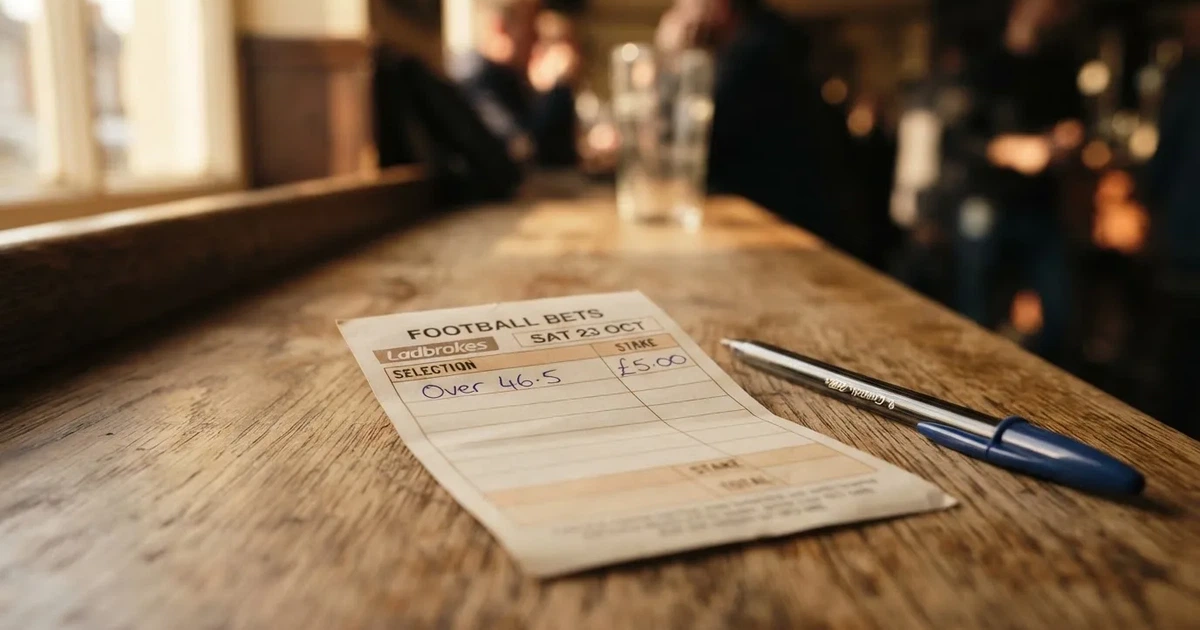
An over/under (O/U) bet, also called a total, is a wager in which the bookmaker sets a number for a statistic in a game and bettors back whether the actual figure will finish higher (over) or lower (under). The most common statistic is the combined score of both teams, but the format applies to corners, cards, player shots, sets in tennis overs, and a dozen other counts. If the final number exactly matches the line, the bet is a push and the stake is returned. That is the whole shape of the market. Everything else on this page is what hangs off it: how prices are built, how it settles sport by sport, which UK-licensed bookmakers offer it on which events, and what the margin the operator keeps actually does to a winning punter’s return.
This page is current as of 27 October 2026 and was checked against the Gambling Commission’s public register. Odds are shown as decimals, the form most UK online sportsbooks display alongside fractional prices; both formats describe the same thing.
How an Over/Under Bet Works from Selection to Settlement
A total bet lives or dies on a single number, set by the bookmaker, that describes what the bettor expects a statistic to be by the end of the event. The punter does not pick a team; the punter picks a direction relative to that line.

The three possible outcomes
For any two-way total the universe of results is narrow:
- Over wins. The actual figure exceeds the line. The bookmaker pays the backer’s stake at the quoted price.
- Under wins. The actual figure comes in below the line. The bookmaker pays the backer’s stake at the quoted price.
- Push. The actual figure lands exactly on the line. Stakes are returned and the bookmaker’s margin is neither won nor lost on this bet.
The push is the single most distinctive feature of totals and the easiest to forget. A 2-2 draw on a 2.5 goals line is a winner for over; a 2-2 draw on a 3 goals line is a half-loss for over and a half-win for under if the operator offers half-lines that way, or a push if the operator rounds to whole lines; a 2-2 draw on a 4 goals line is a winner for under. The number on the ticket is the arbiter, not the picture in the punter’s head.

How a price is built
Every published decimal odds figure hides a margin inside it. Take a market with two equally likely outcomes priced at 1.91 / 1.91. The implied probability each side is 1 ÷ 1.91 = 0.5236, or 52.36%. The two sides sum to 1.0472, or 104.72% — a payout share of 1 ÷ 1.0472 = 95.49%, and a margin of 4.51%. A “fair” book, one with no margin at all, would price both sides at 2.00 and the two sides would sum to exactly 100%.
The arithmetic is the same for any two-way total. A bookmaker posting over 1.85 and under 1.95 is quoting a market whose margin is 1 − 1 ÷ (1/1.85 + 1/1.95) = 1 − 1 ÷ 0.5405 + 0.5128 = 1 − 0.9492 = roughly 5.1%. That 5.1% is the slice of every pound staked on this market that the operator expects to keep, before any consideration of how individual bets settle. The headline price a punter sees is the gross price; the net price, after the margin, is what the market actually returns across thousands of bets.
For the bettor, the practical consequence is that a single price tells them nothing about whether the book is generous. The 1.85 / 1.95 line above and a 1.83 / 1.97 line carry very different margins even though they look like neighbours, and the only honest comparison is the implied payout share each pair produces.
What a winning bet pays back
For any single bet, return = stake × decimal odds, and net profit = stake × (odds − 1). A £10 stake at 1.85 returns £18.50 with a £8.50 profit. A £10 stake at 1.95 returns £19.50 with a £9.50 profit. The two outcomes are priced differently precisely because the bookmaker thinks one is more likely than the other, and the margin is what bridges those views to a profit on the book.
For a combination bet — an accumulator of three over/under lines priced at 1.85, 1.90 and 1.95 — the combined price is 1.85 × 1.90 × 1.95 = 6.85. A £10 stake returns £68.50 if all three legs win, but a single losing leg returns nothing, and the margin of the combined price is the compounded margin of its three legs. Accumulators multiply the upside and they multiply the bookmaker’s edge with it.
Settling a football total
Football betting, the sport on which totals are most heavily traded in Great Britain, settles over/under markets on 90 minutes of play including referee-added stoppage time, unless the market itself states otherwise. Extra time and penalty shootouts are excluded. A 1-1 draw at the end of 90 minutes plus stoppage is a 2-goal total regardless of what happens in extra time; a goal in the 93rd minute counts toward the total exactly the way a goal in the 11th minute does. A bookmaker that prices a “90 minutes only” market and one called “including extra time” will show two different lines for the same fixture, and the punter’s job at the ticket is to read which one they are buying.
Settling a basketball or American football total
In basketball and American football, overtime counts. A game tied at the end of regulation and decided in overtime settles on the final score, including overtime points. The push rule still applies: if the line is set at a whole number and the final score matches, stakes are returned.
Settling a tennis over/under
Tennis over/under markets most often cover total games in a match, total games in a set, or total aces by one player. A match that retires mid-set settles at the score at the point of retirement if the bookmaker’s rules say so, and at the full scheduled number of games if the rules say otherwise — this is one of the few markets where the punter should read the small print before staking.
The Top 10 UK Bookmakers for Over/Under Betting, Assessed Side by Side
The comparison below runs ten brands licensed by the Gambling Commission for remote general betting in Great Britain. Each is on the Commission’s public register under its own account number. The matrix is built to show what an operator’s own terms and product page actually state on the question of over/under, not what its marketing prefers to say. Where a brand has nothing visible on a given matter, the row is left blank — a blank cell is a fact about the bookmaker, and a more useful one than a guess.
| Bookmaker | Gambling Commission remote licence (account holder) | What the operator’s own terms state on totals |
|---|---|---|
| Fitzdares | Remote general betting standard (real events) — Fitzdares Limited | Cash out, accas, antepost and in-play live odds across horse racing, football, tennis, rugby, cricket, golf and American football; over/under prices form part of the standard football and American football boards. |
| Fitzwilliam Sports | Remote general betting standard (real events) — SBKI Limited | Prices on football and racing markets are pegged to Oddschecker’s average price per selection; totals are part of the standard football card; Apple and Google apps carry the same range. |
| London Bet | Remote general betting standard (real events) — Thistle Bet Limited | UK-licensed sportsbook under Thistle Bet Limited; the app carries a 17+ age rating and lists a standard football card with over/under on goals, corners and cards. |
| BetUK | Remote general betting standard (real events) — LeoVegas Gaming PLC | Free bets exclude virtual sports, esports and non-UK/IE horse racing, with minimum odds on the qualifying bet; the sportsbook offers standard football totals (goals, team totals, BTTS). |
| Lottoland | Remote general betting standard (real events) — EU Lotto Limited | UK site combines lottery betting, sports betting, scratchcards and casino under one licence; sportsbook carries a standard range of football totals. |
| Betfred | Remote general betting standard (real events) — Petfre (Gibraltar) Limited | Bet Builder and Sub Switch let a punter combine selections from a single match into one ticket; Racing Post data is integrated; over/under is part of the standard football and American football card. |
| Tote | Remote general betting standard (real events) — TDCO Limited | Pool-betting heritage but offers fixed-odds totals on racing and football as part of its card; Best Odds Guaranteed on UK and Irish racing from 8 AM on the day, on singles and multiples. |
| bet365 | Remote general betting standard (real events) — Hillside (UK Sports) ENC | Bet Builder+ combines markets from one event into a single bet pre-match and in-play; Super Boosts and Winnings Boosts on Bet Builders and selected singles run alongside daily Bet Boosts; a deep in-play card drives totals prices. |
| Hollywoodbets | Remote general betting standard (real events) — Hollywoodbets International UK Limited | Standard football and racing card; new-customer offer is a free bet of up to £30 on a first qualifying losing accumulator (3+ legs, odds of 4/1 or greater, settled within 7 days), with one free bet per customer. |
| Copybet | Remote general betting standard (real events) — Copybet UK Limited | Best Odds Guaranteed runs all day on UK and Irish racing; first past the post is paid even when the winner is later disqualified; standard football and racing totals available. |
Ten licensed brands, ten account holders, all on the public register — the diversity of licence holders is the headline. BetUK and BetMGM run under LeoVegas Gaming PLC, so a punter comparing two apparently separate brands is comparing two products of one licensee; a complaint to the Commission about one flows to the other. That kind of overlap is not visible on the brand’s homepage and is exactly what the register exists to surface.
The UK Betting Landscape in 2026: What the Licence Actually Buys
The reason a UK punt looks the way it does is the Gambling Act 2005, which covers Great Britain, and the Gambling (Licensing and Advertising) Act 2014, which brought remote operators under the Commission’s reach wherever they are based. A bookmaker taking bets from a customer in England, Scotland or Wales needs a Commission licence whether its office is in Dublin, Gibraltar or Tallinn; a Maltese, Curaçao or Gibraltar licence alone is not a substitute. Northern Ireland is outside the Act and follows its own older law, so a “GB-licensed” book is licensed for Great Britain, never for the United Kingdom as a whole.
There is no statutory list of permitted markets. An operator holds a licence for a category — remote general betting standard (real events) is the one most sportsbooks sit under — and offers markets under its own rules and the Licence Conditions and Codes of Practice. In-play betting is offered by GB bookmakers and the controls are the operator’s licence conditions and customer-protection duties; nothing in the Act declares it “unrestricted”, and a punter looking for one should not expect to find a permissive line in the statute. Esports are treated like any other event; virtual events sit under a separate licence category.
Betting exchanges — platforms that match back and lay bets between customers rather than taking the other side themselves — run under a remote betting intermediary licence, with rates and rules specific to each exchange. Spread betting on financial instruments is regulated by the Financial Conduct Authority, not the Commission; losses on a financial spread bet can exceed the deposit. Spread betting that is not a financial product is inside General Betting Duty and falls under the Commission.
There is no state-set cap on stakes or winnings in sports betting. Operators set their own maximum stakes and may restrict individual customers. The bettor’s protection lives in the licence conditions, not in a number on a statute book.
The test of whether a brand holds a Commission licence is the Commission’s public register. The register can be searched by business name, trading name, domain or account number, and it is the single source of truth: a brand claiming to be licensed that does not appear on the register is not licensed, and a brand that does appear is licensed regardless of whether its domain ends in .com, .co.uk or something else. Domains prove nothing; the register proves everything.
Safer Gambling Tools and What a Licence Costs the Operator
Every GB-licensed online operator is a member of GAMSTOP, the national multi-operator online self-exclusion scheme, and that membership has been a mandatory licence condition since 31 March 2020. Exclusion periods run six months, one year, five years, or five years with auto-renewal; after the minimum period the exclusion stays in place for a further seven years unless the customer asks GAMSTOP to remove it. GAMSTOP covers online sites and apps; betting shops use a separate in-shop exclusion service.
Identity is checked before the first deposit. Since 7 May 2019 a licensed operator must verify the customer’s name, address and date of birth before that customer can deposit or gamble, including with a free bet or bonus. Anonymous play at a licensed site is not a thing that exists; a site that lets a customer stake without verifying identity is, by definition, not a licensed site.
A financial vulnerability check has applied since 30 August 2024 (LCCP condition 3.4.4) and the threshold has applied since 28 February 2025: when a customer’s deposits minus withdrawals exceed £150 in a rolling 30 days, the operator runs a public-record check — bankruptcy, county court judgments, similar — and is not an income check and not a credit reference check. The “affordability checks” of the press coverage are a separate, staged set of financial risk assessments, announced by the Commission on 7 July 2026, with no start date set; the honest framing is “announced, staged, no start date”, not “in force”.
Deposit limits: the Commission has moved toward operator-set gross deposit limits on a fixed time frame. The first phase of changes applied from 31 October 2025, a second phase was pushed to 30 September 2026, and whether the second phase is live is not established. There is no state-set ceiling; the limit is the customer’s own choice within the operator’s framework. A punter who wants a hard ceiling sets one at the cashier.
A credit card has not been a permitted funding method at a GB-licensed operator since 14 April 2020, when LCCP condition 6.1.2 took effect. The ban extends to credit-card-funded payments through an e-wallet. Debit cards and bank-based payments are not covered by it. Cryptocurrency at licensed operators is not established as either permitted or banned — describe payments qualitatively and only from each operator’s terms.
Promotion rules in force since 19 January 2026 cap wagering requirements on bonuses at 10x: a £10 bonus with a 50x requirement would need £500 of bets; under the cap no bonus requires more than £100 of qualifying bets. Mixed-product promotions — an offer that requires gambling on two or more product types (betting plus casino, betting plus bingo, betting plus lottery, for example “bet on football to get free spins”) — are banned. Whether the cap applies to free bets with no wagering condition, and whether there is a cap on the money value of a bonus, are not established.
Help that does not run through the operator: GamCare runs the National Gambling Helpline, GambleAware funds treatment and education, the NHS runs gambling clinics, and Gamblers Anonymous runs peer-support meetings. The bettor who feels the leash tightening should reach for one of those before the next deposit.
The tax position is simple from the player’s side: a punter in Great Britain pays no tax on betting winnings. General Betting Duty is the operator’s tax on gross profits at 15%; from 1 April 2027 a new remote betting rate of 25% applies within it, while remote bets on UK horse racing, bets on self-self-service betting terminals in licensed premises, pool betting and in-person betting stay at 15%. Until that date the remote rate is 15%, and whether operators pass duty through to odds is not established. A professional gambler owes a different conversation to HMRC, but the casual punter’s winnings are not a tax event.
Over/Under Betting on Mobile and Tablet
The shape of the UK market in 2026 is mobile-first. The operators reviewed on this page all ship an app — Apple iOS and Google Android in most cases — and the cards a punter used to scroll on a desktop now arrive as a thumb-sized grid on a handset screen. The mechanics of a total are unchanged by the form factor: the punter taps the price, the betslip opens, the stake is entered, the bet is confirmed. What changes is the information density a small screen can carry and the speed at which prices move.
In-play markets are where the screen size matters most. A bookmaker with a deep in-play card — bet365’s market wide enough that prices move on every possession of an NBA game, Betfred’s Bet Builder reaching into the same game from a different angle — gives the mobile punter more decisions per minute than a thin card. A bookmaker with a thin in-play product, by contrast, turns the phone into a slightly slower version of the website, and the punter is paying for the device, not for the live content.
Touch and bet builders are the other piece worth noticing. bet365’s Bet Builder+ combines markets from one event into a single bet pre-match and in-play; Betfred’s Bet Builder and Sub Switch do similar work on a different skin. A punter combining “over 2.5 goals” with “both teams to score” and “a foul in the first ten minutes” into one ticket is buying a higher price and a wider margin against them, and the experience of doing that on a phone is what the rest of the industry is being measured against.
A few housekeeping points the app review pages surface. Fitzdares’s app carries cash out, accas, Lucky 15s, antepost and specials across horse racing, football, tennis, rugby, cricket, golf and American football, with in-play live odds. Betfred’s app features Bet Builder, Sub Switch, Racing Post data, Extra Places, live casino and bingo. London Bet’s app carries a 17+ App Store age rating and is published by Thistle Bet Limited. BetUK’s app carries the same publisher-relationship note as BetMGM — both run under LeoVegas Gaming PLC — so the punter is downloading a sibling product rather than a competitor. Hollywoodbets’s app is the one the new-customer offer is keyed to: a free bet of up to £30 on a first qualifying losing accumulator, stake £10 or more, three or more legs, odds of 4/1 or greater, settled within seven days. That description is from the App Store listing; the punter still reads the operator’s full terms before claiming.
Lottoland’s app combines casino, lottery betting, sports betting and scratchcards under one licence and is the clearest case of a sportsbook sitting inside a larger gambling product — the punter who came for an over/under line on a Premier League game will find it on the same app as a National Lottery line and a slot reel.
Reading the Market: Tips, Forecasts and Bankroll Thinking
The hard truth about a betting tip is that the tipster cannot know the outcome either. A tip is one person’s reading of the form, the team news, the weather, the line and the price; it is not a forecast in the weather-service sense, and the punter who treats it as one is the punter who pays the margin twice. What a tip can do is compress an hour of research into a sentence; what it cannot do is change the math.
The math starts with the margin. Across the long run, a punter staking on a market with a 5% margin loses roughly 5p of every pound staked, before any skill is applied. A punter staking on a market with a 3% margin starts 200 basis points closer to break-even, and the same skill lifts them further off that baseline. The bettor who has not yet compared margins across operators is the bettor who has not yet started.
A second habit worth forming: a line moves for a reason, and the reason is usually money. When a bookmaker opens a football total at 2.5 and moves it to 2.0 inside an hour, the move is the market’s read on late team news — a striker out, a defender back — and the late price is closer to the market’s truth than the opener. The punter who picks the early number is picking the number the professionals had time to push.
A third: accas multiply the upside and they multiply the margin. A treble on three over/under lines at 1.85, 1.90 and 1.95 has a combined price of 6.85, but the margin of that combined price is the compounded margin of its three legs, not the simple sum. A double at 1.85 / 1.90 with margins of 5% each side carries a combined margin north of 9%, before any leg loses. A bookmaker offering a “acca boost” is, in practice, raising the gross price by enough to compete with the compounded margin the boost itself adds; whether the boost is generous depends on the margin in the underlying lines, and the punter who has not done that arithmetic is being marketed at.
The bankroll question is the one most tips columns avoid. A punter with a £200 bank staking £20 a bet has ten bets to learn from; a punter with the same bank staking £2 a bet has a hundred. The first punter feels every result; the second sees the margin.
Totals Across the Major UK Sports
Football (soccer)
The most heavily traded over/under market in Great Britain. Lines are set in 0.5 increments or whole numbers (2.5 goals is the headline line; 1.5, 3.5 and 4.5 follow). Settled on 90 minutes plus referee-added stoppage time. Extra time and penalty shootouts are excluded. Markets include match goals, team goals, both teams to score, corners, cards and player shots. The Premier League, Champions League, FA Cup and the four English Football League divisions carry the deepest cards; the lower the league, the thinner the in-play pricing tends to be.
Basketball
NBA over/under is the second-most heavily traded totals market in the UK after football, and the one where the in-play card is densest. Lines are set in 0.5 increments; overtime counts toward the total. EuroLeague, the BBL and the Spanish ACB follow. bet365’s Bet Builder+ is built for the kind of single-game combination a basketball game invites.
American football
NFL over/under sits on most UK bookmakers’ American football boards alongside moneyline and handicap. Lines are set in 0.5 increments; overtime counts. College football (NCAAF) follows the same rules.
Tennis
Tennis over/under markets most often cover total games in a match, total games in a set, or total aces by one player. Retirements are settled by each operator’s tennis rules — a match that retires in the third set of five may settle at the score at retirement or at the full scheduled games depending on the rule book, and the punter reads the small print before staking.
Cricket
Cricket over/under markets cover total runs in an innings, total runs by a team, and player runs. Test match, One-Day International and T20 markets all sit on the major UK books; the in-play card on a T20 international is dense enough to update every over.
Horse racing
Horse racing’s totals market is Best Odds Guaranteed, a concession rather than a wagering form: the bookmaker pays the bigger of the price at stake-time and the starting price if the runner starts. William Hill pays BOG on UK and Irish racing from 8 AM on the day of the race, on singles and multiples; ante-post, tote and pari-mutuel bets are excluded. Copybet runs BOG all day. Tote is the pool-betting heritage operator and offers fixed-odds racing markets on the same basis as the rest.
Rugby union and rugby league
Premiership, Six Nations, the Rugby World Cup, Super League and the NRL all carry over/under on match tries and match points. Settled on 80 minutes plus stoppage; extra time is excluded unless the market says otherwise.
The Bookmakers, Reviewed
Each review below names what the brand actually offers on over/under, what its own terms say, and what the operator is best suited to. The verdicts are this page’s, not the marketing’s.
Fitzdares
A premium-leaning bookmaker with a deep racing heritage and a sports card broader than the racing gives it credit for. Cash out, accumulators, antepost markets and specials sit on horse racing, football, tennis, rugby, cricket, golf and American football, and over/under are part of the standard football and American football boards. The app is the primary channel and the in-play live odds are part of the package. Overall, a strong choice for racing enthusiasts looking for an extensive sports card.
Fitzwilliam Sports
A sportsbook that pegs its prices to Oddschecker’s average price per selection, which is a structural statement: this book does not try to be the price leader on any single line, it tries to be near the market on every line, and the punter who shops around will find Fitzwilliam on the shortlist rather than at the top of it. Apple and Google apps carry the same range as the desktop. It remains a solid mid-market contender for those who prioritize price consistency.
London Bet
A UK-licensed sportsbook under Thistle Bet Limited. The app carries a 17+ age rating and lists a standard football card with over/under on goals, corners and cards. Less of a racing heritage than some of the longer-established names on this list and more of a football and in-play focus. Best for a UK-based punter who wants a domestic operator with a familiar layout.
BetUK
A sportsbook under LeoVegas Gaming PLC — the same licence holder as BetMGM UK — so a punter comparing the two is comparing two products of one company. Free bets exclude virtual sports, esports and non-UK/IE horse racing, with minimum odds on the qualifying bet. The sportsbook offers standard football totals (goals, team totals, BTTS). A dependable option for players already familiar with the broader LeoVegas ecosystem.
Lottoland
The clearest case on this list of a sportsbook sitting inside a larger gambling product: lottery betting, casino, scratchcards and sports betting under one licence, EU Lotto Limited. The sportsbook carries a standard range of football totals; the punter who came for an over/under line on a Premier League game will find it beside the National Lottery and the slots. Worth considering if you prefer having your lottery and sports betting under one roof.
Betfred
A long-established UK high-street name with a Petfre (Gibraltar) Limited licence. Bet Builder and Sub Switch combine selections from a single match into one ticket; Racing Post data is integrated; Extra Places give the racing punter more places than the standard each-way terms. Over/under is part of the standard football and American football card. Highly recommended for bettors seeking a comprehensive racing-focused product with a reputable legacy.
Tote
The pool-betting heritage operator, now offering fixed-odds totals on racing and football under TDCO Limited. Best Odds Guaranteed runs on UK and Irish racing from 8 AM on the day of the race, on singles and multiples. The punter who likes pool betting can stay with Tote; the punter who wants fixed-odds totals will find them on the same app. An excellent alternative if you enjoy the unique structure of pool-based betting alongside fixed odds.
bet365
The deepest in-play card on this list, and the brand that has shaped what an in-play product is supposed to feel like. Bet Builder+ combines markets from one event into a single bet pre-match and in-play; Super Boosts, Winnings Boosts on Bet Builders and selected singles, and daily Bet Boosts run alongside the card. The price is the price; the experience is the experience. The go-to platform for bettors needing the most reliable and feature-rich in-play experience available.
Hollywoodbets
A newer UK presence under Hollywoodbets International UK Limited, with a standard football and racing card. The new-customer offer is a free bet of up to £30 on a first qualifying losing accumulator (3+ legs, odds of 4/1 or greater, settled within 7 days), with one free bet per customer — that description is from the App Store listing, and the punter reads the operator’s full terms before claiming. A straightforward, modern sportsbook addition for those exploring new UK-licensed betting sites.
Copybet
A sportsbook under Copybet UK Limited with a racing-led proposition: Best Odds Guaranteed runs all day on UK and Irish racing, and first past the post is paid even when the winner is later disqualified — a structural concession the racing punter values. Standard football and racing totals sit on the same card. Best for a racing-led punter who wants BOG without a time cut and a sportsbook on the same licence.
A Worked Margin: What a Two-Way Total at 1.90 / 1.90 Actually Returns
A two-way market at decimal odds 1.90 / 1.90 looks symmetrical. It is not. The implied probability each side is 1 ÷ 1.90 = 0.5263, or 52.63%; the two sides sum to 1.0526, or 105.26%; the payout share is 1 ÷ 1.0526 = 95.01%; and the margin is 1 − 0.9501 = 4.99%, call it 5%.
The result is a band with a condition: across a large sample of bets on this market, the punter keeps roughly 95p of every pound staked on average. That is the effective cost of the market: the same 1.90 number that looks generous on the screen hides a 5% slice the bookmaker keeps before any skill is applied. A different pairing at 1.85 / 1.95 hides a margin of 5.1%; the same pairing at 1.95 / 1.85 hides the same margin. The headline price is the gross price; the implied margin is the net price.
The implication for a punter comparing two bookmakers on the same fixture is that a single price comparison misses the point. The 1.90 / 1.90 line at one book and the 1.85 / 1.95 line at another carry margins that are close enough to look interchangeable, and only the implied margin calculation reveals that one is the slightly cheaper book. The punter who runs that calculation once per fixture, before staking, has done what most punters never do.
Frequently Asked Questions About Over/Under Betting
How does a bet on tennis over/under work?
A tennis over/under market most often covers total games in a match, total games in a set, or total aces by one player. The punter picks over or under against a line set by the bookmaker; the bet settles on the final figure. Retirements are settled by each operator’s tennis rules, and the punter reads the small print before staking because a match that retires in the third set of five may settle at the score at retirement or at the full scheduled games.
What is an over/under bet?
An over/under bet, also called a total, is a wager in which the bookmaker sets a number for a statistic in a game and bettors back whether the actual figure will finish higher or lower than the line. The most common statistic is the combined score of both teams, but the format applies to corners, cards, player shots, total aces and a dozen other counts. If the final number exactly matches the line, the bet is a push and stakes are returned.
What does over/under mean in betting?
Over means the actual figure will exceed the line; under means the actual figure will come in below it. A push — the figure landing exactly on the line — returns the stake. The line is set in 0.5 increments or whole numbers, and the punter’s job at the ticket is to read the line and pick the direction.
How can it be checked that a bookmaker holds a Gambling Commission licence?
The Commission’s public register, on the Commission’s website, can be searched by business name, trading name, domain or account number. A brand that appears on the register against an account holder is licensed for the categories listed; a brand that does not appear is not licensed, regardless of what its marketing says. Domains prove nothing: licensed operators use .com as well as .co.uk. The register is the single source of truth and is worth a thirty-second check before a first deposit.
How is the return on a bet worked out from the stake and the odds?
Return = stake × decimal odds, and net profit = stake × (odds − 1). A £10 stake at 1.85 returns £18.50 with an £8.50 profit; a £10 stake at 1.95 returns £19.50 with a £9.50 profit. For a combination bet the prices of the legs multiply into one combined price, and the margin of the combined price is the compounded margin of its legs. The headline price is the gross price; the implied margin, calculated as 1 − 1 ÷ (1/odds₁ + 1/odds₂ + …), is the slice of every pound staked that the bookmaker expects to keep.
What is the bookmaker’s margin and how can it be seen in the odds?
The margin is the slice of every pound staked on a market that the bookmaker expects to keep across a large number of bets, before any consideration of how individual bets settle. It is calculated as 1 − 1 ÷ (1/odds₁ + 1/odds₂ + …) for all outcomes of the market. A two-way market at 1.90 / 1.90 carries a margin of roughly 5%; a two-way market at 2.00 / 2.00 would carry a margin of 0% and is, in practice, not a margin a bookmaker offers. The punter sees the margin as the gap between the price on the screen and the price a “fair” book would quote, and the gap is the bookmaker’s edge.
Bet types & in-play – Boxing betting
Content created by the «Boxing betting» team
