
UFC Betting Tips and Predictions: A Serious Punter's Guide
 Available in US
The UFC held its first event on 12 November 1993 in Denver, Colorado. Thirty-three years later the promotion runs more than forty fight nights a year, sells out arenas from Madison Square Garden to the T-Mobile Arena, and commands a global betting handle that no other combat sport comes close to. For British punters the sport presents the same challenge it does everywhere else: every fighter has two hands, two legs, and a chin that may or may not hold up. A “tip” is only ever someone else’s read of the same evidence you can see.

Current as of 27 October 2026. Operator licence data verified against the Commission’s public register.
What follows is a guide, not a tip sheet. It explains how prices are built, where the bookmaker’s margin sits inside them, what an offer actually costs the punter, and why no prediction is ever certain. Concrete picks and guaranteed wins have no place in it. A punter who acts on a predicted result loses real money on the page’s word, and a page that publishes those predictions is one a reader should close rather than trust.
The landscape: who takes bets on the UFC in Great Britain
Every commercial bookmaker taking bets from customers in Great Britain needs a Gambling Commission licence, and that has been the position since the Gambling (Licensing and Advertising) Act 2014 took effect. The Commission’s public register is the whole test of who holds one. A Curaçao, Maltese or Gibraltar licence does not substitute; if a brand’s name is not on the register, it is not licensed to serve British punters.

UFC betting in the UK is a deep-pocket market with one characteristic no other sport offers: fights end in seconds, not minutes. A knockout lands and the price stops. The market has had to build around that fact, and a punter who does not understand it loses to the stoppage rule before they lose to the price. The rest of this section works through what the market looks like at the ten licensed operators the register confirms.
Where each brand sits in the British UFC market
| Brand | Gambling Commission remote licence | What the operator’s own terms state on UFC betting |
|---|---|---|
| Kwiff | 044448-R-323408-017 — Eaton Gate Gaming Limited | Supercharge feature can instantly boost odds on any single or multi bet, with UFC markets eligible |
| Sporting Index | 027343-R-308898-011 — Sporting Index Limited | Fixed-odds and spread bets on UFC fight nights; FCA-regulated for spread betting |
| bet365 | 055148-R-331498-002 — Hillside (UK Sports) ENC | Full in-play UFC markets and live streaming where rights allow |
| Tote | 054779-R-331321-008 — TDCO Limited | Pool-style betting alongside fixed odds on major fight nights |
| Fafabet | 057385-R-333191-006 — Taichi Tech Limited | Standard moneyline and method-of-victory markets on numbered events |
| QuinnBet | 061011-R-335683-004 — QuinnBet (Gibraltar) Limited | UFC markets within its sportsbook; free-bet tokens credited on qualifying bets |
| William Hill | 039225-R-319373-015 — WHG (International) Limited | Comprehensive UFC pricing with each-way and method-of-victory markets |
| Betway | 039372-R-319367-029 — Betway Limited | UFC markets within a broad sportsbook offering |
| Geoff Banks | 054095-R-330366-010 — GB Sports Advisors Limited | In-play and ante-post prices on future UFC events |
| Bet600 | 044731-R-323941-016 — Tyche Tech Limited | UFC markets with best-odds-guaranteed treatment on horse racing only |
Licences change; the register is the live answer. A brand on the register today may be off it tomorrow, and a brand off it today may apply tomorrow. The table names what the Commission had on file as of the verification date.
Fundamentals: how a UFC fight is structured and why it matters for prices
Each UFC round is a maximum of five minutes with one minute’s rest between rounds. Championship fights and non-title main events are scheduled for a maximum of five rounds; every other bout runs three. Three judges score each round under the ten-point must system — the winner receives ten points, the loser nine or fewer, and a 10-8 is typical for a dominant round. UFC bouts can be won by submission, knockout, technical knockout, judges’ decision (unanimous, majority, split or technical) or disqualification. A bout can also be ruled a no contest. If a UFC title fight ends in a draw, the defending champion retains the belt.
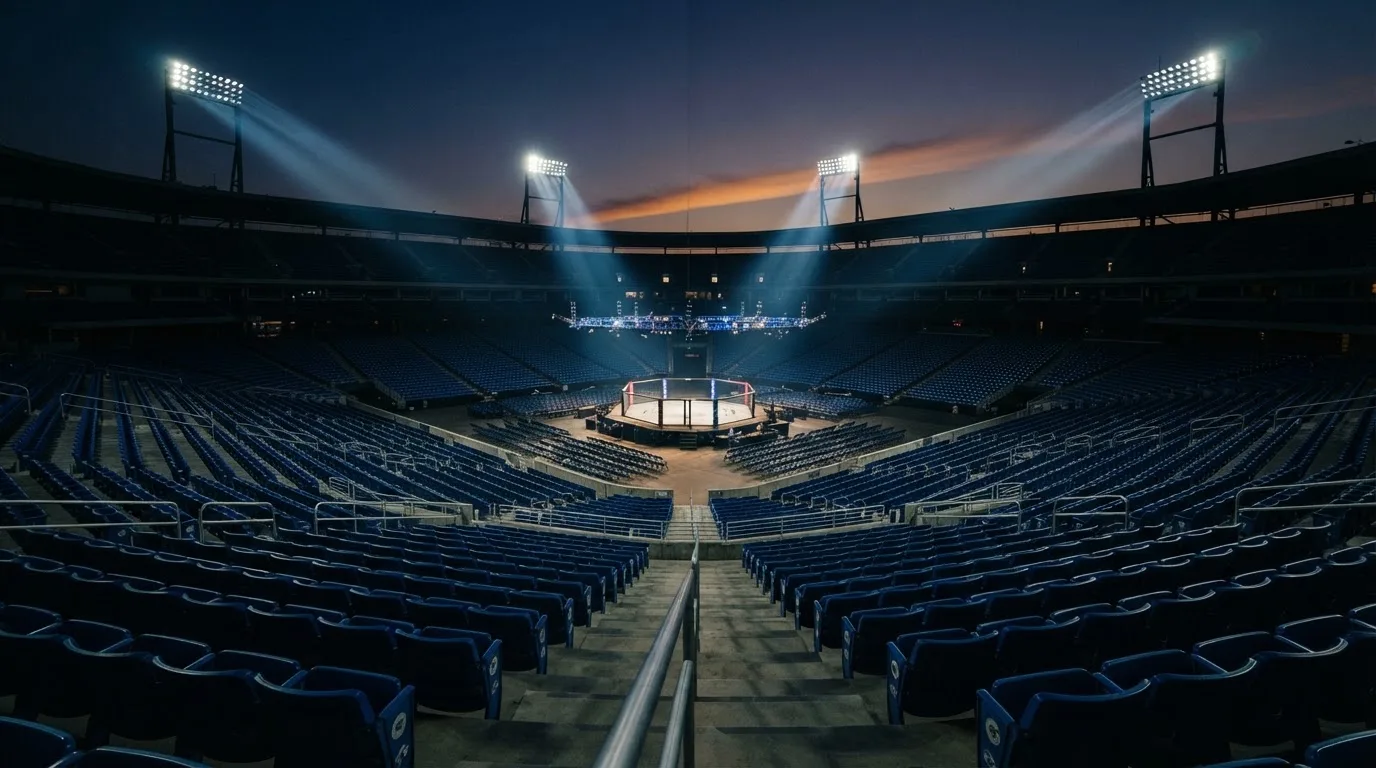
Those rules are the reason a UFC market behaves the way it does. A three-round fight carries a higher stoppage probability than a five-round one, and the price on the favourite reflects it. A fight that has gone three rounds lands differently from one that ended in the first. Method-of-victory markets price each finishing route separately, and a punter who reads the methods first reads the prices better.
The UFC has eight men’s and three women’s divisions and had held over 750 events by 2026. The promotion is owned and operated by TKO Group Holdings; Dana White has been president since 2001. Looking ahead, UFC 334 (Gane vs. Hokit) is scheduled for 14 November 2026 at Madison Square Garden, and UFC 335 (Oliveira vs. Lopes) for 12 December 2026 at T-Mobile Arena. Numbered events like these draw deeper liquidity than Fight Night cards, and that liquidity shows up in tighter margins.
Crypto and the question of anonymity at a licensed UFC bookmaker
UFC betting with bitcoin, ether or stablecoins is a topic that surfaces in every combat-sports search. A licensed British operator runs under money-laundering rules that require identity verification before the first deposit, source-of-funds questions at higher spend, and a debit-card or bank-based payment rail that an e-wallet funded by credit cannot stand on. That frame does not have a crypto gap in it.
A brand accepting bitcoin and offering UFC markets is doing one of two things. If it is licensed in Great Britain and the licence is current on the register, the verification, deposit-limit and GAMSTOP regimes apply regardless of which asset funded the account. If it is not on the register, the punter has no British consumer redress, no approved dispute-resolution route, no GAMSTOP coverage, and no obligation on the operator to pay out at all. Cryptocurrency is the payment method, not the protection.
For a British punter the practical question is simpler than the marketing suggests. A licensed brand with a registered account number is licensed; a brand not on the register is not. Whether the deposit rail is pounds, bitcoin or a prepaid card does not move a brand from one column to the other. The deposit ceiling, the financial vulnerability check at £150 of net deposits over a rolling 30 days, the verification at the door, all of those rules apply at the same operator whether the punter paid in sterling or in coin.
Pseudonymous ledger transactions sound modern; the Commission looks through them. A punter who wants UFC crypto betting wants a brand on the register, because every other brand is one bad beat away from a payout dispute the punter cannot win.
Bonuses and free bets: what an offer actually costs on a UFC card
A free bet, a deposit bonus and a “bet and get” promotion each carry a number the marketing does not put on the front of the advertisement. That number is the turnover requirement, the minimum price for a qualifying bet, and the deadline by which the free-bet stake or the bonus balance must be cleared. The headline figure is the price tag; the conditions are the cost.
Wagering requirements on bonuses are capped at 10x the bonus amount, and mixed-product promotions that require gambling on two or more product types are banned, both since 19 January 2026. A £10 bonus at 50x would have meant £500 of qualifying bets; under the cap no bonus can demand more than £100 of turnover per £10 of bonus. The cap is welcome, but a 10x bonus is still a real sum to clear on a UFC card where the punter’s edge depends on prices that move quickly.
A free bet at most British bookmakers is not paid back with a win. A £10 free bet at odds of 3.00 returns £30, not £40. The stake disappears, and the value of the free bet is the expected value of the edge it gives the punter, not the headline number. QuinnBet free bets are valid for seven days from credit and can be used on any market at odds of 1/2 (1.50) or greater, with maximum odds of 50/1; straight accumulators are allowed but Trixies, Patents and Yankees are not. A punter who lets a free bet expire loses it; a punter who uses it at minimum odds and a short-priced favourite realises almost nothing.
Betway’s welcome offer for new UK and Ireland customers is £40 in free bet tokens (4 × £10) credited on settlement of a first bet of at least £10 at minimum odds of 2.0, with a seven-day expiry and debit card deposits only. That is a real offer; the terms are the cost. Seven days is short, the minimum odds of 2.0 rule out the safe-money route of laying a favourite, and debit-card deposits only exclude the e-wallet-funded punters. Sporting Index’s new-customer offer works differently: a £10 fixed-odds bet at minimum odds of 1/2 unlocks three £10 fixed-odds free bets, three £5 Total Goals spread bets, three £5 Winning Favourites spread bets and a £1 Race Index spread bet. The qualifying bet cannot be placed in play or cashed out early.
The arithmetic of a refund promotion is the same as a free bet’s: stake is not returned, and value depends on the odds the punter takes. A £20 promo bet at 4.0 is worth, on average, £20 × (4.0 − 1) ÷ 4.0 = £15 once the market’s margin is taken out. That is the headline £20 minus £5 of bookmaker edge. Licensed operators are supervised and have deposit-limit duties, but no deposit guarantee and no payout guarantee exist. A punter who reads the small print before claiming knows the real value.
The mobile experience: apps, handsets and the in-play screen
UFC fights happen at hours that suit American primetime, which means British punters are often watching a 3 a.m. main card. The phone is the betting terminal of choice for a sport whose geography does not match the punter’s. Best betting app for UFC UK means, in practice, three things: an in-play screen that updates faster than the punch, a same-game multi or bet builder that lets the punter combine method of victory and total rounds, and a cash-out button that does not disappear mid-round.
bet365 offers in-play betting and live streaming of events worldwide, plus Bet Track, Match Live and a Live Golf Tracker for following bets in play. The Live Golf Tracker does nothing for a UFC card; the point is the underlying in-play infrastructure, which is what the punter uses during a fight. A punter who bets a method-of-victory market and then watches a takedown-heavy first round wants the price to move, and the price moves at operators whose in-play engine is built for it.
A bet builder on a UFC card lets the punter combine markets within one fight: fighter to win, method of victory, total rounds, fight to start round three. The combined price is the product of the legs, less the margin the operator loads onto the combination. That margin is hard to see because the legs are not priced separately once they are bundled, and a punter who checks the same legs as singles will find the combined price is worse than the singles multiplied. The bet builder is convenient; it is rarely cheaper.
A touchscreen interface has one trap: a £10 stake becomes a £100 stake with one tap. Most apps require confirmation on stakes above a threshold, and a punter whose muscle memory places a tenner on a Premier League match should check the slip before tapping confirm on a UFC underdog at 11.00. The punter is the only error-checking system that matters on a phone at 3 a.m.
Live betting and cash out on a UFC fight
Live UFC betting is the market most affected by the sport’s stop-start nature. A round ends, the markets suspend, and they reopen before the next round starts. A punter who wants to bet the over 1.5 rounds after a first-round finish is betting a market whose result is decided. A punter who wants to bet the under 1.5 rounds during a stoppage is betting a market whose price has moved further than it should.
Cash out is the button the in-play screen offers when the punter’s bet is winning. It settles the bet at a price derived from the current market minus the operator’s cash-out margin. That margin is invisible to the punter; the offered cash-out number is what it is. A punter who wants to lock in profit at the end of round two of a five-round fight and the offered cash-out is £85 on a bet that would return £110 at full settlement is being charged £25 of margin for the certainty. Sometimes certainty is worth £25. Sometimes it is not.
In-play betting is offered by every GB-licensed operator; the controls are the operator’s licence conditions and customer-protection duties, not a statute. A punter who watches a fight on a licensed platform and bets the live markets is betting under the same consumer protections as a pre-fight punter, including GAMSTOP coverage and dispute resolution. A punter who watches the same fight on an unlicensed platform and bets on an in-play screen that offers no audit trail has no recourse if the bet is voided after the result.
Predictions and strategy: how a tip is built and why it is never certain
A UFC tip is a forecast built from form, statistics, line-up information and the market’s own odds. Form is recent fight history: who the fighter beat, how, and against what quality of opposition. Statistics are the measurable numbers: significant strikes landed per minute, takedown accuracy, submission attempts defended, age, reach, weight-cut history. Line-up information is everything known about the booking: injury reports, weight misses, late opponent changes. The market’s own odds are the prices every other punter has already voted with their wallet.
A value bet is a price above the true probability once the bookmaker’s margin is taken out. A fighter whose chance of winning is 60 % and whose price is 2.00 (implied probability 50 %) is a value bet. A fighter whose chance of winning is 40 % at the same price is not. The bookmaker’s margin sits inside every price and is the difference between the sum of the implied probabilities and 100 %. The punter’s edge, if any, lives in the gap between the punter’s read of the probability and the price after the margin has been removed.
No tip is ever certain. A fighter ahead on the scorecards can be caught in the last thirty seconds. A fighter ahead on the scorecards can miss weight and have the belt taken. A fighter’s corner can stop the bout between rounds for a cut the cameras have not seen. The UFC’s stoppage rate is higher than any other major combat sport, and a punt on a method-of-victory market carries more variance than a punt on the moneyline.
Bankroll discipline is the strategy that does not depend on a tip. A punter who stakes a fixed percentage of the bank on each bet, accepts the variance, and does not chase losses survives losing runs. A punter who doubles the stake after a loss to recover it loses the bank. The strategy is in the staking, not the picking.
Bet types and odds: how the prices are built
UFC betting odds come in three forms at a British bookmaker: fractional (5/1, 11/4, evens), decimal (6.00, 3.75) and, on the betting exchanges, lay prices that look like back prices to a back punter. Fractional and decimal are interchangeable by the formula decimal = fractional + 1, so 5/1 is 6.00 and evens (1/1) is 2.00. Odds-on means shorter than evens; 4/6 is odds-on because the punter risks £6 to win £4.
The bookmaker’s margin sits inside every price. For a two-way market at decimal odds 1.90 / 1.90 (fractional 9/10 on each side), the implied probabilities sum to 1 ÷ 1.90 + 1 ÷ 1.90 = 0.5263 + 0.5263 = 1.0526, which is 105.26 % of the market. The excess over 100 % is the margin: 5.26 % on this example. A margin that high is realistic for an in-play round-total market; a pre-fight moneyline on a balanced fight sits closer to 3 %.
State the result as a band, not a single figure. A two-way market priced at 1.90 / 1.90 yields a payout share of 1 ÷ 1.0526 = 95.00 % and a margin of 5.00 % (the rounding moves the second decimal). A punter who bets only at margins under 4 % is reading a sharper market; a punter who bets at 6 % margins is paying the operator for the privilege. The margin is the cost of admission.
UFC bet types break into roughly four families. The moneyline is who wins. Method of victory is how: knockout, technical knockout, submission, decision. Total rounds is over or under a given round number. The bet builder is a same-fight combination the operator prices into a single slip. Each family carries its own margin; the punter who checks the moneyline margin against the method-of-victory margin is reading the operator’s house edge market by market.
A UFC accumulator is a multi-fight combination. The combined odds multiply leg by leg, which means a five-fight accumulator pays a higher headline number than five singles but exposes the punter to five stoppages in sequence. A single bad round in fight one voids the whole ticket. Accumulator insurance is the operator’s promise to refund the stake as a free bet if one leg lets the punter down; the free bet is not paid back with a win, and the value of the insurance depends on the legs the punter would have built anyway.
Sports and tournaments: where the action sits
UFC betting in the UK splits across two tournament formats. Numbered events (UFC 300, UFC 334, UFC 335) carry the deep cards: a title fight on top, a co-main, and three or four ranked fights under it. Fight Night cards run weekly and carry fewer ranked fights but more debutants and short-notice bookings.
UFC 334 (Gane vs. Hokit) is scheduled for 14 November 2026 at Madison Square Garden, and UFC 335 (Oliveira vs. Lopes) for 12 December 2026 at T-Mobile Arena. Both are five-round main events with title implications in their divisions, and the betting handle on each will reflect that. A punter who wants the deepest liquidity bets the numbered event, not the Fight Night.
Betting on UFC fights in Great Britain also includes the regional scene: Cage Warriors, Brave CF, ONE Championship and Bellator events still appear at some licensed books, and the UFC’s heavyweight roster also features PFL and bare-knuckle promotions on the undercard circuit. The rules differ across promotions, and a punter who bets a regional card without checking the rules has not read the small print.
The UFC’s eight men’s and three women’s divisions each carry a champion and a ranked top fifteen. A title eliminator carries the deepest betting handle of any non-title fight; a debut on a Fight Night undercard carries the thinnest. The market has priced all of it, and the margin reflects how thin.
The top ten reviewed bookmakers for UFC betting in Great Britain
The ranking below is the register’s ranking: every brand is a Gambling Commission remote licence holder as of the verification date, and no brand without a current licence has been included. The order is the order of licence number, not a recommendation. A punter’s choice depends on what matters to them: in-play speed, free-bet terms, payout time, bet-builder depth.
Kwiff
Kwiff’s licence is held by Eaton Gate Gaming Limited under Commission account 44448. The Supercharge feature can instantly boost the odds on a bet, and the brand’s own marketing names a 2/1 price becoming 20/1 as one example. The Supercharge applies to single or multi bets on any sport. A punter who likes the surprise of a boosted price gets one here; a punter who wants to know the maximum boost before staking does not, because the feature is random and operator-set.
Kwiff’s headline is the Supercharge, and the operator’s own terms do not publish a cap on the maximum boost. The punter who wants a feature they can plan around should look at operators who publish price-boost schedules. The punter who wants a feature that surprises them should look at Kwiff. Both are honest positions.
Sporting Index
Sporting Index’s licence is held by Sporting Index Limited under Commission account 27343. The brand is dual-regulated: fixed-odds betting by the Gambling Commission and spread betting by the Financial Conduct Authority. Spread betting losses can exceed the deposit, and that is the line Sporting Index’s own materials print.
The new-customer offer is a £10 fixed-odds bet at minimum odds of 1/2 unlocking three £10 fixed-odds free bets, three £5 Total Goals spread bets, three £5 Winning Favourites spread bets and a £1 Race Index spread bet. The qualifying bet cannot be placed in play or cashed out early. A punter who wants spread betting on UFC fights alongside fixed odds has one of the few British books that offers both.
bet365
bet365’s licence is held by Hillside (UK Sports) ENC under Commission account 55148. The brand offers in-play betting and live streaming of events worldwide, plus Bet Track, Match Live and a Live Golf Tracker. The in-play infrastructure is the brand’s selling point: bet365 has spent two decades on the engine that updates a UFC market between rounds, and the punter who bets in-play on the under-round markets during a stoppage sees the price move before the next round starts.
The brand does not need a “UFC special”; it has the deepest in-play liquidity and the broadest method-of-victory market. It is the default screen for the punter who prioritises market depth and update speed.
Tote
Tote’s licence is held by TDCO Limited under Commission account 54779. The brand runs pool betting alongside fixed odds, and pool betting on a UFC fight works like pool betting on a horse race: the punter picks a fighter, the pool is divided among winners after the operator’s take. The take is published per pool, and the payout depends on the pool size and the number of winning tickets.
A punter who wants pool-style betting on a UFC card has one of the few British books that offers it. A punter who wants the deepest fixed-odds market does not. Tote’s pitch is its pool format, and a punter who likes that format should look here; a punter who wants a moneyline at 1.91 should look elsewhere.
Fafabet
Fafabet’s licence is held by Taichi Tech Limited under Commission account 57385. The brand offers standard moneyline and method-of-victory markets on numbered events. Best Odds Guaranteed applies to UK and Irish horse racing win and each-way bets from 9am on race days: if the starting price is bigger than the original price, the bigger odds are paid. That rule is horse-racing-specific; Fafabet’s UFC pricing is fixed at the time of bet, with no SP equivalent.
Fafabet is a smaller brand than bet365 or William Hill, and its UFC market depth reflects that. A punter who wants the full method-of-victory breakdown on a Fight Night undercard should look at a bigger book. A punter who wants a clean moneyline on a main card has it.
QuinnBet
QuinnBet’s licence is held by QuinnBet (Gibraltar) Limited under Commission account 61011. Free bets are valid for seven days from credit and can be used on any market at odds of 1/2 (1.50) or greater, with maximum odds of 50/1; straight accumulators are allowed but Trixies, Patents and Yankees are not.
The seven-day expiry is short. The minimum-odds floor of 1.50 rules out the safe route of laying an odds-on favourite and frees the punter to take some risk, but the maximum-odds cap of 50/1 caps the headline upside. QuinnBet’s free-bet terms are the kind a punter reads once and either accepts or walks away from.
William Hill
William Hill’s licence is held by WHG (International) Limited under Commission account 39225. Best Odds Guaranteed applies to UK and Irish horse racing from 8 AM on the day of the race, on both single and multiple bets; it does not apply to ante-post, tote or pari-mutuel bets. That rule is horse-racing-specific.
UFC pricing at William Hill runs deep: full moneyline, method of victory, total rounds, and each-way on title fights. A punter who wants a long-established British brand with comprehensive UFC markets has one. A punter who wants the absolute tightest in-play margin may find it elsewhere, but the difference on a moneyline is a few basis points.
Betway
Betway’s licence is held by Betway Limited under Commission account 39372. The welcome offer for new UK and Ireland customers is £40 in free bet tokens (4 × £10) credited on settlement of a first bet of at least £10 at minimum odds of 2.0, with a seven-day expiry and debit card deposits only.
The minimum odds of 2.0 rule out the low-variance route. Debit card deposits only exclude e-wallet-funded punters. A punter who can place a £10 bet on a UFC fight at 2.0 with a debit card and use four £10 free bets within a week has £50 of betting bank; a punter who cannot meet the deposit-method rule has £0.
Geoff Banks
Geoff Banks’s app is published by GB Sports Advisors Limited under Commission account 54095. The brand offers live in-play prices and ante-post prices on future events. Ante-post on UFC is a thin market because the UFC cards change fighters on short notice, but a punter who wants to back a fighter for the next title shot several months out has the option.
Geoff Banks is a smaller, specialist brand. A punter who wants ante-post on UFC future-book markets has one of the few British books that offers it. A punter who wants the deepest in-play on a live card should look at a bigger book.
Bet600
Bet600’s licence is held by Tyche Tech Limited under Commission account 44731. Best Odds Guaranteed applies to horse racing: if the starting price is bigger than the early or show price taken, the bet is paid at the SP. The rule is horse-racing-specific.
UFC markets at Bet600 run to moneyline and method of victory. A punter who wants a clean, focused UFC market without the wider promotional churn has it. A punter who wants a long free-bet terms page to read does not.
Legal and regulatory frame for UFC betting in Great Britain
The Gambling Commission regulates the whole British commercial betting market under the Gambling Act 2005, which covers England, Scotland and Wales. Northern Ireland is outside the Act and runs on separate law, so the term “Great Britain” applies. Since the Gambling (Licensing and Advertising) Act 2014 took effect, an operator whose remote facilities are used in Great Britain needs a Commission licence wherever it is based. Sections 33 and 36 of the 2005 Act, as amended, set out the offence of providing gambling facilities in Great Britain without the licence the Act requires. A Curaçao, Maltese or Gibraltar licence is not a substitute; the operator must hold a Commission licence to serve British customers.
The Commission’s public register is searchable by business name, trading name, domain or account number, and is the whole test of whether a brand holds a licence. No statutory list of permitted bets or markets exists. Operators hold licences for categories — remote general betting standard (real events), remote general betting standard (virtual events), remote general betting limited, remote pool betting and remote betting intermediary — and offer markets under their own rules and the Licence Conditions and Codes of Practice (LCCP). No statutory cap on stakes in sports betting was found; operators set their own maximum stakes and may restrict customers.
Identity verification is mandatory before the first deposit or gamble, including with a free bet or bonus, and has been since 7 May 2019. The minimum age is 18. Credit cards are banned for gambling in Great Britain since 14 April 2020, including credit-card-funded payments through an e-wallet. Debit cards and bank-based payments are not covered by the ban. The British named-account rule, the state list of permitted payment methods and any rule for or against cryptocurrency deposits at licensed operators are not established; payments are described qualitatively from each operator’s own terms.
The player pays no tax on betting winnings in Great Britain. General Betting Duty is the operator’s tax on gross profits, currently 15 %; from 1 April 2027 a new remote betting rate of 25 % applies within it, while remote bets on UK horse racing, bets on self-service betting terminals in licensed premises, pool betting and in-person betting stay at 15 %. Until 1 April 2027 the remote rate stays at 15 %. Whether operators pass duty on through odds is not established. The Commission’s statutory levy is a separate charge, not a tax.
Advertising is not licensed by the Commission. It runs through the CAP Code (non-broadcast) and BCAP Code (broadcast), enforced by the ASA, alongside the LCCP marketing conditions. Promotion rules in force since 19 January 2026: wagering requirements on bonuses are capped at 10x, and mixed-product promotions are banned. The “whistle-to-whistle” rule, an industry code rather than law, keeps betting advertisements off UK television from five minutes before a live sporting event to five minutes after it, before the 9 pm watershed (horse and greyhound racing excluded).
Offshore and unlicensed operations have no British consumer redress. No offence aimed at a customer who bets on an unlicensed site was found; the consequence for the punter is the loss of protection — no GAMSTOP coverage, no Commission complaints route, no approved dispute-resolution body, no British consumer redress if funds are withheld, not bound by the 10x bonus cap or the financial vulnerability check. Honest framing: licensed means checks, limits, GAMSTOP and the bonus cap, but also verification before the first bet; unlicensed means none of those protections and possible loss of funds.
Responsible gambling and the British safety net
GAMSTOP is the national multi-operator online self-exclusion scheme, and it has been a mandatory licence condition for online operators since 31 March 2020. The minimum exclusion periods are six months, one year, five years, or five years with auto-renewal. After the minimum period, the exclusion stays in place for a further seven years unless the customer asks GAMSTOP to remove it. GAMSTOP covers online sites and apps; betting shops use a separate service. Every brand in the comparison table is a GAMSTOP member.
A financial vulnerability check applies to licensed remote betting when a customer’s deposits minus withdrawals exceed £150 in a rolling 30 days (in force since 28 February 2025). It is a public-record check (bankruptcy, county court judgments), not an income check and not a credit reference check. Financial risk assessments, sometimes called affordability checks in the press, are announced in a staged plan, with no start date as of the Commission’s article of 7 July 2026. Operators must offer a gross deposit limit on a fixed time frame; the first changes have applied since 31 October 2025, a second phase was postponed to 30 September 2026, and whether it is live is not established. There is no state-set deposit or loss ceiling for betting; limits are the customer’s choice.
Help is available. GamCare runs the National Gambling Helpline. GambleAware funds treatment and research. NHS gambling clinics operate in several regions. Gamblers Anonymous runs peer-support meetings. A punter who notices the betting has stopped being fun has options, and those options do not require the betting to have been a problem for years.
Unibet’s safer-gambling tools include deposit limits, a Player Profile test, product restrictions and self-exclusion, with live chat support and links to BeGambleAware, GamCare, GAMSTOP, Gambling Therapy and the BGC. Other brands in the comparison run their own equivalents. The tools are real; the punter who uses them gets a different experience than the punter who does not.
Working out the return, the payout share and the cost of an offer
A winning bet returns stake × odds in decimal form. A £10 bet at decimal odds 3.00 returns £30; the net profit is stake × (odds − 1), so £10 × 2.00 = £20. A combination bet multiplies the legs: a double at 3.00 and 4.00 has combined odds of 12.00, and a £10 double returns £120. The number a punter sees on the slip is the headline; the realised profit is the return minus the stake.
A two-way market at decimal odds 1.90 / 1.90 yields a payout share of 1 ÷ (1 ÷ 1.90 + 1 ÷ 1.90) = 1 ÷ 1.0526 = 95.00 % and a margin of 5.00 % once the rounding settles. A punter who bets £100 across both outcomes on this market, with the result paying out the winning side at 1.90 and returning the losing side as a loss, gets back £95 on the winning side and £0 on the losing side, which averages £47.50 if the outcome is 50/50 and the market is balanced. That is the 95 % payout share. The 5 % margin is the bookmaker’s edge, and it sits inside every price the punter takes.
A free bet whose stake is not paid back with a win has a value of free-bet amount × (odds − 1) ÷ odds × payout share of that market. A £20 free bet at 4.00 in a market with a 95 % payout share is worth £20 × 3 ÷ 4 × 0.95 = £14.25 on average over many bets. The punter who uses the free bet at 4.00 gets £20 × (4.00 − 1) = £60 back on a win, not £80. The stake is gone.
Bonus turnover is bonus base × wagering factor. A £10 bonus at 10x needs £100 of qualifying bets. At £5 per bet, that is 20 bets; at £10 per bet, that is 10 bets. Only bets at or above the minimum price count. The expected cost of clearing the bonus is required turnover × margin of the market the punter bets on, so £100 × 5 % = £5 on a 5 % market. The punter who clears a £10 bonus at a £5 cost has netted £5; the punter who clears it at a £10 cost has broken even.
Frequently asked questions about UFC betting in Great Britain
Where to bet on UFC fights?
At any Gambling Commission-licensed remote bookmaker that offers UFC markets. Every brand in this comparison holds a current remote licence as of the verification date. A punter looking for the deepest market should have bet on a large brand; a punter looking for ante-post on future title shots should look at the smaller books; a punter looking for pool betting should look at Tote. The Commission’s public register is the whole test of who is licensed.
Where to bet on UFC in the UK?
The same shortlist as above. UFC betting UK is a deep market because the UFC cards regularly, the British audience watches from Saturday-night primetime and Sunday-morning main cards, and the licensed books compete for the handle. A punter comparing offers should compare the terms, not the headlines, because the wagering requirement and the minimum price for a qualifying bet are where the cost sits.
Where can I bet on UFC fights?
At any licensed bookmaker with a current Gambling Commission account number on the register, online or via an app, subject to identity verification before the first deposit and GAMSTOP coverage on self-exclusion. A punter who has self-excluded through GAMSTOP cannot open a new account at any licensed brand for the duration of the exclusion. A punter who has not should verify the operator’s licence on the register before staking.
What is a value bet and why is no tip ever certain?
A value bet is a price above the true probability once the bookmaker’s margin is taken out. A fighter whose chance of winning is 60 % and whose price is 2.00 (implied 50 %) is a value bet; the punter’s read gives 10 % of expected edge per unit staked. No tip is certain because UFC fights end in seconds, the stoppage rate is high, and the variables the punter has not priced — a weight cut, an injury, a late opponent change — can move the probability by more than the edge the punter had. A punter who treats a tip as a forecast rather than a price has not understood the market.
What is the bookmaker’s margin and how can it be seen in the odds?
The margin is the percentage of every unit staked that the bookmaker keeps on average over many bets. It is the difference between the sum of the implied probabilities and 100 %. For a two-way market at decimal odds 1.90 / 1.90, the implied probabilities sum to 1 ÷ 1.90 + 1 ÷ 1.90 = 105.26 %, so the margin is 5.26 %. A pre-fight moneyline on a balanced UFC fight sits closer to 3 %; an in-play round-total market can run to 6 % or more. The punter reads the margin by summing the implied probabilities of all outcomes on the market.
How is the return on a bet worked out from the stake and the odds?
Return equals stake × decimal odds. A £10 bet at 3.00 returns £30. Net profit is stake × (odds − 1), so £10 × 2.00 = £20. For a combination bet, the odds of the legs multiply into one price. The punter who sees a headline return and assumes the stake is included has misread the slip: in decimal odds the return always includes the stake, and the profit is the return minus the stake.
Combat & motorsport – Boxing betting
Content created by the «Boxing betting» team
