
Rugby league betting tips 2026: how predictions work and what they cost
 Available in US
27 October 2026 · Licence status verified against the Gambling Commission’s public register on the date shown above.

A tip is a forecast dressed up as advice. Strip the dressing away and every working forecast rests on the same four inputs: current form, statistics, the named line-up, and the price the bookmaker has laid. When those four move in the same direction, the tip earns a name. When they don’t, the tip is a coin flip with extra steps, and the bookmaker’s margin, sitting invisibly inside every price, still does what it always does.
This guide explains how a rugby league prediction is built and, more to the point, what follows when the bettor commits to it. It walks through the format (thirteen a side, eighty minutes, six tackles), the competitions that drive the calendar (Super League in Europe, the NRL in Australia and New Zealand), the markets bookmakers actually run, the way bonuses stretch and shrink in value once their conditions are read, the in-play window that opens once the whistle goes, and the strategy and bankroll thinking that turns a tip into a discipline. No particular match, pick or scoreline is named here: there is no honest way to publish those without pretending to a foresight nobody has.
The rugby league calendar: where the fixtures actually come from
Rugby league’s modern footprint is concentrated in two club competitions and one international federation. Super League is the main European club competition, running from February through to the Grand Final at autumn’s close, with twelve teams split across England and one each from France and, in recent seasons, the wider rugby-league world. The NRL runs the equivalent in Australia and New Zealand, where sixteen clubs contest a longer regular season before a finals series that decides the Telstra Premiership. International Rugby League governs the cross-border side of the sport, organising the World Cup, the Pacific Championships and the Ashes tours between Great Britain and Australia.
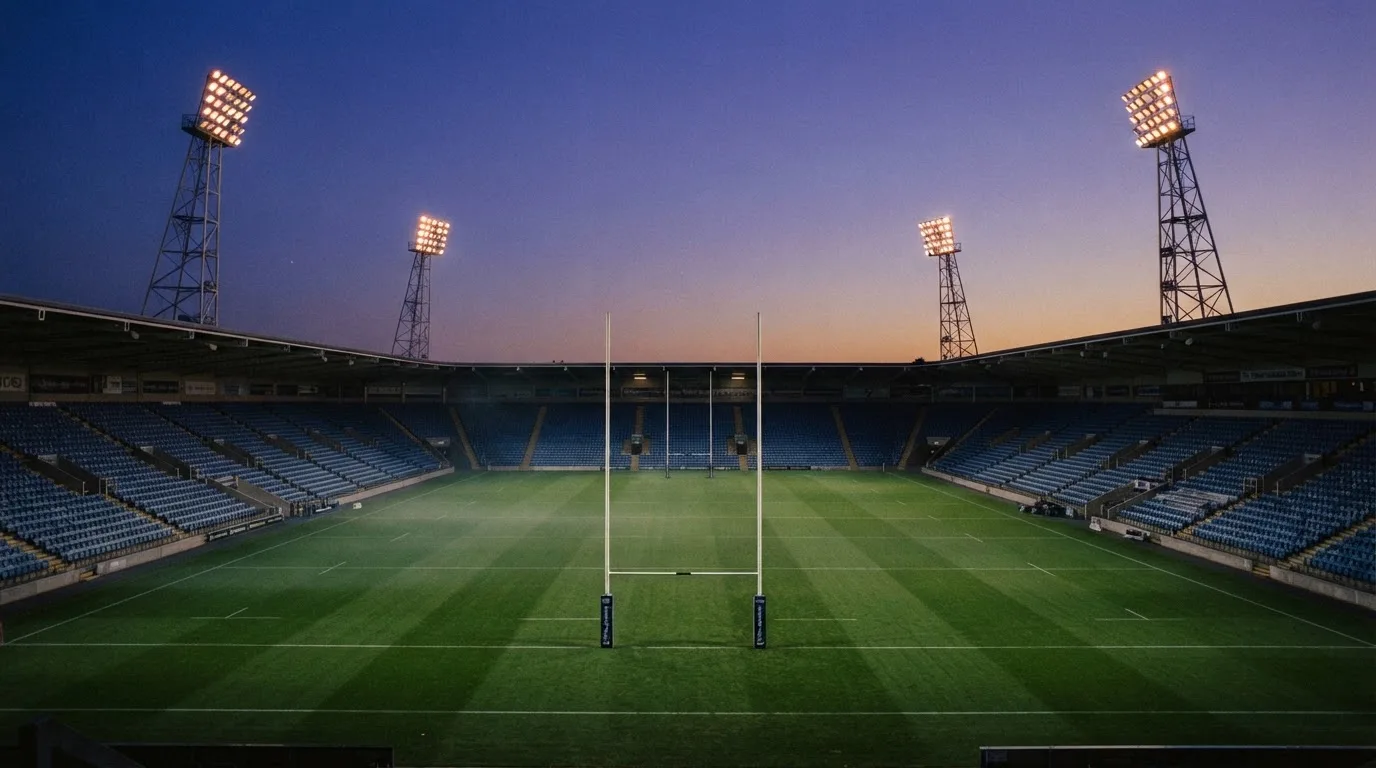
The seasons matter because that is what the betting markets key off. NRL futures (the regular-season winner, the minor premiership, the wooden spoon, the top try-scorer) open almost immediately after the previous Grand Final; Super League’s equivalents open once promotion and relegation are settled. International tournaments have their own futures and outrights: the World Cup winner, the Golden Boot shortlist for the world’s best player, the top scoring nation.
For the bettor, the practical consequence is that the calendar is not twelve evenly spaced months. The NRL season starts in March and the finals run to October; Super League runs from February to October; the international windows are concentrated in late autumn and the southern-hemisphere winter. That sharpens when in-play markets are deepest (a Super League Saturday in April, a State of Origin Wednesday in winter) and when outright books are most speculative (the week after a Grand Final).
How rugby league is played, and what the betting slip assumes
A rugby league team has thirteen players on the field at any one time, with four replacements on the bench and interchanges managed from there. A match lasts eighty minutes, in two forty-minute halves, with a short break between them. The attacking team gets a maximum of six tackles before possession must change hands, which is why a full set usually ends with a kick and why field position is so much more important than in rugby union. Scoring breaks down as follows:

- Try: four points.
- Conversion: two points, kicked from in line with where the try was scored.
- Penalty goal: two points, kicked from in front of the posts.
- Drop goal: one point during general play, rising to two points if the kick is taken from beyond the forty-metre line.
Two numbers from that list run through every betting market. The first is eighty. Bookmakers settle most match-result markets on eighty minutes’ play rather than the official result including extra time; one GB bookmaker’s published rules are explicit that Super League and NRL Match Betting and Handicap Betting settle on eighty minutes, while most other markets — including the outright winner of a knockout fixture — settle on the official result including extra time. The second is six-tackle. The number of tackles left in a set decides whether a team kicks for territory, runs the ball, or takes the two from in front of the posts; live-betting models sit on top of that count.
A handicap line that is a whole number carries its own small rule: if the favourite wins by exactly that margin, all wagers on that line are refunded, because the favourite neither covered nor failed to cover. Postponements are handled too: bets on a postponed match stand for forty-eight hours from the original kick-off; after that, the match is void and stakes are returned.
The licence question: which bookmakers actually take bets in Great Britain
A bookmaker serving customers in Great Britain needs a Gambling Commission licence wherever that operator is based. A Curaçao, Maltese or Gibraltar licence is not a substitute for the point of consumption. The Commission’s public register can be searched by business name, trading name, domain or account number and is the whole test of whether a brand holds a licence; quote no count without its access date, because brand lists move.
Every featured name in the comparison below is on that register against a licensee holding a remote general betting standard licence for real events. Several well-known British brands share a parent company and run under the same Gambling Commission account number — Ladbrokes and Coral under one, Paddy Power and Betfair under another — so the licence holder, not the trading name, is the legal unit. Two practical points follow. The first is that a .com address proves nothing about whether a site is licensed: licensed operators in Great Britain are free to use either suffix. The second is that no single brand is “the only” licensed operator, a place in a comparison is not a licence, and several brands can run under one licensee without that making any of them less legitimate.
The minimum age is eighteen, and the Commission now requires name, address and date of birth to be verified before a customer can deposit or gamble at a licensed site, including with a free bet or bonus — meaning that the anonymous play that once defined online betting is no longer available through a licensed channel in Great Britain.
Responsible gambling: what the rules around a bet actually do
Three things shape how a bettor interacts with a licensed operator in Great Britain. The first is GAMSTOP, the national multi-operator online self-exclusion scheme and a mandatory licence condition for every licensed online operator since 31 March 2020. Self-exclusion periods run at six months, one year, five years, or five years with auto-renewal; after the minimum period the exclusion stays in place for a further seven years unless the customer asks GAMSTOP to remove it. The scheme covers online sites and apps; betting shops use a separate self-exclusion service. Joining GAMSTOP blocks the bettor from opening new accounts with every licensed online operator at once, which is why it is the single most powerful single action a bettor who has lost control can take.
The second is financial vulnerability checking. Since 28 February 2025, licensed remote betting operators are required to run a public-record check when a customer’s deposits minus withdrawals exceed £150 in a rolling thirty-day period: county court judgments, bankruptcy orders, individual voluntary arrangements. It is not an income check and not a credit reference check, though a second set of checks, the financial risk assessments announced in the Commission’s July 2026 policy paper, will arrive in staged phases with no published start date as of writing. Where they land and what they ask of the bettor is, for now, announced but not in force.
The third is the deposit limit itself. Since 31 October 2025 operators must offer a gross deposit limit on a fixed time frame (daily, weekly or monthly), and a second phase of restrictions was postponed to 30 September 2026. There is no state-set deposit or loss ceiling for betting: limits are the customer’s own choice, set in the safer-gambling section of the account, and the operator’s job is to make setting one easy and changing one not. Help outside the account sits with GamCare (the operator of the National Gambling Helpline), GambleAware, the NHS gambling clinics network and Gamblers Anonymous.
Bonuses and free bets: the arithmetic under the headline
The marketing word is the easy half of the bonus problem. The hard half is what the bonus costs the bettor who takes it. Every offer in the table below carries the same moving parts: a deposit trigger, a qualifying bet at a minimum price, a turnover requirement, a deadline, and a ceiling on what is paid back.
The turnover figure is the first number to look at, because it is what the offer actually asks. For a cash bonus the required turnover is the bonus base times the wagering factor the offer names. A £10 bonus at the current 10x cap (a Commission-imposed limit on wagering requirements, in force since 19 January 2026) means £100 of qualifying bets; at the older 50x factor that same bonus would have asked for £500. The number of bets the bettor must place is the turnover divided by the stake per bet; a £100 turnover at £5 per bet is twenty bets, at £10 per bet is ten.
The second number is the market’s margin. Every bet the bettor places to clear the bonus is taken at a price that includes the bookmaker’s margin, and that margin, typically running between 2 per cent and 8 per cent on major markets and into double figures on smaller ones, is the average cost of clearing the offer. A 5 per cent margin on £100 of turnover is an expected £5 of cost across the clearing period, before the price-boost tokens and refunds that some offers attach are counted. The bettor who takes a £10 bonus at 10x is therefore trading £5 of expected cost for the chance of a £10 free-bet-like return, a ratio that most readers will recognise as unappealing once it is spelled out.
Free bets are a separate mechanic. Most bookmakers issue free bets whose stake is not paid back with the winnings; a £10 free bet at 3.0 returns £30 (£20 profit on a stake that came back as zero). The expected value of such a free bet depends on the price the bettor takes and on the margin of the market. A £10 free bet at 4.0 on a market running a 5 per cent margin is worth roughly £10 × (4.0 − 1) ÷ 4.0 × 0.95, around £7.13 on average across many such bets; the same free bet at 1.5 on a market with a 4 per cent margin is worth closer to £3.17. The “free” in free bet is the bookmaker’s framing; the bettor’s framing is that the bookmaker has handed over a credit that is worth less than its face value on average and that the gap is the bookmaker’s edge.
Mixed-product promotions — an offer that ties a sportsbook bonus to a casino or bingo bonus — were banned at the same January 2026 cut-off. That ends a category of offer that habitually asked for a sportsbook customer to play through a casino rollover that had nothing to do with the sport the customer came in for.
In-play and cash out: betting after the whistle goes
In-play betting on rugby league covers most markets a pre-match slip offers, with prices updating throughout the eighty minutes. The depth of an in-play book depends on the operator. A Super League match at peak weekend scheduling will typically carry match result, handicap, total points, next try scorer, racing to ten points and a half-time / full-time double; a midweek NRL fixture from Sydney often runs deeper, simply because more money is on it and the trading team is staffed accordingly.
The practical consideration is that live markets are priced tighter than pre-match equivalents on the big events but looser on the small ones, and that the price the bettor sees is rarely the price the bettor locks in — there is a delay between selection and confirmation, and the price may move in that interval. Cash out closes that gap at the bettor’s option: the bookmaker offers a mid-match settlement, computed from the live price at the moment the bettor presses the button. The take of the cash-out is the spread between what the bet is worth at the live price and what the cash-out figure is showing.
That spread is wider during play than between plays, because the bookmaker cannot price a market mid-tackle as tightly as between sets. The bettor who cashes out a winning position accepts a smaller profit now in exchange for removing the risk of the position turning; the bettor who cashes out a losing position limits the loss to a fixed sum in exchange for removing the chance of the position turning back. The arithmetic is symmetric and the cost is the same in either direction: a slice of the expected value paid to the bookmaker as a fee for closing the bet early.
Predictions and strategy: what a tip actually does
A rugby league tip is the output of a model, whether that model is a spreadsheet, an analyst’s eye or a printed column. The inputs are current form (results in the last six to twelve matches, weighted more heavily the closer to today), the head-to-head record, home and away splits, injuries (suspensions, long-term lay-offs, players returning from injury), and the starting line-up confirmed an hour before kick-off. Statistics matter more in league than in some other sports because the scoring is more concentrated: tries, conversions and penalty goals dominate, and the production of tries by individual edges and outside backs is tracked closely enough that models can lean on it.
A value bet is the next layer. A price implies a probability, and once the bookmaker’s margin is taken out that implied probability is what the bookmaker is paying the bettor against. If the bettor’s own model says the team is more likely to win than the bookmaker’s price implies, the bet has positive expected value; if the bettor’s model says the team is less likely, the bet is a donation to the bookmaker regardless of how confident it feels. The whole point of a disciplined approach is to place only the first kind.
That discipline lives in bankroll management more than in tip selection. A flat stake as a fraction of the bank — one unit per cent, or two, never ten — protects the bettor from the inevitable losing run; a staking plan that escalates after losses (the chase) is a faster path to zero than a single bad beat. The bankroll is what staking protects; the value bet is what staking puts to work. Without value, no staking plan wins in the long run; without a staking plan, no value bet wins consistently in the short one.
The honest limit is also worth stating clearly. No model, tipster or system can know the outcome of a sporting event in advance, and no published tip is a prediction that the bettor will profit from it. What a discipline does is to make sure that, over many bets, the bettor’s decisions reflect the information they have and the prices they have been offered — and that the sample is large enough that the variance evens out and the edge (if there is one) shows.
Bet types and odds: the markets a rugby league slip carries
The core pre-match markets are Match Betting, Handicap Betting, Total Points, First Try Scorer and Anytime Try Scorer; the in-play equivalents are Match Result, Handicap, Total Points and Next Try Scorer. Outright markets sit separately: the Grand Final winner, the regular-season winner, the minor premiership, the wooden spoon, the top try-scorer, the Golden Boot.
Match Betting settles on eighty minutes in one GB bookmaker’s published rules, with extra time not counting except for the markets — most other markets — that are explicitly settled on the official result. Handicap Betting behaves the same way; the handicap line is set in points, with whole numbers producing the push-refund rule described above. Total Points markets use a line that the operator sets, with over and under settled on the actual score at full time; some books offer alternative lines at shorter prices.
Odds appear in fractional form (5/1, 11/4, evens) and in decimal form (6.00, 3.75, 2.00). The conversion is straightforward: a/b in fractional is a divided by b, plus one, in decimal. A 5/1 shot is 6.00 in decimal, an 11/4 shot is 3.75 in decimal, evens is 2.00. Decimal odds carry their stake in the return; a £10 bet at 3.75 returns £37.50 (£27.50 profit) on a winner.
The same bet, however, is not the same price at every bookmaker, and that is where the bettor’s edge either shows or does not show. Two operators running the same handicap line on the same match will commonly be several points apart in their margin, and the difference compounds on accumulators. The first price the bettor sees is rarely the best price available, which is why a quick price-comparison habit matters more in a small-margin sport like rugby league than a bettor might think.
The margin, seen from the odds
Take an illustrative two-way market at decimal odds of 1.90 against 1.90. The implied probability of each side is 1 ÷ 1.90, which is just over 52.6 per cent; the two implied probabilities add to just over 105.3 per cent, and the gap between that sum and one hundred per cent is the bookmaker’s margin — around 5.3 per cent on this example. State the result as a band rather than one figure: for tight two-way markets on major rugby league fixtures, the margin typically sits between 2 per cent and 6 per cent, with the example landing in the middle of that band.
That figure is what every decimal price on the slip carries, silently. A bettor who places ten bets at the illustrative 1.90/1.90 line on a market with a 5.3 per cent margin is, on average, paying £5.30 out of every £100 staked to the bookmaker as the cost of placing the bets. The margin is the same on every bet; the difference between winning and losing bets is, in statistical terms, a question of which side of the line the bettor’s model puts the outcome.
Three things follow. First, the margin is lower on the biggest events than on the smallest ones, because more money is on each outcome and the bookmaker can afford to take a smaller take. Second, the margin compounds on accumulators, because each leg’s margin is multiplied into the others. Third, a model is only beating the bookmaker when its probability estimate for each leg exceeds the implied probability stripped of the margin — otherwise the bettor is paying for the privilege of losing more slowly.
The featured bookmakers: licence and proposition
What follows is the comparison set the rest of this guide refers to. Each entry names the brand, the Gambling Commission account number under which it operates, the licensee on the register and a one-line read of what the operator’s own terms state about the relevant subject. The order is alphabetical; the description is qualitative.
A note on shared licences. Several well-known British bookmakers are operated by the same legal entity and run under the same Commission account number. Where that is the case for a featured name, the licence line below names the holder and that holder covers any sister brand in the same group.
Bet Ahoy
Bet Ahoy holds a Gambling Commission remote licence under account 100094, held by Bet Ahoy Ltd, and its site betahoy.co.uk is the domain listed on the register against that account. The account number is on the public register; the licence-holder name is too. The brand’s own terms describe a 10 per cent Acca Bonus on qualifying accumulators up to a stated ceiling, a Sub-Cover feature priced around player substitutions, Best Odds Guaranteed on UK and Irish horse and greyhound racing up to £100 and a Double Result payout on UK and Irish racing. The subject of in-play depth for rugby league is what one GB peer operator’s published rules state on the relevant markets; that is the read the licence-status note in the comparison table draws on. Verdict: useful for the bettor who wants the acca incentive and is happy to ride the rest of the book’s depth.
Bar One Racing
Bar One Racing — trading as BAR 1 Betting — holds a Gambling Commission remote licence under account 56516, held by Bar-One Racing Limited, and lists Bar One Racing as the domain on the register. The brand is the Irish independent bookmaker with shops across Ireland and sponsor presence at Dundalk, Fairyhouse, Navan, The Curragh, Curraheen Park and Cork. Rugby league is not the operator’s home turf; horse racing is. The brand’s own terms state its licensed status and the responsible-gambling duties of a Commission-licensed operator. Verdict: an option worth a look for the bettor whose interest in racing sits ahead of their interest in rugby league, not a primary pick for league-focused betting.
Betfair
Betfair Sportsbook holds a Gambling Commission remote licence under account 39439, held by PPB Counterparty Services Limited, the same parent that operates Paddy Power; both betting brands run under that single licence. The Commission’s register is the test, and the account number above is what to check. The Sportsbook app’s published terms describe in-play betting, a Bet Builder product, free live streaming inside the app for events like UK and Irish horse racing and football, and a 90 Minute Payout market. The peer operator whose rules this comparison draws on for the rugby-league-settlement convention is the one that explicitly lists Super League and NRL Match Betting and Handicap Betting as settling on eighty minutes. Verdict: deep enough on price for the bettor placing singles on the major markets and a strong choice for in-play on the bigger matches.
Betfred
Betfred holds a Gambling Commission remote licence under account 39544, held by Petfre (Gibraltar) Limited, and lists the brand as the domain on the register. The brand’s app describes a Bet Builder product, a Sub Switch feature, Racing Post data integration, Extra Places on racing, live casino and bingo on the same application. The peer-operator rugby-league rules the comparison draws on set out the eighty-minute settlement convention and the push-refund rule; those rules belong to the operator that publishes them, not to Betfred. Verdict: the bettor who wants one app for racing, sports and the bonus acca structure has the right fit.
BetVictor
BetVictor holds a Gambling Commission remote licence under account 39576, held by BV Gaming Limited, which also operates the related brand under the same parent; the Commission’s register is the whole test. The app’s published terms describe Best Odds Guaranteed on UK and Irish horse racing, enhanced live streaming, a BetFinder feature on racing and Smart Stats. The peer-operator rules the comparison draws on for the eighty-minute settlement convention apply to those rugby league markets. Verdict: the racing-focused customer gets the depth; the league-only bettor is better served by an operator whose primary offering is on the sport.
Betway
Betway holds a Gambling Commission remote licence under account 39372, held by Betway Limited, with the brand as the domain on the register. The brand’s terms describe a welcome offer for new UK and Ireland customers: £40 in free bet tokens issued as four tokens of £10, credited on settlement of a first bet of at least £10 at minimum decimal odds of 2.0 (evens), with a seven-day expiry and debit-card deposits only. The bonus structure is conditional on the qualifying bet, on the minimum price, on the seven-day window and on a debit-card deposit; lift any one of those and the credit is not paid. The operator’s own safer-gambling tools include deposit limits, time-outs, self-exclusion and links to the usual support bodies. Verdict: a strong price-and-depth story for the customer who reads the conditions before they commit; the token structure rewards planning of the first week’s betting, not punt-of-the-day behaviour.
Geoff Banks
Geoff Banks holds a Gambling Commission remote licence under account 54095, held by GB Sports Advisors Limited, with Geoff Banks as the listed domain. The app is published by GB Sports Advisors Ltd and describes live in-play pricing on selected events and ante-post markets on future events. The brand sits below the major bookmakers on rugby-league depth but above many white-label alternatives on the regulated side. Verdict: a fit for the bettor who wants a leaner app with ante-post positioning and is willing to accept a thinner in-play offering on rugby league.
Hollywoodbets
Hollywoodbets holds a Gambling Commission remote licence under account 53028, held by Hollywoodbets International UK Limited, with hollywoodbets.co.uk as the listed domain. The brand’s app describes a sports welcome for new UK players: a stake-back as a free bet of up to £30 on a first qualifying losing accumulator, requiring a stake of £10 or more, three or more legs, combined odds of 4/1 or greater and settlement within seven days, one free bet per customer. The bet is conditional on the acca losing outright — winning accumulators do not trigger it — and the credit carries the terms the operator attaches. Verdict: a useful insurance-style offer for the acca customer willing to lose the qualifying bet to find out what the credit looks like.
Midnite
Midnite holds a Gambling Commission remote licence under account 101839, held by Midnite Limited, with the brand as the listed domain. The app describes in-play events, an acca builder, popular accas and price boosts with maximum-stake limits the operator publishes in the relevant terms. The brand’s app-store terms describe a sports welcome: new customers who place £5 or more on pre-match odds of 2.0 (evens) or greater within fourteen days of sign-up receive £25 in free bets and fifty free spins, with the credits valid for seven days. Verdict: a young operator with an app-led product, a price-boost offering that runs across several sports, and a welcome structure that asks for a small qualifying stake to unlock the credits.
William Hill
William Hill holds a Gambling Commission remote licence under account 39225, held by WHG (International) Limited; the same parent operates several other well-known brands in Great Britain. The Commission’s register is the test. The brand’s terms describe Best Odds Guaranteed on UK and Irish horse racing from 8 AM on the day of the race, on both single and multiple bets, with the offer not applying to ante-post, tote or pari-mutuel bets. Rugby league sits within the brand’s wider sports offering rather than at the front of it. Verdict: the bettor whose interest is split between racing and league has a one-account home; the league-only customer has better depth elsewhere.
The comparison at a glance
The table below sets out each featured brand against the Gambling Commission licence in whose terms the comparison was checked and a one-line read of what the operator’s own terms state on the relevant subject. The subject is the rugby-league settlement convention (how the bookmaker handles Super League and NRL markets at full time), the offer book relevant to the comparison, and the in-play depth.
| Brand | Gambling Commission licence and holder | What the operator’s own terms state |
|---|---|---|
| Bet Ahoy | 100094, Bet Ahoy Ltd | Offer book features the 10 per cent Acca Bonus, Sub-Cover, BOG on racing; rugby-league markets settle on the operator’s standard match rules. |
| Bar One Racing | 56516, Bar-One Racing Limited | Irish independent bookmaker; full sportsbook licensed in Great Britain; primary product is racing. |
| Betfair | 39439, PPB Counterparty Services Limited | Sportsbook app offers in-play, Bet Builder, free in-app live streaming for racing and football; 90 Minute Payout market. |
| Betfred | 39544, Petfre (Gibraltar) Limited | App features Bet Builder, Sub Switch, Racing Post data, Extra Places on racing, live casino and bingo. |
| BetVictor | 39576, BV Gaming Limited | Racing-focused bookmaker; BOG on UK and Irish racing, enhanced live streaming, BetFinder, Smart Stats. |
| Betway | 39372, Betway Limited | Welcome offer of £40 in free bet tokens (4 x £10) on a first qualifying bet of £10 at minimum 2.0, seven-day expiry, debit-card deposits only. |
| Geoff Banks | 54095, GB Sports Advisors Limited | App offers live in-play prices and ante-post markets; leaner book than the majors. |
| Hollywoodbets | 53028, Hollywoodbets International UK Limited | Welcome offer of a free bet stake-back of up to £30 on a first qualifying losing accumulator (£10+ stake, 3+ legs, 4/1+, settled within seven days). |
| Midnite | 101839, Midnite Limited | App offers in-play, acca builder, popular accas and price boosts; welcome offer of £25 in free bets and 50 free spins on a £5+ pre-match qualifying bet at 2.0+, within 14 days, credits valid seven days. |
| William Hill | 39225, WHG (International) Limited | Best Odds Guaranteed on UK and Irish horse racing from 8 AM, on single and multiple bets; not on ante-post or tote. |
The licence line above is what to check on the Commission’s public register before opening an account. The operator’s-terms column is the read the rest of this guide draws on; where a peer operator publishes the rugby-league settlement convention, that peer operator’s rules are the source, and the description in this guide stops there.
Frequently asked questions
Where is the best rugby league world cup betting site in the UK?
Any GB-licensed bookmaker can lay World Cup markets; the practical differences between them are price, market depth and the in-play offering around the knockout stages. Compare prices across at least three books before placing a futures bet and check each operator’s tournament-specific rules (does the settlement include extra time, what happens on a postponed match, are withdrawals on outrights allowed).
How do you place a rugby league bet?
Open an account with a GB-licensed bookmaker, verify your identity (name, address, date of birth), make a deposit through a debit card or bank-based method that the operator accepts, browse to the match or outright market you want, add a selection to the bet slip, enter a stake and confirm. The return on a winning bet is the stake times the decimal odds; the profit is the return minus the stake.
What is a value bet and why is no tip ever certain?
A value bet is a price that is higher than the probability you give the outcome: when the bookmaker’s implied probability (1 ÷ decimal odds, adjusted for margin) sits below your own estimate, the bet has positive expected value over many repetitions. No tip is certain because sporting outcomes are not predictable to that standard: the uncertainty is the whole point of the price, and a confident forecast is just an estimate with a louder voice.
What is the bookmaker’s margin and how does it show in the odds?
The margin is the slice of every pound staked that the bookmaker keeps on average across a market. It shows in the odds as a sum of implied probabilities above 100 per cent on a two-way or three-way market: a 5.3 per cent margin at 1.90/1.90 adds up to 105.3 per cent and tells the bettor roughly what the operator’s take is on that line.
How is the return on a bet worked out from the stake and the odds?
In decimal odds, the return on a winning single is the stake multiplied by the decimal price. A £10 bet at 3.75 returns £37.50 (£27.50 profit), and the profit is the return minus the stake. On an accumulator the odds of each leg are multiplied together, the stake is multiplied by the combined price, and the result is the total return if every leg wins.
How can it be checked that a bookmaker holds a Gambling Commission licence?
Search the Commission’s public register by business name, trading name, domain or Commission account number. The register shows the licence category (remote general betting standard for the brands above), the licence holder (the legal entity operating the site) and the site the licence covers. A brand that is on the register against a current licence is licensed; a brand that is not, is not.
Rugby, cricket & Gaelic – Boxing betting
Content created by the «Boxing betting» team
