
The best betting sites that take debit cards — a UK ranking for 2026
 Available in US
Data current as of 27 October 2026 and checked against the Gambling Commission’s public register of remote operating licences.
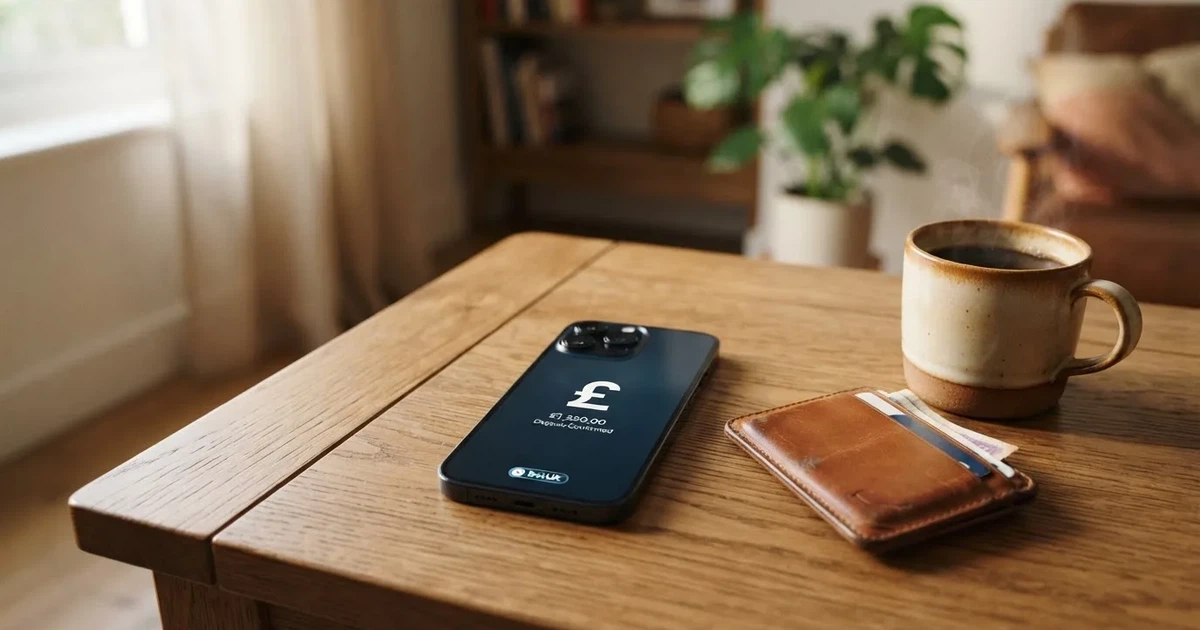
Betting with a debit card in Great Britain is, on the face of it, the most ordinary thing in the world: you type a card number into a cashier, the money leaves your current account, and the bet is on. The detail is where the choice lives. Every brand in this guide sits on a Gambling Commission licence, every one of them verifies your name and date of birth before the first deposit, and not one of them is allowed to accept a credit card for gambling in this country. That is the floor. What differs is how quickly a withdrawal lands, whether a free bet costs more than it looks, and how a brand behaves when a punter needs it to slow down.
This page works through the framework a debit-card bettor actually meets — the licence on the wall, the identity check at the door, the cashier’s limits, the safer-gambling levers, the ten operators this guide reviews in detail — and closes with a short FAQ. The ranking is built on what the comparison turns up, not on the marketing each operator hands the public.
The fundamentals of betting with a debit card in Great Britain
A debit card draws money directly from the cardholder’s current account at the point of sale. It is not a credit card; the funds are yours, and the bank settles the transaction in the same day. The five global card networks — UnionPay, American Express, Discover, Mastercard and Visa — sit behind nearly every card a British punter pulls from a wallet. Two networks British readers once knew well, Switch and Solo, have since been folded into the Maestro brand.

For gambling, that distinction is now a legal one as well as a banking one. Since 14 April 2020, the Gambling Commission’s Licence Conditions and Codes of Practice have banned the use of credit cards for any gambling transaction in Great Britain. The ban covers credit-card-funded e-wallet top-ups as well as direct credit-card deposits, so a punter cannot route a credit line through PayPal to a bookmaker either. A debit card, by contrast, is the textbook acceptable method: it draws real money from a real account, in the customer’s name, with a paper trail the bank and the operator both hold.
That last clause matters because the other half of the framework is verification. Since 7 May 2019, every Gambling Commission-licensed operator has had to confirm a customer’s name, address and date of birth before that customer can deposit or place a bet — including with a free bet or a bonus. No anonymous play. The check is run against public databases, and at higher spend the operator will ask where the money came from under money-laundering rules. None of this is unique to debit cards; it applies whichever payment method a customer uses. The point is that the cashier a punter meets is not a free-standing shop but a window into an already-verified account.
That has consequences for how a deposit behaves. A debit-card deposit is normally instant, because the funds clear at the till; a withdrawal has to be sent back to the same card the deposit came from, in most cases, before it can be released to another method. Some operators route withdrawals through Faster Payments to a bank account instead, which clears in minutes. The cashier’s own terms — minimum deposit, maximum deposit, processing time on the way back, any fee on currency conversion — are where the practical differences between brands live.
The floor of what a debit-card bettor is buying, then, is three things: a bank-grade audit trail, an instant debit at the point of betting, and a payment that the Gambling Commission does not exclude. The rest of this page is about how the ten featured operators meet that brief.
The legal frame around a debit-card bet
A bookmaker serving customers in Great Britain needs a Gambling Commission licence, regardless of where the company is registered. Since the Gambling (Licensing and Advertising) Act 2014, the licence test is set by consumption, not by base: a Gibraltar-, Malta- or Curaçao-registered operator taking bets from a British IP address needs the British licence, and one of those foreign licences is not a substitute. The licence types are remote general betting standard (real events), remote general betting standard (virtual events), remote general betting limited, remote pool betting and remote betting intermediary (the licence held by betting exchanges). Some operators hold more than one.

Two things this page does not claim. No bookmaker in the ranking is “the only” licensed one — the Commission’s public register lists several hundred, and the ten reviewed here are a selection, not the totality. And a Gambling Commission’s involvement is not the same as approving an offer: the Commission licenses the operator and enforces the licence conditions, but it does not sign off each promotion. What it does control is the rules every promotion must work inside.
The promotion rules tightened on 19 January 2026. Wagering requirements on bonuses are now capped at 10x — a £10 bonus with a 50x turnover would have needed £500 of qualifying bets; under the cap, no more than £100 of qualifying bets are needed before an agent release bonus funds or winnings. Mixed-product promotions are banned: an offer that requires gambling on two or more product types — say, bet on football to unlock free spins — is no longer permitted. What is not settled is whether the 10x cap applies to free bets with no wagering condition, and whether there is any cap on the money value of a bonus; the Commission’s published position does not pin those down. A reader comparing two welcome offers should weigh them on turnover, expiry, minimum odds and minimum stake — not on the headline multiple, which the cap has now compressed.
What a punter may bet on is set by the operator’s licence category and its own terms. No statutory list of permitted markets exists, so the practical scope of a brand’s sportsbook comes from what it lists. In-play betting is offered across the British market and is governed by the operator’s licence conditions and customer-protection duties, not by a stand-alone statute. Esports sit inside the general betting standard; virtual events are a separate licence category; politics, TV and novelty markets are offered by GB bookmakers and no statutory prohibition was found.
Two parallel checks live inside the licence. A financial vulnerability check, in force since 30 August 2024 under LCCP condition 3.4.4, applies to licensed remote betting when a customer’s deposits minus withdrawals exceed £150 in a rolling 30 days. Since 28 February 2025 the trigger has been live; the check is a public-record search (bankruptcy, county court judgments), not an income check and not a credit-reference check. A heavier set of checks — the financial risk assessments the press has called “affordability checks” — has been announced in a staged plan, with no start date. The honest framing is “announced, staged, no start date”, not “in force”.
On deposits, the Commission has moved on RTS 12 deposit limits. Operators must offer a gross deposit limit on a fixed time frame; the first changes have applied since 31 October 2025 and a second phase was postponed to 30 September 2026. The current state of that second phase is not established and the page does not pretend otherwise. There is no state-set deposit or loss ceiling for betting: any limit a punter sees on a cashier is one they have set for themselves.
General Betting Duty, the operator’s tax on gross profits, is currently 15%. From 1 April 2027 a new remote betting rate of 25% will apply within that duty; UK horse racing, pool betting and in-person betting will stay at 15%. The rate is the operator’s, not the punter’s: players in Great Britain pay no tax on betting winnings, and whether an operator passes duty on through odds is not established. A punter comparing two prices should compare the prices, not a derived duty.
What is the consequence of betting on an unlicensed site? Section 33 of the Gambling Act 2005 makes it an offence to provide gambling facilities in Great Britain without the licence the Act requires; the offence is aimed at the operator, with penalties up to 51 weeks’ imprisonment, a fine up to level 5, or both (six months in Scotland). The criminal law does not target a customer who merely places a bet with an unlicensed brand. What is lost is the protection: no GAMSTOP coverage, no Commission complaints route, no approved dispute-resolution service, no British consumer redress if funds are withheld, no application of the 10x bonus cap or the £150 vulnerability check. Enforcement against unlicensed operators is by disruption, not blocking — cease-and-desist notices, search-engine referrals, work with payment providers and hosts, and forthcoming court-order DNS blocking powers. The honest framing is that a licensed book is a regulated one, with the checks and the limits that go with it; an unlicensed one is none of those things, with the loss-of-funds risk that implies. Neither is automatically “the safe choice” — that is for the punter to decide, on the evidence.
Safer gambling and the debit-card bettor
Identity is the first protection. Every brand in this guide verifies a customer’s name, address and date of birth before the first deposit; the same check applies to a free-bet or bonus claim. It is the entry price for a regulated account, and a debit card cannot be used to bypass it. From there, the practical safeguards a debit-card punter meets are deposit limits, time-outs, product blocks and self-exclusion, plus a national self-exclusion scheme that applies across every GB-licensed online operator.
GAMSTOP is the national multi-operator online self-exclusion scheme and a mandatory licence condition for online operators since 31 March 2020. A punter who registers is barred from opening new accounts with participating operators for six months, one year, five years, or five years with auto-renewal; after the minimum period the exclusion stays in place for a further seven years unless the customer asks GAMSTOP to remove it. GAMSTOP covers online sites and apps; betting shops use a separate service, and offline pool betting is outside its scope.
The safer-gambling tools a punter finds inside an account vary by brand. The common suite is deposit limits, time-out, product restrictions and self-exclusion, often with a self-assessment questionnaire and links to support services. Unibet’s UK site, for instance, runs deposit limits, a Player Profile test, product restrictions and self-exclusion, with live chat and links to BeGambleAware, GamCare, GAMSTOP, Gambling Therapy and the BGC. Midnite links to GambleAware, GamCare, GAMSTOP and BetBlocker. Betmaster links to GambleAware, GAMSTOP, BetBlocker and GamCare. Star Sports runs deposit limits, a Play Break facility and self-exclusion through the My Account menu. The pattern is consistent because the licence conditions require it; the quality of the surface a punter meets is what differs.
For a debit-card bettor, two of those levers are worth particular attention. Deposit limits are the single most effective nudge available: they are set by the customer, on the operator’s account page, and they bind across every deposit route — debit card, bank transfer, e-wallet. A punter who wants to manage a budget does not need to set a limit on each method; one limit covers them all. Time-out is the short-form version: hours or days away, with the account unlocked at the end. Self-exclusion is the longer-form one: six months minimum, GAMSTOP-registered, irrevocable inside that window.
The help lines a punter can call without going through an operator are the National Gambling Helpline (GamCare), GambleAware, the NHS gambling clinics and Gamblers Anonymous. None of them is a betting brand and none of them sells a product. A reader who has stopped enjoying a bet — or a reader watching one — has those four routes to start with.
A debit card is, in one narrow sense, a safer-gambling tool of its own: banks can block gambling transactions they detect at the merchant category. Barclays, for example, lets customers block debit-card payments to gambling providers it can detect through the “Manage your cards” section of its app; the bank names the boundary — the customer remains responsible for transactions it cannot detect. That is a useful backstop for the customer who wants the spending line drawn at the bank’s end rather than the bookmaker’s.
The cashier: deposits and withdrawals on a debit card
The cashier is where the differences between brands turn into time on the clock. Two operators can each hold a Gambling Commission licence, each verify a customer before the first bet, and each refuse credit cards — yet take materially different times to put a withdrawal back, set materially different minimum deposits, and accept materially different currencies without a conversion fee. The comparison table below takes the operators’ own terms as the source of truth.
The general pattern across the ten brands reviewed here: a £5 or £10 minimum deposit by debit card, an instant credit at the till, and a withdrawal sent back to the same card the deposit came from. Faster Payments to a UK bank account is the route most operators offer for a faster cash-out; the timing varies from “instant” to “within six hours” to “the same day” depending on the operator and the size of the withdrawal. QuinnBet’s published terms accept debit cards, Apple Pay and Open Banking, plus Revolut cards, and explicitly do not accept Skrill or Neteller deposits — a useful exclusion because it tells the punter the operator is conscious of e-wallet deposit abuse. Midnite accepts Visa, Mastercard, Apple Pay, Google Pay and Trustly. Betmaster accepts Visa, Mastercard, Maestro and V PAY. Smarkets takes UK debit card deposits instantly from £10 up to £15,000, and processes withdrawals within six hours from £10 up to £100,000 on open-bank transfers. LiveScore Bet’s cashier accepts debit cards (Visa and Mastercard), Apple Pay, PayPal, Pay by Bank (Open Banking) and Revolut Pay.
The ceiling on a single deposit matters because it sets the upper edge of an in-play punt without a top-up. A £15,000 ceiling at the high end is rare on a debit card; £5,000 is more typical. The minimum matters because it is what a punter with a small budget tests first. Both are operator-set, and both are visible in the cashier.
There is one cost the page does not name: a foreign transaction fee. A debit card issued by a UK bank charges nothing to deposit in pounds; a card issued abroad, used in pounds, attracts the card issuer’s fee and a wholesale rate the customer does not see. A punter travelling, or a punter holding a non-UK card, should read the issuer’s terms before choosing a brand — and a brand’s own terms rarely state the issuer’s fee. The cashier controls the brand; the wallet controls the fee.
Shortlist criteria: how the ranking was built
The shortlist of ten is built on three tests, in this order.
First, the licence. Every brand in the ranking holds a Gambling Commission remote licence for the relevant category, and every one of them appears on the Commission’s public register against a licensee named on that licence. The register is the test, and the table below sets the licence number and account number next to each brand so a reader can run the check. A bookmaker off this list is not necessarily unlicensed; the list is a selection of ten, not the register itself.
Second, the cashier. A shortlist brand accepts Visa and Mastercard debit cards as a primary deposit route, sets a minimum deposit at or under £10, and states a withdrawal time on its own terms page. Where the brand’s own terms name a faster route — Faster Payments, Open Banking, Pay by Bank — the page notes that beside the licence line.
Third, the safer-gambling surface. A shortlist brand offers deposit limits, time-out, self-exclusion and access to a self-assessment or a support service, with the support routes named on the brand’s own site. The brand also appears on GAMSTOP, as every GB-licensed online operator does.
What is not in the criteria, deliberately: a welcome offer’s headline multiple, the size of a sign-up bonus, or a free-bet token. The promotion rules in force since 19 January 2026 cap wagering at 10x and ban mixed-product offers, so the variation in headline offers has narrowed. The page describes each offer’s terms qualitatively and leaves the punter to compare.
Top 10 UK betting sites that take debit cards
The comparison is the spine of the page. Each operator below carries the licence number a reader runs against the Commission’s public register, the key terms the operator’s own cashier page states, and a short verdict on where the brand sits in the shortlist. Brands are listed in the order research sets; the order is not a ranking from best to worst, but the section that follows the table closes with the cross-order’s read.
| Brand | Gambling Commission remote licence | What the operator’s own terms state on debit cards |
|---|---|---|
| NetBet | 039170-R-319343-032 (Netbet Enterprises Limited) | Debit card, Instant Payments to bank, Apple Pay and PayPal; Face ID and Touch ID login on the GB app |
| Bet Ahoy | 100094-R-341742-003 (Bet Ahoy Ltd) | UK and Ireland racing markets with Best Odds Guaranteed up to £100 and Double Result payout on UK and Irish racing |
| QuinnBet | 061011-R-335683-004 (QuinnBet (Gibraltar) Limited) | Debit cards, Apple Pay and Open Banking, plus Revolut cards; Skrill and Neteller deposits not accepted |
| bet365 | 055148-R-331498-002 (Hillside (UK Sports) ENC) | Debit card, PayPal and Apple Pay funding; Face ID login on supported devices |
| Betway | 039372-R-319367-029 (Betway Limited) | New UK and Ireland customers: £40 in free bet tokens (4 x £10) on settlement of a first bet of at least £10 at minimum odds of 2.0; 7-day expiry; debit card deposits only |
| Betboro | 044181-R-324363-007 (Webmedia Development N.V.) | Debit card deposit of at least £10; first bet of £5 to £25 with at least three selections each at minimum odds 3/5 (1.60) |
| Unibet | 045322-R-324275-019 (Platinum Gaming Limited) | New GB customers using a debit card or instant bank transfer: bet £20 at minimum odds 2.0 (1/1) to get £40 in free bets; 7-day expiry |
| LiveScore Bet | 056859-R-332720-005 (LiveScore Betting and Gaming (Gibraltar) Limited) | Visa and Mastercard debit cards, Apple Pay, PayPal, Pay by Bank (Open Banking) and Revolut Pay |
| Smarkets | 039173-R-319366-011 (Smarkets (Malta) Limited) | UK debit card deposits instant from £10 up to £15,000; withdrawals via open bank transfer processed within 6 hours from £10 up to £100,000 |
| Star Sports | 009177-R-104555-019 (Star Racing Limited) | App available in the UK and Ireland; deposit limits, Play Break facility and self-exclusion through My Account |
What the spread tells a punter reading it: every brand accepts a debit card, none of them accepts a credit card (the LCCP ban makes that uniform), and the variation sits in three places — the upper edge of a withdrawal, the time on a withdrawal, and the operator’s path to a faster payout. Smarkets is the only brand in the table with a published six-hour upper bound on open-bank withdrawals and a £100,000 ceiling, which is the clearest signal on speed. Betway and Unibet are the only two brands whose terms name a debit-card deposit as the qualifying route for the welcome offer, which makes them worth a closer read for a punter planning to claim. QuinnBet is the only brand whose cashier rules out Skrill and Neteller deposits outright, which matters for a punter who would otherwise prefer an e-wallet and now has to choose a different deposit route or a different bookmaker.
The ten operators in detail
NetBet — Instant Payments, Apple Pay and a debit-card cashier
NetBet runs a UK cashier built around the modern bank-transfer and e-wallet mix: debit card, Instant Payments to bank, Apple Pay and PayPal. The GB app adds Face ID and Touch ID login on supported devices, which moves the account past the password and onto the device’s biometric surface. The brand sits on remote licence 039170-R-319343-032, with Netbet Enterprises Limited as the named licensee.
The NetBet offering fits a punter who already banks in apps and wants the cashier to look the same way: the bank transfer is instant, the deposit routes are phone-native, and the login is biometric. Where it does not differentiate is on the upper edge of a withdrawal — the cashier pages do not name a single upper bound as clearly as Smarkets’ six-hour, £100,000 ceiling. A punter reading NetBet for the first time should check the withdrawal route and ceiling on the cashier page before depositing at the high end.
The verdict is that NetBet is the right call for a punter who values a phone-native cashier over a sportsbook-specific feature set. For a punter hunting best-odds-guaranteed or a deep in-play menu, the next four brands on the list have more to say.
Bet Ahoy — UK and Irish racing with Best Odds Guaranteed
Bet Ahoy’s offer sits around UK and Irish racing: a 10% Acca Bonus up to £1,000, Sub-Cover for player substitutions, Best Odds Guaranteed on UK and Irish horse and greyhound racing up to £100, and Double Result payout on UK and Irish racing. The brand sits on remote licence 100094-R-341742-003, with Bet Ahoy Ltd as the named licensee.
The racing focus is a niche choice and Bet Ahoy is honest about it: Best Odds Guaranteed and Double Result are racing-specific terms, and the £100 ceiling on BOG is on the lower side of what the bigger brands offer. The Acca Bonus and Sub-Cover widen the brand into football and accumulators, which gives it a multi-sport edge the racing-only brands do not have.
The verdict is that Bet Ahoy is the right call for a punter whose book is built around a Saturday of UK and Irish racing and who values the BOG-with-double-result combination. For a punter whose interest is a Champions League midweek, Bet Ahoy’s racing tilt is more than the punter will use.
QuinnBet — debit cards and Open Banking, with Skrill and Neteller kept out
QuinnBet’s cashier accepts debit cards, Apple Pay and Open Banking, plus Revolut cards. The brand’s own help pages name what it does not accept: Skrill and Neteller deposits. The brand sits on remote licence 061011-R-335683-004, with QuinnBet (Gibraltar) Limited as the named licensee.
The Skrill and Neteller exclusion is the interesting line. E-wallet deposit abuse is a known industry issue — a punter uses an e-wallet bonus to claim a sportsbook’s welcome offer, then walks — and excluding those routes tells the punter the operator is conscious of the trade. The Open Banking and Revolut routes are the modern answer to that trade: instant bank-grade settlement without the e-wallet loophole.
The verdict is that QuinnBet is the right call for a punter who wants a debit-card cashier with Open Banking as the fast route and who would rather the operator bar e-wallet abuse than leave the door open. For a punter wedded to Skrill or Neteller from another bookmaker, this is not the brand.
bet365 — the high-volume standard, with debit card and PayPal at the till
bet365’s accounts are funded by debit card, PayPal and Apple Pay, with Face ID login on supported devices. The brand sits on remote licence 055148-R-331498-002, with Hillside (UK Sports) ENC as the named licensee.
The bet365 offering sits on the high-volume end of the market. The cashier is the standard — debit card, PayPal, Apple Pay — and the GB app’s biometric login is on every device that supports it. What a debit-card punter meets here is a brand with a deep in-play menu, an extensive racing section, and a price-boost programme that runs into a Friday-night Premier League card. The cashier’s deposit and withdrawal terms sit at the upper edge of what a debit-card punter will test.
The verdict is that bet365 is the right call for the punter who wants depth: the deep in-play menu, the racing coverage, the price boosts and the live streaming. For a punter who values a phone-native biometric surface, less familiar than from a smaller brand, less differentiation here.
Betway — welcome offer gated to debit card
Betway’s welcome offer for new UK and Ireland customers is £40 in free bet tokens, credited as 4 x £10, on settlement of a first bet of at least £10 at minimum odds of 2.0. The 7-day expiry and the debit-card-deposits-only condition are the two terms that change the offer’s shape. The brand sits on remote licence 039372-R-319367-029, with Betway Limited as the named licensee.
The debit-card-gated welcome offer is the unusual line. Most brands accept any deposit method to qualify; Betway ties the offer to a debit card. A punter who would otherwise deposit by bank transfer or e-wallet has to switch to a debit card to claim — and the switch is a practical nudge back to the bank-grade audit trail a debit card carries. The £10 minimum qualifying bet at minimum odds 2.0 is a modest condition, and the 4 x £10 free-bet split lets a punter spread the credit rather than risk it on one bet. The 7-day expiry is on the short side.
The verdict is that Betway is the right call for a punter happy to deposit by debit card and to settle a first bet at minimum odds 2.0 within a week. The free-bet split is more useful than a single £40 token on a longer-odds first bet. For a punter who banks by Faster Payments and has no debit card to hand, the offer is unreachable.
Betboro — small-stake accumulator with a debit-card deposit gate
Betboro’s sports welcome offer is a 100% matched free bet of up to £25 on the first qualifying wager, requiring a debit-card deposit of at least £10 and a first bet of £5 to £25 with at least three selections each at minimum odds 3/5 (1.60). The brand sits on remote licence 044181-R-324363-007, with Webmedia Development N.V. as the named licensee.
The minimum odds 3/5 (1.60) and three-selection condition narrow the qualifying bet to an accumulator or a same-game multi. The £25 cap on the matched free bet is on the small side of what a welcome offer delivers, and the £10 minimum deposit is at the floor of the shortlist. For a punter who backs football accumulators at the weekend and is happy to start at £10, the offer is reachable without much strain.
The verdict is that Betboro is the right call for a punter whose first bet is naturally an accumulator and whose bank is happy with £25 as the matched-free-bet ceiling. For a punter whose first bet is a single at odds-on, the offer does not qualify.
Unibet — safer-gambling surface, with a debit-card-gated welcome offer
Unibet’s UK site has been live since 1999 and is run by Platinum Gaming Limited, Gibraltar, under Gambling Commission account 45322. The sports welcome offer is “Get £40 in Free Bets when you bet £20”: a deposit and sports bet of £20 or more at minimum odds of 2.0 (1/1), with free bets expiring within 7 days of issue, for new GB customers using a debit card or instant bank transfer. The safer-gambling tools on the UK site include deposit limits, a Player Profile test, product restrictions and self-exclusion, with live chat support and links to BeGambleAware, GamCare, GAMSTOP, Gambling Therapy and the BGC.
Unibet’s safer-gambling surface is the broader of the ten brands: deposit limits, a Player Profile test, product restrictions and self-exclusion, with live chat and the full list of support services linked from the UK homepage. The debit-card-or-instant-bank-transfer qualifier on the welcome offer is a slightly broader gate than Betway’s debit-card-only one, which makes Unibet reachable for a punter banking by Faster Payments.
The verdict is that Unibet is the right call for the punter who values the safer-gambling surface — the Player Profile test and the product restrictions are not universal — and who would rather claim a £40 free-bet credit than deposit by credit-card-funded routes the LCCP ban rules out. For a punter whose first bet is on a non-UK sport with a thin Unibet offering, the brand’s depth is the question to check first.
LiveScore Bet — Visa and Mastercard, plus Apple Pay, PayPal and Revolut Pay
LiveScore Bet’s cashier accepts Visa and Mastercard debit cards, Apple Pay, PayPal, Pay by Bank (Open Banking) and Revolut Pay. The brand sits on remote licence 056859-R-332720-005, with LiveScore Betting and Gaming (Gibraltar) Limited as the named licensee.
The Revolut Pay line is the unusual one. Revolut’s native pay route is newer to the cashier than PayPal or Apple Pay, and a brand that has it wired in is banking on a punter whose primary wallet is a Revolut card. The Pay by Bank (Open Banking) line sits beside it, with the same Faster Payments-class clearing. The Visa and Mastercard debit routes are the textbook base.
The verdict is that LiveScore Bet is the right call for a punter whose wallet is Revolut or whose bank app supports Open Banking — both routes sit on the cashier alongside the debit-card base. For a punter whose wallet is a legacy Visa debit and nothing else, the cashier is identical to the next four brands.
Smarkets — six-hour withdrawals, up to £100,000
Smarkets’ UK deposits by open bank transfer are instant from £10 up to £10,000, and withdrawals are processed within six hours from £10 up to £100,000. UK debit-card deposits are instant from £10 up to £15,000. The brand sits on remote licence 039173-R-319366-011, with Smarkets (Malta) Limited as the named licensee, in the remote betting intermediary category — the licence type for betting exchanges.
The exchange licence is the structural difference. A betting exchange takes back and lay bets from customers and matches them against each other; the brand’s margin is the commission on net winnings, not the spread on a price. Smarkets’ £100,000 ceiling and six-hour processing time are aimed at a punter who wants to clear a position quickly and at scale. The £15,000 ceiling on a debit-card deposit is, in practice, the upper edge on the standard route.
The verdict is that Smarkets is the right call for a punter who wants a fast, large withdrawal and is comfortable on a betting exchange. For a punter who wants a traditional sportsbook with a price-boost programme, the exchange format is the wrong fit.
Star Sports — Play Break and self-exclusion in My Account
Star Sports’ UK and Ireland app offers deposit limits, a Play Break facility and self-exclusion in the My Account menu. The brand sits on remote licence 009177-R-104555-019, with Star Racing Limited as the named licensee.
The Play Break facility is a softer form of time-out — a short pause on the account with the option to return at the end — and its presence alongside deposit limits and self-exclusion puts the safer-gambling surface on a par with the larger brands. The racing heritage is the brand’s historical tilt, with the sportsbook widening into football and other sports.
The verdict is that Star Sports is the right call for a punter whose interest is racing and who values the Play Break facility as a short-form cooling-off lever. For a punter whose interest is a deep in-play football menu, the racing tilt means more of the brand than the punter will use.
What a debit-card bettor should check before the first deposit
Three checks belong to the punter, not the page.
The first is the licence. The Commission’s public register can be searched by business name, trading name, domain or account number; every brand in the table above names the account number beside the licence. A punter who has not run that check before depositing should run it now. The register is the test; a brand not on it is not licensed in Great Britain.
The second is the cashier’s own terms. Minimum deposit, maximum deposit, processing time on a withdrawal, any fee on currency conversion, the route on which a withdrawal is sent — all of these are on the cashier page and not in this guide. The numbers in this guide are the operators’ own; the cashier is the source a punter should trust over a comparison.
The third is the safer-gambling surface. Deposit limits, time-out, self-exclusion, GAMSTOP — all of these are accessible without making a deposit, and a punter who wants to set a budget can set it before the first bet. A debit-card deposit at the cashier can be preceded by a deposit-limit setting in My Account.
Frequently asked questions about betting sites with a debit card in Great Britain
Can you bet with a debit card in Great Britain?
Yes. Every Gambling Commission-licensed online bookmaker accepts debit cards as a primary deposit route, with a £5 or £10 minimum at the cashier and an instant credit at the till. A credit card has been banned for gambling in Great Britain since 14 April 2020, including credit-card-funded e-wallet top-ups, so the debit card is the textbook acceptable method. Withdrawals are normally sent back to the same card the deposit came from.
Which payment methods do GB-licensed bookmakers accept, and are credit cards allowed?
The common set is Visa and Mastercard debit cards, Apple Pay, PayPal, Open Banking (Pay by Bank), Revolut Pay, Google Pay and Trustly. Skrill and Neteller deposits are taken by some brands and explicitly excluded by others — QuinnBet, for example, does not accept Skrill or Neteller deposits. Credit cards are banned for any gambling transaction in Great Britain. Cryptocurrency deposits are not the subject of a clear British rule; describe each operator’s terms before choosing.
From what age can bets be placed in Great Britain, and when is identity verified?
The minimum age is 18. Identity — name, address and date of birth — is verified before the first deposit or the first bet, including for free bets and bonuses, since 7 May 2019. At higher spend, source-of-funds questions are normal under money-laundering rules, and a financial vulnerability check applies to remote betting when deposits minus withdrawals exceed £150 in a rolling 30 days.
How can it be checked that a bookmaker holds a Gambling Commission licence?
The Commission’s public register is searchable by business name, trading name, domain or account number. Every brand in the comparison table above names the account number beside the licence number, so a punter can run the check directly. A domain ending in .com or .co.uk is not, on its own, evidence of a licence.
What does a player lose by betting on a site without a Gambling Commission licence?
The losses are protections: no Commission complaints route, no GAMSTOP coverage, no approved dispute-resolution service, no British consumer redress if funds are withheld. The 10x bonus cap and the £150 vulnerability check do not apply. No offence aimed at a customer who merely bets was found; the offence is on the operator. The honest framing is that a licensed book is a regulated one, with the checks and the limits that go with it; an unlicensed one is none of those things, with the loss-of-funds risk that implies.
How is the return on a bet worked out from the stake and the odds?
In decimal odds, the return is the stake multiplied by the odds. A £10 stake at odds 3.75 returns £37.50, of which £27.50 is profit. For an each-way bet the stake doubles, because the bet is two equal bets; for a combination bet the odds of the legs multiply into one price. Fractional odds (5/1, 11/4, evens) convert to decimal as a/b → a ÷ b + 1, so 5/1 is 6.00 and 11/4 is 3.75.
Payments & apps – Boxing betting
Content created by the «Boxing betting» team
