
motorsport betting odds in 2026 — price, margin and what the punter pays
 Available in US
A decimal price of 3.00 is a doubling. A price of 1.50 is a fifty-percent return on top of the stake. That is the easy half. The harder half is the gap between those tidy numbers and the pennies bookmakers shave from both sides of a market, the rollover attached to a welcome bonus, the £10 minimum that quietly disqualifies small stakes, and the fact that in Great Britain no anonymous deposit has been legal since May 2019. This page works through the cost of a motorsport bet end to end: the price, the margin inside it, the bet types built on top, the calendar that drives the calendar, the licence that covers the operator, the controls that prevent each stake from becoming a loss, and ten licensed bookmakers with a place at the top of the shortlist.
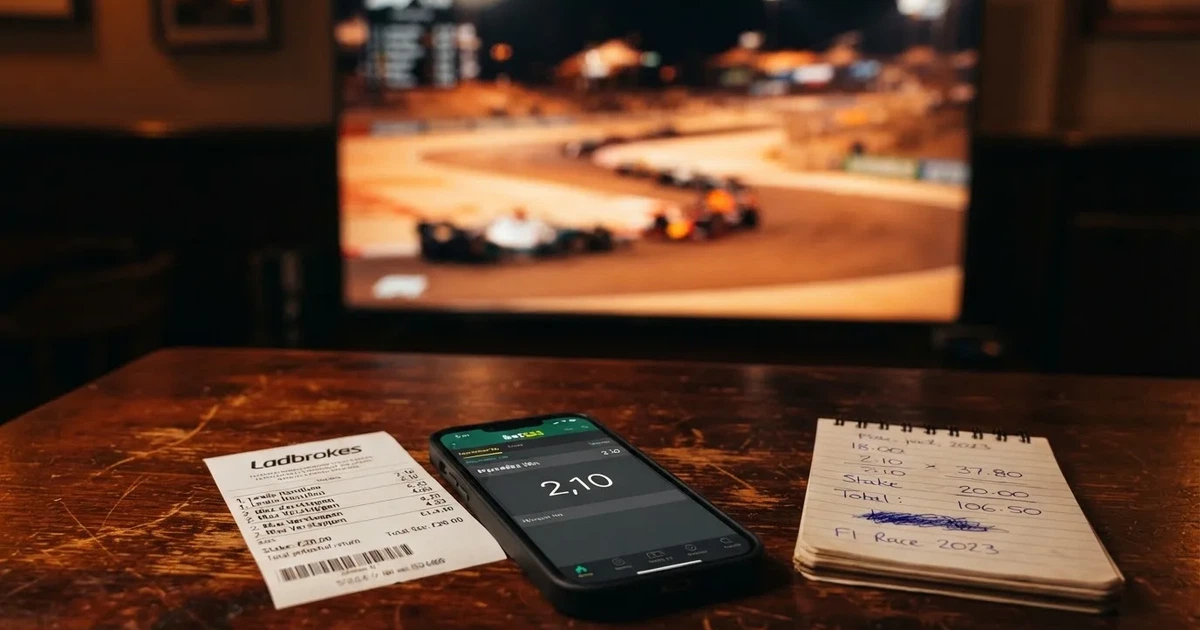
The state of the data is current as of 27 October 2026; the licence and remote-betting figures below were checked against the Gambling Commission’s public register.
What a motorsport odds price actually pays
From stake and odds to a number on the slip
Decimal odds are the only conversion worth knowing. A price of 4.50 on Lando Norris to win the Bahrain Grand Prix means a £10 stake returns £45 if he wins, of which £35 is profit; the stake comes back on top of the odds. Fractional odds are the older British form: 5/1 reads as five units of profit for every one unit staked, which is 6.00 in decimal, and 11/4 reads as 2.75. “Evens” is 1/1, which is 2.00. Odds-on, meaning the punter’s profit is smaller than the stake, sits at anything shorter than evens; 4/6 is 1.67. Prices are written short or long depending on which side the bookmaker wants the money. A short price is the favourite, a long price is the outsider.

The calculation is plain: return = stake × odds, and profit = stake × (odds − 1). For a £25 bet at 3.75 the return is £93.75, the profit £68.75. For a combination bet the odds of the legs multiply: two legs at 2.50 and 1.80 become a combined price of 4.50, and the same £25 stake returns £112.50. That multiplication is also where the cost hides, because the margin in every leg compounds.
The margin is what the bookmaker keeps
Every market has an overround, which is the amount by which the implied probabilities of all outcomes add up to more than 100 per cent. That surplus is the bookmaker’s margin. Two decimal odds of 1.90 and 1.90 on a head-to-head qualifying duel imply a payout share of 1 ÷ (1/1.90 + 1/1.90) = 0.95, so the margin is 5 per cent. Stated differently, the bookmaker keeps about 5p of every pound bet on that market, before any deductions. Across a 23-race Formula One season that margin compounds into the difference between a hobby and a hobby that costs more than it looks.

The arithmetic is the same in any sport: the more outcomes a market has, the more margin a bookmaker tends to take. A three-way F1 qualifying market at 1.80 / 3.50 / 5.00 implies 1 ÷ (0.556 + 0.286 + 0.200) = 0.962, a margin of 3.8 per cent. A race-winner market with a full grid, with twenty implied probabilities all longer than 2.00, runs closer to 30 per cent or worse. The narrowest margins sit in the head-to-head matchups — fastest lap, pole position, team-versus-team qualifying — and the widest sit in season-long outrights, where the price is high and the implied probability is small.
The result is a band rather than a single figure: for a two-way motorsport market the margin typically runs between 3 and 8 per cent depending on the operator, the event and how close to lights-out the price was struck. The narrower the market, the lower the margin, which is why the head-to-head is the friendliest bet to a punter with a sharp eye.
Price boosts and Best Odds Guaranteed are the bookmaker’s counter-offer
Price boosts look like a gift and usually are not. A boosted price from 2.50 to 3.00 on a single outcome is one outcome out of a market, so the rest of the book is unchanged and the boost cannot be combined with another leg into an accumulator at the inflated price. Best Odds Guaranteed is the older concession. On UK and Irish horse racing, from 9am on race day, the bookmaker pays the bigger of the price the punter took and the starting price. For motorsport the equivalent is rare and usually applies only to outright futures. Where a bookmaker does offer it on a motorsport market the rules sit in the terms and are worth a minute of reading.
How to read motorsport betting odds without overpaying
Three numbers on every slip: price, stake, return
The slip is straightforward once the conversion is in hand. The punter chooses a market, the bookmaker offers a price, the punter chooses a stake, the slip multiplies the two and prints a return. The price carries the margin; the stake carries the risk; the return is what is paid on a win. A £50 bet at 1.83 returns £91.50, profit £41.50. A £5 bet at 6.00 returns £30, profit £25. The arithmetic does not change with the size of the bet, which is one reason a price of 1.20 looks tempting — five winners at 1.20 return £6 on a £5 stake, and the punter is down £25 on the five bets if any one of them loses.
Combination bets multiply the price and the risk
An accumulator, or “acca” in British usage, multiplies the legs into one price. Four F1 race-winner picks at 2.5, 3.0, 1.8 and 4.0 combine to a price of 54. A £5 stake returns £270 on a four-fold hit. The catch is that one losing leg takes the whole stake down. A double is two picks; a treble three; a four-fold four. There are named systems — Trixie (four bets across three picks), Patent (seven), Yankee (eleven), Lucky 15 (fifteen), Heinz (fifty-seven), Goliath (two hundred and forty-seven) — where the unit stake is multiplied by the number of bets, so a Lucky 15 at £1 per bet is a £15 stake. These soften the all-or-nothing feel: a Trixie returns something on a single winner where a straight treble returns nothing, because the Trixie also includes three doubles and one single.
Each-way is the special case for racing: two equal bets, one on the win and one on the place, which doubles the stake. The place terms vary by race type and operator and are worth checking on the slip. A Rule 4 deduction applies when a runner is withdrawn and the bookmaker reduces the win payout by a stated percentage.
Bet builders and the same-game multi
A bet builder, or same-game multi, lets the punter combine markets from one event into a single bet. Norris to win the race and the safety car to be deployed is two markets from one Grand Prix combined into one price, usually with a margin baked in. Bet Builder+ is the branded version offered by bet365, available pre-match and in-play, and Super Boosts and Winnings Boosts sit alongside it. The price on a bet builder is built from the legs in the same way a normal acca is, which means the margin compounds, and a multi-leg builder is one of the highest-margin bets a bookmaker offers. The upside is that the markets chosen are correlated, which is part of why the feature exists.
In-play, live streaming and cash out
In-play betting is offered by every GB-licensed bookmaker on motorsport. The price ticks between green and red as the race unfolds and the slip stays live until the result is settled. Live streaming of motorsport varies: BetVictor offers enhanced live race streaming alongside Smart Stats, and bet365 streams events worldwide alongside Match Live and a Live Golf Tracker that doubles as a follower for in-play bets on golf. Cash out lets the punter close the bet before the result, locking in a profit or limiting a loss at a price the bookmaker quotes at that moment. Cash out prices are wider than the underlying market margin, so the price offered on a cash out is rarely the fair value of the position.
The motorsport calendar and the markets that come with it
Formula One, IndyCar, Formula E and NASCAR
Formula One is the headline. The 2026 Formula One World Championship has 23 Grands Prix, starting on 8 March at Albert Park in Melbourne and scheduled to end on 6 December 2026 with the Abu Dhabi Grand Prix at Yas Marina. The grid expands to 11 teams, with Cadillac as the new entry and Audi entering as a works team after taking over Sauber. The 2026 team cost cap is 215 million US dollars. The technical rules drop the MGU-H, raise MGU-K output to 470 brake horsepower (350 kilowatts), and replace DRS with active aerodynamics including an overtake mode available within one second of the car ahead. Lando Norris is the reigning Drivers’ Champion going into the season.
For the punter the calendar shapes the betting calendar. Pre-season testing in Bahrain is the first set of outright futures; the Australian Grand Prix opens the race-by-race market; the constructor market settles at Abu Dhabi. Each round carries its own menu: race winner, podium, pole position, fastest lap, head-to-head qualifying matchups, safety-car deployment, and the constructor points-match markets that sit alongside them. IndyCar runs a parallel calendar with oval and road-course markets. Formula E’s calendar is winter-heavy and the markets are narrower — race winner, podium, head-to-head qualifying. NASCAR’s Cup Series runs from February to November and offers race winner, top-three, head-to-head matchups, and stage winners.
Endurance, rallying and motorcycle racing
The 24 Hours of Le Mans, held each June in France, is part of the FIA World Endurance Championship and is the headline endurance race. Markets open months ahead for outright winner, podium, class winner and the head-to-head qualifying duel. The World Rally Championship runs through the year on a mix of surfaces; rally markets centre on outright winner, podium, stage winners and the manufacturer matchup. MotoGP, World Superbikes and the Isle of Man TT cover motorcycle racing under the FIM, the second international governing body alongside the FIA.
Endurance markets carry a specific risk: the race is long, the field is mixed, and a mechanical retirement wipes the outright bet but does not wipe the class bet. A class bet on a smaller-category entrant at 8.00 or longer is sometimes the smarter play than the headline race-winner market. The FIA, formed in 1904, is the oldest and most prominent international governing body for vehicles with four or more wheels.
What to check before a bet on a less-familiar series
A small-field touring-car series or a regional rally series may have a thinner market. The bookmakers licensed in Great Britain offer different menus, and the outright winner market may not be posted on every race. A punter who plans to bet across the season should check which bookmakers cover the series they want before settling on a brand, because switching mid-season costs the welcome offer and resets the bonus clock. The pace notes also matter: a new series with limited media coverage has less information to work from, which means wider prices and a sharper edge for the punter who watches the practice sessions.
Ten licensed bookmakers for motorsport in Great Britain
A licensed bookmaker in Great Britain holds a Gambling Commission remote licence; the Commission’s public register is the test of whether a brand holds one, and the licence is mandatory at the point of consumption, so a Curaçao, Maltese or Gibraltar licence does not substitute for it. Every brand reviewed below is licensed. The order is the pack’s own; the angle of this page is cost, so the verdict on each one names what it costs the punter and where the cost is hidden.
| Brand | Gambling Commission licence and licence holder | what the operator’s own terms state |
|---|---|---|
| Fitzwilliam Sports | Remote licence 048760-R-335434-009 (account 48760); SBKI Limited | Capped-membership bookmaker with instant deposits, fast withdrawals, timeouts, deposit limits and links to GambleAware, GamStop and Gamblers Anonymous; welcome described as a “High Stakes Welcome” subject to compliance criteria |
| Fafabet | Remote licence 057385-R-333191-006 (account 57385); Taichi Tech Limited | Best Odds Guaranteed on UK and Irish horse racing win and each-way bets from 9am on race days; if the starting price is bigger than the original price, the bigger odds are paid |
| Dabble | Remote licence 065677-R-340363-005 (account 65677); Dabble Sports UK Ltd | Welcome: Bet £10, Get £10 in Free Bets on first deposit for new customers; minimum odds apply; 7-day free bet expiry; the free bet stake is not returned |
| Bet Ahoy | Remote licence 100094-R-341742-003 (account 100094); Bet Ahoy Ltd | Welcome: Bet £10 and Get £10 in Free Bets, made up of a £5 sports bet and a £5 acca |
| BetGoodwin | Remote licence 002927-R-327985-008 (account 2927); Goodwin Racing Limited | Sports welcome: Bet £10 and Get £15 in Free Bets, made up of a £5 sports bet, a £5 acca and a £5 Sub-Cover bet |
| bet365 | Remote licence 055148-R-331498-002 (account 55148); Hillside (UK Sports) ENC | Bet Builder+, Super Boosts, Winnings Boosts on Bet Builders and selected singles, daily Bet Boosts; in-play betting and live streaming worldwide; Bet Track, Match Live and a Live Golf Tracker; the official global betting partner of the UEFA Champions League; the most downloaded sports betting app in the UK |
| BetVictor | Remote licence 039576-R-319370-028 (account 39576); BV Gaming Limited | Best Odds Guaranteed on UK and Irish horse racing; enhanced live race streaming; BetFinder for racing bets; Smart Stats |
| Lottoland | Remote licence 038991-R-319408-020 (account 38991); EU Lotto Limited | Casino, lottery betting, sports betting and scratchcards in one app; licensed by the Gambling Commission for customers in Great Britain |
| DAZN Bet | Remote licence 048756-R-327274-019 (account 48756); DZBT Limited | Deposits start at £5 by debit card, Apple Pay, Paysafecard, Trazendly and Skrill, and at £20 by PayPal; no processing fees |
| BetUK | Remote licence 039198-R-319450-029 (account 39198); LeoVegas Gaming PLC | Sports welcome: deposit £10 or more, place a sports bet within 7 days of registering and receive four £10 free bets — two football accumulators of 4+ selections and two multiples of 2+ — valid for 7 days; opt-in required |
Fitzwilliam Sports
Fitzwilliam Sports is a Dublin bookmaker running a capped-membership model: the doors are not open to everyone, and a “High Stakes Welcome” sits behind compliance criteria the terms set out. The appeal for the right punter is the absence of a mass-market welcome offer tied to a deposit match, which often means the rollover on the welcome is tighter than the market average and the odds on offer are less squeezed by bonus accounting. The cost is the gating: a new customer who does not match the compliance criteria is simply not admitted, and the brand has no obligation to explain why.
The verdict: worth a look for the punter who bets in larger units and is happy to be vetted, less so for the casual punter.
Fafabet
Fafabet’s headline concession is Best Odds Guaranteed on UK and Irish horse racing from 9am on race days, which is the older racing concession rather than a motorsport feature. For motorsport the brand offers a market menu across Formula One, MotoGP and NASCAR, and the usual price-boost and acca-insurance features. The cost is hidden in the margin on the secondary sports: the headline concession pulls focus from the motorsport book, which is competently priced but not the cheapest in the pack.
The verdict: a sensible second-bookmaker for a punter whose primary bookmaker is racing-led, with the BOG concession as the reason to keep a Fafabet account open across the flat season.
Dabble
Dabble runs a social-betting product where customers can follow tipsters and copy picks alongside the standard fixed-odds book. The welcome is Bet £10, Get £10 in Free Bets on first deposit, with minimum odds applying, a 7-day expiry on the free bet and the stake not returned. The cost is the free-bet value: a free bet whose stake is not returned is worth less than its face value, because the £10 free bet at odds of 3.00 pays £30, which is £20 of profit on a stake the punter never risked. The mechanical value sits below £10, and the difference is the cost of the bonus.
The verdict: a clean welcome for a casual punter who bets on weekends and is comfortable with the social feature; less suited to the volume bettor who cares about the per-pound cost.
Bet Ahoy
Bet Ahoy’s welcome is Bet £10 and Get £10 in Free Bets, split into a £5 sports bet and a £5 acca. The split matters: a £5 free bet at any odds is a £5 free bet, but the acca component carries the leg-multiplication margin built into every combination bet. The cost is the acca weighting, which makes the headline look bigger than the value at the bookmaker’s own margin. The brand’s motorsport coverage is mid-pack.
The verdict: a fine place to start for a punter who plans to bet accumulators anyway, and a worse place to start for a punter who bets singles.
BetGoodwin
BetGoodwin is racing-led under Goodwin Racing Limited, and the sports welcome is Bet £10 and Get £15 in Free Bets, split into a £5 sports bet, a £5 acca and a £5 Sub-Cover bet. The Sub-Cover bet is the racing-specific component. For motorsport the welcome leans racing, and the sports-bet slice is the part that applies to a Formula One weekend.
The verdict: worth considering for a punter whose motorsport calendar overlaps with a racing calendar; less compelling for a motorsport-only punter.
bet365
bet365 is the largest licensed bookmaker in Great Britain by handle and the most downloaded sports betting app in the UK. The motorsport menu covers Formula One, MotoGP, NASCAR, IndyCar and Formula E in depth, with race-winner, podium, qualifying, fastest-lap and head-to-head markets each race weekend. Bet Builder+ combines markets from one event into a single bet, available pre-match and in-play. Super Boosts and Winnings Boosts sit on top of the singles and the Bet Builders. In-play betting and live streaming cover events worldwide, and Bet Track and Match Live let the punter follow a position through the race. The cost is the size: a brand this large prices tightly because it can, and the margin on the head-to-head markets is among the lowest in the pack.
The verdict: the strongest all-round choice for a motorsport-only punter, especially one who bets in-play and wants streaming and a Bet Builder in one app.
BetVictor
BetVictor pairs Best Odds Guaranteed on UK and Irish horse racing with enhanced live race streaming, BetFinder for racing bets and Smart Stats across the sportsbook. The motorsport coverage is competent, with the same race-weekend menu most of the pack offers. The cost is the racing-first orientation: a punter whose calendar is motorsport-only gets the racing features as collateral rather than as the centre of the offer.
The verdict: a sound second book for a motorsport-first punter, especially one whose season includes some racing weekends.
Lottoland
Lottoland is the lottery-betting brand that has expanded into casino, scratchcards and sports betting. The sports welcome sits behind the lottery-betting heritage, and the motorsport menu is narrower than the dedicated bookmakers. The cost is the dispersion: a brand spread across four product types is rarely the sharpest on any one of them.
The verdict: a workable fallback for an existing Lottoland customer who wants to add a sports bet on race weekend; not the place to open an account for motorsport alone.
DAZN Bet
DAZN Bet is the betting arm of the DAZN streaming brand. Deposits start at £5 by debit card, Apple Pay, Paysafecard, Trustly and Skrill, and at £20 by PayPal, with no processing fees. The £5 deposit floor is among the lowest in the pack, and the absence of processing fees matters for the punter who deposits and withdraws frequently. The motorsport menu is mid-pack and the brand leans into the streaming tie-in for events DAZN holds the rights to.
The verdict: worth a look for the punter who wants a low deposit floor and an integrated streaming experience; less so for the volume bettor who cares about market depth.
BetUK
BetUK runs under LeoVegas Gaming PLC and the sports welcome is deposit £10 or more, place a sports bet within 7 days of registering and receive four £10 free bets — two football accumulators of 4+ selections and two multiples of 2+ — valid for 7 days, with opt-in required. The football-heavy welcome is the cost: a motorsport-only punter is forced into football-shaped free bets to clear the welcome, and the leg-multiplication margin eats into the value. The brand sportsbook covers motorsport, but the welcome is not built for it.
The verdict: a sensible option for a punter who bets football and motorsport across the same weekend; a poor fit if motorsport is all they bet.
The legal frame around a motorsport bet in Great Britain
The licence, the regulator and what each licence covers
The Gambling Commission licenses the whole commercial market in Great Britain under the Gambling Act 2005. Northern Ireland sits outside the Act and has its own older law, so a “GB licence” is exactly that. Since the Gambling (Licensing and Advertising) Act 2014, an operator whose remote facilities are used in Great Britain needs a Commission licence wherever the operator is based. A Curaçao, Maltese or Gibraltar licence does not substitute. The Commission’s public register can be searched by business name, trading name, domain or account number and is the whole test of whether a brand holds a licence.
The categories on the licence matter. The relevant category for motorsport is the remote general betting standard (real events) licence. The remote pool betting licence covers horse and dog racing pools. The remote betting intermediary licence is the betting-exchange category. A virtual-events licence is a separate category and does not cover real motorsport events. A bookmaker licensed for casino does not have a betting licence from that licence alone; it needs the general betting standard category. The minimum age is 18, and since 7 May 2019 name, address and date of birth are verified before a customer can deposit or gamble, including with a free bet or bonus. There is no anonymous deposit at a licensed site.
In-play, virtual events and what may be bet on
There is no statutory list of permitted bets or markets in Great Britain. The bookmaker holds a licence for a category and offers markets under its own rules and the Licence Conditions and Codes of Practice (LCCP). In-play betting on motorsport is offered and is governed by the operator’s licence conditions and customer-protection duties; the absence of a statutory cap is not the same as an absence of rules. Esports are treated like any other event. Virtual events are a separate licence category. Politics, TV shows and novelty markets are offered by some GB bookmakers and no statutory prohibition was found.
Financial spread betting is regulated by the Financial Conduct Authority, not the Commission; losses on a spread bet can exceed the deposit, which is the opposite of a fixed-odds bet. Spreadex, for example, is regulated by the FCA for spread betting and by the Gambling Commission for fixed-odds betting. Spread betting that is not a financial product is inside General Betting Duty.
The player pays no tax on winnings; the operator does
The punter pays no tax on betting winnings in Great Britain (general information, not tax advice). General Betting Duty is the operator’s tax on gross profits, currently 15 per cent. From 1 April 2027 a new remote betting rate of 25 per cent applies within General Betting Duty, while remote bets on UK horse racing, bets on self-service betting terminals in licensed premises, pool betting and in-person betting stay at 15 per cent. Until 1 April 2027 the remote rate stays at 15 per cent. Whether operators pass duty on through odds is not established, and the player is not charged duty directly. The Commission’s statutory levy is a separate charge on operators, not a tax on winnings.
The 2014 Act and what an unlicensed site costs the punter
Since the Gambling (Licensing and Advertising) Act 2014 a GB licence is compulsory at the point of consumption. Providing gambling facilities in Great Britain without the licence the Act sets out is an offence under section 33 of the Gambling Act 2005, aimed at the operator. No offence aimed at a customer who bets on an unlicensed site was found; the cost is the loss of protection — no GAMSTOP coverage, no Commission complaints route, no approved dispute-resolution body, no British consumer redress if funds are withheld, not bound by the 10x bonus cap or the £150 vulnerability check. Enforcement is disruption rather than blocking; cease-and-desist notices, search-engine referrals, work with registrars, hosts and payment providers. The Commission has been given, or is about to receive, court-order DNS blocking powers, but ISP blocking is not in operation as a standing measure. Honest framing: licensed means checks, limits, GAMSTOP and the bonus cap, but also verification before the first bet; unlicensed means none of those protections and possible loss of funds.
Responsible gambling and the controls around the bet
Identity, age and the financial vulnerability check
A licensed bookmaker verifies name, address and date of birth before the first deposit, including for a free bet or bonus. A financial vulnerability check (LCCP condition 3.4.4, in force since 30 August 2024) applies to licensed remote betting when a customer’s deposits minus withdrawals exceed £150 in a rolling 30 days, with enforcement since 28 February 2025. The check is a public-record check (bankruptcy, county court judgments), not an income check and not a credit reference check. Financial risk assessments — the “affordability checks” of the press — were announced in a staged plan, with no start date as of the Commission’s article of 7 July 2026. There is no state-set deposit or loss ceiling for betting; limits are the customer’s choice.
GAMSTOP and the other self-exclusion routes
GAMSTOP is the national multi-operator online self-exclusion scheme and a mandatory licence condition for online operators since 31 March 2020. Self-exclusion periods are six months, one year, five years, or five years with auto-renewal; after the minimum period the exclusion stays in place for a further seven years unless the customer asks GAMSTOP to remove it. GAMSTOP covers online sites and apps; betting shops use a separate service. A punter who has self-excluded through GAMSTOP cannot open an account at any GB-licensed online bookmaker for the period chosen.
Deposit limits, timeouts, reality checks and product blocks sit alongside GAMSTOP on each operator’s site. Fitzwilliam Sports lists instant deposits, fast withdrawals, timeouts and deposit limits, alongside links to GambleAware, GamStop and Gamblers Anonymous. The toolkit is uniform across the pack because the LCCP requires it, but each operator sets its own default and its own maximum.
Where to get help
GamCare runs the National Gambling Helpline. GambleAware funds treatment and research. NHS gambling clinics operate in several regions. Gamblers Anonymous runs peer-support meetings. A punter who feels the bet is no longer entertainment has a route out through any of these.
The credit-card ban and the payment side
Credit cards are banned for gambling in Great Britain since 14 April 2020 (LCCP condition 6.1.2), including credit-card-funded payments through an e-wallet. Debit cards and bank-based payments are not covered by that ban. A British named-account rule, a state list of permitted payment methods and any rule for or against cryptocurrency deposits at licensed operators are not established; the rules sit in each operator’s terms.
Bonuses and free bets: the offer and what it costs
Welcome offers are deposit-gated
Every welcome offer in this pack is deposit-gated. Fitzwilliam Sports describes a “High Stakes Welcome” behind compliance criteria. Fafabet’s racing welcome sits inside BOG. Dabble’s Bet £10, Get £10 in Free Bets requires a first deposit and a first settled bet at minimum odds. Bet Ahoy’s Bet £10 and Get £10 in Free Bets follows the same shape, split into a £5 sports bet and a £5 acca. BetGoodwin’s Bet £10 and Get £15 in Free Bets is the same shape with three slices. BetUK’s deposit-and-bet welcome hands back four £10 free bets — two football accumulators of 4+ selections and two multiples of 2+ — and the free bets expire after 7 days. None of these is a no-deposit offer; the deposit is the door.
Free bets and the stake-not-returned cost
A free bet whose stake is not returned is worth less than its face value. The mechanical value is the free-bet amount multiplied by (odds − 1) divided by odds, multiplied by the payout share of the market. A £10 free bet at 3.00 on a market with a 95 per cent payout share is worth £10 × (2/3) × 0.95 ≈ £6.33. The headline says £10; the value is closer to £6.30; the difference is the cost of the bonus. Bet Builder+, Super Boosts and Winnings Boosts sit on top of the singles, and the price-boost component is one outcome out of a market, which cannot be combined into an accumulator at the inflated price.
The 10x wagering cap and the marketing code
Promotion rules in force since 19 January 2026 cap wagering requirements on bonuses at 10x: a £10 bonus at 50x would have required £500 of bets; under the cap no more than £100. Mixed-product promotions — an offer that requires gambling on two or more product types such as betting, casino, bingo and lottery, for example “bet on football to get free spins” — are banned. Whether the cap applies to free bets with no wagering condition and any cap on the money value of a bonus are not established. The cap is real; the rule behind it is in the LCCP and is enforced by the Commission.
Advertising and the rules that shape the offer
Advertising is not licensed by the Commission; it runs through the CAP Code (non-broadcast) and BCAP Code (broadcast), enforced by the ASA, alongside the LCCP marketing conditions. CAP Code section 16 requires that marketing be socially responsible, that it not be of strong appeal to under-18s, and that no one who is or seems to be under 25 may be featured gambling or play a significant role, with an exception for marketing placed where a bet can be made directly. The rule concerns who may appear in the advertisement, not who may bet. Whistle-to-whistle is an industry code: since 1 August 2019 betting advertisements are not shown on TV from five minutes before a live sporting event to five minutes after it, before the 9pm watershed, with horse and greyhound racing excluded. The Premier League clubs’ withdrawal of gambling sponsorship from the front of matchday shirts (from 2026/27; sleeves and hoardings remain) is voluntary, not law. Operators are responsible for marketing by their affiliates. Promo codes, where they exist, are not printed here.
Frequently asked questions about motorsport betting odds
How can it be checked that a bookmaker holds a Gambling Commission licence?
The Commission’s public register can be searched by business name, trading name, domain or account number. The register entry shows the licence categories, the licence holder, and the trading and domain names covered. A “.co.uk” or “.com” domain proves nothing on its own, because licensed operators use both; the register is the test. Every brand reviewed above is on the register against a remote general betting standard (real events) licence, which is the relevant category for motorsport.
How is the return on a bet worked out from the stake and the odds?
Return = stake × decimal odds. Profit = stake × (decimal odds − 1). A £25 stake at 3.75 returns £93.75 with a profit of £68.75. A combination bet multiplies the prices of the legs into one number, and the same stake multiplied by the combined price gives the return. The stake is returned on top of a fixed-odds win.
What is the bookmaker’s margin and how can it be seen in the odds?
The margin is the difference between 100 per cent and the implied probabilities of every outcome of a market. Two prices of 1.90 and 1.90 imply a payout share of 1 ÷ (1/1.90 + 1/1.90) = 0.95, so the margin is 5 per cent. The narrower the market, the lower the margin: a head-to-head qualifying duel in Formula One runs closer to 5 per cent; a race-winner market with twenty-plus implied outcomes runs considerably wider. The margin is what the bookmaker keeps of every unit bet on the market.
How do fractional odds such as 5/1 convert to decimal odds such as 6.00?
The conversion is decimal odds = a/b + 1. So 5/1 becomes 5 + 1 = 6.00; 11/4 becomes 11 ÷ 4 + 1 = 3.75; 4/6 becomes 4 ÷ 6 + 1 = 1.67. “Evens” is 1/1, which is 2.00. The decimal form is the only number the slip needs; the fractional form is the older British usage.
Which tools for controlling play does a licensed bookmaker have to offer?
A licensed bookmaker must offer GAMSTOP self-exclusion, deposit limits, timeouts, reality checks and product blocks. Identity is verified before the first deposit, and a financial vulnerability check applies when deposits minus withdrawals exceed £150 in a rolling 30 days. The minimum age is 18. Help lines run through GamCare (National Gambling Helpline), GambleAware, NHS gambling clinics and Gamblers Anonymous.
Are betting winnings taxed in Great Britain, and who pays General Betting Duty?
The punter pays no tax on betting winnings in Great Britain. General Betting Duty is the operator’s tax on gross profits, currently 15 per cent; from 1 April 2027 the remote betting rate within it rises to 25 per cent, with remote bets on UK horse racing, self-service betting terminal bets, pool betting and in-person betting staying at 15 per cent. Spread betting has its own rates (3 per cent financial, 10 per cent other). General information only; a professional gambler should ask HMRC or an adviser.
Combat & motorsport – Boxing betting
Content created by the «Boxing betting» team
