
Padel betting: where the lines sit, what they cost, and how the licence list breaks down
 Available in US
Current as of 27 October 2026 and cross-checked against the Gambling Commission’s public register.
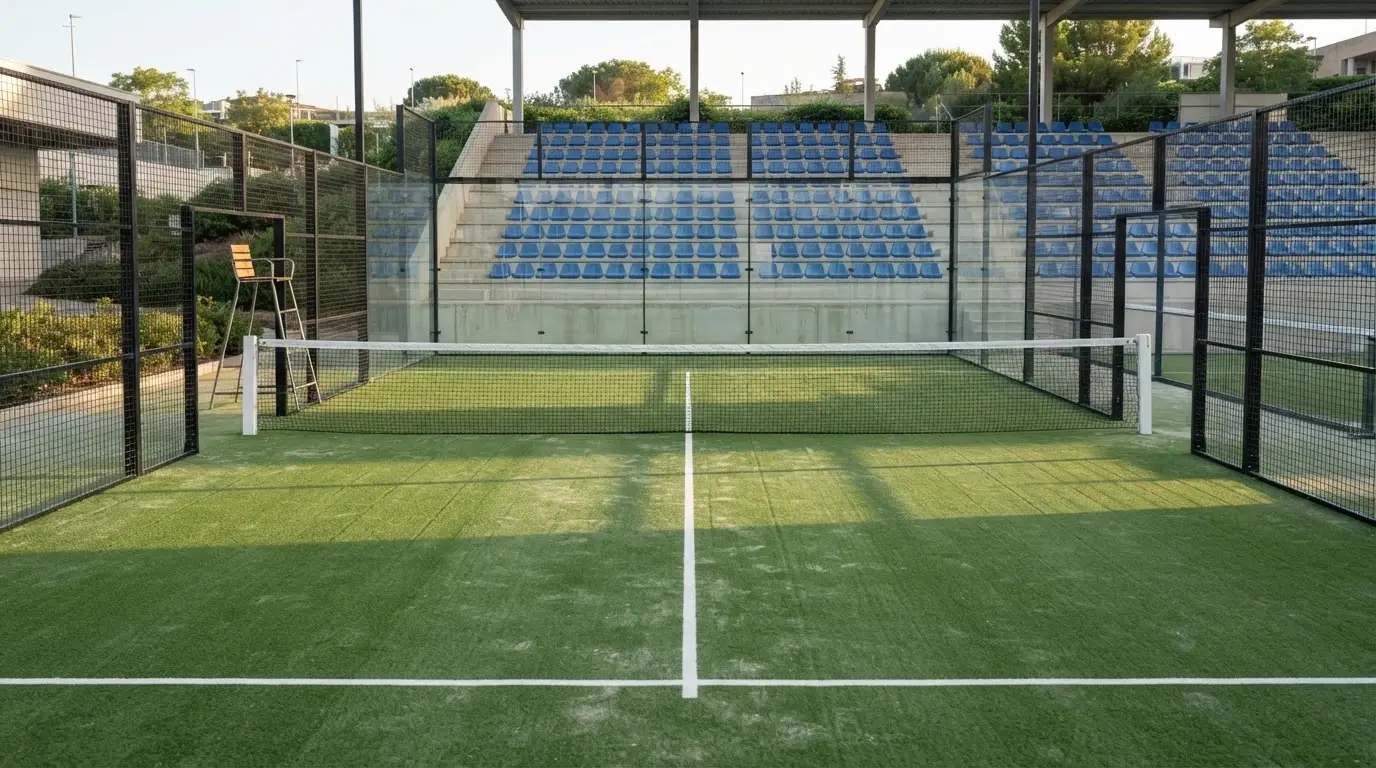
Two things happened to padel in the past three years. The professional tour stopped splitting itself. The World Padel Tour, which had been the main vehicle for ranked padel since 2013, was acquired by Qatar Sports Investments in 2023; the unified global circuit that followed, Premier Padel, took effect for the 2024 season under the governance of the International Padel Federation (FIP), the same body that puts the player-count at well over 35 million in more than 150 countries as of 2025. The amateur and recreational side kept growing in parallel. Padel is now one of the faster-spreading racquet sports in Britain, with clubs adding courts and converting tennis facilities to the 10 m by 20 m glass-walled boxes that house the game.

Betting on it has lagged the playing side by a year or two. The British sports-betting market does not keep a list of permitted sports; a bookmaker takes whatever events its own licence covers, the operator runs in-house traders and product managers, and the market appears when the trading team has priced it. Padel is not a mainstream market in the way Premier League football is. The selection has grown, but the depth still depends on which event is on: Premier Padel main draws and FIP-promoted tournaments price up well; challenger events can be thin or absent at smaller brands.
The material that follows closes around one question. If a British bettor decides to put a stake on a Premier Padel quarter-final, or a World Padel Tour legacy event still on some boards, or a lower-tier FIP draw, what does the bet really cost them, and which bookmakers are licensed to take it? The premise is consequence: what follows from the laws of this market, what follows from how a price is built, and what follows from each book’s terms. Five sections work through the subject, then ten operator write-ups, then a working calculation on margin, then the frequently asked questions.
How padel gets to a betting site in the first place
A padel match becomes a betting market the same way any other event does: a trading team builds a model for the probability of each outcome, converts that probability into a price, and monitors the action until the result. The mechanics are not padel-specific. What is padel-specific is the size and depth of the data the model can draw on. Tennis bookmakers are usually padel bookmakers as well, the underlying point-form model is shared, and pricing is mostly a port of the ATP or WTA structure onto a four-pad court.

The shape of the match shapes the markets. Padel is almost always played as doubles, with each side fielding two players. A match outcome is binary: there is no draw in regulation, so two-way match winner is the natural market. Set betting offers combinations such as 2-0 and 2-1. Game betting inside a set is possible because the scoring system is borrowed from tennis: 15, 30, 40, game, with a golden point at deuce commonly used in major tournaments instead of advantage. That existing familiarity with tennis scoring is what makes padel legible to a trader who built their model for tennis.
The other feature that drives the markets is the calendar. Padel tournaments run on a near-weekly cadence during the season, with main draws of around thirty-two teams, players are ranked as pairs, and the events travel. Premier Padel sets the headline schedule, the FIP runs the development pyramid underneath it, and challenger-level FIP events fill the gaps. For a bookmaker, the most efficient way to price a padel tournament is to mirror the structure it already uses for doubles tennis: a two-way match winner market, an outright winner market for the tournament, and a small handful of side markets.
Why there is no “padel licence” in Britain
Britain does not license sports. It licenses operators. The Gambling Act 2005 and the Gambling (Licensing and Advertising) Act 2014 set the framework; the Gambling Commission holds the public register of who is licensed to take bets from customers in Great Britain. There is no statutory list of permitted events. A bookmaker can offer betting on padel, on chess, on the colour of the Chancellor’s tie, or on a televised cooking contest, subject only to its licence category and the Licence Conditions and Codes of Practice.
The licences that matter for online sports betting are five: remote general betting standard (real events), remote general betting standard (virtual events), remote general betting limited, remote pool betting, and remote betting intermediary. Real-events general betting is the broad category under which padel falls. Pool betting and betting exchange are separate categories. Financial spread betting on price-movement contracts is regulated by the Financial Conduct Authority, not the Commission, which is why a brand such as Spreadex can run two stacks on its homepage: one FCA-regulated spread-betting product, one Gambling-Commission-regulated fixed-odds product, and a warning that spread-betting losses can exceed the deposit.
The point matters because the licence on the register tells you what kind of betting the operator is licensed for, not which sports it must cover. A bookmaker with a remote general betting standard (real events) licence may or may not have padel lines this month. The licence is the right to offer the product, not an obligation to stock every sport.
The legal floor under every padel bet on a UK bookmaker
Minimum age 18. That is the first floor any licensed operator enforces, and it is checked before the first deposit by an automated flow that verifies name, address and date of birth. Since 7 May 2019 no anonymous play is possible at a licensed site; the verification has to be done before a customer can deposit or gamble, including with a free bet or a bonus. The days when a bookmaker could be used without ID are gone.
Beyond age, the framework folds a number of consumer protections around the bettor:
- A financial vulnerability check, drawn from public records, fires when cumulative deposits minus withdrawals at one operator cross £150 in any rolling 30-day period. It is a public-record check, looking at indicators such as county court judgments and bankruptcy. It is not an income check and not a credit-reference check. The trigger has been live in its current form since 28 February 2025 and it applies to every licensed remote bookmaker.
- Deposit limits are the customer’s choice. The operator has to offer them; the customer sets them. The first changes under Remote Technical Standards section 12 came into force on 31 October 2025, and a second phase has been postponed to 30 September 2026 — the live state of that second phase is not a settled question, and the conservative way to phrase it is “in transition”, not “in force from…”.
- A financial risk assessment, the heavier version that has featured in the press under the label “affordability checks”, has been announced in a staged plan on 7 July 2026 with no start date. Until that start date appears, nothing more than the vulnerability check above is mandatory.
- Marketing is governed by the CAP Code on non-broadcast channels and the BCAP Code on broadcast, enforced by the Advertising Standards Authority. Wagering requirements on bonuses are now capped at 10x the bonus amount, with mixed-product promotions (an offer that asks the customer to bet on more than one product type to unlock the bonus) banned outright since 19 January 2026. The bonus cap is a ceiling on what a promotion can ask of the customer, not a price the operator chooses on its own.
GAMSTOP is the second piece of the floor. Since 31 March 2020 every online operator has had to take part; the self-exclusion periods are six months, one year, five years, or five years with auto-renewal, and the minimum period extends by a further seven years unless the customer asks GAMSTOP to lift it. GAMSTOP is online only — betting shops run a separate exclusion — and it overlaps with operator-level exclusion, timeouts, and reality checks that the LCCP also requires.
The protection that is most often missed is the complaints route. A licensed bookmaker is answerable to the Commission, to an approved alternative dispute resolution provider, and ultimately to the courts; the customer has somewhere to take a complaint. An unlicensed brand offers no equivalent.
What makes padel bets different from tennis bets, even when they look identical
Padel borrows the tennis scoring in full. Six games win a set; six games with a two-game margin are needed before a tiebreak at six-all. Major tournaments commonly use the golden point at deuce instead of advantage, so a deuce becomes a single deciding point rather than advantage-in, advantage-out. The structure of matches is what shapes the markets a bookmaker writes.
- Two-way match winner is the base market. It prices up cleanly because there is no draw in regulation; the only state in which a match can be level at the end of the day is 1-1 in sets, which is the decision. Sets that go to a third are settled on the third.
- Set betting offers the 2-0 and 2-1 combinations and prices them off the expected number of sets. Two tennis-style sets is the common outcome at the highest level.
- Game handicap markets mirror tennis: a player gets a head start of plus or minus a fixed number of games. The smaller margin between top pairs means these markets lean a little wider than the equivalent tennis markets.
- Over/under on total games uses the same model as tennis: a model estimates the expected number of games and the market sits around it.
- Outright winner of the tournament is the field market the bookmaker builds when a Premier Padel or major FIP draw is published.
The list is close to identical to the one a tennis bookmaker would publish for an ATP or WTA doubles event. Padel does not have a serve-and-volley advantage that lets a small number of stylistic markets sit alongside the standard set; the market is the tennis market, repointed at a different sport.
What is different is the trading liquidity. Padel turnover is much smaller than tennis. A bookmaker that does serious volume on the men’s and women’s singles draws still prices padel off a static model rather than live prices; bookmakers without a tennis book may decline to take a position at all. That drives the dispersion in market depth between Premier Padel main-draw events and challenger-tier draws: the bigger events have lines available at multiple books, the smaller ones may have a line at one or two of the bigger books and nothing elsewhere.
How the calendar maps to the betting menu
Premier Padel is the headline tour. The World Padel Tour that ran before it carried the men’s and women’s main draw around twenty cities a season; the unified circuit retains the city-by-city structure. Tournaments run year-round with breaks in mid-summer and over the European winter. A Premier Padel event carries about thirty-two teams in each main draw, structured around the FIP ranking, with qualifier places filled from FIP-promoted qualifying events in the same week.
Below Premier Padel the FIP runs a development pyramid:
- FIP Platinum, the second tier of the professional game.
- FIP Gold, the mid-tier international tour with both men’s and women’s draws.
- FIP Rise, the entry point for ranked pairs climbing the ladder.
- FIP Promoted events, run by national federations under FIP rules.
There are also national circuits. The best-known outside Spain are in Sweden, Italy, the UAE and Argentina; in Britain the domestic calendar is a small but growing circuit operated by the LTA padel function. The deeper British events have a market at a few books; most do not.
For a bettor, the practical upshot is that the calendar is dense and the menu varies. Two bookmakers can have very different padel offerings on the same day because one takes positions across FIP Gold while the other stops at the FIP Premier main draws. The bettor looking for a price comparison is comparing bookmakers with different fixtures to begin with.
The shape of the market on the day
A Premier Padel main-draw day looks like this at a well-stocked bookmaker. Morning, the outright winner market on the tournament is updated after the previous day’s results; the win market is updated to reflect withdrawals and form. Midday the day’s order of play is posted on Premier Padel’s site and trader feeds pick it up; the match-winner market for that day’s matches is published, often with multiple price points and a handicap line. By the time play starts the prices have settled into an opening position.
The most useful live market is match winner. Because padel tends to produce short sets and few breaks of serve, the live price is more jumpy than tennis; a single break of serve in tennis can swing a set price by 0.3, in padel the swing per break is comparable. Side markets such as next game and total games of the set update frequently through the game-by-game feed.
What is not always there is the deeper market set: tiebreaks in the set, exact score in games, total aces. Padel does not serve big enough to make aces a market, and breaks of serve happen often enough that game-by-game prices move smoothly. Outright winner is often the second-most-traded market after match winner.
What this looks like at the smaller end
A challenger-tier padel event is harder to find. FIP Rise draws usually price up at one or two of the larger books and nowhere else; FIP Promoted events often have no market at all. The larger books use their own match-pricing engine, the smaller books use a feed; both depend on the FIP for fixtures and results.
A bettor looking at challenger padel should check whether the event is priced at the bookmaker they use, and check the bookmaker’s settlement rules for retirement, walkover and any decision that is short of a completed match. The padel rules around injury during a match are the same as tennis in most tournament rule books: a player who retires mid-match loses the market. Some books settle differently on a mid-match retirement in the third set. That is a rule to read before placing the bet, not after.
The cost of a padel bet: where the margin sits
The bookmaker’s margin is the one number a bettor can read directly out of the prices on the screen, and it is the single figure that defines what the line costs over many bets. It is also the one number that varies most across the market for any given event.
On a Premier Padel match winner, a bookmaker may post prices of 1.91 / 1.91; on the same event another bookmaker may be at 1.85 / 1.85. The price difference is the per-unit stake the better earns, before they look at their model. Margin is the same idea the other way around. A two-way market at 1.91 / 1.91 has a margin around 4.7%; the same market at 1.85 / 1.85 has a margin around 8.1%. The difference between the two is two bookmakers who believe they have priced the same outcome to the same probability and offered different prices to the customer.
That is why margin is the statistic to compare, not a single price. The price moves event by event; the margin holds across the menu. A bookmaker with a padel margin of 5% takes 5p on every £1 staked; a bookmaker with a padel margin of 8% takes 8p on the same stake. The difference compounds across a season.
The payout if the bet wins
Decimal odds are the working form in the British market today. The stake returns stake × odds; the profit (the amount above the stake that lands in the account) is stake × (odds − 1).
A £10 single at odds 2.50 returns £25. The profit is £15. A £5 each-way at the same odds on a tournament winner returns the win portion at full odds (2.50 × £5 = £12.50) plus the place portion at the place terms of the market; the stake is doubled because each-way is two bets at the same unit stake.
A combination bet accumulates the odds. A £5 double at 2.00 and 2.50 returns 5 × (2.00 × 2.50) = £25; the profit is £20. A treble multiplies the three legs; an accumulator with four or more legs multiplies every leg into one price. The longer the chain, the higher the headline number, and the higher the chance of one leg letting the rest down. The compounding effect of margin is also stronger: every leg carries its own margin, and a four-leg acca carries the combined margin of four markets.
Each-way accas are the same arithmetic with the place terms applied to each leg. A £5 each-way Lucky 15 (fifteen bets across four selections, each-way) doubles the stake to £50, and the place portions pay at a fraction of the win odds for each leg that places.
Best Odds Guaranteed, price boosts and the marketing around price
Best Odds Guaranteed (BOG) is the most common special offer on British racing. If the starting price on a horse race is bigger than the early or show price the customer took, the bookmaker pays at the SP. Two bookmakers (William Hill and Bet600) confirmed the offer on their own pages. BOG is a horse-racing product and does not apply to padel; mentioning it is useful only as context for what “price” means at a British bookmaker.
Price boosts are a padel-relevant product. Boosted odds on a Premier Padel winner are common; bet365’s daily Bet Boosts and the broader Super Boosts facility sit in this category, as do BetMGM’s specific promotional boosts around headline events. A boosted price is still a price: the bookmaker’s margin sits inside it, the boost is a discount on that margin for one event, and the customer sees the headline number fall back to the regular line if the bet loses.
Winnings boosts reward a winning bet with a percentage on top; acca insurance refunds a stake as a free bet when one leg lets a multi down; cash out closes a bet early at a bookmaker-set price. Each of these is a feature of the betting site, not a feature of padel; they sit on top of the basic market regardless of the sport.
The shape of a padel bettor’s bankroll over a season
The frame on a bankroll matters more than the average price a customer takes. Padel is a high-variance sport at the betting end because the calendar is dense. There are around twenty Premier Padel weeks in a season; a bettor staking £10 on each main-draw match of each tournament across a 12-month stretch has staked several thousand pounds before accounting for the FIP promotions underneath. The headline line is fine in slow weeks; the busy weeks can soak the bankroll.
The practical mitigation is unit sizing: a fixed stake per bet, expressed as a percentage of the bankroll, with the percentage dropping as the bankroll shrinks. A 1% bankroll per bet rule is the simplest version of this. Padel does not need a special rule because the sport does not need a special rule; the discipline is the same as the discipline for betting on tennis, football, or any other sport a British bookmaker offers.
The risk that is specific to padel is liquidity. A bookmaker that takes a position on a Premier Padel main-draw event will also cap stakes on challenger events. A customer who tries to put five hundred pounds on an FIP Rise pair on a Tuesday afternoon at a bookmaker whose model is not built for it will be limited down to whatever the trading team allows, and possibly refused. The bookmaker’s stake-limit policy is the constraint that affects a sharp padel bettor more often than the rules do.
Ten bookmakers licensed to take padel bets in Great Britain
The next ten sections move from the licence list to the licences themselves. Each brand here is on the Gambling Commission’s public register against a remote general betting standard (real events) licence for Great Britain; the names, the operating companies and the commission account numbers come from that register and from each operator’s own pages.
These are not ranked by margin on padel — no operator publishes its padel pricing model and none of the comparison tables in this guide carry padel-specific margin figures. The aim is to give the bettor the licence information on each brand, the product feature they actually use on a padel match, and a verdict that names what the brand is good for.
Betfred — the high-street name with a big racing menu and a deep coupon
Betfred is operated by Petfre (Gibraltar) Limited under Commission account 39544. The mobile app is published in the UK App Store as Betfred Sports, Casino & Games and covers 21 sports on its sportsbook alongside more than 2,000 casino games. The UK licence covers remote general betting standard (real events); the App Store listing confirms the link between the operator and the app the customer downloads.
On padel, Betfred has tended to run a match-winner market on Premier Padel main draws and a handful of outright markets. The site is built around its racing menu, and the specials are mostly horse-racing focused, but the sportsbook is configured to take a position on most major sports. The terms around settlement, retirement and Rule 4 deductions apply across sports and are unchanged on padel.
A bettor looking at Betfred for padel is paying for two things: brand familiarity and the cash-out function on multi-leg bets. The racing-grade specials do not transfer across to padel, so the headline promotional offers on the page are largely irrelevant to a padel-only customer. The welcome-style promotions and Free Bet Club arrangements vary; the rest of the betting menu is the better comparison.
William Hill — the long-established sportsbook with acca boosts and racing-grade streaming
William Hill is operated by WHG (International) Limited under Commission account 39225. The site carries the Football Acca Boost (3% on a double up to 200% on twenty legs or more, subject to each leg being priced 1/5 or bigger in fractional terms, and a £10,000 maximum boost per online bet) running through to 30 May 2027. The streaming product WHTV is gated behind a funded account or a bet within the last 24 hours, and live racing requires a bet of £1 or more on a qualifying race.
Padel-wise, William Hill has run match-winner and outright markets on Premier Padel events in recent seasons. The site extends the customer-facing padel coverage as the calendar progresses; a single Grand Slam tennis-style event with seventeen courts does not exist in padel, so the menu is narrower than the tennis one. The Acca Boost is a live product on the day of an event and applies to a padel acca as it does to football.
The customer base is older and more horse-racing-heavy than the average operator in this list, and the site offers the same Best Odds Guaranteed on UK and Irish racing from 8am on the day that other major operators offer, with the same exclusions for ante-post, tote and pari-mutuel bets. A padel bettor who also follows racing will find a generous combined product on William Hill; a padel-only bettor is paying for a racing-heavy shop window.
bet365 — the largest menu, with Bet Builder+, in-play and price boosts
bet365 is operated by Hillside (UK Sports) ENC under Commission account 55148. It is the official global betting partner of the UEFA Champions League, and its mobile app is the most-downloaded sports betting app in the UK by App Store rankings. The bet365 product range covers more sports, more markets, and more in-play events than most of the rest of this list combined.
The two features that matter most for a padel bettor are Bet Builder+ and the in-play product. Bet Builder+ combines markets from the same event into a single bet, available pre-match and in-play. A padel builder on a Premier Padel quarter-final can chain together markets like match winner, set betting, total games in set one; the builder handles them as one bet. In-play betting is supported by live streaming on selected events and by Match Live and Bet Track, which give customers an inside view of the action.
Price-boost promotions include Super Boosts on selected markets, Winnings Boosts on Bet Builders and selected singles, and a daily Bet Boosts menu. The headline numbers on a Premier Padel final weekend move around as new boosts are added. The combination of menu depth and live product is what bet365 sells, and it is the reason the site shows up first on most UK betting-comparison searches.
Bet600 — the smaller sportsbook paying BOG on racing
Bet600 is operated by Tyche Tech Limited under Commission account 44731. The site offers Best Odds Guaranteed on horse racing: if the starting price is bigger than the early or show price taken, the bet is paid at the SP. The site has a sportsbook of modest depth that grows during major events; padel coverage tends to follow the Premier Padel calendar.
Punters drawn to Bet600 are usually drawn in for the racing product. The padel offering is a smaller version of the major-books padel offering, with match winner on Premier Padel main draws and a small outright market where it is published. The margin on offer tends to sit inside the better-part of the market on Premier Padel match winner — not always, but on the events that are trader-priced, this bookmaker sits near the front.
A padel-only bettor is not the centre of the Bet600 user base. The book is built around racing, and the promotions on the sportsbook are racing-coded. A bettor looking for a thin menu that prices up the main draws is well served; a bettor looking for a deep menu with in-play padel needs a bigger bookmaker.
BetMGM — the MGM-backed sportsbook with a four-free-bet welcome structure
BetMGM is operated by LeoVegas Gaming PLC under Commission account 39198. The sports welcome offer for new UK customers who deposit £10 or more and place a sports bet within seven days is four £10 free bets, issued as two football accas of four or more selections and two sports multiples of two or more, valid for seven days. Minimum odds and an opt-in are required; the offer is presented on the BetMGM app and across the sportsbook.
On padel, BetMGM has been building out match-winner markets and outright winner markets on Premier Padel events. The site categorises padel alongside tennis and the rest of the racquet sports menu. The four-free-bet welcome is the headline promotion; the regular sportsbook carries price boosts and free-to-play games, but the four-free-bet structure is configured as the marketing headline.
A bettor with a sportsbook portfolio (BetMGM plus one or more of the bigger books) can find good value at BetMGM on Premier Padel match winner because the bookmaker’s pricing engine is configured differently from those of the bigger books; the same event does not always close at the same line. The four-free-bet offer is the reason a new customer picks BetMGM as a starter book; the daily menu is the reason they stay.
Star Sports — the trading-desk book that takes bets by phone
Star Sports is operated by Star Racing Limited under Commission account 9177. The site offers a phone number (08000 521 321) on the app and in the App Store listing, alongside a customer-support email. The intended operating model is a small, trader-led shop that takes positions over the phone and through the app, with the trader able to set prices on markets the rest of the industry does not cover.
Padel sits inside this trader-led model at Star Sports. The match-winner market on Premier Padel events has been trader-led rather than feed-led in recent seasons; the bookmaker takes a position and may publish prices on matches that bigger feed-led books do not price. The padel customer looking for a market on an event that the rest of the market has dropped can find it here.
The user base is small and whale-flavoured. The shop is not a casual bookmaker; it is a trading desk where the customer is a known account and the trader knows what the book has on the line. For a bettor who wants to talk through a position on a padel match that other books do not have, that is the offer.
DragonBet — the Welsh-focused bookmaker with a deep customer base there
DragonBet is operated by DragonBet Ltd under Commission account 64908. The brand runs a sportsbook focused on Welsh football and rugby, alongside horse racing, American football, in-play betting and a bet-builder product. The betting menu sits at the intersection of the domestic Welsh-market book and the international sportsbook; padel is the international side of that menu.
On padel, DragonBet has carried match winner and outright markets on Premier Padel main draws. The book is not as deep as bet365 and not as racing-focused as the racing-led names on this list; the menu is configured around the Welsh football and rugby customer who wants to bet on a wider sports menu. Padel is on that menu but not at the centre.
A bettor who likes the site’s product on Welsh sport, and who already has an account there, will find padel markets on the days they are looking for them. A bettor who wants a padel-specific bookmaker is not DragonBet’s customer.
Coral — the Ladbrokes-group book with a £20-to-£40 free-bet welcome
Coral is operated by LC International Limited under Commission account 54743. The site is part of the Ladbrokes Coral group, which shares an operating licensee in the British market; they are not separate businesses. The Coral sports welcome offer is “Get £40 in free bets when you bet £20” — a deposit and a sports bet of £20 or more at minimum odds 2.0 (1/1), with the £40 in free bets issued within seven days and expiring seven days after issue, for new GB customers who opt in. The terms sit on the Coral homepage in the standard promotional format.
Punters drawn to Coral use the betting shop network: the high-street presence remains a Coral asset, the online shop is connected to it, and Coral customers can drop into a shop to settle disputes and process withdrawals. Pad el coverage at Coral has tended to follow the mainstream tournament calendar; the depth matches the bigger books for Premier Padel main draws.
A bettor who likes the shop-based service and the multi-product welcome offer is well served. A padel-only bettor is paying for features they do not use. The product is closer to the rest of the Ladbrokes-group books than to the independent books on this list.
Betway — the multi-product book with a Free Bet Club weekly product
Betway is operated by Betway Limited under Commission account 39372. The Free Bet Club gives up to £10 in free bets every week after opt-in: spending £25 or more on sports earns 2 x £5 free bets. The structure is straightforward — opt in on Monday, wager on qualifying sports during the week, collect two £5 free bets at the end. The product is configured as a regular weekly reward, not a one-off welcome.
On padel, Betway has run a sportsbook that covers Premier Padel match-winner markets, outright markets at major tournaments, and a small selection of side markets. The depth is in the same neighbourhood as the bigger books on Premier Padel main draws; the mid-week FIP Gold menu is thinner. The Free Bet Club is the user-facing headline offer for the brand.
A bettor who wants a regular weekly reward for staking on padel has a fit at Betway. The weekly structure is more relevant to a regular padel bettor than the one-off welcome structures at the bigger books. A bettor who bets infrequently will not get the same use out of the Free Bet Club.
10bet — the sports-and-casino book with Cash Out, Bet Builder and Live Streaming
10bet is operated by Blue Star Planet Limited under Commission account 43173. The sportsbook covers football, tennis and horse racing in depth, and the trio of Cash Out, Bet Builder and Live Streaming sits on the page as a feature set. Live Streaming is the differentiator; Cash Out and Bet Builder are common across the bigger books but not universal at this size of operator.
On padel, 10bet has tended to price the Premier Padel match-winner markets and the major FIP tournaments. Live Streaming on padel is the interesting feature: a tournament where the streaming feed is open at 10bet offers the in-play bettor both price and picture from the same screen. The Cas h Out function covers pre-match and in-play bets and is the standard product across the bigger sportsbooks.
A padel bettor who wants Live Streaming on the sport has a fit here; a bettor looking for the deepest outright market has the better fit elsewhere. The site is a strong fit for the bettor who wants to watch as they bet, with Cash Out for partial settlement on multi-leg bets.
How to read the table
The single comparison table that follows is the licence-side only. It does not carry padel-specific margin because no operator publishes padel margin. It carries the Commission’s account number, the licence holder’s name, and a short note on the operator’s own terms page that names a feature the page’s research covered.
The numbers across a row are independent facts about the brand. The “operator’s own terms” column is a citation, not an endorsement: where the table names a feature, the operator publishes that feature in its terms or on its homepage; nothing else follows from the table.
| Brand | Gambling Commission account and licence holder | What the operator’s own terms state |
|---|---|---|
| Betfred | 39544, Petfre (Gibraltar) Limited | Sportsbook covers 21 sports including match-winner on Premier Padel events |
| William Hill | 39225, WHG (International) Limited | Football Acca Boost through 30 May 2027; Best Odds Guaranteed on UK and Irish racing |
| bet365 | 55148, Hillside (UK Sports) ENC | Bet Builder+, Super Boosts, in-play, live streaming on selected padel events |
| Bet600 | 44731, Tyche Tech Limited | Best Odds Guaranteed on horse racing: settled at the SP if larger |
| BetMGM | 39198, LeoVegas Gaming PLC | Four £10 free bets as two football 4+ accumulators and two sports 2+ multiples on qualifying first bet |
| Star Sports | 9177, Star Racing Limited | Phone-trading account opening and customer support on 08000 521 321 |
| DragonBet | 64908, DragonBet Ltd | Welsh football and rugby focus; match-winner and outright markets on Premier Padel |
| Coral | 54743, LC International Limited | £40 in free bets when betting £20 at minimum odds 2.0, valid 7 days |
| Betway | 39372, Betway Limited | Free Bet Club: 2 x £5 free bets after £25 wagered on qualifying sports per week |
| 10bet | 43173, Blue Star Planet Limited | Cash Out, Bet Builder and Live Streaming on the sportsbook |
The right-hand column does not say which sportsbook has the deepest padel menu — no operator publishes that figure. It says what each operator confirms about itself. The margin a customer reads out of the prices is a field-of-view matter, decided by clicking through to the page, not by reading the table.
The cost of a price — a worked margin calculation
Take the simplest padel market a bookmaker prices up: a two-way match-winner. The two outcomes are P1 (the favourite to win) and P2 (the outsider), and the price on each is the decimal number the bookmaker publishes. The bookmaker’s margin comes out of the relationship between the two prices.
If the prices are 1.90 and 1.90, the payout share is 1 ÷ (1 ÷ 1.90 + 1 ÷ 1.90) = 1 ÷ (1.0526) = 0.95. The margin is 1 − 0.95 = 0.05, or 5%. Of every pound staked, 95p returns to winning customers on average and 5p stays with the bookmaker.
If the prices tighten to 1.85 and 1.85, the payout share is 1 ÷ (1 ÷ 1.85 + 1 ÷ 1.85) = 1 ÷ (1.0811) = 0.925. The margin is 1 − 0.925 = 0.075, or 7.5%.
The two numbers are the same market seen at two prices. The 1.85/1.85 bookmaker keeps 50% more on every stake than the 1.90/1.90 bookmaker. That is the only number a bettor needs to know to compare two books on the same event.
A real-world margin is rarely the two-way 5% the worked example produces. Premier Padel match-winner markets typically sit between roughly 6% and 9% on the day, with FIP Gold slightly higher again, and smaller-market lines on challenger events pushing past 10%. None of these figures is published; they are what the bettor reads out of the day’s prices, two outcomes at a time.
For an acca, the same arithmetic compounds. A four-leg acca at 2.00 on each leg carries a margin of 1 − (1 ÷ 0.5)^(−4) where 0.5 is the payout share of a 2.00/2.00 line. The four-leg acca’s payout share drops below the single market’s payout share on every leg additively. A 2.00-priced leg has a 4.76% margin by itself; the four-leg acca’s margin is closer to 18%, multiplied into the acca’s headline odds.
How to convert fractional odds to decimal
British racing odds are written as fractions: 5/1 means a £1 stake returns £5 profit plus the £1 stake, total £6. The decimal form is 6.00. The conversion is: decimal = (numerator ÷ denominator) + 1. 11/4 → 11 ÷ 4 + 1 = 3.75. Evens (1/1) → 1 + 1 = 2.00. 4/6 → 4 ÷ 6 + 1 = 1.67.
A £10 single at 5/1 returns £10 × 6.00 = £60. The profit is £10 × 5.00 = £50. A £10 single at 4/6 returns £10 × 1.67 = £16.70. The profit is £10 × 0.67 = £6.70. The decimal form is the working number; the fraction is the form on the page, the form printed on the betting slip.
The bookmaker’s margin expressed in fractions is the same number. A two-way market at 5/6 / 5/6 in decimal is 1.83 / 1.83; the margin is 1 − (1 ÷ (1 ÷ 1.83 + 1 ÷ 1.83)) = 1 − 0.915 = 0.085, or 8.5%. The fraction is a presentation form; the margin is the same calculation in either presentation.
Reading the licence list and writing your own verification
A licence lookup starts at the Commission’s public register. The brand names and operating licences sit there; the brand’s own site cites the same account number in its own terms. A discrepancy between the two — a brand claiming Commission account 12345 when the register shows nothing under that name — is a red flag.
Two practical checks:
- The licence is the operating company’s, not the brand’s. A brand like BetMGM trading on the LeoVegas Gaming PLC licence has to show the same licence number the register shows; the customer-facing terms do not need to mention the operating company, but the licence number is sufficient because it ties the public-register entry back to the entity that holds the licence.
- The licence categories tell the customer what the operator is licensed for. Remote general betting standard (real events) is the relevant category for padel. A brand licensed only for virtual events cannot offer padel. A brand licensed only for pool betting cannot offer match-winner markets on individual padel matches.
The Commission’s register is updated as licences are issued, varied and revoked. A licence that was active in January may have been revoked by October. The only verification is the live register on the day of the lookup.
What changes when padel is at a non-licensed bookmaker
The settings here run narrow. Great Britain has no law that prohibits a customer from using a Curaçao-licensed bookmaker. The relevant law is section 33 of the Gambling Act 2005, aimed at the operator: providing gambling facilities in Great Britain without the licence the Act requires is an offence, on summary conviction up to 51 weeks’ imprisonment, a fine up to level 5, or both; in Scotland, six months. The customer side is not the legal target.
The protection that does not transfer is the practical one. A non-licensed bookmaker is not part of GAMSTOP, so the self-exclusion does not flow through. The bookmaker is not on the Commission’s complaints path and is not bound by an approved alternative dispute resolution provider. The bookmaker is not bound by the £150 vulnerability check, the 10x bonus cap, or the mixed-product promotion ban. A complaint about a withheld withdrawal cannot be taken to the Commission’s alternative dispute resolution provider; it can only be taken to the operator itself. The bettor has signed up to a private dispute path with no British consumer redress if it fails.
This is the framing the page takes. A non-licensed brand is “unregulated by the Commission, not on GAMSTOP, no British complaints route” — those three are factual statements about an unlicensed brand. The page does not write that an unlicensed brand is “illegal to use” because no statute makes the act of betting at one an offence aimed at the customer; the legal position is aimed at the operator.
Responsible gambling on padel sites
The licensed operators in this guide all hold a Commission licence and all participate in GAMSTOP. The four tools the LCCP puts in front of every customer are:
- A deposit limit, set by the customer. The bookmaker has to offer it; the customer chooses.
- A reality check, a periodic reminder to a customer of how long they have been on the site. The reminder can be a soft pop-up or a hard stop.
- A timeout, a short-term self-exclusion from one operator. Timeouts run from 24 hours to six weeks; longer exclusions are routed through GAMSTOP.
- GAMSTOP, the national multi-operator self-exclusion. Periods are six months, one year, five years, or five years with auto-renewal; the minimum period extends by a further seven years unless the customer asks GAMSTOP to lift it.
The financial vulnerability check is a separate consumer-protection layer. The bookmaker performs a public-record check on the customer when cumulative deposits minus withdrawals cross £150 in any rolling 30 days. The check looks at county court judgments and bankruptcy orders, not at bank statements. The trigger has been live since 28 February 2025; the heavier “affordability check” (financial risk assessment) has been announced on a staged plan on 7 July 2026 with no start date.
The third tier is the customer-help line. GamCare runs the National Gambling Helpline; GambleAware funds public education; the NHS runs gambling clinics in some regions; Gamblers Anonymous runs peer meetings. The LCCP requires the licensed operator to signpost at least one of these on the responsible-gambling page.
The credit-card ban from 14 April 2020 makes the deposit instruments debit cards and bank-based payments only; e-wallets funded from a credit card are also inside the ban.
What the price tracker misses
Two misreadings come up regularly. The first is treating the headline price as the price. A £10 bet at 2.50 looks like £25 back; the bookmaker’s margin inside the 2.50 is part of the implied probability and the bet only wins if the real probability is higher than the implied one. The bigger the margin, the more often the bet loses even at the right price.
The second is treating the welcome offer as the offer. A bookmaker that gives £40 in free bets on a £20 first bet is not paying you £20; it is selling you a stake and a turnover requirement. The £40 in free bets is a stake on its own terms — minimum odds, qualifying markets, expiry — and the marketing number is the headline.
Where the line is drawn at each bookmaker
The line at the better bookmaker is the price after margin and the price given across an event. The deeper bookmaker (more events priced up at the same time, more in-play markets, more bet-builder markets on each match) is taking more positions and writing more markets. The bigger margin at a narrower bookmaker is sometimes still a better line for an event-by-event comparison.
The check on the morning of a Premier Padel main draw is straightforward:
- Open the same event at three or four books.
- Read the price of each outcome.
- Pick the book with the highest payout share (the lowest margin) on the outcome you want to back.
- Place the bet.
The rest is the same bet at the same odds — the bookmaker’s take is the only thing that has changed. That is what the comparison table is for and what the margin calculation works against. The rest of the operator pages are the choice of book; the choice of price is on the page.
What the next 12 months look like for padel betting
Two trajectories are running simultaneously. The first is the consolidation of Premier Padel and the FIP development pyramid. The professional game has one tour for the top of the sport and three or four FIP tiers underneath, all running a near-weekly calendar. Bookmaker coverage is dense at the Premier Padel level; challenger coverage is still uneven.
The second is the British consumer-protection regime tightening. The October 2025 changes to Remote Technical Standards section 12 (deposit limits) are live; a second phase has been postponed to 30 September 2026 and is not settled at the time of writing. The financial risk assessment has been announced on a staged plan with no start date. The bonus cap and the mixed-product promotion ban are now law and have been since 19 January 2026.
The two trajectories interact. As the consumer-protection regime tightens, the smaller books will continue to consolidate, and the British-market bookmaker with a remote general betting standard (real events) licence is likely to be the big-five sportsbooks plus the racing-led independents. Padel will continue to be a sub-set of the tennis menu at those books; the FIP development pyramid will continue to feed challenger events that not every book prices.
Reading this guide against the bookmaker pages
The ten operator reviews above each close on what the bookmaker is actually for. None of them is the same recommendation; each one is the consequence of the licence, the product set, and the in-house terms that the operator publishes. Reading the guide end-to-end is what positions each operator; reading any one operator review alone gives that operator’s part of the picture.
A bettor who wants the deepest menu and the strongest in-play product starts with bet365; the bettor who wants the racing product and the high-street touch starts with William Hill or Coral; the bettor who wants the weekly-reward structure starts with Betway; the bettor who wants a phone-trading experience starts with Star Sports; the bettor who wants the strongest cash-out / streaming combination on a smaller menu starts with 10bet. None of the books above is the wrong book; none of them is the only book; the comparison table at the centre of this page is the licence-level fact set from which the rest follows.
Frequently asked questions
Where is padel bet on in the British market?
Padel is bet on at licensed bookmakers that hold a Gambling Commission remote general betting standard (real events) licence; coverage extends across Premier Padel main draws, the FIP development pyramid, and the smaller FIP Promoted events. The Commission’s public register is the test of who holds one, and every brand in the operator section above holds such a licence.
How is a Gambling Commission licence verified?
The public register at the Commission’s site can be searched by business name, trading name, domain or account number. The licence categories on the entry show what the operator is licensed for; a remote general betting standard (real events) licence is the relevant category for padel betting. The same licence number appears in the operator’s terms or its app-store listing.
How is the return worked out from the stake and the odds?
The return on a winning bet is the stake multiplied by the decimal odds. The profit is the stake multiplied by (decimal odds − 1). A £10 single at odds 2.50 returns £25; the profit is £15. For a combination bet the odds of each leg are multiplied into one price before the same multiplication by the stake is applied.
What is the bookmaker’s margin, and how is it read out of the odds?
The margin is what the bookmaker keeps, on average, of every unit staked on a market. On a two-way market at 1.90 / 1.90 decimal, the payout share is 1 ÷ (1 ÷ 1.90 + 1 ÷ 1.90) ≈ 0.95 and the margin is about 0.05, or 5%. The price on each outcome carries the implied probability, and the gap between the implied probabilities summed and 1.00 is the margin.
How do fractional odds such as 5/1 convert to decimal odds?
The conversion is decimal = (numerator ÷ denominator) + 1. A 5/1 line is 5 ÷ 1 + 1 = 6.00. An 11/4 line is 11 ÷ 4 + 1 = 3.75. An evens line (1/1) is 1 + 1 = 2.00. The decimal form is the working form used in any calculation of return, profit or margin; the fraction is the form written on the British betting slip.
Which player-protection tools does a licensed bookmaker have to offer?
A licensed remote bookmaker has to offer GAMSTOP self-exclusion, deposit limits, timeouts, reality checks, and signposting to GamCare, GambleAware and the NHS gambling clinics. The financial vulnerability check applies when deposits minus withdrawals cross £150 in a rolling 30-day period, and the credit-card ban prevents gambling transactions funded from credit.
Tennis, darts & cue sports – Boxing betting
Content created by the «Boxing betting» team
