
Snooker Betting Odds 2026: Where They Sit, What They Cost and How to Read Them
 Available in US
The price of a snooker bet looks simple — a number on a screen, a stake typed in, a return if the player wins. It is not. Every decimal price is a margin dressed up as a probability, and the bookmaker’s margin is the single number a bettor can shave off every bet they place by choosing the right operator. This page is about that number and the ones beside it: the markets licensed UK bookmakers offer, the live-in-play conditions, the outright prices weeks before a frame is played, and the cost of every welcome offer that arrives with a stake attached.
Data current as of 27 October 2026 and checked against the Gambling Commission’s public register.
Live Snooker Betting: What Actually Moves
In-play snooker is not the same product as a pre-match price. A match that began at 1.57 for the favourite moves frame by frame, and the price a backer takes in the sixth frame reflects a different set of probabilities than the one they could have locked in before the first ball was potted. That is the trade, and it is a working one for anyone who can read a table while it is in progress.
How in-play snooker markets are shaped
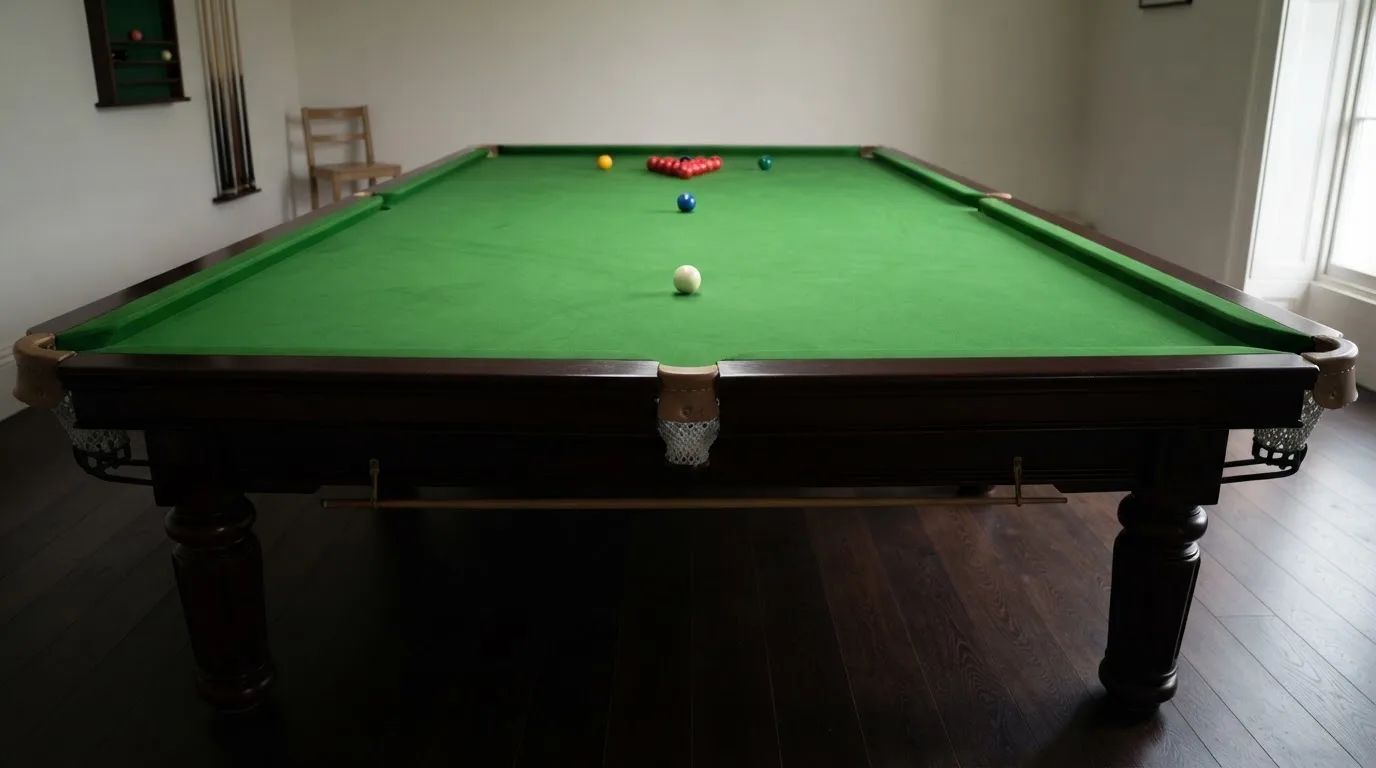
Frame-by-frame markets update through a match as the balls are potted. The two most common in-play prices are match outright — who lifts the trophy or wins the best-of-N — and next-frame winner. Each settles from the official score feed, and a bet placed while a frame is in progress is matched to the score at the moment the wager was confirmed. A suspension for a miss or a foul does not void a settled frame; the bet stands on what was potted.
In the bigger tournaments the in-play book runs deeper. Mid-session frame handicap, total frames over/under, century break markets and a next-century market all appear while the player is at the table. Their margins are higher than pre-match — a bookmaker in-play has less time to balance the book, so the price reflects a wider safety margin. That is the cost a backer pays for the privilege of betting on a frame that is already in progress.
What “live” means at the bigger UK bookmakers
Midnite’s site lists in-play events alongside its acca builder and price boosts. 888sport offers pre-match, in-play, Cash Out, Bet Builder, racing streams, BetFinder form tools, a live bet feed and daily boosted odds. The point is that the in-play product is not an add-on: at the brands that lean into snooker, it is the product, and the pre-match market is the surface, the live one is the substance.
The practical consequence: a bettor who only places bets the morning of a match is paying a different price for the same opinion than one who waits for a break of serve — the snooker equivalent of a service game in tennis. A 1.80 pre-match favourite who loses the first frame can drift to 2.10 within minutes, and the smart money is on the bettor who decided in advance which side of that move they want to be on.
Cash out and what it costs
Cash Out closes a bet before the final frame settles. The bookmaker offers a price — usually below the true mid-market — and the backer takes it or leaves it. At operators that offer it, Cash Out is built into the in-play product; at those that do not, a backer is locked in until the result. A bet that is winning mid-match is worth less in cash than it would be at full settlement, and the difference is the cost of liquidity. It is real money, and for a backer who wants it, the price is the price.
Snooker Betting Predictions and Strategy: What the Tips Cannot Tell You
A snooker betting tip is one person’s read on a match. It is published under a brand name, posted on social media, sometimes paid for, almost never accountable when it is wrong. What the tipster writes is not the question; the question is what the tipster is actually selling.
The shape of a prediction market
Outright markets for the World Snooker Championship open months in advance, and the price on the favourite — the eventual winner’s name — moves from a long 10.00 or 12.00 down through 5.00, 4.00 and into the 2.00s as the tournament draws closer. Each step reflects bookmaker balance, not new information; the same player is just being re-priced as money arrives on each side. A tipster calling the winner at 12.00 in January is not smarter than a tipster calling the same player at 3.50 in April — they are picking from the same pool of information, just at a different price.
What “today’s snooker” really offers
Fixtures are pulled together on a match-by-match basis, and a “snooker betting today” page is a list of matches and prices, not a verdict. The 2026 World Snooker Championship ran from 18 April to 4 May 2026 at the Crucible Theatre, with Wu Yize beating Shaun Murphy 18-17 in the final and a £500,000 winner’s share from a £2,395,000 prize fund. That is what a settled snooker event looks like — a single result, a single payout, no second chances.
Bankroll, staking and what a tipster does not promise
Bankroll management is the discipline of deciding, in advance, what stake goes on which price. The most common rules are flat staking — the same unit on every bet — and percentage staking — a fixed share of the bank on each wager. Both assume the bettor has an edge, which the arithmetic of the margin says they almost never do. A tipster promising a 60% strike rate at average odds of 1.80 has a profitable record before the margin is applied; after it, the same record is a long, slow loss. The arithmetic is unforgiving and the marketing is not.
Snooker Bet Types and How the Odds Are Built
Snooker has fewer markets than football or horse racing, but the ones it has are dense. A frame-outright bet, a handicap, a total-frames line and an each-way outright are all priced differently, and the same bookmaker will hold a different margin on each.
The two main snooker markets
Match outright is the simplest: who wins the match. The bookmaker offers two prices, one on each player, and the margin is built into both. Total frames over/under is the line of which the smaller market is the mirror — set at, say, 16.5 in a best-of-25, the over and the under are both priced just under evens. Each-way outright is the structure used for tournament winner markets: place terms vary by event, and the each-way fraction is the bookmaker’s choice, usually a quarter or a third of the win odds, paying out at one to four or one to three of the place places.
How a snooker price is constructed
Every decimal price is the inverse of an implied probability, plus a margin. A player priced at 2.00 implies a 50% chance of winning; a player priced at 4.00 implies a 25% chance. The two probabilities on a two-way market do not add up to 100% — they add up to more, and the excess is the bookmaker’s margin, sometimes called the overround.
Take an illustrative two-way match at 1.90 and 1.90, the kind of price seen on a balanced best-of-11. The implied probabilities are 1 ÷ 1.90 = 0.5263 for each player, totalling 1.0526, or 105.26%. That excess of 5.26% is the bookmaker’s take on this market. The payout share — the proportion of every pound staked that comes back to backers in aggregate — is 1 ÷ 1.0526 = 95.00%, so the margin sits in a band around 5% for a balanced two-way snooker price. Different markets carry different margins: a heavily lopsided pre-match favourite at 1.20 against 5.50 can show 7-8% margin on a single book; a well-balanced handicap market can sit closer to 3%. The exact figure is the bookmaker’s call, and the band is the bettor’s working assumption.
How a winning snooker bet pays back
A winning bet returns the stake plus the winnings; the return is the figure on the bet slip, the profit is the return minus the stake. At decimal odds of 2.50, a £10 stake returns £25 (£10 × 2.50) and the profit is £15. At 1.50, a £10 stake returns £15 and the profit is £5. A combination bet — a treble, an accumulator — multiplies the legs together, so a three-fold acca at 2.00, 3.00 and 1.50 returns £10 × 2.00 × 3.00 × 1.50 = £90 from a £10 stake, the same arithmetic as 2.00 × 3.00 × 1.50 = 9.00 multiplied by the £10.
Fractional and decimal: the same price in two forms
British bookmakers show fractional odds by tradition: 5/1 means a £1 stake returns £6 (£5 profit plus the £1 stake), and 11/4 means a £4 stake returns £15 (£11 profit plus the £4 stake). The decimal form is the fraction plus one — 5/1 = 6.00, 11/4 = 3.75, evens (1/1) = 2.00. The decimal form is the working number for the arithmetic of return and margin; the fractional form is what the bettor sees on the slip. Both express the same price and neither is “better” — they are two ways to write the same number.
Snooker Tournaments, Events and Where the Calendar Sits
Snooker runs on a calendar that does not match the football one. The headline event is the World Snooker Championship, played at the Crucible Theatre, Sheffield since 1977. The UK Championship, the Masters, the Champion of Champions and the tour events around the world fill the rest of the year. The price depth and the outright market liquidity vary with the event.
The World Snooker Championship
Held since 1977 at the Crucible, with matches ranging from best of 19 in the first round to best of 35 in the final. Stephen Hendry and Ronnie O’Sullivan have seven world titles each in the modern era; Joe Davis won 15 in a row from 1927 to 1946. The 2026 final was a 18-17 finish between Wu Yize and Shaun Murphy, with a £500,000 winner’s share from a £2,395,000 purse. The outright market on the World Championship opens months ahead and the favourite-to-field margin is wider than on a weekly ranking event.
The other headline events
The UK Championship, the Masters (invitation only), the Champion of Champions and the Shanghai Masters each carry their own outright and match markets. Smaller ranking events — the English Open, the Scottish Open, the German Masters — are priced but with thinner books, and a bettor comparing prices across bookmakers will often find the smaller event priced at only two or three firms, with the price movement in the hours before the first frame more pronounced.
The shape of a professional match
Most professional matches are best of 7, 9 or 11 frames, which is the format the betting lines are built around. A best-of-11 is a four-session match with a mid-session interval; a best-of-19, used in the first round of the World Championship, is a longer format with a different shape of price movement. The bettor reading the in-play market needs to know the format — a two-frame lead is a different position in a best-of-11 than in a best-of-25.
The rules and the governing body
A full-size snooker table is 12 ft by 6 ft with six pockets, and a match is played on a green-baize surface under the WPBSA’s official rules. The IBSF governs the amateur game. The professional tour is the WPBSA’s domain, and the rules a bookmaker settles against are the WPBSA’s, not a house variant.
Top 10 UK Bookmakers for Snooker Betting Odds 2026
Ten licensed UK bookmakers carry snooker odds on a weekly basis. The list is not a ranking by quality and not a recommendation; the order reflects how the brands appear on the Gambling Commission’s public register and the depth of their snooker product. What follows is a description of each, with the licence that backs it and the terms that govern it. A licensed brand offers the bettor the protections a UK licence confers — GAMSTOP, dispute resolution, the 10x bonus cap — and the verification that comes with it; an unlicensed brand does not, and that is the line this list holds.
| Brand | Gambling Commission remote licence | Licence holder | What the operator’s own terms say on snooker |
|---|---|---|---|
| BetMGM | 039198-R-319450-029 (Commission account 39198) | LeoVegas Gaming PLC | Pre-match and in-play snooker markets; in-play events listed on app |
| Bar One Racing | 056516-R-332750-007 (Commission account 56516) | Bar-One Racing Limited | Irish-anchored bookmaker with snooker markets on the main tour events |
| QuinnBet | 061011-R-335683-004 (Commission account 61011) | QuinnBet (Gibraltar) Limited | Snooker outright and match markets; Best Odds Guaranteed applies to horse racing, not snooker |
| Coral | 054743-R-330863-014 (Commission account 54743) | LC International Limited | Snooker outright, match and frame markets; pre-match and in-play |
| Smarkets | 039173-R-319366-011 (Commission account 39173) | Smarkets (Malta) Limited | Betting exchange — back and lay prices on snooker; markets may be thinner than at fixed-odds books |
| VBet | 044662-R-324273-022 (Commission account 44662) | SCGO Limited | Pre-match and in-play snooker; new-customer free bet on a losing first stake |
| Unibet | 045322-R-324275-019 (Commission account 45322) | Platinum Gaming Limited | Snooker outright, match and handicap markets; in-play on headline events |
| 888sport | 039028-R-319297-014 (Commission account 39028) | 888 UK Limited | Pre-match and in-play snooker with Cash Out, Bet Builder and boosted odds |
| Tote | 054779-R-331321-008 (Commission account 54779) | TDCO Limited | Pool-based product with snooker markets; pricing model differs from a fixed-odds book |
| Kwiff | 044448-R-323408-017 (Commission account 44448) | Eaton Gate Gaming Limited | Snooker markets on the main tour events; Surprise Bets feature alters prices randomly |
The ten brands differ not in whether they hold a licence — every brand on this list does — but in the kind of product they offer. Coral, Unibet and 888sport run deep pre-match and in-play books on the major events. Smarkets is an exchange, so the price is set by other backers and the bettor can back or lay; the product is different, not inferior. Tote runs a pool product with payouts declared after the event. BetMGM, Bar One Racing, QuinnBet, VBet and Kwiff each carry snooker markets on the main tour, and the depth varies by event.
A licence is not a quality mark. It is the floor: GAMSTOP, a dispute-resolution route, the 10x bonus cap, source-of-funds checks at higher spend. Above the floor, a bettor comparing two books looks at the price on the market they want, the in-play depth, the Cash Out terms and the welcome offer — and the welcome offer is never the reason to pick a book, because the price on the match they want to bet is.
The Fundamentals of Snooker Betting
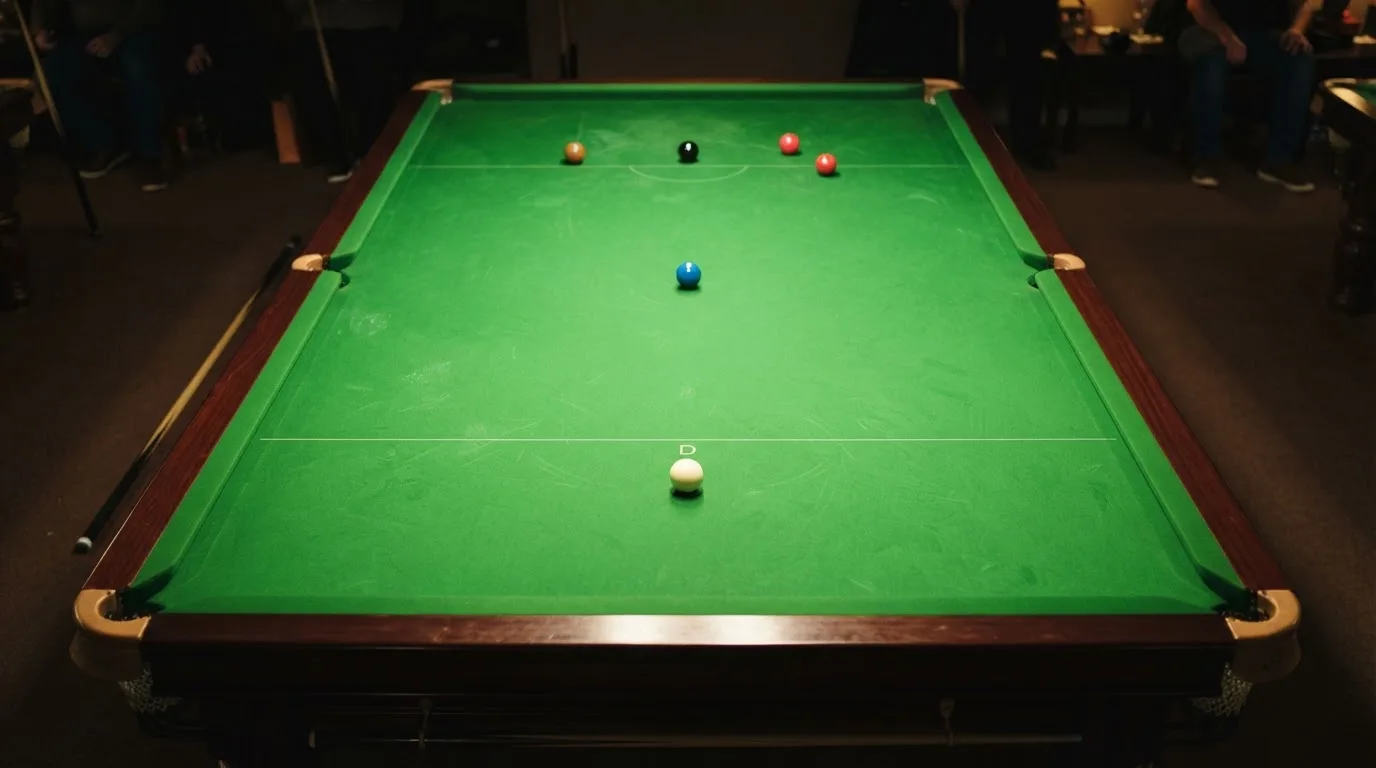
The sport itself is straightforward in outline: 22 balls, 15 reds and six colours of ascending value, a white cue ball, and a table 12 ft by 6 ft with six pockets. The maximum break — potting all 15 reds with a black, then all six colours in order — is 147. A century break is any break of 100 or more, and a 147 is the rarest of those.
What the bettor needs to know
The shape of a match determines what a price means. A best-of-11 is a four-session format with a mid-session interval and a clear lead at the halfway stage; a best-of-19 is a longer format in which a 4-2 lead is not the same position it would be in a best-of-11. The bettor who reads the format reads the price more accurately than one who just looks at the number.
The WPBSA rules and the bookmaker’s terms
A frame is settled by the WPBSA rules, not the bookmaker’s. A re-spot, a miss, a foul, a frame awarded under the miss rule — all of these are settled by the WPBSA, and a bookmaker’s settlement follows. A bettor who has a question about a settled frame goes to the WPBSA’s rules, not the bookmaker’s terms page.
UK Gambling Law and the Licensing Frame
A bookmaker serving customers in Great Britain needs a Gambling Commission licence under sections 33 and 36 of the Gambling Act 2005 as amended by the Gambling (Licensing and Advertising) Act 2014. The licence is the point of consumption: where the operator is based does not matter; what matters is whether the Commission has licensed it. A Curaçao, Maltese or Gibraltar licence is not a substitute.
The register is the test
The Gambling Commission’s public register is searchable by business name, trading name, domain or account number. The register is the whole test of whether a brand holds a licence, and the access date is part of any reference to a licence number. A licence number quoted without a date to the register is a number without a check.
What the licence categories mean
The remote licences the Commission issues are remote general betting standard (real events), remote general betting standard (virtual events), remote general betting limited, remote pool betting and remote betting intermediary — the last is the licence for betting exchanges. The licences a brand holds are listed on the register beside the licence number, and a snooker market sits under a remote general betting standard (real events) licence. A betting exchange sits under a remote betting intermediary licence. The difference is the format of the bet, not whether it is allowed.
Northern Ireland
Northern Ireland is outside the Gambling Act 2005 and runs under older legislation. A “GB-licensed” or “Great Britain licence” applies in England, Scotland and Wales; a GB licence does not regulate Northern Ireland. A brand licensed in Great Britain may not be licensed in Northern Ireland, and a bettor in Northern Ireland checks the operator’s Northern Ireland terms separately.
Safer Gambling: What the Licence Requires
GAMSTOP is the national multi-operator online self-exclusion scheme and a mandatory licence condition for online operators since 31 March 2020. A bettor who signs up to GAMSTOP is excluded from every GB-licensed online operator for a minimum of six months; the periods are six months, one year, five years, or five years with auto-renewal. After the minimum period, the exclusion stays in place for a further seven years unless the customer asks GAMSTOP to remove it. GAMSTOP covers online sites and apps; betting shops use a separate service.
Financial vulnerability and risk checks
A financial vulnerability check (LCCP condition 3.4.4) applies to licensed remote betting when a customer’s deposits minus withdrawals exceed £150 in a rolling 30 days. It is a public-record check — bankruptcy, county court judgments — not an income check and not a credit reference check. Financial risk assessments, sometimes called affordability checks in the press, have been announced in a staged plan (a Commission article of 7 July 2026) with no start date. The current state of play is announced, staged, no start date.
Deposit limits and stake controls
Operators must offer a gross deposit limit on a fixed time frame; the first changes have applied since 31 October 2025, a second phase was postponed to 30 September 2026, and whether the second phase is live is not established. There is no state-set deposit or loss ceiling for betting; the limits are the customer’s choice. The 18+ minimum age and the identity check before the first deposit are state-set; the deposit ceiling is not.
Help lines and what they offer
GamCare runs the National Gambling Helpline; GambleAware funds treatment and education; NHS gambling clinics offer specialist treatment; Gamblers Anonymous runs peer support. Fitzwilliam Sports, for one, links to GambleAware, GamStop and Gamblers Anonymous from its home page. A bettor with a concern about their own play or someone else’s has a working route to a working answer through any of these.
Crypto and Offshore Snooker Betting: What the Licence Does Not Cover
A bettor asking about crypto snooker betting is asking two questions at once. The first is whether a GB-licensed bookmaker takes cryptocurrency; the second is whether an unlicensed brand does, and what the difference costs. The honest answer to the first is that licensed UK operators are not known to take cryptocurrency deposits in the standard way a debit card is taken; the honest answer to the second is that an offshore brand does, and the bettor trades away every protection a UK licence confers.
What the bettor loses
An unlicensed brand does not sign the bettor up to GAMSTOP, does not run the financial vulnerability check, does not cap bonuses at 10x, does not offer a Commission complaints route, does not pass disputes through an approved resolution body, and is not bound by the British named-account rule. Funds withheld by an offshore brand have no British consumer redress; the bettor is on the operator’s terms alone.
What the law says
Providing gambling facilities in Great Britain without the licence the Act requires is an offence under section 33 of the Gambling Act 2005 — on summary conviction up to 51 weeks’ imprisonment, a fine up to level 5, or both; six months in Scotland. The offence is aimed at the operator, not the customer. The Commission’s enforcement is disruption rather than blocking: cease-and-desist notices, search-engine referrals, work with registrars, hosts and payment providers. The Commission has been given, or is about to receive, court-order DNS blocking powers; ISP blocking is not in operation as a current measure.
The honest framing
A licensed brand offers checks, limits, GAMSTOP and the bonus cap, but also identity verification before the first bet. An unlicensed brand offers none of those protections and the possibility of funds being withheld. Neither is “the safe choice” by default; the difference is what happens when something goes wrong.
Bonuses and Free Bets on Snooker: The Real Cost
A welcome offer on a snooker bookmaker is a free bet, a deposit match, or a refund-as-free-bet structure. Each has a cost the marketing does not name, and the cost is the wagering requirement, the minimum odds on the qualifying bet, the deadline, and the cap on what the free bet wins. A bettor who reads the terms reads the cost; one who does not, pays it anyway.
The shape of a UK welcome offer
BetMGM’s sports welcome offer for new UK customers who deposit £10 or more and place a sports bet within 7 days is four £10 free bets — two football accumulators of four or more selections and two sports multiples of two or more — valid for 7 days with minimum odds and opt-in required. Coral offers “Get £40 in Free Bets when you bet £20” for new GB customers who opt in. The offer requires a £20 deposit and sports bet at minimum odds of 2.0 (1/1), with the £40 in free bets issued within 7 days and expiring 7 days after issue. Unibet’s welcome offer follows the same structure, requiring a £20 deposit and sports bet at odds of 2.0 or greater, with free bets valid for 7 days. VBet’s offer is a £10 free bet if a new, verified customer stakes £10 or more on a first-ever bet that loses.
What the bonus cap means
Wagering requirements on bonuses at GB-licensed operators are capped at 10x since 19 January 2026: a £10 bonus at 50x would have needed £500 of qualifying bets; under the cap, no more than £100. A mixed-product promotion — an offer that requires gambling on two or more product types, like “bet on football to get free spins” — is banned. Whether the cap applies to free bets with no wagering condition, and whether there is a cap on the money value of a bonus, are not established. The cap is the floor, not the ceiling on what a bettor can be asked to turn over.
The cost the marketing does not name
A free bet whose stake is not returned with a win is worth the free-bet amount multiplied by (odds minus 1) divided by odds, multiplied by the payout share of the market. A £10 free bet at odds of 3.00 on a market with a 95% payout share is worth £10 × 2.00 ÷ 3.00 × 0.95 = £6.33 on average. A £10 free bet at odds of 5.00 on the same market is worth £10 × 4.00 ÷ 5.00 × 0.95 = £7.60. The higher the odds, the more the free bet is worth, and the ceiling is the maximum the market pays. The floor is the stake not coming back, and that is the cost the bettor is paying for the marketing word “free”.
The promotions calendar and the snooker season
The World Snooker Championship is the single biggest snooker promotion window: free bet offers on the outright, enhanced prices on the favourite, acca insurance on the day. The UK Championship, the Masters and the Champion of Champions are the next tier. Smaller ranking events see thinner promotional coverage, and a bettor chasing a free bet will find the best offers stacked on the events the bookmaker is most promoting — which is not always the event the bettor wants to bet on.
How to Verify a UK Bookmaker’s Licence
A licence number on a bookmaker’s home page is a number, not a check. The check is the Commission’s public register, searchable by business name, trading name, domain or account number. The procedure is mechanical and takes under a minute.
The three-step check
The bettor takes the licence number from the bookmaker’s home page or its terms, opens the Commission’s public register, and searches by account number. The entry that comes back shows the licence holder’s legal name, the licence categories, the licence status and the date the entry was last updated. The bettor compares the legal name to the trading name they are betting with; if the legal name is a parent company and the trading name is a brand, both should be on the register, and the connection should be visible on the operator’s own terms page. A domain on the register that does not match the domain the bettor is on is a sign to pause and check.
What the register shows and does not show
The register shows the licence, the categories and the holder. It does not show the terms, the welcome offer, the price on a specific market, the payout time, or the deposit limit. Those are the operator’s own terms, and the bettor reads them on the operator’s site. The register is the licence check; the operator’s terms are the conditions. Both are necessary; neither is sufficient alone.
What a licence does and does not protect
A licence protects against the failure modes an unlicensed brand cannot answer for: GAMSTOP coverage, dispute resolution through an approved body, the 10x bonus cap, source-of-funds checks, the named-account rule. A licence does not protect against a losing bet, a price that moved, a settled frame the bettor disagreed with. The bettor’s edge, if they have one, sits inside the prices they take, and no licence adds a point to the margin.
The Margin on a Snooker Market: A Worked Example
The margin is the single number the bettor can move against, and it is the single number the marketing never names. Here is how it is read from the price on the screen.
The arithmetic of a two-way snooker market
A match at 1.90 and 1.90 (fractional 9/10) is a balanced two-way price. The implied probability of each side is 1 ÷ 1.90 = 0.5263, or 52.63%. The two probabilities together total 105.26%, and the excess above 100% is the bookmaker’s margin. Stated as a band with its condition: the margin on a balanced two-way snooker match at 1.90 / 1.90 sits around 5%, give or take a fraction of a point. A 1.85 / 1.95 line widens the band; a 1.95 / 1.95 line tightens it. The exact figure depends on the market, the event, and the operator, and the band is the bettor’s working assumption.
Why the margin matters more than the headline price
A bettor placing ten £10 bets at an average price of 1.90 is betting £100 in aggregate. At a margin of 5%, the expected loss on those bets — the cost of the bookmaker’s take — is £100 × 0.05 = £5, before any edge the bettor might have. At a margin of 8%, the expected loss is £8. The bettor’s edge has to beat the margin before the bet becomes profitable, and a 3% margin difference between two books is, over a season of betting, the difference between a winning and a losing year.
Where the margin widens
Outright markets carry wider margins than match markets. In-play markets carry wider margins than pre-match. Specials — next-century, total centuries in a match, player to make a 147 — carry wider margins still. A bettor who chases the headline price is often chasing the wider margin; a bettor who reads the price knows the difference.
The Bookmaker Reviews
BetMGM
BetMGM runs under Gambling Commission account 39198, with the licence held by LeoVegas Gaming PLC. The site’s sports welcome offer is four £10 free bets for new UK customers who deposit £10 or more and place a sports bet within 7 days, structured as two football accumulators of four or more selections and two sports multiples of two or more, valid for 7 days with minimum odds and opt-in required. The product on snooker is a pre-match and in-play book, with the in-play markets listed on the app during the headline events. The free-bet structure leans into accumulators, which suits the bigger tournament outrights more than the frame-by-frame betting the in-play product offers. The match price on a balanced best-of-11 is comparable to other fixed-odds books, and the welcome offer’s accumulator split means the bettor using the free bets on snooker is best placed on outright tournament markets, not single frames. For a bettor whose interest is a single frame or a match outright, the welcome offer is not the strongest fit; for one whose interest is the outright and who is happy to back a short-priced favourite in an accumulator, it works.
Bar One Racing
Bar One Racing is now BAR 1 Betting, an Irish independent bookmaker with shops across Ireland and horse racing sponsorships at Dundalk, Fairyhouse, Navan, The Curragh, Curraheen Park and Cork. The licence is held by Bar-One Racing Limited under Commission account 56516. The product on snooker is the main tour events, with pre-match prices and a thinner in-play book than the larger fixed-odds operators. The brand is recognisably Irish, and the racing-heavy sponsorship history is visible in the home page. A bettor who wants a smaller, independently-owned book and is happy with a thinner snooker product — particularly on the Irish amateur and ranking events — will find it here. A bettor who wants the deepest in-play snooker book will not. The welcome offer is described on the operator’s own terms.
QuinnBet
QuinnBet runs under Commission account 61011, held by QuinnBet (Gibraltar) Limited. The site offers Best Odds Guaranteed on Irish and UK horse racing from 10:00am daily on singles, multiples and system bets, with a maximum benefit of £150 per customer per race. The BOG applies to horse racing, not snooker, and a bettor comparing snooker prices at QuinnBet against another book is comparing on price alone. The product on snooker is pre-match outright and match markets, with in-play on the bigger events. The price on a balanced match sits in the same band as the larger books, and the welcome offer is described on the operator’s own terms. For a bettor who already has a horse-racing account at QuinnBet and wants the same shop for a snooker bet, the convenience is the selling point. It is a viable, licensed option for those who prefer an all-in-one platform.
Coral
Coral runs under Commission account 54743, held by LC International Limited — the same parent that holds the Ladbrokes licence, a point worth knowing for a bettor who already has a Ladbrokes account and is comparing the two. The sports welcome offer is “Get £40 in Free Bets when you bet £20”: a deposit and sports bet of £20 or more at minimum odds of 2.0 (1/1), with £40 in free bets issued within 7 days and expiring 7 days after issue, for new GB customers who opt in. The snooker product is pre-match and in-play, with outright, match and frame markets. The 2.0 minimum odds on the qualifying bet is the figure to watch: at odds shorter than 2.0, the bet does not qualify; at 2.0 or longer, it does. The free-bet structure suits a single-frame or single-match bet, and a bettor who uses the free bets on a longer-priced outright gets a higher expected value from the offer. Coral is one of the larger fixed-odds books on the UK high street, and the snooker product is correspondingly deep.
Smarkets
Smarkets is a betting exchange licensed under Commission account 39173, held by Smarkets (Malta) Limited. The licence category is remote betting intermediary — the exchange licence, not the fixed-odds book licence. The product is back and lay prices on snooker, set by other backers, with the exchange taking a commission on net winnings. UK deposits by open bank transfer are instant from £10 up to £10,000, and withdrawals are processed within 6 hours from £10 up to £100,000; UK debit card deposits are instant from £10 up to £15,000. The exchange format means the prices on snooker are set by the market, not by the bookmaker’s trading desk, and a backer who can lay a position as well as back one has a tool no fixed-odds book offers. The market depth on a smaller snooker event is thinner than at a fixed-odds book, and a bettor looking to back a 33/1 outsider on a ranking event may find the price is not there. For a bettor who wants to back and lay and is happy with the exchange interface, Smarkets is the working choice; users seeking a standard fixed-odds book might find the exchange mechanics less intuitive.
VBet
VBet runs under Commission account 44662, held by SCGO Limited. The sports welcome offer is a £10 free bet if a new, verified customer stakes £10 or more on a first-ever bet that loses. The “refund as free bet” structure is the important point: the bettor does not get their £10 stake back as cash if the first bet loses — they get a £10 free bet, whose stake is not returned with a win. The free bet’s expected value is therefore not £10, but £10 multiplied by the average edge the bettor can find on a market, minus the stake-not-returned cost. A bettor using the free bet at decimal odds of 3.00 on a market with a 95% payout share gets £10 × 2.00 ÷ 3.00 × 0.95 = £6.33 of expected value. The product on snooker is pre-match and in-play on the bigger events, and the price sits in the same band as the larger books. For a bettor who is happy to use the free bet on a longer-priced selection, the offer has a real value; for one who would use it on a 1.20 favourite, the value is closer to the marketing.
Unibet
Unibet runs under Commission account 45322, held by Platinum Gaming Limited, Gibraltar, and the site states Unibet has operated since 1999. The sports welcome offer is “Get £40 in Free Bets when you bet £20” — the same structure as Coral: a deposit and sports bet of £20 or more at minimum odds of 2.0 (1/1), with free bets expiring within 7 days, for new GB customers using a debit card or instant bank transfer. The product on snooker is outright, match and handicap markets, with in-play on the headline events. The book on a best-of-11 is deep, and the handicap lines on the bigger events are competitive. A bettor comparing Unibet and Coral on snooker is comparing two similar products at similar prices, and the welcome offer is structurally identical; the choice between them sits in the in-play product, the market depth on a specific event, and which brand the bettor already has an account with.
888sport
888sport runs under Commission account 39028, held by 888 UK Limited. The product is pre-match and in-play with Cash Out, Bet Builder, racing streams, BetFinder form tools, a live bet feed and daily boosted odds. The snooker product is covered by the general in-play and pre-match book, with the boosted odds feature running on the bigger events. The Bet Builder is built for football-style same-game multiples, and the snooker coverage on the bet builder is thinner than the football coverage; a bettor wanting a snooker-specific bet builder will find the market depth at 888sport does not match the football one. The price on a balanced match sits in the same band as Coral and Unibet, and the boosted-odds feature is a positive on the outright markets. For a bettor who already has an 888 account and wants the snooker product added to it, the convenience is the point. The book offers a balanced, reliable product that competes well across major tournaments.
Tote
Tote runs under Commission account 54779, held by TDCO Limited. The product is a pool-based book, with payouts declared after the event rather than fixed-odds prices locked in at the time of bet. The pool format means the price the bettor backs at is not the price they are paid at; the dividend depends on the pool and the winning tickets. The product is most familiar on horse racing, where it has decades of history, and the snooker product is an extension of the same format. A bettor who is happy with the pool format and wants a non-fixed-odds alternative will find it here; a bettor who wants a locked-in decimal price at the time of bet will not. The welcome offer is described on the operator’s own terms.
Kwiff
Kwiff runs under Commission account 44448, held by Eaton Gate Gaming Limited, and the app carries a 17+ age rating on the App Store. The product is a fixed-odds book with a feature called Surprise Bets, in which the operator randomly boosts the price on a selection the bettor has made after the bet is placed. The feature is the marketing differentiator and the bettor experience is different from a standard book. The snooker product is covered on the main tour events, with pre-match and in-play on the bigger events, and the price on a balanced match sits in the same band as the larger books. For a bettor who likes the Surprise Bets feature and is happy to take a randomly boosted price, Kwiff is the working choice; for one who wants a fixed price at the time of bet, the random boost is a wrinkle rather than a benefit.
Frequently Asked Questions About Snooker Betting Odds
How do you bet on snooker?
Pick a licensed UK bookmaker, open an account, complete the identity check, deposit by debit card or bank transfer, and find the snooker section. The main markets are match outright, frame handicap, total frames over/under, and outright tournament winner. Choose a market, pick a price, set a stake, confirm the bet. The bet settles from the official WPBSA score feed, and the return is the stake multiplied by the decimal odds.
Can you bet on snooker?
Yes, at any UK-licensed bookmaker that lists snooker. There is no statutory list of permitted sports or markets in Great Britain, and snooker has been a licensed betting product since the Gambling Act 2005 came into force. The bettor checks the operator’s licence on the Gambling Commission’s public register before opening an account.
How can a bookmaker’s Gambling Commission licence be checked?
Open the Gambling Commission’s public register and search by the licence number on the bookmaker’s home page or by the business name. The entry shows the licence holder, the licence categories and the licence status. A licence number quoted without a check is a number; a licence number checked against the register is a fact.
How is the return on a bet calculated from the stake and the odds?
At decimal odds, the return is the stake multiplied by the odds, and the profit is the return minus the stake. A £10 bet at 2.50 returns £25 with a £15 profit. A combination bet multiplies the legs together: a treble at 2.00, 3.00 and 1.50 returns £10 × 9.00 = £90 from a £10 stake.
What is the bookmaker’s margin and how is it seen in the odds?
The margin is the excess above 100% when the implied probabilities of all outcomes on a market are added together. On a two-way market at 1.90 and 1.90, the probabilities add to 105.26% and the margin is 5.0%. A wider margin means the bookmaker keeps more of every pound staked; a tighter margin means the bettor faces a smaller take.
How do fractional odds like 5/1 convert to decimal odds like 6.00?
The decimal form is the fraction plus one: 5/1 becomes 5.00 + 1.00 = 6.00, 11/4 becomes 2.75 + 1.00 = 3.75, and evens (1/1) becomes 1.00 + 1.00 = 2.00. The two formats express the same price and the conversion is mechanical.
Tennis, darts & cue sports – Boxing betting
Content created by the «Boxing betting» team
