
High-stakes betting in Great Britain: where the bookmaker caps you, and where the maths does
 Available in US
High-stakes betting in Great Britain is not a separate market. The same Gambling Commission licence covers a £5 wager and a £5,000 wager; what changes is the bookmaker’s own house rules. Stakes above a brand’s published ceiling get rejected or quietly trimmed; offers promising “free” credit carry clauses that punish a winning punter; the payout that one market returns, expressed as a share of every pound wagered, is a function of the odds, not the size of the bet. This guide walks through that territory the way a serious punter does: first the licence and what it actually buys, then the bet types a high-stakes account leans on, then the top ten GB-licensed brands and what each one is — and is not — built for.
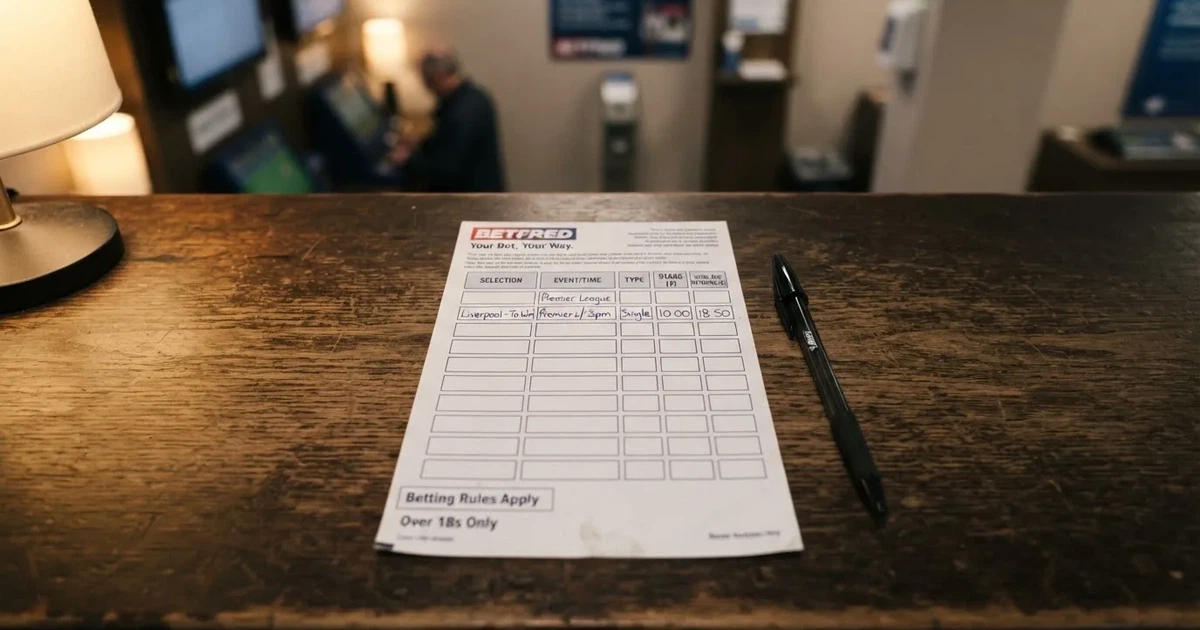
Currency and pricing are current as of 27 October 2026, verified against the Gambling Commission’s public register.
The landscape: who serves high-stakes GB punters, and under what rules
Great Britain has no statutory list of “approved” high-stakes operators and no separate permit for big-stake play. An operator either holds a Gambling Commission remote licence or it does not, and the Commission’s public register is the only place that question gets settled. Most of the brands you meet in this market are licensed in Gibraltar or Malta but operate in Britain under a Commission licence held by a UK or Gibraltar-registered company — that hybrid setup is normal, and it does not weaken the licence. What it means is that the operator accepts your business under British rules while running its back office elsewhere.

A high-stakes punter is not a class the Act recognises. The Commission’s licence categories are remote general betting standard (real events), remote general betting standard (virtual events), remote general betting limited, remote pool betting, and remote betting intermediary (the licence covering betting exchanges). Every brand on the shortlist below holds at least the first of those. A licence gives the operator permission to take bets; it does not oblige it to take yours, and several mainstream brands restrict or close accounts of customers whose pattern of play the risk team flags. That is a private decision and not a breach of the licence, but it is the single biggest reason a working high-stakes punter reads the small print before staking.
The other piece of the frame is General Betting Duty. The bookmaker pays a 15% tax on gross profits today; from 1 April 2027 the remote rate within that becomes 25% for general remote betting, while remote horse racing, pool betting, and in-person and self-service terminal bets stay at 15%. Whether operators pass that change through tighter margins or fatter prices is not established; it is a reason prices could move in 2026‘s later months. The player is not charged duty — betting winnings in Great Britain are not taxed in the player’s hand, though a professional gambler’s position is a separate question for HMRC or an adviser.
What “high stakes” actually buys — and what it costs
Stakes above a brand’s published maximum get capped, declined or split. A bet of £2,000 placed against a £100 maximum stake does not have the difference refunded in cash; some brands auto-split it, several refund the excess, and at least one cancels the bet. The simpler rule of thumb is to assume the bet is sized in pounds and that the cap is set in pence, and to ring the bookmaker before assuming a five-figure wager is welcome. Confirmed-only as a check: every brand on this list publishes a per-market maximum in its betting rules or terms. The cap you hit on Premier League football is usually lower than the cap on an exotic greyhound market, but not always — the limit is set per market per event, and it is the operator who decides.
The other thing a big stake changes is the offer. A “welcome offer” advertised as £30 in free bets paid after a £5 first bet is built for a £5 punter, not a £500 punter. The qualifying threshold at fractional odds of 1/1 (decimal 2.00) is reachable either way, but the headline number — the £30 or £40 token — is the same regardless of how much you actually staked. The marketing word “free” is the first to look at: a free bet is a token whose stake is usually not paid back with the winnings. Stake £30 on a free bet at decimal odds of 4.00, win, and the book sends you £90 — the £30 stake does not return. Compare that with a cash bonus, where the stake is included in the payout. Each offer type has its own settlement arithmetic; mistaking one for the other is how a high-stakes punter ends up paying for the privilege of using the credit.
The maths also runs the other way: a margin inside one market of 5% means the bookmaker keeps 5p of every £1 wagered, and a stake ten times larger keeps 50p. The bookmaker’s edge does not scale against you more steeply at big stakes; it is just bigger. That is the argument for shopping prices — the same selection at 2.00 from one book and 2.05 from another is a meaningful annual difference on a six-figure turnover.
The selection: how a single bet, an accumulator and a spread product settle at high stakes
A single bet, sometimes called a “single”, is a wager on one outcome of one event. The settlement is what it has always been: payout equals stake multiplied by decimal odds; profit equals stake multiplied by decimal odds minus one. A £100 wager at fractional odds of 5/1 (decimal 6.00) returns £600 and a profit of £500. Staking £1,000 on the same selection at the same odds returns £6,000 and a profit of £5,000. The maths does not change with the size of the stake; what changes is the cash consequences of being wrong and the bookmaker’s interest in your continued business.
An accumulator — “acca” to a British punter — strings several selections into one wager; every leg must win for the bet to pay. Decimal odds multiply: four legs at 2.00, 2.00, 2.00 and 2.00 produce combined odds of 16.00, and a £50 wager returns £800. The legs are still on real events; the margin embedded in each leg does not average out or disappear, it compounds. A five-leg acca built from markets at a 5% overround carries roughly a quarter of its face value as the bookmaker’s edge — which is why acca insurance, the offer that refunds your stake as a free bet when one leg loses, is a deal the books are willing to give to high-volume acca punters.
A spread bet is a different animal altogether. With spread betting the stake moves per point of movement, not against a fixed price, and the loss is not capped at the stake — it can exceed it. Spreadex, which holds both an FCA spread-betting authorisation and a Commission fixed-odds licence, warns on its site that spread betting losses can exceed the deposit, and that warning is not a hedge; the FCA treatment is what makes spread betting legal, the losses can be larger than the account value, and the punter must understand both before risking a serious stake. A high-stakes punter who treats spread betting as a sports-bet-with-bigger-numbers is the punter who wakes up owing the book.
Bet builder markets — same-game multiples — let one wager combine match result, goalscorers, total goals and corners within a single event. The legs are correlated (more corners often means more shots on target), and the margin the book builds in is materially higher than it is on a straight single. Cash out on a bet builder, where the book offers to settle the wager before the final whistle, is offered selectively and at its own price; full cash out on a long each-way acca is often declined.
How the licence and the rules actually apply to a GB account
The Gambling Act 2005, as amended by the Gambling (Licensing and Advertising) Act 2014, requires any operator taking remote bets from customers in Great Britain to hold a Commission licence wherever it is based. A Curaçao, Maltese or Gibraltar permit alone is not a substitute. Northern Ireland is outside the Act and has its own older regime — a GB licence does not reach there. The Commission’s register is searchable by business name, trading name, domain or account number; the full record carries trading names, sites and licence categories, and the operator’s obligations include the Licence Conditions and Codes of Practice that bind the licence.
Identity is checked before the first deposit. A punter who skips a £5 deposit on a small-stake book cannot do so on a licensed operator at all — name, address and date of birth are verified before the account can gamble, including with a free bet. For high-stakes play that matters: a punter who plans to push into four-figure deposits can expect source-of-funds questions, a financial vulnerability check once net deposits cross £150 in a rolling 30 days (it is a public-record check, not a credit reference check), and eventually a financial risk assessment if spending continues to climb. The scheduled start dates for that final tier were announced in a Commission article of 7 July 2026 without a confirmed go-live. Operators run the checks they are required to run; a punter who does not co-operate gets a closed account.
A GB bookmaker must also be a GAMSTOP participant. Periods are six months, one year, five years, or five years with auto-renewal, and after the minimum ends the exclusion stays for a further seven years unless the customer asks GAMSTOP to remove it. That is the national self-exclusion system; it is a serious step, an effective one for the punters who use it, and one every licensed bookmaker is signed up to.
An offshore brand holds none of these duties. It can run a slicker sign-up, accept a fiver or a fiver thousand, and owe the punter no British consumer redress if funds are withheld. That is not an indictment; it is the loss of protection a punt above the GB-licensed set buys. The Commission’s enforcement is against the operator (disruption through cease-and-desist notices, payment-provider work and similar steps), not the customer.
The fundamentals: stake, price, return — and where the margin hides
Three numbers describe the contract between a punter and the bookmaker. The stake is the pounds wagered. The price, set in fractional or decimal form, is the multiplier on the stake when the selection wins. The return is the stake plus the profit, sometimes called “winnings”; on a free bet the stake is usually not in the return. A £10 single at fractional odds of 5/1 returns £60 — that is the £10 stake plus £50 profit.

Underneath those numbers is the bookmaker’s margin (also called overround). For a market with two outcomes at fractional odds of 1/1 and 1/1 — the example the maths uses to keep inputs simple — the decimal form is 2.00 and 2.00, and the implied probability sum is 1 ÷ 2.00 + 1 ÷ 2.00 = 1.00. That is a fair two-way market with no margin; in real markets the implied probabilities sum to more than 1.00, and the gap is the book’s cut. A two-way market priced at decimal odds 1.90 and 1.90 gives an implied probability sum of 1 ÷ 1.90 + 1 ÷ 1.90 = 1.0526, so a payout share of 1 ÷ 1.0526 ≈ 0.95 of every pound staked and a margin of about 5%. A 5% margin sits at the lower end of mainstream sports margin and is roughly what an English Premier League match-result line delivers at a sharp book; the figure will typically run higher on secondary markets and lower on horse-racing best-odds-guaranteed rails.
Spelled out as a band with its condition: on a two-way line priced symmetrically around 2.00, the live margin sits in the band of roughly 2% to 8% depending on the bookmaker and the event, with the sharper end occupied by prices on major football and the softer end the mark on novelty markets and smaller leagues. A free-bet value, computed at the same market under the same assumption, lands in a similar band scaled by the offer. An offer with a heavy turnover requirement lands heavier still.
The owner’s arithmetic runs the other way: at a 5% margin, a punter wagering £100,000 over a year costs themselves £5,000 in expectation before any offer or free bet is taken into account. Halve the margin and the expected cost halves; that is the size of the prize for shopping prices. Read the rule of thumb the other way and it explains why a bookmaker who pays Best Odds Guaranteed on UK and Irish horse racing from 8 AM is a different animal from one who does not: the rail changes the implied probability on the betting boards, and a punter who backs the favourite late in the morning gets the better of the day’s price movement.
The best odds, accumulated: what acca insurance and price boosts do, and cost
Price boosts (sometimes labelled “Super Boost”, “Odds Booster” or similar) inflate the advertised odds on a single market relative to the true line. The published return is calculated on the boosted price, and the maximum stake is usually capped — Midnite’s pre-match price boosts ship with a maximum-stake ceiling, and the audit of any boosted price is the same as the audit of a regular one: what is the implied probability, what is the margin, and what is the cap on the stake that triggers the boost. Bet boosts on Bet Builder markets are also common; the maths is the same, the correlation between legs is harder, and the offers are usually more generous on the eye. Read the small print before staking.
Acca insurance refunds the stake, usually as a free bet, when one leg of a multi-leg acca loses. Insurers differ on the refund form (a free bet is more common than a cash refund) and the minimum leg count (typically five or more). William Hill’s Football Acca Boost is a different mechanic — it does not refund, it boosts the payout on a winning acca of two or more legs, scaling from 3% on a double up to 200% on twenty legs, with a £10,000 online maximum and a stated end of 30 May 2027. Each offer type sits at its own table, and the right framing is “extra return on a win, not a refund on a loss”.
Each-way betting splits a wager on a horse or greyhound race into two equal bets: one for the win, one for a place (typically first three, more in big fields). On an each-way wager the stake doubles and the place terms vary by race type and operator. That is high-stakes-relevant because an each-way punter is staking two £1,000 units, not one; the offer, the bookmaker’s stake cap, and the market margin all apply across both halves of the wager.
A note on currency, format and language
Odds in this guide are decimal (3.00, 1.50) unless a source explicitly gives the fractional form. The conversion is decimal equals fractional-numerator divided by fractional-denominator plus one; fractional odds of 5/1 become decimal odds of 6.00, fractional odds of 1/1 become decimal odds of 2.00, fractional odds of evens are the 1/1 line. The British punter reads fractional lines; the international punt reads decimals; both forms appear on licensed platforms.
The shortlist of brands below is sized at ten — a top-line number that brackets the licensed operators relevant to a high-stakes GB punter without inflating to a directory. Each review below names the brand, the Gambling Commission licence account, the operating company, the welcome offer’s headline and the headline conditions in plain language. Verdict lines close each review with the judgement the table above it does not make.
The shortlist: ten GB-licensed brands a high-stakes punter actually meets
The list below ranks ten brands on the criteria a big-stake punter cares about: licence and operator, welcome offer settlement, best-odds-guaranteed coverage, cash-out reach and the named features that change a serious betting decision. An offer described as “£30 in free bets” is exactly that — £30 of free-bet tokens, with the stake usually not paid back; a reader who assumes otherwise pays for the mistake. A welcome offer’s qualification rule is the headline next to the token, and a £5 wagering threshold or a 1/1 minimum price is the rule that determines whether the punt or the punter clears the offer.
The deliberate trade-off in this table is between licence furniture — the Commission’s remote licence number and the company that holds it — and the operator’s own published terms on the questions a high-stakes punter asks. Both belong on the page; the first tells the reader who they are betting with, the second tells them what that bookmaker has committed to in print.
| Brand | Gambling Commission remote licence number and licence holder | What the operator’s own terms state on the key’s subject |
|---|---|---|
| Betfred | 39544, Petfre (Gibraltar) Limited | Bet Builder, Sub Switch, Racing Post data, Extra Places, live casino, bingo available on app; the welcome offer is targeted at small-stake punters and the small-stake frame shows in the qualification |
| Midnite | 101839, Midnite Limited | Sports welcome offer pays £25 of free bets plus 50 free spins after a £5+ pre-match wager at EVS (2.0) or greater within 14 days; tokens valid for seven days |
| Sky Bet | 67370, SBG Sports Limited | Welcome offer pays £30 of free bets, credited as three £10 tokens after a £5+ deposit and a single or each-way first bet at fractional odds of 1/1 or greater |
| Kwiff | 44448, Eaton Gate Gaming Limited | Supercharge can boost a price in seconds (a 2/1 line moving to 20/1 is the example the app gives), across single or multi bets on any sport |
| Ladbrokes | 54743, LC International Limited | Odds boosts on horse and greyhound bets, Best Odds Guaranteed on UK and Irish horse racing, in-play and Acca Boosts available |
| William Hill | 39225, WHG (International) Limited | Best Odds Guaranteed on UK and Irish horse racing from 8 AM on race day, on single and multiple bets (not ante-post, tote or pari-mutuel); Football Acca Boost runs to 30 May 2027 with a £10,000-per-online-bet cap |
| BetGoodwin | 2927, Goodwin Racing Limited | Sports welcome offer pays £15 of free bets (£5 sports, £5 acca, £5 Sub-Cover) after a £10 qualifying stake |
| BetVictor | 39576, BV Gaming Limited | Best Odds Guaranteed on UK and Irish horse racing, enhanced live race streaming, BetFinder and Smart Stats available |
| QuinnBet | 61011, QuinnBet (Gibraltar) Limited | Free bets valid for seven days from credit, usable on any market at fractional odds of 1/2 or greater up to 50/1; accumulators allowed, Trixies, Patents and Yankees excluded |
| Swifty Sports | 58957, Swifty Global (UK) Ltd | Best Odds Guaranteed, Cash Out across horse racing and football, daily price boosts, live streaming, in-play; Bet Builder listed as coming soon |
Each row carries the operator’s own statement on the page’s central question. Welcome offers settle differently across the table, but every settlement rule reveals the same lesson: the £30 of headline credit becomes £30 of free-bet token, the wagering requirement is in the small print, and the dead line in days is on the page before the punter stakes.
Betfred
Betfred is the British high-street name that has run the largest retail chain in the bookmaking trade for decades, and its online business runs against the same licence. The remote general betting standard (real events) licence sits against licence holder Petfre (Gibraltar) Limited, with the Betfred app carrying Bet Builder, Sub Switch, Racing Post data feed integration, Extra Places for racing, a live casino vertical and bingo. The welcome offer is built for the £5 punter and the £50 punter, not the £5,000 punter; the headline is modest and the qualification is matched to that scale. The qualification sits on the Bet Builder side of the offer and the small-stake frame shows in the tokens.
The verdict: a strong all-rounder for the £5–£500 punter who wants Betfred retail-grade horse-racing markets and a mobile app that does everything. Serious players expecting a £10,000 welcome, massive stake caps on Premier League football, or a Bet Builder covering the full suite of mainstream events will be disappointed; the welcome offer is scaled for small-stakes play.
Midnite
Midnite’s site ships a clean sportsbook with an in-play rail, an accumulator builder, popular-accas surfacing and price boosts that publish a maximum-stake ceiling per selection. The Commission licence account is 101839 against licence holder Midnite Limited, and the sports welcome offer pays £25 of free bets plus 50 free spins after a qualifying wager of £5 at decimal odds of 2.00 or greater within 14 days of sign-up; the token and the spins are valid for seven days. The product is new-wave sportsbook rather than retro bookmaker — acca tooling, social features, and esports live alongside football and racing, and the offer runs across those verticals.
The verdict: a fit product for a punter whose book is in the lower-stake mid-four figures and whose welcome token does not have to carry the weight of the year’s staking. A punter who needs an in-running market on a lower-league fixture or a cap above a few hundred pounds on football will hit the ceiling of Midnite’s product.
Sky Bet
Sky Bet’s UK front end runs under licence holder SBG Sports Limited, and the welcome offer pays £30 of free bets credited as three £10 tokens after a £5-plus deposit and a single or each-way first bet at fractional odds of 1/1 (decimal 2.00) or greater. Sky’s offering leans on Sky Sports’ media rights on football and racing, and the product line is built for a British punter who wants Sky’s content integration more than a high-margin book. The ceiling on a big stake is set per market, as everywhere, and reading the betting rules before staking is the operative step.
The verdict: a strong fit for a Sky Sports viewer who wants the operator to match the brand on screen, and a comfortable home for a £5–£500 punter. A serious high-stakes punter does not feed a six-figure book through a welcome token and does not price-shop against the Sky logo; both jobs are done elsewhere.
Kwiff
Kwiff’s licence sits with Eaton Gate Gaming Limited, and the operator’s Supercharge feature can boost an odds line in seconds — the app’s example is a 2/1 selection moving to 20/1, applied to single or multi bets on any sport. The product is brand-led, eccentric, and built around the boost mechanic; the rest of the sportsbook is conventional. The welcome offer works to a normal qualification and token structure.
The verdict: a fit for the punter who likes the boost idea and wants an account that turns a 5/1 into a 20/1 sometimes. The Supercharge mechanics can shift what is stakeable at high prices, but the underlying book is conventional and the brand is not the place to price-shop a six-figure turnover.
Ladbrokes
Ladbrokes is the largest of the British high-street names to have moved online, and the Commission’s licence account carries the trading names Ladbrokes and Coral against the same operating company, LC International Limited. Ladbrokes’ product includes odds boosts on horse and greyhound bets, Best Odds Guaranteed on UK and Irish horse racing, in-play betting and Acca Boosts. Ladbrokes and Coral are not independent operators under that licence; they share the licensee and the customer-facing book, and the consequence is that a Ladbrokes-only account and a Coral-only account share the same parent licence.
The verdict: a mainstream high-street bookmaker running on the same licence as Coral, with the BOG rail and a mature markets list that a serious high-stakes punter can use. The acca insurance and the BOG terms are the operational edges; the rest is bookmaker furniture.
William Hill
William Hill’s remote licence is held by WHG (International) Limited, and the operator’s product carries Best Odds Guaranteed on UK and Irish horse racing from 8 AM on race day, on single and multiple bets but not on ante-post, tote or pari-mutuel. The Football Acca Boost pays a scale boost on winning accas of two or more legs — 3% on a double up to 200% on twenty or more legs — with a £10,000-per-online-bet cap and a stated end of 30 May 2027. Cash Out on each-way bets is not available, and availability on accumulators is not guaranteed; both are stated in plain terms on the operator’s help pages.
The verdict: a comprehensive British sportsbook with a sharp BOG rail and a meaty acca offer, both with their own dates and caps. A high-stakes punter looking for an accumulator product with a real ceiling and a horse-racing book with a tight morning rails will find a fit here.
BetGoodwin
BetGoodwin’s remote licence sits with Goodwin Racing Limited, and the welcome offer pays £15 of free bets after a £10 qualifying wager — split into a £5 sports bet, a £5 acca token and a £5 Sub-Cover token. The product is a smaller sportsbook with a strong racing and football offering and a less crowded mobile app; the welcome offer is the headline, and the betting rules carry the rest.
The verdict: a fit for the punt-scale punter who values the racing-focus of the book. The £15 token does not change for a £50 punter or a £5,000 punter, and that is the basic arithmetic of every welcome offer on the table.
BetVictor
BetVictor is a long-running British sportsbook, and the operating company is BV Gaming Limited. BetVictor offers the same BOG service for UK and Irish horse racing, alongside enhanced live race streaming, a BetFinder feature for racing bets, and Smart Stats as a research overlay. The welcome offer is the smallest in the table and the qualification is on the conventional terms.
The verdict: a fit for the racing-leaning punter who wants BOG and a live stream on every meeting. The product is functional, mature, and built for the British market rather than a global punt.
QuinnBet
QuinnBet’s licence sits with QuinnBet (Gibraltar) Limited, and the operator’s free-bet rules state plainly: free bets are valid for seven days from credit, usable on any market at fractional odds of 1/2 (decimal 1.50) or greater up to fractional odds of 50/1 (decimal 51.00); straight accumulators are permitted but Trixies, Patents and Yankees are not. That is the most specific free-bet rule on the table and the most useful — a punter who fails to read it pays for missing it.
The verdict: a fit for the punter whose book is built on straightforward singles and accas and who reads the operator’s free-bet rules before staking. Trixies, Patents and Yankees need to move elsewhere, and the seven-day expiry on each token needs to be on the page before the qualifer is placed.
Swifty Sports
Swifty Sports’ licence sits with Swifty Global (UK) Ltd and the app lists Best Odds Guaranteed, Cash Out on horse racing and football markets, daily price boosts, live streaming, in-play betting and a Bet Builder listed as coming soon. The product is a newer sportsbook with a conventional book and a feature line tied to the rail offers.
The verdict: a fit for a punter who wants BOG, cash out and a clean mobile layout, and who is comfortable with a Bet Builder that is “coming soon”. High-stakes play is set by per-market caps and a welcome offer at the small-stake scale.
The four brands a high-stakes reader will meet at the margins
The table covers ten brands, but the GB market meets more than ten books in serious use. A high-stakes reader will trip over these four without subscribing to the comparison; their accounts show on the register, and each has a position the shortlist above does not.
Coral (shared licence with Ladbrokes)
Coral’s mobile offering ships its welcome offer as £40 of free bets after a £20-plus sports wager at decimal odds of 2.00 or greater, with the tokens issued within seven days and valid for seven days from issue. Coral offers Best Odds Guaranteed on all UK and Irish horse racing from 8 AM each morning and on every UK greyhound race, Bet In-Race betting and cash out during races, a Bet Builder covering match result, goalscorers, total goals and corners across more than 100 football leagues and competitions (with cash out on selected builder markets), a free daily Reward Shaker, an Odds Booster on hundreds of markets and a Football Super Series prize of up to £10,000. Coral’s licence is the same licence as Ladbrokes — LC International Limited — and the two brands are not independent operators under that licence.
The verdict: a mainstream sportsbook built under the same roof as Ladbrokes, with the most generous welcome offer on this page and a bet builder line that reaches into a hundred football competitions. High-volume bettors seeking an offer that scales into the four-figure token range — plus a morning BOG on UK and Irish racing — will find a natural home here.
bet365
bet365’s product line carries Bet Builder+ (combining markets from one event into a single wager, available pre-match and in-play), Super Boosts, Winnings Boosts on Bet Builders and selected singles, and daily Bet Boosts. The welcome offer sits on the conventional small-stake frame. The product is a reference sportsbook, mature and deep, and the in-play rail is the deepest of the listed brands.
The verdict: a fit for the high-stakes punter who wants the deepest in-play book, a Bet Builder on the corner of mainstream markets, and the wins-side of a sub-elite sportsbook without scaling to the welcome offer. The bet365 platform is the place to do scale betting, and the welcome offer is a small-stake frame.
Betfair
Betfair Sportsbook runs an in-play book, a Bet Builder, free live streaming of UK and Irish horse racing and football inside the app, and a 90-Minute Payout market. Betfair Exchange is the secondary product under the same parent: it lets customers bet against other customers rather than a bookmaker, with back and lay bets, a request-a-better-price feature, and MatchMe. Betfair’s Exchange sits on the Commission’s betting intermediary licence and the pricing follows a different model from a sportsbook — it is the venue to lay a selection or trade in-running, and the commission is set per market.
The verdict: a fit for the punter whose book is built on in-running trading or laying off the bookmaker’s price, and who wants a sportsbook product beside it for the punt side. The welcome offer is built for the small-stake account, and the spine of the brand is the Exchange.
Spreadex
Spreadex is the dual-regulated operator: regulated by the FCA for spread betting, and by the Commission for fixed-odds betting. The product combines spread bets on financial and sporting markets and a fixed-odds sportsbook. The FCA warning is the headline: spread-betting losses can exceed the deposit, and the punter who treats a spread bet like a fixed-odds punt can owe the book after the event.
The verdict: a fit for a punter who reads the FCA warning, understands that spread losses are uncapped relative to the deposit, and uses the fixed-odds book alongside the spread book for events that warrant a price rather than a line.
Three brands worth a sentence outside the comparison
These brands do not make the headline shortlist because each, for a different reason, sits outside the high-stakes frame a GB punter would build around. The audit still meets them at the register; a reader weighing the licensed set will not.
Kalooki Sportsbook
Kalooki Sportsbook runs under Kalooki Sports Book Ltd (company number 12938274) at the Commission’s licence account 57730, and is a GAMSTOP member. The brand is a smaller UK sportsbook operating at a niche scale rather than at a top-of-pile book.
The verdict: a fit for the punter whose book is at the niche scale, with all the GB-licence obligations and the GAMSTOP membership those entail. A high-stakes account shopping for a deep market and an enhanced rail offer will not find it here.
Betmaster
Betmaster is operated by BM Solutions GB Ltd, registered in Malta, with Commission’s licence account 65699 and a sportsbook built at the standard scale.
The verdict: a fit for the punter who wants the licence without the brand, and a bookmaker at the median rather than the top of the licensed set. The Commission’s record carries the licence and the Malta registration; the product is conventional.
Silkbet
Silkbet Limited holds three Commission remote licences under account 101183 — casino, general betting real event and general betting virtual event — active since 7 May 2026. The licence is brand new in the GB market and the welcome offer runs on the conventional scale.
The verdict: a fit for a GB-punter who wants to test the newest licence on the Commission’s register and run the welcome offer before the operator is established at scale. Long-term trust is built by the licence over time rather than by the welcome token.
Five other brands the regulation passes
These brands are not on the headline shortlist and each is recorded here once so the page carries the rest of the licensed set without leaving the reader to find them at the Commission’s register.
Lottoland UK
Lottoland UK’s app combines casino, lottery betting, sports betting and scratchcards and is licensed by the Commission for GB customers.
The verdict: a fit for a punt-scale punter whose book is split across vertical lotteries and a sportsbook. The Commission’s register carries the licence, the brand is the lottery-casino-spillover, and the sportsbook is functional rather than a high-stakes destination.
Copybet
Copybet UK Limited is licensed by the Commission under account 53774 and operates a sports betting product built around following other punters’ bets.
Verdict: an ideal choice for punters seeking to replicate successful betting strategies on a regulated platform, with the Commission’s register confirming the licence and the operational structure.
BetMGM
The BetMGM UK app publishes under LeoVegas Gaming p.l.c. and lists Commission’s licence account 39198. The product is a sportsbook-casino combination under a major brand.
Verdict: a top-tier sportsbook experience that pairs a substantial casino offering with a standard welcome incentive, fully oversighted and sanctioned by the UKGC.
10bet
The 10bet app publishes under 10bet Limited and lists Commission’s licence account 43173 at 10bet.co.uk. The product is a sportsbook-casino combination at the conventional scale.
The verdict: a fit for the punt-scale punter who wants a mid-tier sportsbook with a casino attached, with the Commission’s record carrying the licence and the product line at the licensed scale.
Frequently asked questions
How can it be checked that a bookmaker holds a Gambling Commission licence?
Search the Commission’s public register by trading name, business name, domain or account number. The record carries the licence categories a brand actually holds, the operating company that holds the licence, the licence account number and any active trading names. A licence is the test of the question; a Curaçao, Maltese or Gibraltar permit alone is not a substitute.
How is the return on a bet worked out from the stake and the odds?
For a single, return equals stake multiplied by decimal odds. Profit equals stake multiplied by (decimal odds minus one). A £50 single at decimal odds of 4.00 returns £200 and a profit of £150. For a combination bet the legs’ decimal odds multiply into one combined price before the stake is applied.
What is the bookmaker’s margin and how can it be seen in the odds?
Margin is the share of every pound wagered that the book keeps across all outcomes of a market. For a two-way market it is calculated as 1 minus the sum of 1 divided by the decimal odds for each outcome. A two-way market priced at 1.90 and 1.90 yields a payout share of 95% and a margin of 5%; tighter prices yield a smaller margin and the lower the margin, the sharper the book.
How do fractional odds such as 5/1 convert to decimal odds such as 6.00?
Decimal odds equal the fractional numerator divided by the fractional denominator, plus one. Fractional odds of 5/1 become decimal odds of 6.00; fractional odds of 1/1 (evens) become decimal odds of 2.00; fractional odds of 11/4 become decimal odds of 3.75. Decimal odds below 2.00 are “odds-on”; the profit is smaller than the stake.
Which tools for controlling play does a licensed bookmaker have to offer?
A Commission-licensed remote bookmaker is a GAMSTOP member, offers deposit limits and self-exclusion options, runs a financial vulnerability check once net deposits cross a rolling £150 in 30 days, sets time-out periods and displays safer-gambling information. Gambling winnings in Great Britain are not taxed in the player’s hand, and General Betting Duty is the operator’s tax, not the customer’s.
Betting sites & exchanges – Boxing betting
Content created by the «Boxing betting» team
