
Online hurling betting in Great Britain
 Available in US
£20 on Limerick to win the All-Ireland. That is the kind of wager a GAA follower places once a summer, on a sport most British bookmakers ran without a dedicated section for years. Online hurling betting now sits inside nearly every major UK sportsbook, though the depth of coverage still varies wildly, and so does what each welcome offer takes out of the punter before they ever place a bet. This page is a cost-side comparison of the licensed bookmakers that take bets on Gaelic hurling from customers in Great Britain, the markets they offer, the margins those markets carry and what a typical welcome promotion actually requires in turnover before any winnings become withdrawable.

Current as of 27 October 2026. Every licence quoted below was verified against the Gambling Commission’s public register.
Hurling and the UK betting market
Hurling is one of two field sports governed by the Gaelic Athletic Association. A team has 15 players, a senior inter-county match runs 70 minutes in two halves, and scores are unusual to anyone used to football or rugby: a goal, struck under the crossbar between the uprights, is worth 3 points, and a point struck over the crossbar between the uprights is worth 1. A score like 2-18 to 0-17 means two goals and eighteen points, or twenty-four points in total, against seventeen.
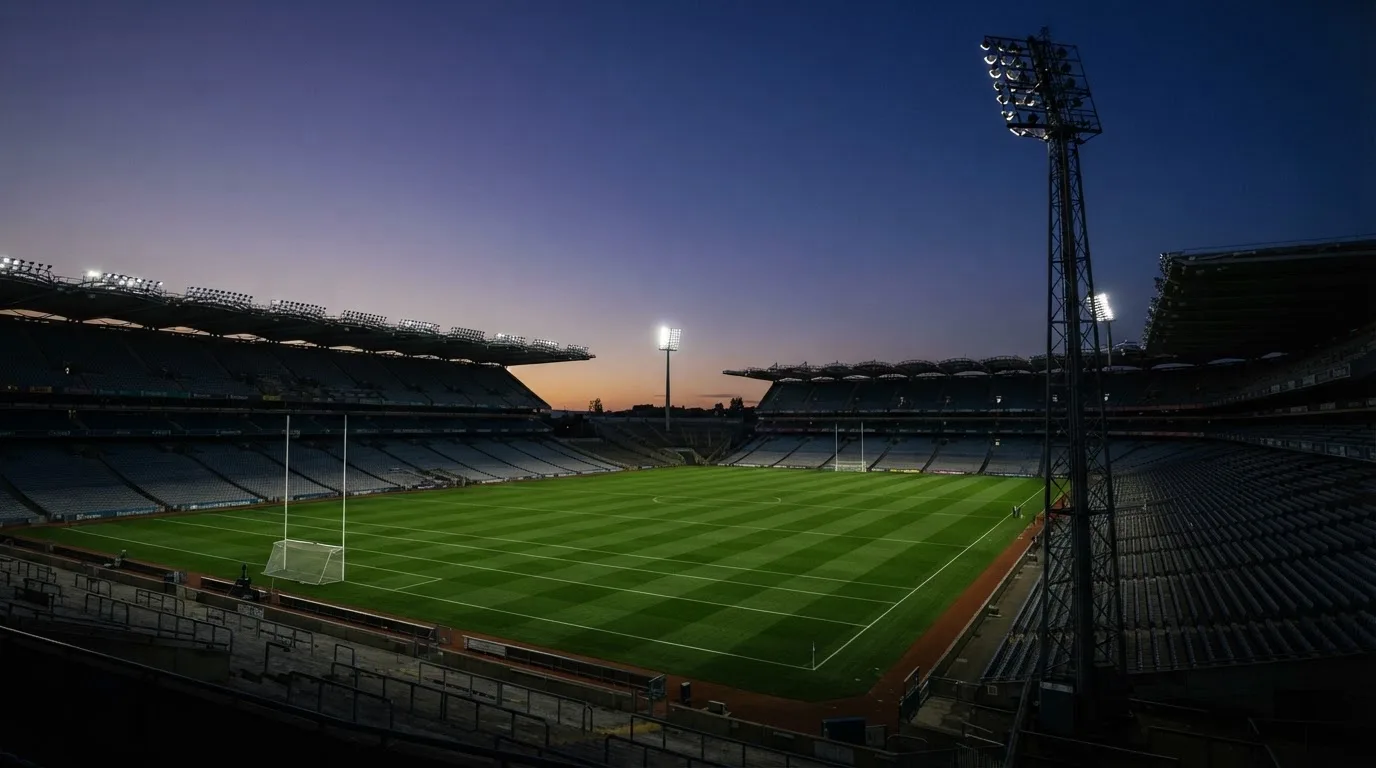
That scoreboard is the first thing the betting slip has to settle around. GB-licensed bookmakers settle hurling markets on the official result at the end of normal time plus any injury time; extra time in a replayed or drawn fixture does not count unless the market’s terms say so. Outside Ireland the sport sits in a strange spot — familiar enough to draw a price at the majors, niche enough that not every operator builds a full schedule around the Allianz League or the Joe McDonagh Cup.
What that means for a punter is that the “match winner” market is usually well priced for the bigger fixtures and thinly priced for provincial rounds. The All-Ireland Senior Hurling Championship final between Limerick and Galway closed the 2026 championship on 19 July 2026, and Limerick took it. The 2025 final had gone to Tipperary. The cycle matters: form books for hurling are shorter than for football because the inter-county season compresses into a few months, and bookmakers’ trading models are still calibrated against a smaller body of data than their Premier League or Champions League feeds.
For the reader, the relevant question is not whether hurling is available to bet on in Great Britain — it is, at every operator reviewed below — but at what cost, in terms of margin, and under what licence conditions. The rest of this page works through those.
Where betting on hurling stands under UK law
The Gambling Commission regulates commercial betting in Great Britain under the Gambling Act 2005. Since the Gambling (Licensing and Advertising) Act 2014, any operator taking bets from customers in Great Britain needs a Commission licence wherever the operator itself is based. A Maltese or Curaçao licence does not cover a British customer — the test is the location of the customer, not the headquarters of the brand.

Each operator reviewed below holds a remote general betting standard (real events) licence issued by the Commission under a named licence holder. VBet sits under account 44662, Sporting Index under 27343, Hollywoodbets under 53028, BetGoodwin under 2927, bet365 under 55148, Bet Ahoy under 100094, Paddy Power under 39439, Geoff Banks under 54095, Sky Bet under 67370 and Matchbook under 39504. Those account numbers appear on every search of the Commission’s public register.
No statutory list of permitted sports exists. The bookmaker chooses which events to price under the conditions of its licence and its own house rules. Gambling duty, called General Betting Duty, is paid by the operator at a current rate of 15% on gross profits on most bets and rises to a new 25% rate on remote betting from 1 April 2027 for non-horse-racing bets; the player pays no tax on winnings. Whether the operator passes its duty on through reduced odds is not a settled question — describe it in terms of the margin the price carries, not in terms of who pays duty.
A separate note on spread betting: financial spread betting falls under the Financial Conduct Authority, not the Commission, and Spreadex for instance is one operator dual-regulated under both bodies for that reason. Spread bets can lose more than the original deposit, which is a category of risk the fixed-odds book does not share.
Staying in control of the bet
Every GB-licensed remote operator now has a duty to offer tools that let the customer set boundaries, and the customer has automatic protections under the licence conditions themselves. The two to know about are GAMSTOP and the financial vulnerability check.
GAMSTOP is the national multi-operator self-exclusion scheme. Since 31 March 2020 every online operator offering gambling in Great Britain takes part. Self-exclusion periods are six months, one year, five years or five years with auto-renewal, and once the chosen minimum has expired the exclusion stays in force for a further seven years unless the bettor asks GAMSTOP to lift it. GAMSTOP covers sites and apps only — high-street betting shops run a separate service.
The financial vulnerability check is a Commission rule in force in stages. As of 28 February 2025, when a customer’s net deposits (deposits minus withdrawals) cross £150 across a rolling 30-day window, the operator runs a public-record check — bankruptcy registers, county-court judgments, that kind of source — before accepting further deposits. It is not a credit check and not an income check. Stronger “financial risk assessments” have been announced by the Commission in a staged plan, with no confirmed start date.
Deposit limits and time-outs sit at the customer level. Operators must offer a way to set a fixed-time gross deposit limit; the customer picks the amount. The Commission published the second-phase rules for this on a phased timetable, with the first round live from 31 October 2025 and a second phase postponed to 30 September 2026. There is no state-set ceiling on what a customer may deposit or stake in sports betting.
Identity verification happens before the first deposit, not later. Since 7 May 2019 every licensed operator has had to confirm name, address and date of birth before a customer could fund an account or place a bet, including with a free bet or bonus. Anonymous play is not available at a licensed site. The corollary is that credit cards have been banned for gambling in Great Britain since 14 April 2020, including the use of a credit card to fund an e-wallet used at the bookmaker.
For someone struggling with their play, GamCare runs the National Gambling Helpline, GambleAware signposts help and self-help material, and the NHS runs gambling clinics in several regions. Gamblers Anonymous runs local meetings. Those are the routes the licensed bookmakers themselves link to from their safer-gambling pages.
What a welcome offer actually costs
A welcome offer for hurling is the same shape as a welcome offer for football: the bookmaker hands back something after a first bet, usually as a free bet or bet credits. The line on the advert reads “Bet £10, Get £30 in Free Bets” or similar. The headline figure is the size of the return, not the cost of clearing it.
The first fact is the wagering cap. Since 19 January 2026 the Commission has capped wagering requirements on bonuses at 10x — meaning a £10 bonus at the new 50x rule would need £500 of qualifying bets to clear; under the cap, no more than £100 in turnover is required. The cap does not name a maximum value for a bonus; it caps the multiplier. Mixed-product promotions, where a sportsbook offer requires a casino or bingo leg as part of the deal, are banned outright.
The second fact is how the free bet pays out. A free bet at most UK operators returns the winnings only — the stake is not given back with a successful return. Sky Bet spells this out in its free-bet terms: the free bet stake is not returned, the credit expires 30 days after crediting, and it cannot be used on multiples or virtual events. A £10 free bet at 4/1 settles at £40 in profit, not £50. That distinction moves more offers from “fair” to “thin” than any other.
The third fact is the minimum price. An accumulator insurance offer that refunds the stake as a free bet if one leg lets you down almost always requires each leg to be at a minimum price, often 1/2 (1.50 decimal) or 3/1 (4.00 decimal). Hollywoodbets’ UK welcome offer, for example, asks for an accumulator of three or more legs at combined odds of 4/1 or greater, settled within seven days. A “free” leg at odds below the threshold does not qualify.
The fourth fact is the cap. Some offers put a ceiling on the value of the free bet (Hollywoodbets caps the free bet at £30) or on the winnings from a free bet. Both are normal in the market, both are written into the terms, and both bite only when the bet lands.
What this adds up to: a typical welcome offer of “Bet £10, Get £30 in Free Bets” at a 10x wagering cap exposes the customer to a required turnover that the licence condition now bounds, but the value of the promotion depends entirely on the structure of the offer and the minimum odds on each leg. The £30 in headline value often settles closer to £20 of expected value after the stake-not-returned rule and the odds threshold. The “free” in free bet is a marketing word, and the licence-side cap on wagering does not address that label — it caps the multiplier, not the marketing.
Live betting, cash out and Bet Builder on hurling
In-play betting on GAA hurling is now offered by most of the major UK bookmakers. The product is thinner than football or tennis because the trading volume is smaller: an operator has fewer customers feeding data into the price, and the price moves more slowly than a Premier League match would. For a pre-match punter the in-play product adds a second window — the prices at half-time, after a goal, after a red card — and those windows are where margin often widens, not narrows, because the operator is uncertain about how the run of play will resolve.
Cash out is a separate product. It lets the customer close a bet before the result is known, at a price the bookmaker sets at that moment. Sporting Index, for instance, lists auto cash-out among its features alongside fixed-odds and spread betting. Sky Bet settles cash-out values against its own feed, and the values are typically tighter than the live price — the bookmaker keeps the difference, which is its margin on the second trade. A punter who cashes out at half-time when Limerick are seven points up is not getting the live match-winner price; they are getting the bookmaker’s take on what that price is worth right now.
Bet Builder is a different trick: it combines markets from a single event into one price. bet365’s Bet Builder+ covers pre-match and in-play markets on the same fixture, on individual events rather than across fixtures. The trade-off is that every leg added to the bet widens the bookmaker’s margin, because the operator prices each leg separately and then multiplies them together. A two-leg Bet Builder on the All-Ireland final carrying one goal-line and one match-winner leg will carry a higher margin than either leg on its own.
Live streaming is offered by bet365 across many events worldwide, by Matchbook on horse racing and greyhounds, and by other operators on a fixture-by-fixture basis. Hurling matches are streamed less often at UK-licensed sites than football matches are — the rights and the production costs sit with the GAA’s broadcast partners in Ireland, and a UK bookmaker is usually a redistributor rather than a primary feed.
The cost of all of these features is in the margin, not the licence fee. A live-betting market on a sport like hurling is, on average, a less efficient market than a Premier League match-winner market, and the bookmaker’s pricing reflects that. For the punter this means betting early on the longer-priced fixtures and avoiding the in-play window unless the read on the game is sharp.
Markets, odds and what a decimal price actually means
The match-winner market is the backbone. Two teams in a hurling fixture, three outcomes — Limerick to win, draw (hurling fixtures can be drawn after normal time), Galway to win. A bookmaker offers a price on each, and the three prices together carry a margin, also called the overround.
The margin is easiest to see in the prices. Suppose a bookmaker offers Limerick at 1.90 and Galway at 1.90 on a two-way market with no draw. The implied probabilities — 1 ÷ 1.90 for each — come to 52.63% + 52.63% = 105.26%. The 5.26% beyond 100% is the overround, which implies a margin of 5.0%: for every £100 staked on the market across both outcomes, the bookmaker keeps £5.00 on average after paying out winning bets. That 5.0% margin is the cost of the bet to the customer, embedded in every price on the market.
On a three-way match-winner with Limerick at 1.80, draw at 9.00 (so 11.11%) and Galway at 2.50 (40%), the implied probabilities come to 55.56% + 11.11% + 40% = 106.67%. The margin on that market is 6.67%. A Scottish Premiership or a League Two match-winner market tends to come in around 103% to 106%; the same market on a hurling fixture, especially outside the All-Ireland final, tends to come in closer to 107% to 110%. The thinner the market, the wider the margin.
Odds come in two formats in British bookmaking. Fractional odds are the historical form: 5/1 means a £1 stake returns £5 profit plus the £1 stake back, total £6. Even money is 1/1, “evens” or 1. Decimal odds show the total return including the stake: 6.00 on the same bet means a £1 stake returns £6 including the stake. To convert fractional a/b to decimal, divide a by b and add 1: 5/1 becomes 5 ÷ 1 + 1 = 6.00, 11/4 becomes 11 ÷ 4 + 1 = 3.75, 9/10 (which is shorter than evens, called “odds-on”) becomes 0.9 + 1 = 1.90. The conversion is mechanical; what is not mechanical is reading the return off it: a £10 stake at decimal 6.00 returns £60, of which £50 is profit.
The settlement rule matters. A hurling bet settles on the official result at the end of normal time including injury time. Extra time in a drawn fixture played as a replay does not count unless the terms say so. A bet on a player to score the first goal settles the moment the goal is scored, even if the game is later abandoned; the rule on abandonment is part of the operator’s terms.
Combinational bets multiply the odds. A double on Limerick at 1.50 and Galway at 2.00 gives combined odds of 3.00. A treble on three legs gives the product of all three prices. The more legs added, the higher the headline return — and the wider the margin, because the bookmaker keeps a cut from each leg. A 10-leg accumulator at single-leg margins of 6% carries an effective margin closer to 79%, and the £1 stake at combined odds of, say, 100 returns £100 only because the operator’s edge has compounded all the way along.
The working figure for a market is the price × stake = return, with profit being return − stake. Decimal odds × stake gives the total return including stake in one step, which is the format used everywhere in this page.
Hurling’s tournament calendar
Hurling’s inter-county calendar in Ireland runs from January through to July. The Allianz Hurling League takes up most of the early spring, then the provincial championships — Leinster and Munster are the two senior hurling provinces, with six teams in Leinster and five in Munster in 2026 — run on a round-robin group stage followed by a provincial final. The top two in each provincial final contest the All-Ireland quarter-finals and semi-finals via the third-placed qualifier route.
Beyond the senior championship, the All-Ireland Senior Hurling Championship is the showcase. The Joe McDonagh Cup, the Christy Ring Cup and the Nicky Rackard Cup run the second tier of inter-county hurling. The All-Ireland club championship runs in the early part of the following year. Provincial championships like Munster and Leinster run into double-headers that bookmakers sometimes price as separate fixtures and sometimes as outright markets on the provincial winner.
For a UK-based punter the relevance is what gets priced. The bigger the fixture, the more markets a bookmaker offers — match winner, handicap, total points, first goalscorer, player to score at any time, half-time result. The Allianz League midweek fixtures in February carry fewer markets; the All-Ireland final in July carries the most. The All-Ireland final on 19 July 2026 between Limerick and Galway was priced as a match-winner market well before throw-in, and the trophy odds for the 2027 championship begin to price up in the autumn.
The 2026 championship ran in this form — Leinster and Munster round-robins, top two through to the provincial final, third place into the All-Ireland quarter-finals, with Limerick winning the title in July. The cycle is predictable enough that outright markets on the 2027 Liam MacCarthy Cup winner will be open at most operators by September.
How this site ranks the bookmakers
The ranking below is not a recommendation and not an endorsement. It is a shortlist of ten operators that, as of the date of writing, hold a Gambling Commission remote licence for real-event betting, take customers from Great Britain and offer markets on GAA hurling or, in Matchbook’s case, operate a betting exchange covering GAA fixtures through its users. Each carries a licence account number that can be checked on the Commission’s public register. The comparison table below the rankings pairs each brand with its licence, its licence holder and a one-line statement of how the brand’s own terms treat the subject at the heart of this page — bonus or promotion rules, GAA market coverage, in-play product or exchange mechanics.
| Brand | Gambling Commission remote licence number and licence holder | What the operator’s own terms state on the key’s subject |
|---|---|---|
| VBet | 044662-R-324273-022 (Commission account 44662) — SCGO Limited | A £10 free bet if a new, verified customer stakes £10 or more on a first-ever bet that loses. |
| Sporting Index | 027343-R-308898-011 (Commission account 27343) — Sporting Index Limited | Customers can switch between fixed-odds and spread betting; in-play, auto cash-out, Multi-Markets and Bet Builder on football listed. |
| Hollywoodbets | 053028-R-330019-013 (Commission account 53028) — Hollywoodbets International UK Limited | Sports welcome offer refunds a first qualifying losing accumulator (3+ legs, combined odds 4/1+, settled within 7 days) as a free bet up to £30. |
| BetGoodwin | 002927-R-327985-008 (Commission account 2927) — Goodwin Racing Limited | Welcome offer of £15 in free bets (a £5 sports bet, a £5 acca and a £5 Sub-Cover bet) for a £10 qualifying bet. |
| bet365 | 055148-R-331498-002 (Commission account 55148) — Hillside (UK Sports) ENC | Bet Builder+ across pre-match and in-play; in-play and live streaming of events worldwide; daily Bet Boosts and Super Boosts advertised. |
| Bet Ahoy | 100094-R-341742-003 (Commission account 100094) — Bet Ahoy Ltd | Welcome offer: a £5 sports bet and a £5 acca free bet on a £10 qualifying first bet. |
| Paddy Power | 039439-R-319330-013 (Commission account 39439) — PPB Counterparty Services Limited | App covers football, horse racing, boxing, rugby, tennis, golf, darts, snooker and F1; GAA coverage subject to event calendar. |
| Geoff Banks | 054095-R-330366-010 (Commission account 54095) — GB Sports Advisors Limited | App offers live in-play prices and ante-post prices on future events. |
| Sky Bet | 067370-R-341330-005 (Commission account 67370) — SBG Sports Limited | Free bets expire 30 days after crediting, single or each-way only, non-withdrawable and do not return the stake with winnings. |
| Matchbook | 039504-R-319407-024 (Commission account 39504) — Triplebet Limited | Betting exchange where customers bet against other users; Bet Builder, multiples, in-play betting and live streaming on horse racing and greyhounds. |
The licence column is the relevant figure. The third column is what each operator’s own terms say, on the date of the source quoted, about the subject matter of this page — bonus mechanics, the in-play offering or the exchange model. It is not a comment on what each does well; it is what those terms disclose.
VBet
VBet is a remote general betting operator under SCGO Limited, holding Commission account 44662. Its sports welcome offer is a £10 free bet if a new, verified customer stakes £10 or more on a first bet that loses. That is a simple refund-in-free-bet structure: if the qualifying bet wins, the customer keeps the winnings but receives no bonus; if it loses, the stake is returned as a free bet of £10, stake-not-returned. The headline £10 figure is the value of the free bet at face; the effective value depends on what the customer prices it at, since the stake is not given back on a win.
Vbet’s hurling coverage at the time of writing is not detailed in the operator’s own terms to the level of disclosure shown for football or tennis, and a punter placing a bet on a Munster SHC round-robin fixture would be relying on the operator’s general sportsbook. For a one-event punter on the All-Ireland final, the product is sufficient; for a full provincial-championship programme, the depth of markets will be lighter than at the bigger multi-sport books.
The verdict: VBet is fit for the punter who wants one straightforward welcome bet without a multi-stage bonus clear. The free-bet stake-not-returned rule means a £10 free bet at 5/1 (6.00 decimal) settles at £50 in profit, not £60 — a feature shared across the welcome offers in this list, and worth knowing before claiming.
Sporting Index
Sporting Index sits under Commission account 27343, held by Sporting Index Limited. The product is unusual in the list: the operator runs both fixed-odds and spread betting, with in-play betting, auto cash-out and Multi-Markets (a Bet Builder construct across multiple events) among the features listed. Spread betting is the Financial Conduct Authority territory for the financial side, and the general betting licence covers the rest. Losses in a spread bet can exceed the deposit, which is not true of fixed-odds bets on the same fixtures.
For a hurling punter, the principal product is the fixed-odds sportsbook; spread betting on GAA fixtures is offered when the trading team has priced it. The two-mode structure adds complexity — the punter needs to read whether they are in a fixed-odds book or a spread book before placing a bet — and a punt that crosses the line by mistake is an expensive lesson.
The verdict: Sporting Index is for the punter who wants spread betting alongside fixed odds and is comfortable moving between the two. A first-time user is better served by a single-mode sportsbook. The auto cash-out is a useful feature on fixtures where in-play liquidity is thin, since the operator’s cash-out values are typically inside the live price.
Hollywoodbets
Hollywoodbets UK is licensed under Hollywoodbets International UK Limited at Commission account 53028. The sports welcome offer is structured around an accumulator: a new player depositing £10 or more by card receives a free bet of up to £30 if their first qualifying accumulator loses. The qualifying bet is a £10+ stake, three or more legs, combined odds of 4/1 or greater, settled within seven days. One free bet per customer.
The accumulator structure is the central cost. Three legs at single-leg margins of 7% each compounds to roughly 23% effective margin on the acca — the punter is paying the bookmaker’s edge on every leg, multiplied together. The 4/1 minimum combined odds rules out any three-leg “favourite-heavy” combination at the threshold; the punter needs at least one leg over even money for the accumulator to clear the minimum. The cap of £30 on the free bet means a stake-returned-as-free-bet of, say, £50 is delivered as £30 of credit, with the £20 lost in the wash.
The verdict: Hollywoodbets rewards accumulator bettors, and a punt who only bets singles will see no benefit. The seven-day settlement window is restrictive: the qualifiying bet has to settle within a week, and missing the window forfeits the free bet entirely. For someone whose betting pattern already runs on three-leg multis, the offer is fair; for a singles punter, it is invisible.
BetGoodwin
BetGoodwin operates under Goodwin Racing Limited at Commission account 2927. The sports welcome offer is £15 in free bets for a £10 qualifying bet, split across a £5 sports bet, a £5 acca and a £5 Sub-Cover bet. The three-part split makes the offer feel larger than it is: £15 of nominal free-bet value, but each £5 tranche has its own market restriction, and the £5 Sub-Cover is a niche product that not every punter will use.
Sub-Cover is a BetGoodwin-specific product: a refund as a free bet if the customer places an accumulator and one leg lets them down. Its presence in the welcome offer is a signal that the operator’s house product is around accumulator insurance. The £5 single and £5 acca vouchers are the more conventional parts.
The verdict: BetGoodwin is for the punter who already plays accumulators and wants a refund-style insurance on top. For a singles-only customer, the value is partial — the £5 sports voucher works, the other two tranches fall by the wayside.
bet365
bet365 sits under Hillside (UK Sports) ENC at Commission account 55148. It is the most-downloaded sports-betting app in the UK, and the operator is the official global betting partner of the UEFA Champions League. That is the football frame, but the same product infrastructure carries GAA hurling: pre-match markets, in-play markets, Bet Builder+ across pre-match and in-play, Super Boosts, Winnings Boosts on Bet Builders and selected singles, daily Bet Boosts, and live streaming of events worldwide.
Bet Builder+ is a key feature on hurling. It combines markets from a single fixture — match winner with a total-points line, first goalscorer with a handicap — into one price. The trade-off is that the margin compounds across the legs, and a Bet Builder with three or four legs carries a wider edge than the same legs priced separately. A Bet Builder at 11.00 is not the same as laying three legs at combined odds of 11.00 through singles.
Live streaming covers a wide range of fixtures, GAA included when rights allow. The in-play product is the deepest in the list, and the daily Bet Boost function is the route through which the operator markets price boosts — a higher price on a named selection, often with a stake cap.
The verdict: bet365 is the right choice for a punter who wants the deepest in-play product on GAA fixtures. The Boost mechanics come with stake caps, and Bet Builder+ widens margin across combined legs. For a casual customer betting on one All-Ireland match, the product is more than sufficient; for an accumulator shopper, the platform’s tools are the best in the list.
Bet Ahoy
Bet Ahoy operates under Bet Ahoy Ltd at Commission account 100094. The sports welcome offer is £10 in free bets (£5 sports bet + £5 acca) for a £10 qualifying bet. The structure is similar to Hollywoodbets without the loyalty-style accumulator insurance and with a smaller headline.
Bet Ahoy’s GAA coverage is light on the operator’s own materials — the public-facing information is focused on broader sportsbook mechanics. A punter wanting depth on provincial-round GAA hurling is likely to be underserved here relative to the bigger names. The free-bet split between a single and an acca is conventional.
The verdict: Bet Ahoy is a small welcome offer on a smaller platform. For a one-off hurling punter, the product is sufficient; for a sustained programme of betting on GAA, a deeper product at bet365 or Paddy Power is more appropriate. The £10 bonus headline is honest, the wagering cap under the new Commission rules bounds the multiplier, and the operator’s house terms are conventional.
Paddy Power
Paddy Power operates under PPB Counterparty Services Limited at Commission account 39439. The app covers football, horse racing, boxing, rugby, tennis, golf, darts, snooker and Formula 1. GAA hurling is part of the standard sportsbook product under the football/other sports category, and the depth of markets on the All-Ireland Senior Championship is at the top of the list alongside bet365. Paddy Power and Betfair sit under the same Flutter group corporate structure, which is worth knowing when promotional terms interact.
The welcome offer category is consistent with the rest of the larger operators. A punter looking at Paddy Power for hurling is choosing it for the depth of market and the brand’s familiarity rather than for any GAA-specific feature — the operator does not differentiate its hurling offering from any other sport.
The verdict: Paddy Power is a top-three choice for GAA hurling on the depth of markets and the strength of the in-play product. The same Flutter-group considerations on shared promos apply, and Paddy Power’s own bonus mechanics follow the broader bookmaker pattern.
Geoff Banks
Geoff Banks operates under GB Sports Advisors Limited at Commission account 54095. The product is a smaller bookmaker focused on horse racing and in-play prices, with ante-post prices on future events. GAA hurling is present but the operator is not the natural choice for it; a punter considering Geoff Banks for an All-Ireland bet is more likely to be drawn by an ante-post price on a tournament winner or by an in-play feature than by a deep GAA schedule.
The welcome offer category is horse-racing-led, and the GAA welcome machinery follows the standard sportsbook pattern. A hurling punter would be reading the firm’s terms for the sport-specific rules rather than for a hurling-tailored welcome.
The verdict: Geoff Banks is the right choice for a punter whose GAA interest is around ante-post pricing or in-play specials, not for a full provincial-championship programme. The brand is solid; the GAA coverage is not its core.
Sky Bet
Sky Bet operates under SBG Sports Limited at Commission account 67370. Sky Bet’s free-bet mechanics are spelled out explicitly in its terms — a useful tell for how the brand treats bonuses generally. Free bets expire 30 days after crediting, can be used on single or each-way markets (not multiples), are non-withdrawable and do not return the stake with winnings. A £10 free bet at 4/1 (5.00 decimal) settles at £40 in profit, not £50.
The 30-day window is short relative to operators that keep free-bet credits for 90 days; a customer who doesn’t use the credit within a month loses it. The single-or-each-way restriction rules out one natural use of free bets — adding a leg to an acca — which the brand’s welcome offer is structured around. The non-return of stake is the convention at this list’s operators, but having it in the headline terms is a transparency flag Sky Bet deserves credit for.
The verdict: Sky Bet is a top-tier operator for GAA fixtures and one of the few to publish its free-bet mechanics plainly on a help page rather than in the small print of a promotional banner. The 30-day expiry and the no-multiple restriction are constraints worth reading before the welcome stake is placed; the price depth on the All-Ireland Championship is comparable to bet365’s.
Matchbook
Matchbook operates under Triplebet Limited at Commission account 39504. The licence category is unusual: remote general betting standard (real events) plus remote betting intermediary, which is the licence for a betting exchange. Customers at Matchbook bet against each other, not against the house. Back and lay prices are visible to all users, and the operator takes a commission on net winnings rather than a margin on every bet.
For a hurling punter this is a meaningfully different product. The commission-based model can produce tighter prices than a traditional sportsbook on a well-traded fixture — if the fixture is well-traded. GAA hurling at a betting exchange is a thinner market than Premier League football, and the depth of liquidity on an All-Ireland final market is far below the depth on Liverpool v Manchester United. A back price at 3.25 on the platform is a price other users are willing to lay at 3.25; if no one is laying the price, the bet doesn’t get matched and the stake is held.
The exchange offers Bet Builder, multiples and in-play betting for fixtures where liquidity exists, plus live streaming on horse racing and greyhounds. Hurling streams are less common.
The verdict: Matchbook is for a punter who understands the exchange model and is willing to work with thinner liquidity on GAA fixtures in exchange for tighter prices when liquidity exists. A first-time punter placing a £20 single at a traditional sportsbook is better served elsewhere; a seasoned exchange user pricing up an All-Ireland semi-final has a serious case for using Matchbook.
What offshore means in practice
A bookmaker without a Gambling Commission licence is not illegal for the punter to use in the sense that there is no criminal offence against a customer betting on an unlicensed site, but it offers none of the protections of a licensed site. There is no GAMSTOP coverage, no Commission complaints route, no approved alternative dispute resolution, and no British consumer protection if funds are withheld. The Commission’s own enforcement is against the operator, not the punter — cease-and-desist notices, work with search engines, registrars, hosts and payment providers, and a court-order DNS blocking power the Commission has been given or is about to receive. None of that is “ISP blocking in operation today.”
The honest framing of offshore for a punter is not “safe” or “unsafe.” A licensed brand runs identity checks before the first deposit, has GAMSTOP coverage, is subject to the 10x bonus wagering cap, and offers an alternative dispute resolution route. An offshore brand runs on its own house rules. Neither label is a guarantee; the licensed route is the only one with a Commission-backed recovery route if the operator fails.
The margin this page uses
A worked example helps a punter read the prices they see on a hurling market. Suppose a bookmaker offers two outcomes, Limerick at 1.90 and Galway at 1.90, decimal odds, with no draw — a scenario common in handicap markets or in tournaments with knockout-only structure. The implied probability for each outcome is 1 ÷ 1.90 = 52.63%. Added together across the two outcomes the sum is 105.26%. The excess over 100% is the overround of 5.26%, which implies a margin of 5.0%.
For a £100 stake on a market with this 5.26% margin — placed across both outcomes to capture every result — the expected return to the punter, after all bets settle, is £100 − £5.26 = £94.74 on average. The £5.26 is the bookmaker’s long-run take, no matter which outcome lands. That is the cost of the bet, embedded in the price.
On a three-way match-winner (Limerick to win, draw, Galway to win) with prices 1.80 / 9.00 / 2.50, the implied probabilities are 55.56% + 11.11% + 40% = 106.67%, giving an overround of 6.67% and a margin of 6.2%. On the provincial round-robin fixtures, three-way markets typically carry 7% to 9% overround; on the All-Ireland final the same market can come in closer to 5% overround. The headline offer a bookmaker publishes is its list of boosted prices — those come with a stake cap, and the underlying market underneath still carries its margin.
This is a band, not a point. The 5.26% on the two-way 1.90 / 1.90 example is the upper bound of where a tight bookmaker lands on a heavily-traded market; the marginal punter on a provincial hurling fixture will see a wider number, and the size of that wider number is the cost of being a customer on a small market rather than a large one.
Comparison snapshot
What follows is the working figure a punter needs at a glance: the licence account number for verification, the welcome offer in the operator’s own words, and the principle of what the offer costs.
| Brand | Licence account | Welcome offer shape |
|---|---|---|
| VBet | 44662 | £10 free bet on a losing first bet |
| Sporting Index | 27343 | Sportsbook + spread betting product mix |
| Hollywoodbets | 53028 | Free bet up to £30 on losing acca (3+ legs, 4/1+) |
| BetGoodwin | 2927 | £15 split into £5 sports, £5 acca, £5 Sub-Cover |
| bet365 | 55148 | Standard sportsbook, no GAA-tailored welcome |
| Bet Ahoy | 100094 | £10 free bet split (£5 sports, £5 acca) |
| Paddy Power | 39439 | Standard sportsbook, deep GAA coverage |
| Geoff Banks | 54095 | Horse-racing-led bookmaker, ante-post and in-play |
| Sky Bet | 67370 | Standard sportsbook, free-bet terms published |
| Matchbook | 39504 | Betting exchange, commission model |
The headline numbers in the third column are the cost of being wooed. Each is bounded by the 10x wagering cap the Commission set in January 2026 on bonus clearing; none of them, individually, exceeds £500 in required turnover against a £10 qualifying bet. The bigger cost is structural — the stake-not-returned on free bets, the minimum odds on accumulator legs, the cap on bonus value, and the wider margins in play across every leg of a multi-leg bet.
How to read a £10 free bet
The simplest offer at this list is VBet’s: stake £10, get a £10 free bet if that first bet loses. The cost to the customer is straightforward — if the first bet wins, no bonus is paid; if it loses, the £10 stake is returned as a free bet, not as cash. A £10 free bet at 4/1 (5.00 decimal) returns £40 in profit. A £10 free bet at 1/2 (1.50 decimal) returns £5 in profit. The free bet’s value is the price the customer gets, multiplied by the stake, with the stake not returned.
A refund-in-cash structure, by contrast, would return the stake as cash on a winning free bet, meaning a £10 free bet at 4/1 would return £50, with the £10 stake effectively refunded to the cash balance. None of the operators in this list offer that structure on the welcome. A welcome offer with a refund-in-cash structure would carry a higher effective value at the same headline figure.
The 10x wagering cap from the Commission, in force since 19 January 2026, sets a ceiling on the multiplier of any bonus that has a wagering requirement attached. A “Bet £10, Get £30 in Free Bets” offer without further turnover attached falls under a different category: the bonus itself is not subject to turnover, the credit is. The 10x rule applies where the bonus has its own play-through requirement. None of the offers listed above carry a separate wagering requirement on the bonus amount beyond the natural use of the free bet on a market of choice.
What the smaller print contains
Every welcome offer above carries three pieces of small print the punter should read before claiming. The first is the minimum odds on the qualifying bet or the free bet; offers that require a leg at 1/2 (1.50 decimal) versus 1/3 (1.33 decimal) carry materially different effective values. The second is the deadline: a free bet that expires in 7 days versus 30 days is a different product for a casual customer. The third is the cap on the bonus value or the cap on winnings from the free bet — a £30 cap on a “free bet up to £30” means a £50 losing stake returns only £30 in credit.
Beyond the welcome, the rules around withdrawal timing, deposit limits, identity verification and dispute resolution sit in the operator’s general terms, separately from any promotion. The Commission’s safer-gambling rules apply across all of these.
GAA-specific settlement rules
The settlement rule for hurling matters because extra time is unusual in the sport but exists in some replayed championship fixtures. GB bookmakers settle hurling bets on the official result at the end of normal time including injury time; extra time does not count unless the market’s terms say so explicitly. A bet on Limerick to win the All-Ireland Senior Hurling Championship final settled when the final whistle of normal time blew, regardless of whether extra time was played.
Abandoned matches are settled under the operator’s terms. Some operators void bets if a match is abandoned before the end of normal time; others settle on the official result if the match has reached a certain point. Player markets — first goalscorer, player to score at any time — settle on the moment the event occurred, even if the match is later abandoned.
These rules are consistent across most GB operators. A punter placing the same bet at two different operators on the same fixture will typically see the same settlement rule, but the corner cases — abandoned after half-time, replayed fixture, walkover — are where operators diverge.
Frequently Asked Questions
How can a punter check that a bookmaker holds a Gambling Commission licence?
The Gambling Commission’s public register is searchable by business name, trading name, domain or account number. Every licence account number listed in this article can be cross-checked against it. The domain a bookmaker uses does not prove the licence — a licensed operator can run .com as well as .co.uk, and a brand without a .uk presence may still be GB-licensed. The register is the whole test.
How is the return on a bet worked out from the stake and the odds?
In decimal odds, multiply the stake by the price. A £10 stake at decimal 6.00 returns £60 total, of which £50 is profit. In fractional odds, the return is the stake times the numerator divided by the denominator plus the stake. A £10 stake at 5/1 returns £10 × 5 ÷ 1 + £10 = £60 total. The two formats describe the same bet; the conversion is a/b → (a ÷ b) + 1 = decimal.
What is the bookmaker’s margin and how can it be seen in the odds?
The margin, also called the overround, is the percentage by which the implied probabilities of all outcomes in a market exceed 100%. Implied probability is 1 ÷ decimal price. For a two-way market at 1.90 and 1.90, the implied probabilities are 52.63% each, summing to 105.26% and giving an overround of 5.26%, which implies a margin of 5.0%. The margin is the bookmaker’s long-run take from the market before any individual customer considerations.
How do fractional odds such as 5/1 convert to decimal odds such as 6.00?
Divide the numerator by the denominator and add 1. 5/1 becomes 5 ÷ 1 + 1 = 6.00, 11/4 becomes 11 ÷ 4 + 1 = 3.75, 9/10 becomes 0.9 + 1 = 1.90. The decimal figure is the total return including the stake, so a £10 stake at 6.00 returns £60 including the original £10.
What tools for controlling play does a licensed bookmaker have to offer?
Every GB-licensed operator offers deposit limits, time-outs and self-exclusion through GAMSTOP. The Commission also requires a financial vulnerability check based on a rolling 30-day deposit figure above £150, which triggers a public-record check before further deposits can be accepted. The brand-specific products vary — some operators offer reality checks on session length, others offer profit-and-loss statements at the end of each month, and most link to GamCare, GambleAware and the NHS gambling clinics from a safer-gambling page.
Are betting winnings taxed in Great Britain, and who pays General Betting Duty?
Betting winnings are not taxed on the punter in Great Britain. General Betting Duty is paid by the operator at a current rate of 15% on most bets, rising to 25% on remote betting from 1 April 2027 for non-horse-racing bets. A professional gambler should ask HMRC or a tax adviser, because the line between casual betting and trade is a factual one. The Commission’s levy is a separate charge on the operator, not a customer tax.
Rugby, cricket & Gaelic – Boxing betting
Content created by the «Boxing betting» team
