
Darts betting odds 2026: how prices are built and where British punters should look
 Available in US
A bookmaker does not give a darts player a price and hope for the best. The price is the result of a calculation that runs every time a market opens, and what that calculation leaves on the table is what the bookmaker keeps whatever happens on the oche. In 2026 the biggest event on the darts calendar — the PDC World Championship — carried a £5,000,000 prize fund and a £1,000,000 cheque for Luke Littler after a 7–1 final win over Gian van Veen at Alexandra Palace. Every bookmaker listed in this guide had a price on that final before a dart was thrown, and every one of those prices sat on the same arithmetic. This page explains what that arithmetic is, what the regulator demands of the bookmakers quoting it, and what the ten operators reviewed here actually offer a British punter who wants a bet on darts.
Data current as of 27 October 2026, checked against the Gambling Commission’s public register.
What a darts season actually looks like in Britain
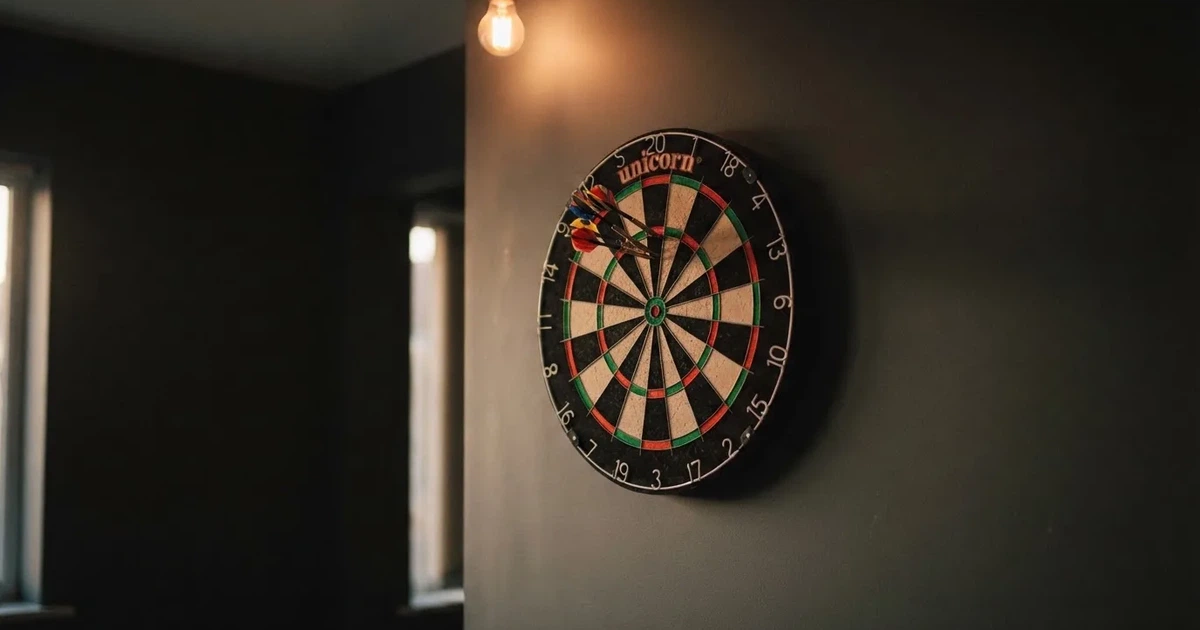
The calendar that drives darts betting odds runs on three competitions more or less above the others. The PDC World Darts Championship sits at the top, played every year across the Christmas and New Year window; the 2025/26 edition ran from 11 December 2025 to 3 January 2026 at Alexandra Palace with a 128-player field (up from 96). Around it the Premier League Darts runs from February to May, with weekly live shows and an outright market that is open for months before the play-offs. Beyond those two sits a continuous tour — the Players Championship events, the European Tour, the World Series, the Grand Slam — every one of them priced up by the major bookmakers from the moment the draw is published.
Inside that calendar the markets divide into two camps. Pre-match markets are open days or weeks ahead of a fixture and cover the outright winner, the match winner, the correct score in sets or legs, and the 180s count. In-play markets open once the first dart is thrown and are dominated by the next-leg market, the race-to-X-legs market and a constantly updating price on who wins the next 180. The difference matters: the pre-match outright is set once and pays on the tournament’s final outcome, while the in-play price on the next leg is rebuilt every time a player steps up to the oche. The bookmaker’s margin sits inside both — it is just easier to see in one of them.
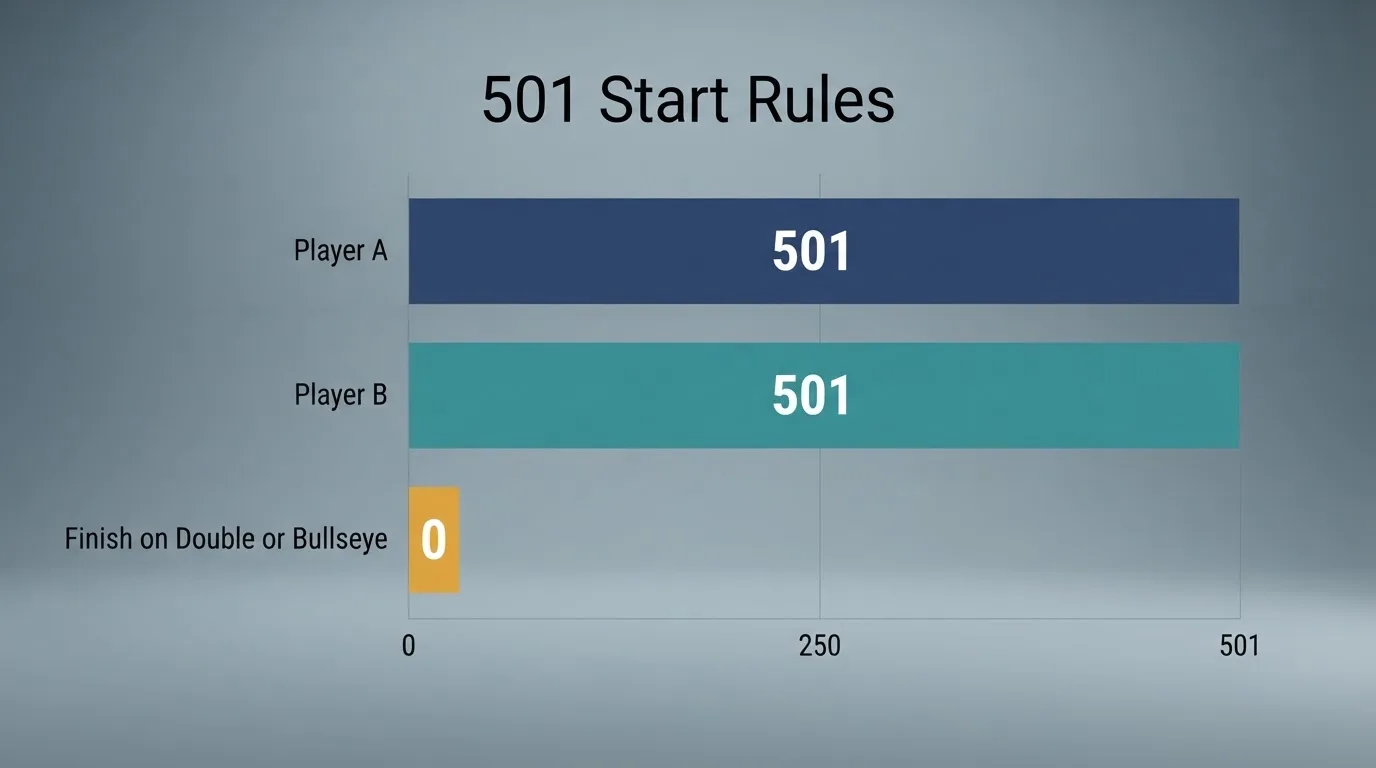
The structure of a match is what makes the in-play market workable in the first place. In 501 darts players start at 501 and must finish on a double or the bullseye, and the highest possible three-dart finish is 170. A leg lasts, in the best case, nine darts; in the worst case it can run into the thirties. Each leg is short, the scores are visible, and the bookmaker has no trouble pricing the next outcome. That is also why darts is one of the friendlier sports for cash-out: a position can be locked in at almost any point, because almost any point is a moment a price can be rebuilt.
The 2026 World Championship, as a worked example of the calendar
The 2026 World Championship is the cleanest recent example of the structure that drives the betting. The field doubled, rounded, to 128 players; the prize fund was £5,000,000 with £1,000,000 to the winner. Format moved up with the field: rounds 1 and 2 were first to 3 sets, rounds 3 and 4 first to 4, the quarter-finals first to 5, the semi-finals first to 6 and the final first to 7. Each set is best of five legs, each leg is the standard race-to-501-on-a-double, and the bookmaker’s match market is a function of the most likely number of sets and legs the favourite will need. The whole tournament is a worked example, and the rest of the page works through what its odds reveal.
What a bookmaker’s darts price actually contains
A decimal odds line on a darts match is two things at once. To the punter, 1.90 on van Veen means a £10 stake returns £19 (£10 profit on top of the £10 stake). To the bookmaker, the same 1.90 is one piece of a market in which every possible outcome has been priced, and the total of those inverse prices — 1 ÷ 1.90 plus 1 ÷ 1.90, where the second 1.90 is the price on the other player — comes to slightly more than 1. The amount by which it does is the bookmaker’s margin. That margin is what pays for the trading desk, the marketing budget and the licence, and it is the only number that is the same for every market and every bookmaker in a structural sense. What varies is how much of it the bookmaker has built into this particular line on this particular evening.
The highest governing body in darts is the Professional Darts Corporation (PDC); the World Darts Federation (WDF) sits beside it for the amateur game. The PDC’s marquee event is the World Championship, but it is not the only one that takes British money — the Grand Slam, the Players Championship Finals and the Premier League play-offs all sit at the top of a bookmaker’s outright market.
How this ranking was put together
This guide reviews ten Gambling Commission-licensed bookmakers that price darts to a British audience. They were chosen because each one is on the Commission’s public register with a remote general betting standard (real events) licence — that is the licence category that covers fixed-odds sports betting at distance — and because each one carries the kind of darts menu a punter looking at odds for, say, a Premier League night would want. The ranking is not a leaderboard; a licence is not a recommendation and a place in a comparison is not a licence. What follows is an assessment of what each operator does with a darts market, how it runs its welcome offer and what its terms do to the price a punter sees.
The comparison table: licence and what each bookmaker does with darts odds
| Brand | Remote licence and licence holder | How its own terms treat darts prices |
|---|---|---|
| LiveScore Bet | 056859-R-332720-005 (account 56859), LiveScore Betting and Gaming (Gibraltar) Limited | Bet Builder allows up to 10 selections and covers match result, both teams to score, corners, total goals, player scoring and card markets |
| Star Sports | 009177-R-104555-019 (account 9177), Star Racing Limited | Lets customers speak to a trader directly on 08000 521 321 to open an account, place bets or ask customer queries |
| Kwiff | 044448-R-323408-017 (account 44448), Eaton Gate Gaming Limited | Operates a “supercharged” price model that can randomly boost the odds on a selection at the bet’s settlement |
| Unibet | 045322-R-324275-019 (account 45322), Platinum Gaming Limited | Has operated since 1999; prices the full PDC calendar with outright, match and in-play darts |
| Betboro | 044181-R-324363-007 (account 44181), Webmedia Development N.V. | A 100% matched free bet of up to £25 on the first qualifying wager, with at least three selections each at 3/5 (1.60) or higher |
| Tote | 054779-R-331321-008 (account 54779), TDCO Limited | Pays Best Odds Guaranteed from 8 AM on the day of UK and Irish horse racing, on both single and multiple bets |
| Copybet | 053774-R-330743-010 (account 53774), Copybet UK Limited | Offers Best Odds Guaranteed all day, every day on all UK and Irish racing |
| Betway | 039372-R-319367-029 (account 39372), Betway Limited | Free Bet Club gives up to £10 in free bets every week after opt-in; spending £25 on sports earns 2 x £5 free bets |
| Betfred | 039544-R-319290-010 (account 39544), Petfre (Gibraltar) Limited | App covers 21 sports plus over 2,000 casino-style games, published by Done Brothers (Cash Betting) Ltd |
| 888sport | 039028-R-319297-014 (account 39028), 888 UK Limited | Pre-match and in-play betting, Cash Out, Bet Builder, racing streams, BetFinder form tools, a live bet feed and daily boosted odds |
How to read the table
Two of those columns are facts that change slowly, and one of them changes every minute the markets are open. The remote licence number is the operator’s identity on the Commission’s public register — searchable by business name, trading name, domain or account number — and the licence holder is the company that holds the licence. The third column is what each operator’s own terms state about darts markets, welcome offers or distinctive features, and it is where the difference between brands usually lives. A bookmaker whose “own terms” column mentions a Bet Builder or a price boost is doing something to the price a punter sees; one that mentions a Best Odds Guaranteed offer on horse racing is doing something for racing punters specifically. The connection to darts is the rest of the page.
The core of darts betting: what is on the slip
A darts betting slip is a long list of single-event markets and a shorter list of ones that only make sense in a tournament. The match winner — who wins the match — is the spine of the menu: first to X sets in a best-of format, with the number of sets set by the round. Inside that, the correct-score market lets a punter back the exact set score (3–1 in sets, 2–3 in legs inside a set). The 180s market — how many maximums will be hit in the match, or by one player — sits on top because the maximum is one of the most stable numbers in the sport: three treble-20s, every visit, in theory. The outright winner market — who wins the tournament — runs alongside the match markets from the moment the draw is published until the final is decided.
How the market groups on a major event
The 2026 World Championship is the cleanest illustration. With 128 players and rounds moving from first to 3 sets to first to 7 sets in the final, the outright market runs for the full three weeks of the tournament. The match market opens for each fixture roughly 24–48 hours before it is scheduled; the in-play market opens on the first throw and stays open until the final double is hit. In-play prices on darts are dominated by the next-leg market — who will win the leg currently in progress or, if the leg has just ended, who will win the next one — and by the race-to-X-legs market, which prices how many legs a player needs to take to win the set.
Why the markets keep changing
The reason the bookmaker rebuilds the in-play price is that darts is unusually well-suited to live trading. Each leg lasts at most a few minutes; scores are visible to the trading desk the instant the dart lands; the structure of the leg — race to 501 on a double — means the remaining score and the number of darts left are calculable at every visit. The bookmaker’s price on the next leg changes every time a player hits a treble-20, a single-5 or a bust. For a punter who has taken an early price on the match winner, the live market is also when a cash-out starts to make sense — a position can be locked in when the favourite is a set up but the opponent has just broken throw.
What a bookmaker does with a bet builder on darts
The bet builder, sometimes called a same-game multi, is the market that lets a punter stack outcomes from one event on the same slip. LiveScore Bet’s Bet Builder allows up to 10 selections and covers match result, both teams to score, corners, total goals, player scoring and card markets; a darts bet builder of the same shape covers match winner, 180s count, highest checkout and correct score. Each leg of a bet builder has its own margin, and the combined price is the product of those individual prices — and therefore the combined margin. A four-leg darts builder at 1.90, 1.90, 1.90, 1.90 is a combined 7.60 bet with a margin that is roughly four times the single-line margin. They are useful for the punter who has a strong read on a single match and useless for the punter who is just stacking outcomes for the sake of it.
Legality in Great Britain: the licence and what it covers
Every bookmaker on this page holds a remote general betting standard (real events) licence from the Gambling Commission, the non-departmental public body that licenses the commercial gambling market in Great Britain under the Gambling Act 2005. The Act covers England, Scotland and Wales; Northern Ireland is outside it and has its own older law, so a “GB licence” or “GB-licensed” is the right framing and “UK licence” is loose. The Commission’s public register is the whole test of who holds a licence — searchable by business name, trading name, domain or account number — and a bookmaker that does not appear on it for the domain a punter visits is not licensed for that domain, even if the same operator is licensed for a different one. Since the Gambling (Licensing and Advertising) Act 2014 an operator whose remote facilities are used in Great Britain needs a Commission licence wherever it is based; a Curaçao, Maltese or Gibraltar operating licence is not a substitute. The licence holder named on the register is often a Gibraltar or Maltese company — Platinum Gaming Limited for Unibet, Petfre (Gibraltar) Limited for Betfred, 888 UK Limited for 888sport — because those are where the operators are incorporated, but what licenses them to take a bet from a British customer is the Commission’s account, not the corporate address.
The categories that cover sports betting
The Commission issues several betting licence types. The one that covers what this guide calls fixed-odds sports betting is the remote general betting standard (real events) licence; the remote general betting standard (virtual events) licence covers computer-simulated events, the remote general betting limited licence is for smaller operators, the remote pool betting licence is for pool products such as the Tote, and the remote betting intermediary licence is what a betting exchange runs on. Every operator in the table above holds the first of these.
Off the register, off the table
A bookmaker without a Commission licence is not licensed to take a bet from a customer in Great Britain, and providing those facilities without the licence the Act requires is an offence under section 33 of the Gambling Act 2005 (on summary conviction up to 51 weeks’ imprisonment, a fine up to level 5, or both; six months in Scotland). The offence is aimed at the operator, not at the customer who merely places the bet — no offence aimed at a customer was found. What the customer loses by betting offshore is the British consumer-protection layer: no GAMSTOP coverage, no Commission complaints route, no approved dispute-resolution body, no British redress if funds are withheld, no application of the 10x bonus cap, no £150 vulnerability check, no credit-card ban. None of that is an argument that betting at an unlicensed site is illegal for the punter; it is an argument that the punter has fewer places to turn if the operator stops paying out. The Commission’s enforcement is disruption rather than blocking — cease-and-desist notices, search-engine referrals, work with registrars, hosts and payment providers — and court-order DNS blocking powers have been granted or are imminent, but no blanket ISP blocking regime is in operation.
What a “darts betting site not on GAMSTOP” actually is
Search phrases around darts betting sites not on GAMSTOP are about offshore operators that have not signed the multi-operator self-exclusion scheme. GAMSTOP is mandatory for GB-licensed online operators (since 31 March 2020), which is why every brand in the table below is a member; the self-exclusion periods are six months, one year, five years, or five years with auto-renewal, and after the minimum period the exclusion stays in place for a further seven years unless the customer asks GAMSTOP to remove it. A bookmaker that markets itself as “not on GAMSTOP” is, in plain terms, not licensed for Great Britain. That is a fact about the operator’s licence status, not an endorsement of the operator.
Responsible gambling in a darts betting context
The British framework for safer gambling runs through the operator’s licence conditions and codes of practice (the LCCP) and a handful of national schemes. GAMSTOP covers online sites and apps; betting shops use a separate multi-operator self-exclusion service. GamCare runs the National Gambling Helpline; GambleAware funds treatment and education; NHS gambling clinics run treatment services; Gamblers Anonymous runs peer-support meetings. Most GB-licensed bookmakers link to those services from a footer or a responsible-gambling page, and that link is itself a licence-condition obligation.
The financial vulnerability check
The LCCP condition 3.4.4, in force since 30 August 2024, applies to licensed remote betting when a customer’s deposits minus withdrawals exceed £150 in a rolling 30 days (since 28 February 2025): the operator runs a public-record check (for example bankruptcy or county court judgments). It is not an income check and not a credit reference check; it is a check against published records that may indicate financial vulnerability. Financial risk assessments — the “affordability checks” of the press — have been announced in a staged plan (Commission article of 7 July 2026) but with no start date; the framing is “announced, staged, no start date”, not “in force”.
Deposit limits
Operators must offer a gross deposit limit on a fixed time frame under RTS 12. The first changes have applied since 31 October 2025, a second phase was postponed to 30 September 2026, and whether the second phase is live is not established. There is no state-set deposit or loss ceiling for betting: limits are the customer’s choice, set inside the operator’s responsible-gambling tools. A punter who bets on darts in Britain is choosing their own deposit ceiling; the operator is required to offer the tool and to honour it, not to set a number.
Why verification sits in this section
Identity verification before the first deposit (in force since 7 May 2019) means no anonymous play at a licensed site — name, address and date of birth are checked before a customer can deposit or gamble, including with a free bet or bonus. This is a player-protection measure as well as an anti-money-laundering measure: the same check that prevents a minor from signing up also prevents a self-excluded customer from opening a new account at the same brand. It sits in the responsible-gambling section because that is what the verification is for, even though the customer encounters it as friction at the sign-up page.
Bonuses and free bets: what a “free” bet on darts actually pays
The word “free” sits next to almost every welcome offer in British sports betting, and almost none of them are free in the sense the word usually means. Unibet’s sports welcome offer is “Get £40 in Free Bets when you bet £20”: a deposit and sports bet of £20 or more at minimum odds of 2.0 (1/1), with free bets expiring within 7 days of issue, for new GB customers using a debit card or instant bank transfer. That is a £40 headline on a £20 qualifying bet, but the £40 is in free bets whose stake is not returned with a win — the punter keeps the profit only, not the £40 stake — and the £20 qualifying bet has to land before the £40 is issued. Betboro’s sports welcome offer is a 100% matched free bet of up to £25 on the first qualifying wager, requiring a debit card deposit of at least £10 and a first bet of £5 to £25 with at least three selections each at 3/5 (1.60) or higher. The headline is “100% matched”, the qualifier is three selections, and the qualification is a long way from a £25 stake on one match.
The promotion rules that apply to every offer
The promotion rules in force since 19 January 2026 cap wagering requirements on bonuses at 10x — a £10 bonus at 50x needs £500 of bets; under the cap no more than £100. Mixed-product promotions — an offer that requires gambling on two or more product types such as betting, casino, bingo and lottery, for example “bet on football to get free spins” — are banned. Whether the cap applies to free bets with no wagering condition, and any cap on the money value of a bonus, are not established; describe each operator’s terms as the operator’s own terms state them. Credit cards are banned for gambling in Great Britain (since 14 April 2020, LCCP condition 6.1.2), including credit-card-funded payments through an e-wallet; debit cards and bank-based payments are not covered by that ban.
What a free bet is worth on a darts price
The free bet’s value is not its face value. Take a £10 free bet on a darts match at decimal odds of 4.00: if it wins, the punter keeps £30 of profit, not £40, because the £10 stake is not returned with a free bet. On odds of 1.90 the value is roughly £4.74 of profit, on odds of 2.50 roughly £6, on odds of 5.00 roughly £8. The expected value of a free bet is the profit on a winning selection averaged over the probability of winning; on a market with a 5% margin, a £10 free bet at odds of 3.00 is worth about £13.60 in expected profit, never £30. The free bet is closer to a discount coupon than to a gift, and the discount depends on the price it is used at.
Acca insurance, price boosts and BOG: the offer landscape
Three other shapes of promotion sit alongside the welcome free bet. Acca insurance refunds the stake (usually as a free bet) if one leg of an accumulator lets the punter down — five-folds and above are the usual minimum — and is a small cushion against the one outcome that wipes out the rest of the slip. A price boost is a one-off enhancement of a price on a specific selection, paid as cash winnings on a win, and is best treated as a short-lived discount on a single bet. Best Odds Guaranteed (BOG), which the table notes for Tote and Copybet, is a horse-racing offer — William Hill pays Best Odds Guaranteed on UK and Irish horse racing from 8 AM on the day of the race, on both single and multiple bets; Copybet offers it all day, every day on all UK and Irish racing — and has no darts equivalent, because darts prices do not move between the morning and the start of play in the same way. The terms that govern each are the operator’s own; the punter reads the small print once and again when claiming.
Live betting and cash out on darts
Darts is, structurally, one of the easier sports for in-play betting. Each leg lasts at most a few minutes; the scoreboard is the source of truth; the structure of the leg is fixed (race to 501 on a double). The bookmaker’s trading desk can rebuild the in-play price between visits and can offer a cash-out quote on most positions at most points.
What an in-play price on the next leg looks like
Take the 2026 World Championship final, Littler against van Veen, with Littler a set up. The pre-match price on Littler to win the match is, say, 1.40 — a heavy favourite. After the first set, the in-play price on Littler to win the next leg is closer to 1.70 than 1.40, because each leg is independent of the match market; the bookmaker is pricing the next leg on its own probability. The match market is then the product of all the leg markets that have not yet been played, and the bookmaker’s margin on the in-play match market is wider than the margin on the pre-match market because the trading desk is taking on more risk with each rebuild.
What cash out does to a darts position
Cash out is the bookmaker buying back the punter’s bet at a price derived from the current in-play market, less a margin. A punter who backed Littler at 1.40 pre-match and is sitting on a 3–1 lead in sets after the first set can cash out at a price that reflects the current probability of Littler winning the match, minus the bookmaker’s cash-out margin. That margin is the difference between a full win and a cash-out; it is not advertised and is built into every quote. A punter who wants to lock in a profit takes the cash-out quote; a punter who believes the price is wrong lets the bet run. The cash-out quote is not a free option — it is the bookmaker’s price for closing the position now.
In-play limits and the rules around live markets
No statutory cap on stakes in sports betting exists; operators set their own maximum stakes and may restrict customers, and in-play markets tend to have lower maximum stakes than pre-match markets because the trading desk has less time to manage the risk. Some operators suspend an in-play market after a fast move — a price change of more than a tick or two — and resume it only when the trading desk has a new quote. A punter who tries to place a bet during a suspension gets a message to that effect and is invited to try again. The pattern is universal across the ten operators in this guide and is not specific to darts.
Predictions and strategy: where the arithmetic runs out
The word “prediction” is the wrong word for what a punter can do with darts. The right word is “estimate”. A punter who has watched enough darts to know that the favourite in a Premier League match wins roughly 60% of legs against a mid-card opponent can build a price; a punter who has done the work to track head-to-heads on the Players Championship tour can sharpen it; nobody can know the outcome of any single match. The bookmaker’s price already incorporates the same information, plus a margin, and is rebuilt at every visit on the oche. A punter who is sharper than the market on a single match has an edge on that match; a punter who is sharper than the market on average has an edge on average; a punter who is not, is paying the margin and nothing else.
Where the bankroll discipline lives
Bankroll discipline is the boring answer that turns out to be the right one. A punter who decides in advance what fraction of the bank to stake on each bet — flat staking at, say, 2% of the bank on each selection — gives the arithmetic room to work. A punter who doubles the stake after each loss to “chase” is paying the bookmaker’s margin twice over. A punter who backs a five-fold accumulator every Saturday is paying the margin on five markets at once and is most likely to lose all five on the same weekend. None of this is a prediction; it is the cost of the bet the punter has chosen.
Why “darts betting tips today” should be read with care
Darts betting tips exist in two forms. The first is a tip from a tipster who has a public record and stakes from a bankroll they disclose; the second is a tip from a tipster who has neither. The first is data a punter can weigh against their own; the second is marketing copy. The bookmaker’s margin is the same whatever the tip; a winning tip still pays a price that includes the margin, and a losing tip costs the stake plus the missed opportunity of staking elsewhere. A punter who pays for tips is paying for a record, not for an outcome; a punter who bets on a tip without seeing the record is paying for a name.
What an “outright winner” market costs
The outright winner market on a 128-player tournament is the textbook example of a market the bookmaker builds with a margin on every runner. The bookmaker’s book — the sum of the inverse prices on all 128 runners — is greater than 1 by the margin. A punter who backs the favourite to win outright is paying the margin on 127 other runners; a punter who backs a 100/1 outsider is paying the margin on 127 runners, including the favourite. The margin is the same on every selection; what differs is the payout when the selection wins. The outright market is best treated as a long-shot lottery for most runners and a serious bet for a small number of well-researched selections.
Bet types and odds: the shapes on a darts slip
A darts betting slip carries single bets, multiple bets, each-way bets, bet builders and outright bets. Each has a different shape of margin and a different rule about settlement.
Single, double, treble, accumulator
A single bet is one selection. A double is two selections, both of which must win. A treble is three, an accumulator (“acca”) is four or more. Each leg’s price is multiplied into the next, and the combined price is the product. A four-fold at 2.00, 2.00, 2.00, 2.00 is a 16.00 line; the same four-fold at 1.90, 1.90, 1.90, 1.90 is a 13.03 line. The margin on the combined price is roughly the sum of the margins on the individual legs — combine enough short-priced favourites and the bookmaker’s margin builds up faster than the punter’s price.
Each-way
Each-way betting is two bets of equal stake — one on the selection to win, one on the selection to place. The place part pays a fraction of the win odds (typically 1/4 or 1/5 in horse racing, with place terms that vary; on a darts outright the place terms are usually set by the bookmaker). The total stake on an each-way bet is double the unit stake; the punter is paying for two bets and the bookmaker is building two separate margins.
Bet builder
A bet builder stacks outcomes from one event on the same slip — for example, van Veen to win the match, over 5.5 180s, Littler highest checkout. Each leg is priced independently and the combined price is the product. LiveScore Bet’s Bet Builder allows up to 10 selections. The combined margin is roughly the sum of the single-line margins; a four-leg builder at 1.90 each carries a margin roughly four times the single-line margin.
Multi-leg combinations
A Trixie is 4 bets on 3 selections (3 doubles and 1 treble); a Patent is 7 bets on 3 selections (3 singles, 3 doubles and 1 treble); a Yankee is 11 bets on 4 selections (6 doubles, 4 trebles and 1 four-fold); a Lucky 15 is 15 bets on 4 selections (4 singles, 6 doubles, 4 trebles and 1 four-fold); a Super Yankee or Canadian is 26 bets on 5 selections; a Heinz is 57 bets on 6 selections; a Goliath is 247 bets on 8 selections. The total stake is the unit stake multiplied by the number of bets. A Lucky 15 at a £1 unit stake costs £15; a Goliath at a £1 unit stake costs £247.
Cash out
Cash out is not a bet type — it is the operator buying back an existing position. The cash-out price is derived from the current in-play market, less a margin, and is offered at most points during an event. A punter who backs a five-fold before play and watches the first four legs win can cash out before the fifth is played, locking in a smaller profit than a full win would pay but a real one.
How the price is built: the margin, in a worked band
The prescribed calculation is a margin. Take an illustrative two-way darts match at decimal odds 1.90 on each player (fractional 9/10). The payout share is 1 ÷ (1/1.90 + 1/1.90), which is 1 ÷ (0.5263 + 0.5263), or 1 ÷ 1.0526. That gives a payout share of about 0.95, or 95%. The margin is 1 minus 0.95, which is 0.05, or 5%. A two-way darts market with a 5% margin is roughly average for the sport; pre-match outright markets sit higher (the margin is spread across 128 runners, and the sum of inverse prices is materially larger than 1), and heavily liquid in-play match markets sit lower (sometimes down to 2–3% on a head-to-head between two well-known players). The band on a single darts match is therefore somewhere between 2% and 10%, with the most common mid-range sitting in the 5–8% area and the worst (long-shot outright markets, exotic in-play specials) running higher.
The point of the band is not the single number — the single number is whatever the bookmaker has built into that market on that day. The point is what the margin does to the punter’s stake over time. A punter staking £10 at decimal odds 2.00 on a market with a 5% margin pays 5p of every pound staked to the bookmaker in expectation. A punter staking £10 on the same selection in a market with an 8% margin pays 8p. The difference between 5% and 8% on a £10 stake is 30p, but on 100 such stakes in a season the difference is £30, and the punter who can find a bookmaker pricing a market at 5% when the rest of the market is at 8% is paying £30 less for the same bets. That is what a sharper price is worth.
Why the price moves between bookmakers
Different bookmakers build different margins into different markets. A bookmaker that specialises in darts may run a tighter margin on the outright market than a generalist; a bookmaker that pushes racing may run a tighter margin on racing at the expense of other sports; a bookmaker that wants to acquire customers may run a temporarily wide margin on a popular match to absorb more bets on either side. The punter’s job is to compare prices across bookmakers for the same selection — a routine called “line shopping” — and to take the better price when the difference is worth the inconvenience of another account. None of this changes the margin; it changes which margin the punter is paying.
What a price boost does to the margin
A price boost is the bookmaker offering a better price on a specific selection for a limited time. Midnite’s site shows price boosts with maximum-stake limits on certain selections; 888sport runs daily boosted odds on selected markets. The boosted price carries the same margin as the un-boosted price, but on a larger payout — the punter pays nothing extra, and the bookmaker is paying the margin on a larger liability than it would otherwise have run. A punter who takes a boosted price is getting a better number for the same market, and the price is worth taking when the selection is one the punter would have backed at the un-boosted price.
The ten operators, in detail
The order below follows the table; each entry covers what the licence says about the operator, what the operator’s own terms say about darts or bet promotion, and a closing judgement of what the brand is for. No two operators are alike, and the verdicts are not interchangeable.
LiveScore Bet: the bet-builder-first bookmaker
LiveScore Bet runs on a remote licence held by LiveScore Betting and Gaming (Gibraltar) Limited (account 56859, licence 056859-R-332720-005). The brand sits on top of the LiveScore live-results product and its Bet Builder allows up to 10 selections on a single event, covering match result, both teams to score, corners, total goals, player scoring and card markets. On darts the same builder shape covers match winner, 180s, highest checkout and correct score. The product is the brand’s main reason to exist, and a punter who wants to stack outcomes on a single darts match has the cleanest builder here of the ten. The verdict: best for the builder-first punter, less for the punter who just wants a straightforward match winner.
Star Sports: the phone-a-trader bookmaker
Star Sports runs on a remote licence held by Star Racing Limited (account 9177, licence 009177-R-104555-019). The brand is unusual in letting customers speak to a trader directly on 08000 521 321 to open an account, place bets or ask customer queries, with a support address at [email protected]. That phone line is the brand’s differentiator in a market where most customer service runs through chat bots and email queues. A punter who has a large stake to place or a complicated bet to negotiate has a faster route at Star Sports than at most competitors; a punter who just wants to back the match winner has no particular reason to choose it. It is the only operator in this guide that prioritises direct trader access for routine enquiries.
Kwiff: the supercharged-odds bookmaker
Kwiff runs on a remote licence held by Eaton Gate Gaming Limited (account 44448, licence 044448-R-323408-017). The brand’s signature is a “supercharged” price model that can randomly boost the odds on a selection at the bet’s settlement — a £10 bet at 2.00 may settle at 4.00, with the boost applied after the bet is placed. The randomness is the point: every bet carries a chance of a multiplied payout that the punter did not pay for. The downside is the same as the upside — the punter cannot plan around a price that may move. A punter who treats each Kwiff bet as a small lottery ticket has the right mindset; a punter who needs a fixed price has the wrong one. If you treat the boosted price as a possible bonus rather than a guaranteed return, it makes sense; otherwise, there are more predictable markets elsewhere.
Unibet: the long-established international bookmaker
Unibet runs on a remote licence held by Platinum Gaming Limited, Gibraltar (account 45322, licence 045322-R-324275-019). The brand has operated since 1999, is one of the largest sportsbooks in Europe, and prices the full PDC calendar with outright, match and in-play darts markets. Its sports welcome offer is “Get £40 in Free Bets when you bet £20”: a deposit and sports bet of £20 or more at minimum odds of 2.0 (1/1), with free bets expiring within 7 days of issue, for new GB customers using a debit card or instant bank transfer. The £40 headline is on a £20 qualifying bet, with the qualifying price of 2.0 setting the floor for the bet that has to land before the £40 is issued. A punter who wants a deep menu and a recognisable brand has the right fit; a punter hunting for the tightest margin may need to compare with a specialist. It is a top-tier choice for any punter prioritising market depth over niche specialists.
Betboro: the three-selection free bet
Betboro runs on a remote licence held by Webmedia Development N.V. (account 44181, licence 044181-R-324363-007). Its sports welcome offer is a 100% matched free bet of up to £25 on the first qualifying wager, requiring a debit card deposit of at least £10 and a first bet of £5 to £25 with at least three selections each at 3/5 (1.60) or higher. The qualifier is the restrictive part: three selections at 1.60 minimum is a combined minimum price of 4.86, and a £25 stake that loses costs £25. The free bet, when it arrives, follows the standard free-bet rule — the stake is not returned with a win. A punter who already planned a three-fold acca on darts has a natural use for the offer; a punter who wants to back a single match winner does not. The verdict: for the punter with a treble in mind.
Tote: the pool-betting heritage
Tote runs on a remote licence held by TDCO Limited (account 54779, licence 054779-R-331321-008). The brand is the descendant of the Tote, the state-backed pool-betting operator that was privatised in 2011, and its sportsbook sits beside its pool products on horse racing. The racing offer is Best Odds Guaranteed from 8 AM on the day of UK and Irish horse racing, on both single and multiple bets; on darts the offer is the standard sportsbook menu. A punter whose interest is darts alone has little reason to choose Tote over a specialist; a punter who bets on both darts and racing has the consolidated account. The verdict: for the punter whose slip spans both sports.
Copybet: the all-day BOG bookmaker
Copybet runs on a remote licence held by Copybet UK Limited (account 53774, licence 053774-R-330743-010). Its racing offer is the most generous BOG in this guide — Best Odds Guaranteed all day, every day on all UK and Irish racing, with first past the post paid even if the winner is later disqualified. On darts the menu is the standard sportsbook. The verdict for a darts-only punter: nothing special here, and a specialist is the better fit. For a punter whose slip is split: a strong combined offering.
Betway: the free-bet-club bookmaker
Betway runs on a remote licence held by Betway Limited (account 39372, licence 039372-R-319367-029). The brand’s weekly hook is its Free Bet Club: opt in, spend £25 or more on sports, earn 2 x £5 free bets. That is £10 a week in free bets for a £25 stake on a sportsbook that runs a full darts menu, and it is the closest thing in this guide to a recurring offer that is not tied to a single welcome. The free bets follow the standard rule — stake not returned — and the £25 stake has to clear at whatever odds the punter chooses. It remains the most reliable source of weekly free bets for active sports bettors.
Betfred: the Done Brothers bookmaker
Betfred runs on a remote licence held by Petfre (Gibraltar) Limited (account 39544, licence 039544-R-319290-010). The Betfred Sports, Casino & Games app is published by Done Brothers (Cash Betting) Ltd and covers 21 sports plus over 2,000 casino-style games. The brand is the longest-established high-street bookmaker in the list and has the most recognisable British shop front. On darts the menu is the standard sportsbook. Its main appeal is its longevity and its familiarity for punters who prefer a traditional high-street brand.
888sport: the feature-heavy bookmaker
888sport runs on a remote licence held by 888 UK Limited (account 39028, licence 039028-R-319297-014). The brand’s product list is the longest in this guide: pre-match and in-play betting, Cash Out, Bet Builder, racing streams, BetFinder form tools, a live bet feed and daily boosted odds. A punter who wants every tool on the same app has the right fit; a punter who only needs a match-winner market is paying for tools they will not use. The verdict: for the feature-hungry punter.
Where to take this next
A punter who has read this far should be doing three things. Comparing prices on the same darts selection across at least two of the operators above, because the difference in margin between brands is what the price changes between brands. Reading the welcome offer’s qualifying terms before staking the qualifying bet, because the headline number is rarely the headline cost. Setting a deposit limit on the first day with any operator, because the LCCP requires the tool and the punter’s bankroll benefits from the discipline. None of these is a prediction of who wins the next World Championship; all three are decisions the punter can make before the first dart is thrown.
Frequently asked questions
How do I bet on darts from Great Britain?
Open an account with a Gambling Commission-licensed bookmaker, pass the identity check (name, address, date of birth, since 7 May 2019), deposit by debit card or bank transfer (credit cards are banned for gambling in Great Britain since 14 April 2020), pick a darts market and place a stake. The whole process takes a few minutes once the account is verified, and the bet settles as soon as the event is over.
What does “darts betting” cover as a market?
Pre-match outright winner on a tournament, match winner on a fixture, correct score in sets or legs, 180s count, highest checkout, total legs in a match, race-to-X-legs in a set, and the live in-play equivalents of all of those once the first dart is thrown. Some bookmakers also offer specials on a player to hit a 170 checkout or to win the next leg from a starting position.
How does handicap betting on darts work?
Handicap betting gives one player a fictional lead in legs or sets before the match starts. A -2.5 handicap on Littler means his market price is settled as if he had already won two and a half legs; he has to win by three legs or more for the bet to land. The handicap is a way to back a heavy favourite at a longer price or an outsider at a shorter one, and the margin on a handicap market is similar to the margin on the match market.
How can I check that a bookmaker holds a Gambling Commission licence?
Use the Commission’s public register, which is searchable by business name, trading name, domain or account number. Each entry shows the licence type (remote general betting standard for sports betting), the licence holder and the registered domain. The licence number is the operator’s identity for regulatory purposes; the brand name on the front of the site is not.
How is the return on a bet worked out from the stake and the odds?
For decimal odds, the return is the stake multiplied by the odds. A £10 stake at 3.75 returns £37.50; the profit is the return minus the stake, so £27.50. For fractional odds, the return is the stake multiplied by (a ÷ b + 1), where the fraction is a/b. A £10 stake at 5/1 returns £60 (£50 profit plus the £10 stake); a £10 stake at evens (1/1) returns £20 (£10 profit plus the £10 stake).
What is the bookmaker’s margin and how can I see it in the odds?
The margin is the amount the bookmaker keeps of every pound staked, on average, across a market. It is the sum of the inverse decimal prices minus 1: on a two-way market priced at 1.90 and 1.90, the sum is 1/1.90 + 1/1.90 = 1.0526, and the margin is 0.0526, or about 5.26%. A punter who sees the same market priced at 1.95 and 1.95 elsewhere is looking at a margin of about 2.56%. The lower margin is the better price for the punter, all else equal.
Tennis, darts & cue sports – Boxing betting
Content created by the «Boxing betting» team
