
Price-boost bookmakers, ranked by what the offer actually costs
 Available in US
A price boost looks free. It is, in a sense: the bookmaker hands the punter a longer price than the market quotes and pays out at the boosted number if the bet wins. The same mathematics that drives a price cut drives a boost — the margin inside the new price is thinner, sometimes negative on a single event when an operator wants traffic on one match above all others. Trading floors know what this costs them and treat it as customer-acquisition spend; punters who read it as generosity tend to treat the surrounding sign-up offer the same way, and end up surprised by a turnover rule that converts a “free” £40 into a week of betting on short-priced favourites.
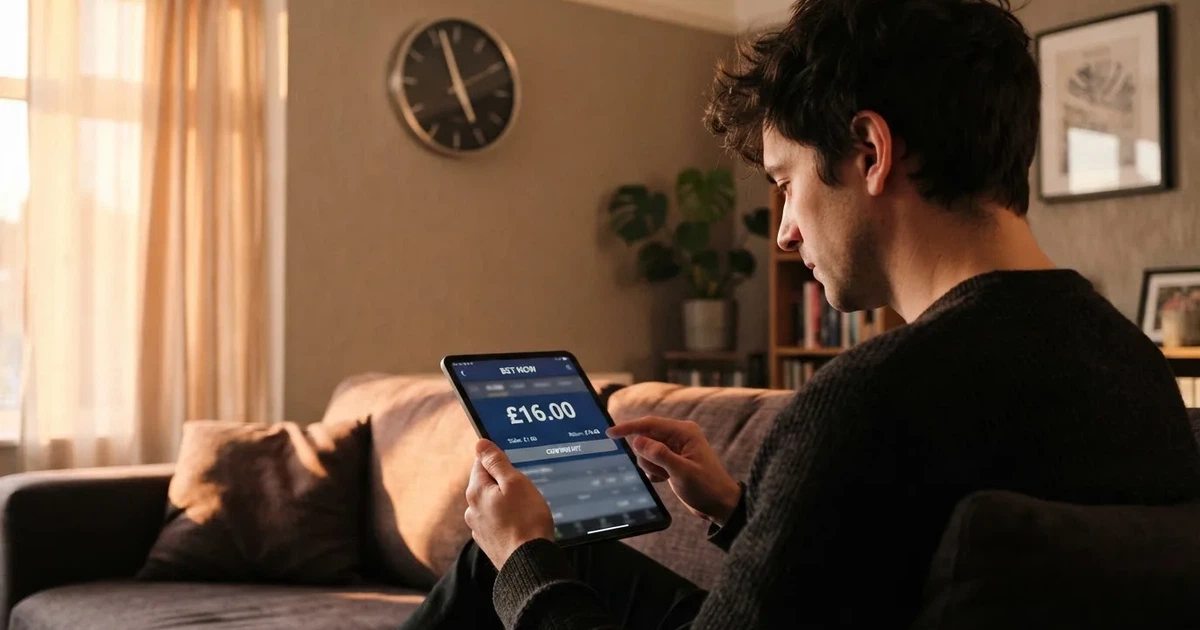
The honest lead is the regulator. From 19 January 2026 the Gambling Commission caps wagering requirements on bonuses at 10x and bans mixed-product promotions — an offer that requires gambling on two or more product types such as betting and casino has had its day. Anything in the round-up below sits underneath that ceiling or it does not sit here. What the cap does not say matters as much as what it does: a price boost itself is not a bonus in the regulated sense, the stake of a free bet is generally not returned with the winnings, and the difference between a cash refund and a free-bet refund is the difference between a useful offer and a marketing one.
Current as of 27 October 2026. Gambling Commission public register checked for every operator reviewed.
How Price Boosts Actually Work at a Bookmaker
A price boost is an enhanced odds offer on a specific market. The bookmaker posts a longer price than its own model — Liverpool to win at 3/1 when the line sat at 2/1, an over-2.5 goals line priced at 6/4 when traders had it at evens — and pays the boosted price if the bet wins. The stake is returned in the usual way, because a price-boosted bet is a regular bet at a longer price, not a free bet or a bonus. Limits are tight: most boosts cap the qualifying stake at around £5 to £20, with maximum boosted payouts that vary by event.

The mechanism is straightforward. The interesting bit is who pays for it. A bookmaker that boosts Premier League prices on a Saturday afternoon has decided that punters on that match are worth more than the margin it gives up, which is why boosted prices concentrate on the matches with the heaviest recreational traffic. Pricing teams think in customer-acquisition cost: a £5 boost that costs the firm £4 if it wins is cheaper than the equivalent paid-search click, and the boost carries the advantage that the punters who take it tend to come back.
This is why the surrounding offer, not the boost itself, is where the real cost sits. Welcome packages stage free bets behind a turnover requirement that turns £30 or £40 of promotional credit into a sequence of short-priced bets at minimum odds over a week. The 10x cap since January 2026 puts a hard ceiling on how heavy that turnover can be; it does not stop operators from writing the rule tightly.
The Statutory Frame Around a Boosted Bet
Great Britain operates one commercial betting regime under the Gambling Act 2005, administered by the Gambling Commission. The Northern Ireland market runs on older legislation and is outside the GB framework. A bookmaker whose remote facilities are used in Great Britain needs a Commission licence wherever the company is based — Gibraltar, Malta, the Isle of Man, Curaçao — since the Gambling (Licensing and Advertising) Act 2014. A non-GB licence is not a substitute for taking GB customers.

A handful of categories matter for an online sports punter:
- remote general betting standard (real events), the standard online sports licence;
- remote betting intermediary, the licence a betting exchange runs on;
- remote pool betting, for off-course pool products on horse and dog racing.
A brand with any of these can take a real-money bet from a customer in Great Britain. A brand that holds only an offshore licence is operating under its own house rules and falls outside the section near the bottom of this article on offshore brands.
What may be bet on is not listed in statute. Operators run markets under their own rules and the Licence Conditions and Codes of Practice. In-play betting is offered across the major GB brands and is governed by the operator’s licence conditions and social-responsibility duties. Esports sit inside the same regime as any other event; virtual events are a separate licence category. Politics, TV and novelty markets are routinely offered.
Two rules shape the bonus end of the trade. The first is the bonus cap: from 19 January 2026 a wagering requirement on a bonus cannot exceed 10x the qualifying amount. On a £10 bonus that means no more than £100 of qualifying bets before withdrawal; on a £40 bonus, £400. The second is the mixed-product ban: an offer that requires a customer to gamble on betting and casino together, or betting and bingo, is no longer permitted. That rule cut a long-standing format — “bet £10 on football to claim 50 free spins” — at its root.
The audit trail for licence status is the Commission’s public register, searchable by business name, trading name, domain or account number. Every brand below was checked against that register on the date this article was written. A licence is not a quality mark — it means the operator is bound by the LCCP, GAMSTOP and the Commission’s complaints route, not that it offers a sharp price.
The 10x Wagering Cap in Practice
The headline is short. Bonus turnover at a GB-licensed bookmaker is capped at 10x. The mechanics are what change the offer.
A £40 free bet package of the conventional shape — deposit, place a qualifying bet at minimum odds, receive free bets — sits inside the cap only if the *bonus base* itself, not the full amount a punter might be expected to stake across clearing, is the figure that matters. The Commission’s rule reads as a 10x ceiling on the promotional amount: a £10 bonus cannot carry a £500 rollover. The trade’s normal practice has been to write turnover rules at 1x of the bonus (deposit plus bonus, or just bonus, sometimes free-bet credit on its own), with the binding constraint usually sitting at minimum odds and a tight expiry window rather than at the multiplier.
What the cap does is take the worst offers off the table. A 50x bonus, the kind that cropped up on offshore sites and unlicensed casino-sports crossover products, is now unlawful for GB customers, period. For the average punter who claims a Coral- or Unibet-shaped welcome offer, the cap is a backstop rather than the binding rule; the binding rule is the minimum odds on the qualifying bet (2.0 / 1/1 in the most common structure) and the seven-day expiry on the free bets once credited. The cap changes what the regulator approves, not what the operator hands out.
The mixed-product ban bites harder for people who would rather not play casino. A bet-and-spins package — the staple of the mid-2010s GB offer — required a customer to do both. Under the January 2026 rule that offer cannot run. The trade has adapted by separating the products: a sports welcome offer on one bookmaker, a casino welcome offer on another, no requirement to do both for one promotional bundle. That split is friendlier to a punter who only bets on sport.
One important carve-out: the rule applies to bonuses, which the Commission treats as promotional credit with a wagering condition. A free bet whose stake is not returned with the winnings is generally treated as bonus credit for these purposes; a price boost is a regular bet at a longer price and is outside the bonus definition. Where the cap lands on free bets that carry no wagering condition is not established in writing, and operators in the same market have written their free-bet rules differently. Read the terms before you claim.
Pricing, Margin and Why a Boost Is Not Always a Better Bet
Two concepts run underneath any bookmaker conversation: margin and payout share. The margin is the percentage of every pound staked that the bookmaker keeps on average across a market; the payout share is the inverse, what returns to punters in the long run. On a three-outcome match market (home, draw, away) at decimal prices 2.10 / 3.40 / 3.60, the sum of reciprocals — 1/2.10 + 1/3.40 + 1/3.60 — comes to about 0.925, and 1 minus that figure is the margin, around 7.5%. On a different fixture with tighter prices, the margin can drop below 4% on a liquid market; on a novelty or outright market it can exceed 12%.
A price boost changes the price of one outcome, not the rest of the market. The boosted outcome may carry a thinner margin, a flat margin, or even a negative margin on that single line. In every case, the rest of the market has not changed and the long-run margin on the book as a whole has not moved by much. A punter who chases boosts across many events is paying the standard margin on most bets and getting a thinner margin on a few — the average is what matters, and the average settles close to where it would have been without the boost.
This is why boosts make sense as a fun way to take a stronger opinion on a match you’d have backed anyway, and not as a structural route to better returns. Priced boosts on a market you would never otherwise have touched are paid for by the margin on the bets you would have placed anyway, and the marketing word “best odds” deserves the same scepticism as the word “risk-free” does elsewhere.
What a Free Bet Is Worth in Real Money
Free bets share a property the marketing rarely mentions. The stake is not returned with the winnings. A £10 free bet at 5/1 returns £50 in profit, not £60; a £10 cash bet at the same price returns £60. The arithmetic of value: free-bet value = free-bet amount × (odds − 1) ÷ odds, multiplied by the payout share of the market the free bet is placed on.
A worked example. Take a £10 free bet on a Premier League match at boosted odds of 5/1 (6.00 decimal). At market payout share around 95%, the expected value of the free bet is £10 × (6.00 − 1) / 6.00 × 0.95, roughly £7.92. That figure is the long-run average over many uses; it is not what the free bet wins on a single Saturday. Any single outcome is binary: the bet wins or it does not.
The free bet is therefore worth less than its face value. A £40 free bet package is worth around £30 in expected return on typical boosted markets, less on markets with a thick margin, more on markets that sit close to a 100% payout share. The gap between face value and expected value is where the marketing hides the cost.
A bookmaker that refunds a losing first bet as a free bet rather than as cash is making the same trade explicit. The refund headline looks generous; the structure converts a £30 stake refund into roughly £22 of expected value on the markets the punter is most likely to use it on. Hollywoodbets and a handful of others run this model.
Welcome Offers That Pair with Price Boosts
Welcome offers stage free bets behind a qualifying real-money bet. Every brand below runs one; the differences sit in size, in the qualifying bet’s minimum odds, and in the free-bet expiry. Three structures recur.
The matched-free-bet structure is the most common. Bet £20 on a sportsbook at minimum odds 2.0 (1/1) and receive £40 in free bets, credited within a few days and expiring seven days later. Coral and Unibet both run a version of this in Great Britain; both require a debit card or instant bank transfer to qualify, and neither extends to credit cards or e-wallets funded by credit card, which the credit-card gambling ban of April 2020 closed off.
The smaller-stake structure requires a smaller deposit. Sky Bet issues £30 in free bets after a £5 first bet at minimum odds 1/1; that offer is friendly to a small-stake customer and unfriendly to anyone whose first bet might land a longshot that the bonus would have amplified. Matchbook trades welcome offer for time: 110 days of commission-free betting rather than free bets, with standard commission applying afterwards. The exchange shape rewards volume over the qualifier.
The accumulator-shape welcome offer requires the qualifying bet to have several legs. Hollywoodbets’ offer stakes an accumulator of three or more legs at minimum odds 4/1; the refund, if the first acca loses, is a free bet of up to £30. BoyleSports, Betboro and a handful of others run similar accumulator-shaped qualifiers. The accumulator qualifier costs the bookmaker less on average than a single-bet qualifier because the punter pays the multi-leg margin into the qualifying turnover.
The cap ties all of these together. None of the welcome offers below carries a wagering multiplier higher than 10x on the bonus, because the Commission does not let one. The binding constraints are minimum odds and the seven-day expiry on most free bets, not the multiple.
Bonus Turnover: What Clearing a Welcome Offer Costs
The arithmetic of a bonus turnover belongs to the punter who claims the offer. A worked example using a representative set of rules from the welcome offers in the round-up below:
A £40 free bet package, qualifying bet £20 at minimum odds 2.0 (1/1), free bets credited within seven days and expiring seven days from issue. The 10x cap since 19 January 2026 places a ceiling of £400 on turnover against a £40 bonus base — that is the maximum any operator can require under current rules. The actual wagering requirement on this shape is normally 1x the bonus amount on most major GB brands, so £40 of qualifying bets placed at minimum odds 2.0 before the bonus balance converts.
If the qualifying bets are placed on a Premier League match market with a 7% margin, the expected cost of clearing that £40 turnover is £40 × 0.07 = £2.80 — the gross margin the bookmaker earns on the qualifying bets. The free bets themselves are valued separately: at a typical 95% payout share and face value £40, expected free-bet return is roughly £30, which gives the punter a net expected value close to £27 once the clearing cost is netted.
Stated as a band rather than a single number: the cost of qualifying turnover sits between £0 and £40 depending on the markets used, and is materially lower on markets with thin margins than on markets with thick ones. Free-bet value depends on the boosted prices the punter uses them on and on the markets’ payout share, which is why two claims of the same welcome offer can produce very different results.
That is the calculation the trade would prefer the customer not to run. It is the calculation that tells the punter whether the offer is worth claiming.
Responsible Gambling Tools and What Operators Must Run
The LCCP requires every GB-licensed online operator to offer several safer-gambling tools and run several checks. GAMSTOP self-exclusion is mandatory for online operators since 31 March 2020 and covers every brand on this page: a customer who has self-excluded cannot deposit or bet. Exclusion periods are six months, one year, five years or five years with auto-renewal, with a further seven-year minimum if the customer does not ask GAMSTOP to lift the exclusion at the end of the chosen period.
Deposit limits are required under the Remote Technical Standards. The customer sets a gross deposit limit on a fixed time frame; operators must offer the tool. A staged series of further changes has been rolling through since 31 October 2025, with a second phase postponed to 30 September 2026; whether that second phase is live at the moment a punter registers is not established. There is no state-set ceiling on deposits or losses for betting customers; limits are the customer’s choice, set within the operator’s framework.
Financial vulnerability checks have applied since 30 August 2024 and extend to remote betting. Once a customer’s deposits minus withdrawals exceed £150 in any rolling 30 days (since 28 February 2025), the operator runs a public-record check — bankruptcy registers, county-court judgments — not a credit-reference agency pull and not an income check. The press calls this an “affordability check”; the regulator’s term is the financial vulnerability check.
Financial risk assessments, the heavier version the regulator announced on 7 July 2026, run in a staged plan with no start date. Write that summary exactly that way.
Identity verification is required before a customer can deposit or gamble at a GB-licensed site, since 7 May 2019. Name, address and date of birth are checked; the check covers free bets and bonuses too. Anonymous play is not a product that exists at a licensed operator.
Help services: GamCare runs the National Gambling Helpline; GambleAware funds treatment and prevention; the NHS runs a network of gambling clinics; Gamblers Anonymous runs peer-led meetings. These are independent of the operator.
Payments at a Price-Boost Bookmaker
Credit cards are banned for gambling in Great Britain since 14 April 2020 — the ban covers payments funded through an e-wallet where the e-wallet was topped up by credit card. Debit cards and bank-based payments are not in the ban; they are the workhorses of GB online betting. E-wallets (PayPal, Skrill, Neteller) are accepted where the operator lists them, and Apple Pay and Google Pay are now routine. Revolut Pay is listed on several operators below; Pay by Bank (Open Banking) sits alongside it on LiveScore Bet. Cryptocurrency is not part of this round-up: no statutory rule permits or bars it at GB-licensed operators, and no operator in the list accepts it.
Source-of-funds checks are normal at higher spend. The £150 rolling-30-days vulnerability check is the trigger; beyond it the operator may ask for payslips, bank statements or similar evidence of where the money comes from. The Customer Due Diligence rules in the money-laundering regime require it; the operator runs them.
Identity on first deposit means a £5 deposit from a new customer, even with a Sky Bet-shaped offer, opens a verification flow that ends at a matched name, address and date-of-birth record. That record is what the GAMSTOP exclusion catches; it is also what freezes an account if a Customer Due Diligence flag fires.
Payment speeds vary by method. Debit-card withdrawals clear in one to three working days on most operators; bank transfer can take longer; e-wallets clear within hours on the operators that support them. Kalooki Sportsbook advertises instant withdrawals by bank transfer within minutes. Treat operator-stated times as best-case and the bank’s processing time as the floor on the worst-case.
The Round-Up: Ten UK-Licensed Bookmakers Reviewed on Price Boosts
The ten brands below hold a Gambling Commission remote licence and feature the price-boost format on their sportsbook. They are presented in the order research sets; the ranking is descriptive, not normative. Brands that run the same parent company as another brand on the list do not appear twice.
1. Coral (coral.co.uk) — Established High-Street Brand With a Wide Boost Range
Coral sits under LC International Limited, Gambling Commission account 54743. The sports welcome offer is the conventional £20-qualifying, £40-free structure: deposit and bet £20 at minimum odds 2.0, with £40 in free bets credited within seven days and expiring seven days after issue. Coral’s payment roster includes debit cards (Visa, Mastercard, Visa Electron), Apple Pay, Revolut Pay, Google Pay and several instant bank-transfer rails (TrueLayer, Earthport, Trustly). The terms name a debit card or instant bank transfer as the qualifying methods for the welcome offer.
The boost side is dense. Coral runs a free daily Reward Shaker, an Odds Booster on hundreds of markets and free-to-play games such as Football Super Series with a £10,000 jackpot. Football Super Series is a free entry, which is the kind of product the Commission’s mixed-product rule does not catch because no qualifying bet on a separate product is required.
Coral suits the punter who reads every boosted price against an exchange and wants a wallet-friendly welcome offer. The Qualifying-bet minimum odds (2.0) on the welcome offer are the kind that exclude almost nothing in the Premier League but rule out a 1/2 shot, which is the same constraint most major operators now impose.
The verdict: Coral’s welcome offer and the broad boost roster make it a strong general-purpose sportsbook. The seven-day expiry on the free bets is the binding constraint — miss the window and £40 of promotional value is gone.
2. Matchbook — Exchange Shape Rather Than Price-Boost Shape
Matchbook is the exchange in the round-up, licensed under Commission account 39504 to Triplebet Limited. The welcome offer is 110 days of commission-free betting from registration, against a code shown in the listing and a deposit. Commission is the exchange’s revenue model — it runs on the back side of every matched bet — and the welcome offer is a route to delay that charge.
Matchbook runs Bet Builder, Cash Out, live horse-racing streams and price boosts alongside the exchange. The price boosts here have a different feel from a sportsbook boost because liquidity on the exchange is uneven: a boosted fixture needs both sides of the market to clear, and the operator weights toward events where the liquidity profile is supportive.
Matchbook suits a punter who treats price as the product and wants to lay outcomes as well as back them. The exchange shape rewards volume; a punter placing three bets a week on a Saturday will not extract much commission value from the 110 days, and the welcome offer’s value depends on the punter’s order book.
The verdict: Matchbook is the only true exchange on the list, and the welcome offer is the only offer on the list that charges zero commission. The price-boost feature is a useful secondary tool, not the headline.
3. NetBet (netbet.co.uk) — Active Booster With Daily Free Bets
NetBet runs Daily Boosts, Profit Boosts and free bet offers across football, horse racing and a wide secondary sport roster. NetBet Enterprises Limited holds the licence under Commission account 39170. The sportsbook pairs the boosts with a Bet Builder with instant dynamic odds and a sports-stats panel covering the major leagues.
NetBet’s boost cadence is high, which suits a recreational punter who wants a daily bet on a boosted fixture rather than a research-led accumulator. The Bet Builder’s “instant dynamic odds” wording implies real-time price updates as selections are added — a feature that matters when the same-game multi includes three or four legs from one event.
NetBet suits a punter whose shop is the weekend card and who treats the Bet Builder as the everyday tool. The welcome offer is modest against the round-up’s larger packages and the operator earns its place through boost density rather than headline credit.
The verdict: NetBet’s daily-boost cadence and same-game multi feature make it the round-up’s best fit for a bettor whose routine is to scan one or two boosts per day. Welcome-package terms should be checked at the point of claim; the operator rotates promos.
4. Unibet (unibet.co.uk) — Mature Sportsbook With a Named Boost Stack
Unibet UK runs under Platinum Gaming Limited, Gibraltar, on Commission account 45322, and has been in the UK market since 1999. The sports welcome offer mirrors the matched-free-bet structure: bet £20 at minimum odds 2.0 and receive £40 in free bets expiring within seven days. The qualifying payment methods are debit cards or instant bank transfer.
Unibet layers Bet Builder, daily Uniboosts, live streaming through Unibet TV, in-play betting, Best Odds Guaranteed on horse racing and Cash Out on thousands of markets. The combined feature set is the round-up’s widest at a GB-licensed sportsbook.
Unibet suits a punter who treats the sportsbook as a daily tool rather than a one-off welcome-offer destination. The Best Odds Guaranteed feature on UK and Irish horse racing pays out at the higher of the price taken or the starting price, which converts longshots after the declarations stage into something the punter did not have to back at a smaller price.
The verdict: Unibet is the round-up’s strongest general-purpose sportsbook at the headline-price level, with daily Uniboosts in addition to the Bet Builder and live-streaming stack. Welcome-package terms sit inside the Commission’s 10x cap; the seven-day expiry is the practical constraint.
5. Betboro — Modest Welcome Offer, Accumulator-Qualifier Shape
Betboro runs under Webmedia Development N.V. on Commission account 44181. The sports welcome offer is a 100% matched free bet of up to £25 on the first qualifying wager. The qualifier requires a debit card deposit of at least £10 and a first bet of £5 to £25 with at least three selections each at 3/5 (1.60) or higher.
The three-leg minimum turns the qualifying bet into an accumulator. A £25 acca at three legs of 1.60 each carries compound price (1.60 × 1.60 × 1.60 = 4.096), so a winning qualifier returns around £102. The offered refund is a matched free bet of up to £25 on the same structure; a free bet at the same acca price returns around £40 in profit if the bet wins.
Betboro suits a punter who already bets small-stake accumulators and is comfortable with the three-leg floor. The £25 cap is conservative against Coral’s £40, Unibet’s £40 and Sky Bet’s £30; the offer’s value depends on the punter’s acca habit.
The verdict: Betboro is a smaller bookmaker with a usable welcome offer and standard price-boost features. Worth claiming before trying the bigger brands if the qualifier fits; the matched-free-bet structure is an honest one.
6. London Bet — Local-Brand Sportsbook With a Conservative Roster
London Bet is published by Thistle Bet Limited on Commission account 66162. The brand’s app carries a 17+ age rating in the GB App Store and a UK-Gambling-Commission licence disclosure. The boost roster is not the round-up’s headline feature; what distinguishes London Bet is the brand profile — a smaller-scale operator under a UK licensee rather than one of the big multi-brand gambling groups.
London Bet suits a punter who prefers the look of a small-brand sportsbook over the mega-app and is comfortable confirming the boost and welcome-offer details inside the app. The brand’s audit posture (a Commission account number, an in-app terms page) is what the round-up’s standards require; the welcome offer and boost specifics need to be checked at the point of claim rather than carried across from a competitor’s terms.
The verdict: London Bet fits a punt-to-spare habit. The big-scale operators have the daily boost cadence London Bet does not, and the operator sits in the round-up to round out the licence check rather than to lead on price-boost frequency.
7. 10bet (10bet.co.uk) — Casino-Cross Welcome Bundle Within the New Rules
10bet runs under Blue Star Planet Limited on Commission account 43173. The app advertises a 100% up-to-£50 betting bonus for UK sign-ups, with daily free bets and free spins on top. The mixed-product ban since 19 January 2026 forces 10bet to split what was once a joint offer; how that split sits under the current rules matters for any UK punter — whether the betting bonus can be claimed without the casino side is the first thing to confirm in the terms.
10bet suits a punter who has used the brand elsewhere and likes the app. The Commission’s bonus cap applies; the £50 ceiling puts 10bet’s headline ahead of Coral’s £40 on paper but the binding constraint will sit at the wagering multiple and the qualifying bet’s minimum odds.
The verdict: 10bet is in the round-up for its licence and its boost roster. The mixed-product ban changes how its welcome bundle is structured under the current rules. Check the qualifying terms carefully — the offer is only as good as the minimum-odds rule and the expiry.
8. LiveScore Bet — Score-Feed Sportsbook With Modern Payment Rails
LiveScore Bet runs under LiveScore Betting and Gaming (Gibraltar) Limited on Commission account 56859. The brand pairs the global LiveScore score feed with a modern UK sportsbook. Payments include Visa, Mastercard, Apple Pay, PayPal, Pay by Bank (Open Banking) and Revolut Pay — the strongest payment-method range in the round-up, in particular for a punter who prefers bank-based rails over card rails.
The boost cadence sits around the daily-boast cadence operators describe as standard: boosted prices on selected football markets, in-play boosts on the marquee fixtures, an acca boost on qualifying accumulators. Cash Out and Bet Builder are listed on the app.
LiveScore Bet suits a punter who already keeps LiveScore open as a score service and wants the bet to sit inside the same app. The payment-method range is the practical edge: e-wallet, open banking and card rails side by side without the credit-card-funded e-wallet penalty.
The verdict: LiveScore Bet is a strong second-bookmaker choice for a punt-to-spare routine, and the natural partner for a punter already using LiveScore as a score feed. Welcome-offer specifics need to be checked at the point of claim.
9. Kalooki Sportsbook (kalookisportsbook.co.uk) — Smaller Brand With Best Odds Guaranteed and Daily Boosts
Kalooki Sportsbook runs under Kalooki Sports Book Limited (company number 12938274) on Commission account 57730 and is a GAMSTOP member. The brand advertises instant withdrawals by bank transfer within minutes, Best Odds Guaranteed on UK and Irish horse racing, in-play betting, daily boosts and extra place races.
Kalooki is the round-up’s smallest bookmaker, and its daily-boost roster is on the same level as the bigger brands. Best Odds Guaranteed on horse racing is the headline feature: a punter who takes 8/1 on a horse at 10am and the starting price drifts to 12/1 is paid at 12/1. Extra place races extend each-way terms on selected meetings.
Kalooki suits a horse-racing punter who values BOG and extra places above a deep football boost roster. The brand’s withdrawal speed (within minutes by bank transfer) is the round-up’s quickest, which matters for a punter whose working capital is small.
The verdict: Kalooki is the round-up’s best fit for a horse-racing-led habit. The instant-withdrawal claim is worth verifying against a small first transaction; the brand is well-placed for a BOG-led punter at a smaller scale than the bigger brands.
10. Hollywoodbets (hollywoodbets.co.uk) — South-African-Born Sportsbook With an Accumulator Refund
Hollywoodbets runs under Hollywoodbets International UK Limited on Commission account 53028. The sports welcome offer is a first-bet refund: deposit £10 or more by card, place a first accumulator of £10 or more with three or more legs at odds of 4/1 or greater, and if the acca loses, receive stake back as a free bet of up to £30.
Hollywoodbets’ welcome shape is the most accumulator-leaning of the round-up. The 4/1 minimum combined odds and the three-leg floor push the qualifying bet into a profile that the average recreational punter uses week-to-week. A winning qualifier returns around £40 if the combined price clears 4/1 on the chosen fixture; a losing qualifier is refunded up to £30 in free bet credits.
Hollywoodbets suits a punter whose working bet is the acca. The refund shape is the reason the offer is in the round-up — it is the cleanest accumulator-led welcome offer available at a GB-licensed brand in 2026.
The verdict: Hollywoodbets fits a punt-to-accas habit. The accumulator-shape welcome offer is genuinely different from the matched-free-bet shape on most of the round-up; the £30 cap is honest about what the refund is worth.
Table: UK Price-Boost Bookmakers Compared
| Brand | Gambling Commission account and licence holder | What the operator’s own terms state on price boosts and welcome offers |
|---|---|---|
| Coral | 54743 (LC International Limited) | £40 free bets after a £20 qualifying bet at minimum odds 2.0; daily Reward Shaker, Odds Booster on hundreds of markets, Football Super Series free-to-play |
| Matchbook | 39504 (Triplebet Limited) | 110 days of commission-free betting on sign-up; Bet Builder, Cash Out and live horse-racing streams; price boosts on selected markets |
| NetBet | 39170 (NetBet Enterprises Limited) | Daily Boosts, Profit Boosts and free-bet offers; Bet Builder with instant dynamic odds; sports stats for major leagues |
| Unibet | 45322 (Platinum Gaming Limited, Gibraltar) | £40 free bets after a £20 qualifying bet at minimum odds 2.0, seven-day expiry; Bet Builder, daily Uniboosts, Best Odds Guaranteed on horse racing, Unibet TV, Cash Out |
| Betboro | 44181 (Webmedia Development N.V.) | Matched free bet up to £25 on first acca of three+ legs at 1.60+; standard price-boost features |
| London Bet | 66162 (Thistle Bet Limited) | UK-licensed local-brand sportsbook; specific boost and welcome-offer terms inside the in-app terms page |
| 10bet | 43173 (Blue Star Planet Limited) | 100% up-to-£50 betting bonus headline plus daily free bets; mixed-product bonus bundle subject to January 2026 rule |
| LiveScore Bet | 56859 (LiveScore Betting and Gaming (Gibraltar) Limited) | Daily boosts on selected football, acca boost on qualifying accumulators, Cash Out and Bet Builder |
| Kalooki Sportsbook | 57730 (Kalooki Sports Book Limited) | Best Odds Guaranteed on UK and Irish horse racing, daily boosts, extra place races; instant bank-transfer withdrawals |
| Hollywoodbets | 53028 (Hollywoodbets International UK Limited) | Stake refunded as a free bet up to £30 if the first acca of three+ legs at 4/1+ loses; daily boost roster |
What the Comparison Tells You
Look first at the welcome shape. Coral and Unibet run a matched-free-bet welcome offer on the same £20/£40/2.0/7-day terms; that shape is the round-up’s most generous at the headline level. Matchbook offers a different product — commission-free days — that suits a punt-and-lay routine rather than a matched-bet one. Hollywoodbets and Betboro run accumulator-shape qualifiers, which cost the punter more in qualifier margin but cost the operator less. Sky Bet’s £30 free-bet package is friendly to small-stake customers; that operator’s licence set is not in this round-up’s headline ten but the format shows up elsewhere.
Look next at the boost density. NetBet, Coral and Unibet lead on the daily-boost side; a punter who values boost frequency will land on one of the three. LiveScore Bet runs a similar cadence but pairs it with the strongest payment-method range, which matters when a wallet needs to move. Kalooki’s boost roster is matched by its Best Odds Guaranteed feature on horse racing — the right punter for the brand is the racing-led punter.
A licence is the floor, not the ceiling. Every brand above holds a Commission remote licence; that is what makes the round-up safe in the regulatory sense. A higher licence number or a longer trading history does not make a brand’s price sharper, nor does it make the welcome offer more valuable. The right brand for any one punter is the one whose welcome shape and boost cadence match that punter’s habit.
Offshore Brands and What a Non-GB Licence Costs the Customer
A Curaçao, Maltese or other non-GB licence is not a substitute for a Gambling Commission licence. A bookmaker whose remote facilities are used in Great Britain needs a Commission licence under sections 33 and 36 of the Gambling Act 2005 as amended by the 2014 Act. Operating without the licence is an offence, on summary conviction punishable by up to 51 weeks’ imprisonment, a fine, or both. The offence is aimed at the operator, not the punter.
What the punter loses without the licence:
- GAMSTOP self-exclusion does not apply. A punter who has self-excluded on a Commission-licensed site can still deposit and bet offshore.
- The Commission’s complaints route and an approved Alternative Dispute Resolution body are not available.
- The British consumer-protection record and the redress route are absent. Funds withheld at an offshore operator may have no realistic recovery path.
- The 10x bonus cap does not apply; the offers at offshore operators can carry higher wagering requirements and looser terms.
- The £150 financial-vulnerability check does not apply; the cheque-free compliance regime is the offshore operator’s own policy.
Enforcement is disruption-led: cease-and-desist notices, search-engine referral letters, work with payment providers, registrars and hosts. The Commission has sought, or is about to receive, court-order DNS-blocking powers — those are not the same as ISP-side blocking and may not be in operation yet.
Neither licensed nor unlicensed is “the safe choice” by default. Licensed sites check identity, run GAMSTOP and operate under the LCCP; unlicensed sites offer none of those protections and the punter carries the counterparty risk on top of the gambling risk.
Reading a Price-Boost Term Sheet
Every operator’s terms page names the same set of points in different language. The audit runs in a fixed order: qualifying payment method, qualifying bet minimum odds, free-bet expiry, maximum boosted payout, stake-returned rule, settlement timing on in-play and pre-event voids, and the operator’s withdrawal rule on bonus-derived funds.
The minimum-odds rule does the heavy lifting. A free bet usable only at odds of 1/2 (1.50) or longer forces the punter onto markets with thinner margins, and the rule’s tightness is a fair proxy for the operator’s view of the offer’s cost. Matchbook’s commission-free period is commission-free only for matched bets inside the platform’s own system; an unmatched leg in the 110-day window does not earn the rate. BoyleSports’ acca insurance caps the refund at £20 as a free bet that expires in seven days; the cost of the refund is the gap between £20 face value and the free bet’s expected value on typical markets.
Each rule is the punter’s friend when the punter reads it.
Frequently Asked Questions
What is the maximum wagering requirement on a betting bonus in Great Britain?
Wagering requirements on bonuses at GB-licensed bookmakers are capped at 10x the bonus amount since 19 January 2026. On a £10 bonus that means at most £100 of qualifying bets before the bonus balance converts. The cap is a ceiling, not a standard — most major operators run the requirement at 1x of the bonus. The cap covers the bonus element of welcome packages and reloads; whether it applies to free bets with no wagering condition is not established in the Commission’s published guidance and operators differ in how they treat the case.
What do minimum odds and the wagering requirement mean in a sign-up offer?
Minimum odds set the floor for the price a qualifying bet must reach to count toward the offer. Wagering requirement is the multiple of the bonus (or in some cases the deposit plus bonus) that must be staked before any winnings can be withdrawn. A Coral-shaped offer with a £20 qualifier at minimum odds 2.0 and a 1x wagering multiple on the £40 free bet means the punter bets £20 at odds of 2.0 or longer, then runs £40 of qualifying turnover on the bonus side, at minimum odds that the operator sets separately.
Why is the stake of a free bet not paid back with the winnings?
A free bet is promotional credit, and the promotional price is the winnings, not the stake plus the winnings. A £10 free bet at 5/1 returns £50 in profit, not £60. The expected value of a free bet depends on the market’s payout share; on a 95% payout share market at face value £10 a free bet is worth around £8 in long-run expected return. That property is what distinguishes a free bet from a cash refund.
Can a bet on sport be tied to a casino bonus under the Commission’s promotion rules?
No. From 19 January 2026, mixed-product promotions — an offer that requires gambling on two or more product types such as betting and casino — are banned at GB-licensed operators. Sports welcome offers no longer carry free spins; casino welcome offers no longer require a sports bet. Operators separate the products, and a punter can take either side without the other.
How can it be checked that a bookmaker holds a Gambling Commission licence?
The Commission’s public register is searchable by business name, trading name, domain or account number. Any account number on the register corresponds to a remote licence for the categories shown — remote general betting standard (real events), remote betting intermediary, remote pool betting. The register is the whole test of whether a brand is licensed; no other source confirms it independently. Every brand reviewed in this article was checked against the register on the date of writing.
Are betting winnings taxed in Great Britain, and who pays General Betting Duty?
The punter pays no tax on betting winnings in Great Britain. General Betting Duty is the operator’s tax on gross profits, currently 15%; from 1 April 2027 a new remote betting rate of 25% applies inside the same duty, while remote bets on UK horse racing, self-service terminal bets, pool betting and in-person betting stay at 15%. The duty is the operator’s bill, not the punter’s. Spread betting has its own rates and the operator’s tax on that product runs on a separate schedule.
Free bets & offers – Boxing betting
Content created by the «Boxing betting» team
