
Where to bet on basketball online in 2026 — a GB-licensed guide
 Available in US
Basketball earns its second screen. The NBA regular season alone runs October through April and stacks four to five games most nights, while the EuroLeague, NCAA, NBL and a dozen second-tier European leagues keep the calendar busy outside that window. Betting on the sport means something slightly different on each bookmaker: one promises a hundred pre-match markets on a Lakers–Celtics game, another hides the same fixture behind six lines and a Bet Builder prompt. This guide walks through what licensed British bookmakers actually offer on basketball, what the odds are doing underneath, and what each welcome bonus and free-bet promotion asks of the customer who claims it. The angle throughout is consequence: what the offer, the market and the rule take from the punter, and when that cost shows up.

Current as of 27 October 2026 against the public register of the Gambling Commission.
What basketball betting in Great Britain actually is
The mechanics of basketball betting look like any other single-sport vertical: pick a market, set a stake, take a price. The detail that separates this sport is the pace. Forty-eight minutes of NBA play produces more possessions than ninety minutes of Premier League football, which means more possessions to bet on and a wider spread of pre-match lines. Moneyline, point spread, total points (over/under), player props and quarter-by-quarter markets are all standard; alternate spreads, race-to-X-points, derivable player performance props and same-game accas live one rung further out.
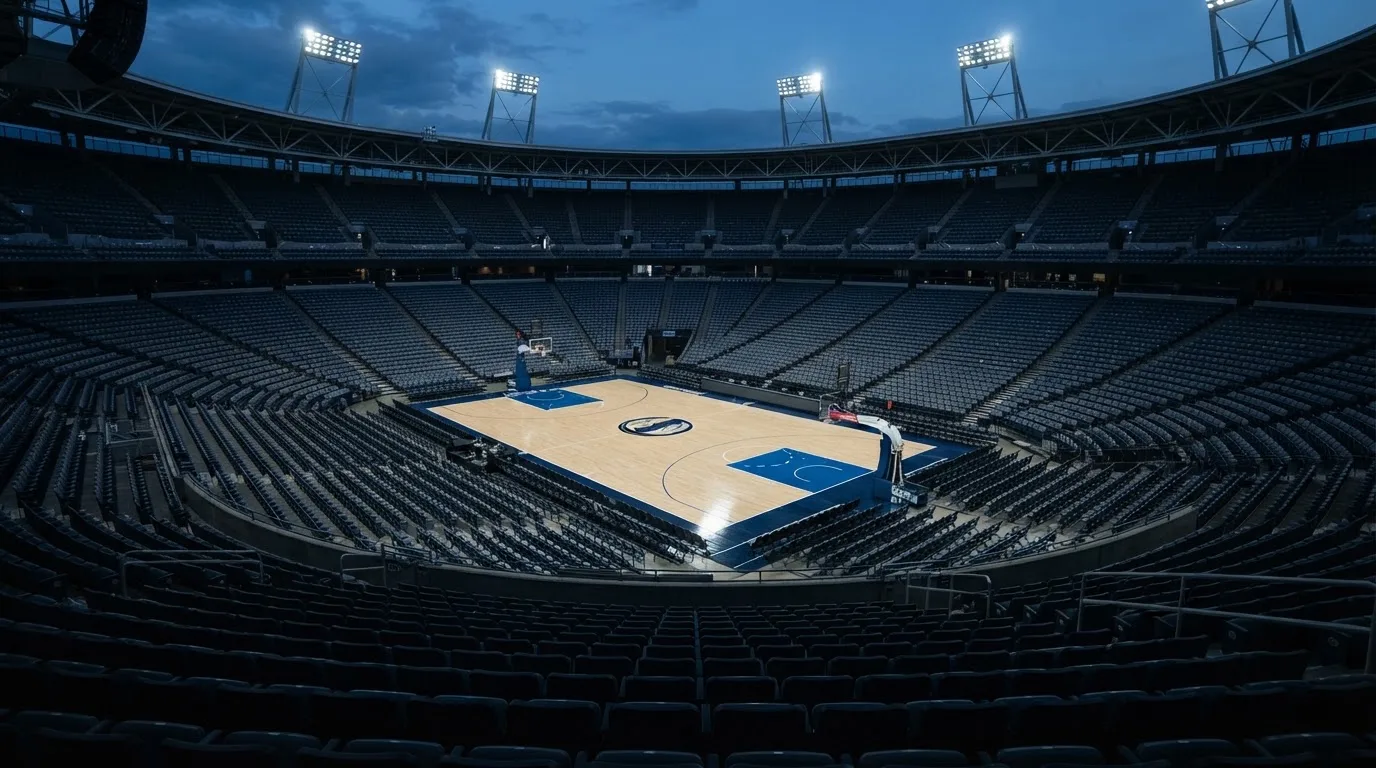
Licensed British bookmakers treat basketball as a year-round sport, not an American one. The NBA, WNBA, NCAA and NCAAW sit on the main tab of every operator in this guide, and most carry the EuroLeague, the Spanish ACB, the Greek Basket League and a handful of Asian and Australian competitions alongside. Markets on obscure leagues (Israel, Turkey, Argentina) appear more reliably on the bigger brands than on niche ones, and coverage of women’s basketball outside the WNBA is patchy across the board. NBL and NBL1 in Australia show up in time for their season; the British Basketball League (BBL) shows up when the schedule lines up, which is roughly September through May.
Two details matter before anything else. First, Great Britain has no statutory list of permitted sports or markets: a bookmaker licensed by the Gambling Commission decides what it offers, within its licence category (most operators here are licensed for remote general betting standard on real events). Second, virtually every product a reader meets on a basketball page is the operator’s own design, fitted into the licence it holds. Comparing two offers is rarely a matter of deciding between two regulated products; it is a matter of reading two sets of terms and deciding which one is the better fit.
Basketball’s own rules, and why the markets look the way they do
Basketball was invented by James Naismith in 1891 in Springfield, Massachusetts, and the first game took place on 21 December 1891. Five players per side take the court, with unlimited substitutions available during every stoppage. A field goal is worth two points, three from beyond the arc, and a free throw one. The rim sits ten feet (3.05 m) above the floor at almost every level of competition. NBA games are four twelve-minute quarters, FIBA games four ten-minute quarters, and overtime periods last five minutes. Those format differences are not trivia; they shape the totals market and the in-play price ladder, because a ten-minute European quarter produces a different pace of possession from a twelve-minute NBA one.

On the Olympic side, men’s basketball has been played since the 1936 Berlin Games, women’s since 1976, and 3×3 basketball is an Olympic event from 2020. The Olympic run is short and the club calendar dense, which is part of why basketball produces so many more fixtures per week than football or tennis.
What matters for a bettor is that the rule book creates the market. Over/under totals are anchored to a points-per-game calculation that assumes roughly two points per possession and somewhere between 95 and 105 possessions per NBA game. Point spreads cluster between two and ten points because the league is competitive enough that the favourite wins by less than double digits more often than not. Player props (points, rebounds, assists, three-pointers) work because a regular starter touches the ball ten to fifteen times per game and his statline has a tight enough variance that a price can be set. The form of the bet is the shape of the sport underneath.
Where the bookmaker keeps its edge: how markets are priced and what margin really means
A basketball price looks like odds for one side to win. The bookmaker keeps a margin by shortening every outcome in the market so the implied probabilities of all outcomes sum to more than 100%. The thicker the sport, the closer margin sits to its theoretical minimum. On an NBA two-way market priced 1.90 / 1.90 (decimal) or 9/10 (fractional each side), the implied probability of each side is about 52.63% and the sum of both outcomes is 105.26%, leaving an overround of 5.26% (a margin of 5%) on the market. On an illustrative three-way NBA market at 1.70 / 3.25 / 4.50 — home, away, overtime — implied probabilities come out at roughly 58.8%, 30.8% and 22.2%, summing to 111.8%, so the overround would sit near the 11.8% mark (a margin of 10.6%). Margins on basketball player props and on lower-tier leagues routinely run between 7% and 12%, sometimes wider on niche selections where the book has thin liability.
The condition matters. A 5.26% margin is the typical band on a deep NBA pre-match two-way market with active liquidity; elsewhere the band widens. Live in-play markets carry a heavier margin than pre-match because the prices move faster and the book absorbs more variance. Three-way NBA markets run hot by design (the overtime line is the bookmaker’s cushion). Player-prop margins are typically the widest on the site because the inputs (a single player’s box score) are noisiier than team-level ones.
For the punter, the consequence is straightforward. Two markets priced 1.90 / 1.90 look fair in isolation; an NBA total points market priced 1.91 / 1.91 looks fair in isolation too. The bookmaker’s 5% to 6% sits inside both, and the long-run cost of betting is whatever the sum of all those margins adds up to across the bets you place. That is the only honest way to think about a basketball price: the figure on the screen is fair on its own terms, and the percentage the book keeps is the price of being allowed to take it.
Live basketball betting and the cash-out lever
Live betting on basketball is a different market from a pre-match price because the price moves with the score. Every field goal, foul and timeout is a state change that the book reprices. Pre-match to live is the part of the trade where the bookmaker’s margin widens, sometimes by two or three percentage points, because the book is now managing a position it already has open rather than pricing from scratch. The in-play line therefore tends to be a touch shorter on the favourite and a touch longer on the underdog than the closing pre-match line, even when the underlying probability has not actually changed.
Cash out changes the calculus. The cash-out button takes the current live price of the bet, applies the bookmaker’s own valuation and offers to settle the bet at that figure before the game finishes. The valuation is always worse than the true live price would imply, which is the bookmaker’s fee for closing the position early. On a winning bet that has drifted shorter, cashing out mid-game locks in less profit than holding to the end, and on a losing bet it returns a fraction of the stake. The job it does is risk management, not profit; a punter with a five-fold acca who wants to lock in profit before the final leg will often take whatever cash out offers rather than watch the last leg lose.
In-play on basketball has one structural quirk that punter should know about: NBA games finish close to a press conference in real time, with each team taking a timeout in the final minute. Late-game pricing is choppier than the underlying game state suggests because the book is hedging against the possibility of a turnover or a quick foul. Prices in the last two minutes of a close game can move several percentage points inside thirty seconds; that volatility is the cost of liquidity in those markets.
Bonus terms that matter on basketball betting offers
Welcome bonuses and free bets on basketball are, by volume, the most common promotion a punter sees. The headline reads “100% matched” or “bet £10, get £10” or “free £25”; the body of the terms is what determines whether the offer is worth taking. The legal frame changed in January 2026: wagering requirements on any bonus offered by a licensed British bookmaker are capped at 10x, and promotions that ask the customer to gamble on more than one product type (a bet on football plus casino spins, for example) are now prohibited.
Concretely, a free bet costing £10 at 50x wagering would have required £500 of bets before withdrawal; the cap removes that shape entirely. What replaces it is one of two structures. Either the bonus is small and essentially promotional (a £5 free bet for installing the app, say, with no wagering attached and the stake not returned on a win), or the bonus is larger and gated by a minimum price on the qualifying wager (minimum odds of 3/5 or 1.60 decimal are common; minimum EVS or 2.0 are not unusual on more cautious operators). The stake of a free bet is usually not returned on a win, which is the single most important detail on a basketball free bet: a winning £10 free bet at 2.50 returns £25 in profit, not £35.
Expiration on free bets is short. Seven days is the typical window on welcome free bets and matched free bets, with some operators going to fourteen days for sports-only offers. Free spins attached to a sportsbook welcome offer normally last seven days and are restricted to a small list of games; on a basketball-focused punter, those spins are mostly irrelevant. Enhanced odds promotions are a different shape: the book pays a boosted price on a single selection, usually capped at a small stake (often £5 or £10) and usually restricted to one customer. A £10 enhanced-odds token at 50/1 on a particular NBA winner returns up to £500 if it lands, but is more often a tool for marketing than a long-run value proposition.
Best Odds Guaranteed on horse racing does not transfer to basketball. Punters used to BOG on racing sometimes expect the same concession on NBA totals; it does not exist on this sport. What does exist is a price boost, usually a daily short-price enhancement on a marquee NBA accumulator or a single-game parlay, and an acca insurance that refunds the stake as a free bet if one leg lets the wager down. The value of either is in the odds offered on the day, not the structure; the structure is constant.
Basketball bet types and how they settle
The single is the unit. A single is one selection on one event, settled at the bookmaker’s price if it wins, with the stake returned as well on a win. A double is two selections from different events, settled only if both win, with the odds multiplied together. A treble is three. An accumulator (or “acca”) is four or more. Each-way betting, a horse-racing idiom that has migrated onto outright basketball markets (NBA Championship winner, MVP), is two equal bets: one on the selection to win, one on it to place.
The bet builder is the basketball market that has reshaped the rest. A bet builder is a same-game multi: a single bet combining several selections from one event into one price. Player to score 25+ points AND team to win AND total points over 220 in an NBA fixture is a Bet Builder line that pays out only if all three legs win. The price quoted for the builder is always worse than the product of the individual prices, because the bookmaker compounds margin on every leg into the same selection; the convenience for the punter is one stake and one ticket rather than three. The cost for the punter is several percentage points of margin that they would not pay on three separate singles.
The point spread is the market where basketball’s identity sits. A Lakers–Celtics game priced Lakers −4.5 / Celtics +4.5 is the bookmaker’s view of the margin of victory. Lakers −4.5 at 1.91 wins if the Lakers win by five or more; the half-point (the .5) is the spread that prevents a tie, because basketball does not draw. Total points (over/under) sits at the level the bookmaker expects the combined score to clear — 220.5 is a typical line on an NBA game at full pace. Quarter and half markets (first quarter winner, first half total points) are derivatives that use the same logic at a smaller window. Player performance markets — points, rebounds, assists, three-pointers made, double-doubles, triple-doubles — settle on the official box score and reference the player’s listed position; a position change mid-game does not void a settled bet but can confuse the result.
Same-game parlays go further. A wager that the Lakers win, LeBron scores 30+ points, total points clear 220 and the Celtics commit more than fifteen turnovers is one bet with one stake and one combined price. The shape is identical to a Bet Builder, but with greater latitude in market combination. The risk on every same-game multi is correlation: the legs of a player prop and a team total are not independent, so a same-game multi compounds the same fundamental view more than once at a margin-laden price.
Tournaments and competitions the British bookmakers actually price
NBA. The regular season runs October through April, the play-in tournament in mid-April and the playoffs through June, with the Finals usually settling in mid-June. Every operator in this guide prices every NBA game pre-match and live, and every operator carries NBA Championship, conference winner, division winner, MVP, Rookie of the Year, Coach of the Year and Defensive Player of the Year markets on the futures tab during the relevant window. Outright prices shorten sharply through the postseason as the field narrows.
WNBA. The regular season runs May through September and the Finals settle in October. Coverage is consistent across the bigger brands; some niche brands carry a smaller fixture list. WNBA Championship, MVP and Rookie of the Year markets exist on most books during the regular season.
NCAA and NCAAW. The men’s tournament — March Madness — runs November through April, with the knockout rounds in March and the Final Four in early April. Coverage of the regular season is reasonable on the bigger books; the bracket market on March Madness is one of the few outright markets priced on a UK-facing site. NCAAW has grown considerably on the bigger books in the last two seasons.
EuroLeague and the European club game. The Turkish Airlines EuroLeague runs October through May, with the Final Four in May. The Spanish ACB, the Italian LBA, the Greek Basket League and the German BBL are the next tier; coverage is consistent on larger books. French Pro A, Israeli Ligat HaAl and ABA League (Adriatic) coverage is patchy. National-team competitions (EuroBasket, FIBA World Cup, the Olympic tournament) are present in season.
NBL. The Australian NBL runs October through May. Most UK-facing operators price NBL fixtures, though depth of markets varies.
British Basketball League (BBL). The BBL regular season runs September through May, with playoffs in May. Coverage on UK-facing operators is consistent through the season; champion and MVP markets appear mid-season on the bigger books.
Apps, mobile and what each operator’s product does well
Mobile is where the punter actually bets. Every operator in this guide publishes an app on iOS and Android, with web access as a fallback for users who prefer not to install. The differences are in product, not in the existence of the app.
Betfred’s sports, casino and games app is a multi-product hub covering 21 sports and over 2,000 casino-style games. The product depth is the selling point; the cost is that basketball sits inside a wider app and the navigation can be a step slower than single-vertical competitors. BetVictor pairs Best Odds Guaranteed on UK and Irish horse racing with enhanced live race streaming, a BetFinder form tool for racing and Smart Stats; basketball products exist but are not the centre of gravity. Ladbrokes, published by Entain Operations Limited and rated 4.66 from 101,255 ratings on the GB App Store, runs a multi-product betting app that carries pre-match and live basketball, cash out and bet builder across NBA, NCAA, EuroLeague and the BBL.
DragonBet, published by DragonBet Ltd, leans into the Welsh vertical: Welsh football and rugby markets are the centrepiece, alongside racing, American football, in-play and bet builder. Basketball coverage is there but is not the centre of the product. bet365, published by Petfre (Gibraltar) Limited and described as the most-downloaded sports betting app in the UK, carries NBA, NCAA, EuroLeague and a deep set of player props; its Bet Builder+ product combines markets from one event into a single bet, available pre-match and in-play, with Super Boosts, Winnings Boosts on Bet Builders and selected singles, and daily Bet Boosts that are the marketing face of the brand. 888sport carries pre-match and in-play, Cash Out, Bet Builder, racing streams, BetFinder form tools, a live bet feed and daily boosted odds; basketball is part of a wider offering rather than its centre of gravity.
Midnite, Bet600 and Betboro are newer vertical-native operators. Midnite pairs its sportsbook with an acca builder, popular accas, price boosts and maximum-stake limits; the licence cites 101839 and the operator’s site shows in-play events. Bet600 carries Best Odds Guaranteed on horse racing and is a thin product on basketball as a result. Betboro is a sports-vertical bookmaker with a basketball-first welcome offer and a small selection of pre-match markets on the major leagues. The niche of these books is the user experience — the speed and minimalism of the product — and the cost is product depth compared to the bigger books.
Crypto and the offshore question for basketball betting
A reader who searches for “basketball betting with bitcoin” or “ethereum basketball betting” is not looking for a UK product. The Gambling Commission does not license a cryptocurrency-only bookmaker; every operator in this guide settles deposits and withdrawals in sterling through debit cards, bank transfer and e-wallets. Crypto use at a licensed British operator comes down to using a regulated exchange to buy bitcoin or ether and then funding a betting account through a normal payment method — if the operator accepts payment via an exchange and the exchange is compliant with the operator’s own onboarding rules. Most operators do not.
The offshore alternative is real, and unlicensed. A Curaçao-licensed or Malta-licensed bookmaker may accept bitcoin deposits directly, pay out in bitcoin, and operate in Great Britain without holding a Gambling Commission licence. Doing so is an offence under section 33 of the Gambling Act 2005, aimed at the operator; the customer does not commit an offence by placing a bet, but loses the customer-protection frame that comes with a Commission licence. No GAMSTOP coverage. No Commission complaints route. No ADR (approved alternative dispute resolution) service if funds are withheld. No 10x bonus cap, no £150 financial vulnerability check, no identity verification before the first deposit. The bookmaker’s own rules apply, and the only recourse when something goes wrong is the courts of the licensing jurisdiction — a process that is expensive enough that most disputes are abandoned.
For a UK punter, the structural trade-off is obvious. A licensed book takes the customer’s identity before the first deposit, gives the customer every protection a regulator can guarantee, and limits the welcome bonus to a structure capped at 10x wagering. An unlicensed book skips the verification, pays a bigger headline bonus, and leaves the customer holding the credit risk and the dispute-resolution problem. Neither is the “safe” choice. They are different choices with different costs; a punter who picks the offshore book for the privacy and the bonus structure pays for both in the protections the licensed book would have offered.
The current legal frame in Great Britain, in plain words
The Gambling Commission (UKGC) is the regulator. It is a non-departmental public body sponsored by the Department for Culture, Media and Sport, and it licenses the whole commercial gambling market in Great Britain (England, Scotland and Wales) under the Gambling Act 2005. Northern Ireland is outside that Act and has its own older law; for a GB-licensed operator, the licence covers Great Britain only. Since the Gambling (Licensing and Advertising) Act 2014 an operator whose remote facilities are used in Great Britain needs a Commission licence wherever it is based — a Curaçao, Maltese or Gibraltar licence is not a substitute, and sections 33 and 36 of the 2005 Act are the relevant pieces of law for that point.
The minimum age is 18. Name, address and date of birth are verified before a customer can deposit or gamble (since 7 May 2019), including on a free bet or bonus. Credit cards are banned for gambling in Great Britain since 14 April 2020 — the ban covers credit-card-funded payments through an e-wallet as well as direct credit-card payments. Debit cards and bank-based payments are not covered.
There is no statutory list of permitted bets or markets. The Commission registers operators under categories — remote general betting standard (real events), remote general betting standard (virtual events), remote general betting limited, remote pool betting and remote betting intermediary (the exchange licence) — and each operator offers markets within its own terms and the LCCP (Licence Conditions and Codes of Practice). In-play betting is licensed under the operator’s permit; operators control the product under their social responsibility duties. No statutory cap on stakes in sports betting was found; the operator sets its own maximum stake and may restrict individual customers.
Player protection: GAMSTOP is the national self-exclusion scheme and a mandatory licence condition for online operators since 31 March 2020. Periods available are six months, one year, five years, or five years with auto-renewal; after the minimum period ends, the exclusion stays for a further seven years unless the customer asks GAMSTOP to remove it. A financial vulnerability check (LCCP condition 3.4.4, in force since 30 August 2024) applies when a customer’s deposits minus withdrawals exceed £150 in a rolling 30 days (since 28 February 2025): it is a public-record check (bankruptcy or county court judgments, for example) rather than an income or credit reference check. Financial risk assessments — the affordability checks of the press — were announced in a Commission article of 7 July 2026 on a staged plan, with no start date. Deposit limits (RTS 12) were first implemented since 31 October 2025, a second phase postponed to 30 September 2026, and whether it is live is not established; there is no state-set deposit or loss ceiling.
Bonuses: wagering requirements on bonuses are capped at 10x (a £10 bonus at 50x previously needed £500 of bets; under the cap it cannot ask for more than £100 in qualifying bets). Mixed-product promotions — offers that require gambling on more than one product type, such as “bet on football to get free spins” — are banned. Whether the cap applies to free bets with no wagering condition, and any cap on the monetary value of a bonus, are not established.
Tax: the player pays no tax on betting winnings in Great Britain (general information; a professional gambler should ask HMRC or an adviser). General Betting Duty is the operator’s tax on gross profits, currently 15%; from 1 April 2027 a new remote betting rate of 25% applies within General Betting Duty, while remote bets on UK horse racing, bets on self-self-service betting terminals in licensed premises, pool betting and in-person betting stay at 15%. Until 1 April 2027 the remote rate stays at 15%. Spread betting has its own rates (3% financial, 10% other). Never write that the player is charged duty: that is not established.
Offshore: providing gambling facilities in Great Britain without the licence the Act requires is an offence under section 33 of the Gambling Act 2005 — up to 51 weeks’ imprisonment, a fine up to level 5, or both on summary conviction; six months in Scotland. Enforcement is disruption rather than blocking: cease-and-desist notices, search-engine referrals, work with registrars, hosts and payment providers; the Commission has been given or is about to receive court-order DNS blocking powers — never write that ISP blocking is in operation. The customer’s loss is in protection, not in law: no GAMSTOP coverage, no Commission complaints route, no approved dispute-resolution body, no British consumer redress if funds are withheld, not bound by the 10x bonus cap or the £150 vulnerability check.
The honest framing is that licensed and unlicensed are different product types. A licensed book enforces identity, caps bonuses, applies the GAMSTOP frame and offers the protections. An unlicensed book skips verification, pays a bigger headline bonus and expects the customer to take the credit risk. The licensed book is not “safe” by default; it is the regulated product. The unlicensed book is not “illegal to use”; the operator is in breach of section 33. Neither is the only kind of bookmaker; both are real markets with different costs.
Responsible gambling and where help sits
Basketball betting crosses into harm when the same patterns that produce harm on any other sport produce harm on this one: chasing losses, betting under impairment, depositing to a level that crowds out essential spending, or continuing to bet after a decision to stop. The mechanical signs are the same; the sport is incidental.
GAMSTOP is the self-exclusion scheme, free to register with and effective across every GB-licensed online operator that takes part. Periods available are six months, one year, five years, or five years with auto-renewal; after the minimum period, the exclusion stays in place for a further seven years unless the customer asks to remove it. Shop-based exclusion is a separate service.
Deposit limits are the customer’s lever at every licensed book. Operators must offer a gross deposit limit on a fixed time frame, with the first changes applied since 31 October 2025; a second phase was postponed to 30 September 2026 and whether it is live is not established. Setting a deposit limit is a routine step on first sign-up for most operators and the simplest single decision a punter can make about their own activity.
Help: GamCare runs the National Gambling Helpline. GambleAware funds research and treatment. NHS gambling clinics offer cognitive-behavioural therapy and addiction treatment. Gamblers Anonymous runs peer-support meetings across the UK. For someone whose own gambling has moved past fun, the first call is to GamCare on 0808 8020 133; the second is to the GP, who can refer into an NHS clinic.
The ten-bookmaker comparison
The table below covers the ten bookmakers the rest of this guide reads through. Each operator holds a Gambling Commission remote licence for general betting (real events) on its public register entry; the licence numbers and licence holders are stated, because a Commission account that the register confirms against a licensee is the working test of who holds a licence, and a place in this comparison is not a licence of its own. The right-hand column is a qualitative reading of what each operator’s own terms state about basketball — coverage, depth of markets, mobile product — and does not promise anything the operator itself does not state.
| Brand | Gambling Commission remote licence | What the operator’s own terms say about basketball |
|---|---|---|
| Betboro | Account 44181 — Webmedia Development N.V. | Sports-first bookmaker; carries NBA, EuroLeague and major European leagues pre-match; welcome offer is a 100% matched free bet of up to £25 on the first qualifying wager, requiring a £10 debit-card deposit and a £5–£25 first bet with at least three selections each at 1.60 or higher |
| DragonBet | Account 64908 — DragonBet Ltd | App-led bookmaker with Welsh football and rugby at its centre; basketball markets exist but the product depth is thinner than a vertically native operator |
| Midnite | Account 101839 — Midnite Limited | Sportsbook with in-play markets, acca builder, popular accas and price boosts subject to maximum-stake limits; welcome offer pairs new-customer qualifying bets at 2.0 or greater with £25 in free bets and 50 free spins, valid 7 days |
| Bar One Racing | Account 56516 — Bar-One Racing Limited | Irish independent bookmaker rebranded as BAR 1 Betting, with shops across Ireland and horse racing sponsorships; basketball is available but racing-led |
| Dabble | Account 65677 — Dabble Sports UK Ltd | Sports and casino app; welcome offer is “Bet £10, Get £10 in Free Bets” on first deposit, with a 7-day free-bet expiry and the stake not returned; basketball coverage standard across NBA, NCAA and EuroLeague |
| Bet600 | Account 44731 — Tyche Tech Limited | Racing-led bookmaker offering Best Odds Guaranteed on horse racing; basketball coverage thinner than the major sportsbooks |
| Betfred | Account 39544 — Petfre (Gibraltar) Limited | App covering 21 sports plus over 2,000 casino-style games; basketball inside a wider product, with NBA, NCAA, EuroLeague and the BBL covered pre-match and live |
| 888sport | Account 39028 — 888 UK Limited | Sportsbook with pre-match and in-play, Cash Out, Bet Builder, racing streams, BetFinder form tools, a live bet feed and daily boosted odds; basketball coverage across the major leagues |
| BetVictor | Account 39576 — BV Gaming Limited | Racing-led sportsbook offering Best Odds Guaranteed on UK and Irish horse racing and enhanced live race streaming, with basketball inside a wider product |
| Ladbrokes | Account 54743 — LC International Limited | Sports betting app published by Entain Operations Limited, rated 4.66 from 101,255 ratings on the GB App Store; carries pre-match and live basketball, cash out and bet builder across NBA, NCAA, EuroLeague and the BBL |
Spread betting on financial markets sits outside the Commission’s remit and runs under the Financial Conduct Authority; Spreadex, the operator covered in the inputs, is dual-regulated and states that spread-betting losses can exceed the deposit — a warning that does not apply to fixed-odds basketball betting through any of the ten operators above. A separate reminder is in the licence-only column: a GB-licensed bookmaker is the regulated product, not a recommendation, and a place in the comparison above is not a licence of its own.
Betboro
Betboro runs a sportsbook-first product with a welcome offer aimed at basketball and the other major sports. The licensed cover (Webmedia Development N.V., Commission account 44181, remote general betting standard on real events) is the regulatory floor; the offer is a 100% matched free bet of up to £25 on the first qualifying wager, requiring a £10 debit-card deposit and a first bet of £5 to £25 with at least three selections each at 1.60 or higher. The minimum price (3/5 fractional) is the standard cost on a multi — singles at 1.60 do not qualify — and the customer’s stake is not returned on a winning free bet, so the realised value is whatever the multi lands at, less the stake the customer already paid. The product is plain: NBA, EuroLeague and the major European leagues pre-match, with the usual moneyline, spread and total markets. The structure is plain, making it a functional choice for bettors who prioritise core pre-match lines over niche player props or deep alternate-spread markets.
DragonBet
DragonBet, licensed by DragonBet Ltd (Commission account 64908), is a Wales-led bookmaker whose app features Welsh football and rugby at the centre, alongside horse racing, American football, in-play and bet builder. The basketball product exists but is part of a wider vertical rather than its centre of gravity. There is no welcome-offer shape specific to basketball on the inputs; the operator’s identity is its regional focus. A bettor whose interest is in Welsh sport and who wants a bookmaker that lists BBL and EuroLeague alongside the main lines will find the product coherent; a bettor whose interest is NBA player props will find the depth of markets limited.
Midnite
Midnite, licensed by Midnite Limited (Commission account 101839), runs a vertical sportsbook whose terms show in-play events, an acca builder, popular accas and price boosts with maximum-stake limits. The welcome offer pairs new-customer qualifying bets at EVS (2.0 decimal) or greater within 14 days of sign-up with £25 in free bets and 50 free spins, valid 7 days. The minimum price is the higher of the standard shapes — a single at 1.60 is the cheaper offer, a single at 2.0 the costlier one — and the structure leans on an acca-style flow rather than singles. The product is closer to native-vertical on basketball than the racing-led brands and the casino-led brands, and the maximum-stake limits on price boosts are a routine safety feature rather than a restriction. A bettor who wants a single-app sports product with an acca focus will find this layout familiar.
Bar One Racing
Bar One Racing, rebrand to BAR 1 Betting and licensed by Bar-One Racing Limited (Commission account 56516), is an Irish independent bookmaker with shops across Ireland and horse racing sponsorships. Basketball is on the product but the operation is racing-led, and a bettor who wants racing supremacy on the BBL side of the bet will find it a thin offering.
Dabble
Dabble, licensed by Dabble Sports UK Ltd (Commission account 65677), runs a sports and casino app with a “Bet £10, Get £10 in Free Bets” welcome offer on a first deposit for new customers, with minimum odds applying, a 7-day free-bet expiry and the stake not returned. The structure is the familiar matched-bet shape, similar to Betboro’s, but simpler: one qualifying bet, free-bet return, seven days to use. Basketball coverage spans the standard NBA, NCAA and EuroLeague lines. A bettor who wants the simplest matched free bet structure on the major sports will find this offering easy to read.
Bet600
Bet600, licensed by Tyche Tech Limited (Commission account 44731), runs a thin product on basketball by design. The brand offers Best Odds Guaranteed on horse racing — the standard racing concession applied to a racing-led product — and basketball coverage is part of a wider offering rather than its centre. A bettor whose priority is racing and who wants a small basketball book alongside is the profile Bet600 fits; the brand is the wrong fit for a bettor whose primary interest is NBA live markets.
Betfred
Betfred, licensed by Petfre (Gibraltar) Limited (Commission account 39544), is published under Done Brothers (Cash Betting) Ltd and covers 21 sports plus over 2,000 casino-style games on its app. The product depth is the selling point and the navigation is wider than a vertical-native book. NBA, NCAA, EuroLeague and the BBL are all in the pre-match and live section; the offer on basketball is a multi-sport book rather than a basketball book. A bettor who wants everything in one app — sports, casino, games — and is happy to navigate a slightly slower product finds this a strong choice; a bettor whose only interest is basketball would find smaller products more focused.
888sport
888sport, licensed by 888 UK Limited (Commission account 39028), runs a sportsbook with pre-match and in-play, Cash Out, Bet Builder, racing streams, BetFinder form tools, a live bet feed and daily boosted odds. The product is wide and the basketball offer covers the standard set of leagues. A bettor who wants a single app covering everything on the major sports and the racing side equally finds this layout coherent; a bettor whose interest is narrowly basketball would find a more focused product elsewhere.
BetVictor
BetVictor, licensed by BV Gaming Limited (Commission account 39576), is a racing-led sportsbook offering Best Odds Guaranteed on UK and Irish horse racing, enhanced live race streaming and a BetFinder feature for finding racing bets, alongside Smart Stats. Basketball exists in the wider product; a racing punter who wants a sportsbook with basketball coverage will find this a strong primary choice. For a bettor whose only interest is basketball the product depth is not the centre of gravity.
Ladbrokes
Ladbrokes, licensed by LC International Limited (Commission account 54743) and published by Entain Operations Limited, is rated 4.66 from 101,255 ratings on the GB App Store. The product covers pre-match and live basketball, cash out and bet builder across NBA, NCAA, EuroLeague and the BBL, inside a wider multi-product sportsbook. The size of the customer base is what the rating measures; the product depth covers everything a basketball punter expects of a major sportsbook, alongside sports the customer may or may not use. A bettor who wants a single bookmaker for basketball and a wider product for everything else will find this one of the natural choices.
A worked example of a market margin
Consider an illustrative two-way NBA moneyline on a fixture priced 1.90 / 1.90 (decimal) or 9/10 (fractional each side). The implied probability of each outcome is 1 ÷ 1.90 = 0.5263, or 52.63%. Both sides summed give 105.26% — the overround of 5.26%, with a margin of 5%. That figure is what the book keeps, on average, of every unit staked on this market; the corresponding payout share (1 − margin) is 95%, which is the proportion of stakes returned to customers in the long run across this market. Three-way markets (home / away / overtime) push the overround up sharply — the 1.70 / 3.25 / 4.50 example produces roughly 111.8% — and player-prop markets typically run between 7% and 12%. The wider the spread of liquidity, the lower the margin; the narrower the market, the higher. The condition matters: a 5% margin is the typical band on a deep NBA pre-match two-way market with active liquidity; elsewhere the band widens.
Reading a price before placing the bet
Every basketball price carries a margin. The skill is in noticing it. On a pre-match NBA two-way market, the symmetric 1.90 / 1.90 line has implied probability at 52.63% each side and a margin of 5.26%; the asymmetric 1.80 / 2.10 line has 55.56% / 47.62% — summed to 103.18%, leaving a 3.18% margin on the market but a heavy favourite of -125 in implied probability. The asymmetric shape is closer to the book’s “true” probability of the event; the symmetric 1.90 / 1.90 line is closer to the product that the book wants the customer to take, with the favourite and underdog equally priced so the punter chooses which side to bet on.
Three details tell a punter where the book sits. First, the wider the margin on a market, the more selective the book has been about who gets to bet on it. Niche player props and lower-league total markets routinely run 9–12% margin because the book has thin liability. Second, prices move more during live play than during pre-match, and the speed of the move is a measure of how much liability the book already holds. Third, the same market at two bookmakers can carry different margins: betting the NBA spread at 1.91 / 1.91 at one book and the same spread at 1.95 / 1.95 at another is a 4.18% margin versus a 2.56% margin — a difference of 1.62 percentage points. Over a season of bets that adds up.
FAQ
How is the return on a basketball bet worked out from the stake and the odds?
Return on a winning single is stake × decimal odds, made up of the stake returned plus the winnings. A £10 single at 2.50 returns £25 total (£15 profit on top of the £10 stake). A combination bet multiplies the odds of every leg together: a £5 double at 2.00 and 3.00 returns £30 if both legs win. Free-bet stakes are usually not returned, so a £10 free bet at 2.50 returns £25 profit only, not the £35 with-stake figure.
What is a bookmaker’s margin and how can it be seen in the odds?
The margin is the share of every unit staked that the book keeps, calculated from the overround — the sum of implied probabilities across all outcomes of one market, where each implied probability is 1 ÷ decimal odds. On a two-way market priced 1.90 / 1.90 the overround is 5.26% and the margin is 5%. The lower the margin, the better the long-run return to customers on that market. Wide margins (9% to 12%) are typical on niche player props and lower-league total markets.
How can a customer check that a bookmaker holds a Gambling Commission licence?
The Gambling Commission’s public register is the single test. Search by business name, trading name, domain or account number. The register is the Commission’s own; a licence number on a brand’s site that does not match the register is not a licence. Every brand in this guide is on the register as a remote general betting standard (real events) licensee. Licensed operators take part in GAMSTOP.
How does a customer bet on basketball?
Pick a licensed British bookmaker holding a remote general betting licence, register with a debit card or bank-based payment, complete identity verification (name, address, date of birth) before the first deposit, then place a single or combination bet on a basketball market — moneyline, spread, total points, player prop or bet builder — at a price the operator shows. The stake settles at the price shown. Net winnings are paid back into the betting account; no UK tax applies to customer winnings.
How does a customer bet on basketball and win?
Wins depend on outcomes that no bookmaker can predict, and no system guarantees profit. A bettor who wants to keep more of every winning bet prices the same market across two bookmakers, takes the higher price and ignores the rest; insists on minimum margins of 2–4 percentage points before placing; treats the welcome bonus and free bet as marketing spend rather than expected gain; and never bets more than a fixed share of bank on any one fixture.
US & other team sports – Boxing betting
Content created by the «Boxing betting» team
