
Newest Betting Sites in the UK: Who Just Opened, Who Just Reloaded, and Which One to Try
 Available in US
A “new” betting site in the UK is, properly, a business that has recently appeared on the public register the Gambling Commission maintains under the Gambling Act 2005. Anything else — a brand relaunch, a fresh colour scheme, a new front-of-shirt sponsor — is marketing, not a new licence. This page starts with that distinction, because it decides what can honestly be called a new bookmaker and what is just a renamed one, and it leaves the bearings behind before it gets to the names.
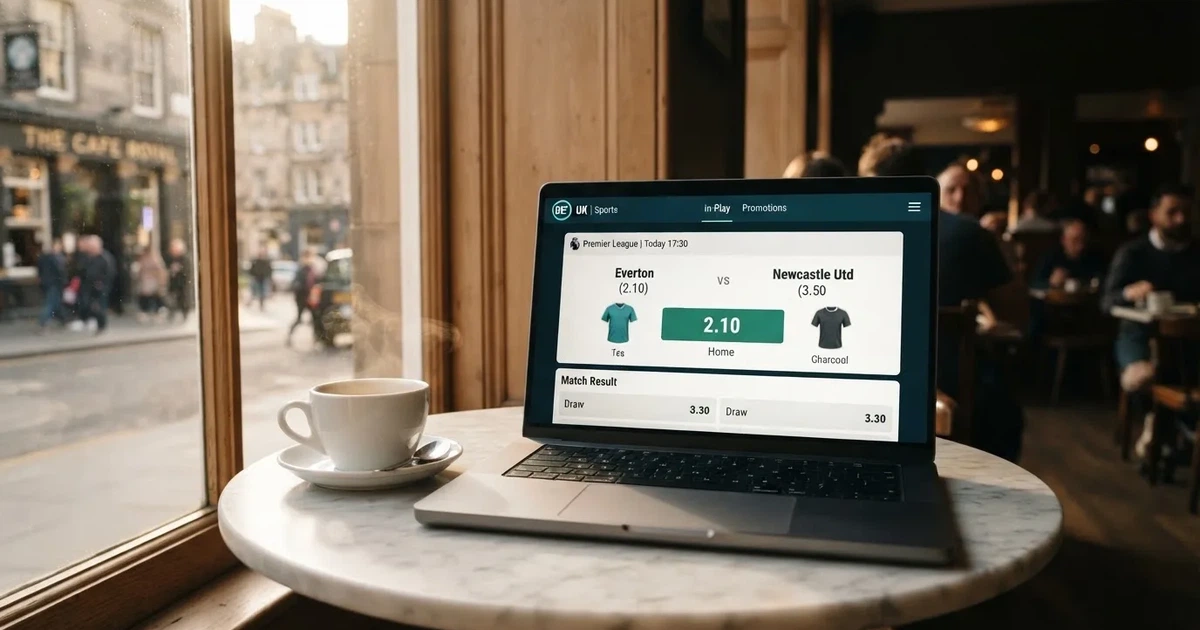
The ten operators below all hold a Gambling Commission remote general betting licence for real events. The list is a snapshot of newcomers whose licences are live in the register as of 27 October 2026, cross-checked against each operator’s own published terms. Their welcome offers are stated as each operator describes them in its own small print; figures are exact to the source named in the row. Nothing on this page is a recommendation to bet, and nothing on it is a tip on who will win. A reader who acts on a guaranteed-outcome claim — anyone’s — pays the price the bookmaker quietly built into every price.
A bookmaker’s margin lives inside every price it quotes, in every sport, in every market, on every site. This article never forgets that. Where the topic is what an offer costs — the welcome bonus, the wagering requirement, the minimum price — the arithmetic does the talking. Where it is a rule that protects the bettor, the rule is stated plainly. Where two operators are being compared, the comparison earns its place by saying which reader each one suits.
What a New UK Betting Site Actually Means
A new UK betting site is a business whose name or domain has been added to the Gambling Commission’s public register against a remote operating licence held by a UK-licensed operator. The Commission is a non-departmental public body sponsored by the Department for Culture, Media and Sport, and the register is searchable by business name, trading name, domain or account number. That register, accessed as of 27 October 2026, is the source for every licence number cited on this page.

Three points follow from that definition, and they shape the rest of this article.
First, the test is the register, not the homepage. A site can claim to be “newly licensed” without being newly licensed; a site can hold a fresh licence without ever shouting about it. The only document that matters is the row on the Commission’s register, listing the licence holder, the account number, the licence category and the trading name under which the site operates.
Second, a “new” brand is often not a new company. Several of the operators below run under the same parent group, and the Commission register groups them under one licence holder. A new skin over an old licence is still a new betting site in the sense a punter means it, but it is not a new business in the legal sense, and the difference matters when the question is who is on the other end of a withdrawal.
Third, the headline “new” can mean three things. It can mean a first licence issued in the last year or so. It can mean a rebrand of an existing licence holder. Or it can mean a name new to the UK market whose operator already holds a Commission licence for a related product — for example a casino licence holder extending into sports. All three appear in the ten operators reviewed below, and the register entry, not the homepage launch date, is what tells them apart.
The licence categories a UK bettor will meet
The Commission issues several remote licence types relevant to sports betting. Remote general betting standard (real events) is the licence a UK-facing sportsbook runs on; it covers betting on real sporting events. Remote general betting standard (virtual events) covers computer-generated events such as virtual horse racing. Remote general betting limited is a smaller-scope licence with its own stake and prize limits. Remote pool betting covers pool bets on horse and dog racing. Remote betting intermediary is the licence under which a betting exchange operates. Each operator’s licence category is listed on the Commission register beside its name; the licence type fixes which products the operator can lawfully offer to customers in Great Britain.

Licensed operators use .com as well as .co.uk, so the domain ending proves nothing on its own. A site at something.co.uk is not automatically licensed; a site at something.com is not automatically unlicensed. The Commission’s register, not the domain, is the proof.
The minimum age and identity check
Every GB-licensed operator must verify a customer’s name, address and date of birth before the first deposit or first bet — a requirement in force since 7 May 2019, including where the first play is a free bet or bonus. The minimum age is 18. Anonymous play is not on offer at a licensed site, and a name on a credit file or in public records is what a serious operator will reach for once a customer crosses the financial-vulnerability check thresholds laid out below.
The upshot for a reader comparing new sites is that “no verification” is a tell, not a feature. The unlicensed background is normally sold as frictionless; in Great Britain, friction before the first deposit is the law.
The Legal Frame Around a New UK Sportsbook
The Gambling Act 2005 covers Great Britain — England, Scotland and Wales. Northern Ireland is outside the Act and runs under older legislation; the relevant point is that a licence to take bets from customers in Great Britain does not, on its own, authorise taking bets from customers in Northern Ireland. Operators that serve both jurisdictions hold separate permissions for each.
Since the Gambling (Licensing and Advertising) Act 2014, an operator whose remote facilities are used in Great Britain needs a Commission licence wherever the operator itself is based. A Curaçao, Maltese or Gibraltar licence alone does not satisfy the requirement. A company based in any of those jurisdictions but trading into Great Britain is required to hold a GB remote licence alongside its home-country authorisation; sites trading from one of them without a GB licence are doing so outside the law for the British side of their business. This is why the operator cards on this page cite a Commission account number rather than a Maltese or Gibraltar one.
There is no state monopoly on betting in Great Britain and no statutory cap on the number of licences. The Commission issues licences to applicants that meet its fitness-and-suitability tests; the constraint on entry is regulatory fitness, not licence scarcity.
A separate point worth keeping separate: financial spread betting is regulated by the Financial Conduct Authority, not the Commission. Where an operator offers spread betting on financial markets, it does so under FCA authorisation, and the customer protections differ in scope from those applying to sports spread bets. Spreadex, for example, runs both sides under separate regulators — the FCA for spread betting, the Commission for fixed-odds betting — and a customer should know which product they are on, because the loss profile is different.
What a licence lets a bookmaker offer
There is no statutory list of permitted bets or markets. A licence category covers the activity; the operator’s own rules, together with the LCCP (Licence Conditions and Codes of Practice), decide which markets are on the site at any given time. In-play betting is permitted under a general betting licence and is widely offered by GB bookmakers; the controls on it — match availability, market suspension, stake limits — are operator-side, not statutory. Esports sit inside the general licence; novelty markets, politics and TV-event betting are likewise offered by GB operators under their own rules. The Commission register tells the reader whether the activity is licensed; the operator’s site tells the reader whether the activity is on offer today.
Bonuses and promotions since 19 January 2026
The Commission has run a series of bonus-and-promotion rules since 19 January 2026 that change the shape of a welcome offer. Two matter here.
First, wagering requirements on bonuses are capped at 10x. A £10 bonus that would have required £500 of qualifying bets at a 50x turnover is now capped at £100 of qualifying bets. Free bets whose stake is not returned with a win — the ordinary kind on UK sites — are not the same product as a bonus with a turnover condition, and the cap’s exact reach across that boundary is not established in the public material. What is established is the ceiling: no licensed operator may attach a turnover requirement higher than 10x to a bonus.
Second, mixed-product promotions are banned. A welcome offer that asks the customer to bet on football in order to unlock free spins on slots is, since 19 January 2026, no longer permitted at GB-licensed sites. Each promotion must stay within one product — sports, casino, bingo or lottery — rather than chain them.
The player’s tax position
Betting winnings in Great Britain are not taxed in the player’s hands. General Betting Duty is the operator’s tax, levied on its gross profits from betting, and at present sits at 15%. From 1 April 2027 a new remote betting rate of 25% applies within General Betting Duty for remote bets other than on UK horse racing, self-service betting terminal stakes in licensed premises, pool betting and in-person betting, which stay at 15%. Until that date the remote rate stays at 15%.
Whether the operator passes the duty on through its odds is not established publicly, and no statement that duty is added to a customer’s stake is made on this page. The single safe statement is that the duty is on the operator’s profit, not the player’s return.
Advertising: who says what
Advertising for gambling is not licensed by the Commission. Broadcast advertising is governed by the BCAP Code, non-broadcast by the CAP Code, both administered by the Advertising Standards Authority. The LCCP layers the Commission’s marketing conditions on top.
The CAP Code’s section 16 sets the social-responsibility test: marketing must not be of strong appeal to under-18s, and no one who is or seems to be under 25 may feature gambling or play a significant role in an advertisement, with an exception for marketing placed at the point of sale. That rule governs who may appear in an advert, not who may place a bet.
The “whistle-to-whistle” rule — no betting adverts on TV from five minutes before a live sporting event to five minutes after it, before the 9pm watershed, with horse and greyhound racing excluded — is an industry code, not statute, and has applied since 1 August 2019. The Premier League clubs’ withdrawal of gambling logos from the front of matchday shirts, beginning from the 2026/27 season, is a voluntary club-level decision; sleeves and pitch-side hoardings remain available.
Offshore sites and what they cost the bettor
A bookmaker licensed somewhere outside Great Britain but trading into Great Britain without a Commission licence is committing an offence under section 33 of the Gambling Act 2005. The offence is aimed at the operator. No offence is aimed at a customer who merely bets on an unlicensed site.
What the customer loses by using one is the substance. There is no GAMSTOP coverage, no Commission complaints route, no approved British dispute-resolution body, no consumer redress if funds are withheld, and none of the bonus cap, the financial-vulnerability check or the verification-before-deposit regime. The Commission’s enforcement tools are cease-and-desist notices, search-engine referrals, registrar and host work, payment-provider pressure, and the prospect of court-ordered DNS blocking powers — but blocking is not the same as removing the site, and an unlicensed site that a British punter reaches today may well be reachable tomorrow.
The honest framing: a GB-licensed bookmaker brings checks, limits, GAMSTOP and a bonus cap, and also the friction of verification; an unlicensed bookmaker brings no checks, no limits and no protection, and the genuine risk that a withdrawal is simply not paid. Neither is “the safe choice” by default, and that is the point.
Safer Gambling Tools at a New UK Sportsbook
A licensed bookmaker in Great Britain is bound by a stack of player-protection duties. The headline ones are listed below in the order a punter is most likely to meet them; the table covers what each one does, what the Commission has set, and what each operator’s own terms add.
Identity verification before first deposit. Name, address and date of birth, in force since 7 May 2019, applies even to a first bet paid for with a free bet or bonus. The check runs against public records and, where needed, document upload.
GAMSTOP self-exclusion. The national multi-operator self-exclusion scheme, mandatory for online operators since 31 March 2020. Exclusion periods run six months, one year, five years, or five years with auto-renewal. After the minimum period the exclusion stays in place for a further seven years unless the customer asks GAMSTOP to remove it. GAMSTOP covers online sites and apps; betting shops run a separate service. Every operator reviewed on this page participates.
Financial vulnerability check (LCCP 3.4.4, in force 30 August 2024). When a customer’s deposits minus withdrawals exceed £150 in a rolling 30-day period, since 28 February 2025, the operator must run a public-record check — bankruptcy, county court judgments, and the like. It is not an income check, and it is not a credit-reference check; the operator looks at records a person can already see for themselves.
Financial risk assessments. The “affordability checks” of the press. A staged rollout has been announced by the Commission (article of 7 July 2026), with no start date set. The honest framing is “announced, staged, no start date”; this page does not state otherwise.
Deposit limits. Operators must offer a gross deposit limit on a fixed time frame. The first set of changes has applied since 31 October 2025; a second phase was postponed to 30 September 2026, and whether the second phase is live on a given site is not established in this material.
Wagering cap. Bonuses carry wagering requirements capped at 10x, since 19 January 2026, and mixed-product promotions are banned. No state-set ceiling on the size of a bonus exists.
Player-controlled tools. A licensed operator must offer deposit limits, time-outs, product restrictions and self-exclusion. Several of the operators reviewed below add their own: reality checks, session timers, activity statements, loss limits.
Help organisations. GamCare (and its National Gambling Helpline), GambleAware, NHS gambling clinics, and Gamblers Anonymous. A reader who feels their betting has moved from a pastime into a problem can reach any of these directly; a reader who wants to exclude themselves from every GB-licensed site can do so through GAMSTOP in one registration.
The hard rule for a punter comparing two operators on this point: every operator reviewed below meets the Commission’s safer-gambling floor. Where one offers a richer set of tools — a deeper session-history page, a more visible link to the helpline, a longer list of self-help options — the comparison belongs in the operator card, not in the law section. The law is the floor; the operator’s own design is the bit above it.
The App and Mobile Experience at a New Sportsbook
A new betting site in 2026 reaches most of its customers through a handset. The App Store and Google Play listings for the brands reviewed below give a presence table; the product itself is what the operator ships.
Two questions matter for a punter on a phone. Is the app stable, and does it lose less than the desktop site in features? Stability is hard to judge from the listing alone, but the version history and the App Store ratings are a rough proxy. Feature parity is the more revealing test: does the in-play console, the cash-out button, the bet builder, the deposit page and the withdrawal page all appear in the app, and is anything mobile-only.
What the app store listings show
Several of the operators reviewed below publish a sports app rather than a casino-plus-sports product. Betway, Bet600, BetTom, Swifty Sports, the Geoff Banks app, Rollerbet and others present a sports-specific product on the App Store. Others, including BetMGM and Lottoland UK, sit in a combined casino-and-sports app, with the sportsbook as a tab inside a larger product. The difference matters for navigation, not for licence status; both kinds are GB-licensed.
App Store age ratings vary. The Geoff Banks app, kwiff, London.bet and others carry a 17+ rating; the Lottoland UK app, the BetMGM app and others carry a higher rating reflecting the lottery or casino product. The age rating is set by the developer under Apple’s guidelines, not by the Commission, but a 17+ rating on a sportsbook is unusual — the legal age is 18 — and a punter under 18 is excluded at the storefront in any case.
Touchscreen features a UK sportsbook is expected to offer
The features below are the ones a serious punter will look for on a phone. Whether each one is present on a given operator is stated in the operator card.
In-play console. Live markets, scoreboard, suspended-market handling. GB bookmakers offer in-play on a wide range of sports; the Commission does not restrict it, and the operator’s licence condition controls whether and when markets are suspended.
Cash out. Settling a bet before the final outcome. The presence of cash out on horse racing and football is a standard expectation on UK sites; several of the operators reviewed in The Ten Operators section list it explicitly.
Bet builder / same-game multi. Building a single bet from multiple selections inside one match. Swifty Sports, for example, lists Bet Builder as “coming soon” rather than as live, which is the kind of detail the app store description can show.
Live streaming. A live feed inside the app for selected events. Available on several established UK bookmakers; the newer sites vary.
Best Odds Guaranteed. SP-plus, an in-row price rise on UK and Irish horse racing after the off. Stated by Swifty Sports as part of its offering.
Touch ID / Face ID / passcode. A login that is biometric or device-locked rather than password-only. Most GB sportsbooks support this; it is one of the easier wins for a new app to ship.
What the absence of an app means
A site without an iOS or Android app is not, on that ground, a worse site. A mobile-first website can match the app for the bets a punter actually places; an app that has not been updated for six months is a worse experience than a mobile site updated last week. The version history on the app store is the test that catches the abandoned app, and it is the place to look first.
The version histories cited in this material include: the Geoff Banks app at version 16.93, updated 13 October 2026, first released 20 July 2014; Rollerbet at version 2.0, released 4 August 2026. The Geoff Banks version number tells a reader that the operator has been shipping a sportsbook for over a decade under one name; the Rollerbet version tells a reader that the operator is closer to a fresh launch.
New UK Bookmakers: The Ten Operators in 2026
The ten operators below are the operators the Commission’s public register names against a remote general betting standard (real events) licence, as of 27 October 2026, in the order this site has chosen to present them. They are a snapshot, not a ranking. Several run under long-established parent groups; several are at the front end of their licence; two — DAZN Bet and Midnite — operate under licence holders whose parent companies are well-known in adjacent industries. The cards below state what each operator’s own published terms say, name the licence account number, and end on what kind of punter the operator suits.
Betway
Betway holds a Gambling Commission licence for remote general betting (real events), with account number 39372, held by Betway Limited. Its welcome offer for new UK and Ireland customers is £40 in free bet tokens, split into four tokens of £10 each, credited on settlement of a first bet of at least £10 at minimum odds of 2.0, with a 7-day expiry and debit card deposits only. The offer is stated in the App Store listing for Betway Sports Betting – Live.
The “debit card only” line is the one to read twice. A punter who plans to fund their account with Apple Pay, PayPal or a bank transfer will not clear the qualifying condition, and the four £10 tokens will not arrive. A punter who has a debit card to hand is, in the small print, in.
The product is broad: a long-established sportsbook with a casino product alongside, both inside the same app. Betway has been a fixed-odds Commission licensee for years, and the kind of reader it suits is one who wants a familiar interface and a settled welcome path, rather than a fresh design or a niche market focus.
Betboro
Betboro operates under Gambling Commission account 44181, held by Webmedia Development N.V., for remote general betting (real events). The sports welcome offer is a 100% matched free bet of up to £25 on the first qualifying wager, requiring a debit card deposit of at least £10 and a first bet of £5 to £25 with at least three selections each at 3/5 (1.60) or higher.
Three selections at minimum odds of 1.60 is a low bar for an acca; the qualifying bet is an accumulator, not a single. A punter who would otherwise place a single on the first weekend of the football season is asked to find three selections and combine them. The matched-free-bet structure pays the stake of the qualifying bet back as usual — it is the free-bet stake that is not returned on a win, in the ordinary UK free-bet pattern. The maximum £25 is small against the offers at the established names.
The reader Betboro suits is one who likes a small, structured welcome package and who has a debit card and a multi-selection first bet in mind.
BetTom
BetTom is licensed for remote general betting (real events) by the UK regulator, under account 64959, held by Bet Tom Limited. The sports welcome offer is 50% back as a free bet of up to £50, paired with a matching 50% back up to £50 as free slot funds for casino play — with the casino side subject to its own full terms.
The shape is mixed-product: a sports welcome offer with a casino welcome offer attached. Since 19 January 2026 mixed-product promotions are banned at GB-licensed operators, and an offer that explicitly chains a sports free bet to a casino slot credit would not be permitted in its pre-January 2026 shape. The terms as published in the App Store listing should be read alongside any current promotions page on BetTom’s site to confirm the live structure; this page states the offer as the App Store listing describes it.
A punter who wants both a sportsbook and a casino product from the same operator, in one app, may be the reader BetTom suits. The casino side is what makes the offer unusual against a single-product sportsbook.
Swifty Sports
Swifty Sports runs its remote general betting (real events) operation under Gambling Commission account 58957, held by Swifty Global (UK) Ltd. The published offering includes Best Odds Guaranteed, Cash Out on markets including horse racing and football, daily price boosts, live streaming and in-play betting, with Bet Builder listed as coming soon.
The combination of BOG and Cash Out on horse racing, alongside live streaming, is a horse-racing-first feature set. BOG pays the bigger of the SP and the price the punter took, when the bet loses; the SQL reader will know it is the feature that matters most on the day of a big race meeting. Cash Out on a racing market is rarer than Cash Out on football; Swifty Sports lists it.
A horse-racing punter who wants a smaller-scale sportsbook with the racing features on the headline list is the reader Swifty Sports suits. The “coming soon” on Bet Builder is worth noting for football-focused punters; the product is not yet there.
DAZN Bet
DAZN Bet, under account 48756, held by DZBT Limited, provides remote general betting on real events. Deposits start at £5 by debit card, Apple Pay, Paysafecard, Trustly and Skrill, and at £20 by PayPal, with no processing fees. The product sits inside DAZN’s broader sports platform, where the DAZN subscription service is the primary product and the sportsbook is a feature alongside it.
The PayPal minimum at £20 against the £5 elsewhere is the practical detail: a punter who normally funds via PayPal will need to put £20 in to clear the minimum, while a debit card or Apple Pay punter is at £5. The mix of payment methods is wide, with Paysafecard and Trustly alongside the cards and wallets, and no fee line on the operator’s help page is the policy the help page states.
The reader DAZN Bet suits is the one who is already on the DAZN platform for streaming and wants the sportsbook as a side product, or the one who likes the brand and is happy to use it as their primary bookmaker. The “no processing fees” line is a small but real saving against any operator that does charge.
Betmaster
Betmaster is a GB-licensed sportsbook under Gambling Commission account 65699, held by BM Solutions GB Ltd, a company registered in Malta, for remote general betting (real events). The operator’s home page states the licence and lists itself as a GB-licensed sportsbook.
The Malta-registered parent is a familiar shape: a Commission licence held by a Malta-registered company, with the GB side of the business run under that licence. Several of the operators in this list follow the same pattern; the reader who checks the Commission’s register will see the licence holder’s name and the company’s country of registration in the same row.
The reader Betmaster suits is one who is happy with a smaller sportsbook on a Commission licence, where the operator’s product focus is the deciding factor rather than a flagship welcome offer.
BetMGM
BetMGM UK is authorised for remote general betting (real events) under Gambling Commission account 39198, held by LeoVegas Gaming p.l.c. The app is published by LeoVegas Gaming p.l.c. and lists the Commission account number on the App Store listing. The product sits inside the BetMGM combined casino-and-sports app, with the sportsbook as a tab.
The LeoVegas parent is the larger story here. LeoVegas has run a multi-brand UK-facing operation for years; BetMGM UK is the sports-and-casino brand within it, and the MGM branding on the UK product is a partnership with the MGM Resorts group rather than a sign of a US-headquartered operator. The Commission’s register names LeoVegas Gaming p.l.c. as the licence holder, which is the document a punter should rely on.
A casino-first punter who wants the sportsbook attached, or a sportsbook punter who also plays casino, is the reader BetMGM UK suits. The combined app is the design choice that follows from that.
Bet600
Bet600 operates on a remote general betting (real events) licence from the Gambling Commission (account 44731), held by Tyche Tech Limited. The app welcome offer requires at least 5 qualifying single bets of £10 or more at Evens (2.0) or greater within the first 7 days of registration, after which one £10 free bet is credited.
The five-bet requirement is the unusual shape here. Most welcome offers qualify on the first bet; Bet600 qualifies on the first five. The £10 minimum per qualifying bet, at minimum odds of 2.0, over seven days, is a structure that asks the punter to settle in before the free bet arrives. A punter who places one qualifying bet and waits will not see the credit.
A punter who plans to bet on a few weekends in a row, at evens or longer, is the reader Bet600 suits. The welcome path rewards regular play rather than a single opening bet, and the £10 free bet is modest against the £40 or £50 some operators offer.
LiveScore Bet
LiveScore Bet runs on a Commission remote general betting standard (real events) licence under account number 56859, held by LiveScore Betting and Gaming (Gibraltar) Limited. The operator’s help page lists debit cards (Visa and Mastercard), Apple Pay, PayPal, Pay by Bank (Open Banking) and Revolut Pay as payment methods. The product is the sportsbook inside the LiveScore brand, which has been a scores-and-stats publisher for years before the sportsbook launched.
The Pay by Bank / Open Banking line is the differentiator on payments. Open Banking payments route directly from the punter’s bank account under PSD2 strong-customer-authentication; they are an alternative to card payments for punters who prefer not to use a card or wallet. Revolut Pay, on the same list, is a wallet option alongside Apple Pay and PayPal.
A punter who already uses the LiveScore app for scores and wants the betting tab added, or one who prefers Open Banking over cards, is the reader LiveScore Bet suits. The product design is the deciding factor rather than the welcome offer.
Fitzwilliam Sports
Fitzwilliam Sports runs on a Commission remote general betting standard (real events) licence under account number 48760, held by SBKI Limited. The operator’s home page states it offers instant deposits, fast withdrawals, timeouts and deposit limits, and links to GambleAware, GamStop and Gamblers Anonymous.
The safer-gambling line is the explicit feature here. Every licensed operator offers the Commission’s safer-gambling floor; Fitzwilliam Sports surfaces the tools and the help links on its home page rather than behind a footer link, which is a small but real design choice.
A punter who wants the safer-gambling tools visible at the front of the site, and a Commission licence as the floor underneath, is the reader Fitzwilliam Sports suits. The product is a straightforward sportsbook with the safety framing visible.
The Comparison at a Glance
The table below sets the ten operators side by side. The licence account numbers are the Commission’s own. The “what the operator’s terms say on the key’s subject” column is a verbatim quote of the offer or feature each operator names in its own published material, with the date 27 October 2026 attached. Where an operator’s material does not state a figure or a feature, the cell carries an em dash rather than a guess. No column of em dashes has been kept in: every column here has substance in at least most rows.
| Brand | Licence account | Licence holder | What the operator’s own terms state on the key’s subject |
|---|---|---|---|
| Betway | 39372 | Betway Limited | £40 in free bet tokens (4 × £10) on settlement of a first bet of £10+ at minimum odds 2.0, 7-day expiry, debit card deposits only |
| Betboro | 44181 | Webmedia Development N.V. | 100% matched free bet up to £25 on a first qualifying bet of £5–£25, with three selections each at 3/5 (1.60) or higher, debit card deposit of £10+ |
| BetTom | 64959 | Bet Tom Limited | 50% back as a free bet up to £50, paired with 50% back up to £50 as free slot funds, full terms apply |
| Swifty Sports | 58957 | Swifty Global (UK) Ltd | Best Odds Guaranteed, Cash Out on horse racing and football, daily price boosts, live streaming and in-play betting; Bet Builder coming soon |
| DAZN Bet | 48756 | DZBT Limited | Deposits from £5 by debit card, Apple Pay, Paysafecard, Trustly and Skrill, from £20 by PayPal, no processing fees |
| Betmaster | 65699 | BM Solutions GB Ltd | Licence held by a Malta-registered company, GB-licensed for remote general betting standard (real events) |
| BetMGM UK | 39198 | LeoVegas Gaming p.l.c. | Combined casino-and-sports product under the MGM branding, Commission account on the App Store listing |
| Bet600 | 44731 | Tyche Tech Limited | One £10 free bet after 5 qualifying single bets of £10+ at Evens (2.0)+ within 7 days of registration |
| LiveScore Bet | 56859 | LiveScore Betting and Gaming (Gibraltar) Limited | Debit cards (Visa, Mastercard), Apple Pay, PayPal, Pay by Bank (Open Banking) and Revolut Pay accepted |
| Fitzwilliam Sports | 48760 | SBKI Limited | Instant deposits, fast withdrawals, timeouts and deposit limits; links to GambleAware, GamStop and Gamblers Anonymous |
The pattern the table shows is one of two shapes. The first is a free-bet welcome offer, sized between £10 and £50, with a small qualifying condition in front. The second is a feature list — payments, in-play tools, safer-gambling links — that the operator leads with rather than a bonus. Three of the ten (Swifty Sports, DAZN Bet, LiveScore Bet) are in the second shape; the rest are in the first, with Betmaster sitting between as a licence-led product rather than a feature-led one.
The spread the table does not show is the spread on the welcome offers themselves. The free-bet maximums run £10 at Bet600, £25 at Betboro, £40 at Betway, £50 at BetTom. The qualifying structures vary: a single first bet at Betway and Betboro, five bets in seven days at Bet600, a three-selection acca at Betboro, a single at minimum odds of 2.0 across the board. A punter who already knows the shape of bet they want to place on day one has a clear route through this; a punter who would otherwise drift should pick the structure that matches the betting they would have done anyway, since that is the cheapest way to convert a welcome offer into a free bet.
How a New UK Bookmaker Earns (and Loses) Its Margin
A bookmaker’s margin is the share of every pound bet on a market that the bookmaker keeps on average. It is built into the prices the bookmaker quotes, and it is the figure a sharp punter looks at before looking at anything else. A market with a 5% margin keeps 5p of every pound; a market with a 10% margin keeps 10p. Lower is better for the punter, and the spread across the UK market on the same event is wider than most welcome offers suggest.
The arithmetic runs the other way for the punter’s expected return. A bet at decimal odds of 2.0, on a market with a 5% margin, has an implied payout share of 95% of stake over many bets. A bet on the same selection at decimal odds of 1.91, on a market with a 10% margin, has the same stake but a lower return. Two operators quoting the same selection at different prices are quoting the same outcome with different margins; the difference is what the bookmaker keeps.
Three points follow.
First, the margin is a property of the market, not the bettor. A 5% margin on the 1X2 of a Premier League match is the bookmaker’s take on that market for that match; it does not change with the size of the stake. A £5 bet and a £500 bet on the same selection at the same odds earn the same margin for the bookmaker as a share of turnover.
Second, the margin is hidden in the price. A bookmaker that quotes decimal odds of 2.10, 3.40 and 3.60 on a three-way football market is not quoting three independent bets; the three prices together encode a margin that can be read from the relationship between them. The 1 ÷ (1/odds₁ + 1/odds₂ + 1/odds₃) formula gives the payout share, and 1 minus the payout share gives the margin. The reader who can do that arithmetic in their head on a Saturday afternoon is the reader who knows which bookmaker is offering the thinnest line on the match.
Third, the margin varies by market and by bookmaker. Premier League football is a deep market with thin margins on the major UK bookmakers; a lower-division match or a niche sport carries a fatter margin on the same bookmaker, because the bookmaker cannot match the price-discovery that a deep market provides. The bookmaker the punter picks for a Premier League acca is not the bookmaker the punter picks for a Conference North match.
Reading a price the British way
British bookmakers quote prices in fractional form as well as decimal. A price of 5/1 means a £1 stake returns £5 of profit plus the £1 stake, for a £6 return. A price of 11/4 means a £1 stake returns £2.75 of profit plus the £1 stake, for a £3.75 return. The decimal form of 5/1 is 6.00; the decimal form of 11/4 is 3.75. The conversion is a/b → a ÷ b + 1. A price of Evens (1/1) is decimal 2.00. A price shorter than Evens — “odds-on” — is decimal odds below 2.00.
A reader who thinks in fractional terms should also think in decimal when the price is being quoted in an article. Decimal odds include the stake; fractional odds are profit. A price of 5/1 in fractional is the same as 6.00 in decimal; the £1 stake is in the return, the £5 of profit is the winnings. The two formats are different views of the same bet.
Spread betting, and the margin it carries
A spread bet on a sporting index is a different product. The punter’s stake is multiplied by the difference between the spread and the actual outcome, and a losing spread bet can cost more than the punter’s deposit. Spreadex, which is regulated by the FCA for spread betting on financial markets and by the Commission for fixed-odds sports betting, states on its homepage that spread betting losses can exceed the deposit. The product is licensed under a different regime, with a different risk profile, and a punter reading a “spread” line on a sports index is not reading the same product as a punter reading a fixed-odds price.
How to Compare New UK Sportsbooks on the Numbers That Matter
A shortlist of ten is a starting point, not a verdict. The four comparisons below are the ones a punter running an honest comparison will run, with the source each comparison draws on.
Licence status. The Commission’s public register, searched by business name or domain, is the only place a brand’s licence status is settled. A bookmaker whose name is on the register under a Commission account number is licensed; one not on it is not. The register is updated as licences are issued, varied and revoked, and a check run today may differ from one run next month.
Welcome offer shape. The free-bet maximum, the qualifying condition, the minimum odds, the expiry and the deposit method are the five lines to read. A £40 free bet at minimum odds of 2.0 with a 7-day expiry and no debit card restriction is a different offer from a £25 free bet at minimum odds of 1.60 with a three-selection acca requirement and a debit card deposit minimum. The second is harder to clear, and the “100% off” headline on the first may not match what the punter actually receives.
Payment methods. The set of payment methods an operator accepts, the minimum deposit on each, and any fee. A punter who plans to use PayPal needs an operator whose PayPal minimum is £5; a punter who plans to use Open Banking needs an operator that lists it. The Commission’s register does not list payment methods; the operator’s own help page does.
Safer-gambling tools. The set of player-protection tools an operator offers beyond the Commission’s floor. Reality checks, session timers, loss limits, activity statements, timeouts, product restrictions and self-exclusion are the seven tools a Commission-licensed operator must offer; some operators surface them on the home page, others behind a footer link. The Commission’s register does not list safer-gambling tools; the operator’s own site does.
The honest answer to “which is the best new UK betting site” is that the question has no settled answer. The ten operators above are all licensed, all running on a Commission remote general betting standard (real events) licence, all offering a real-money sportsbook. The decision turns on which of the four comparisons above matters most to the punter asking the question, and on what the punter would have bet anyway. A welcome offer that fits the punter’s ordinary betting is a free bet; a welcome offer that pushes the punter into a bet they would not have placed is a discount that did not arrive.
What the Older Names Do Differently
A “new” UK sportsbook in 2026 is competing, in most cases, against older names that hold the same kind of licence. The Commission’s register has long-established operators who received their first licence a decade or more ago, and the practical differences between a new name and an established name are not what a marketing page would suggest.
The licensing regime is the same for both. The Commission’s safer-gambling duties apply to all GB-licensed remote operators, and the LCCP does not distinguish between a brand launched last year and a brand launched in 2010. The wagering cap at 10x applies to all licensed operators’ bonuses; the financial-vulnerability check at £150 in 30 days applies to all. A punter comparing a new sportsbook to an established one on safety is comparing two products on the same regulatory floor.
The differences lie in three places. The product focus — horse-racing-first versus football-first versus a deep menu — is set by the operator and tends to be sharper on the established names. The welcome offer, on a new bookmaker, is often the largest single concession the operator makes, because the operator’s first goal is to win a customer; on an established name, the welcome offer is one of several retention tools. The safer-gambling surfacing, on a new site, is sometimes more visible than on an older one, because the new operator is competing for trust as well as customers.
A punter who already has an account with an established bookmaker is not, on the figures, forced to open a new one. The welcome offer is a one-time credit; the long-term value is the product. A punter comparing two welcome offers is comparing the immediate credit, not the long-term cost. A bookmaker’s margin on the punter’s ordinary betting is the figure that compounds across a year of play, and it is the figure that decides whether the new site earns the account over time.
The Limits of This Page
This page is a snapshot. The Commission’s register is updated as licences are issued, varied and revoked; the operators listed below are the operators on the register as of 27 October 2026. The welcome offers are stated as each operator’s own published material describes them on that date; the operator’s own promotions page is the live source, and a reader who is about to deposit should read it.
No margin figure is given on this page. The margin on a market varies by event, by bookmaker, and by the time the price is taken; a single figure is misleading, and the honest answer is that a punter comparing margins reads the prices on the matches they intend to bet on and does the 1 ÷ (1/odds₁ + 1/odds₂ + …) arithmetic themselves. The arithmetic is one line and is given in the margin section above.
No winner-prediction is given on this page. A page that named a winner for a match would name a wrong answer more often than a right one; a page that named a “sure” bet would name a marketing line, not a price. The honest answer is that no one knows who will win, and a punter who acts on a predicted outcome pays the price the bookmaker quietly built into every price.
Frequently Asked Questions
How can it be checked that a bookmaker holds a Gambling Commission licence?
The Commission’s public register, on the gov.uk website, is searchable by business name, trading name, domain or account number. A bookmaker whose name appears with a remote general betting licence category, an account number and a licence holder is licensed. The test is the comparison; the only document that settles the question is the register entry.
How is the return on a bet worked out from the stake and the odds?
In decimal odds, the return on a winning bet is the stake multiplied by the odds. A £10 stake at decimal odds of 3.50 returns £35, of which £25 is profit. For a combination bet the odds of the legs multiply into one price, and the same arithmetic applies to the combined price.
What is the bookmaker’s margin and how can it be seen in the odds?
The margin is the share of every pound bet that the bookmaker keeps on average. It is calculated from the prices on a market: payout share = 1 ÷ (1/odds₁ + 1/odds₂ + …) over every outcome, and margin = 1 − payout share. Two operators quoting different prices on the same selection are quoting different margins, and the lower-margin bookmaker returns more to the punter on average.
How do fractional odds such as 5/1 convert to decimal odds such as 6.00?
The conversion is a/b → a ÷ b + 1. Fractional odds of 5/1 are a ÷ b = 5, plus 1 = 6.00 in decimal. Fractional odds of 11/4 are 11 ÷ 4 = 2.75, plus 1 = 3.75. A price of Evens (1/1) is 1 ÷ 1 + 1 = 2.00. The decimal price includes the stake; the fractional price is the profit.
Which tools for controlling play does a licensed bookmaker have to offer?
A licensed remote operator must offer deposit limits, timeouts, product restrictions and self-exclusion; GAMSTOP self-exclusion is mandatory across all online operators; a financial-vulnerability check runs at £150 in net deposits over 30 days. Several operators add reality checks, session timers, activity statements and loss limits as part of their own safer-gambling design.
Are betting winnings taxed in Great Britain, and who pays General Betting Duty?
Betting winnings in Great Britain are not taxed in the player’s hands. General Betting Duty is the operator’s tax on its gross profits from betting and is paid by the operator, not the customer. Whether the operator passes the duty on through its odds is not established publicly, and no statement that duty is added to a customer’s stake is made here.
Betting sites & exchanges – Boxing betting
Content created by the «Boxing betting» team
