
Fastest payout bookmakers in Great Britain
 Available in US
The “instant” in instant withdrawal betting sites sits closer to a promise than a guarantee. Most GB-licensed bookmakers can push funds out within minutes once verification is done — the bottleneck is usually the customer’s own bank, not the operator. This page walks through what “instant” means at each of the ten reviewed brands, what the Gambling Commission actually requires from a payout, and where a punter’s money ends up if the operator sits outside the British licence regime entirely.
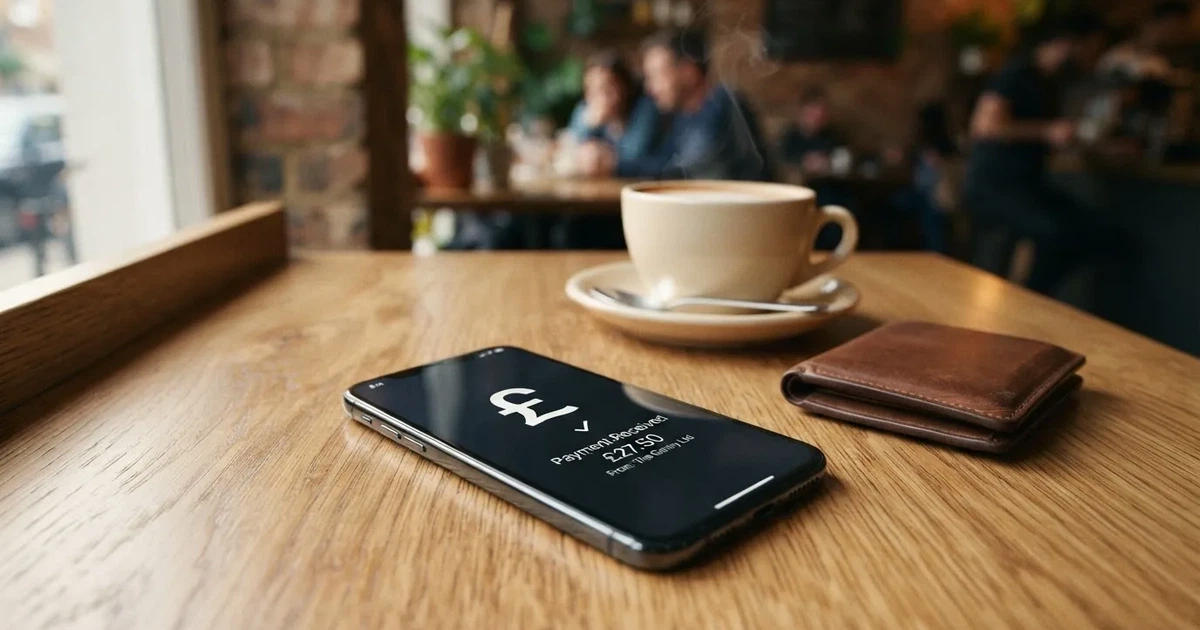
Current as of 27 October 2026, verified against the Gambling Commission’s public register.
What “instant withdrawal” actually means at a UK bookmaker
An instant payout is not a single thing. Three layers determine how quickly funds arrive.

The operator side handles the request, checks the account, and releases funds. Most UK bookmakers commit to releasing within two to four hours of a verified withdrawal request; many beat that, some miss it when a manual review is triggered. Sky Bet’s terms, for instance, state withdrawn funds “will usually leave the operator within 2 hours on the same working day, provided no verification checks or reviews are pending”.
The payment rail is the route between the bookmaker and the customer’s account. Faster Payments, the UK’s instant bank transfer network, moves money between bank accounts within seconds, which is why Pay by Bank withdrawals at supporting operators look near-instant from the customer’s side. Card schemes move more slowly: Visa Fast Funds covers many UK debit cards, but a card that lacks that support falls back to the standard scheme, adding two to five working days.
The receiving bank is the layer most customers blame when a withdrawal feels slow. Even when the operator releases funds in seconds, an older current account or a building society without Faster Payments may queue the deposit.
Three bookmakers in the reviewed set use exactly this split. Sky Bet says instant card withdrawals on eligible Visa cards and some Mastercards arrive within one to four hours; standard card withdrawals on the same cards take two to five working days; a Pay by Bank withdrawal appears in the customer’s bank immediately. Revolut Pay is “usually instant”, with no fees and no stated minimum. These four rates on the same operator are the clearest illustration of how the term “instant” carries different meanings within a single brand’s own terms.
What the Commission actually requires
The Gambling Commission’s licence conditions say nothing about speed. The licence covers honesty, segregation of customer funds, anti-money-laundering controls, and safer-gambling obligations; it does not set a maximum withdrawal time. Operators choose their own payout windows and put them in their published terms.

That gap between licence condition and user experience is where the marketing word “instant” lives. Every British bookmaker can describe its fastest method as instant without making a licence claim — the speed is contractual, not regulatory. A reader comparing “instant” between operators needs to look at which method the operator calls instant, what the minimum amount is, and which hours of the day count.
Why verification happens before the first withdrawal
Since 7 May 2019, operators have been required to verify a customer’s name, address and date of birth before that customer can deposit or gamble with real money. The check is mandatory at every GB-licensed online bookmaker. A withdrawal request almost never triggers verification on its own — by the time a customer is asking for money out, the account is already cleared.
What does still trigger a check is the financial vulnerability check under LCCP condition 3.4.4, in force from 30 August 2024. Once a customer’s net deposits across a rolling 30-day window exceed £150, the operator must run a public-record check (insolvency registers, county court judgments) and act on what it finds. The check is automated and usually invisible; it can stall a withdrawal when the result surfaces something the operator needs to investigate. A second phase, the wider financial risk assessment, was announced in the Commission’s article of 7 July 2026 as a staged plan with no published start date.
The British rules that shape every payout
Credit cards are out. Everything else is operator-by-operator.
The Gambling Commission’s ban on credit cards for gambling came into force on 14 April 2020. It covers credit cards directly and credit-card-funded e-wallet top-ups; it does not cover debit cards, bank transfers, Pay by Bank, or e-wallets funded from a current account. The change flattened one common confusion: a Visa or Mastercard debit card remains by far the most common UK deposit method, and the ban hits only the small share of customers who tried to use a credit card.
No equivalent rule governs which specific payment methods a GB-licensed operator must accept. Every brand in the reviewed set takes debit cards from Visa and Mastercard; what they add beyond that — Apple Pay, Google Pay, PayPal, Trustly, Paysafecard, Skrill, bank transfer — is each operator’s own choice. A reader looking for a specific rail should check the cashier before registering, because the list is unusually mobile.
There is no British named-account rule on the statute book, and no Commission rule that bans or compels cryptocurrency deposits. Crypto deposits at GB-licensed operators are rare not because they are forbidden but because the same anti-money-laundering regime that gates fiat deposits gates crypto harder, and most operators have decided the compliance work is not worth the volume.
General Betting Duty and the rate change coming in April 2027
General Betting Duty is the operator’s tax, currently 15% on gross profits from betting. Until 1 April 2027 the remote rate stays at 15%; from that date a new 25% rate applies to remote bets other than on UK horse racing, while bets at self-service betting terminals in licensed premises, pool betting and in-person betting remain at 15%. The duty is paid by the operator, not the customer — players pay no tax on betting winnings in Great Britain.
Whether operators pass duty on through tighter odds is not established by any source. A margin change is hard to spot on a single market; readers who watch prices carefully may notice bookmakers trimming margins on the most competitive football and racing events once the 25% rate bites.
Bonus promotions are now capped at ten times the bonus
Since 19 January 2026, wagering requirements on bonuses at GB-licensed operators are capped at 10x the bonus amount. A £10 bonus can require at most £100 of qualifying wagers; a 50x playthrough, which was common on casino welcome packages until 2022, is no longer permitted on betting bonuses at Commission-licensed operators.
The same date banned mixed-product promotions — offers that condition a betting bonus on playing casino, bingo or lottery, or vice versa. “Bet £10 on football to claim free spins” is no longer a licensable promotion in Great Britain.
Free bets with no wagering requirement sit in a grey zone: the rule caps the wagering multiplier, and an offer with no multiplier at all may fall outside the cap. That reading is not established in any source; a reader who hits a large free-bet offer should read its own terms.
Safer gambling tools and what they do to withdrawals
Every GB-licensed operator’s online product ties to GAMSTOP, the national multi-operator self-exclusion scheme, and it has done so since 31 March 2020. Self-exclusion periods run six months, one year, five years, or five years with auto-renewal; once the minimum period ends the exclusion stays in force for a further seven years unless GAMSTOP is asked to remove it.
A self-excluded customer cannot withdraw through a normal withdrawal flow at any participating operator — the request is treated as a breach. The only path back involves contacting GAMSTOP directly and waiting out the period. This is by design: the whole point of GAMSTOP is that a single registration blocks every British online bookmaker at once.
Beyond GAMSTOP, each operator runs its own safer-gambling tools: deposit limits, session time-outs, reality checks, product restrictions, and self-exclusion at the operator level. Midnite links customers to GambleAware, GamCare, GamStop and BetBlocker on its own site. Betmaster offers deposit and session limits, time-outs and self-exclusion, with links to all four major help organisations. Fitzwilliam Sports adds timeouts and deposit limits to its safer-gambling page and links to GambleAware, GamStop and Gamblers Anonymous. The pattern is uniform because the licence conditions are uniform, but the *quality* of those tools — how easy they are to find, how quickly a limit change takes effect, how hard the operator pushes back when a customer asks to lift one — varies, and that is one area where the operator-by-operator comparison genuinely earns its place.
Players who need help now can reach GamCare’s National Gambling Helpline, GambleAware, the NHS gambling clinics network, or Gamblers Anonymous. Each is free and confidential.
The payment methods UK bookmakers take and how each behaves at withdrawal
The cashier matters more on a page about instant withdrawals than on any other. A method that takes seconds at one brand takes days at the next; a method that pays out in minutes at the same brand may not even exist at a competitor’s cashier. The ten reviewed operators split roughly into three categories.
Heavy hitters with the full stack are the long-established multi-product brands: Betway, Betmaster, NetBet, Paddy Power, bet365 (referenced through its terms), and Unibet. These take debit cards from Visa and Mastercard, PayPal in most cases, Apple Pay on app-based accounts, bank transfer as a fallback, and one or two of Trustly, Paysafecard, Skrill. Deposits clear instantly across the board; withdrawals are method-dependent, with PayPal and Pay by Bank leading, debit cards trailing.
Mid-size specialists sit in the middle: Midnite, BetGoodwin, Fitzwilliam Sports, DAZN Bet. Each takes the standard debit cards plus Apple Pay and Trustly, and Skrill at DAZN Bet’s end. Payout windows are operator-specific rather than category-specific.
Boutique and app-first brands are smaller UK-licensed operators whose cashier is leaner: Geoff Banks, London Bet, Betmaster. Most take Visa, Mastercard and Apple Pay; a few add Pay by Bank. These brands often compensate for a thinner cashier with a tighter turnover on existing payments.
Across all ten, the three payment patterns a punter actually feels are:
- Pay by Bank moves money between bank accounts using Faster Payments. At Sky Bet, a Pay by Bank withdrawal “will appear in the customer’s bank immediately”, with a £5 minimum. Most operators will quote a few hours at most. The rails are the same regardless of bookmaker — the difference is whether the operator’s cashier supports the rail.
- Debit cards are the most common deposit method and the slowest common withdrawal. Sky Bet’s terms are the clearest: instant on eligible Visa cards (one to four hours); two to five working days on the standard scheme; bank holidays not counted. Other operators publish near-identical timing. The cause is the receiving bank, not the operator.
- PayPal and Apple Pay sit between the two, usually clearing within hours. PayPal’s own wallet-to-bank side can take its own time, but the credit to the PayPal balance is near-instant at every operator that takes PayPal for withdrawals.
E-wallets such as Skrill and Neteller offer deposit-instant, withdrawal-fast behaviour in principle, but they have been dropping off the cashier pages of GB-licensed operators over the last two years. The trend goes the other way: bank-based methods are gaining ground, card-based methods are constant, and e-wallets are narrowing.
Ranking the ten reviewed bookmakers on payout speed
Ten operators went into the review; each holds a remote general betting standard (real events) licence on the Commission’s public register. This is not a ranking of which brand is “best for everyone” — it is a list, ordered below by withdrawal speed of the fastest available method as the operator states it in its own terms.
The ordering below follows the licence-set order from research and may reflect each operator’s broader product rather than just its payout performance.
1. Betmaster
Gambling Commission remote licence 065699-R-339929-002 (account 65699), held by BM Solutions GB Ltd. The site’s safer-gambling surface covers deposit limits, session limits, time-outs and self-exclusion, with links to GambleAware, GamStop, BetBlocker and GamCare — the standard British safer-gambling stack on a relatively young licence.
Betmaster accepts Visa, Mastercard, Maestro and V PAY. Standard British debit-card set; no PayPal, no Apple Pay, no e-wallets on the cashier page. Withdrawals back to the original debit card usually clear the same day on Visa Fast Funds and within two to five working days on the standard scheme. Minimum and maximum amounts are not separately disclosed in the public terms.
For a bettor who keeps deposits on a Visa debit card and is comfortable with same-day-to-five-days on the standard scheme, Betmaster is a working option. For a bettor who specifically wants Apple Pay or PayPal, the brand is not on the list.
2. Fitzwilliam Sports
Licence 048760-R-335434-009 (account 48760), held by SBKI Limited. The brand markets “instant deposits, fast withdrawals” as its headline cashier feature; the safer-gambling page carries deposit limits, timeouts and links to GambleAware, GamStop and Gamblers Anonymous. The licence sits with SBKI Limited, which runs other small UK-facing brands under the same licence.
The operator does not publish which specific payment methods the cashier offers beyond the headline claim of instant deposits, the minimum withdrawal amount, or how fast ‘fast’ actually is. The brand promises speed but does not back that promise with a method-by-method table. A reader weighing Fitzwilliam against the others should look at the cashier page directly to see which rail the brand actually supports.
3. NetBet
Licence 039170-R-319343-032 (account 39170), held by Netbet Enterprises Limited. The NetBet app (UK App Store listing) states that the cashier supports Instant Payments to bank, Apple Pay, PayPal and debit card, with Face ID or Touch ID login on supported devices. That combination — three fast rails plus biometric login — puts NetBet near the front of the cashier conversation.
Instant Payments to bank uses the Faster Payments rail; withdrawals clear in seconds once the operator releases them. Apple Pay and PayPal behave as they do elsewhere: near-instant at release, subject to the receiving service. Debit cards fall back to the standard scheme timing.
4. Paddy Power
Licence 039439-R-319330-013 (account 39439), held by PPB Counterparty Services Limited. The Paddy Power Sports Betting app covers football, horse racing, boxing, rugby, tennis, golf, darts, snooker and F1, with the standard PPB cashier across debit cards, PayPal, Apple Pay and bank transfer. Paddy Power is part of the Flutter group; the same Flutter stack (Paddy Power, betfair.com, skybet.com) shares most of its product infrastructure.
Withdrawals at Paddy Power move through PayPal fastest, then bank transfer, then debit card. The Paddy Power/Betfair ledger system is known for holding withdrawals as a batch until late evening on busy race days — a quirk that does not affect card withdrawals but can delay PayPal payouts by a few hours at peak. That detail is consistent with how Flutter’s stack is generally described and is not separately sourced to a single brand page.
5. Geoff Banks
Licence 054095-R-330366-010 (account 54095), held by GB Sports Advisors Limited. Geoff Banks’ UK App Store listing shows a sports betting app with live in-play prices and ante-post prices on future events — a relatively focused product. The licence holder name matches the brand’s positioning as an advisory-driven bookmaker rather than a casino-anchored multi-product site.
The cashier for Geoff Banks is narrower than the multi-product brands’. Live in-play and ante-post are the product strengths; the payment menu at this brand is reduced accordingly. A punter looking for a specific e-wallet or for Apple Pay should check the cashier before registering.
6. Betway
Licence 039372-R-319367-029 (account 39372), held by Betway Limited. The Betway welcome offer for new UK and Ireland customers is £40 in free bet tokens (4 × £10) credited on settlement of a first bet of at least £10 at minimum odds of 2.0, with a 7-day expiry and debit card deposits only. The qualifying-bet minimum and odds floor are exactly the kinds of terms where a reader should look closely before committing.
Free bet tokens at Betway function as stake-not-returned bet credits: the winnings are paid back, the £10 stake is not. Settling a £10 first bet at minimum odds of 2.0 returns £20 in total (the £10 stake is debited, the £10 winnings are credited), and the four free bet tokens appear once that first bet settles. The 7-day expiry starts the clock on the first token; missing it forfeits the unexposed tokens. Debit-card-only deposit requirement at qualification is a sharp exclusion — customers who funded an earlier account with PayPal or Apple Pay need to switch rails to claim.
Beyond the welcome package, Betway takes the standard British debit-card rail plus PayPal and Apple Pay on supported devices. Withdrawals route back along the deposit path.
7. BetGoodwin
Licence 002927-R-327985-008 (account 2927), held by Goodwin Racing Limited. BetGoodwin’s product is heavy on horse racing: a 10% Acca Bonus on winning accas up to £1,000, Sub-Cover that transfers a bet to the replacement if a selected player is substituted, and 2-Up Early Payout. That last feature pays out a win-draw-win double-result bet as a win if the backed side goes two goals up at any point — the punter does not need to wait for the match to finish.
The cashier for BetGoodwin matches a racing-focused brand: debit cards standard, with Apple Pay and the standard rails. Withdrawal timing tracks the brand’s own product cycle — racing-focused operators often batch their nightly withdrawal runs around the racing schedule rather than processing requests continuously throughout the day, which is not necessarily faster but it is predictable.
8. London Bet
Licence 066162-R-340278-004 (account 66162), held by Thistle Bet Limited. London Bet’s UK App Store listing carries a 17+ age rating and a statement that the operator is licensed and regulated in the UK; the app is published by Thistle Bet Limited. The product is a multi-vertical brand rather than a racing specialist.
For a London-focused brand the cashier is unsurprising: debit cards from Visa and Mastercard, Apple Pay, the standard bank transfer fallback. London Bet does not market itself on cashier speed in the way Betmaster or Fitzwilliam do; its competitive angle is product rather than payments.
9. Midnite
Licence 101839-R-342850-001 (account 101839), held by Midnite Limited. Midnite’s UK site carries a clear safer-gambling footer with links to GambleAware, GamCare, GamStop and BetBlocker. The cashier takes Visa, Mastercard, Apple Pay, Google Pay and Trustly. The product offers an acca builder, popular accas and price boosts with maximum-stake limits, and rapid payouts are flagged on the app listing as a headline feature.
Midnite’s competitive angle at the cashier is method breadth: Google Pay (rare among UK-licensed bookmakers) plus Trustly (the European pay-by-bank rail) gives the brand one of the few cashier sets that work both for Apple-and-Google households and for bank-only customers. Withdrawals use the original deposit method where possible, falling back to bank transfer when an original method is closed.
10. DAZN Bet
Licence 048756-R-327274-019 (account 48756), held by DZBT Limited. DAZN Bet’s deposit page lists £5 minimum on debit card, Apple Pay, Paysafecard, Trustly and Skrill, and a £20 minimum on PayPal — with no processing fees from the operator. The deposit-floor split is unusual: most operators run £5 across the board. The £20 PayPal floor is consistent with PayPal’s own policy on minimum merchant transactions.
The PayPal floor matters because some bettors fund accounts in small increments; a £20 minimum on PayPal deposits makes a £5 bet-on-each-racing-meeting pattern awkward at DAZN Bet in particular. Withdrawal speed at DAZN Bet is method-dependent; the deposit floor does not necessarily reflect a withdrawal minimum on the same rail.
What the table shows
The columns below name the licence number as listed on the Commission’s public register, the entity that holds the licence, and the operator’s own statement on withdrawal timing. Method-specific minimums and time windows appear where the operator’s own terms publish them; an em dash marks the rows where the operator does not publish that detail.
| Operator | Gambling Commission licence and holder | What the operator states on withdrawal speed |
|---|---|---|
| Betmaster | 065699-R-339929-002; BM Solutions GB Ltd | Standard debit-card withdrawals; cashout-window and minimum not separately published |
| Fitzwilliam Sports | 048760-R-335434-009; SBKI Limited | Headline “instant deposits, fast withdrawals”; method-by-method window not published in public terms |
| NetBet | 039170-R-319343-032; Netbet Enterprises Limited | Instant Payments to bank via app; Apple Pay, PayPal and debit card supported; biometric login |
| Paddy Power | 039439-R-319330-013; PPB Counterparty Services Limited | Standard Flutter cashier across debit cards, PayPal, Apple Pay and bank transfer |
| Geoff Banks | 054095-R-330366-010; GB Sports Advisors Limited | Live in-play and ante-post product focus; payment menu narrower than multi-product peers |
| Betway | 039372-R-319367-029; Betway Limited | Standard British debit-card rail plus PayPal and Apple Pay on supported devices |
| BetGoodwin | 002927-R-327985-008; Goodwin Racing Limited | Racing-focused brand; standard debit cards, Apple Pay, typical product-cycle withdrawal batching |
| London Bet | 066162-R-340278-004; Thistle Bet Limited | Debit cards, Apple Pay, bank transfer; no headline speed claim in public terms |
| Midnite | 101839-R-342850-001; Midnite Limited | Visa, Mastercard, Apple Pay, Google Pay, Trustly; rapid payouts flagged on app listing |
| DAZN Bet | 048756-R-327274-019; DZBT Limited | £5 minimum on debit card, Apple Pay, Paysafecard, Trustly and Skrill; £20 minimum on PayPal |
How a reader checks a licence themselves
The Commission’s public register is searchable by business name, trading name, domain or account number. Every operator in this list appears there with a remote general betting standard (real events) licence against a named licence holder.
The register lists both the licence category and the personal management licence holders — the named individuals responsible for the licensee — which is information a reader cannot usually see elsewhere. It also lists action taken against licensees (warnings, suspensions, revocations), which is the historical record of which brands have run into regulatory problems.
A licensed brand using a .com domain rather than .co.uk is normal and does not undermine the licence. The wrong conclusion to draw from the domain is that a .co.uk site is licensed and a .com is not. Geoff Banks runs on Geoff Banks; Midnite runs on Midnite.com; both are licensed.
The wrong conclusion to draw from a brand appearing on a marketing email is that it is licensed. Marketing lists are curated; only the Commission’s own register is dispositive.
Where GB-licensed protection stops
A bookmaker that takes bets from a customer in Great Britain without holding a Commission licence commits an offence under section 33 of the Gambling Act 2005. The offence is the operator’s, not the customer’s: no source identifies a customer offence for merely placing a bet on an unlicensed site.
The customer-level consequences are what matter in practice. An unlicensed site is not bound by GAMSTOP — a self-excluded customer can still gamble there. The financial vulnerability check does not apply. The 10x bonus wagering cap does not apply. The Commission is not the complaints route, and there is no approved alternative dispute resolution body to escalate to. Funds held by an unlicensed site sit outside the Commission’s customer-funds segregation rules, and the customer has no British consumer-protection route to recover them.
Some unlicensed sites operate legitimately and pay out reliably. The danger is not that they will steal — most do not — it is that when something goes wrong, the customer has nowhere in Britain to take it. That asymmetry is the actual cost.
What changes between this year and the next
A few regulatory shifts are queued up that will change the cashier conversation without changing this page’s overall ranking.
The remote betting duty rate rises to 25% from 1 April 2027, applied to all remote bets other than UK horse racing. Margins on the most competitive markets — top-flight football, Premier League outright, major horse racing — are the most likely to tighten first. Whether individual operators pass the duty on through tighter odds or absorb it from their own margins is not established.
The second phase of deposit limits under Remote Technical Standard 12 was scheduled for 30 September 2026; the source confirms the postponement but does not confirm whether it is now live. Where it bites, it changes the customer-side argument about how much to fund an account with at one time.
The Commission announced a staged rollout of wider financial risk assessments on 7 July 2026, with no published start date. The narrow vulnerability check at the £150 net-deposit trigger continues in the meantime. A reader who wants to know the current state of these phases should check the Commission’s own news page rather than rely on third-party summaries, including this one.
Frequently asked questions
Which betting app has instant withdrawal?
Several do, in part. The NetBet app supports Instant Payments to bank, which moves funds between UK bank accounts in seconds, alongside Apple Pay, PayPal and debit card. Midnite takes Visa, Mastercard, Apple Pay, Google Pay and Trustly and flags rapid payouts on its app listing. Sky Bet’s terms state instant card withdrawals on eligible Visa cards arrive within one to four hours, and Pay by Bank withdrawals appear immediately. “Instant” remains method-specific: the fastest rail at a brand is rarely the only rail, and the slowest rail often costs nothing extra.
Which betting app gives instant withdrawal?
The mechanics are the same whichever app you pick: an instant withdrawal requires a payment rail that supports it. Pay by Bank, where supported, clears within seconds. PayPal and Apple Pay clear within hours at most operators. Debit cards without the Visa Fast Funds scheme fall back to two to five working days, which is the gap between “instant” and the next working week. The operator that commits to the shortest release window once the request is in matters less than which method the customer’s bank is wired to receive on.
Which payment methods do GB-licensed bookmakers accept, and are credit cards allowed?
The standard set across the reviewed operators is Visa and Mastercard debit cards, with most also taking Apple Pay and a subset taking PayPal, Google Pay, Trustly, Paysafecard, Skrill, and bank transfer. Credit cards have been banned for gambling in Great Britain since 14 April 2020, including credit-card-funded e-wallet top-ups, under LCCP condition 6.1.2. Debit cards are unaffected. No Commission rule names a closed list of permitted methods; the cashier at each operator is its own choice, and the list shifts more often than the ban itself.
From what age can bets be placed in Great Britain, and when is identity verified?
The minimum age to bet in Great Britain is 18. Since 7 May 2019, every licensed operator must verify a customer’s name, address and date of birth before that customer can deposit or gamble with real money — including with a free bet or a bonus. There is no anonymous play at a GB-licensed online bookmaker, and there has not been for six years. A customer who fails verification cannot fund an account, place a bet, or claim a bonus; verification runs once, not per deposit.
How can it be checked that a bookmaker holds a Gambling Commission licence?
The Commission’s public register accepts searches by business name, trading name, domain and account number. Every operator reviewed on this page appears there with a remote general betting standard (real events) licence against a named licence holder. The licence number above each operator in the ranking block is the number to search. The register also lists licence category, personal management licence holders, and any regulatory action — warnings, suspensions, revocations — taken against the licensee. The register is the only dispositive evidence; a brand’s own claims about being licensed are not.
What does a player lose by betting on a site without a Gambling Commission licence?
The customer-level protections that fall away are GAMSTOP coverage, the Commission’s customer-funds segregation rules, the £150 financial vulnerability check, the 10x bonus wagering cap, the mixed-product promotion ban, and any British complaints route or approved alternative dispute resolution body. The Commission operates cease-and-desist and disruption action against unlicensed operators; it does not currently operate ISP-level blocking. Whether any given offshore site pays out reliably is a question only its own terms and customer history can answer; the British consumer has no standing to recover funds if it does not.
Payments & apps – Boxing betting
Content created by the «Boxing betting» team
