
Snooker betting online: where licensed bookmakers sit, what they offer and how the price is built
 Available in US
A frame of snooker rarely ends the way it looks. A colour sits over a pocket, the cue ball slides half a yard, and a 60–40 favourite finds the match slipping to 5–5. That tension — the gap between the form book and the next visit — is exactly what a betting market prices, and it is the reason snooker has been a fixture of British bookmakers’ sportsbooks for decades. This page is about that gap: how the market for online snooker betting is built in Great Britain, who is licensed to take a bet on it, what the markets look like and what they cost a bettor in margin.

Snooker itself is a 22-ball game on a 12 ft by 6 ft table, played to a maximum break of 147, with a tournament calendar topped by the World Snooker Championship at the Crucible Theatre, where frames range from best of 19 to best of 35 in the final. Ronnie O’Sullivan and Stephen Hendry each hold seven world titles in the modern era; Joe Davis won fifteen in a row from 1927 to 1946. The most recent Crucible final, in 2026, went to a final-frame 18–17 win for Wu Yize over Shaun Murphy, with a £500,000 winner’s share from a £2,395,000 prize fund. None of that history tells a reader what price to take. What it does is fix the scale: a sport with a single dominant showcase, a long tail of ranking events, and a points-based system that makes outright betting both a season-long question and a frame-by-frame one.
The British regulator — the Gambling Commission — licenses the whole market under the Gambling Act 2005, and any operator taking remote bets from customers in Great Britain needs one of its remote licences, no matter where the operator is incorporated. Ten bookmakers reviewed below hold such a licence and form the comparison that runs across this page. They differ in price, in the depth of their snooker programme, in their in-play product and in how their bonuses are constructed. The differences matter, and so does the cost the bettor pays for them, which sits inside every odds line as a margin the bookmaker keeps.
This page is current as of 27 October 2026 and was checked against the Gambling Commission’s public register.
Live snooker betting and cash out: where the in-play price moves
In-play snooker betting turns the long wait between frames into a market. After a player takes the opening frame, the outright price on them shortens immediately; a missed red off the spot lengthens it on the next visit. Three things decide whether an in-play snooker product is worth using: how quickly the bookmaker settles each frame, what markets are open while the player is at the table, and whether cash out is offered at a sensible price when the picture changes.
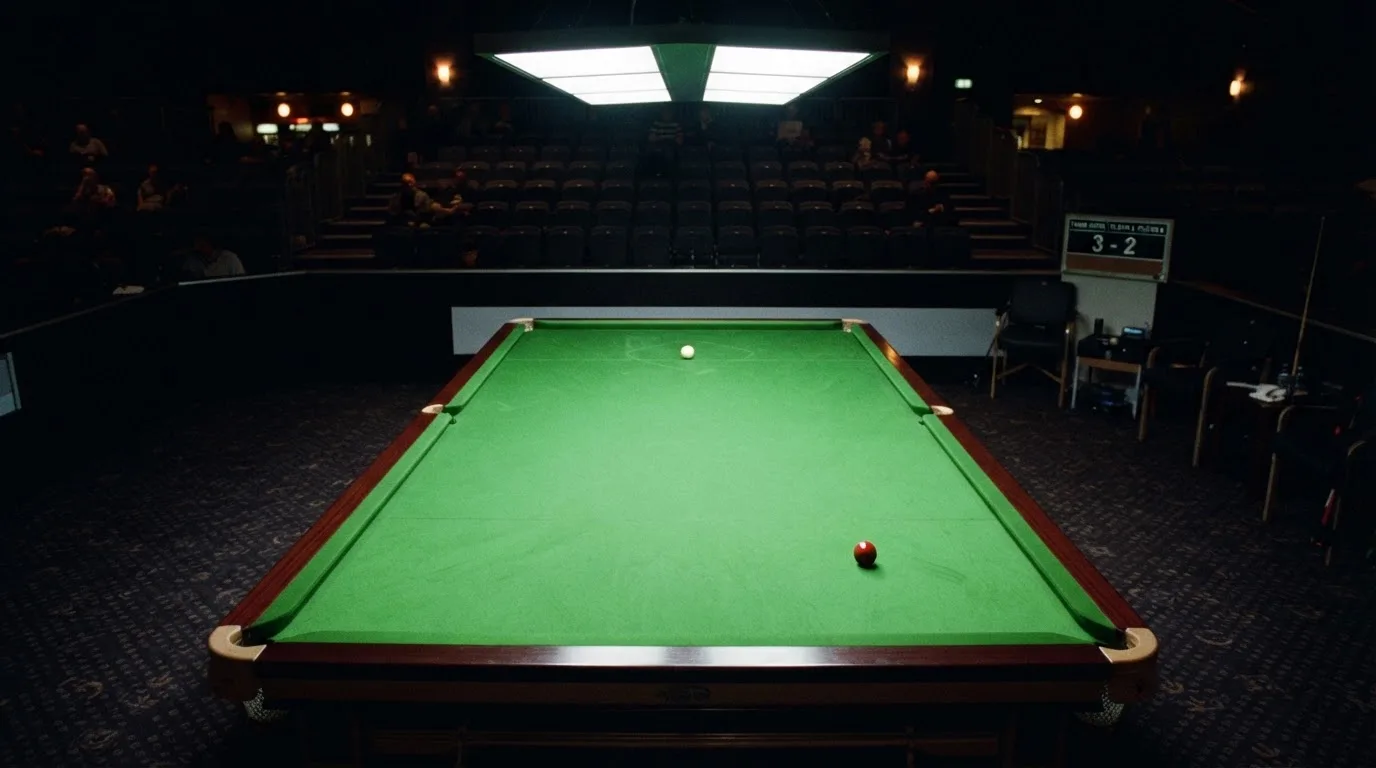
A frame of professional snooker lasts twenty to forty minutes on average, with safety exchanges that can stretch a single visit. The longer the frame runs, the more a bookmaker’s algorithm has to update and the more vulnerable its price is to a sharp bettor who has watched the visit develop. Licensed British bookmakers offer in-play snooker — from the outright match winner down to frame-by-frame and next-break markets — and the controls sit in each operator’s own licence conditions and customer-protection duties, not in any statute that fixes what they must offer.
Cash out closes a position before the result is known. For snooker, that is most useful when the bettor took an outright at the start of a tournament and the player has reached the semi-finals but looks out of sorts. A cash-out price locks in a partial return — sometimes more, often less than the original stake — and removes the risk of a final-frame collapse. The cost is the bookmaker’s margin on the cash-out quote itself, which is wider than the pre-match price because the bookmaker is making a one-sided offer to a bettor who has already committed.
The practical order a bettor goes through is straightforward. Open the in-play tab during a televised match and check which markets are priced: match winner, frame winner, next break over/under a number, and the points handicap. If cash out appears on the betslip, the price displayed is the bookmaker’s mid-market quote, and the difference between that and the true mid is the cost of using the feature. For matches shown only on a streaming subscription, some bookmakers stream the table inside their own app; others require the bettor to bring a feed. Streaming is operator-specific and is not a condition of the licence.
The deeper the in-play product, the more the bettor pays for it in the long run. A bookmaker that prices fifteen snooker markets per match carries a wider margin on each than a bookmaker that prices five; the extra choice is a real cost. Snooker is not football, and the bettor who treats it like football — backing every redraw at full stakes — burns through a bankroll faster than the headline prices suggest. The right way to use in-play snooker is the same way as every other in-play market: take the price only when the visit on the table justifies it, and ignore the rest of the offer.
Snooker betting predictions and strategy: what a tipster actually sells
Snooker betting tips exist because snooker has a long form book, and a long form book tempts the bettor into thinking form is destiny. A tipster — whether a paid service, a free column or a chat thread — is selling an opinion about which player will win a match, a quarter-final or an outright tournament. The opinion is a view, not a forecast, and the bettor who pays for one is buying conviction the tipster does not in fact possess. No tipster knows the outcome of a frame of snooker; nobody can, because the sport is decided by a ball on a cloth and the cue in the player’s hand.

The honest frame is that tipsters charge for a record — a list of past results — that is always partly a function of which results were reported. A tipster can post ten picks a week for six months, ignore the seven that lost, and show a winning record built on half of the bets. The bettor who buys in never sees the other half. Some tipsters are open and publish settled results; most do not. The lesson is not that tips are useless, but that the bettor has to weigh the record the tipster publishes against the record the tipster does not.
What a bettor can do, and what no tipster does for them, is the arithmetic of price. A bookmaker’s outright market on the World Championship carries Ronnie O’Sullivan, Judd Trump, Mark Selby and a long tail of 50/1-and-longer shots. The bettor who picks the winner is right roughly once every two or three years; the bettor who backs four 25/1 chances in different quarter-finals is right more often but at a smaller price. The right price to take is the one that gives a positive expected value after the bookmaker’s margin is taken out — and that calculation has to be done on the bettor’s own book, not by a tipster with a six-month record.
Bankroll strategy is the practical side of the same point. A common rule is to risk one to two per cent of a betting bank on any single outright and a higher fraction on shorter-priced match betting. The number is not magical; it is the share of a bankroll that lets a bettor survive a bad run of twenty losing bets without going broke. The bankroll is what the bettor is willing to lose; it is not the deposit on any single bookmaker, and it is not the balance in an e-wallet.
Forecast tools, model outputs and betting software exist for snooker and they do what they say: turn a long form book into a probability that the bettor can compare against the bookmaker’s price. The honest version of a model uses the players’ break-building rate, the percentage of frames each player wins on serve (in matches with a fixed frame order), and the head-to-head record at the venue. The dishonest version uses the players’ names and a moving average of recent results, which collapses to a tipster view with a spreadsheet behind it. The bettor who can read the input is the one who knows which kind they are looking at.
The right strategy is the same for snooker as for any other sport: bet the price, not the tip, and never confuse a model’s output with a forecast. A frame of snooker is decided on the cloth; the rest is arithmetic.
Snooker bet types and odds: what the bookmaker prices and how
Snooker betting odds are written in two forms across British bookmakers — fractional (5/1, 11/4, evens) and decimal (6.00, 3.75) — with decimal the default on most licensed sites and fractional still common in horse racing and ante-post snooker. The two are interchangeable: decimal odds of 6.00 mean a £10 stake returns £60 (£10 × 6.00), of which £50 is profit; the fractional form is 5/1 — five units of profit for every one unit staked. Odds-on (shorter than evens, e.g. 4/6 or 1.67 decimal) is a favourite; odds-against (longer than evens, e.g. 5/2 or 3.50 decimal) is an outsider.
The market that opens first on a snooker match is the outright winner — the player to win the match — followed by the frame handicap (a player given +1.5 frames, so a bet wins if they take the match or lose by one frame) and the total frames over/under a number set by the bookmaker. Outright tournament markets — the World Championship, the UK Championship, the Masters — open months ahead and shorten as the field narrows. Each-way betting is offered on outrights (and on some match markets), splitting the stake into a win half and a place half; the place terms depend on the field size and the bookmaker’s rules.
A combination bet multiplies the odds of its legs into one price. A double on two selections at 2.00 and 3.00 pays 6.00; a treble at 2.00, 3.00 and 4.00 pays 24.00. Each leg must win or the bet loses, which is why bookmakers promote accumulators — the headline price is large and the probability of all legs winning is small. British bookmakers call a four-fold accumulator a “Yankee” (eleven bets covering all combinations of two or more selections); a “Lucky 15” is fifteen bets on four selections; a “Heinz” is fifty-seven bets on six; a “Goliath” is two hundred and forty-seven bets on eight. Total stake = unit stake × number of bets.
Bet builder, also called a same-game multi, is the modern equivalent: a bettor selects several markets from the same match (match winner, total frames over a number, player to make a century break) and the bookmaker multiplies them into one price. LiveScore Bet’s Bet Builder allows up to ten selections and covers match result, both teams to score equivalents in snooker (next-frame winner, race to a number of frames), corners (in snooker, points scored in the visit), total goals (total frames), player scoring (next break over a number) and card markets (fouls). Other bookmakers offer similar products with different ceilings and different exclusions.
The price the bettor sees is built from a probability and a margin. A match between two roughly equal players has true probabilities near 50/50, but the bookmaker’s prices will be 1.90 / 1.90 (decimal) — 9/10 each in fractional — implying probabilities of 52.6 % and 52.6 %, which add to 105.3 %. That extra 5.3 % is the margin, the slice of every pound staked the bookmaker keeps on average across the two outcomes. The margin is the cost of placing the bet at all, and it is set by the bookmaker, not by the sport. The narrower the margin, the more of every pound returns to bettors as winnings; the wider, the more the bookmaker keeps.
The arithmetic belongs to the writer: a market priced 1.90 / 1.90 pays back a fraction 1 ÷ (1/1.90 + 1/1.90), which is around 0.95 — a payout share of roughly 95.0 % and a margin of roughly 5.0 %. The margin moves with the bookmaker and the market: a Premier League football match may carry 2–4 %, a snooker match has no fixed band because the field size and the number of outcomes differ, and the bettor who compares two bookmakers’ snooker prices will see a margin range from around 4 % on the headline match winner to 8 % or higher on the frame handicap and the total-frames lines. Margin is the one number that lets a bettor compare markets across bookmakers without being distracted by the headline odds.
Snooker betting: tournaments and the season-long calendar
Snooker is a year-round sport with a calendar dominated by the World Snooker Tour and a small number of invitational events. The World Snooker Championship at the Crucible Theatre, Sheffield, has run annually since 1977; it is the season’s last ranking tournament and the one the rest of the calendar leads into. The UK Championship in York, the Masters at Alexandra Palace and the Champion of Champions are the other majors. Around them sit the ranking events — the English Open, the German Masters, the Welsh Open, the Players Championship — and the invitationals run by promoter World Snooker.
Two governing bodies matter to a bettor. The World Professional Billiards and Snooker Association (WPBSA) governs the professional game and owns the official rules. The International Billiards and Snooker Federation (IBSF) governs amateur competition. Betting markets on amateur events are offered by some bookmakers but are thinner than on the professional tour; a bettor who wants prices on the World Championship has many options, a bettor who wants prices on a Q School event has fewer.
Match formats vary by round. Most ranking matches at the Crucible are best of 19 in the first round, best of 25 in the quarters, best of 33 in the semis and best of 35 in the final. Outside the Crucible, ranking matches are commonly best of 7 or best of 9, which compresses the outright market and lengthens the in-play market — a best-of-7 match gives a long series of frame prices inside a short window. A best-of-35 final gives the opposite: a long match in which frame prices accumulate.
Outright betting on the World Championship opens weeks or months before the event and tightens as the field narrows. The draw is seeded, so the outright market is not a flat field of 128 players; the top seeds are priced short, the qualifiers are priced long, and the price on a qualifier reaching the final can shorten sharply during the early rounds. The bettor who takes a 50/1 shot in October is paying for the option of a long run; the bettor who takes a 5/2 favourite in April is paying for the perceived certainty of a top player.
The Masters is invitational — only the top sixteen in the world qualify — and the field is small enough that outright betting is concentrated on a handful of names. The UK Championship is open and has the widest outright field of any ranking major. The Scottish Open, the English Open and the Welsh Open are Home Nations events with a £100,000 winner’s share; the smaller events on the calendar carry a fraction of that.
The bettor who follows the season is right to map the calendar first. Each ranking event runs for a week; each carries a winner’s market, a quarter-final market and a name-the-finalist market; each settles on a Sunday. The bettor who wants outright exposure is to bet across the calendar, not on a single event, because a single-event staking plan concentrated on the World Championship is a single-event staking plan that depends on one result.
The ten licensed bookmakers for snooker in Great Britain
Each bookmaker below holds a Gambling Commission remote licence and appears on the Commission’s public register. The Commission’s public register is the test of who is licensed, and a single match of licence number, account number and domain is the only way to verify that match — anything less is a marketing claim, not a regulatory fact.
The table that follows is the only place in this page where the ten bookmakers are set side by side. It carries the four columns the comparison needs and no extras: brand, Gambling Commission licence number and licence holder, and what the operator’s own terms state on snooker specifically. Cells that research cannot fill are marked with the article’s no-data marker rather than guessed.
| Brand | Gambling Commission licence | Licence holder | Snooker (operator’s own terms) |
|---|---|---|---|
| DAZN Bet | 048756-R-327274-019 (account 48756) | DZBT Limited | Deposits from £5 by debit card, Apple Pay, Paysafecard, Trustly, Skrill; £20 by PayPal. Snooker markets not specifically disclosed. |
| Swifty Sports | 058957-R-334734-006 (account 58957) | Swifty Global (UK) Ltd | Best Odds Guaranteed on racing, Cash Out on selected markets including horse racing and football, daily price boosts, live streaming, in-play betting; Bet Builder listed as coming soon. Snooker markets not specifically disclosed. |
| Ladbrokes | 054743-R-330863-014 (account 54743) | LC International Limited | Sports betting app published by Entain Operations Limited. Deep snooker programme, BOG on racing, Bet Builder, Cash Out. |
| QuinnBet | 061011-R-335683-004 (account 61011) | QuinnBet (Gibraltar) Limited | BOG on UK and Irish horse racing from 10:00 am daily on singles, multiples and system bets, with a maximum benefit of £150 per customer per race. Snooker markets not specifically disclosed. |
| DragonBet | 064908-R-339041-003 (account 64908) | DragonBet Ltd | Welsh football and rugby markets, racing, American football, in-play betting, bet builder markets. Snooker markets not specifically disclosed. |
| Copybet | 053774-R-330743-010 (account 53774) | Copybet UK Limited | BOG all day every day on UK and Irish racing; pays first past the post on horse racing even if the winner is later disqualified. Snooker markets not specifically disclosed. |
| Bet600 | 044731-R-323941-016 (account 44731) | Tyche Tech Limited | BOG on horse racing — bet is paid at the starting price if the SP is bigger than the early or show price taken. Snooker markets not specifically disclosed. |
| Sporting Index | 027343-R-308898-011 (account 27343) | Sporting Index Limited | Lets customers switch between fixed odds and spread betting, with in-play betting, Bet Builder for football, auto cash-out and Multi-Markets. Spread betting regulated by the FCA. Snooker markets not specifically disclosed. |
| William Hill | 039225-R-319373-015 (account 39225) | WHG (International) Limited | BOG on UK and Irish horse racing from 8 am on the day of the race, on singles and multiples; does not apply to ante-post, tote or pari-mutuel bets. Deep snooker programme, Bet Builder, Cash Out. |
| LiveScore Bet | 056859-R-332720-005 (account 56859) | LiveScore Betting and Gaming (Gibraltar) Limited | Bet Builder allows up to ten selections and covers match result, both teams to score, corners, total goals, player scoring and card markets. Snooker markets not specifically disclosed. |
A bookmaker licensed in Great Britain is not required to carry snooker at all, and several of the brands above make their name on racing, football and US sport rather than on the baize. The bettor who wants snooker prices is to check the bookmaker’s sportsbook before opening an account, not to assume it from the licence alone.
The differences across the ten that matter for snooker specifically are few and worth naming. Ladbrokes and William Hill carry the deepest snooker programme among British bookmakers, with outright markets on every ranking event and frame-by-frame markets on televised matches. QuinnBet, Copybet, DragonBet and Bet600 are racing-first brands whose snooker offering is thinner. DAZN Bet is a sportsbook whose snooker markets are not specifically disclosed in research and which a snooker bettor should check directly. Swifty Sports is new to the market with a Bet Builder listed as coming soon. Sporting Index is a spread-betting bookmaker whose snooker product is on a different footing entirely — financial spread betting is regulated by the FCA, not the Gambling Commission, and spread losses can exceed the deposit. LiveScore Bet’s Bet Builder product extends to ten selections and covers the markets a snooker bettor is most likely to combine.
The rest is arithmetic, which the next sections work through.
Snooker betting in Great Britain: the regulatory frame
Great Britain has no statutory list of permitted sports or markets for betting. A bookmaker serving customers in Great Britain needs a Gambling Commission remote licence, and every licence is verifiable against the Commission’s public register. The register is searchable by business name, trading name, domain or licence number; it lists the licence category (remote general betting standard for real events, remote betting intermediary for exchanges, and others) and the named licence holder; and it is the whole test of whether a brand is licensed.
The 2005 Act covers Great Britain — England, Scotland and Wales. Northern Ireland has its own older law and is outside the Act, so a “GB-licensed” bookmaker is licensed for the mainland and not for Northern Ireland. The 2014 Act extended the requirement to operators whose remote facilities are used in Great Britain, no matter where they are incorporated; a Curaçao, Maltese or Gibraltar licence is not a substitute. Every operator detail on this page comes from the licence holder’s own terms and from the Commission’s register, not from the brand’s marketing.
Three licence conditions matter to a bettor. First, identity verification — name, address and date of birth — must be completed before a customer can deposit or gamble, including with a free bet or bonus; no anonymous play is possible at a licensed site. Second, GAMSTOP is a mandatory licence condition for online operators since 31 March 2020: a customer who has self-excluded through GAMSTOP is blocked at every licensed online bookmaker in Great Britain. Third, the credit-card ban, in force since 14 April 2020, prohibits gambling by credit card and credit-card-funded payments through an e-wallet; debit cards and bank-based payments are not covered by the ban.
Three controls sit in front of the bettor in 2026. The financial vulnerability check, in force since 30 August 2024 and updated since 28 February 2025, is a public-record check (bankruptcy, county court judgments) that triggers when a customer’s deposits minus withdrawals exceed £150 in a rolling 30 days; it is not an income check and not a credit reference check. Financial risk assessments, the affordability checks of the press coverage, are announced in a staged plan with no start date. Deposit limits under RTS 12 are in a phased rollout: the first changes have applied since 31 October 2025, a second phase was postponed to 30 September 2026, and whether it is fully live is not established.
Three bonuses rules shape what a bookmaker can offer. Since 19 January 2026, wagering requirements on bonuses are capped at 10x — a £10 bonus at 50x needs £500 of bets and is no longer allowed. Mixed-product promotions — an offer that requires gambling on two or more product types such as betting and casino — are banned. Whether the cap applies to free bets with no wagering condition is not established; the bettor is to read the small print on any free bet and assume the worst until the terms say otherwise.
A British bookmaker pays General Betting Duty on its gross profits, currently 15 %; from 1 April 2027 a new remote betting rate of 25 % applies within General Betting Duty, while remote bets on UK horse racing, bets on self-self-service betting terminals, pool betting and in-person betting stay at 15 %. Spread betting has its own rates (3 % financial, 10 % other). The bettor pays no tax on betting winnings in Great Britain; General Betting Duty is the operator’s tax, not the player’s.
An offshore bookmaker has none of these protections. No GAMSTOP coverage, no Commission complaints route, no approved dispute-resolution body, no British consumer redress if funds are withheld, and not bound by the 10x bonus cap or the £150 vulnerability check. Enforcement against unlicensed operators is disruption, not blocking: cease-and-desist notices, search-engine referrals, work with registrars, hosts and payment providers; the Commission has been given, or is about to receive, court-order DNS blocking powers, but no ISP blocking regime is in operation.
The bettor who places a bet at a GB-licensed bookmaker pays the price of identity verification and a margin inside every odds line, in return for the consumer protections that come with the licence. The bettor who places a bet at an offshore bookmaker pays a wider margin and loses those protections. Neither is “the safe choice” by default; the right choice is the one the bettor can stand behind with a clear head.
Responsible gambling at a British snooker bookmaker
A British snooker bettor who feels the betting has stopped being a choice has three routes. The fastest is GAMSTOP, the national multi-operator self-exclusion scheme that every GB-licensed online bookmaker is part of; periods are six months, one year, five years, or five years with auto-renewal, and after the minimum period the exclusion stays in place for a further seven years unless the customer asks GAMSTOP to remove it. GAMSTOP covers online sites and apps; a betting shop uses a separate self-exclusion process.
The second route is the bookmaker’s own safer-gambling tools: deposit limits, time-outs, reality checks and self-exclusion at the operator. Fitzwilliam Sports is one example of a licensed bookmaker whose site links to GambleAware, GamStop and Gamblers Anonymous and offers instant deposits, fast withdrawals, timeouts and deposit limits. Other licensed bookmakers carry the same tools under the same licence conditions. A deposit limit is set by the customer, not by the regulator; the regulator requires the operator to make the limit available.
The third route is professional help. GamCare runs the National Gambling Helpline; GambleAware funds treatment and research; the NHS runs gambling clinics in parts of England; Gamblers Anonymous runs peer-support meetings. The bettor who reaches for any of these is not failing the system — the system is built for the bettor who reaches for them.
The vulnerability check and the financial risk assessment sit in this picture too. A bettor whose deposits minus withdrawals exceed £150 in a rolling 30 days is checked against public records for financial pressure; the check is not a credit reference check and not an income check, and the bettor who sees it is not being penalised but flagged for a conversation with the bookmaker. The financial risk assessment, when it comes into force, will ask harder questions of higher-spending customers; the bettor is to answer them honestly and to set a deposit limit they can live with.
The single most useful thing a snooker bettor can do is set a deposit limit on the day they open the account, before the betting begins, and not to raise it without a clear reason. The limit is the boundary the bettor sets for themselves; the bookmaker’s tools and GAMSTOP exist for the days the boundary is hardest to hold.
Crypto snooker betting: the British licensed frame
The search phrases around “crypto snooker betting” and “snooker betting with bitcoin” name a market that exists offshore. In Great Britain, no GB-licensed bookmaker is known to take cryptocurrency deposits under the Commission’s remote licences. The Commission’s money-laundering and customer-verification rules require a named account in fiat currency and source-of-funds questions on larger deposits; cryptocurrency deposits do not naturally fit that frame, and a licensed bookmaker that offered them would face questions the Commission has not publicly answered.
What a bettor gets at a GB-licensed bookmaker is a debit-card, bank-based or e-wallet deposit and a withdrawal back to the same method; what they do not get is a Bitcoin or Ethereum deposit and a payout in the same coin. The licensed bookmakers named on this page — DAZN Bet, Swifty Sports, Ladbrokes, QuinnBet, DragonBet, Copybet, Bet600, Sporting Index, William Hill, LiveScore Bet — are each governed by the Commission’s licence conditions and each accepts the standard payment set: debit cards, bank transfer, Apple Pay, Trustly, Skrill, Paysafecard and, in some cases, PayPal.
What an offshore crypto bookmaker offers is a deposit in Bitcoin or Ethereum, a withdrawal in the same coin and a lighter identity check. The trade-off is everything a GB licence provides: no Commission complaints route, no GAMSTOP coverage, no £150 vulnerability check, no 10x bonus cap, and no British consumer redress if funds are withheld. The bettor who values pseudonymity gets it; the bettor who values the protections of a British licence does not.
The honest frame is that cryptocurrency deposits at unlicensed offshore operators are an option for a bettor who has weighed the protections they give up and decided they do not want them. The honest frame is also that no GB-licensed bookmaker is currently offering it, and that the bettor who thinks they have found one is to check the Commission’s public register before depositing.
Snooker betting bonuses and free bets: what an offer really costs
A snooker betting bonus is a marketing offer: a bookmaker credits a new or existing account with a balance in return for the bettor meeting a set of conditions. The headline — “100 % bonus”, “£50 free bet”, “bet £10 get £30” — is the marketing; the small print is the cost.
The cost has three components. First, the wagering requirement: the number of times the bonus (or bonus plus deposit) must be turned over before the balance becomes withdrawable. The Commission has capped wagering requirements at 10x since 19 January 2026; a £10 bonus at 50x needed £500 of bets and is no longer allowed. A £10 bonus at 10x needs £100 of bets and is the new ceiling. Second, the minimum odds: each bet towards the wagering requirement usually has to be at or above a minimum price (often 1.50 or 2.00 decimal), so the bettor cannot clear the bonus on a one-sided favourite. Third, the deadline: the bonus must usually be cleared within a fixed window (commonly seven, fourteen or thirty days) or it expires.
A free bet is a different offer. The bookmaker credits a stake and pays the winnings — but usually not the stake itself — when the bet wins. A £10 free bet at 4.00 decimal wins £30 of profit, not £40 of return; the £10 stake is the bookmaker’s. The bettor who takes a free bet at a long price gets more value; the bettor who takes it at a short price gets less. The cap on free-bet winnings is bookmaker-specific, and the bettor is to read it before claiming.
A price boost is a one-off enhancement on a specific market: the bookmaker takes a 3.00 shot and offers it at 5.00 for new customers. The cost is that the boosted price is often on a market the bookmaker is willing to lose on, and the bettor who backs the boosted side at the full stake gives back the edge. A small stake at a boosted price is the right call. Acca insurance refunds the stake as a free bet (not as cash) if one leg of an accumulator loses; the bettor who relies on it is paying for it inside the accumulator’s margin.
Each of the ten bookmakers above carries some combination of these offers, and the bettor is to read the specific terms of each before claiming. The point of this section is not the offer; the point is the cost. A snooker bettor who bets a £10 free bet at 1.50 decimal wins £5 of profit; a snooker bettor who bets the same £10 free bet at 5.00 decimal wins £40. The same free bet, the same wagering requirement, the same deadline, two different outcomes. The bettor who understands the price of the offer is the one who picks the right side.
A wagering requirement of 10x on a £10 bonus is £100 of bets; at a 5.3 % margin on a snooker match winner, the expected cost of clearing the bonus is around £5.30 — the margin on the £100 of bets the wagering requires. The exact cost depends on the bookmaker’s margin on the markets the bonus is cleared on; a bookmaker that restricts clearing to high-margin novelty markets raises the cost; a bookmaker that lets the bettor clear on snooker at 4–5 % margin lowers it. The bettor who clears a bonus on snooker pays less than the bettor who clears it on a novelty market.
Snooker odds: what the margin is and what it does
A snooker market has a margin the bookmaker sets, and the margin is the slice of every pound staked the bookmaker keeps on average. The headline price the bettor sees is the price minus that slice, and the bettor who backs the favourite is paying the slice on every bet they place.
The arithmetic belongs to the writer. A market priced 1.90 / 1.90 (decimal) pays back a fraction 1 ÷ (1/1.90 + 1/1.90) = 0.95 — a payout share of roughly 95.0 % and a margin of roughly 5.0 %. The bookmaker keeps 5.0p on every pound staked across the two outcomes. A market priced 1.85 / 1.95 carries a margin of around 4.9 %; a market priced 1.80 / 2.05 carries a margin of around 5.4 %. The narrower the spread between the two prices, the tighter the market and the lower the margin.
The margin moves with the bookmaker and the market. A snooker match winner on a televised match at a top British bookmaker may carry 4–5 %; a frame handicap or total-frames line may carry 6–8 %; an outright tournament market may carry 12–25 % because the field is wide and the long shots are heavily over-billed. The bettor who wants the cheapest price is to take the match winner on a televised match, not the outright on the World Championship a month out.
The bettor who wants to compare two bookmakers’ snooker prices is to read the margin, not the headline price. A bookmaker offering 1.85 / 1.95 on a match is not cheaper than a bookmaker offering 1.90 / 1.90 just because the favourite’s price is shorter; the second bookmaker is cheaper because the margin is tighter. The right comparison is on the margin, not on the price.
The margin is also the cost of in-play and cash out. The cash-out price the bookmaker offers is wider than the pre-match price because the bookmaker is making a one-sided quote; the bettor who uses cash out regularly is paying the wider margin on every cash-out. The bettor who uses cash out occasionally, to lock in a partial return on a long outright that is going wrong, is paying the wider margin for the insurance.
The single most useful figure a snooker bettor can carry away from this page is the margin. The headline odds tell the bettor what a win pays; the margin tells them what every bet costs. The bettor who knows the margin is the one who picks the right bookmaker.
Picking a snooker bookmaker: a comparison
Ten bookmakers carry a Gambling Commission remote licence and appear on the Commission’s public register. The differences across them that matter to a snooker bettor are four: the depth of the snooker programme, the in-play product, the margin on the headline match winner, and the cost of any bonus. The rest is racing, football, casino and the long tail of markets that the snooker bettor does not use.
The deep snooker programme sits at Ladbrokes and William Hill, both long-established British bookmakers with frame-by-frame markets on televised matches and outright markets on every ranking event. Both also carry Cash Out and Bet Builder products. The bettor who wants the widest snooker offering is to open at one of the two, not at a racing-first brand.
The racing-first brands — QuinnBet, Copybet, DragonBet, Bet600 — make their names on horse racing and offer Best Odds Guaranteed on UK and Irish meetings. QuinnBet’s BOG runs from 10:00 am daily on singles, multiples and system bets, with a maximum benefit of £150 per customer per race. Copybet’s BOG runs all day every day on UK and Irish racing and pays first past the post even if the winner is later disqualified. Bet600’s BOG pays at the starting price if the SP is bigger than the early or show price taken. The snooker offering on each is thinner, and a snooker bettor who opens at one of them is to check the sportsbook before betting.
DAZN Bet is a sportsbook whose deposits start at £5 by debit card, Apple Pay, Paysafecard, Trustly and Skrill, and at £20 by PayPal, with no processing fees. Its snooker markets are not specifically disclosed in research. The bettor who values a low minimum deposit and a clean payment set is to check the sportsbook directly. Swifty Sports is new to the market, with a Bet Builder listed as coming soon and the standard package of BOG on racing, Cash Out on selected markets, daily price boosts, live streaming and in-play betting. The snooker offering is not disclosed.
Sporting Index is a different bookmaker. It lets customers switch between fixed odds and spread betting, with in-play betting, Bet Builder for football, auto cash-out and Multi-Markets. Financial spread betting is regulated by the FCA, not the Gambling Commission, and spread losses can exceed the deposit. A snooker bettor who takes spread bets on snooker is taking a financial product, not a sports bet, and the consumer protections are different. The bettor who is uncertain which side they are on is to read the betting slip before confirming.
LiveScore Bet’s Bet Builder allows up to ten selections and covers match result, next-frame winner, race-to-frames, total frames, player scoring and foul markets. The product is a strong fit for snooker because a snooker match offers a clean set of independent legs to combine.
The single best answer to “which snooker bookmaker” is the one whose snooker programme matches the bettor’s staking plan. A bettor who backs outrights across the calendar needs the deepest programme and is to open at Ladbrokes or William Hill. A bettor who uses Bet Builder for match-day multiples needs the cleanest builder and is to check LiveScore Bet. A bettor who mixes snooker with racing needs the racing product too and is to weigh each bookmaker’s racing terms. The rest of the decision is margin, and the bettor who compares margins is the one who pays the least for the bet.
The right bookmaker for snooker in Great Britain is a licensed one whose programme covers the events the bettor wants, whose margin on the headline match winner is tight, and whose bonus terms do not cost more than they pay. The rest is arithmetic.
The right snooker bet: staking, price and the form book
A snooker bettor’s staking plan is the share of their bankroll they put on any single bet. The most common rule is one to two per cent on an outright, two to five per cent on a match bet. The number is the share the bettor can lose twenty times in a row without going broke; the bettor who cannot survive twenty losers is to lower the share, and the bettor who wants to grow the bankroll is to raise it only when the record supports it.
The price is the second leg. A 5/2 shot (3.50 decimal) at a 6 % margin is not the same bet as a 5/2 shot at a 12 % margin; the second is worse value, and the bettor is to take the first. The bettor who shops the price across bookmakers pays the lower margin and wins more over a season.
The form book is the third leg. Snooker has a long form book — a season’s worth of ranking events — and the form book tells the bettor who is playing well and who is not. The form book also has a recency problem: a player who reached the semi-finals of the UK Championship in December is not necessarily playing well in March. The bettor who reads the form book is to weight recent events more than older ones and to discount events where the field was thin.
The visit, not the match, is the unit of value in snooker. A long safety exchange can change the frame’s price more than the form book suggests. The bettor who watches the table is the one who sees the value before the bookmaker’s algorithm catches up. The bettor who bets from the form book alone is the one who pays the in-play price.
The right snooker bet is the one the bettor can hold with a clear head. The bettor who cannot hold it is to skip the bet and the next one, and the next. The frame is the right size for a single decision; the tournament is too large to bet on impulse.
A note on data, dates and the figures on this page
Every licence number, account number, deposit minimum, wagering requirement, cap and date on this page is sourced to the operator’s own terms page or the Commission’s public register. The current as-of date is 27 October 2026, the licence check was made against the Commission’s public register, and the figures are correct as of that date.
A wagering requirement of 10x is the cap in force since 19 January 2026; a £150 vulnerability threshold has been in force since 30 August 2024 and updated since 28 February 2025; a remote General Betting Duty rate of 25 % applies from 1 April 2027. A bettor who reads this page a year from now is to check the Commission’s register and each operator’s terms for any change.
The Commission has announced, not implemented, financial risk assessments; the bettor who reads about them in the press is to wait for the Commission’s own statement before assuming they are in force. The bettor who reads about “ISP blocking” of unlicensed operators is to wait for the Commission’s own statement on whether court-order DNS blocking is in operation; the Commission’s enforcement has been disruption, not blocking.
A margin is a number the bettor can recompute from the prices on the snooker market in front of them; the worked example on this page — 1.90 / 1.90, 5.3 % margin — is an illustration, not a quoted price, and the bettor is to recompute it for the market they are looking at.
Frequently asked questions about online snooker betting
How is a snooker bet placed online?
A snooker bet is placed by opening an account with a Gambling Commission-licensed bookmaker, completing identity verification, depositing by a permitted payment method, navigating to the snooker section of the sportsbook and selecting a market — match winner, frame handicap, total frames, outright tournament — then choosing a stake and confirming the betslip. The stake is debited and the bet is recorded; settlement happens after the event settles, with winnings credited back to the same payment method.
Can a bet be placed on snooker in Great Britain?
Yes, snooker is offered by every major British bookmaker under a Gambling Commission remote licence for “real events” betting. There is no statutory list of permitted sports in Great Britain, and snooker has been a fixture of the licensed market for decades. The bettor is to check the Commission’s public register for the licence number of any bookmaker before depositing, and to use only licensed bookmakers — offshore sites do not carry the consumer protections a GB licence provides.
How is a Gambling Commission licence verified?
A Gambling Commission licence is verified against the Commission’s public register, which is searchable by business name, trading name, domain or licence number. Each entry on the register lists the licence category (remote general betting standard for real events, remote betting intermediary for exchanges, and others), the named licence holder and the licence status. A licence number quoted by a bookmaker is to be matched exactly against the register; a domain alone is not enough — licensed bookmakers use both .com and .co.uk and the domain proves nothing on its own.
How is a return calculated from the stake and the odds?
A return is calculated as stake × odds. A £10 stake at decimal odds of 6.00 returns £60, of which £50 is profit and £10 is the original stake. At fractional odds of 5/1, the £10 stake returns £60 — five units of profit for every one unit staked, plus the stake back. A combination bet multiplies the odds of its legs into one price; a double at 2.00 and 3.00 pays 6.00.
What is the bookmaker’s margin and how is it seen in the odds?
The margin is the slice of every pound staked the bookmaker keeps on average across the outcomes of a market. It is calculated as 1 minus the payout share, where the payout share is 1 ÷ (1/odds₁ + 1/odds₂ + …) summed over the market’s outcomes. A market priced 1.90 / 1.90 (decimal) carries a payout share of roughly 95.0 % and a margin of roughly 5.0 %. A wider spread between the two prices means a wider margin.
How do fractional odds convert to decimal odds?
Fractional odds of a/b convert to decimal odds of a ÷ b + 1. Fractional odds of 5/1 convert to 6.00 (5 ÷ 1 + 1); fractional odds of 11/4 convert to 3.75 (11 ÷ 4 + 1); fractional odds of evens (1/1) convert to 2.00 (1 ÷ 1 + 1). The decimal form is the default on most licensed British bookmakers, with fractional retained on horse racing and ante-post snooker markets.
Tennis, darts & cue sports – Boxing betting
Content created by the «Boxing betting» team
