
Best Betting Sites With Accumulators
 Available in US
27 October 2026 · Licensing and offers verified against the Gambling Commission’s public register and each operator’s UK terms page.
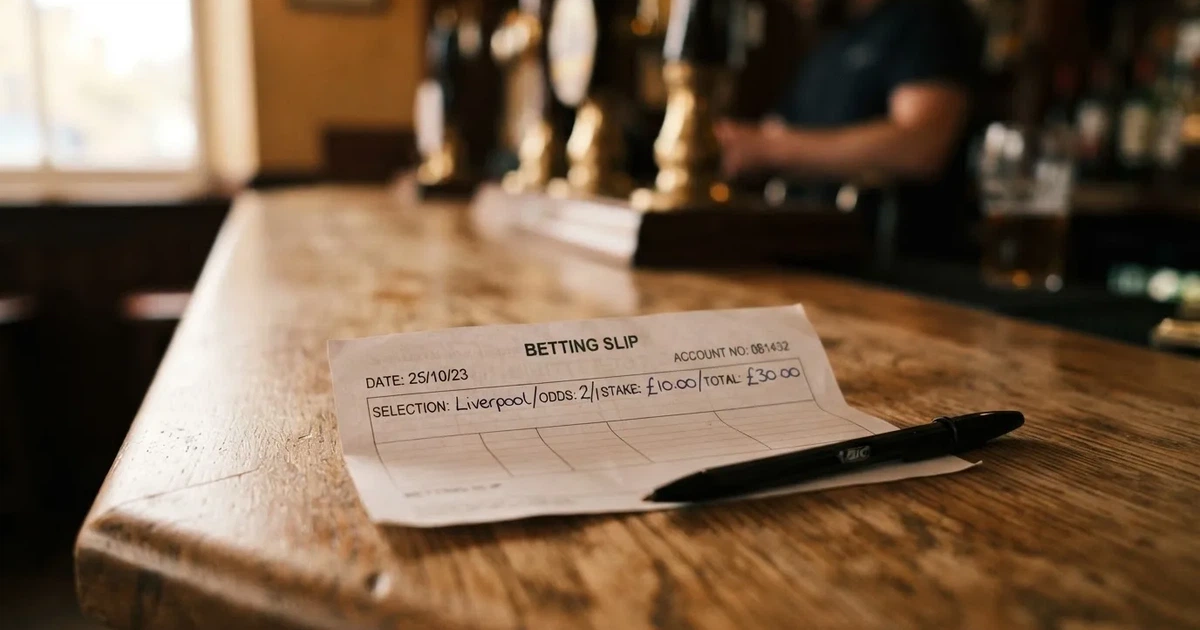
An accumulator looks cheap. A line of four short-priced football results, each one “a banker”, each one carrying decimal odds of around 1.30, multiplies into roughly 2.86 and looks like easy money. It is not. Every leg carries its own margin, those margins stack on top of each other rather than cancel, and the longer the line the harder the bookmaker’s edge compounds. A four-fold at 1.30 prices looks reasonable until the maths is run on the implied probability versus what the book has actually paid for. That is the frame this page works in. The ten UK-licensed brands below are real options; the calculation underneath them is the same calculation each one is making on every acca slip, and it is what decides whether a price on offer is genuinely worth taking.
A short bet on what an accumulator actually is, before the list. A single bet on two or more selections where every leg must win for the bet to pay, where the odds of each selection multiply into one combined price, where a void or push drops that leg out and reduces the price to whatever remains, and where the return is the stake multiplied by the combined price. That is the engine. The rest of this page is what it costs the punter who plays it.
The UK Legal Frame For Accumulators
A Great Britain licence is the only thing that puts a bookmaker inside the rules the Gambling Act 2005 lays down. Since the Gambling (Licensing and Advertising) Act 2014, an operator whose remote facilities are used in Great Britain needs a Commission licence wherever the operator itself is based. A Curaçao, Malta or Gibraltar registration is not a substitute, and Northern Ireland sits outside the 2005 Act entirely, which is why this page speaks of Great Britain licences rather than UK ones.

There is no statutory list of permitted bets or markets. An operator holds a licence for a category — remote general betting standard (real events) is the one most sportsbooks run on — and offers its markets under its own house rules, the Licence Conditions and Codes of Practice, and the Commission’s Remote Technical Standards. Accumulator betting sits squarely inside that envelope. It is not banned, restricted or carved out. The bookmaker writes its own rules on how a void leg is treated, how a Rule 4 deduction moves a price, and whether an acca with one dead leg is paid out as a single on the rest or settled as the reduced multi. Those rules are the substantive law of accumulator betting in Great Britain, and they sit in each operator’s terms, not on a statute book.
The Commission’s public register is the test of who holds a licence. It can be searched by business name, trading name, domain or account number, and the entry shows the licence type, the licensee, the trading names running under it, and the categories covered. A .co.uk domain is not proof of a licence, and neither is the absence of one: licensed operators use .com and .co.uk interchangeably. The ten brands named later in this page were checked against the register; the licence numbers and the account numbers that appear in the table are the values the register returns for them.
One distinction worth flagging. Betting exchanges (Smarkets, Betfair’s exchange) operate under a remote betting intermediary licence, which is a different category from the remote general betting standard licence that runs an ordinary sportsbook. The exchange takes a commission on net winnings rather than baking its margin into every price, and the price it shows for a selection is the price a backer and a layer agree on between them. The accumulator product is technically available on an exchange — most runners will let a punter stack back bets into a multi — but the prices are sharper than a sportsbook’s and the margin therefore lower, which is part of why an exchange acca pays less to the book but costs the punter less per leg.
What Responsible Gambling Means On An Acca Slip
Every brand on this page is a GAMSTOP member, because every GB-licensed online operator has to be. GAMSTOP is the national multi-operator online self-exclusion scheme; periods run six months, one year, five years, or five years with auto-renewal, and once the chosen minimum is over the exclusion stays in place for a further seven years unless the customer asks GAMSTOP to remove it. It is the strongest single safeguard the framework offers a punter who feels the slip getting away from them, and signing up with one operator blocks every GB-licensed site and app for the period chosen.

Two newer rules have changed the day-to-day feel of licensed sportsbooks. A financial vulnerability check (LCCP condition 3.4.4) has applied since 30 August 2024 and was extended on 28 February 2025 to customers whose deposits minus withdrawals exceed £150 in a rolling 30 days. The check is a public-record one (bankruptcy, county court judgments, the kind of record any reader could pull on Companies House); it is not an income check, not a credit reference check. Where it flags a problem the operator is expected to step in, not to ban the customer. A second tier of “financial risk assessments” was announced by the Commission in an article of 7 July 2026 as a staged plan; no start date has been published and the rule should be written as announced rather than as in force.
There is no state-set deposit or loss ceiling for betting in Great Britain. Limits are the customer’s choice, set inside the account, and operators must offer them under the Remote Technical Standards. A first phase of changes has applied since 31 October 2025; a second phase was postponed to 30 September 2026. None of this is a substitute for the punter’s own rules: an acca is structurally harder to walk away from than a single because every leg is still live, so the size of the stake the punter is comfortable losing matters more than on a single match. GamCare runs the National Gambling Helpline; GambleAware, NHS gambling clinics and Gamblers Anonymous are the other main routes. Costs they should not pay is one cost the page can put a number on later.
Free Bets, Acca Insurance And What They Actually Cost
The marketing word is “free”. The unlock word is “turnover”. A welcome offer of “Bet £10, Get £10 in Free Bets” is two bets and a balance, not £20 in the pocket, because the free-bet stake is usually not returned with a win. A free bet of £10 at combined odds of 4.00 that wins pays £30 — £40 in return minus the £10 stake that does not come back. The headline gift is a gift of the winnings, not the stake. A cash bonus is different; a “100% bonus up to £100” returns the bonus as withdrawable cash once its wagering requirement is cleared, and the £10 cap the Commission has set on wagering requirements is the rule of thumb: a £10 bonus at 10x means £100 of qualifying bets, no more.
Promotions on accumulators take a few shapes, each with its own arithmetic.
An acca insurance refunds a stake — usually as a free bet, not cash — if one leg lets the punter down. The price is that the refund is itself a free bet, which means the punter has effectively traded one stake for another if the bet loses by one. It is a softer landing than no insurance at all, and the worst it does is move the loss onto a smaller free bet that has to be turned over again.
A price boost is a single accumulator or selection the operator has marked up above the price the same legs would carry individually. The boosts are real, sometimes substantial, and they are also the operator choosing which legs to boost on, which means the price being juiced is one the operator thinks it can afford to inflate. They are worth taking when the boosted leg beats anything else on the market at the same moment.
Accumulator insurance and acca boosts can both be subject to a minimum number of legs, a minimum odds threshold per leg or for the acca as a whole, and a cap on the refund. The operator’s terms set them, and the punter’s job is to read them before tipping the slip. The same goes for the 10x wagering cap: it limits the multiplier a bonus can carry, but it does not limit the multiplier an enhanced-odds offer can carry, because the 10x applies to bonuses with a wagering condition, not to one-off price boosts.
The strongest single line to take into a free bet: read what happens to the stake on a win, read the minimum price for each leg, read the deadline, and read whether the free bet pays back as cash or as another free bet. The offered / out-of-pocket gap is where most of the surprise sits.
Mobile And App Considerations For Acca Builders
Most accumulator betting now happens on a phone. The reasons are obvious — placing a four-fold from the sofa is faster than opening a desktop, in-play accas need a screen in the hand — and the operators have built their products around that. The questions worth asking of any app before trusting it with a long line are narrow. Does it show the combined odds updating as each leg is added, or only at the end? Does it allow one leg to be edited without re-doing the whole slip? Does it let a stake be set in pence rather than pounds for the small punter? Does the Bet Builder sit inside the acca builder, so a same-game multi can be folded into a longer line, or does it force a separate bet?
A Bet Builder is a market-by-market composer — pick a result, a scorer, a number of corners, fold them into one price — and most GB sportsbooks now run one. The price it produces tends to be wider than the equivalent singles would be on the same match, because the legs are correlated in ways the operator’s pricing models understand better than the punter’s intuition. That is the cost of the convenience. A Bet Builder folded into a four-fold acca is carrying both margins on top of each other, and a quick read of the legs before confirming the slip is worth the ten seconds it takes.
In-play accumulators are a separate thing from pre-match ones, and not every operator supports them. Where the operator does, the price updates as goals, wickets, sets go in, and a punter who started the acca at 8.00 can watch the combined price shrink as legs win and grow as legs drift. Cash Out — settling the bet early for a value the operator quotes at that moment — is a feature that exists alongside acca betting and lets the punter bank a profit or cut a loss before the last leg goes in. The price on a Cash Out is the operator’s, not the market’s, and the rule of thumb is that Cash Out favours the house more than letting the bet run. It is a tool for a punter who has decided the rest of the line is too thin to ride out, not a default.
Live streaming of UK and Irish horse racing and selected football is a feature Betfair in particular runs hard; the price it pays the punter is the premium the operator charges on those markets to fund the streams. Best Odds Guaranteed (BOG) on horse racing is the bookmaker’s promise to pay the starting price if it is higher than the price taken when the bet was placed; it is not free money, because the prices taken are usually already pretty tight, but on the days the SP drifts it is a real gain.
Why “Predictions” And “Strategy” Pages Cost The Punter The Same
The search clusters around accumulator tips share a structure: a tipster, a set of fixtures, a recommended stake. The page this one is not — and what the punter should be careful about — is the tipster page that promises a winning line. No named source can tell the reader what a Premier League match will do this weekend, and the page that says it can is selling certainty it does not have. The accumulator tips that work are the ones built on a small edge the punter has identified and a stake sized to lose many times in a row, not the ones promised by an account with a green tick.
The strategy that has any traction is the one built on price, not on picks. An accumulator with three short-priced legs is paying the bookmaker’s margin three times in a row. The way to weaken that is to take a longer price on one or two legs, to use a Bet Builder sparingly, and to refuse the impulse to round the acca up to “one more leg for luck”. The price of an extra leg is the combined probability of that leg winning, multiplied into the rest of the line. The longer the line, the sharper the fall-off. A punter who limits accas to three or four legs is paying less margin than one who stretches to eight or ten, and is more often in the running at the end.
Bankroll management is the second strand. A flat unit stake — one unit per acca, where the unit is something like one or two per cent of the betting bank — is the only way to ride the variance. An accumulator pays out infrequently and in large lumps when it does; the temptation to chase a loss with a longer, higher-stake line is the one the structure sets up. Most accumulator bettors who go broke do so on a recovery stake after a bad weekend, not on the bad weekend itself.
How Accumulator Odds And Bookmaker Margins Are Built
The simplest accumulator is two selections. Each selection carries a price, which is the bookmaker’s expression of how likely it thinks the outcome is. In decimal odds a price of 2.00 means the punter’s £10 returns £20 for a £10 profit. In fractional odds a price of 1/1 (evens) means the same. The conversion is a ÷ b + 1, where the fraction is a/b: 5/1 → 6.00, 11/4 → 3.75, evens → 2.00.
A combined acca price is the product of the legs. Three legs at 1.50, 2.00 and 2.50 multiply into 7.50, so a £10 stake returns £75 on a win, of which £65 is profit. That is the headline. The margin the bookmaker carries on the underlying selections is somewhere inside the 7.50. The bookmaker’s margin is the slice of every pound bet on a market that the bookmaker keeps on average; the rest is paid out as winnings. A 1X2 football market with three prices of 2.10, 3.40 and 3.60 has an implied probability of 1 ÷ 2.10 + 1 ÷ 3.40 + 1 ÷ 3.60, which works out to about 1.0448, so the payout share is about 95.7% and the margin about 4.3%. A market with three prices of 1.80, 3.20 and 4.50 has an implied probability of about 1.0856, a payout share of about 92.1% and a margin closer to 7.9%. The wider the margin, the worse the deal on average for the punter, and the harder the punter has to work to come out ahead.
What happens on an accumulator is that the margins of the legs compound. A three-fold acca on three markets each carrying a 5% margin does not have a 5% margin; it has roughly a 14.3% margin, because the price the punter is offered is wider than the price the underlying events would combine to give. The compounding is the silent cost of the longer line. A four-fold at the same margins sits closer to 18.5%. A six-fold carries the punter past 26%. Every leg added is the punter paying the bookmaker again, in expectation, on the whole stake.
A push (a leg that ties, because of a void selection or a non-runner) is removed from the line and the acca is settled on the remaining legs. The combined price drops to whatever those remaining legs multiply to; the stake is unchanged. A Rule 4 deduction on a horse race — when a horse is withdrawn and the bookmaker takes a percentage off winning stakes — is applied to the leg and therefore to the acca’s combined price, in proportion. These are the mechanics the punter needs to read before the slip goes in.
A full-cover bet is a different family of bet. A Trixie covers three selections in four bets (three doubles and a treble); a Yankee covers four in eleven; a Lucky 15 covers four in fifteen with singles; a Canadian or Super Yankee covers five in twenty-six; a Heinz covers six in fifty-seven; a Goliath covers seven in two hundred and forty-seven. The total stake is the unit stake multiplied by the number of bets: a £2 Trixie costs £8, a £2 Heinz costs £114, a £2 Goliath costs £494. These are the structured cousins of the straight accumulator, and they pay out if two or more of the selections win, where an accumulator pays out only if all of them do.
What The Example Returns On A £10 Acca
Three illustrative selections at 1.50, 2.00 and 2.50, stake £10. The combined odds are 1.50 × 2.00 × 2.50 = 7.50. Return = £10 × 7.50 = £75. Net profit = £75 − £10 = £65. That is the payout on the three-fold if all three legs win. The same stake on a Trixie at £2 per line is £8 across four bets, and the payout varies by how many of the four combinations hit. The band the punter sees in either case is the product of the prices on the slip, less the stake — and the band is wide because the gap between one leg winning and all three is the gap between nothing and the headline number.
That example does not say the bet will win. The £65 profit is the payout conditional on every leg landing, and what the bookmaker keeps on the same line is the margin compounded across the three legs — somewhere around the 14% mark on a typical football acca at these prices. The £65 is what a winning bet pays back; it is not the expected return on the £10 stake over many such bets.
How The Ten UK-Licensed Acca Brands Compare
The ten brands below all hold a Gambling Commission remote licence that the Commission’s public register can be searched for by the licence or account number given. The licence lines below are taken from the register entries on the date of check. The offer lines describe what each operator’s own terms page says the welcome package is. None of the figures in this table should be read as the punter’s payout on a settled acca; they are the shape of the offer, not its value.
| Brand | Licence and licence holder | What the operator’s terms say about accumulators |
|---|---|---|
| BetUK | Remote general betting standard (real events), Gambling Commission account 39198, LeoVegas Gaming PLC | Free bets exclude virtual sports, esports and non-UK/IE horse racing; minimum odds apply to qualifying bets |
| Midnite | Remote general betting standard (real events), Gambling Commission account 101839, Midnite Limited | In-play events, an acca builder, popular accas and price boosts with maximum-stake limits; welcome package ties free bets to a single qualifying bet |
| Bet Ahoy | Remote general betting standard (real events), Gambling Commission account 100094, Bet Ahoy Ltd | Welcome package splits a £10 free-bet credit into a £5 sports bet and a £5 acca |
| Smarkets | Remote betting intermediary (exchange), Gambling Commission account 39173, Smarkets (Malta) Limited | Standard commission of 2% on eligible exchange bets, with promotional 0% commission periods for new customers |
| BetGoodwin | Remote general betting standard (real events), Gambling Commission account 2927, Goodwin Racing Limited | Welcome package is three £5 credits — a sports bet, an acca and a Sub-Cover bet — for a £10 qualifying stake |
| Kalooki Sportsbook | Remote general betting standard (real events), Gambling Commission account 57730, Kalooki Sportsbook Limited | Operated by Kalooki Sports Book Ltd (company number 12938274); GAMSTOP member |
| 888sport | Remote general betting standard (real events), Gambling Commission account 39028, 888 UK Limited | Cash Out, Bet Builder, racing streams, BetFinder form tools, a live bet feed and daily boosted odds |
| Swifty Sports | Remote general betting standard (real events), Gambling Commission account 58957, Swifty Global (UK) Ltd | Best Odds Guaranteed, Cash Out on horse racing and football, daily price boosts, live streaming, in-play; Bet Builder listed as coming soon |
| Spreadex | Remote general betting standard (real events), Gambling Commission account 8835, Spreadex Limited | New-customer free bets usable across fixed odds and spread betting; spread betting regulated by the FCA, fixed odds by the Commission |
| Betfair | Remote general betting standard (real events), Gambling Commission account 39439, PPB Counterparty Services Limited | In-play betting, Bet Builder, free live streaming of UK and Irish horse racing and football, and a 90 Minute Payout market |
The brands on the list cover the same licence category, with two exceptions. Smarkets is a betting intermediary — the Commission’s label for a betting exchange — and its commission model is different from a sportsbook’s margin model. Spreadex holds a sportsbook licence for its fixed-odds arm and a separate FCA authorisation for its financial spread-betting arm; the two sit under one trading name and the punter who uses both is dealing with two regulators at once. The other eight are sportsbooks in the conventional sense: the operator takes the other side of the bet, builds a margin into every price, and pays out from its own book on a winning slip.
A licence does not make one brand better than another at accumulators. It makes the brand subject to the Commission’s rules, and it makes the punter eligible for GAMSTOP and for the Commission’s complaints route if a dispute cannot be resolved with the operator. The substantive differences sit in the offer lines and in the in-app experience. Where the welcome package is split — a £5 sports bet and a £5 acca, a £5 sports bet, a £5 acca and a £5 Sub-Cover bet — the punter is being asked to place several bets to unlock the full headline. The headline “£10 in free bets” is real, and the splits are real; the gap between the two is the work the punter does to collect both.
The Operators, One By One
BetUK — LeoVegas Gaming PLC’s UK Sportsbook
BetUK runs on the LeoVegas Gaming PLC licence (account 39198) and is a sportsbook in the conventional sense, with a remote general betting standard (real events) licence that the Commission’s register shows. Its welcome offer bundles free bets into the standard format, and the operator’s terms set the exclusions: virtual sports, esports and non-UK or non-Irish horse racing do not count, and minimum odds apply to the qualifying bet. The exclusions are not unusual — they are common across GB sportsbooks — but they cut off the punter who planned to free-bet on a virtual event or on Argentine racing.
A punter looking for a sportsbook with a familiar shape and a LeoVegas licence will find one. A punter looking for acca insurance or specific acca features advertised on the home page will need to read the promotions tab, because the home page is not where BetUK leans on the acca angle. The brand suits a small-to-medium punter who wants a straightforward sportsbook without the acca-heavy marketing some of the brands below carry, and it sits in the middle of the table on offer generosity rather than at the top.
Midnite — Midnite Limited’s Sportsbook And Acca Builder
Midnite is a younger brand than most on this list and runs its own licence (account 101839). The site’s home page leans hard on accas — popular accas, an acca builder, price boosts with stated maximum-stake limits — which puts it close to the centre of the question this page is built around. The acca builder lets the punter add legs and watch the combined price update, which is the basic check any decent acca product should pass.
The welcome package is on the small side: a £5+ qualifying bet at EVS or greater within 14 days of sign-up unlocks £25 in free bets and 50 free spins, with the free bets valid for seven days. The price for the punter is the 14-day window and the EVS-or-greater qualifier, which rules out the long line of short-priced favourites and forces the qualifying bet to carry at least one leg with a bit of juice. The £25 in free bets is a reasonable size against a £5 qualifying stake, and the seven-day expiry is tight enough that the punter who sits on the credit loses it.
The verdict on Midnite is that it is the closest match on this list to the question a searcher of “best accumulator betting site” is actually asking, and the offer is mid-pack rather than top of the table. The punter who wants the acca builder and the price boosts gets both; the punter who wants the largest free-bet credit on a small qualifying bet should look elsewhere.
Bet Ahoy — A £10 Free-Bet Credit Split Two Ways
Bet Ahoy runs under Bet Ahoy Ltd’s licence (account 100094). The welcome offer is “Bet £10 & Get £10 in Free Bets”, split into a £5 sports bet and a £5 acca. The split matters: a punter who reads the headline as “a £10 free bet” will be surprised when the credit lands in two parts with two sets of terms. A £5 acca credit at minimum odds has to be turned into an acca at minimum odds to clear, and the £5 sports credit has to be turned into a sports bet on the right markets to clear.
The brand does not advertise a Bet Builder on the home page. There is no signal in the App Store listing of acca insurance, cash out on accas, or price boosts specific to accumulators. The acca credit is the brand’s contribution to the question, and the rest of the product is a competent GB sportsbook rather than an acca specialist.
The verdict: a punter who values a clear, small welcome package and a straightforward sportsbook will be served. A punter looking for acca-specific features will find the £5 acca credit and not much else. The brand sits in the lower half of the table on offer generosity.
Smarkets — The Exchange On The List
Smarkets is a betting exchange, which puts it in a different category from the sportsbooks on this list. It runs under a remote betting intermediary licence (account 39173) — the Commission’s term for an exchange — and its commission is 2% on eligible exchange bets. New customers have been offered 0% commission for 60 days, conditional on a first deposit of at least £10. An exchange’s price for a selection is the price a backer and a layer agree on, with no bookmaker margin baked in; the punter’s cost is the commission on net winnings, which is taken out after the bet settles.
The accumulator product on an exchange is functionally a multi built from back bets. The price is sharper than a sportsbook’s on the same selection, which means the punter’s compounded margin across the legs is lower than it would be at a sportsbook. The catch is liquidity: an exchange works because there is somebody on the other side, and an obscure accumulator leg may have no layer at the price the punter wants. The punter who wants to back a four-fold at a sportsbook price on an exchange will find the four-fold price at the sportsbook first.
The verdict: a punter who wants the sharpest possible price and is willing to manage an exchange account will get one. A punter looking for a sportsbook with acca insurance, Bet Builder and free-bet bundles will find the wrong product.
BetGoodwin — The Three-Part Free Bet
BetGoodwin runs under Goodwin Racing Limited’s licence (account 2927). The welcome package is the most distinctive split on this list: a £10 qualifying stake unlocks £15 in free bets, in three parts — a £5 sports bet, a £5 acca and a £5 Sub-Cover bet. The Sub-Cover is a structured bet rather than a straight multi, and the punter who wants to use all three credits has to place three different types of bet on three different sets of markets.
The brand sits in the racing-leaning end of the GB sportsbook market, which is consistent with Goodwin Racing’s name and licence history. The acca credit is the £5 piece of the welcome package, and the rest of the acca product — Bet Builder, acca insurance, price boosts — is not advertised on the home page. A racing-led punter who wants the Sub-Cover credit will find it useful; a football-only punter who wants a deep acca product will not.
Kalooki Sportsbook — A Smaller-Profile Brand
Kalooki Sportsbook is operated by Kalooki Sports Book Ltd (company number 12938274), runs under Kalooki Sportsbook Limited’s licence (account 57730), and is a GAMSTOP member. The brand is smaller-profile than the household names on this list and the home page does not lean on a flashy acca pitch.
A punter who wants a GB-licensed sportsbook without the marketing weight of the bigger brands will find one. The acca product is a competent one rather than a standout one, and the offer lines on the App Store listing are thin. The brand suits a punter who values the licence and the smaller-book feel over the headline generosity of the bigger welcome packages.
888sport — Cash Out, Bet Builder And Boosted Odds
888sport runs under 888 UK Limited’s licence (account 39028). The product suite is the deepest on the list: pre-match and in-play betting, Cash Out, Bet Builder, racing streams, BetFinder form tools, a live bet feed and daily boosted odds. A punter who wants the full sportsbook — not just the acca credit — gets the most here.
The boosted odds are the line that intersects most directly with this page’s question. A boosted acca or a boosted single is the operator choosing which prices to inflate, and the punter’s job is to take the boost when the boosted price beats the next-best price on the market at that moment, not to take every boost on offer. Cash Out on a settled acca is a useful tool for the punter who wants to bank a profit before the last leg goes in, at the cost of the operator’s price on the Cash Out.
The verdict: a punter who wants the full sportsbook suite with a strong acca product will find it. The welcome offer is not the largest on this list, but the product depth is the deepest.
Swifty Sports — Best Odds Guaranteed And Streaming
Swifty Sports runs under Swifty Global (UK) Ltd’s licence (account 58957). The product suite is racing-and-football heavy: Best Odds Guaranteed on horse racing, Cash Out on horse racing and football markets, daily price boosts, live streaming and in-play betting. The Bet Builder is listed as coming soon rather than live, which is the one gap in an otherwise strong offering.
The verdict: a racing-led punter who values BOG and streaming will find the strongest product on the list outside Betfair. A punter looking for a Bet Builder folded into a long acca should look at 888sport or Betfair instead, because the feature is not yet live on Swifty.
Spreadex — Fixed Odds Plus Spread Betting, Two Regulators
Spreadex is the only brand on this list that runs under two regulators at once. The fixed-odds sportsbook runs under the Commission’s licence (account 8835, Spreadex Limited). The financial spread-betting arm runs under the Financial Conduct Authority, not the Commission. The welcome offer is £60 in free bets for a £10 fixed-odds qualifying bet, with the free bets usable across fixed odds and spread betting, and the qualifying bet has to be placed within 28 days of opening the account.
The 28-day window is the longest qualifying window on this list, which gives the punter breathing room. The £60 headline is the largest in cash terms among the brands here, though the free bets have to be turned over across both fixed odds and spread betting, and spread betting losses can exceed the deposit — the operator’s own homepage says so.
The verdict: a punter who wants the largest welcome credit on the list and is comfortable using a spread-betting account will find it. A punter who only wants fixed-odds free bets and is not interested in spread betting will leave part of the credit on the table.
Betfair — Exchange And Sportsbook Under One Name
Betfair Sportsbook runs under PPB Counterparty Services Limited’s licence (account 39439), the same licensee as Paddy Power. The sportsbook product is a deep one: in-play betting, Bet Builder, free live streaming of UK and Irish horse racing and football, and a 90 Minute Payout market — a market that pays out if the backed team goes two goals up at any point in the match, regardless of the final result.
The 90 Minute Payout market is the most distinctive single feature on this list, because it shortens the punter’s risk on a favourites acca in a structural way: a leg that goes two up is settled as a win before the end, which protects the acca against a late collapse. The punter who folds 90 Minute Payout legs into a longer line is paying for the insurance in the odds — the price on the 90 Minute Payout market is tighter than the outright price, because the operator is paying out more often.
The verdict: a punter who wants the deepest sportsbook product, the live streaming, and the 90 Minute Payout market gets the strongest combined offering on this list. The welcome offer is not the largest in headline terms; the product depth and the unique market are the draw.
What Offshore Means, And Why It Matters Here
The phrase “UK-licensed” is the test that decides whether a brand is in this list. The 2014 Act closed the offshore loophole: a Curaçao or Malta licence is not a substitute for a Commission licence where the operator takes customers in Great Britain. The brands on this list are all on the Commission’s public register, and the ten licence numbers in the table can be searched there. A brand that does not appear on the register is not licensed for Great Britain.
A punter who uses an unlicensed brand loses several things in one move. No GAMSTOP coverage, because GAMSTOP is for licensed operators and the unlicensed site does not take part. No Commission complaints route, because the Commission has no jurisdiction over a brand it has not licensed. No approved dispute-resolution body that the Commission recognises. No British consumer redress if funds are withheld, which is the most concrete loss. No 10x bonus cap (if the offshore brand offers a bonus at all, it can carry whatever wagering condition it likes), no £150 vulnerability check, no Commission-led safer-gambling duties. The phrase “legal to use” is the wrong way to frame it; the right way is “no protection if anything goes wrong”.
Enforcement is disruption, not blocking. The Commission issues cease-and-desist notices, refers sites to search engines, and works with registrars, hosts and payment providers to take them down. Court-order DNS blocking powers have been granted or are imminent; ISP-level blocking is not in operation. None of this is the punter’s protection, because the punter who has already deposited and lost cannot un-deposit. The protection is the licence check before the first deposit.
The Core Of The Question, Restated
An accumulator is a single bet linking two or more selections, where the odds multiply into one combined price, where every leg must win for the bet to pay, where a push drops the dead leg out and reduces the price to the rest, and where the return is the stake multiplied by the combined price. That is the engine. The cost the punter pays for the engine is the compounded margin of the underlying selections — roughly 14% on a three-fold at typical football margins, 18% on a four-fold, past 26% on a six-fold — and the gap between “free bet” and “free bet that turned out to cost something” sits in the turnover, the minimum price, the deadline, and whether the stake is returned on a win.
The ten brands on this list are ten ways of paying that cost. Smarkets is the sharpest price, with the liquidity constraint. 888sport is the deepest product, with the daily boosts. Betfair is the strongest combination of sportsbook and live streaming, with the 90 Minute Payout market as the standout feature. BetUK and Kalooki Sportsbook are the quieter sportsbooks, with familiar shapes. Midnite is the closest match to the acca-builder question. Bet Ahoy, BetGoodwin and Swifty Sports split the welcome credit into structured pieces that ask more of the punter. Spreadex carries the largest cash headline and the longest qualifying window, with a spread-betting account the punter has to be comfortable using. None of them is “the only” licensed brand, because the register lists many more than these ten; the punter’s choice is which combination of licence, product and offer lines up with the way he or she actually bets.
Frequently asked questions
What is an accumulator bet?
An accumulator (also called a parlay, acca, multi or combo bet) is a single bet that links two or more selections and pays out only if every leg wins. The price of the bet is the product of the individual prices, so a £10 stake at combined odds of 7.50 returns £75 if all legs land. A losing leg loses the whole bet, a tie removes that leg and reduces the price to what remains.
How do football accumulator bets work?
A football accumulator is the same structure as any other sport’s acca, applied to a set of football match outcomes — 1X2, both teams to score, over/under, BTTS, a Bet Builder leg, or any combination of markets the bookmaker offers. Each leg must win for the bet to pay, the prices multiply into one combined price, and a void selection (a postponed match, for example) drops out and reduces the acca to the remaining legs.
What is accumulator bet?
It is the same question, asked a different way: an accumulator bet is a single bet on two or more selections where every leg must win for the bet to settle as a winner, where the odds multiply into one combined price, and where the stake multiplied by that combined price is the return on a win. The stake is returned on top of the profit on a winning single bet; on a winning acca the stake is returned on top of the profit as well, because the combined price is the price of the product, not the price of a leg.
How can it be checked that a bookmaker holds a Gambling Commission licence?
The Commission’s public register is the test. It can be searched by business name, trading name, domain or account number, and the entry shows the licence type, the licensee, the trading names running under it, and the categories covered. The licence and account numbers in the table earlier on this page are the values the register returned for those brands.
How is the return on a bet worked out from the stake and the odds?
The return is stake × odds. The net profit is stake × (odds − 1), because the stake is returned on top. Decimal odds of 2.00 on a £10 stake return £20 (£10 profit); fractional odds of 1/1 (evens) are the same number, expressed differently. For an accumulator the combined odds are the product of the legs, and the return is stake × that product.
What is the bookmaker’s margin and how can it be seen in the odds?
The bookmaker’s margin is the slice of every pound bet on a market that the book keeps on average. It is the difference between 100% and the payout share, where the payout share is 1 ÷ (1 ÷ price₁ + 1 ÷ price₂ + …) over every outcome the market has. A 1X2 market with three prices of 2.10, 3.40 and 3.60 has a payout share of about 95.7% and a margin of about 4.3%. On an accumulator the margins of the legs compound, so a three-fold at typical football margins carries a compounded margin closer to 14%, and a six-fold carries the punter past 26%. The longer the line, the more the punter is paying the bookmaker on average.
Bet types & in-play – Boxing betting
Content created by the «Boxing betting» team
