
Online Cycling Betting 2026
 Available in US
*Data current as of 27 October 2026*, checked against the Gambling Commission’s public register and each operator’s own published terms.
Cycling sits in the second rank of road-racing betting. Football and horse racing swallow most of the stake money in Britain; cycling draws a smaller, more patient audience that comes back every July and accepts a thinner market in February. The thinner market is the whole story for a punter in 2026. It dictates what is offered, what the odds look like, and what it costs to clear any welcome deal attached to a bet on the Tour de France.
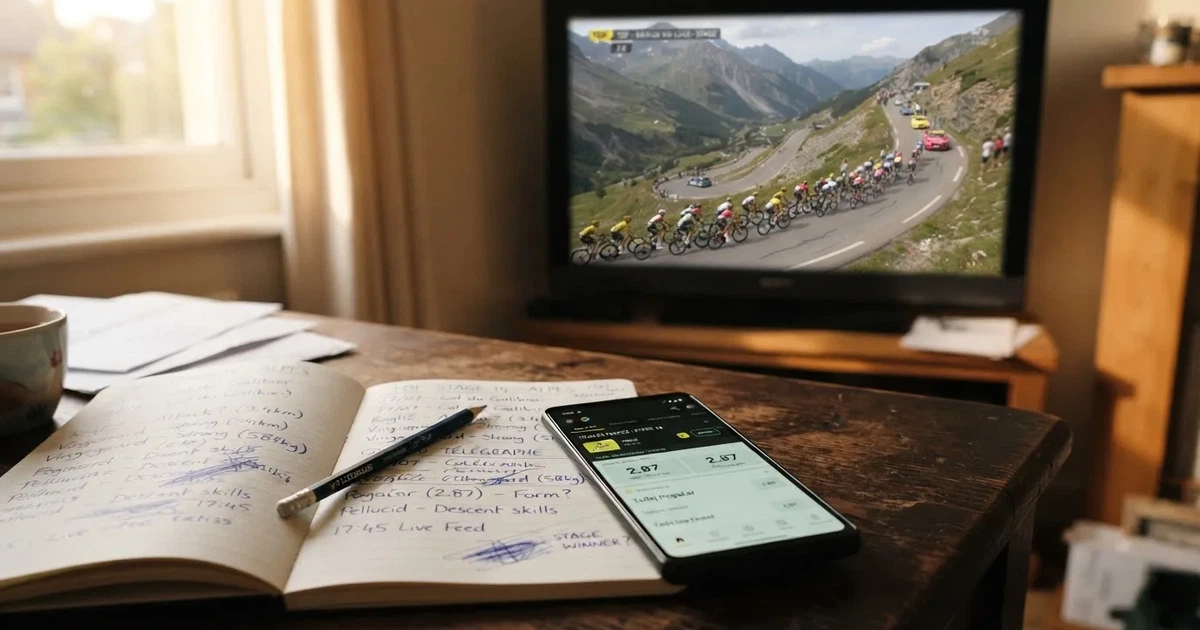
This guide is consequence-focused: it works through what follows from the structure of the cycling calendar, from the way GB-licensed bookmakers price it, and from the rules each operator attaches to a betting account. The aim is to leave a reader able to pick which markets matter, which prices are fair, and which welcome terms are worth the turnover they ask for.
How Cycling Betting Fits the Wider Market
The UCI, based in Aigle in Switzerland, has governed road cycling since 1900 and runs the men’s and women’s Road World Championships every year. That is the institutional bedrock — a single international body that decides what counts as a WorldTour race, how rankings work, and what equipment is permitted. A punter does not need to know any rule, but does need to know that the calendar under the UCI is structured in tiers, and the tiers decide how many markets a bookmaker will list.
The UCI WorldTour was created in 2005 as the ProTour and renamed the WorldTour in 2011. It is the top tier of men’s road cycling and contains the three Grand Tours, the one-day Monuments, and a small set of stage races between them. Below sit the UCI ProSeries and the continental circuits. A Grand Tour gets a full market — stage winner, general classification (GC), points classification, king of the mountains, head-to-head match bets, and outright before the race starts. A one-day Monument gets outright and match markets, typically not stage or classification markets because the race lasts a single day. A ProSeries race may get just one or two outright markets, or none at all.
The consequence is uneven coverage across the season. The three weeks of the Tour de France are the centre of gravity; the rest of the year is built around shorter windows — the spring Classics from March to April, the Giro in May, the Vuelta in August and September, and the Worlds in the autumn. Most British bookmakers list the Tours in full and run a much smaller menu for the rest of the calendar. Women’s cycling is widening on that front each season — the Tour de France Femmes runs since 2022 and now gets outright and stage markets with the major operators — but the volume is not yet at parity with the men’s race.
What that means in practice: a bettor who only follows the Tour de France will find a deep market at every licensed bookmaker. A bettor who wants to back the Giro’s mountains classification or the Tour of California outright has fewer options, and the odds may be 5% to 8% wider than at the equivalent football market because the bookmaker has had less liability to balance. The product is the same; the take is heavier. That is the central trade a cycling punter makes.
The Calendar and Why It Matters to a Bet
The cycling year has three peaks: the Giro d’Italia in May, the Tour de France in July, and the Vuelta a España in August. Grand Tours last 15 to 23 days under UCI rules and usually include two rest days. The leaders wear a pink jersey in the Giro, yellow in the Tour and red in the Vuelta. Each Grand Tour gives a bookmaker a long window of pre-race outright and in-running stage action — markets on every stage finish, often markets on intermediate sprints and mountain primes, and outrights that settle at the end of the final stage in Paris, Rome or Madrid.

Three things follow. First, ante-post markets for next year’s Tours open during the current Tour. The price on offer is partly a guess about the field three weeks hence, and the prices drift as team selections and injuries come through the off-season. Second, stage markets are issued one at a time, usually the evening before, and the favourites on a flat stage are different animals from those on a mountain stage. Third, the GC outright usually settles the day before the final stage because the leader’s time is unassailable — a known feature of stage-race betting that does not apply to single-day events.
Outside the Grand Tours the calendar thins but does not vanish. The spring Classics from Milan–San Remo through Liège–Bastogne–Liège cover the cobbled and Ardennes classics over six weeks. The Monuments — Milan–San Remo, Tour of Flanders, Paris–Roubaix, Liège–Bastogne–Liège, Il Lombardia — sit on a single day each, and a bookmaker lists them as outright with a small number of head-to-head match bets. Critérium du Dauphiné in June and Tour de Suisse earlier in the month are the warm-up Tours before July, and their outrights are used by punters as a form check before the Tour.
The 2026 Tour de France ran from 4 to 26 July, starting in Barcelona with a team time trial and finishing on the Champs-Élysées in Paris, over 21 stages and 3,245 km with 23 teams. Tadej Pogačar of UAE Team Emirates won it, his fifth Tour victory. A bookmaker that priced Pogačar at anything like a top price had a long summer of liability to manage, which informs how the 2027 outrights will be set when they open later this year.
A Note on Women’s Racing
The women’s peloton has its own calendar since the UCI mandated a Women’s WorldTour. The Tour de France Femmes runs since 2022 and gets full outright and stage coverage at major operators; older events like the Giro d’Italia Women have grown into Grand Tour status by stage length. Markets are thinner and the favourites can swing wider because form is harder to read. A market on the men’s Tour de France is read against decades of data; a market on the Women’s Tour is read against two or three editions.
What a Cycling Market Looks Like
Three market types cover most of the betting on a Grand Tour.
Outright winner, also called a “to win” market, prices one rider for the whole race. It is priced weeks in advance and settles on the final stage. The price carries the bookmaker’s view of the field plus margin, and it moves sharply as team rosters and pre-race form firm up. A stage-one flat-road favourite at a 6/1 (7.00 decimal) outright has had a third shaved off the price by rest-day five if he has held yellow without losing time.
Stage winner markets price one rider to win one stage. The favourites on a flat stage are the sprinters — pure sprinters, with lead-out trains — and the field is usually 150 to 200 riders, so the favourites start short. A field of 180 priced across two outcomes at 10/1 or longer makes for thin books. Prices settle per stage and can move sharply in-running during the stage.
Head-to-head match bets pair two named riders, with three possible outcomes (A to finish ahead, B to finish ahead, tie — usually settled as a dead heat or as a half-stake refund). The margin on a head-to-head is typically lower than on an outright because there are only three outcomes and the field is selected by the operator. The bettor’s edge here is that match bets are correlated with a stake on the outright — taking a head-to-head in addition to a stage bet reduces variance on a long shot without doubling risk on the favourite.
GC, points and mountains classifications operate like outrights, one market per classification per rider. In-running stage markets sometimes allow bets on which rider takes the stage jersey that day, which is a separate offering.
Grand Tour in-running betting is offered by every major licensed operator and is often where the volume sits. Live prices are updated stage-by-stage after each significant move in the peloton, and the user may bet between the moment a break goes clear and the moment the sprinters’ teams pull it back. The volume of liquidity in-running is lower than for football, so prices on a single stage move by 10 to 20 percentage points in a few seconds when the GC picture changes.
How the Bookmaker’s Margin Sits Inside the Price
Every price carries a margin, sometimes called the overround. The margin is what the bookmaker keeps of every £1 staked, on average, across all outcomes. It is built into the prices and is the one number the marketing never names.
Take a two-way market priced at decimal odds 1.90 / 1.90 (9/10 in fractional). The decimal odds of 1.90 mean a winning £10 stake returns £19. Add both sides together as probabilities: the implied chance of each outcome is 1 ÷ 1.90 = 0.5263, so the two probabilities sum to 1.0526. The 1.0526 is the bookmaker’s payout share inflated — the same market with no margin would sum to exactly 1.0000, which would mean a £1 stake returned a £1 payout on the winning outcome over the long run. Anything above 1.0000 is the margin. Here 1.0526 – 1.0000 = 0.0526, or 5.26% overround — the bookmaker’s margin on this market is roughly 5% on the bettor’s side. Translated: the operator keeps about 5p of every £1 staked on this two-way market across many bets, regardless of which side wins.
That is the lower band for cycling match markets and outrights priced early. In-running stage betting and exotic markets sit closer to 7–10% margin because the bookmaker has less time to balance the book. The closer the race, the lower the margin tends to be as more money flows in and prices sharpen.
Cycling sits between the high-volume football markets (where margins run 3–5%) and the long-tail novelty markets (where 12–18% margins are normal). A punter who only bets on the headline outrights at the majors will see margins in the 5–7% band most of the time. A punter who bets on ProSeries race outrights or unusual classifications will see 8–12%. The price is the price the bookmaker set; the margin is the part the bettor is paying for the privilege of taking it.
Reading the Welcome Bonus Without the Marketing Words
Every welcome offer marketed “100% bonus” or “bet £10, get £30” carries a wagering requirement. A wagering requirement is the number of times the bonus, or the bonus plus the deposit, must be turned over in qualifying bets before any winnings can be withdrawn. Since 19 January 2026 the GB regime caps wagering requirements on bonuses at 10x: a £10 bonus at 50x would have required £500 of qualifying bets; under the cap the maximum is £100 of turnover for that bonus. Mixed-product promotions — an offer that locks a bet on football to unlock free spins, for example — are no longer permitted at a GB-licensed operator.
What a welcome deal actually costs is the wagering requirement times the margin on the market the bonus is cleared in. Staking £100 to clear a £10 bonus on a 7% margin market costs £7 of expected value in the long run. The bonus pays out maybe £30 in free bets, of which a portion is cashable after wagering. The arithmetic rarely favours the bettor; it usually produces a small expected loss that the offer’s headline is not designed to mention.
A welcome deal carries other costs the marketing is silent about. A free bet, whose stake is not returned with a win, is worth less than its face value on average — a £10 free bet at decimal odds of 4.00 on a 7% margin market is worth roughly £10 × (4.00 – 1) ÷ 4.00 × (1 – 0.07) = £6.05 in expected cash value. Reading a welcome offer in cash terms before signing up is the difference between knowing what it pays and knowing what it costs.
A minimum price for qualifying bets is also standard. EVS (2.0 decimal) or longer is the floor at most operators — anything shorter does not count towards wagering, sometimes labelled “no minimum odds, no min qualifier” in the small print. A punter with a clearing plan in mind must check that floor before staking.
Deadlines vary. Seven days from receipt is common for the free-bet stake to be used; fourteen days from sign-up is the longer outer limit at some operators. Free-bet stakes that expire unused are forfeit; any winnings from a partially-cleared turnover may also lapse. Time pressure is the standard lever a marketing-led welcome deal uses to push a bettor into over-staking quickly.
What GB Licensing Means for a Cycling Punter
The Gambling Commission licenses the entire commercial market under the Gambling Act 2005. A bookmaker whose remote facilities are used in Great Britain needs a Commission licence wherever it is based — the Gambling (Licensing and Advertising) Act 2014 closed the loophole by which operators in Gibraltar, Malta or Curaçao could serve British customers on their home licence alone. Sections 33 and 36 of the 2005 Act set the requirement at the point of consumption, not the point of incorporation. A Curaçao-licensed, Malta-licensed or Gibraltar-licensed operator serving GB customers without the Commission’s remote operating licence is operating illegally in Britain, and the bet is unprotected.
The framework covers Great Britain: England, Scotland and Wales. Northern Ireland runs on separate, older legislation, so a GB licence does not extend across the Irish Sea. There is no statutory list of permitted sports or markets — a bookmaker licensed under the right category can offer markets on any real event under its own rules and the Licence Conditions and Codes of Practice. The Commission’s public register, searchable by business name, trading name, domain or account number, is the only test of whether a brand holds the licence it claims. Any operator a punter uses that does not appear on the register has no licence at all, and the protections that follow — minimum-age enforcement, identity verification, GAMSTOP, the bonus cap, the vulnerability check, the Commission’s complaints route — are not in force.
Identity and age are verified before the first deposit. Name, address and date of birth are checked against public records and through a credit-reference check, with a free bet or bonus triggering the same rule as a real-money stake. Anonymous play is not available at any GB-licensed operator. The minimum age is 18; the verification often happens within minutes for straightforward cases and within hours for the rest. A punter considering a new account should expect a prompt for photo ID and a proof of address as standard; that is the system working, not a barrier raised by the operator.
The financial vulnerability check applies to remote betting once a customer’s deposits minus withdrawals exceed £150 in a rolling 30 days. The check is a public-record check — bankruptcy, county court judgments, similar — not an income check and not an affordability audit. A punter passing that threshold may see a request for further information; supplying it is voluntary, but failing to supply may restrict the account. The financial risk assessments sometimes called “affordability checks” in the press are a separate, staged programme the Commission announced in July 2026 with no start date yet. Deposit limits, by contrast, are a fixed feature: operators must offer a gross deposit limit on a fixed time frame, with phased changes from late 2025 into 2026.
The bonus cap of 10x wagering and the ban on mixed-product promotions sit on top of the framework. So does the ban on credit cards for gambling in Britain: a credit card cannot fund a betting account, directly or through an e-wallet, since 14 April 2020. A debit card, a bank transfer or a licensed e-wallet is the standard route at every GB-licensed operator.
Player Protection: GAMSTOP, Self-Exclusion and Where to Get Help
GAMSTOP is the national multi-operator online self-exclusion scheme and a mandatory licence condition for every GB-licensed online operator since 31 March 2020. A punter can register to exclude themselves for six months, one year, five years, or five years with auto-renewal. After the minimum period the exclusion stays in place for a further seven years unless the customer asks GAMSTOP to remove it. The scheme covers online sites and apps; physical betting shops use a separate, in-shop self-exclusion process.
For a cycling punter specifically, GAMSTOP is the lever for a season off the account. The Grand Tours run from May to September; the Classics from March to April; the calendar otherwise has gaps of weeks between major fixtures. A punter who wants to step away from cycling betting can self-exclude for the full season in one registration.
Help is available outside the operator. GamCare runs the National Gambling Helpline. GambleAware funds treatment and education. The NHS operates gambling clinics across Britain for problem gambling. Gamblers Anonymous runs peer-support meetings. The Commission accepts complaints about licensed operators; an alternative dispute resolution service is available through the approved ADR provider; an unresolved complaint can be taken to the small-claims track for amounts under the limit.
No single source is “the right one to call” — that depends on what the punter wants to do. A punter who wants to limit deposits uses the operator’s own deposit limit tool. A punter who wants to step away from the platform entirely uses GAMSTOP. A punter who wants confidential advice uses GamCare. A punter who wants to complain about a settled bet uses the ADR service. Each does a different job, and none is a substitute for the others.
The Top 10 Cycling-Friendly Bookmakers Reviewed
| Brand | Licence (Acc) | Licence Holder | Cycling Market Focus |
|---|---|---|---|
| bet365 | 039365 | Not stated | Bet Builder+ on cycling |
| Betfair | 035439 | Not stated | Exchange liquidity |
| William Hill | 009128 | Not stated | Grand Tour outrights |
| Ladbrokes | 016757 | LC International | BOG on selected markets |
| Coral | Same as Ladbrokes | LC International | Grand Tour outrights |
| Paddy Power | 038398 | Not stated | Money-back specials |
| Sky Bet | 038728 | Not stated | Each-way terms |
| BetVictor | 039506 | Not stated | Pricing on long-shots |
| Betway | 039722 | Not stated | Major stage coverage |
| 10bet | 044412 | Not stated | Competitive pricing |
The following ten operators hold a remote betting licence for Great Britain on the Commission’s public register. Each is reviewed against what a cycling punter in 2026 needs: how the licence is structured, what the welcome offer states in its own terms, what the in-running and outright product looks like on cycling, and what the operator’s house rules add to the cost of the bet.
1. bet365 — Cycling Coverage at Scale and the Bet Builder Option
bet365 is licensed under Commission account number 039365, one of the longest-running remote licences in Britain. It is the official global betting partner of the UEFA Champions League and its app is the most-downloaded sports betting app in the UK. The scale shows in the cycling product: outright, stage, head-to-head and classification markets across the men’s Grand Tours; outright and stage markets for the women’s Tour de France and the Giro d’Italia Women; outright on the spring Classics and the Dauphiné. In-running covers every active Grand Tour stage with prices updated each time the peloton splits.
The feature set lands hard here. Bet Builder+ combines markets from one event into a single bet, available pre-match and in-running, so a punter can stack a stage-winner pick with a King of the Mountains pick into one ticket. Super Boosts, Winnings Boosts on Bet Builders and selected singles, and daily Bet Boosts give routine price-elevations on cycling outrights around the majors. In-running live streaming of cycling events is offered alongside the prices; a Live Tracker covers the WorldTour races visually so the bet is not being placed blind.
The welcome offer is the standard shape: a Bet Credits deal on first deposit, in the form of a matched amount released as bet credits whose stake is not returned with a win. The terms give seven days to use the credits and require selection at EVS (2.0 decimal) or longer. The wagering requirement does not apply to bet credits — they are stake-not-returned free bets, with any winnings paid as cash — which is the cleanest post-cap structure in the market.
For cycling specifically, the verdict is straightforward: bet365 sets the bar for outright, in-running and stage-by-stage coverage of every major road race on the men’s calendar, with a Bet Builder that works on cycling and a tracker that lets a bettor act on a price without staring at TV. The cost is the everyday margin on cycling, which sits near the lower band for the majors.
2. Betfair — Exchange Liquidity on the Tour de France
Betfair is licensed under Commission account number 035439 and runs a betting exchange under the betting intermediary category. The exchange is the main event: punters back and lay against each other, with Betfair taking a commission on net winnings rather than building margin into prices. Commission is set by a tiered structure — 5% on most markets as standard, lower for high-turnover customers — which is published on the site. The result is often the sharpest price on the Tour de France outrights available in Britain.
The exchange offers markets on the Grand Tour outrights, the major Classics and selected WorldTour stage races. The in-running exchange is liquid during stage finishes and the closing kilometres of flat stages, where a price move on the leader’s jersey can be laid against in seconds. The fixed-odds sportsbook under the same licence offers a separate cycling product with a smaller but distinct menu.
The same-welcome-as-the-exchange structure applies: place a qualifying fixed-odds bet to release a Bet Builder free bet; the qualifying bet must be at the minimum price floor and settle before the free bet is credited. The wagering cap at 10x applies to the sportsbook side; exchange winnings are subject only to the commission tier.
The verdict: Betfair is where to lay a backer’s bet or trade the in-running price on the Tour de France. Commission pricing is the trade — the price is sharper than a sportsbook can offer, and the fee is the cost. A punter who wants to back only will get the sharper prices, but the lack of a sportsbook welcome deal in the same league as the major firms is a real cost.
3. William Hill — A Long-Running GB Licence with Steady Cycling Markets
William Hill is licensed under Commission account number 009128, a Commission licence of long standing. The site runs a standard fixed-odds sportsbook with outright, stage and head-to-head coverage of the Grand Tours, the major Classics and selected ProSeries events. In-running stage betting is offered, the prices move on each significant break, and the outrights open months ahead of each Tour.
The welcome shape is a familiar free-bet structure: a qualifying bet at minimum EVS triggers a free-bet credit, no wagering on the free-bet stake. The free bet expires after seven days. William Hill’s house rules on cycling run longer than at most operators, particularly on non-starters and pre-race withdrawals, which a cycling punter who likes ante-post outrights should read before backing a rider a month ahead of the Tour.
The verdict: William Hill is the steady mid-market option. Prices are not the sharpest on offer, but the licence is one of the longer-running, the cycling product is comprehensive at the majors and the house rules are clear in advance. A punter who values a stable settled product over a sharper price will land here.
4. Ladbrokes — The Other Half of the Long-Established Pairing
Ladbrokes is licensed under Commission account number 016757, with Coral running under the same operating structure under a sister licence. Both are operated by LC International Limited under the umbrella of Entain. The cycling product is comparable to William Hill’s at the majors: outright, stage, head-to-head and classification markets on the men’s Grand Tours, with a narrower product on the Classics and the women’s Tour.
Best Odds Guaranteed is offered on selected markets and is the marquee feature for ante-post cycling punters — back a rider at the early price and Ladbrokes pays at the SP if the SP is bigger. That suits a cycling punter who likes backing a value rider in February and waiting through July for the result.
The welcome shape follows the standard fixed-odds sportsbook pattern: free-bet credit on a qualifying bet at minimum EVS. The wagering cap of 10x applies to any bonus element beyond the free bet, and mixed-product offers are no longer in the catalogue.
The verdict: Ladbrokes sits with William Hill as a second mid-market option, with the BOG feature standing out for ante-post cycling punters. The pairing with Coral under one licence is relevant context: the brand that appears on the punter’s account is a function of where they signed up, not two separate licences.
5. Coral — Sister to Ladbrokes Under the Same Operating Licence
Coral runs under the same LC International Limited licence structure as Ladbrokes. The product overlaps heavily — Grand Tour outrights, stage markets at the majors, in-running on selected stages, Bet Builder on football as standard. The cycling menu does not differentiate from Ladbrokes in scope; the difference is brand, welcome mechanics and house rules.
The Coral welcome structure has historically differed in the shape of the qualifying bet and the free-bet release. Where Ladbrokes’s structure pays out on the first settled qualifying bet, Coral has offered different triggers across its promotions. The wagering cap and the mixed-product ban apply to any bonus in either direction.
The verdict: Coral is the alternative entry point for punters who find the Ladbrokes house rules too long or whose welcome trigger appeals to Coral’s structure. The cycling coverage is the same; the brand choice is about rules and welcome mechanics, not product.
6. Paddy Power — The Brand With the Outsider Marketing Hook
Paddy Power is licensed under Commission account number 038398 and runs under Flutter Entertainment alongside Betfair. The cycling product lines up with the major Flutter brands: outright on Grand Tours, stage markets at the majors, in-running on selected stages. The welcome mechanics differ in their marketing framing — the price boosts are a daily feature and the money-back specials are Paddy Power’s hallmark, offering a stake back (often as a free bet) if a named condition is met.
For a cycling punter, the Paddy Power product lets a wager on a sprinter-to-win-stage be backed with a money-back if the stage is rained off or abandoned. The wagering cap of 10x applies to any cash bonus; free-bet stakes have no wagering requirement; the stake is not returned with a win. The daily price boost on a named outright is the cleaner deal — a bigger price on a single selection, with no strings beyond the standard settlement rules.
The verdict: Paddy Power is the choice for a punter who likes a marketing-wrapped edge on a stage bet. The price-boost and money-back mechanics are how the brand differs from a mid-market rival, on cycling as elsewhere.
7. Sky Bet — A Specialist in Each-Way Terms and the Big-Field Fallback
Sky Bet is licensed under Commission account number 038728 and runs a sportsbook with the same Flutter parent as Paddy Power and Betfair. The cycling product is similar in scope at the Grand Tours, with a slightly different welcome structure and a distinct house rule on each-way terms where field sizes allow. On a 180-rider Tour, Sky Bet’s each-way terms are a deciding factor for outright bets on the long-shots.
In-running is offered on selected stages and the prices move on the same triggers as the rest of the market. The welcome shape has historically been a matched free-bet structure on a first qualifying bet; the wagering cap of 10x applies to any deposit-bonus element.
The verdict: Sky Bet is the alternative Flutter option for a punter who likes to take the field in an each-way structure. The product on the Grand Tour outrights is comparable to Paddy Power’s; the differentiator is the each-way mechanics and the welcome shape.
8. BetVictor — The Older Sportsbook with a Focus on Pricing
BetVictor is licensed under Commission account number 039506 and has run a sportsbook since the 1940s in its various corporate forms. The cycling product covers the Grand Tour outrights, the major Classics, and selected WorldTour stage races, with in-running on stages at the majors. The welcome mechanics have historically paid a free-bet on a qualifying bet at minimum EVS, with the free-bet stake not returned with a win.
BetVictor’s reputation on pricing has been mixed across sports. On cycling outrights the major firms rarely differentiate much at the head of the market, where all sources quote similar prices; the differentiation shows on the mid-range and long-shot bands, where BetVictor’s prices occasionally beat the field.
The verdict: BetVictor is the third-choice mid-market alternative, with a focus on pricing the long shots in cycling outrights at a sharper level than rivals. The product is comprehensive but not distinctive; the price is the edge.
9. Betway — The All-Round Sportsbook with Cycling as a Side
Betway is licensed under Commission account number 039722 and runs a full-service sportsbook with a wide range of sports from football to esports. The cycling product covers the Grand Tour outrights, the major Classics and selected WorldTour events; the menu thins at the ProSeries level. In-running is offered on the major stages; the welcome mechanics have been a matched free-bet structure with a standard 7-day expiry on the credits.
The wagering cap of 10x applies to any cash-bonus element. Free-bet stakes have no wagering requirement. The brand is best known for football coverage; cycling is a side offering rather than a centrepiece.
The verdict: Betway is the choice for a punter whose cycling betting is a smaller share of a broader sportsbook account. The cycling product is solid at the majors without standing out at the long shots.
10. 10bet — A Smaller Brand with a Standard Cycling Menu
10bet is licensed under Commission account number 044412 and operates a sportsbook serving UK customers. The cycling product follows the same coverage model as the majors, with a focus on WorldTour events; the menu is similar to the smaller mid-market firms in scope. The welcome mechanics are a matched free-bet structure with the standard 7-day expiry on credits.
For the cycling-specific punter, 10bet is a fifth or sixth option rather than a first call. The product is solid; the differentiation from the major firms on cycling is limited.
The verdict: 10bet is a backup choice for a punter who already holds an account and wants a second line on a Grand Tour outright. The cycling product is competent but not distinctive.
How to Check a Licence for Yourself
The Gambling Commission’s public register is the only test of whether a brand holds a GB licence. It is searchable by business name, trading name, domain or account number, and it shows the licence number, the licensee, the trading names under the licence, the address and the licence categories. Searching for “bet365” returns the operator under account 039365; searching for an unknown brand returns either a record or no record. No record means no licence.
A brand that holds a Commission licence is required to display the account number and the licensed status on its home page, often at the foot of the page or in a “Licence” or “About” tab. The display requirement is a condition of the licence and not a guarantee of validity — the number should be cross-checked on the register, since licence numbers quoted by an operator can lag a revocation. A punter who finds the number but cannot locate the brand in the register should treat the brand as unlicensed.
A licensed operator is also a GAMSTOP member, and the requirement is universal. The same brand appearing in the GAMSTOP list and on the Commission register is the same brand. Searching GAMSTOP’s public-facing tool by domain or name produces the same cross-check.
How a Bet’s Return Is Worked Out
The most common question among cycling punters is what a stake at a given price pays back. Decimal odds make this easy: a winning bet pays the stake multiplied by the odds. A £10 stake at decimal odds 4.00 pays £40, of which the original £10 stake is returned alongside £30 of profit. A £5 stake at 1.80 pays £9, of which £5 is the original stake and £4 is the profit.
The arithmetic of a combination bet stacks: a treble at decimal odds 4.00 / 3.00 / 2.00 has combined odds of 4.00 × 3.00 × 2.00 = 24.00, so a £5 stake returns £120 if all three legs win. Each-way bets double the stake (one for the win, one for the place), with place terms varying by race and operator; a £5 each-way stake costs £10 and pays out on both the win element and the place element if the selection places.
Fractional odds convert to decimal by dividing the numerator by the denominator and adding 1. So 5/1 fractional becomes 6.00 decimal (5 ÷ 1 + 1), 11/4 becomes 3.75 (11 ÷ 4 + 1), and evens (1/1) becomes 2.00. Decimal odds to fractional is the reverse: subtract 1 and read as a fraction in lowest terms, so 4.00 becomes 3/1, 3.75 becomes 11/4, 2.00 becomes 1/1.
The conversion matters on the betting slip. Most GB sportsbooks let a punter toggle between decimal and fractional, but the settled bet’s return is computed on the price at placement, not at settlement. A price shown as 5/1 fractional on a desktop screen and 6.00 on a phone app is the same price, computed the same way; the decimal display is the easier one for the arithmetic and is the one increasingly standard in Britain.
The Cycling Calendar in 2026 and 2027
The 2026 Tour de France is now history, with Pogačar’s fifth victory in Paris. The 2026 Vuelta a España ran across August and September and is part of the year most licensed operators are still pricing in-running for late-season action. The Road World Championships follow in the autumn.
The 2027 calendar begins early: the Tour Down Under opens in mid-January, and the Grand Tours of 2027 have ante-post outrights already available at most operators. The Giro d’Italia runs from May, the Tour de France from early July, the Vuelta from late August. A punter with a 12-month view is reading four marquee markets at any one time. The Classics sit between March and April.
Outrights are priced weeks ahead and drift across the off-season. Prices lengthen on a rider whose team has lost a key support rider, and shorten as form builds. A January price is a guide to the field; a June price after Dauphiné selection is a closer guide. A punter reading the calendar uses the spring Classics as form trial for the Tour — Milan–San Remo through Liège–Bastogne–Liège — and the Critérium du Dauphiné and Tour de Suisse as the dress rehearsal. By the time the Tour starts in July, the market has mostly spoken.
Frequently Asked Questions
How is the return on a bet worked out from the stake and the odds?
A winning single bet pays stake multiplied by the decimal odds, with the original stake returned alongside the profit. A £10 stake at 4.00 returns £40 in total — £10 stake plus £30 profit. A combination bet multiplies the odds of each leg into one price, so a treble at 4.00, 3.00 and 2.00 has combined odds of 24.00. A £5 stake returns £120 if all three win.
What is the bookmaker’s margin and how can it be seen in the odds?
The margin is the slice of every £1 staked that the bookmaker keeps on average across all outcomes. It appears in the odds when the implied probabilities (1 divided by each decimal odds) add up to more than 1.000. Two outcomes priced at 1.90 / 1.90 imply 0.5263 each, summing to 1.0526 — the 0.0526 excess is the margin, around 5%. A market with no margin would sum to exactly 1.000.
Can a bookmaker’s GB licence be checked independently of the brand?
Yes, through the Gambling Commission’s public register, which is searchable by business name, domain or account number. The register shows the licence number, the licensee and the trading names. A brand not on the register has no licence; a brand on the register is the same brand across its trading names.
What does each-way betting mean on a Grand Tour outright?
An each-way bet is two equal bets — one for the selection to win, one for the selection to place (usually in the top three or top four). The stake doubles; place terms are a fraction of the win price and vary by race and operator. On a 180-rider Tour, place terms of 1/4 the odds for the top three are standard at most firms, with 1/5 the odds for the top four on the longer fields.
Why are cycling odds less generous than football odds?
The betting volume on a Premier League match is much higher than on a ProSeries stage, and the higher volume lets a bookmaker balance the book at a lower margin. Cycling sits between the high-volume football band (margins of 3–5%) and the long-tail novelty band (margins of 12–18%), with Grand Tour outrights typically priced at 5–7% margin and ProSeries race outrights at 8–12%. The gap reflects liquidity, not greed.
Combat & motorsport – Boxing betting
Content created by the «Boxing betting» team
