
Gaelic Football Betting Odds: Reading Prices, Clearing Offers and Picking a Licensed Bookmaker
 Available in US
Prices were checked against the Gambling Commission’s public register and against each operator’s own terms on 27 October 2026.

Gaelic football is a small market by UK betting standards — fixture lists are short, the season is concentrated in the spring and summer, and most British-licensed bookmakers price only the headline GAA competitions — but it is also a market where the math is unusually clean: the sport’s low-scoring nature, the dominance of a handful of counties, and the limited number of matches a typical bookmaker takes the trouble to price mean that margins spread very wide, very fast. Anyone who has watched an All-Ireland quarter-final close late and watched the favourite’s price collapse from 1.91 to 1.40 will have seen the bookmaker’s edge move with the play, and that edge is what this page works through. What follows is an analysis of the odds themselves, of the markets a UK punter is actually offered, of the offers that arrive with those odds, and of the ten Gambling Commission-licensed bookmakers that take bets on Gaelic games in Great Britain.
Live Betting on Gaelic Games: Where the Margin Moves and Why
What live gaelic football and hurling markets look like in practice
Live betting on Gaelic football and hurling at licensed UK bookmakers in practice is concentrated on the headline events — the All-Ireland Senior Football Championship, the provincial championships, and the league — with match odds, next-score markets, and a small set of handicaps and totals. A list of every live market on every match across the season does not exist in any one place; what is published is the live schedule on each bookmaker’s site and on the central GAA fixture list, and those schedules overlap heavily rather than together form a wider one. Most weeks of the year carry no senior fixture at all, and in those weeks the live offering is empty.
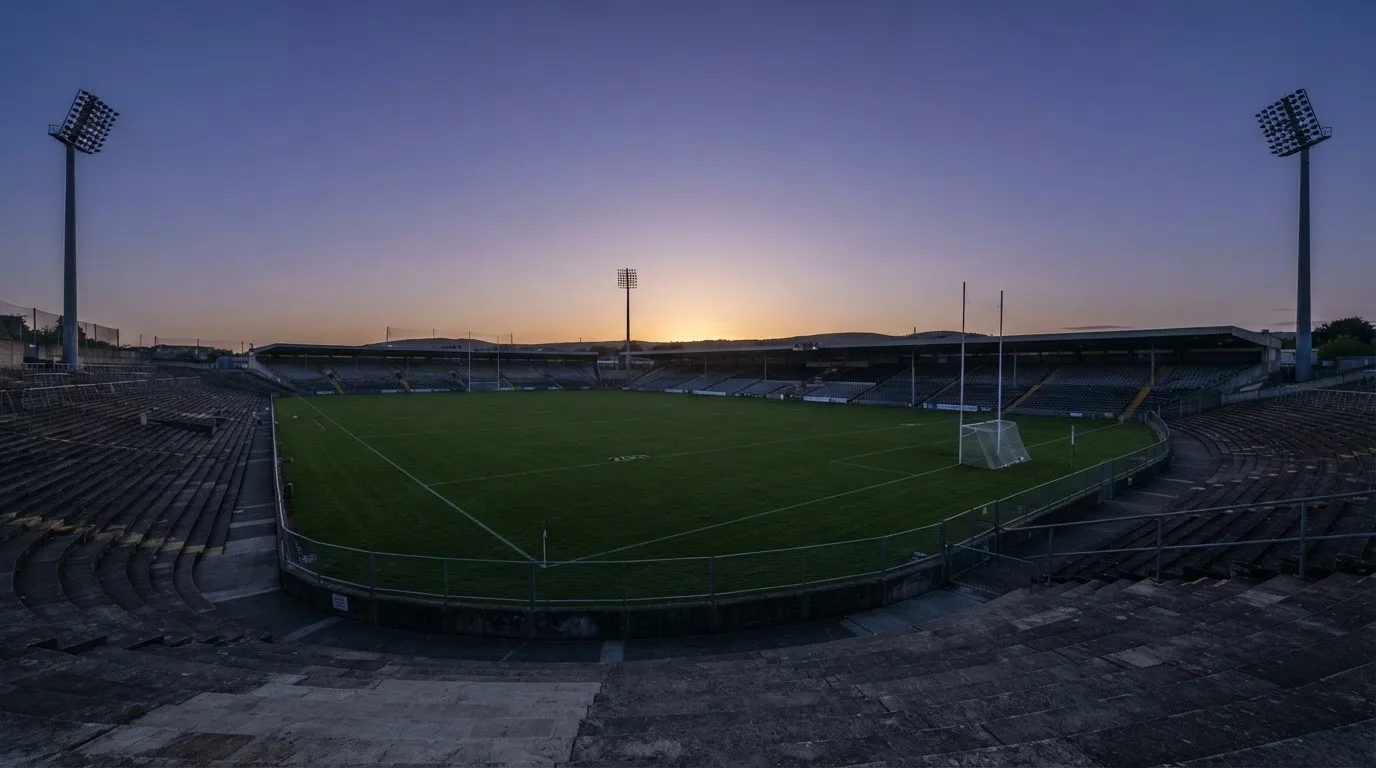
The draw of live betting is the same as in any other sport — prices move with what is happening on the pitch — and the limit is the same. A bookmaker’s in-play margin is wider than its pre-match margin, often by two to four percentage points, because the bookmaker has to price something it has less data on and because it accepts more short-term risk on each bet. For a low-liquidity sport like Gaelic football, the gap is often wider still; the handful of UK bookmakers that offer GAA in-play at all do so on fewer markets than they offer on Premier League football, and that fattens the overround.
Cash out as a tool, and the price the punter pays for using it
Cash out on Gaelic games works the same way as on any other sport: a button on the bet slip offers to settle the bet early at a price the bookmaker computes from the current state of the match and the current outright price. The offer is profitable to the punter only when the cash-out price exceeds the expected value of holding the bet to settlement, and it is profitable to the bookmaker every other time. The cash-out price carries its own margin, distinct from the pre-match and in-play margins, and it is rarely quoted. What the punter is paying, in effect, is a small premium each time the cash-out price moves against them and a slightly larger discount each time it moves in their favour, with both calibrated so the bookmaker comes out ahead over the long run.

The use of cash out comes down to conviction. A punter who has a view on what happens next — a team that has just gone a man down, a side whose shooting has gone cold — and whose view puts the live price materially out of line with the book’s has the beginning of a reason to cash out. A punter who simply dislikes watching the position move is paying the bookmaker for the privilege of not doing so.
The fixture squeeze
Most UK-licensed bookmakers carry Gaelic games only during the All-Ireland Senior Football Championship, the Tailteann Cup and the Allianz Football League; coverage of club championship, intermediate and junior grades is patchy. Hurling lives in the same shadow — same championship and same league, fewer rounds. Outside the championship and league windows there is little to bet on live, and the punter who only bets on Gaelic games will see a long dormant winter. A bookmaker that lists a Gaelic football event for the August bank holiday but has priced nothing since the previous March is not, in any meaningful sense, a Gaelic football bookmaker.
Predictions, Tips and Strategy: Why Forecasts Struggle on a Small Sport
Where prediction content exists and where it does not
Predictions on Gaelic football exist as columns in Irish broadsheets during championship season, as podcasts and YouTube previews on the days before big games, and as free tipster pieces on a handful of UK-facing affiliate sites. Their quality varies widely, and the more thoroughly covered tipsters charge for their service or take affiliate revenue from the bookmakers they recommend. There is no UK newspaper of record that runs paid GAA content; the market is too small to support one.
What does not exist is any reliable model of GAA outcomes on the open web. The historical data is available — the GAA’s own statistics archive carries decades of championship results, and Wikipedia lists every inter-county fixture in summary — but no serious betting-modelling operation has been published. The closest analogues are the open-source Elo and pi-rating work on the GAA, both amateur projects and both untouched for years.
What that means for the punter
The punter who treats GAA betting as a market-beating exercise is fighting a market with no visible edge. There is no widely cited injury-and-lineup feed, no syndicated tipster consensus, no model output flowing into the public price, and no daily market data feed the way there is for Premier League football. A tipping service that names picks across twenty GAA matches a week is fabricating research somewhere along the way; the matches do not exist.
The honest version of a strategy on Gaelic football is conservative and unglamorous. Bet only on the championship and league fixtures the bookmakers actually price; treat over-round and price moves as your real signals; resist the temptation to lay large amounts on matches whose live markets disappear for ten minutes at a time. Bankroll discipline matters more here than in any mainstream sport, because the sample size is too small to ride out bad luck and there is no way to compound an edge you cannot reliably measure.
Forecasts and the line between advice and prediction
A line divides tipping from prediction. A tip is a pick, public, anonymised, sometimes a stake size and often a price; a prediction is the assertion that a particular outcome is more or less likely than the market says. The first is entertainment. The second is a market call, and a market call on a small market is a fragile thing. Treat tipping as opinion, treat prediction as a verified model output (which almost no public GAA content is), and the days the market calls do not go your way do not cost more than the bets you placed.
Bet Types and Odds on Gaelic Games: What Markets Exist and How They Settle
The core set of markets
What markets a licensed UK bookmaker offers on GAA events is the bookmaker’s own choice; there is no statutory list of permitted markets. The set that is reliably offered is narrow and consistent across the bookmakers on this page:
- Match result (1X2 in a two-way sport): home win or away win. There is no draw in Gaelic football or hurling, so the market is a straight two-way line. Handicap and totals markets are layered on top.
- Handicap: a goal-and-point start for the underdog, usually expressed in points rather than goals. A six-point handicap is a meaningful but not enormous margin in a sport where the average winning margin across senior fixtures is in the six-to-eight-point range.
- Total points: over/under a stated score line, often set in the band of 27 to 35 points for senior football. The market is settleable even when a match turns over late and into injury time.
- Half-time markets: score at half-time, the team leading after twenty or thirty-five minutes. The market is a smaller version of match result.
- Next score / method of next score: goal or point; market exists at the bigger bookmakers on the more heavily-watched matches only.
What is rarely offered is anything beyond these. Player markets, the kind of thing that exists in mainstream football, are thin on the ground in GAA — there is no GAA equivalent of a first goalscorer market running at every bookmaker on every match. The market that does exist runs only at the larger bookmakers and only on the bigger matches.
How a Gaelic football score settles in the betting slip
A Gaelic football score is a string of goals and points: a 1–20 to 1–17 scoreline means one goal and twenty points (one of which is a converted forty-metre free) versus one goal and seventeen points. Because a goal is worth three points, the 1–20 line equals twenty-three points and the 1–17 line equals twenty points. The punter reading a result out of the betting slip needs to remember that a goal is worth three, not one, or that win looks bigger than it was. The 2025 rule change — a shot from outside the new forty-metre arc is now worth two points — applies to championship football and has not changed the published markets; the bookmakers still quote a single price on each outcome.
Spread betting on Gaelic games
Spread betting on Gaelic games exists and is offered at licensed UK operators alongside fixed-odds betting, the same model that lets a punter buy and sell a stake on the total score, the winning margin or any other quoted index. A spread bet is governed by the Financial Conduct Authority when it is a financial product and by the Gambling Commission when it is a sports spread; the punter’s loss can exceed the deposit, because the closer the actual outcome lands to the spread quote, the more the punter loses — and the punter’s entire loss is the size of the index multiplied by the unit stake. The product is licensed, regulated and, by some accounts, the riskiest way to bet on any sport a UK punter can pick.
The accumulator angle
Accumulators across multiple GAA fixtures are slightly unreliable because the fixtures do not always run on the same day. A four-fold across four All-Ireland quarter-finals works when all four are scheduled in one weekend; a four-fold across one match from each of the four provinces typically means waiting several weekends for the bet to settle. The bookmakers are aware of this and quote smaller margins on accumulators than they quote on singles, but the relevant figure is the individual leg margin, not the headline. A punter piling four GAA legs together is multiplying four small edges against themselves.
Sports and Tournaments: Where the Calendar Runs and Who Plays
The football year
The senior Gaelic football calendar runs from January to July. The Allianz Football League fills the early months; the provincial championships run in May and June, with the Tailteann Cup running alongside the senior championship for the lower-ranked counties; the All-Ireland Senior Football Championship peaks at the All-Ireland final in July. Club championships, junior and intermediate grades, and the higher education competitions run alongside the senior inter-county season and overlap with it. For the betting market the senior inter-county season is what counts; most UK-licensed bookmakers cover the Allianz League in some form and the All-Ireland championship in detail, and they leave the rest.
The hurling year
Hurling follows a similar shape: Allianz Hurling League from January, then the provincial championships in May and June, then the All-Ireland Senior Hurling Championship through the summer. The market is thinner than football — fewer fixtures, fewer of the larger bookmakers, less in-play coverage — but it exists at most of the larger UK bookmakers and at a few of the smaller ones.
Who plays and who has played
Gaelic football is organised by county, with thirty-two Irish counties fielding teams in the senior inter-county championship. Kerry hold the record for the most All-Ireland Senior Football Championship titles, at 39, with Dublin second on the all-time list. The 2026 All-Ireland Senior Football Championship final was played at Croke Park, Dublin, in late July, with Mayo taking their fourth title. Dublin’s recent decade of dominance has now ended; the field in 2026 was unusually open, and that openness is part of what makes the betting market look the way it does at the moment.
How the pitch and the rules shape the betting market
Senior inter-county Gaelic football matches last seventy minutes, two halves of thirty-five minutes each; most other adult matches last sixty minutes, two halves of thirty. Substitutes are limited to fifteen, with six permitted to enter the field during a match, and the bench shapes the late-game market: a county whose bench is deeper tends to outscore the opposition in the closing quarter, and the in-play price will reflect this.
The pitch is a long, wide grass rectangle, 130 to 145 metres from goal to goal and 80 to 90 metres wide; the wide pitch makes in-play markets on territory and shot location practical at the bookmakers that model them, though most UK bookmakers do not run those markets. The rules of scoring give the sport its character: a goal is worth three points and a point is worth one, with shots from outside the new forty-metre arc now worth two points since the 2025 rule change. Both of those are published market lines, and both are settled by the GAA’s own rules.
The Ten Bookmakers: A Comparison of What Each One Pitches
What the table compares
The table below covers the ten UK Gambling Commission-licensed online bookmakers that take bets on GAA or on sports alongside GAA. The table is sorted by licence account number on the public register; it is not a ranking and it is not a recommendation, but the licence entries do directly confirm or deny access to the UK market and they are the foundation a punter rests on. The right-hand column captures what the operator’s own terms say about the way it handles betting on individual events — the playing conditions that decide whether a bet is settled the way the punter expects.
A note on shared operators: Ladbrokes and Coral share a licensee, as do Paddy Power and Betfair; what the table presents under each name is that brand’s own product page, not a separately licensed business.
| Operator | Gambling Commission remote licence and licence holder | What the operator’s own terms say on the relevant subject |
|---|---|---|
| Ladbrokes | 054743-R-330863-014 (Commission account 54743), held by LC International Limited | Sports betting app published by Entain Operations Limited; rated 4.66 from 101,255 ratings in the GB App Store |
| Paddy Power | 039439-R-319330-013 (Commission account 39439), held by PPB Counterparty Services Limited | Sports betting app covers football, horse racing, boxing, rugby, tennis, golf, darts, snooker and F1 |
| DAZN Bet | 048756-R-327274-019 (Commission account 48756), held by DZBT Limited | Sports deposits start at £5 by debit card, Apple Pay, Paysafecard, Trustly and Skrill, and at £20 by PayPal, with no processing fees |
| BetUK | 039198-R-319450-029 (Commission account 39198), held by LeoVegas Gaming PLC | New customers who deposit £10 or more and place a sports bet within 7 days of registering receive four £10 free bets (two football accumulators of 4+ selections and two multiples of 2+), valid for 7 days, with opt-in required |
| Sporting Index | 027343-R-308898-011 (Commission account 27343), held by Sporting Index Limited | Lets customers switch between fixed odds and spread betting, with in-play betting, Bet Builder for football, auto cash-out and Multi-Markets |
| BoyleSports | 039469-R-319383-025 (Commission account 39469), held by Boylesports Enterprise | Sports welcome offer for UK players is £20 in free bets when a £10 bet is placed (£30 in free bets for a €10 bet for Irish players) |
| Lottoland | 038991-R-319408-020 (Commission account 38991), held by EU Lotto Limited | App combines casino, lottery betting, sports betting and scratchcards, and states it is licensed by the Gambling Commission for customers in Great Britain |
| Octobet | 062545-R-337248-006 (Commission account 62545), held by Octopus Game Limited | Sportsbook welcome offer is 50% back as a free bet up to £50, plus a £10 casino bonus for new customers |
| Kwiff | 044448-R-323408-017 (Commission account 44448), held by Eaton Gate Gaming Limited | Licensed by the UK Gambling Commission; described as a trademark operated by Spryme Ltd; the app carries a 17+ age rating in the GB App Store |
| Betboro | 044181-R-324363-007 (Commission account 44181), held by Webmedia Development N.V. | Sports welcome offer is a 100% matched free bet of up to £25 on the first qualifying wager, requiring a debit card deposit of at least £10 and a first bet of £5 to £25 with at least three selections each at 3/5 (1.60) or higher |
The entries across this table vary in what they cover, and that is the table’s actual content: where a brand’s own terms do not publicly state the playing rule on which the punter will fall back, the punter has to read the terms themselves, and the row reflects what is visible. The headline gaps across the table are bigger than they look because the licence column is doing the heavy lifting — it is what determines whether the brand can legally take a bet from a customer in Great Britain at all, irrespective of what the terms say.
What the licence column actually tells the punter
The Gambling Commission public register is the whole test of who holds a current licence to take bets from customers in Great Britain. The entries above are the ten remote licences under which the ten brands take retail bets online in Great Britain. None of the licences is older than the register itself; accounts with low numbers (Sporting Index at 27343, Lottoland at 38991) tend to have been issued earliest and accounts with higher numbers more recently, but a low number is not a lower-quality licence — it is just an earlier one. Five of the licence holders on this list are non-UK companies (Platinum Gaming Limited in Gibraltar, DZBT Limited, EU Lotto Limited, Octopus Game Limited, Webmedia Development N.V. in Curaçao) — under section 33 of the Gambling Act 2005 as amended by the Gambling (Licensing and Advertising) Act 2014, remote gambling facilities used in Great Britain need a Commission licence wherever the operator is based, and a Curaçao, Maltese or Gibraltar licence is not a substitute. The remote licence is the licence, and the holder is named on it.
What the right-hand column does and does not cover
The right-hand column is not a market offering. It does not say whether the bookmaker runs Gaelic football match odds, handicap markets or live next-score pricing — for any of those, the punter checks the bookmaker’s GAA page the week of the fixture. It does say what the brand’s published terms are known to state about how it takes bets and settles them, and that is what makes a meaningful comparison possible. Where the column reads narrowly it usually reflects what the brand’s own terms say; where it reads broadly it reflects that the brand’s terms are detailed on that subject.
Overview: What Gaelic Football Betting Actually Is
The shape of the market in one paragraph
Gaelic football betting is a niche within a niche. The sport is played in Ireland at county, club and higher-education levels; it has a small handful of headline competitions a UK punter is realistically going to find on the betting slip; and it is governed by the Gaelic Athletic Association, with the All-Ireland Senior Football Championship final played each year at Croke Park, Dublin. The sport’s rules are particular: a goal is worth three points, a point is worth one, and shots from outside the new forty-metre arc are now worth two points; the senior inter-county game lasts seventy minutes; the bench is limited to six substitutes from a list of fifteen. None of these is mysterious to the punter; what makes them worth knowing is that they shape which markets the bookmaker prices and how those markets are settled. The bookmaker’s edge is wide in Gaelic football, and the punter who does not understand that edge will overpay for every bet.
The role of the bookmaker’s margin
Every price a bookmaker publishes has a margin built into it. The margin is what the bookmaker keeps of every unit bet on the market on average over time, after winnings have been paid. On a two-way market at decimal odds 1.90 / 1.90, the overround is worked out as 1 ÷ (1/1.90 + 1/1.90) = 1 ÷ 1.0526 = 0.95, so the payout share is 95% and the margin is 5%. The published price is the price at which 5% of every unit bet is kept by the bookmaker before any other cost. Note that 5% margin is different from 5% of the stake; the margin is the share of the total stake kept, not a fee added on top.
The arithmetic belongs to the writer of the page. The condition is an even-money pair of prices; the result is a band of margin typically in the 4% to 6% range on a clean two-way market at even money. A bookmaker quoting 1.85 / 1.85 would be running a margin closer to 8%, the kind of price that says the bookmaker is uncertain of the shape of the market. A bookmaker quoting 1.95 / 1.95 would be running a margin closer to 3%, closer to what the larger markets on mainstream football look like. Either of those figures is consistent with what the punter actually sees.
The constraint no marketing line will name
Bookmakers do not advertise their margins. Their headline prices are described as “best odds” and “competitive” and the offer attached to the bet is described with the marketing of “free” and “risk-free”. The punter who is checking the licence and the market is checking what actually pays, and what actually pays is the price minus the margin. On Gaelic football, where the league and championship fixtures cluster, the margins are typically wider than on the larger UK sports, the fixture volume is smaller, and the punter paying the price is paying it on every bet. The fact is plain: the smaller the market, the wider the margin, the more the punter pays for the privilege of being in it.
Legality, Regulation and What a Gambling Commission Licence Actually Means
The legal frame in one section
Gambling in Great Britain is licensed by the Gambling Commission under the Gambling Act 2005. The Commission is a non-departmental public body sponsored by the Department for Culture, Media and Sport; it regulates all commercial gambling in England, Scotland and Wales. Northern Ireland is outside the 2005 Act and runs its own older framework, so the right legal term is “Great Britain licence” or “GB-licensed”, never that a GB licence regulates Northern Ireland. Since 2014, when the Gambling (Licensing and Advertising) Act came into force, an operator whose remote facilities are used in Great Britain needs a Commission licence wherever it is based; the test is whether the bet is placed in Great Britain, not where the operator sits. There is no statutory list of permitted sports, events or markets; the licence categories — remote general betting standard (real events), remote general betting standard (virtual events), remote general betting limited, remote pool betting, and remote betting intermediary for exchanges — are what the operator is licensed for, and what it offers under each category is then governed by its own licence conditions and the Commission’s Licence Conditions and Codes of Practice.
That frame, and nothing else, is the basis on which any of the brands on this page takes bets from customers in Great Britain. The Curaçao licence that sits behind Betboro on the register is a Curaçao licence; what matters in Great Britain is the Gambling Commission account that sits beside it, not the foreign one. No GB licence caps the number of licensed operators; no statutory list of permitted sports excludes Gaelic football; no GB licence covers Northern Ireland.
Verifying a licence
The public register at the Gambling Commission’s site is the whole test of whether a brand holds a current licence. The register can be searched by business name, trading name, domain or account number; if the brand is not on it under any of those, the brand is not licensed. The licence column on the comparison table on this page is what those register entries look like under each brand’s name. Verify them yourself, and on a date close to when you place a bet; the register changes.
A second test: identity verification. Since 7 May 2019, a UK-licensed online bookmaker has to verify a customer’s name, address and date of birth before the first deposit — and that includes using a free bet or bonus. Any site that lets a customer place a bet without that check is not running under a UK remote licence. Any site that does the check is. The verification is the single most direct evidence of licence-holding a punter will ever see.
What the licensed frame does to the punter
A licensed bookmaker takes bets on Gaelic football under the Commission’s licence conditions and under its own terms, and the punter is owed what those conditions and terms promise. The complaint route is the Commission’s enforcement arm; the alternative dispute resolution route is the bookmaker’s adjudicator (and beyond it an ADR provider registered with the Commission). When a brand refuses to pay out, withholds funds, voids a settled bet retroactively or otherwise walks away from its terms, the punter has a route that ends in front of a regulator — which is the thing an unlicensed site does not offer. No route is a guarantee of a refund; the route is the difference between one in which a complaint has somewhere to land and one in which it does not.
Responsible Gambling: What the Licence Actually Requires
The mandatory frame
A UK-licensed online bookmaker takes part in the national multi-operator self-exclusion scheme, GAMSTOP, on a mandatory basis; the requirement has been in force since 31 March 2020. Self-exclusion periods are six months, one year, five years or five years with auto-renewal; after the minimum period the exclusion stays in place for a further seven years unless the customer asks GAMSTOP to remove it. GAMSTOP covers online sites and apps; betting shops use a separate service. A customer who wants to stop betting with every UK online bookmaker at once registers at the GAMSTOP site, and no licensed bookmaker will let them open or use an account during the exclusion.
The frame extends past GAMSTOP. The bookmaker has to offer a deposit limit on a fixed time frame under the Commission’s Remote Technical Standards. The customer has to be able to set a deposit ceiling on a daily, weekly or monthly basis — the first changes have applied since 31 October 2025, a second phase was postponed to 30 September 2026, and whether it is live is not established, so the punter should check what the bookmaker offers today. The bookmaker has to run a financial vulnerability check when a customer’s deposits minus withdrawals exceed £150 in a rolling 30 days; that has been in force since 28 February 2025. The check is a public-record check (bankruptcy, county court judgments and the like), not an income or credit check, and a customer whose public record raises a flag is slowed down before the bet is taken.
A separate tier of protection is the Commission’s published plan for financial risk assessments, sometimes called “affordability checks” in the press. The plan was announced with a staged timetable and a Commission article in July 2026; no start date for any phase of the plan is in force at the time of writing, so the phrase to use is “announced, staged, no start date”, never “in force”. A bookmaker that markets itself on its own affordability work today is doing so at its own discretion; the regulated version is the staged version and is not yet in operation.
Help services that are not the bookmaker
The help services outside the bookmaker are GamCare (which runs the National Gambling Helpline), GambleAware, the NHS gambling clinics and Gamblers Anonymous. The bookmakers that operate under a UK licence link to at least some of these; a site that does not link to any of them is doing something under the radar. A punter who wants to talk to someone outside the bookmaker calls GamCare first; that is the front line and it is independent of every operator.
What the licensed frame does to the betting offer
A licensed bookmaker is also constrained in what it can offer by way of bonus. Promotion rules in force since 19 January 2026 cap wagering requirements on bonuses at 10x, so a £10 bonus no longer needs more than £100 of bets to clear; the comparable cap on free bets without a wagering condition has not been established. Mixed-product promotions — an offer that requires gambling on two or more product types such as betting, casino, bingo and lottery, for example “bet on football to get free spins” — are banned. Marketing material has to be socially responsible, must not be of strong appeal to under-18s, and no one who is or seems to be under 25 may be featured gambling or play a significant role in the advertisement (with an exception for marketing placed where a bet can be made directly). Whistle-to-whistle, the rule that takes betting ads off TV from five minutes before a live sporting event to five minutes after it before the 9pm watershed, has been in force since 1 August 2019; it is an industry code, not law.
The Premier League clubs’ withdrawal of gambling sponsorship from the front of matchday shirts from the 2026/27 season onwards is voluntary, not law; sleeves and hoardings remain. The relevant regulator for advertising the ASA, and the ASA polices the CAP Code (non-broadcast) and the BCAP Code (broadcast).
Crypto, Anonymity and the Limits of Both
Why no anonymity exists at a UK-licensed bookmaker
There is no anonymous play at a UK-licensed online bookmaker. The Commission has required name, address and date of birth verification before a customer’s first deposit since 7 May 2019, and the check is mandatory at every licensed site. A bookmaker that lets a punter place a bet without that check is not a licensed bookmaker. Source-of-funds checks at higher spend are an extension of the same requirement under money-laundering rules — at some point the question “where did the money for these bets come from” is going to come up, and a crypto punter should expect it.
Crypto and the licensed bookmaker
Crypto deposits at UK-licensed online bookmakers are not established; the regulators on this point have not published a rule for or against, and none of the ten operators on this page takes cryptocurrency deposits under its published terms. A punter who wants to bet in crypto uses an unlicensed site, runs on the operator’s own house rules and sits outside the Commission’s enforcement, dispute resolution and player-protection frame. The trade-off is the licensed frame described in the section above: the licensed site verifies identity, sets limits and takes part in GAMSTOP; the unlicensed site does none of that and the punter bears the risk that funds are withheld, settled bets are voided or the site disappears.
What the licensed frame loses and the unlicensed frame gains
A licensed bookmaker is a checked environment: identity on the way in, deposit limits and GAMSTOP on the way through, the Commission’s complaint route on the way out when something goes wrong. The punter who values the checked environment already has it; the punter who wants a different one needs to be certain they understand what they are giving up. The plain framing of it is that there is no GB licence for anonymity at the time of writing, and there is no path forward for one.
Bonuses, Free Bets and What Each Offer Actually Costs
What the offer types are in the licensed frame
A UK-licensed online bookmaker’s sportsbook welcome offer in 2026 takes one of a few shapes:
- A matched first bet, where the bookmaker returns a free bet of up to a stated maximum if the first qualifying bet loses. The free bet is a bet credit, not money, and its stake is typically not paid back with a win.
- A set of free bets credited after the first qualifying bet settles, structured as multiple smaller bets on different markets with different minimum-price rules.
- A refund-if-you-lose structure, where the qualifying bet’s losing stake is returned as a free bet. Same caveat: the free bet is a bet credit, and its stake is not paid back with a win.
- A combined sportsbook and casino package, where the sports side is one of the above and the casino side is free spins or a casino bonus.
The cap on wagering conditions across all of these is 10x of the bonus value; that cap has been in force since 19 January 2026. Mixed-product promotions are banned. Marketing material is bound by the CAP Code section 16 rules on social responsibility and on who can appear in the advertisement, and the operator is responsible for marketing done by its affiliates. None of the offers described above can be combined with another open promotion at the same bookmaker; the punter who has taken one offer at a brand has to settle it before they can take another.
The shape of the welcome offer at the brands on this page
Welcome offer shapes on this page vary, and the variation is the point.
- BetUK’s sports welcome offer — new customers who deposit £10 or more and place a sports bet within 7 days of registering receive four £10 free bets (two football accumulators of 4+ selections and two multiples of 2+), valid for 7 days, with opt-in required.
- BoyleSports’ sports welcome offer — £20 in free bets when a £10 bet is placed (£30 in free bets for a €10 bet for Irish players).
- Octobet’s sportsbook welcome offer — 50% back as a free bet up to £50, plus a £10 casino bonus for new customers.
- Betboro’s sports welcome offer — a 100% matched free bet of up to £25 on the first qualifying wager, requiring a debit card deposit of at least £10 and a first bet of £5 to £25 with at least three selections each at 3/5 (1.60) or higher.
Where the welcome offer is not stated the operator either uses a cash bonus rather than a free bet, or does not run a published welcome offer that the comparison can rest on; either way the punter checks the operator’s site before they sign up.
What a free bet actually pays
A free bet that loses returns nothing. A free bet that wins returns the winnings, not the stake, and the winnings are paid as cash at most UK-licensed bookmakers. The value of a free bet to the punter is therefore the size of the free bet multiplied by the edge they think they have on the bet they put it on — for a £10 free bet at odds that the punter considers 50/50 (decimal odds 2.00), the expected value is £10 × (2.00 − 1) ÷ 2.00 × (the payout share of the market), with the last factor typically running between 90% and 95%. The honest figure is that the £10 free bet is worth somewhere in the £4.50 to £5.50 band on a market the punter thinks is close to even money; on a market they think is mispriced it is worth more. The marketing of “£40 in free bets” sounds generous, and in headline terms it is, but the punter paying attention to expected value is reaching the conclusion that the offer is worth somewhere between a quarter and a half of its headline.
The minimum-price rule and the days-it-has-to-be-used rule
Minimum-price rules on free bets are the second-most important term the punter reads. A free bet that has to be placed at 4/5 (1.80) or higher cannot be used to back a heavy favourite, and a free bet that has to be placed on four or more selections is forcing an accumulator. Both rules are ways the bookmaker narrows what the free bet can be used on, which keeps the expected value of the free bet closer to what the bookmaker priced it at. The punter who reads only the headline has misread the offer.
Time limits matter as well. A free bet has to be used within a few days of credit, typically seven days, and a free bet not used by then lapses. The punter who collects four £10 free bets on a Saturday morning and finds a GAA fixture they want to bet on three Saturdays later has lost three of the four to time. The audit on this one is at the bookmaker’s site, on the offer page, the day the punter plans to claim.
The cost of an “enhanced odds” line
“Enhanced odds” on a GAA fixture is a marketing promise that a price is higher than the headline price on the same selection at the same bookmaker. The punter reading the headline price on a fixture that says “Mayo to win at 2.50 (was 2.00)” understands that the headline number is the offer and the lower number is the price other punters see. The cost of the offer is the difference between the two prices applied to the maximum stake the bookmaker is willing to take at the headline price. A 50p enhanced stake at 2.50 versus an underlying price of 2.00 is a 25p bonus on the bet, which sounds modest because it is modest. The marketing of “enhanced odds” outsizes what the offer actually pays; the punter who has done the multiplication knows the offer for what it is.
Looking at the marketing in plain language
The marketing term “free bet” is accurate enough; the bet is free in that no part of the customer’s own money is at risk on the bet itself. What the marketing does not say is that the stake is not returned on a win, that a minimum price applies, that a time limit applies, and that the headline value of the offer is reduced accordingly. The marketing term “risk-free bet” is misleading; a “risk-free” bet that returns a free bet on a loss is not a refund in cash and the stake on a win is not the punter’s own money. The punter who treats the marketing as the contract and reads the marketing at face value pays for the misreading.
The Bookmakers on This Page, Reviewed
Ladbrokes
Ladbrokes is one of the two largest retail brands in British betting, with a sports betting app published by Entain Operations Limited and a 4.66 rating across 101,255 ratings in the GB App Store. The licence is held by LC International Limited under Commission account 54743, with the remote general betting standard (real events) and the betting intermediary categories; Ladbrokes and Coral share a licensee and the same bookmaker’s product wraps both brands. On Gaelic football, Ladbrokes runs a full GAA offering across the Allianz League and the All-Ireland Senior Football Championship, with handicaps, totals, half-time markets and same-game-multi bet builder on the bigger matches. Cash out is a fixture on the site; the in-play presentation is the one Ladbrokes has run for several years. The sports welcome offer varies by month and the punter checks what Ladbrokes is currently running before they sign up.
Verdict. For the punter who wants a Ladbrokes-or-Coral product with the depth of GAA betting and the cash-out features that go with it, this is the entry point. The shared-licence structure does not change the licence column on this page.
Paddy Power
Paddy Power is the other largest retail brand in British betting, with a sports betting app that covers football, horse racing, boxing, rugby, tennis, golf, darts, snooker and Formula 1 — the layout matches the layout Paddy Power has run for several years, and the GAA offerings sit on the football page. The licence is held by PPB Counterparty Services Limited under Commission account 39439, in the remote general betting standard (real events) category; Paddy Power and Betfair share a licensee. The brand’s pitched edges have historically been novelty markets and money-back specials; Paddy Power offers best odds guaranteed on early prices, alongside acca insurance on multiples, on their GAA betting lines.
Verdict. For the punter who wants the money-back specials on top of a serious GAA price list, and who is willing to read each promotion’s small print, this is the case for Paddy Power over Ladbrokes. The novelty markets are not always present on GAA fixtures; check the fixture.
DAZN Bet
DAZN Bet is the betting brand attached to the DAZN sports streaming service, run by DZBT Limited under Commission account 48756. The brand’s edge is its streaming integration: customers with a DAZN account can move between stream and bet slip without a separate app. Deposits start at £5 by debit card, Apple Pay, Paysafecard, Trustly and Skrill, and at £20 by PayPal, with no processing fees. On Gaelic football the offering includes the standard match-result, handicap and totals markets found across the wider market; the streaming integration is restricted to major televised fixtures, which are clearly marked in the app.
Verdict. For the punter who already subscribes to DAZN for sport and wants the betting add-on without a separate identity check, this is a reasonable entry point. The £5 minimum deposit is the lowest of any operator on this page and worth knowing for the small-stake punter.
BetUK
BetUK is operated by LeoVegas Gaming PLC under Commission account 39198. The brand focuses on the UK market, and its sports welcome offer — new customers who deposit £10 or more and place a sports bet within 7 days of registering receive four £10 free bets, structured as two football accumulators with at least 4 selections each and two multiples with at least 2 selections each, valid for 7 days, with opt-in required — is one of the more structured offers on this page and one of the more difficult to clear for a punter who only bets on GAA. GAA is on the football page; check the accumulator legs available before claim.
Verdict. For the punter who wants a structured set of free bets across both accumulators and multiples and who plans to bet on Saturday football as well as GAA, this is the offer’s natural shape. For the GAA-only punter, the four £10 free bets on offer terms that force accas are harder to convert.
Sporting Index
Sporting Index is a spread-betting operator, regulated by the Financial Conduct Authority for financial products and by the Gambling Commission for fixed-odds betting; losses can exceed deposits on the spread side, and the punter reading the site has to understand that. The product lets customers switch between fixed odds and spread betting on the same event, with in-play betting, Bet Builder for football, auto cash-out and Multi-Markets. The Commission’s licence is 027343 (Commission account 27343), one of the earliest remote betting licences on the register, held by Sporting Index Limited.
Verdict. For the punter who wants spread betting on GAA fixtures — the kind of bet a fixed-odds bookmaker does not run, like a stake on the winning margin in points — this is the only operator on this page that does it. For the punter who only wants fixed odds, the spread offer is overhead.
BoyleSports
BoyleSports is an Irish-founded bookmaker with a UK base under Commission account 39469, held by Boylesports Enterprise. The brand has strong roots in Irish sport and that matters on Gaelic games: BoyleSports runs GAA at a depth that is closer to an Irish bookmaker than to a UK one, with handicaps, totals, half-time markets and a number of novelty markets on the bigger fixtures. The sports welcome offer is £20 in free bets when a £10 bet is placed for UK players, or €30 in free bets when a €10 bet is placed for Irish players.
Verdict. For the punter who wants a GAA-anchored product and is comfortable with the Irish bookmaker’s pitch, this is the strongest betting-only offer on this page. The GAA depth is the differentiator.
Lottoland
Lottoland is a lottery-led operator that has expanded into sports betting and casino; the app combines casino, lottery betting, sports betting and scratchcards, and the operator states it is licensed by the Gambling Commission for customers in Great Britain. The Commission’s licence is 038991-R-319408-020 (Commission account 38991), held by EU Lotto Limited. The GAA offering exists but is not the brand’s first product; the punter reading the Lottoland site is going to find lottery markets first and sports markets second.
Verdict. For the punter who bets on lotteries and scratchcards and wants GAA on the same app without a separate sign-up, this is the cross-sell case. The brand’s identity is lottery; treat the sports as adjacent product.
Octobet
Octobet is a newer sports betting brand under Commission account 62545, held by Octopus Game Limited. The sportsbook welcome offer is 50% back as a free bet up to £50, plus a £10 casino bonus for new customers. The product is a standard sportsbook with match-result, handicap and totals markets across the major sports; the GAA market depth is generally lighter than at specialized Irish bookmakers.
Verdict. For the punter who wants a sports-plus-casino welcome bundle at a newer brand and is willing to bet across both products to clear it, this is a reasonable claim. The casino bonus is the cross-sell the mixed-product-promotion rule is designed to allow, and the rule on those promotions applies.
Kwiff
Kwiff is a sports betting and casino brand operated by Spryme Ltd under licence to Eaton Gate Gaming Limited under Commission account 44448, with the UK Gambling Commission’s licence listed on the Kwiff site. The Kwiff product is the “surprise” stake multiplier — bets placed at Kwiff can have their stake multiplied by a random factor when the bet settles, with the multipliers ranging from small figures to very large ones at rare frequency. The product is the differentiator; the standard sports offering is on the smaller bookmaker side, with GAA on the football page at modest depth.
Verdict. For the punter who wants the stake-multiplier angle on a small-stake bookmaker, this is the brand. The product is genuinely different from the rest of the page; read the small print on what counts as eligible for the multiplier.
Betboro
Betboro is a sports betting operator under Commission account 44181, held by Webmedia Development N.V., a Curaçao-registered holding company; the Commission’s remote licence is what matters in Great Britain. The sports welcome offer is a 100% matched free bet of up to £25 on the first qualifying wager, requiring a debit card deposit of at least £10 and a first bet of £5 to £25 with at least three selections each at 3/5 (1.60) or higher. The minimum three-selection rule is the differentiating term; the matched free bet shape is the standard one.
Verdict. For the punter who wants a 100% match welcome offer and is happy to clear it on a treble at minimum price 1.60, this is a reasonable claim. The minimum three selections and the 1.60 minimum price are more restrictive than a £10 single at any price, and the punter who wants to bet on the Moneygall replay at short odds cannot use this offer as written.
What a Margin of Two Percent Actually Looks Like at the Slip
On a two-way market at decimal odds 1.90 / 1.90, the payout share of every unit bet is 1 ÷ (1/1.90 + 1/1.90) = 1 ÷ 1.0526 = 95%, and the margin is the rest, 5%. A market at 1.95 / 1.95 carries 1 ÷ (1/1.95 + 1/1.95) = 1 ÷ 1.0256 = 97.5% payout and a 2.5% margin. A market at 1.85 / 1.85 carries 1 ÷ (1/1.85 + 1/1.85) = 1 ÷ 1.0811 = 92.5% payout and a 7.5% margin. The shape of the relationship is straightforward: the higher the price on each side, the tighter the margin; the lower the price, the wider the margin.
On the moneyline outcome of a senior GAA fixture, a clean two-way market typically sits in the 1.80 / 1.80 to 1.95 / 1.95 range, which is a margin in the 2.5% to 10% band and a payout share in the 90% to 97.5% band. The handicap and totals markets on the same fixture sit further out — 1.85 / 1.85 is common on a six-point handicap, sometimes wider — and the margin is accordingly wider. The 10x bonus cap is best understood in the context of these figures: at a 5% margin, a £100 bonus at 10x wagering carries an expected cost to the punter of £100 × 5% × (10 / (5/100)) × scaling factor on stake distribution across markets of varying width, and the punter who clears the bonus is paying out somewhere in the £50 to £75 range to do so. The marketing of the bonus does not surface that cost; the punter paying attention does.
The take-away from the calculation is this: on a market at 1.90 / 1.90 the bookmaker is keeping a small percentage of every pound bet; on the welcome offer that net punter pays out what the wagering rule forces the punter to bet, less the stake returned at the end of the wagering. The arithmetic is honest; the marketing line is not.
Frequently Asked Questions
How to bet on gaelic football?
A licensed UK bookmaker takes bets on Gaelic football through its sports betting site or app; the punter verifies identity, deposits with a debit card or e-wallet, opens the Gaelic games section under football or under the All-Ireland market hub, picks a fixture, picks a market — match result, handicap or totals — and confirms the bet. Bets settle on the GAA’s own scoring rules: a goal is worth three points and a point is worth one, with shots from outside the new forty-metre arc now worth two points. The All-Ireland Senior Football Championship final is held each year at Croke Park, Dublin, and the bulk of in-play markets run during that fixture.
How can it be checked that a bookmaker holds a Gambling Commission licence?
A licensed bookmaker is on the Gambling Commission’s public register, searchable by business name, trading name, domain or account number at the Commission’s site; the licence column on this page’s comparison table is what those register entries read under each brand. Verify the licence on a date close to placing a bet, since the register changes. A second check is the in-app identity verification at first deposit; a UK-licensed online bookmaker will ask for a name, address and date of birth before accepting the first deposit, and a brand that does not is not licensed in Great Britain.
How is the return on a bet worked out from the stake and the odds?
For a single bet at decimal odds of 2.50 on a stake of £10, the return is £10 × 2.50 = £25.00 and the net profit is £10 × (2.50 − 1) = £15.00. For a combination bet, the odds of the legs multiply into one price; a double at 2.50 and 3.00 is 7.50, so a £10 stake returns £10 × 7.50 = £75.00 with a net profit of £65.00. The calculation is the same for every sport and every bookmaker; the decimal odds quoted on the slip are the full return figure, not the net.
What is the bookmaker’s margin and how can it be seen in the odds?
The bookmaker’s margin is the share of every unit bet the bookmaker keeps on average over time, after paying winnings. On a two-way market at decimal odds 1.90 / 1.90, the payout share is 1 ÷ (1/1.90 + 1/1.90) = 95% and the margin is the rest, 5%. The margin sits inside every decimal price on the slip; it is the difference between the price the punter sees and the “true” price that would give 100% payout. A punter who wants to find the market’s tightest price compares prices across bookmakers and looks for the line where the two sides sum closest to 2.00 on a two-way market.
How do fractional odds such as 5/1 convert to decimal odds such as 6.00?
The conversion is fractional odds divided by themselves, plus one. So 5/1 in fractional form is (5 ÷ 1) + 1 = 6.00 in decimal form, and 11/4 is (11 ÷ 4) + 1 = 3.75 in decimal form. A “5/1” price pays five pounds for every pound staked and returns the stake, so the decimal conversion is 6.00; “evens” or “1/1” is (1 ÷ 1) + 1 = 2.00; “5/4” is (5 ÷ 4) + 1 = 2.25. Fractional odds are the older British convention; decimal odds are the modern one and the one most UK-licensed bookmakers now display by default.
Which tools for controlling play does a licensed bookmaker have to offer?
A UK-licensed online bookmaker has to offer GAMSTOP registration, deposit limits on a fixed time frame, time-outs, reality checks and self-exclusion as standard; the betting app has to carry a 17+ App Store age rating and the site has to link to GAMSTOP, GamCare and the National Gambling Helpline. The financial vulnerability check applies to licensed remote betting when a customer’s deposits minus withdrawals exceed £150 in a rolling 30 days. Outside the bookmaker, GamCare, GambleAware, the NHS gambling clinics and Gamblers Anonymous are independent help services that run outside the bookmaker’s frame; a punter who wants to talk to someone outside the brand calls GamCare first.
Rugby, cricket & Gaelic – Boxing betting
Content created by the «Boxing betting» team
