
Floorball betting odds in 2026: what the price actually costs
 Available in US
A line of floorball betting odds says two things at once. On the surface it tells a punter what a winning wager returns. Underneath it hides what the bookmaker keeps from every pound that crosses the counter. Most pages on the subject never get past the first reading, so a bettor who only ever looks at the headline number pays a margin they were never told was there. This page is written for the reader who wants to see both readings, on a sport that has moved from a Swedish gym-hall curiosity in the late 1960s to a 16-team World Championship scheduled for Tampere this December.

Data current as of 27 October 2026 and checked against the Gambling Commission’s public register.
How a price on floorball is built
The number the betting slip shows has a single job: tell the eye what a winning bet returns. Decimal odds do that directly. A stake of £10 at 2.50 returns £25 — the £10 stake plus £15 of profit. Fractional odds, the form most British bookmakers still show by default, say the same thing in two pieces: 5/2 means £5 of profit for every £2 staked, so a £10 stake returns £25 in total. The two formats are interchangeable, and the conversion is mechanical — divide the numerator by the denominator and add one. 5/2 becomes 2.50. 9/10 becomes 1.90.
What the slip does not show is how the bookmaker makes money. Two-way markets such as a floorball match result have three possible outcomes — home win, draw, away win — and the bookmaker’s job is to price all three so that the implied probabilities add up to more than 100 per cent. The excess is the margin, also called the overround, and it is how the firm earns regardless of which side wins. A market priced at 1.90 / 1.90 on a hypothetical two-way event carries a margin of about 5.3 per cent: 1 ÷ (1/1.90 + 1/1.90) gives a payout share of roughly 94.7 per cent, and the difference between that share and 100 is what stays with the house on every pound staked. As a band rather than a single value, expect margin between roughly 3 and 8 per cent on mainstream floorball match markets during the World Championship window, tighter on outright winner markets where information is plentiful, looser on player props or handicap lines where it is not.
The same percentage hides in a different place on an accumulator. Each leg of an accumulator carries its own margin, and the margins multiply into the combined price — a four-fold at 3.00, 3.00, 3.00, 3.00 has a margin noticeably larger than a single at the same headline price, because four over-rounds have been layered into one number. That is why a long-odds accumulator feels generous in pounds and is in fact a worse deal per pound staked than the singles it is built from. The same rule applies to a Bet Builder combining markets from one match: the more legs added, the wider the margin baked into the final price.
A free bet, in turn, is not worth its face value once the margin is taken into account. A £10 free bet at 2.50 on a market with a 95 per cent payout share returns, on average, £10 × (2.50 − 1) ÷ 2.50 × 0.95, which works out to about £5.70 of expected value — the stake is not returned with the winnings on a free bet, and the margin takes a further slice of what is left. Compare that with a cash bonus whose stake does return, and the headline numbers stop meaning the same thing.
Reading the price as £-in, £-out is the first step. Reading it as the cost the margin imposes is what separates a punter who chooses a market from one who only ever takes the headline number.
Settling a floorball bet
Settlement rules are part of the price, because the punter cannot predict what is not yet true. The starting price is the industry’s last word before the off, used when a back bet is left un-staked until the race begins. Best odds guaranteed pays the higher of the price taken and the starting price when the bet applies to horse or greyhound racing — floorball does not run on this rule. Each-way bets split the stake into two equal halves: one wins if the pick wins, the other wins at a reduced place fraction if the pick finishes in the place positions. The acca variants on a floorball coupon — Trixie, Patent, Yankee, Lucky 15 and their bigger cousins — are ways of packaging several selections into one slip and so are the multi-leg bets that bundle every leg into a single price. Tie on a regulation floorball match goes to sudden-death overtime, which matters because most match-result markets settle on the regular-time score and treat overtime as separate.

Floors, ceilings and the rest of the small print
Bookmakers set their own minimum and maximum stakes, and the same applies to the maximum payout on any one coupon. A bet on a Finnish floorball league match may have a ceiling well below a Premier League football match, simply because liquidity is thinner. Free bets have their own clock: a 7-day expiry on the Dabble welcome bonus means the credit disappears if it has not been used. The minimum price on a qualifying bet — the floor above which a wager counts towards an offer — usually sits somewhere between 1.50 and 2.00 depending on the operator. None of these limits is set in regulation; they sit in each bookmaker’s own terms.
The sport beneath the odds
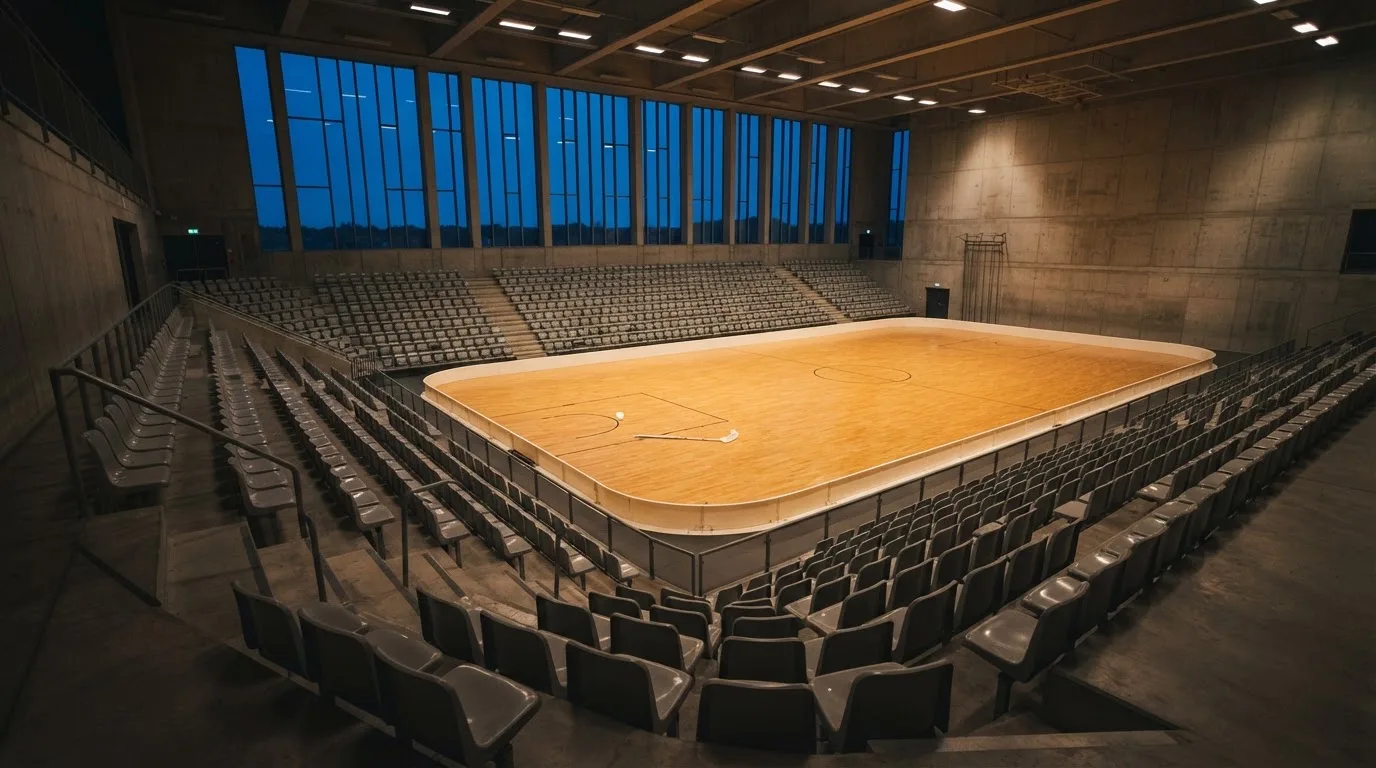
Floorball sits in an unusual place in the British sports-betting market. It is contested by international teams and televised in its heartland, but its profile in Great Britain is small enough that licensed British bookmakers do not all carry it as a discipline. Floorball betting online in any meaningful sense is the World Championship tournament, the Swedish Superligan, and a handful of other national leagues whose fixtures line up with European prime time.
Floorball was invented in Sweden in the late 1960s and its basic rules were set in 1979. The game is played indoors on a court roughly the size of a hockey rink, with five outfield players and a goalkeeper per team. Matches have three 20-minute periods — 15 minutes for juniors — and a tied game goes to sudden-death overtime. The International Floorball Federation governs the sport and had 80 member associations as of 2025. Great Britain has competed at World Championship level but has not come close to a medal; Sweden has won the men’s title ten times, most recently in 2022.
The Men’s World Floorball Championship is held every December in even-numbered years, since 2008. The 2026 edition, the 16th, is scheduled for 4 to 13 December 2026 in Tampere, Finland, with 16 national teams. Finland qualified automatically as host nation and is the defending champion after winning the 2024 title. Tampere’s Tampereen Areena is the venue, and the fixture list covers twelve days of group play, playoffs, and a final on the closing Sunday. From a betting perspective, the tournament is short and finite, with a clear knockout arc.
For everything outside the men’s World Championship, Superligan floorball betting is the next-most-covered stream. The Swedish top flight, divided into an autumn and a spring phase, runs the regular floorball calendar and is offered by some UK-licensed operators as a season-long outright winner market rather than match-by-match coverage. Leagues from Finland, Switzerland and the Czech Republic appear at major tournaments and on a few bookmakers, but the daily fixture menu outside the World Championship is thin. A punter looking to bet on floorball markets week-in, week-out outside the December window will find fewer lines than on any mainstream football league.
That shape — a tournament spike and a long, low season — is the practical reason floorball betting in Great Britain is mostly tournament betting. The headline-grabber every two years is the Men’s Worlds in December, and British bookmakers tend to deepen their markets around it.
Reviewed bookmakers and how each one handles floorball
A bookmaker treating this market well needs three things: a licence from the Gambling Commission for remote betting, a market menu that includes floorball at the right times, and a margin that does not punish the punter for showing up. The set below is the licensed operator set for this comparison — ten brands, each holding a Commission licence as a remote general betting standard operator for real events. Each headline carries what sets the brand apart, because a list of ten names that say the same thing is no list at all.
| Operator | Licence holder and account | Floorball treatment |
|---|---|---|
| DragonBet | DragonBet Ltd, Commission account 64908 | Welsh football and rugby focus; floorball only at major tournaments |
| Betmaster | BM Solutions GB Ltd, Commission account 65699 | Football, cricket, horse racing and NFL core; floorball on coverage weeks only |
| Bar One Racing | Bar-One Racing Limited, Commission account 56516 | Irish racing-led bookmaker; no floorball markets in its standard programme |
| BetGoodwin | Goodwin Racing Limited, Commission account 2927 | Racing-led sports welcome offer; floorball appears intermittently |
| Dabble | Dabble Sports UK Ltd, Commission account 65677 | General sports book, floorball at major events; social features are the draw |
| Spreadex | Spreadex Limited, Commission account 8835 | Combined fixed-odds and spread betting in one app, FCA-regulated for the spread side |
| 10bet | Blue Star Planet Limited, Commission account 43173 | Football, tennis, horse racing cover with cash out and Bet Builder |
| Betboro | Webmedia Development N.V., Commission account 44181 | Wagering-heavy welcome offer on the sportsbook |
| London Bet | Thistle Bet Limited, Commission account 66162 | UK-facing multi-sport book with casino slots layered in |
| NetBet | Netbet Enterprises Limited, Commission account 39170 | Daily and profit boosts with a same-event Bet Builder |
The licence column is the working column on this page. Anyone comparing brands should also know that several of these names can run under a single group licence from the Commission’s perspective, but the licences are real and they are the Commission’s, not a white-label arrangement.
DragonBet
A Welsh-flavoured brand operated by DragonBet Ltd under Commission account 64908, marketing itself on Welsh football and rugby, with American football, in-play and bet builder markets alongside. Floorball is a December-tournament sport for this brand; outside the World Championship there is little reason to log in for it. The licence holds on the Commission’s public register under the category remote general betting standard (real events). A bettor who likes a localised product and wants to bet on floorball markets when the World Championship comes round will find what they need; a punter hunting a deep floorball menu year-round will not.
Betmaster
A multi-sport bookmaker operated by BM Solutions GB Ltd under Commission account 65699, covering football, cricket, horse racing and NFL at the GB App Store listing. The Commission licence is real and sits in the remote general betting standard (real events) category. Floorball appears on the brand’s coverage weeks, which is when the Swedish Superligan final phase or a World Championship falls. Day-to-day the brand is built for the bigger sports. Used for floorball around the December tournament when its multi-sport reach earns its keep; otherwise a football, cricket or racing shop.
Bar One Racing
An Irish independent bookmaker operating as Bar-One Racing Limited under Commission account 56516, with high-street shops across Ireland and race-sponsorship deals at Dundalk, Fairyhouse, Navan, The Curragh, Curraheen Park and Cork. The app carries the racing line and a small sportsbook, but the brand does not push floorball in any of its published menus. Worth holding for the racing side; not a floorball punter’s book.
BetGoodwin
Goodwin Racing Limited runs this brand under Commission account 2927 in the remote general betting standard (real events) category. The sports welcome offer at the App Store listing reads “Bet £10 & Get £15 in Free Bets”, made up of a £5 sports bet, a £5 acca and a £5 Sub-Cover bet — three different bet types, three working parts, with the usual small print on minimum price and free-bet expiry. Floorball shows up where the brand’s coverage lists it, which is intermittent. Not a floorball-first book.
Dabble
Dabble Sports UK Ltd, Commission account 65677, runs a general-purpose sports book with a strong social feed where punters follow each other’s picks. The welcome offer — “Bet £10, Get £10 in Free Bets” — requires a first deposit, carries minimum odds on the qualifying bet, a 7-day expiry on the free bet, and the stake is not returned with winnings. The square deal for a punter who likes the social layer and wants to bet on floorball at tournament time.
Spreadex
Spreadex Limited, Commission account 8835, combines fixed-odds betting with financial spread betting under one app. The fixed-odds side is regulated by the Gambling Commission; the spread side is regulated by the Financial Conduct Authority, and the brand’s own homepage says spread betting losses can exceed the deposit. Features on the App Store include one-click, auto and partial cash out, a Bet Builder across fixed odds or spreads, and live streaming of UK and Irish horse racing, greyhounds, tennis, NFL and selected football. The two licences are separate, the two products behave differently, and both are central to the offering. Floorball sits on the fixed-odds side.
10bet
Blue Star Planet Limited runs the UK-facing 10bet under Commission account 43173, in the remote general betting standard (real events) category. The App Store listing describes a sportsbook covering football, tennis and horse racing with cash out, Bet Builder and live streaming. Floorball is part of the bigger menu when the operator builds one out for a tournament, less so for the rest of the calendar. The brand’s contribution here is the combination of cash out and Bet Builder on the bigger sports where it is strongest.
Betboro
Webmedia Development N.V. operates the brand under Commission account 44181, the only one of the ten with a non-UK operating company in the licence column, with the Commission’s permission nevertheless. The sports welcome offer — a 100 per cent matched free bet of up to £25 on the first qualifying wager — requires a debit card deposit of at least £10 and a first bet of £5 to £25 with at least three selections, each at 3/5 (1.60) or higher. A wagering-heavy structure that needs reading before claiming, as is normal for matched free bets.
London Bet
Thistle Bet Limited runs the brand under Commission account 66162, with a sportsbook covering football, tennis, horse racing, greyhounds, darts, golf, cricket, NFL, NBA, MLB and snooker together with Pragmatic Play casino slots and live in-play betting. Floorball lives in the multi-sport menu where the operator chooses to price it. Useful for the bigger sports and slots; floorball a tournament-time addition.
NetBet
Netbet Enterprises Limited, Commission account 39170, frames its UK sportsbook around Daily Boosts, Profit Boosts, free bet offers, a Bet Builder with instant dynamic odds, and sports stats for major leagues. Floorball appears in its bigger menu. The brand is most useful to a floorball punter when the boost-heavy product meets a tournament calendar with a target — boosted odds on a Sweden v Finland group game hit a punter’s eye in a way a flat line does not.
Legality and the regulatory frame in Great Britain
In Great Britain, the Gambling Act 2005 covers the whole commercial market. The Gambling Commission, a non-departmental public body sponsored by the Department for Culture, Media and Sport, is the licensing regulator. Since the Gambling (Licensing and Advertising) Act 2014, an operator whose remote facilities are used in Great Britain needs a Commission licence wherever it is based — so a Gibraltar, Malta or Curaçao licence is not enough on its own. Northern Ireland is outside the 2005 Act and has its own older law; the right wording is “Great Britain licence” or “GB-licensed”, never a GB licence regulating Northern Ireland.
The Commission’s public register is the whole test of who holds a licence. It is searchable by business name, trading name, domain or Commission account number, and the only thing a brand needs to demonstrate is that its account number, its licence categories and its trading name line up. Licensed operators use .com as well as .co.uk, so the domain proves nothing. The minimum age for any kind of gambling transaction is 18; the operator verifies name, address and date of birth before the first deposit or first bet, and that verification covers bonuses and free bets as well. Several of the brand write-ups above may share a group licence — Ladbrokes and Coral, Paddy Power and Betfair are well-known groupings — and the same holds true on smaller scales.
Licence categories matter because they tell the punter what the brand is licensed to sell. The standard for a serious British sports book is the remote general betting standard (real events) licence; remote general betting standard (virtual events) is a separate category for computer-simulated fixtures; remote pool betting covers off-course pool products like Scoop6; the betting intermediary licence covers exchanges such as Betfair and Smarkets. Every brand named in the comparison above holds the remote general betting standard (real events) licence, which is the right category for floorball betting.
No statutory list of permitted bets or markets exists in Great Britain. The operator offers markets under its own rules and the Commission’s Licence Conditions and Codes of Practice, and that includes in-play, esports, novelty and political markets. There is no statutory cap on stake sizes — operators set their own maximums. The Commission’s role is to police the conditions, not to draw the list.
Payment rules and identity
The credit-card ban for gambling in Great Britain, in force since 14 April 2020 under LCCP condition 6.1.2, covers credit-card-funded payments through an e-wallet as well as direct card payments; debit cards and direct bank transfers are not covered. Identity verification before the first deposit means anonymous play is not available at a licensed site, and source-of-funds questions at higher spend are normal under money-laundering rules.
Bonuses and the promotional cap
Wagering requirements on bonuses are capped at 10x as a regulation in force since 19 January 2026, and mixed-product promotions — an offer that requires gambling on two or more product types such as betting, casino, bingo and lottery — are banned. A £10 bonus at 50x would have needed £500 of betting clearance before the cap; under the cap no more than £100 of wagering is required. Whether the cap extends to free bets with no wagering condition, or any cap on the money value of a bonus, has not been established. Bonus advertising itself is regulated through the CAP Code (non-broadcast) and the BCAP Code (broadcast), enforced by the ASA, alongside LCCP marketing conditions: marketing must be socially responsible, must not appeal strongly to under-18s, and no one who is or seems under 25 may be featured gambling or play a significant role.
Tax on betting winnings
The player pays no tax on betting winnings in Great Britain — a general statement, not tax advice. General Betting Duty is the operator’s tax on gross profits, currently 15 per cent, and from 1 April 2027 a new remote betting rate of 25 per cent applies within it on remote bets placed with UK customers, while remote bets on UK horse racing, bets on self-service betting terminals in licensed premises, pool betting and in-person betting stay at 15 per cent (HM Government policy paper of 26 November 2025). Spread betting has its own rates of 3 per cent on financial products and 10 per cent on others. Until 1 April 2027 the remote rate stays at 15 per cent; whether operators pass any duty on through odds is not established.
Responsible gambling: the framework a licensed bookmaker sits inside
GAMSTOP is the national multi-operator online self-exclusion scheme, a mandatory licence condition for online operators since 31 March 2020. Self-exclusion periods run six months, one year, five years or five years with auto-renewal, and after the minimum period the exclusion stays in place for a further seven years unless the customer asks GAMSTOP to remove it. GAMSTOP covers online sites and apps; betting shops run a separate exclusion service. Every GB-licensed online operator takes part in GAMSTOP, and that includes the ten brands reviewed above.
A financial vulnerability check, set out in LCCP condition 3.4.4 and in force since 30 August 2024, applies to licensed remote betting when a customer’s deposits minus withdrawals exceed £150 in a rolling 30 days from 28 February 2025. The check is a public-record check such as a bankruptcy search or a county court judgment lookup; it is not an income check and it is not a credit reference check. The wider financial risk assessment — the affordability check in press coverage — has been announced in a staged plan (Commission article of 7 July 2026) with no start date and so should be written as “announced, staged, no start date”, never as “in force”. Deposit limits under RTS 12 require operators to offer a gross deposit limit on a fixed time frame: the first changes applied from 31 October 2025 and a second phase was postponed to 30 September 2026, with no settled position on whether the second phase is live.
There is no state-set deposit or loss ceiling for betting. Operators must offer the tools; the customer chooses the limit. Self-exclusion schemes and self-set limits are not the same product — a self-exclusion takes the account off the platform and blocks re-registration, while a deposit limit lets the customer continue at a spend level they have chosen in advance.
Help outside the operator sits with GamCare (which runs the National Gambling Helpline), GambleAware, the NHS gambling clinics, and Gamblers Anonymous. Most major British sports books link to one or more of these from their responsible-gambling pages, and a Commission-licensed operator will surface them clearly rather than bury them. A punter who feels the tools are not enough can self-exclude across every GB-licensed online operator in one step through GAMSTOP, and that decision is binding.
Bonuses, free bets and what they actually cost the bettor
A floorball betting bonus reads simply — “Bet £10, Get £15 in Free Bets” or “100% matched free bet up to £25” — and the small print hides the price. The price is built out of three parts: the qualifying bet, the wagering requirement, and the expiry. A £10 qualifying bet at minimum odds of 1.60 or higher produces £10 of free bet credit on the deal above, and the credit has a 7-day expiry on the offer that names one. A 100% matched bonus with 10x wagering takes £100 of betting turnover to clear if the matched amount is £10; before the cap the same bonus at 50x would have taken £500. The cap is now law — wagering on bonuses is capped at 10x as a Commission licence condition.
The free bet is worth less than its face value because the stake is not returned with the winnings. A £10 free bet at 2.50 returns £25 — £15 profit on a stake the customer never got back. On a 95 per cent payout share market, the expected value of that free bet is £10 × (2.50 − 1) ÷ 2.50 × 0.95 = about £5.70. The headline says £10; the working worth is around £5.70. A cash bonus whose stake does return changes the calculation — the headline and the working worth are closer together, which is why a cash bonus is a better deal than a free bet of the same face value, even when both are described as bonuses.
The marketing language inflates the headline and shrinks the small print. “Risk-free” usually means “if you lose, you get a free bet” — the refund is not cash, the customer cannot withdraw it, and the same wagering rule applies the second time around. “Best odds guaranteed” applies to horse and greyhound racing, not to floorball. “Boosted odds” pins a higher price on one selection with a maximum stake, and the boost usually does not apply alongside other offers on the same selection. “Accumulator insurance” refunds a stake as a free bet if one leg of an acca lets it down — same refund mechanism, same stake-not-returned caveat.
The cost to the punter therefore runs through three layers: the qualifying bet must be at or above a minimum price the operator names; the wagering requirement consumes a defined amount of betting turnover before any of the bonus is withdrawable; and any free bet that comes out of the offer is worth less than its face value to begin with. A punter who reads the three layers together gets a fair sense of what the offer costs, and a punter who only reads the headline pays the difference.
Offers on the reviewed set, read carefully
The comparison set runs across offers heavy and light. A £25 matched free bet with a 10x wagering requirement on a £5 min stake, three selections at 1.60 or higher, costs the qualifying £25 to take part in and produces £250 of betting turnover to clear, plus the free bet itself which expires quickly and is worth around £5 to £6 in expected value on a 2.50 selection. A smaller book welcome of £10 of free bets for £10 cash and minimum odds has fewer moving parts but the same stake-not-returned catch on the credit side. A racing-led “free £15 in three forms” deal splits the credit three ways across a sports bet, an acca and a Sub-Cover bet, none of which behave like one another when it comes to cashing out.
These offers are bookmaker marketing, not endorsements. Each one needs to be read on the operator’s own terms page at the time of claim; the qualifier on a minimum selection count, the expiry on the free bet, the maximum-stake cap on the offer and the cap on winnings from a free bet all sit in the small print, and they can change between the App Store listing and the live terms.
Frequently asked questions
How can it be checked that a bookmaker holds a Gambling Commission licence?
Search the Commission’s public register by the brand’s trading name, its licence holder’s name, or its Commission account number; the account number is the easy one, because it appears on every operator’s own terms page. Look for the remote general betting standard (real events) category and a status of “active”. The domain alone is not enough — licensed operators use .co.uk and .com in equal measure.
How is the return on a bet worked out from the stake and the odds?
Multiply the stake by the decimal odds. A £10 stake at 2.50 returns £25 in total, made up of the £10 stake and £15 of profit. For fractional odds such as 5/2, the £10 stake produces £25 of profit on top of the stake for a £35 total return, because 5/2 means £5 profit for every £2 staked.
What is the bookmaker’s margin and how can it be seen in the odds?
The margin is the slice of every pound staked the bookmaker keeps on average. Convert each price to an implied probability by dividing one by the odds — 2.50 implies 40 per cent, 1.50 implies 66.7 per cent — and add the probabilities across every outcome of one market. Anything above 100 per cent is the margin. A 1.90 / 1.90 two-way event carries about a 5.3 per cent margin.
How do fractional odds such as 5/1 convert to decimal odds such as 6.00?
Divide the numerator by the denominator and add one. 5/1 becomes 5 ÷ 1 + 1 = 6.00. 11/4 becomes 11 ÷ 4 + 1 = 3.75. Evens (1/1) becomes 2.00. The conversion is one-way mechanical, and most British bookmakers display both side by side.
Which tools for controlling play does a licensed bookmaker have to offer?
A licensed remote betting operator must offer GAMSTOP self-exclusion (covering every GB-licensed online bookmaker in one step), a self-set deposit limit on a fixed time frame, timeouts, reality checks and clear links to GamCare, GambleAware and the NHS gambling clinics. A financial vulnerability check fires automatically once a customer’s deposits minus withdrawals exceed £150 in a rolling 30 days.
Are betting winnings taxed in Great Britain, and who pays General Betting Duty?
The player pays no tax on betting winnings. General Betting Duty is paid by the operator at 15 per cent of gross profits on most bets, with a higher 25 per cent remote rate applying to bets placed with UK customers from 1 April 2027. The duty sits in the price the operator offers, not in a separate charge to the bettor.
US & other team sports – Boxing betting
Content created by the «Boxing betting» team
