
Online UFC Betting 2026: How the Markets Work and Where to Place a Bet in Britain
 Available in US
The UFC is a promotion, not a sport in the British statutory sense. That distinction decides almost everything that follows on this page: which bookmakers offer it, how its events reach a betting slip, what the law asks of the operator running it, and where the punter’s pound ends up after the overround has done its work. This guide walks through what the UFC is as a betting subject, how its fights are priced, what makes one bookmaker’s card different from another’s, and where the arithmetic of a wager can surprise someone who has only watched the cage.
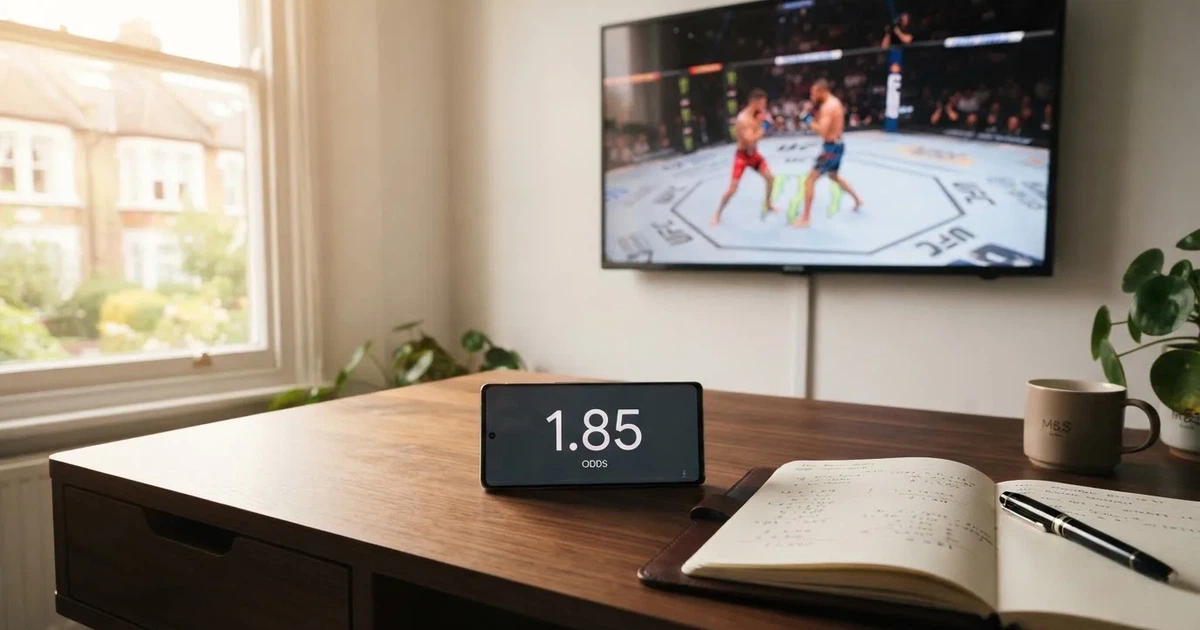
*Current as of 27 October 2026 — verified against the Gambling Commission’s public register.*
Crypto and the Anonymous Bet: Where the Licence Line Falls
The first question a British punter asks about crypto UFC betting is rarely about blockchain. It is about whether the bet can be placed at all without the kind of identity checks that come with a Gambling Commission account. The answer is straightforward, and it comes from the Gambling Act 2005 as amended by the Gambling (Licensing and Advertising) Act 2014: any operator whose remote facilities are used in Great Britain needs a Commission licence wherever that operator is based. A Curaçao or Malta registration does not substitute. Since the money-laundering and customer-identification rules came into force on 7 May 2019, name, address and date of birth are verified before a customer can deposit or gamble at any Commission-licensed site — including when the stake is a free bet or bonus. There is no anonymous play at a licensed bookmaker, and no cryptocurrency deposit short-circuits the check.
What does exist, and what gets called crypto betting in the search results, is a separate offshore market. Operators licensed in Curaçao, Anjouan or similar jurisdictions accept bitcoin, ethereum and stablecoins, settle in the same coin, and let a punter open an account with an email address and a wallet. They do not appear on the Gambling Commission’s register. The consequences are not theoretical: they lose GAMSTOP coverage, the Commission’s complaints route, any approved alternative dispute resolution body, and British consumer protection if funds are withheld. They are not bound by the 10x bonus wagering cap, by the £150 financial-vulnerability check threshold or by the credit-card prohibition. Section 33 of the Gambling Act 2005 targets the operator providing facilities without a licence, not the customer who bets there, so the punter does not commit an offence. “Legal to use” remains the wrong phrase; “outside British consumer protection” is the right one.

For a punter who wants to stay inside British law, the practical upshot is that crypto at a Commission-licensed site is, in practice, a deposit rail rather than an anonymity rail. None of the ten bookmakers featured later in this guide takes bitcoin as a deposit method on the British site, and where the operator’s terms name a wallet option it is operated as a third-party payment processor under the same identity check as a debit card. The ledger-only feature of crypto — a verifiable transaction record — does nothing for a punter who has already given a passport scan to the cashier.
Where crypto betting genuinely earns its name is in the offshore market, where it is one rail among several and the principal alternative to a card. The punter who chooses that path trades regulatory recourse for frictionless signup, and the trade is rarely symmetrical when a payout is contested. For UFC specifically, the fights are on the same global feed, the markets are similar, and the margin on a method-of-victory line at an offshore book is often wider than at a British high-street name. Whether the wider margin compensates for the loss of dispute resolution is a question each punter answers alone.
Bonuses and Free Bets: What the Marketing Word Is Worth
UFC betting offers in 2026 cluster around the same handful of mechanics: a matched first deposit, a free-bet bundle triggered by a qualifying bet, a stake-back on a losing accumulator, and Best Odds Guaranteed on a parallel horse-racing product. The mechanics look interchangeable. The arithmetic underneath them is not.

A matched-deposit bonus at a Commission-licensed bookmaker carries, by the rule in force since 19 January 2026, a wagering requirement capped at 10x the bonus amount. A £10 bonus at the cap means no more than £100 of qualifying bets before the bonus balance converts to withdrawable cash. Mixed-product promotions — an offer that requires betting on two or more product types, such as a UFC bet that unlocks free casino spins — are banned for licensed operators. The cap does not say whether it applies to a free bet with no wagering condition, and the cap on the money value of a bonus is not established. Where a free bet has no rollover, the value is the stake multiplied by the edge the punter keeps, less the edge the bookmaker takes.
The Best Odds Guaranteed concession is not a bonus. It is a settlement rule that applies, in the featured set, to horse racing rather than to UFC — Best Odds Guaranteed from 8 AM on the day of the race on UK and Irish horse racing, paid at the starting price if the SP is higher than the price taken, on singles and multiples, excluding ante-post, tote and pari-mutuel bets. A punter who only bets UFC will not see a BOG payout, and a punter who treats BOG as a UFC feature has misread the small print.
Stake-back acca refunds are the offer closest to a UFC punter’s weekly rhythm. The mechanic is identical across several featured brands: place a qualifying accumulator of three or more legs at minimum odds of 4/1, settle the bet within seven days, and if every leg loses the stake returns as a free bet, usually capped at a stated amount and limited to one per customer. The cap is the number that matters. A £30 cap on a £10 stake is a 3x return conditional on a loss; a £5 cap on the same stake is half the loss. The cap and the qualifying-odds threshold, not the headline refund, decide the offer’s worth.
Free-bet bundles that arrive as three tokens — a £5 sports single, a £5 acca and a £5 Sub-Cover bet — look generous on the page and resolve into a £15 exposure to the house edge across three bets. The punter’s expected loss is the three stakes multiplied by the market margin, and the punter’s upside is the three stakes multiplied by the price taken minus one. The marketing word for these bundles is “free”. The arithmetic word is “stake-not-returned”. When a £10 free bet wins at odds of 4/1 the punter collects £40 of profit, not £50, because the £10 stake was the house’s. That distinction is the single most expensive misunderstanding a new account holder can carry into a UFC Saturday.
The lifetime of a bonus is also part of its cost. A seven-day settlement window on a stake-back offer is generous by current standards; some offers settle in three days and quietly expire the bonus if the punter’s accumulator settles on day eight. Reading the settlement window is the difference between an offer that pays out and one that vanishes.
A punter who reads the small print on three or four offers quickly sees a pattern: the headline price is the same shape — match the deposit, get the bonus, take the free bet — but the underlying terms are not interchangeable. The wagering factor, the qualifying-odds floor, the eligible markets, the settlement window and the cap on the free bet decide the real cost. The marketing on the landing page does not.
Mobile and App: Where the Bet Actually Gets Placed
A UFC card usually opens at 1 AM British time on a Sunday. The punter who wants to back a method-of-victory selection on the main event is, in practice, betting from a handset in bed. The desktop site is, for the median UFC punter, the secondary interface.
The market for UFC betting apps in Britain splits along three lines. The first is the legacy high-street bookmaker, whose app is a port of a website built for desktop and offers the deepest market coverage on fight night but is rarely the most responsive in the in-play window. The second is the native mobile-first brand, designed for the handset and optimised around the bet-builder and acca flow. The third is the exchange, whose app is built around a back-and-lay order book and is a different betting instrument with a different rhythm.
UFC markets on the app are not the same as UFC markets on the desktop. Several featured apps surface a subset of the desktop card: method of victory, fight to go the distance, total rounds, and the moneyline are universal, but round groupings and round-and-method combinations are sometimes app-only and sometimes desktop-only. The punter who places a round-and-method combination bet on the desktop and expects to track it on the app can find the bet simply absent from the app’s open-bets tab. Where the bet settles is the operator’s terms page, not the app; both interfaces should show settled bets, but the open-bet display is where the interface gap shows.
In-play on the app is where the lag matters. A live UFC market updates inside two to three seconds at a major bookmaker during the minute’s rest between rounds; updates slow during a flurry on the canvas, and a punter who taps “back” while a market is suspended watches the bet queue rather than execute. Apps that surface a market-status badge — green for live, amber for suspended, red for closed — give the punter the information they need to know whether a queued tap will execute at the displayed price or sit unconfirmed until the round ends. Apps without that badge force the punter to read the price changing on the slip, which is a slower read.
Notifications are the most under-priced feature of a UFC app. A push for a fighter weighing in over the limit, for a main event cancellation, or for an odds movement above a set threshold changes the punter’s day. Several featured apps offer this; several do not. The punter who relies on notifications as a market signal is choosing an app for a feature the casual user does not know is there.
The app store ratings on the British App Store reflect a different metric — install size, battery use, crash count, payment friction — and a four-star app with a thin UFC card is still a four-star app. The punter who picks an app for the UFC card picks it on the card, not on the rating.
Live Betting and Cash Out: The In-Cage Market
Live UFC betting is a different instrument from pre-fight betting. The market restarts each round, the cash-out price resets on every significant strike, and the punter who entered a pre-fight wager can find its cash-out value swing by twenty per cent in the time it takes a fighter to land a jab.
In-play betting is offered by every featured bookmaker. The bookmaker’s in-play licence is the Commission’s; the in-play controls are the operator’s licence conditions and customer-protection duties. The Commission has not set a maximum in-play stake, and there is no statutory list of permitted in-play markets. The bookmaker sets its own.
Cash out turns an open position into a closed one. The mechanic is the bookmaker offering to buy the bet back at a price derived from the current market and a margin layered on top. The punter who cashes out a winning pre-fight bet at even money receives less than the bet would pay at full settlement, by exactly the cash-out margin the bookmaker applies. That margin is not printed on the slip. The cash-out price shown is the price; the spread inside it is invisible.
The case for cashing out is asymmetric. On a pre-fight wager that has moved against the punter — a fighter has been dropped in round one and the live moneyline is now wider — cashing out recovers part of the stake and closes the bet. On a wager that has moved with the punter, cashing out crystallises a profit that may be smaller than the full-settlement profit if the bet runs to the judges. The bookmaker’s cash-out margin sits inside both prices, and is the cost of the certainty the cash-out is selling.
A live UFC market also opens opportunities that the pre-fight market cannot price. A fighter who is winning the round but has been cut opens a method-of-victory market in the live book that did not exist at the opening price. The punter who watches the cut and reads the in-play market can take a price on a TKO/KO finish that the pre-fight card did not offer. The same punter pays the live margin, which is wider than the pre-fight margin because the live book has less time to balance.
The opposite side of the same trade is the suspension. A market suspended for a flurry is a market in which no bet executes at the displayed price; a market suspended because the round has ended is a market that will reopen with the cumulative score reflected in the new line. A punter who reads a suspension as a price movement misreads the screen. Several apps show a market as “closed” rather than “suspended” during a flurry; the punter who taps a closed market sees no queue and no error.
The case for an in-play UFC wager is, finally, a case against the bookmaker’s margin. The live book has fewer bets to balance across, fewer markets to offset against, and a wider margin to compensate. The punter who places a live wager for the entertainment value of betting during a fight pays for the entertainment in expected terms.
Predictions, Tips and the Limits of Forecast
UFC betting tips and UFC fight predictions are a category of search and a category of commerce. The search is real; the commerce is, in the British market, mostly informal — a tipster with a Telegram channel, a tipster on a paid subscription site, a tipster on a bookmaker’s own “experts” page. The forecast is a probabilistic claim about an event whose outcome no one can know in advance. The value of a tipster is the historical record against closing odds, and that record is the only figure worth quoting.
The first thing to say about a UFC betting tip is that no tip is a probability. A tip that names a fighter to win at odds of 8/11 is a forecast that the fighter will win more often than the 8/11 implies, not a guarantee. The 8/11 implies a win probability of about 58 per cent (11 ÷ 19), and a tip that names the fighter without saying what probability the tipster assigns is a tip without a stake.
The second thing to say is that the closing line is the sharpest estimate the market produces, because it incorporates the bets of every punter who has seen the same information. A tipster who beats the closing line over a sample of a few hundred bets is doing something the market has not yet priced; a tipster who trails the closing line is contributing less than the market would have done without the tip. The punter who pays a subscription for a record that trails the closing line is paying for noise.
The third is that a UFC tip is shaped by the fight’s structure. A tip on the moneyline is a tip on the fight outcome; a tip on method of victory is a tip on a market with a much wider margin and a much smaller sample of historical wins. A tipster with a record of +5 per cent on moneylines and −2 per cent on method-of-victory markets is a tipster whose strength is the moneyline and whose weakness is a market where the closing line is harder to beat. A punter who follows the tipster across markets follows them into a market where they have a negative edge.
A punter who uses tips as one input among several — alongside the form, the weigh-in, the camp news, and the closing line — uses tips as a research tool. A punter who uses tips as the wagering input substitutes the tipster’s bankroll for their own. The substitution is not free, because the tipster is paid, and the tipster’s record is the only measure of whether the substitution earns its keep.
The deeper question — whether any tipster reliably does — is the one a punter answers with their own record, kept across a season, against the closing line. Without that record the punter is betting on the tipster’s word. With it, the punter is betting on data.
The British tipster market also has a regulatory line. A tipster who charges for forecasts is selling a service and falls under the consumer-protection rules; a tipster who runs an affiliate link to a bookmaker is paid by the bookmaker and is, in effect, a marketing channel. The punter who pays for a service and follows an affiliate link is paying twice. The punter who follows an affiliate link without paying should know that the link is a commission the tipster receives regardless of whether the tip wins.
Bet Types, Markets and How the Odds Are Built
UFC betting odds at a Commission-licensed bookmaker cover the fight in three layers. The first is the winner — the moneyline, who wins the bout. The second is the method — by which the winner wins. The third is the round — in which the fight ends. A punter who bets the moneyline sees the sharpest line; a punter who bets the method-of-victory line or the round-and-method combination pays a larger overround because the market is thinner and the bookmaker has less offsetting action.
The basic UFC bet types are:
- Moneyline. A bet on the fighter to win. The bet settles on the official result: knockout, technical knockout, submission, disqualification, or judges’ decision (unanimous, majority, split or technical). Draws are a separate selection.
- Method of victory. A bet on the fighter to win by a stated method — knockout/technical knockout, submission, or decision. The bet loses if the fighter wins by a different method or the bout ends in a draw or no contest.
- Round grouping. A bet on the fight to end in a stated round or range — for example, fight to end in round 1, fight to end in rounds 1-2, or fight to go the distance. Round groupings vary by bookmaker.
- Round and method combination. A bet on the fighter to win in a stated round by a stated method. The bookmaker prices this market wider than the round grouping alone because the market is thinner still.
- Fight to go the distance. A bet that the bout reaches the judges’ scorecards. A bout that ends inside the distance — by stoppage in any round — settles the bet as a loss.
- Over/under total rounds. A bet on whether the number of completed rounds crosses a stated line — usually 0.5, 1.5, 2.5 or 4.5, depending on the bout’s scheduled length. A fight scheduled for five rounds has an over/under at 2.5; a fight scheduled for three rounds has the same line.
Each market’s odds carry an overround — the bookmaker’s margin built into the prices such that the implied probabilities of all outcomes sum to more than 100 per cent. A two-way market priced at 1.90 / 1.90 in decimal odds has a payout share of 1 ÷ (1 ÷ 1.90 + 1 ÷ 1.90), which is 0.95, and a margin of 5 per cent. That 5 per cent is what the bookmaker keeps, on average, of every pound bet on the market. A wider market — a three-way with a draw at, say, 8.00 — has a smaller payout share and a wider margin; the three outcomes multiply the implied probabilities above 1.0 by more.
The punter who reads the overround as the price of the bet reads it correctly: every price the bookmaker publishes already contains the margin, and the margin is what the bookmaker keeps of every unit staked on average over a large sample. The punter who reads the headliner’s price as “the probability” is reading a number that includes the bookmaker’s commission on top of any genuine probability estimate.
The bet builder — sometimes called a same-game multi — is a parlay of selections from the same bout, priced as the product of the implied probabilities. A bet builder with three legs at decimal odds of 1.50, 1.80 and 2.00 has combined odds of 5.40. The combined market’s margin is wider than any single leg’s margin because the bookmaker layers an additional edge on the combination. The bet builder is the highest-margin product on a UFC card, and the highest-margin product is the one most heavily promoted in-app.
A combination bet across fights — a UFC acca — has the same property, multiplied by the number of legs. The combined odds grow with each leg, and the combined margin grows faster than the combined odds, because each leg adds its own margin and the multiplication compounds the overround. A four-fight acca at combined odds of, say, 50/1 is not “50/1 shot” in any meaningful sense; it is a sequence of four markets each with a 5-10 per cent margin, compounded. The acca is the bookmaker’s most profitable UFC product.
The settlement rule is the part of the bet the punter reads last and should read first. A bet on a method of victory voids — returns the stake — if the bout ends in a no contest. A bet on a round grouping voids if the bout is cancelled before the bell. A bet on a fight-to-go-the-distance voids if the bout does not start. The voids are not losses; they are also not wins. The punter who treats a void as a loss overstates the bookmaker’s edge.
Sports and Tournaments: What the UFC Is as a Betting Subject
The UFC is the largest mixed martial arts promotion in the world and the only one whose bouts are routinely priced at every Commission-licensed British bookmaker. The promotion held its first event on 12 November 1993 in Denver, Colorado. It is owned and operated by TKO Group Holdings. Dana White has been president since 2001. By 2026 the promotion had held over 750 events across eight men’s and three women’s divisions. The structure — title fights, numbered events, Fight Nights — produces roughly forty cards a year, with a numbered event every week or two and a Fight Night between.
The standard bout structure is three rounds of five minutes each, with one minute’s rest between rounds. Championship fights and non-title main events are scheduled for five rounds. The rounds are short, the rests are short, and a bout that goes the distance in a five-round fight produces forty-five minutes of fighting time, not counting rest. The structure matters for the betting because a five-round fight offers more round-grouping lines than a three-round fight, and the total-rounds market sits at 2.5 for five-round fights and 1.5 for most three-round fights.
The result of a UFC bout can be a submission, a knockout, a technical knockout, a judges’ decision (unanimous, majority, split or technical) or a disqualification. A bout can also be ruled a no contest. Where a title fight ends in a draw the defending champion retains the title. The settlement rules flow from these definitions: a method-of-victory bet on a knockout loses if the result is a technical knockout ruled after the bell; a bet on a decision wins if the judges’ scorecards deliver any of the four decision types; a bet on a submission loses if the corner stops the bout between rounds.
The ten-point must system applies: three judges score each round, the winner receiving 10 points and the loser 9 or fewer. A 10-8 round is typical for a dominant round. The judges’ scorecards do not enter the betting markets directly, but they shape the judges’-decision market and the fight-to-go-the-distance market, because a fight that goes the distance is a fight decided on the scorecards.
The 2026 UFC schedule is dense. UFC 334 (Gane vs. Hokit) is scheduled for 14 November 2026 at Madison Square Garden, New York City. UFC 335 (Oliveira vs. Lopes) is scheduled for 12 December 2026 at T-Mobile Arena, Las Vegas. The numbered events run on most weekends; the Fight Nights fill the gaps. The punter who plans a week around a card plans around a card that begins at 1 AM British time on a Sunday for an American venue, with the main event later still.
The British betting market treats the UFC as a single sport, not as a federation of regional promotions. Bellator, ONE Championship and PFL appear at the major bookmakers, but the UFC is the headline. The punter who bets across promotions bets across markets priced by different trading desks at the same bookmaker, and the overround on a Bellator card is wider than on a UFC card for the same reason — less liquidity, less offsetting action.
The men’s divisions are heavyweight, light heavyweight, middleweight, welterweight, lightweight, featherweight, bantamweight and flyweight. The women’s divisions are featherweight, bantamweight and flyweight. The title picture in each division produces a sequence of numbered events as champions defend and challengers emerge. The punter who bets a title fight pays a sharper line than the punter who bets a Fight Night preliminary bout, because the title fight has more liquidity and the trading desk has more offsetting action.
The Ten Featured Bookmakers at a Glance
The table below sets out the ten operators featured in this guide, their Gambling Commission remote licence number and licence holder, and what their own terms say about the UFC. The “what the operator’s own terms state” column carries a fact each bookmaker’s own site states about the UFC or about its offer relevant to UFC punting — not a recommendation and not a verdict.
| Brand | Gambling Commission remote licence number and licence holder | What the operator’s own terms state on the UFC subject |
|---|---|---|
| LiveScore Bet | 056859-R-332720-005 (LiveScore Betting and Gaming (Gibraltar) Limited) | Bet Builder allows up to ten selections and covers match result, both teams to score, corners, total goals, player scoring and card markets across the listed sports |
| BetGoodwin | 002927-R-327985-008 (Goodwin Racing Limited) | Sports welcome offer is a £15 free-bet bundle triggered by a £10 qualifying bet, comprising a £5 sports bet, a £5 acca and a £5 Sub-Cover bet |
| Bet600 | 044731-R-323941-016 (Tyche Tech Limited) | Best Odds Guaranteed applies on horse racing; if the starting price is larger than the early or show price taken, the bet is paid at the SP |
| William Hill | 039225-R-319373-015 (WHG (International) Limited) | Best Odds Guaranteed on UK and Irish horse racing from 8 AM on the day of the race, on singles and multiples, excluding ante-post, tote and pari-mutuel bets |
| Hollywoodbets | 053028-R-330019-013 (Hollywoodbets International UK Limited) | Stake-back offer returns the stake as a free bet of up to £30 on the first qualifying losing accumulator (stake £10+, 3+ legs, odds of 4/1 or greater, settled within 7 days); one per customer |
| Fitzdares | 000400-R-103839-030 (Fitzdares Limited) | App offers cash out, accumulators, Lucky 15s, specials and ante-post markets across horse racing, football, tennis, rugby, cricket, golf and American football, with in-play live odds |
| Betfair | 039439-R-319330-013 (PPB Counterparty Services Limited) | In-play betting, Bet Builder, free live streaming of UK and Irish horse racing and football inside the app, and a 90 Minute Payout market |
| DAZN Bet | 048756-R-327274-019 (DZBT Limited) | Deposits start at £5 by debit card, Apple Pay, Paysafecard, Trustly and Skrill, and at £20 by PayPal, with no processing fees |
| NetBet | 039170-R-319343-032 (Netbet Enterprises Limited) | Daily Boosts, Profit Boosts and free-bet offers, a Bet Builder with instant dynamic odds, and sports stats for major leagues |
| Sporting Index | 027343-R-308898-011 (Sporting Index Limited) | Customers can switch between fixed odds and spread betting, with in-play betting, Bet Builder for football, auto cash-out and Multi-Markets |
Each row above names what the operator publishes, not a verdict on what it is worth. The verdicts are in the write-ups that follow.
LiveScore Bet
LiveScore Bet runs under Gambling Commission account 56859, licensed to LiveScore Betting and Gaming (Gibraltar) Limited for remote general betting standard (real events). The Bet Builder tool allows up to ten selections across the listed sports and covers match result, both teams to score, corners, total goals, player scoring and card markets — a builder whose coverage is wider than most. The punter who wants a UFC bet builder with several legs can build one here, and the ten-selection ceiling is the highest in the featured set. The punter who wants a sharp in-play product should expect the Bet Builder product to follow the in-play market, not lead it.
Verdict: a UFC punter who values a wide Bet Builder above a deep in-play market has the right fit here.
BetGoodwin
BetGoodwin runs under Gambling Commission account 2927, licensed to Goodwin Racing Limited. The sports welcome offer is the £15 free-bet bundle: a £5 sports bet, a £5 acca and a £5 Sub-Cover bet, triggered by a £10 qualifying bet. The Sub-Cover bet is the unusual element — a free bet that pays out only on a specific market structure, designed to cover a leg of an accumulator. The bundle is three stakes, three expected losses at the overround, and three separate settlement windows. The punter who treats the bundle as one bonus is reading past its structure.
Verdict: a UFC punter who wants a structured first-bet bundle and is comfortable reading three separate small prints has the right fit here.
Bet600
Bet600 runs under Gambling Commission account 44731, licensed to Tyche Tech Limited. Best Odds Guaranteed applies to horse racing, paying at the starting price if the SP is larger than the early or show price taken. For a UFC-only punter, BOG is irrelevant — it is a horse-racing concession, not a combat-sports concession. The brand’s UFC card is what it is; BOG is the headline feature on the landing page and the headline feature a UFC punter does not use.
Verdict: a UFC punter who also bets horse racing and wants BOG on the racing side has the right fit here. A UFC-only punter does not.
William Hill
William Hill runs under Gambling Commission account 39225, licensed to WHG (International) Limited. The Best Odds Guaranteed concession is the same as Bet600’s — UK and Irish horse racing from 8 AM on the day of the race, on singles and multiples, excluding ante-post, tote and pari-mutuel bets. William Hill is a high-street name with a long market history and a deep UFC card. The punter who wants a familiar brand with a wide sportsbook and a horse-racing concession has it here.
Verdict: a UFC punter who wants the high-street brand with the widest name recognition in the featured set has the right fit here, on the understanding that BOG is a horse-racing feature.
Hollywoodbets
Hollywoodbets runs under Gambling Commission account 53028, licensed to Hollywoodbets International UK Limited. The stake-back offer is the headline: deposit £10 or more by card, place a qualifying accumulator (stake £10+, three or more legs, odds of 4/1 or greater, settled within seven days), and if every leg loses the stake returns as a free bet of up to £30. One free bet per customer. The cap is the figure that matters — £30, not the headline “stake back”. The punter who stakes £40 on a qualifying accumulator and loses is refunded £30, not £40.
Verdict: a UFC punter who builds weekend accumulators and wants a stake-back on the first one has the right fit here, with the cap read closely.
Fitzdares
Fitzdares runs under Gambling Commission account 400, licensed to Fitzdares Limited. The app offers cash out, accumulators, Lucky 15s, specials and ante-post markets across horse racing, football, tennis, rugby, cricket, golf and American football, with in-play live odds. The UFC sits inside the in-play live odds alongside the other sports, and the ante-post coverage of a UFC card is the structure of a British bookmaker — main card, prelims, method-of-victory lines, total-rounds lines. The Lucky 15 is a horse-racing concession too, and the punter who bets Lucky 15s on UFC fights is betting a horse-racing structure on a combat-sports market.
Verdict: a UFC punter who wants a premium-positioned bookmaker with in-play and cash-out and is comfortable paying the higher unit stake has the right fit here.
Betfair
Betfair runs under Gambling Commission account 39439, licensed to PPB Counterparty Services Limited. The Sportsbook is the fixed-odds product; the Exchange is the betting-intermediary product, and the two share a licence holder but are different betting surfaces. In-play betting, Bet Builder, free live streaming of UK and Irish horse racing and football inside the app, and a 90 Minute Payout market are the headline Sportsbook features. The Exchange offers back and lay on the same events and is the sharpest-priced product in the British market — the closest a retail punter comes to trading against other punters. A UFC punter who wants the deepest liquidity and the option of laying a fighter (betting against them winning) has the Exchange; a punter who wants a Sportsbook experience has the Sportsbook.
Verdict: a UFC punter who wants exchange liquidity and the option to lay has the right fit on Betfair Exchange; a punter who wants a Sportsbook has the right fit on Betfair Sportsbook. The same licence covers both, and a punter who opens one account has access to both.
DAZN Bet
DAZN Bet runs under Gambling Commission account 48756, licensed to DZBT Limited. The deposit floor is the unusual element: £5 by debit card, Apple Pay, Paysafecard, Trustly and Skrill, and £20 by PayPal, with no processing fees. The brand is associated with the DAZN sports streaming platform and is a newer entrant to the British market. The punter who wants a low deposit floor and a familiar payment-method list has it here.
Verdict: a UFC punter who wants a £5 deposit floor and a brand connected to a streaming subscription has the right fit here.
NetBet
NetBet runs under Gambling Commission account 39170, licensed to Netbet Enterprises Limited. Daily Boosts, Profit Boosts and free-bet offers, a Bet Builder with instant dynamic odds, and sports stats for major leagues are the headline features. The Bet Builder’s “instant dynamic odds” is the marketing word for a builder whose combined price updates as each leg is added — a feature most builders share but few advertise. The punter who uses the builder heavily will appreciate the dynamic odds; the punter who uses the builder occasionally will not notice.
Verdict: a UFC punter who uses the Bet Builder as their main instrument has the right fit here.
Sporting Index
Sporting Index runs under Gambling Commission account 27343, licensed to Sporting Index Limited. The switch between fixed odds and spread betting is the unusual element: a customer can place a fixed-odds bet on a UFC fight and a spread bet on the same fight, on the same account, with the same app. Spread betting on a UFC fight is a different instrument — the punter’s profit or loss is multiplied by the difference between the spread and the actual outcome, and the loss can exceed the stake. Spreadex, regulated by the FCA for spread betting and by the Gambling Commission for fixed odds, states that spread betting losses can exceed the deposit. Sporting Index’s spread betting on sports is the same shape.
Verdict: a UFC punter who wants both fixed odds and spread betting on the same account has the right fit here, on the understanding that spread betting is a higher-risk instrument than fixed odds and the loss can exceed the deposit.
Overview: What “Online UFC Betting” Actually Means in Britain
Online UFC betting in 2026 is, in practice, a set of betting instruments layered onto a sports promotion whose fights run on American prime time and reach British punters in the early hours of a Sunday morning. The bookmaker is the visible interface; the Gambling Commission is the regulator; the punter is the customer whose identity has been verified before the first deposit and whose self-exclusion is held by GAMSTOP.
The mechanics are the same as those on a Premier League fixture, with one important difference: a UFC fight is a single, indivisible event whose outcome is settled inside the cage in minutes or inside the scorecards in forty-five. There is no second half, no added time, no extra round beyond the scheduled limit. A punter who bets the over/under at 2.5 rounds on a five-round fight is betting on a fight that has four round-end opportunities before the line — after the end of round 1, round 2, round 3 and round 4. A fight that ends in round 5 settles the over/under at 2.5 as a win for the over. A fight that ends in round 1 settles it as a win for the under. The market is binary at each round-end.
The licensing regime is the Commission’s. Every featured bookmaker holds a remote general betting standard (real events) licence and appears on the Commission’s public register. The register is searchable by business name, trading name, domain or account number and is the whole test of whether a brand holds a British licence. A licence number quoted on a marketing page is not the test; a licence number on the register is.
The credit-card ban, in force since 14 April 2020, applies to gambling in Great Britain, including credit-card-funded payments through an e-wallet. Debit cards and bank-based payments are not covered. A punter who funds a betting account with a credit card commits no offence, but the bookmaker commits an offence if it accepts the deposit.
The minimum age is 18. Identity verification — name, address and date of birth — is required before the first deposit. A punter who tries to register at a Commission-licensed site without passing verification cannot deposit or gamble. A free bet or bonus is part of the gambling offer and is gated by the same verification.
The 10x bonus wagering cap is the headline number on the promotional side. The £150 financial-vulnerability check threshold, in force since 28 February 2025, is the headline number on the consumer-protection side. The 25 per cent remote betting duty from 1 April 2027 is the headline number on the tax side, until which date the remote rate stays at 15 per cent. Whether operators pass duty on through odds is not established; the punter should not assume they do and should not assume they do not.
The player pays no tax on betting winnings in Great Britain. General Betting Duty is the operator’s tax, currently 15 per cent on gross profits from remote general betting standard (real events) until 1 April 2027, after which a new remote rate of 25 per cent applies within the duty. Pool betting, in-person betting and remote bets on UK horse racing stay at 15 per cent. The Commission’s statutory levy is a separate charge to the operator, not a tax on the player.
The punter who reads these numbers as a checklist has read them correctly. The punter who reads them as the cost of betting has read them as the cost of the bookmaker’s licence to take the bet.
Legality and Regulation: The British Frame
The Gambling Commission is the regulator. It is a non-departmental public body sponsored by the Department for Culture, Media and Sport. It licenses the whole commercial market under the Gambling Act 2005, which covers Great Britain — England, Scotland and Wales. Northern Ireland is outside the Act and has its own older law, so a GB licence does not regulate Northern Ireland. A “GB-licensed” or “licensed in Great Britain” formulation is correct; “licensed in the UK” is a phrase that papers over the Northern Ireland distinction.
The Gambling (Licensing and Advertising) Act 2014 amended sections 33 and 36 of the Gambling Act 2005. The effect is that any operator whose remote facilities are used in Great Britain needs a Commission licence wherever it is based. A Gibraltar, Malta or Curaçao licence is not a substitute. There is no state monopoly on gambling in Great Britain; there is no cap on the number of licences.
The licence categories for the remote market are: remote general betting standard (real events), remote general betting standard (virtual events), remote general betting limited, remote pool betting, and remote betting intermediary (the licence for betting exchanges). Every featured bookmaker in this guide holds a remote general betting standard (real events) licence. Betfair’s exchange runs under the betting-intermediary category. Spread betting on sports is regulated separately for financial instruments (where the FCA is responsible) and otherwise under General Betting Duty.
There is no statutory list of permitted bets or markets. An operator holds a licence for a category and offers markets under its own rules and the Licence Conditions and Codes of Practice (LCCP). In-play betting is offered by GB bookmakers and the controls are the operator’s licence conditions and customer-protection duties. Esports are treated like any other event; virtual events are a separate licence category. Bets on politics, TV shows and novelty markets are offered by GB bookmakers and no statutory prohibition was found. The punter who bets on a novelty market is betting on a market the operator chooses to offer under its own rules.
Advertising is not licensed by the Commission. The CAP Code (non-broadcast) and BCAP Code (broadcast) cover it, enforced by the ASA alongside the LCCP marketing conditions. CAP Code section 16 requires marketing to be socially responsible, not of strong appeal to under-18s, and no one who is or seems to be under 25 may be featured gambling or play a significant role (with an exception for marketing placed where a bet can be made directly). That rule concerns who may appear in an advertisement, not who may bet.
The promotion rules in force since 19 January 2026 cap wagering requirements on bonuses at 10x (a £10 bonus at 50x requires £500 of qualifying bets; under the cap no more than £100), and ban mixed-product promotions — an offer that requires betting on two or more product types, such as a UFC bet that unlocks casino free spins. Whether the cap applies to free bets with no wagering condition, and any cap on the money value of a bonus, are not established. The “whistle-to-whistle” rule is an industry code, not law: since 1 August 2019 betting advertisements are not shown on TV from five minutes before a live sporting event to five minutes after it, before the 9 pm watershed, with horse and greyhound racing excluded. The Premier League clubs’ withdrawal of gambling sponsorship from the front of matchday shirts from 2026/27 is voluntary, not law.
The offshore market sits outside this frame. Providing gambling facilities in Great Britain without the licence the Act requires is an offence under section 33 of the Gambling Act 2005 — up to 51 weeks’ imprisonment, a fine up to level 5, or both on summary conviction; six months in Scotland. The offence is aimed at the operator. No offence aimed at a customer who merely bets on an unlicensed site was found. The honest framing is unlicensed = no GAMSTOP coverage, no Commission complaints route, no approved dispute-resolution body, no British consumer redress if funds are withheld, not bound by the 10x bonus cap, not bound by the £150 vulnerability check, not bound by the credit-card prohibition. The punter who bets offshore is not committing an offence; the punter who loses funds offshore has no British recourse.
Responsible Gambling: The Customer-Protection Frame
The instruments that protect a British punter are several, and they sit at different points in the betting journey. GAMSTOP is the multi-operator online self-exclusion scheme and a mandatory licence condition for online operators since 31 March 2020. A punter who self-excludes via GAMSTOP is excluded from every licensed online operator for a stated period — six months, one year, five years, or five years with auto-renewal — and after the minimum period the exclusion stays in place for a further seven years unless the customer asks GAMSTOP to remove it. GAMSTOP covers online sites and apps; betting shops use a separate self-exclusion scheme.
The financial vulnerability check (LCCP condition 3.4.4, in force since 30 August 2024) applies when a customer’s deposits minus withdrawals exceed £150 in a rolling 30 days (since 28 February 2025). The check is a public-record check — bankruptcy or county court judgments, for example — not an income check and not a credit reference check. A punter whose deposits net of withdrawals cross the £150 threshold is asked to confirm the absence of significant debt before further deposits are processed.
Financial risk assessments — the “affordability checks” of the press — were announced in a staged plan (Commission article of 7 July 2026), with no start date. The honest framing is “announced, staged, no start date”, never “in force”.
Deposit limits (RTS 12) require operators to offer a gross deposit limit on a fixed time frame. The first changes applied on 31 October 2025; a second phase was postponed to 30 September 2026, and whether the second phase is live is not established. There is no state-set deposit or loss ceiling for betting in Great Britain: limits are the customer’s choice. A punter who wants a £50 weekly deposit cap sets one at the cashier; a punter who wants no cap can set no cap, within the operator’s own limits.
The help line is GamCare, the National Gambling Helpline. The charities are GambleAware, the NHS gambling clinics and Gamblers Anonymous. A punter who is concerned about their own betting or someone else’s can reach any of these without going through the bookmaker. Several featured bookmakers link to GambleAware, GamStop and Gamblers Anonymous from their safer-gambling pages.
The credit-card prohibition is a customer-protection rule. A punter who cannot fund a betting account from a credit card cannot run a credit-card balance as a betting float. The rule is part of the customer-protection frame, not the consumer-finance frame.
The punter who reads the customer-protection frame as a checklist — GAMSTOP, financial vulnerability check, deposit limit, help line, credit-card prohibition — has read it correctly. The punter who reads it as a substitute for personal discipline has read past its limits, because the frame is a backstop, not a budget.
The Margin and the Price
The bookmaker’s margin is the difference between the true probability of every outcome and the implied probability embedded in the odds. It is the cut the bookmaker takes of every pound staked, on average, over a large sample of bets.
A two-way market priced at 1.90 / 1.90 in decimal odds (9/10 in fractional) has a payout share of 1 ÷ (1 ÷ 1.90 + 1 ÷ 1.90), which is 0.95, and a margin of 5 per cent. In this illustrative two-way market, the expected loss for the punter is a band of 5% to 6%, depending on the bookmaker’s overround on that specific market. The implied probability of each selection is 1 ÷ 1.90 = 52.6 per cent, and the two implied probabilities sum to 105.3 per cent. The 5.3 per cent above 100 per cent is the margin.
A three-way market — the moneyline plus the draw, or the moneyline plus method-of-victory groupings — has a wider margin. A method-of-victory market at, say, 2.20 for a KO win, 3.50 for a submission win and 2.50 for a decision has implied probabilities of 45.5 + 28.6 + 40.0 = 114.0 per cent and a margin of 14.0 per cent. The wider market is the wider margin.
The margin is what the bookmaker keeps of every unit staked on the market, on average. A punter who places 100 bets of £10 each at a 5 per cent market has staked £1,000 and lost, on average, £50 to the overround. A punter who places the same 100 bets at a 14 per cent market has staked the same £1,000 and lost, on average, £140.
The punter who reads the overround as a fee reads it correctly: the fee is the cost of the bet, and the fee varies by market. Moneyline markets are sharp. Method-of-victory markets are wider. Round-grouping markets are wider still. Round-and-method combination markets are widest. Bet builders are widest of all. Accumulators compound the overround across legs, so a four-fight acca carries the multiplied margin of four markets.
The punter who reads the headline price as a probability reads a number that already contains the fee. The punter who reads the closing line as the sharpest estimate the market produces reads it correctly: the closing line incorporates the bets of every punter who has seen the same information, and it is the benchmark against which a tipster is measured.
The honest framing of the margin is that it is the price of the bet, charged to the punter, paid in expected terms over a large sample. The dishonest framing is that it is a “vig” or a “juice” or a “commission” that disappears if the punter picks winners. It does not disappear. It compounds.
Frequently Asked Questions
Where can a UFC fight be bet on in Britain?
At any of the ten featured bookmakers in this guide, each of which holds a Gambling Commission remote licence and is searchable on the Commission’s public register. The register is the test of who holds a licence; a brand that does not appear there is unlicensed in Great Britain, and bets placed there carry no British consumer protection.
Where should a punter check whether a bookmaker holds a Gambling Commission licence?
On the Gambling Commission’s public register, searchable by business name, trading name, domain or account number. A licence number quoted on a marketing page is a starting point, not a confirmation; the register is the confirmation.
How is the return on a winning bet worked out from the stake and the odds?
For decimal odds, the return is the stake multiplied by the odds. A £10 stake at decimal odds of 4.00 returns £40 — £30 of profit and the £10 stake. For fractional odds, the return is the stake multiplied by (a/b + 1) for odds of a/b. A £10 stake at 3/1 returns £40 (£30 profit plus the £10 stake). The stake is returned with a win.
What is the bookmaker’s margin and how can it be seen in the odds?
The margin is the cut the bookmaker keeps of every pound staked, on average. It is seen by adding up the implied probabilities of every outcome in a market and subtracting 100 per cent. A two-way market at 1.90 / 1.90 has implied probabilities of 52.6 + 52.6 = 105.3 per cent and a margin of 5.3 per cent. A wider market has a wider margin.
What is a UFC method-of-victory bet?
A bet on the fighter to win by a stated method — knockout/technical knockout, submission, or decision. The bet loses if the fighter wins by a different method or the bout ends in a draw or no contest. The market carries a wider margin than the moneyline because the market is thinner and the bookmaker has less offsetting action.
Combat & motorsport – Boxing betting
Content created by the «Boxing betting» team
