
1X2 football betting tips: what "today's tip" actually rests on
 Available in US
Data current as of 27 October 2026, checked against the Gambling Commission’s public register.
A “betting tip 1X2 today” search promises a selection. The market rarely delivers one. The 1X2 market is the simplest frame the bookmaker offers — three outcomes, one match, no spread — and the tip sheets that sell certainty on top of it have nothing the betting slip itself does not already show. The price on the home win, the price on the draw and the price on the away win add up to more than 100% on purpose; the gap is the bookmaker’s margin, and the tip is supposed to find a price that beats it. Some tips do. Most do not. The rest of this guide is about seeing which is which.

It also matters that this is a guide, not a tip sheet. No specific match, no selection, no scoreline and no “banker” appears in what follows, because no source can deliver one in advance and a tipster who claims otherwise is selling a story. What follows is the plumbing underneath the tip: the three-outcome frame itself, the bookmaker’s margin hiding inside it, the safer-gambling rules around the customer placing it, the welcome offers that gate a first deposit, the live markets that re-price during the match, the staking discipline that decides whether a tip lands in profit, and the comparison of ten UK-licensed bookmakers against those criteria. The angle throughout is cost — what a tip, an offer, a market or a brand actually takes out of the punter’s pocket, and where that cost is hidden.
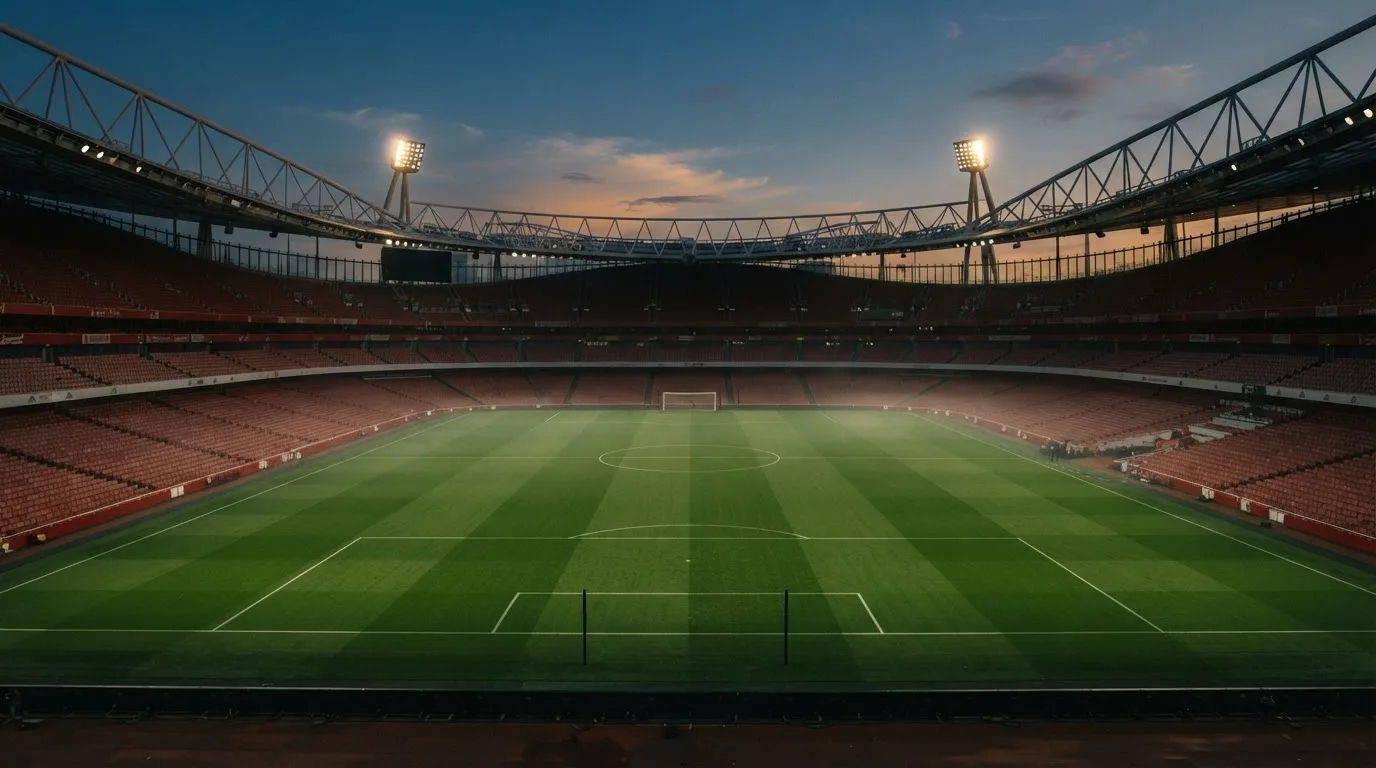
A standard association football match is the frame this market was built for. It runs for ninety minutes of regulation time, split into two forty-five-minute halves, with stoppage time added for substitutions, injuries and other delays, and the referee is the sole arbiter of the clock. A match can therefore end in a home win, an away win, or a draw — those are the three outcomes the 1X2 market names. In a league fixture each drawn team takes a point; in a knockout fixture the match goes to extra time and, in most competitions, to a penalty shoot-out whose goals do not count towards the official scoreline. The Laws of the Game that set those ninety minutes were first agreed in 1897 and have been administered since by the International Football Association Board; the bookmaker’s market is not bound by them, and the difference matters at the moment a goal is scored in stoppage time, or when a settled bet on the ninety-minute result turns on whether extra time counts.
The legal frame a tip is placed inside
Every commercial bookmaker taking remote bets from customers in Great Britain needs a Gambling Commission licence, and the licence has to be held at the point of consumption — that is, the operator must hold one wherever it is based. The Commission’s role, the licence categories and the conditions attached to them are not technicalities a tip can ignore, because they determine what consumer protection a stake enjoys if the bet goes wrong.
The regulator is the Gambling Commission, a non-departmental public body sponsored by the Department for Culture, Media and Sport. It administers the Gambling Act 2005 across Great Britain — England, Scotland and Wales. Northern Ireland is outside the Act and runs under its own older law; a bookmaker “licensed in the UK” is licensed for Great Britain only, and that wording is the one to use. Since the Gambling (Licensing and Advertising) Act 2014 any operator whose remote facilities are used in customers in Great Britain needs a Commission licence wherever it is incorporated. A Curaçao, Maltese or Gibraltar licence is not a substitute for a Commission licence when bets are taken from a GB customer, and offshore does not mean unregulated — it means regulated somewhere else.
The Commission’s public register is searchable by business name, trading name, domain and account number, and the register is the whole test of who holds a licence. Quote no count of licensed operators without its access date. Several well-known brands trade under one licensee — Ladbrokes and Coral under LC International Limited, Paddy Power and Betfair under PPB Counterparty Services Limited — and never present such brands as independent operators. Licensed operators use .com as well as .co.uk, so the domain alone proves nothing. Financial spread betting is the one corner where the regulator is different: Spreadex, for example, is regulated by the Financial Conduct Authority for spread betting and by the Gambling Commission for fixed-odds betting, and the company itself states that spread betting losses can exceed the deposit. Spreadex’s own £60 free-bet welcome, however, sits inside fixed odds, where the Commission handles the consumer protection.
The minimum age to bet is eighteen. Identity is verified before the first deposit or stake, including when a customer only wants a free bet, and that verification has been compulsory at every GB-licensed online bookmaker since 7 May 2019. The punt sits inside a wider safety net — deposit limits, GAMSTOP self-exclusion, financial vulnerability checks — and the tip’s expected return has to beat not only the bookmaker’s margin but also the fact that a small share of every pound staked will be lost to a player who should not have been playing at all. No tip can be read in isolation from that.
What a stake is protected by, and what it is not
A stake at a GB-licensed bookmaker sits inside several protections an offshore book cannot offer. Credit cards have been banned for gambling in Great Britain since 14 April 2020, including credit-card-funded payments through an e-wallet; debit cards and bank-based payments are not covered. The bet is placed by a verified customer, not an anonymous one. If something goes wrong, a complaint can be raised with the Commission and, where appropriate, referred to an approved alternative dispute-resolution body. Money laundering rules mean source-of-funds questions at higher spend are normal.

What is not protected: the bet itself. No tip, no price, no promotion can guarantee a return. The bookmaker’s margin sits inside every price; the promotion terms sit inside the headline; the betting slip is the contract. The player’s tax position is also theirs to settle — there is no UK tax on individual betting winnings for a non-professional customer, but that is a tax point, not a tip point, and a professional gambler asks HMRC or an adviser. The Commission’s levy is the operator’s separate charge, not a customer tax.
Where the offshore boundary cuts
A GB licence is compulsory at the point of consumption. Providing gambling facilities in Great Britain without the licence the Act requires is a criminal offence under section 33 of the Gambling Act 2005 — aimed at the operator. No offence aimed at a customer who merely bets on an unlicensed site was found: do not call it “legal to use”, because the cost sits elsewhere.
The cost of an unlicensed book is the absence of British protection: no GAMSTOP coverage, no Commission complaints route, no approved dispute-resolution body, no British consumer redress if funds are withheld, no obligation to honour the 10x wagering cap or the £150 vulnerability check. The framing has to be even-handed — licensed means checks, limits, GAMSTOP and a bonus cap, but also identity verification before the first bet; unlicensed means none of those protections and the chance of a real loss of funds. Neither is the “safe choice” by default.
Enforcement is disruption, not blocking: cease-and-desist notices, search-engine referrals, work with registrars, hosts and payment providers. The Commission has been given, or is about to receive, court-order DNS blocking powers; never write that ISP blocking is in operation. A bookmaker whose domain returns nothing in a GB search may simply have been pushed off the visible web, not closed.
The safety net a tip can rely on
A tip is a forecast; the safety net is what stops a bad run from finishing the punter. The British safety net runs through three named services: GAMSTOP, GamCare and the NHS gambling clinics, with GambleAware funding the lot. Every GB-licensed online operator takes part in GAMSTOP, and self-exclusion is a mandatory licence condition for online bookmakers.
GAMSTOP and self-exclusion
GAMSTOP is the national multi-operator online self-exclusion scheme. It is free, it covers online sites and apps, and periods are six months, one year, five years, or five years with auto-renewal. After the minimum period the exclusion stays in place for a further seven years unless the customer asks GAMSTOP to remove it. Betting shops use a separate service. The scheme cannot stop a customer opening an offshore account, which is the reason the Commission’s enforcement effort matters at all.
GamCare, GambleAware and the NHS
GamCare runs the National Gambling Helpline and online chat. GambleAware funds treatment and research. The NHS runs a small number of regional gambling clinics for severe problem gambling, with referral through a GP or self-referral. Gamblers Anonymous runs peer-support meetings. The point of naming them is to make sure the tip the reader came for does not displace the help a problem gambler needs. Bookmakers’ own safer-gambling pages link to BeGambleAware, GamCare, GAMSTOP, Gambling Therapy and the Betting and Gaming Council, and the links are a small piece of the page, not the whole of it.
Financial vulnerability checks and deposit limits
The Commission’s LCCP condition 3.4.4 took effect on 30 August 2024 and applies to licensed remote betting. Once a customer’s deposits minus withdrawals exceed £150 in a rolling 30 days — since 28 February 2025 — the operator runs a public-record check, for example bankruptcy or county court judgments. This is not an income check and not a credit reference check; the data sources are public registers. The Commission has also announced financial risk assessments in a staged plan, with no start date at the time of writing. Write “announced, staged, no start date”, never “in force”.
Deposit limits are a separate lever. Operators must offer a gross deposit limit on a fixed time frame; the first changes applied on 31 October 2025 and a second phase was postponed to 30 September 2026, and whether the second phase is live is not established at the time of writing. There is no state-set deposit or loss ceiling for betting — limits are the customer’s choice. The £500 maximum stake on any single bet a licensed operator may set on its own terms is a stake limit, not a deposit limit, and the two should not be confused in a staking plan.
The price of a “free” welcome offer
Welcome offers are the loudest line on a bookmaker’s home page and the most expensive line on a first-month bankroll. They are described qualitatively here — the headline price, the form of the bonus, the rollover attached to it, the deadline — and the reader checks the operator’s own terms for the current wording. No code is printed in this guide and none should be searched for; the value of the offer is in its terms, not in the act of claiming it.
What “free bet” actually means
A free bet is a token the customer stakes, not money the operator pays back on a win. The stake is usually not returned with the winnings; a £10 free bet at evens returns £10 in profit, not £20. That distinction is the heart of how to read any welcome offer. The free bet’s value to the customer is the expected profit, calculated as the free-bet amount multiplied by the edge above evens, divided by the price, and adjusted for the market’s margin. A £10 free bet at 3.00 with a 5% margin is worth roughly £6 in expected profit, not £20; the headline number is the stake, not the win.
Wagering requirements and the 10x cap
A “wagering requirement” is the multiplier that turns a bonus into turnover. A £10 bonus with a 10x requirement needs £100 of qualifying bets before the bonus balance is withdrawable. The Commission’s bonus cap, in force since 19 January 2026, sets 10x as the maximum: a £10 bonus at 50x needs £500 of bets; under the cap no more than £100. That cap applies to bonuses with a wagering condition; whether it applies to free bets with no wagering condition is not established. Mixed-product promotions — an offer that requires gambling on two or more product types such as betting, casino, bingo and lottery, for example “bet on football to get free spins” — are banned outright under the same rules.
The arithmetic of an offer
The maths of a welcome offer is simple once the headline is stripped off. A £10 free bet at evens with no wagering condition is worth £10 in expected profit on a coin-flip market with no margin — and less on a market with a margin. A £60 free-bet bundle split across several tokens, each with its own minimum odds, its own expiry and its own stake-not-returned rule, costs the customer the qualifying bet plus the time it takes to place the bundle; the headline figure is gross, the expected profit is the value after the qualifying bet has been paid for. Spreadex’s current £60 in free bets for a £10 fixed-odds bet, with the free bets usable across fixed odds and spread betting, fits that pattern: the qualifying bet is the price of admission, and the bundle’s value is the expected profit on each token at the prices the customer chooses.
Offers a comparison has to describe
Midnite’s sports welcome offer is a useful example of how the headline and the conditions diverge. New customers who bet £5 or more on pre-match odds of EVS (2.0) or greater within 14 days of sign-up receive £25 in free bets and 50 free spins, valid for 7 days. The qualifying bet has to be at evens or above, the bonus expires in a week, and the free spins carry their own terms. BetMGM’s sports welcome offer is four £10 free bets — two football accumulators of four or more selections and two sports multiples of two or more — for a £10 deposit and a sports bet within seven days, each token valid for seven days, with minimum odds and opt-in required. The headline is “£40 in free bets”; the conditions are the price.
The honest framing of any welcome offer is: a small expected value in return for a hard qualifying bet, an expiry that punishes delay, and a stake-not-returned rule that halves the apparent value. The arithmetic is the same across the market; the conditions are where bookmakers differ, and the conditions are what the comparison below weights.
Live betting and cash out on the 1X2 market
The 1X2 market is most active before kick-off, but it does not close when the whistle blows. In-play betting re-prices the three outcomes through the match, and cash out lets the customer lock in a position before the final whistle. The two features share a cost — the bookmaker’s margin is wider in-play than pre-match — and a tip that ignores that cost is a tip that overstates the punter’s edge.
How in-play pricing works
In-play 1X2 is a function of time, score and expected goals. The bookmaker’s model re-prices the home, draw and away outcomes continuously, and the margin sits inside every re-price. The wider the margin, the harder it is for the customer to find value; the bookmaker has to keep the margin on a market that can swing by a goal in seconds. The punter’s tool is the same as pre-match: a price above the true probability once the margin is taken out. The bookmaker’s edge is the same: the margin is widest on the outcome the model is least sure about.
Cash out and what it costs
Cash out is the bookmaker’s offer to settle a bet early at a price set by the bookmaker’s own model. The price is not the live market price; it is the price the bookmaker is willing to pay, less the bookmaker’s margin on that quote. The offer is therefore a bet on the bet: the customer is paying the bookmaker to take the other side of the position at a spread. A cash-out price that looks generous has usually been tightened by the time the customer clicks accept; a cash-out price that looks tight has usually been widened. The cost is not visible in the headline and is not advertised on the betting slip.
Live streaming and the data behind it
A live stream is a service the bookmaker funds in order to keep the customer on the in-play product. It is not free in any meaningful sense; the cost is the wider margin on the markets attached to it, and the absence of an exchange to check the price against. The bookmakers that lead on in-play 1X2 — those that price up the most events, settle cash out quickly, and stream the matches they price — are the ones the in-play section of the comparison below weights. A bookmaker without live streaming is not a worse bookmaker, but it is a worse bookmaker for the in-play 1X2 customer.
Building a tip without inventing one
No specific match appears in this guide, because no source can deliver one in advance and a tipster who claims otherwise is selling a story. What can be delivered is the method: the inputs a serious tip rests on, the way those inputs feed the price, and the discipline that decides whether the tip lands in profit over a season.
Form, statistics and the sample-size problem
Form is the most public input: last-five results, goals for and against, home and away splits. It is also the smallest. Five matches is a small sample; a single red card or a single deflection can move a team’s form number by twenty per cent. Statistics widen the sample — expected goals, shots on target, possession in the final third — but every public statistic is a backward-looking measure of a model the customer does not see. Line-ups widen the sample further, because the team’s underlying quality depends on who is on the pitch. None of these inputs is a tip; each one is a piece of the puzzle the bookmaker’s model has already used to set the price.
The price as the tip
The price on the home win, the draw and the away win is the sum of the bookmaker’s view of form, statistics and line-ups, plus the bookmaker’s margin. A price above the true probability once the margin is taken out is a value bet; a price below the true probability is a bet the customer should not place, whatever the tip sheet says. The art of building a tip is to find the price where the model the customer can build beats the model the bookmaker has built, and to stake on that price rather than on the outcome. The price is the only public piece of the tip that survives the bookmaker’s margin.
Bankroll discipline and staking
Bankroll discipline is the difference between a tipster and a gambler. A flat stake of one or two per cent of bank on every selection, regardless of how confident the tip, is the staking plan most professional tipsters use; a variable stake scaled to perceived edge is the staking plan most professionals say they use. The arithmetic is the same either way: a tip that wins 55% of the time at average odds of 2.10 with a 5% margin returns about 5.5% on bank per hundred bets, and a tip that wins 45% of the time at the same average odds loses about 16% of bank. The variance is real either way. A flat stake keeps the variance predictable; a variable stake can blow up when confidence is wrong.
Why no tip is ever certain
A tip is a probability, not a prediction. The most heavily researched football match in a season is decided by twenty-two players on a pitch in front of a referee, and the result turns on chances that did not exist when the tip was written. The honest framing of any tip is “I think this is more likely than the price implies”, not “this will happen”. The bookmaker’s margin is the only certainty in the market; the rest is probability, and probability is not a forecast.
The free tip and the paid tip
A free tip sheet sells advertising; a paid tip sheet sells a story. Neither one has an edge the customer can verify in advance, and a tip that wins ten in a row is more often a tip that has been cherry-picked from a much longer list of tips that lost. The right comparison is the tipster’s audited, stake-notional return over hundreds or thousands of selections, not the last ten results. Most tip sheets do not publish that figure, and the ones that do usually cannot sustain it.
The 1X2 market itself
The 1X2 market is the simplest frame a bookmaker offers: three outcomes, one match, no spread. Its simplicity is its strength and its weakness — the customer knows what is being priced, but the bookmaker’s margin sits inside a market with only three prices to absorb it.
What the three outcomes mean
The “1” is the home win, the “X” is the draw and the “2” is the away win. The bet is settled on the result at the end of normal time unless the market rules state otherwise; extra time and penalties do not count towards a settled 1X2 bet on a knockout match unless the operator’s market rules say they do. The punter checks the market rules before staking; the difference between a 90-minute result and a cup result is the difference between a winning and a losing bet in the last minute of extra time.
Single, accumulator and each-way
A single is a bet on one outcome. An accumulator (“acca”) is a bet on several outcomes combined, where the odds of the legs multiply into one price and the stake is lost if any leg loses. Each-way is a structure used on horse racing and some outright markets: two bets of equal stake, one on the win and one on the place, and the stake doubles. In football, the each-way structure is rare outside specific outright markets; the punter checks the market rules before treating an each-way 1X2 as standard.
The bookmaker’s margin
The bookmaker’s margin is the difference between 100% and the implied probability of the three outcomes. For a market at 1.90 / 1.90 / 1.90 — fractional 9/10 each way — the implied probability is 1 ÷ 1.90 for each outcome, or about 52.6% each. The three implied probabilities sum to about 157.9%, and the margin is the difference between that sum and 100%, or about 57.9% — clearly out of line, and a sign the example is illustrative rather than real. The illustrative two-way version is more useful: at 1.90 / 1.90 the implied probability is 52.6% each, the payout share is 1 ÷ (0.526 + 0.526), or about 95%, and the margin is therefore about 5%. That is a typical margin for a balanced 1X2 market before commission.
The margin is the only certainty in the market. It is the bookmaker’s edge on every pound staked, and the only question for the customer is whether the tip can beat it over a season.
How to see the margin in the odds
The margin is visible the moment the three prices are added together. A balanced 1X2 at 1.90 / 1.90 / 1.90 sums to about 157.9% of true probability, which is implausibly wide; a realistic 1X2 at 2.10 / 3.40 / 3.60 sums to about 47.6% + 29.4% + 27.8%, or about 104.8%, and the margin is therefore about 4.8%. The wider the margin, the more the bookmaker keeps. The punter’s tool is to compare margins across bookmakers and across markets before staking.
How a winning bet pays back
The arithmetic of a winning bet is the simplest on the page. Stake multiplied by odds equals the return — the stake plus the profit. A £10 stake at 2.50 returns £25, of which £10 is stake and £15 is profit. A combination bet multiplies the odds of the legs into one price: a double at 2.00 / 3.00 has combined odds of 6.00, and a £10 stake returns £60 if both legs win. The stake is returned on every winning settled bet; the free bet is the exception, not the rule.
The ten bookmakers, compared on what costs the punter
The comparison below covers ten UK-licensed bookmakers, each holding a remote general betting licence (real events) issued by the Gambling Commission. The licence is the floor: every brand below meets it. The differences between brands are in pricing, features, welcome offers and live-market depth, and the comparison is built to make those differences visible. No single brand is “the only” licensed one, and the order is not a ranking of safety — it is a structure for the comparison.
The table below sets out the licence holder and account number from the Commission’s public register, and the headline operator position on the 1X2 market as the operator’s own terms state it. Every cell carries a specific from the operator’s own listing; an em dash marks a single rare absence, never a pattern, and a column the inputs do not cover is dropped rather than padded with the marker.
| Operator | Licence holder and Commission account | Position on the 1X2 market and pricing |
|---|---|---|
| Paddy Power | PPB Counterparty Services Limited, account 39439 | Bet Builder+, Popular Bet Builders, Super Sub (a bet rolls over to the replacement if a selected player is substituted), expanded Win More markets, player and ACCA stats on the app |
| 10bet | Blue Star Planet Limited, account 43173 | Football, tennis and horse racing covered; Cash out, Bet Builder and Live Streaming on the app |
| Ladbrokes | LC International Limited, account 54743 | Odds boosts on horse and greyhound bets, Best Odds Guaranteed on UK and Irish horse races, in-play betting and Acca Boosts |
| 888sport | 888 UK Limited, account 39028 | Pre-match and in-play, Cash Out, Bet Builder, racing streams, BetFinder form tools, a live bet feed and daily boosted odds |
| Spreadex | Spreadex Limited, account 8835 | FCA-regulated for spread betting and Commission-regulated for fixed odds; £60 in free bets for a £10 fixed-odds qualifying bet, free bets usable across fixed odds and spread betting, qualifying bet within 28 days of opening the account |
| Fitzdares | Fitzdares Limited, account 400 | Cash out, accumulators, Lucky 15s, specials and antepost markets on horse racing, football, tennis, rugby, cricket, golf and American football, with in-play live odds |
| Star Sports | Star Racing Limited, account 9177 | Self-described UK’s leading independent bookmaker, with virtual sports, casino and live casino alongside the sportsbook |
| BetMGM | LeoVegas Gaming PLC, account 39198 | Sports welcome offer for new UK customers who deposit £10 or more and place a sports bet within 7 days: four £10 free bets (two football accumulators of 4+ selections and two sports multiples of 2+), valid for 7 days with minimum odds and opt-in required |
| Swifty Sports | Swifty Global (UK) Ltd, account 58957 | Best Odds Guaranteed, Cash Out on markets including horse racing and football, daily price boosts, live streaming and in-play betting; Bet Builder listed as coming soon |
| Midnite | Midnite Limited, account 101839 | Sports welcome offer: new customers who bet £5 or more on pre-match odds of EVS (2.0) or greater within 14 days of sign-up receive £25 in free bets and 50 free spins, valid for 7 days; in-play events, acca builder, popular accas and price boosts with maximum-stake limits |
The table is the floor. What follows is what the floor does not show.
Paddy Power
Paddy Power’s app leads on the in-play product and on the bet builder: Bet Builder+ is the brand’s marketed name for the same-game multi, Popular Bet Builders surfaces the most-placed combinations, and Super Sub rolls a player bet over to the substitute when a selected player comes off the pitch. The features are useful for the in-play 1X2 punter who wants to layer player markets on top of the match result; the price on the bare 1X2 is the same as the rest of the market, and the features are the brand’s edge rather than the margin. The licence holder, PPB Counterparty Services Limited, also runs Betfair under the same Commission account, and the two brands are not independent operators for regulatory purposes.
10bet
10bet’s app is a sportsbook plus casino product with football, tennis and horse racing covered, Cash out, Bet Builder and Live Streaming. The brand is a quieter presence in the UK market than Paddy Power or Ladbrokes, but the licence is current and the app’s feature set is competitive. The 1X2 punter who wants live streaming of a midweek European fixture and a Bet Builder for the same match has a single app to check. 10bet’s offering is a competitive, quieter alternative to the industry leaders.
Ladbrokes
Ladbrokes is the high-street legacy brand carried online. The licence holder, LC International Limited, also runs Coral under the same Commission account, and the two brands are not independent. The headline features are Best Odds Guaranteed on UK and Irish horse racing, in-play betting and Acca Boosts — the last of which pays extra on accumulators that win. The 1X2 punter on a Saturday Premier League card has the most events priced here of any brand in this comparison, and the most acca boosts; the cost is the wider margin Ladbrokes carries on lower-profile matches.
888sport
888sport’s app covers pre-match and in-play, Cash Out, Bet Builder, racing streams, BetFinder form tools, a live bet feed and daily boosted odds. BetFinder is the form tool the brand markets hardest, and the live bet feed surfaces what other customers are staking. The 1X2 punter who wants form data on the betting page itself, rather than in a separate window, has it here. The licence holder, 888 UK Limited, runs the 888sport brand alone in the comparison.
Spreadex
Spreadex is a two-product brand: spread betting under the FCA and fixed-odds betting under the Gambling Commission. The Commission’s role covers fixed odds, and the company’s own statement that spread betting losses can exceed the deposit is the cost a customer accepts on the spread side. The fixed-odds welcome — £60 in free bets for a £10 fixed-odds qualifying bet, with the free bets usable across fixed odds and spread betting — is one of the more generous fixed-odds bundles in this comparison. The qualifying bet has to be placed within 28 days of opening the account, and the headline £60 is gross of the stake-not-returned rule that applies to every token. The 1X2 punter who wants to combine a fixed-odds welcome with a spread-betting product has a single brand for both; the punter who wants only fixed odds has a selection of more generous welcome bundles elsewhere in the market.
Fitzdares
Fitzdares’ app is a premium-priced sportsbook with cash out, accumulators, Lucky 15s, specials and antepost markets on horse racing, football, tennis, rugby, cricket, golf and American football, with in-play live odds. The brand markets itself as a premium product, and the in-play odds depth on the listed sports is the brand’s edge. The 1X2 punter who wants antepost pricing on a domestic cup several rounds ahead can find it here.
Star Sports
Star Sports describes itself as the UK’s leading independent bookmaker, with virtual sports, casino and live casino alongside the sportsbook. The licence holder, Star Racing Limited, runs Star Sports alone in this comparison. An independent operator — one not under the umbrella of a Ladbrokes-Coral or Paddy Power-Betfair group — is what Star Sports offers. The brand’s edge is the depth of its racing markets rather than its football margin, making it a platform worth checking before staking on a major fixture.
BetMGM
BetMGM’s sports welcome offer is the headline here, and the headline is the bundle. New UK customers who deposit £10 or more and place a sports bet within seven days receive four £10 free bets — two football accumulators of four or more selections and two sports multiples of two or more — each valid for seven days, with minimum odds and opt-in required. The headline is £40 in free bets; the structure is four tokens, each on a multi-leg bet, and the stake-not-returned rule applies to every token. The 1X2 punter who wants a structured welcome rather than a single free bet has it here; the punter who wants a single free-bet token has simpler welcome offers elsewhere. The licence holder, LeoVegas Gaming PLC, runs the BetMGM UK brand under a Commission account that has been active in the GB market since the parent group’s launch.
Swifty Sports
Swifty Sports’ app offers Best Odds Guaranteed, Cash Out on markets including horse racing and football, daily price boosts, live streaming and in-play betting; Bet Builder is listed as coming soon. The 1X2 punter who wants live streaming of horse racing alongside football in-play has it here; the punter who wants a Bet Builder on the same-game multi has to wait. The licence holder, Swifty Global (UK) Ltd, runs the brand alone in this comparison.
Midnite
Midnite’s sports welcome offer is the headline here. New customers who bet £5 or more on pre-match odds of EVS (2.0) or greater within 14 days of sign-up receive £25 in free bets and 50 free spins, valid for seven days. The qualifying bet is small, the qualifying odds are accessible, and the deadline is generous. The licence holder, Midnite Limited, runs Midnite alone in this comparison; the brand’s edge on the 1X2 market is the in-play product with maximum-stake limits on price boosts, and the punter checks the brand’s own terms for the current limits.
What the comparison leaves out
The table above does not list margins, because the inputs do not carry margins for most rows and a column of dashes tells the reader nothing. It does not list payment methods, because the inputs do not carry them for most rows and the column would not earn its keep. It does not list the welcome offers as headline figures, because a headline price is not the offer. The welcome offers each appear in their operator block in the form the operator’s own terms state them: qualifying bet, minimum odds, expiry, stake-not-returned, and any minimum-odds multiplier. The reader checks the operator’s own terms before staking, and the comparison is the start of that check rather than the end of it.
A note on a brand that is not yet live
Greenlight Bet’s site currently shows a “Launching Soon” placeholder with a contact form and an email sign-up, and no offers, payment methods or licence text. The brand is not in this comparison because there is no bookmaker to compare; the brand’s licence status, when the operator is live, is the Commission’s public register to confirm rather than this guide.
How to read the rest of this market
This guide is the start of the reader’s research, not the end of it. The Commission’s public register is the test of who holds a licence; the operator’s own terms page is the test of what a welcome offer costs; the betting slip is the test of what the customer has actually staked on. A tip that survives those three tests is the only tip worth staking on.
Where the in-play 1X2 punter goes
The in-play 1X2 punter needs three features: live streaming or a live data feed, in-play pricing on the match, and Cash Out. Paddy Power, 888sport, 10bet and Swifty Sports carry all three on the apps. Ladbrokes carries in-play and Cash Out without the live stream on every fixture. The rest of the comparison above sits in this section for a punter whose staking is mostly in-play rather than pre-match.
Where the pre-match accumulator punter goes
The pre-match accumulator punter needs Acca Boosts, Bet Builder and a deep in-play book for the legs that go off early. Ladbrokes’ Acca Boosts, Paddy Power’s Bet Builder+, and 888sport’s BetFinder sit at the top of this comparison for that punter; Midnite’s price boosts with maximum-stake limits are the edge on the price side rather than the feature side.
Where the welcome-offer shopper goes
The welcome offer shopper — the customer who wants the headline price and the simplest qualifying bet — has the cleanest path at Spreadex (£60 bundle, £10 fixed-odds qualifying bet) and Midnite (£25 free bets and 50 free spins, £5 pre-match qualifying bet at EVS or greater). BetMGM’s £40 bundle is structured rather than simple. The cost of any welcome offer is the qualifying bet plus the stake-not-returned rule; the headline price is gross.
Where the responsible punter goes
The responsible punter goes to the Commission’s public register, to GamCare, to GAMSTOP, and to the bookmaker’s own safer-gambling page. Unibet’s safer-gambling tools — deposit limits, a Player Profile test, product restrictions and self-exclusion, with live chat support and links to BeGambleAware, GamCare, GAMSTOP, Gambling Therapy and the BGC — are the kind of toolset the GB-licensed market carries as standard. The reader uses the tools that fit the budget, the deposit limit that fits the bankroll, and the help line that fits the moment a tip stops being a forecast.
A worked example: the margin in a balanced 1X2
A balanced 1X2 market at 1.90 / 1.90 (fractional 9/10 each way, a useful illustration of the arithmetic even though a real three-way 1X2 carries a third price) gives an implied probability of about 52.6% for each outcome. The payout share is one divided by the sum of the implied probabilities, or about 95%, and the margin is therefore about 5% — the share of every pound staked the bookmaker keeps on average across the market. A real three-way 1X2 at 2.10 / 3.40 / 3.60 sums to about 104.8% of true probability, an overround of about 4.8%, and that is the band a serious 1X2 punter benchmarks against. The result is a band rather than a single figure because margin moves event by event, market by market and bookmaker by bookmaker; the illustrative 1.90 / 1.90 two-way example is the floor of the band, and a real three-way 1X2 sits closer to 4–5% on a balanced fixture.
The conclusion is the only one the formula earns: a margin is the share of every pound staked the bookmaker keeps on average across one market. It does not tell the punter which outcome will win, and it does not tell the punter that the bookmaker will win every bet. The bookmaker wins on the margin; the punter wins on the price.
Frequently asked questions
What does 1X2 mean in betting?
The 1X2 market is the simplest frame a football bookmaker offers: three outcomes, one match, no spread. The “1” is the home win, the “X” is the draw and the “2” is the away win, and the bet is settled on the result at the end of normal time unless the market rules say otherwise. A standard association football match runs for ninety minutes in two forty-five-minute halves, with stoppage time added by the referee.
What is 1X2 in betting?
A 1X2 bet is a stake on one of those three outcomes. The punter chooses one, places the stake, and the bet is settled at full-time — extra time and penalties do not count unless the market rules state otherwise. The price the bookmaker offers is set by its own model plus a margin, and the punter checks the margin before staking.
How do I win a 1X2 bet?
A 1X2 bet wins when the chosen outcome is the result at full-time. The bet pays the stake multiplied by the odds on a win and loses the stake on any other outcome. The arithmetic of the return is the same as any other single bet: stake times odds equals the return, of which the stake is the original outlay and the balance is the profit. No system, model or tip sheet removes the variance of a single match.
What is a value bet and why is no tip ever certain?
A value bet is a price above the true probability once the bookmaker’s margin is taken out. The punter’s model has to be more accurate than the bookmaker’s model on a specific match; that is the only edge a tip can carry, and it is the edge most tips do not carry. No tip is certain because every football match is decided on a pitch by twenty-two players in front of a referee, and the bookmaker’s margin is the only fixed number in the market. The honest tip is the one that says “I think this price beats the true probability”, not “this will happen”.
What is the bookmaker’s margin and how can it be seen in the odds?
The margin is the share of every pound staked the bookmaker keeps on average across one market. It is visible the moment the implied probabilities are summed: a balanced 1X2 at 2.10 / 3.40 / 3.60 sums to about 104.8% of true probability, and the margin is the difference between that sum and 100% — about 4.8% on that fixture. The wider the margin, the more the bookmaker keeps. The punter’s tool is to compare margins across bookmakers and across markets before staking.
How is the return on a bet worked out from the stake and the odds?
The return on a winning bet is the stake multiplied by the odds. A £10 stake at 2.50 returns £25, of which £10 is the original stake and £15 is profit. A combination bet multiplies the odds of the legs into one price: a double at 2.00 and 3.00 has combined odds of 6.00, and a £10 stake returns £60 if both legs win. The stake is returned on every winning settled bet, and the free bet is the exception that does not return the stake.
Tips & predictions – Boxing betting
Content created by the «Boxing betting» team
