
MMA Betting Odds in Great Britain — A Punter's Map for 2026
 Available in US
A price on a fight looks simple. Two numbers, sometimes three if the draw is offered, and the punter picks one. The mechanic behind it is not simple, and the gap between two competing bookmakers on the same fighter is rarely random — one is keeping a tighter margin, the other is letting more back. This guide walks through what decimal odds mean on a mixed martial arts bout, what the bookmaker’s margin does to the price, and what the British market requires of anyone running those markets. MMA in Great Britain sits inside the same licence regime as any other sport: a Gambling Commission remote licence for real events, mandatory identity checks before the first deposit, GAMSTOP coverage, a 10x cap on bonus wagering, no credit cards. The fights themselves run under the Unified Rules of MMA — five-minute rounds, ten-point must scoring, decisions unanimous, majority or split.
Current as of 27 October 2026. Licence details checked against the Gambling Commission’s public register.
Bitcoin and Crypto Deposits on MMA Fights
Mixed martial arts and cryptocurrency meet in one place at GB-licensed bookmakers: the cashier. The sport itself is no more or less crypto-friendly than any other on the betting menu. What matters is whether a brand accepts bitcoin, ethereum, or a stablecoin at deposit, and whether the regulator tolerates that funding path.

The Gambling Commission’s framework treats funds by their origin, not by their technology. A licensed operator must verify the customer before the first deposit — name, address, date of birth — and may ask where the money comes from at higher spend. A deposit in bitcoin travels through the same source-of-funds questions as a deposit from a current account, because the rule is about who is sending it, not what it is denominated in. Credit cards have been banned for gambling in Great Britain since 14 April 2020, including credit-card-funded e-wallet top-ups. Cryptocurrency funded by a card would breach that ban; cryptocurrency drawn from a self-custody wallet is the operator’s call, and operators vary. None of the ten brands covered in this guide is established on this pack as offering a public MMA-specific bitcoin welcome package, and no GB rule forces the position one way or the other.
A punter who wants to bet on MMA with bitcoin is doing two things at once: placing a price-dependent bet and moving a volatile asset through a regulated cashier. The bet is settled in pounds at the price locked in at placement. If the crypto rises between deposit and withdrawal, the punter keeps that gain; if it falls, the loss is theirs. The bookmaker does not price crypto risk into the odds. The only thing on the betting slip is the fight price.
What to check before funding an MMA account from a crypto wallet: the operator’s own payment-method list, the deposit and withdrawal minimums in pounds, and whether winnings return to the same wallet or only to a bank account. Some operators do not pay back to crypto at all. The Commission’s public register is the test of whether the brand holds a remote general betting licence at all — every brand in this guide does — but the payment-method list is the operator’s own page.
A crypto deposit yields fees in spread, in network cost, and in conversion. The bookmaker’s margin sits inside the fight odds and is paid by every punter regardless of how the stake arrived. That margin is the cost of betting, and it is the subject of the calculation later in this guide. A bitcoin-funded stake pays it the same way a debit-card stake does. The deposit method changes the cashier; the price of the bet does not move.
Bonuses, Free Bets and What an MMA Welcome Offer Actually Pays Back
A welcome offer on MMA in Great Britain today is one of two things: a free bet or a stake-back. Either way, what the punter keeps from it depends on terms the marketing rarely highlights — a wagering multiple, a minimum price for the qualifying bet, a deadline, and a cap on what the free-bet winnings return.
The most common shape in this market is a fixed free bet for a fixed qualifying stake. BetUK’s sports welcome offer hands four £10 free bets (two football accumulators of 4+ selections and two multiples of 2+) to a new customer who deposits £10 or more and places a sports bet within 7 days of registering; each free bet is valid for 7 days from issue and opt-in is required. Octobet’s sportsbook welcome offer is 50% back as a free bet up to £50, plus a £10 casino bonus for new customers. Dabble’s welcome offer is “Bet £10, Get £10 in Free Bets” on a first deposit for new customers, with minimum odds applying, a 7-day free bet expiry and the stake not returned. Those are the working shapes; the page describes what each is worth, not how to claim it.
Two rules of the 2026 British market apply to every offer on this list. The first is the wagering cap: since 19 January 2026, the Gambling Commission’s LCCP has capped wagering requirements on bonuses at 10x the bonus amount, and mixed-product promotions — a deal that asks the punter to gamble on two or more product types — are banned. A £10 bonus at the cap means no more than £100 of qualifying bets before withdrawal; a 50x rollover from the offshore era is no longer compliant at a GB-licensed brand. The second is the stake-not-returned rule: a free bet that wins pays out winnings only, not the free-bet stake itself. A £10 free bet at 5.00 returns £40 in profit, not £50. The punter’s £10 is gone either way; the question is how much profit the price adds.
The arithmetic behind the cap is worth sitting with. A bonus at 10x turnover means the punter must place ten times the bonus amount in qualifying bets before the bonus balance moves to cash. On a £30 bonus, that is £300 of qualifying bets. At a market margin of 5% — typical for a priced two-way fight — the expected cost of clearing £300 is £15. The punter keeps the bonus only if their picks clear the rollover and beat the margin they paid to do it. Most bonuses of this shape are not the giveaway the headline price implies. The headline is the deposit match; the cost is the qualifying-bet margin; the gap between them is the offer’s real price.
Free bets with no rollover are simpler but smaller. They are usually paid in fixed denominations, expire in 7 days, and cannot be split or exchanged. A £10 free bet on a 3.00 fight returns £20 profit if it wins and nothing if it loses. The punter’s downside is capped at the headline value; the upside is capped by the price offered on the betting slip. A free bet is a coupon, not a stake. Treating it like a stake — sizing picks as if the £10 were cash — is the commonest misreading of what the offer pays.
A bonus that mixes products is no longer on the menu at a GB-licensed brand: since 19 January 2026, requiring gambling on two or more product types — a sports bet to unlock casino spins, a casino deposit to unlock a sports free bet — is prohibited. Operators offering what looks like a cross-product deal at a GB-licensed site are either grandfathering an older campaign or are not what they appear to be. The Commission’s licence conditions are the line. Where the line has been crossed, the offer is not legitimate at a GB-licensed brand, whatever the marketing says.
MMA Betting Apps and the Mobile Experience
The MMA betting app is, for most British punters, the bookmaker. The desktop site is the place to read the terms; the slip lives on the handset. What separates one app from another on this sport is not the look but four working things: how quickly in-play odds refresh, how the bet builder handles round and method markets, whether live streaming covers the card, and whether the cashier works on the same app or pushes the punter to a browser.
bet365’s app is described as the most downloaded sports betting app in the UK, and it is the official global betting partner of the UEFA Champions League — a partnership that says nothing about MMA but says much about the operator’s sports-marketing reach. For MMA specifically, the app carries in-play betting and live streaming of events worldwide, plus Bet Builder+ (combining markets from one event into a single bet, available pre-match and in-play), Super Boosts, Winnings Boosts on Bet Builders and selected singles, and daily Bet Boosts. Live streaming of a UFC pay-per-view is not free to the punter — the operator buys the feed from the rights holder and shows it under its own conditions — but a Fight Night card on ESPN+, where the rights flow differently, is more often streamed live.
Spreadex’s app combines fixed-odds and spread betting, with one-click, auto and partial cash out, Bet Builder across fixed odds or spreads, and live streaming of UK and Irish horse racing, greyhounds, tennis, NFL and selected football. The spread side is what sets it apart; the same handset covers both products. Sporting Index lets customers switch between fixed odds and spread betting, with in-play betting, Bet Builder for football, auto cash-out and Multi-Markets. A punter who wants both fixed odds and spread on one app has two names on this list.
Kwiff’s app carries a 17+ App Store age rating and describes itself as a trademark operated by Spryme Ltd, licensed by the UK Gambling Commission. LiveScore Bet’s Bet Builder allows up to 10 selections and covers match result, both teams to score, corners, total goals, player scoring and card markets — a football-shaped builder; for MMA the same builder sits on the fight markets the operator offers. Lottoland UK’s app combines casino, lottery betting, sports betting and scratchcards, and is licensed by the Gambling Commission for customers in Great Britain.
The browser-versus-app split matters less than it once did. Most GB-licensed apps now mirror the desktop product on the handset, and the bet slip syncs across both. Where the app earns its keep is the in-play experience: a push notification when a fighter’s price moves, a one-tap cash out, a streamed fight under the betting slip. None of those features are free to build; their presence on an app is a sign of an operator with a working in-play pipeline. Their absence is a sign of a sportsbook that runs MMA as a line item rather than a feature.
What to check on the app before settling on it: live odds refresh on a known fight, bet-builder markets on the method-of-victory market, streaming availability for the next UFC card, and the cashier working end-to-end on deposit, bet and withdrawal without bouncing to a browser. The page describes the apps; the punter installs the one that handles their fights.
Live MMA Betting, In-Play Pricing and Cash Out
A mixed martial arts fight does not pause for a market. The referee separates the fighters and the betting slip has to clear. Live MMA betting is where the market meets the round in real time, and the depth of the in-play product separates an MMA-first sportsbook from one that lists the sport as a line.
The shape of an in-play MMA market is a moving moneyline plus a method market that tightens or shortens with the round. After a knockdown the favourite shortens and the underdog lengthens; after a takedown defence that visibly shifts momentum, the price drifts back. A fight that goes to the third round often sees the method market settle into a coin-toss on whether the judges or a finish decides it, and a fight that ends inside the distance collapses the decision market entirely. A punter who wants to bet live on MMA needs an app whose odds refresh is faster than their finger, and a sportsbook whose traders are awake during a Fight Night card that starts at 3am UK time.
Cash out sits next to in-play. The mechanic cash out is the bookmaker offering to settle the bet early at a price of its own choosing — the punter’s slip closes, the cash-out figure lands, and the bet is over. The price offered is rarely generous; it is the bookmaker’s margin applied to a market the punter can no longer trade anywhere else. Spreadex runs one-click, auto and partial cash out on both its fixed-odds and spread sides. Sporting Index runs auto cash-out on its fixed-odds book. bet365’s in-play pipeline underwrites its full cash-out product. Whether a brand offers full, partial or auto cash out on MMA specifically is the question; most operators that offer cash out on football offer it on MMA, but not every in-play market on MMA is cash-out-enabled. The bet slip tells the punter.
Best Odds Guaranteed — the BOG concession — runs on UK and Irish horse racing, not MMA. William Hill pays BOG on UK and Irish horse racing from 8 AM on the day of the race, on both single and multiple bets; it does not apply to ante-post, tote or pari-mutuel bets. Fafabet pays Best Odds Guaranteed on UK and Irish horse racing win and each-way bets from 9am on race days: if the starting price is bigger than the original price, the bigger odds are paid. MMA fights have no starting price in the racing sense; the price is what the bookmaker quoted and what the punter took. The mechanic does not transfer.
The deeper question on in-play is the price refresh. A bookmaker whose odds lag the round is a bookmaker whose cash-out price lags too, and a punter who tries to close a winning position into a stale quote is selling themselves short. The fastest in-play books on MMA are the ones whose sportsbooks also run tennis and basketball in-play at depth — a wider trading desk, more markets, faster pricing. The slowest are the books that run MMA as a Saturday-night add-on.
A live bet on MMA is settled the moment the fight result is official. A bet placed at 1.80 on a fighter who lands a flush knee in round two and never fights again is settled at 1.80, not at a “closing price” the bookmaker would have offered after. The punter’s edge, on a live bet, is reading the round before the trader finishes repricing it. Most live bets lose. The price offered reflects the round the trader is watching; the punter is one tap behind.
MMA Betting Tips, Predictions and the Shape of a Tipster’s Week
A tip on a fight is an opinion. A prediction is a probability with a price behind it. The difference matters because the price is what the punter actually pays, and a 70/30 fight at 1.50 is not the same bet as a 70/30 fight at 2.20 — one is offering the punter nothing, the other is offering the punter the probability and a margin on top.
The market for MMA tips runs on three levels. The first is the editorial tipster — a national newspaper column, a podcast, a YouTube channel — that names a pick and the reasoning behind it. The second is the tipster subscription — a paid service that issues picks at a stated strike rate and yield. The third is the model — a quant service that prices every bout on the card from form, finish rate and reach. None of them know who wins. They know what they think the price should be, and the difference between that price and the bookmaker’s is the edge they claim.
What the punter is buying in a tip is information the market may not have priced in. A torn MCL that surfaces the week of the fight, a camp change, a weight-cut that went badly, a stylistic mismatch the model rates at 65/35. None of those are guaranteed; they are the inputs a tip is built from. A tip without an input is a guess; a tip with an input is a view; a tip with a price underneath it is a bet. The punter’s job is to read the price first and the tip second.
Where the tip breaks down is on the weekend card. MMA in Great Britain runs late: a UFC Fight Night in Las Vegas starts at 9pm UK time and runs to 4am; a pay-per-view card starts at 1am and runs to 6am. A tip on a 3am fight has to be read by 2am, and a punter who places it at the price available at 10pm on Friday is betting a different number from the tipster who placed it at 10am on Saturday. The price moves. The tip does not. The punter’s job is to check that the price the tip assumed is still on offer.
The honest framing on MMA predictions is the same as on any sport: nobody can know the outcome, and a tipster who claims they can is selling certainty they do not have. What they can sell is a model — a way of pricing fights that beats the closing line over a sample of a hundred picks. The punter’s edge is reading the tip against the price and deciding whether the price is still worth taking.
A bankroll framework sits next to the tips. The mechanic bankroll is the stake pool the punter sets aside for MMA, sized so that a losing weekend does not force a withdrawal. A staking plan — flat stakes, level stakes, percentage of bank — sets the size of each pick. A record of every bet, with the closing price, the result and the running profit and loss, lets the punter audit the tipster and themselves. None of this changes who wins the fight. It changes whether the punter is still betting in three months.
What “value” means on a fight: the price offered is longer than the probability the punter estimates. A 60/40 fight at 1.80 is offering 55.6% implied probability at the price — the punter who thinks the true probability is 60% has the edge. A 60/40 fight at 1.60 is offering 62.5% — the punter needs 62.5% true probability to break even, and 60% is a loss. The math is straightforward; finding the prices is the work.
MMA Bet Types and How the Odds Are Built
The odds on a fight are not a forecast of who wins. They are the bookmaker’s price for each outcome, with the bookmaker’s margin built in. Reading the odds means reading the margin; ignoring the margin means paying for it on every bet.
A two-way fight with no draw — the commonest MMA shape — carries three prices when the draw is offered (1, X, 2) and two prices when it is not (1, 2). A bookmaker pricing a fair two-way fight at 50/50 would quote 2.00 on each side. A bookmaker keeping a 5% margin quotes 1.90 on each side. The 0.10 difference is the bookmaker’s edge on every £1 staked, regardless of who wins. The margin is paid by the punter on every bet; it is the tax the price does not name.
The arithmetic of margin on a priced two-way market at decimal odds 1.90 / 1.90 is the page’s worked example. The payout share — the share of every £1 staked that comes back to all punters combined across all outcomes — is the reciprocal of the sum of the implied probabilities. At 1.90, the implied probability of each side is 1 ÷ 1.90 = 0.5263, or 52.63%. The two sides sum to 1.0526, or 105.26%. The payout share is 1 ÷ 1.0526 = 0.9500, or 95.00%. The margin is 1 − 0.9500 = 0.0500, or 5.00%. The bookmaker keeps 5p of every £1 staked on this market across all outcomes; the punter pool gets back 95p for every £1 staked. The result is a band, not a single figure, because margin varies by market and by event — anywhere from 2.5% on a heavily bet UFC title fight to 12% on a regional card with thin liquidity. The 5% used here is the working number for a priced two-way MMA fight; the real figure on any given bout sits above or below it.
A method-of-victory market — pick the fighter and the way they win (KO/TKO, submission, decision) — is a six-way market on a three-round fight with no draw, and a bookmaker pricing a fair 1/6 on each method would quote 6.00 on each. With a margin, each method price sits below 6.00. The more methods the bookmaker offers, the more places the margin has to hide. The punter who wants the tightest price on a fight picks the two-way moneyline; the punter who wants the bigger price on a specific method pays the wider margin for the privilege.
The method market and its running costs: KO/TKO and submission are the high-variance finishes, decision is the higher-probability outcome for most fights that go the distance. The prices reflect that. A punter who always backs the decision is paying the wider margin on a high-probability outcome; a punter who always backs the early finish is paying the wider margin on a low-probability outcome. The expected cost of either bet, in margin, is the same.
A round-and-finish market — pick the fighter, the method and the round — is the widest-margin market on the card, and the worst price-per-edge on most fights. A punter who has a real view on a finish in round one can pay for the precision. A punter who does not should leave the market alone. The longer the bet slip, the wider the margin, the smaller the edge.
Combination bets — the bet builder and the multi-fight accumulator — multiply the legs and the margins. A bet builder with three MMA legs at 1.80, 1.80 and 1.80 multiplies the prices into 5.83 but the combined margin compounds the same way. The punter’s edge, if any, has to beat the compounded margin across all three legs. A two-leg builder at 1.90 / 1.90 has the same compounded margin as the two-way fight — 5% — and the punter’s edge has to beat 5% across two independent fights. The compounding is the cost of the convenience.
The starting price — the SP — is a horse-racing term that does not transfer to MMA. There is no on-course bookmaker on a UFC card; the price is the price the operator quoted, and the operator’s terms decide whether it pays at the price the punter took or at a later price the operator preferred. A punter who places a bet at 1.80 and sees the price drift to 1.95 mid-fight is paid at 1.80, not at 1.95. There is no BOG on MMA.
Decimal versus fractional odds: a British bookmaker quotes both on every market, and the conversion is fixed. Decimal 2.00 = fractional 1/1 = evens. Decimal 1.50 = fractional 1/2. Decimal 3.75 = fractional 11/4. The decimal form multiplies the stake by the odds to give the return; the fractional form adds the stake to the winnings. A £10 bet at decimal 2.00 pays £20; a £10 bet at fractional 1/1 pays £20. A £10 bet at decimal 1.50 pays £15; a £10 bet at fractional 1/2 pays £15. The numbers are the same; the form is what the punter reads.
What the price tells the punter about the fight: nothing certain. It tells the punter what the market thinks, with the bookmaker’s margin loaded in, and the punter’s edge is the gap between that view and the punter’s own. A price is not a tip. A price is a question the market is asking the punter to answer with their stake.
MMA Betting Sites, the UFC Calendar and Where the Sport Sits on the British Menu
Mixed martial arts sits on the betting menu of every GB-licensed sportsbook worth the name. The question is not whether a bookmaker offers MMA — they all do — but how deep the market runs, how many fights on the card are priced, whether the method and round markets are open, and what the in-play product looks like once the first bell rings.
The UFC is the spine of the MMA calendar. The Ultimate Fighting Championship was founded on 12 November 1993, when UFC 1 was held at McNichols Sports Arena in Denver, Colorado. Thirty-three years on it runs 11 weight divisions, eight men’s and three women’s. The card structure is a numbered pay-per-view event once a month — UFC 300-style — flanked by Fight Night cards every Saturday, and the Contender Series in the run-up to a season. Bellator, PFL and ONE Championship run alongside, with thinner British coverage but real markets at the GB-licensed books that carry them.
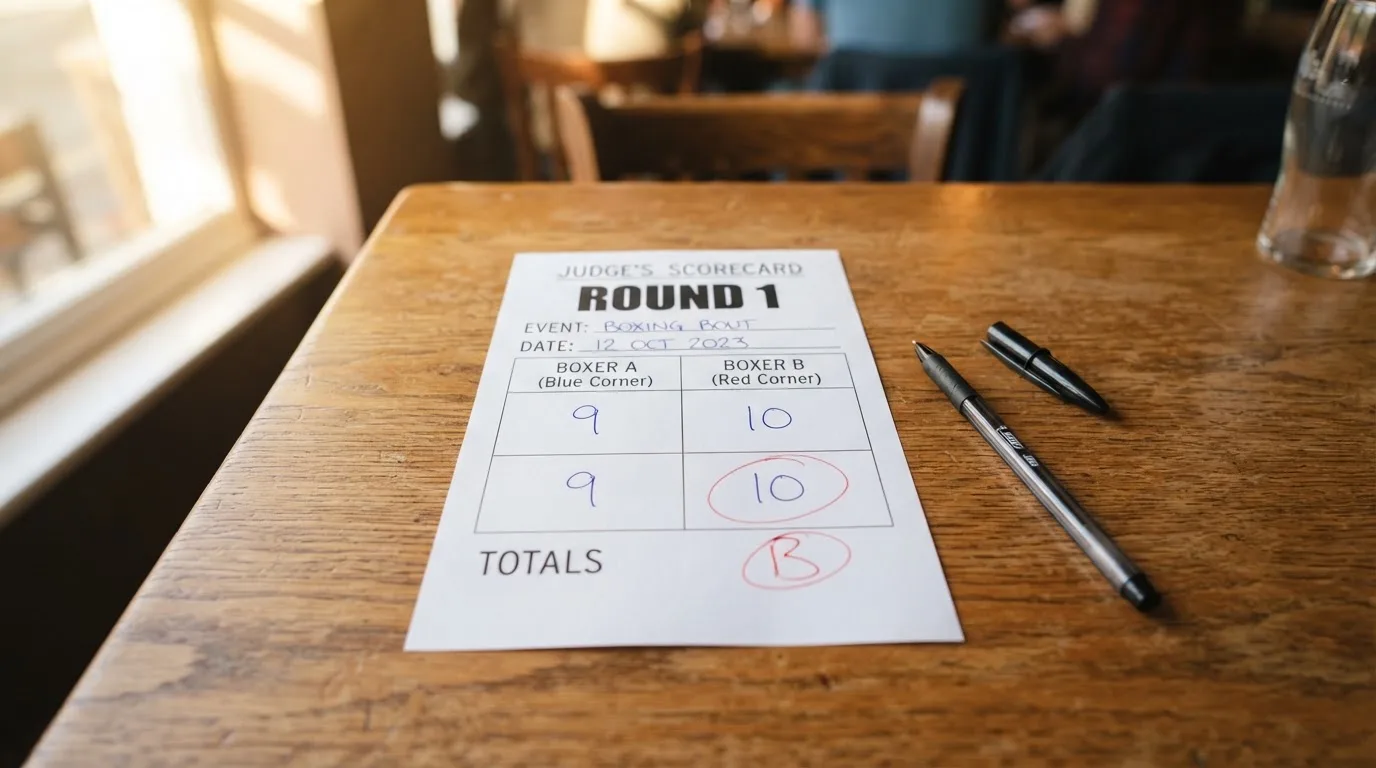
Under the Unified Rules of MMA each round lasts five minutes with a one-minute rest between rounds; non-title bouts normally go no more than three rounds, while title bouts can be sanctioned for five rounds. Three judges score each round under the ten-point must system: the round winner gets 10 points, the loser 9 or fewer, and an even round is scored 10–10. A decision can be unanimous, majority or split, and a draw can also be unanimous, majority or split. A bout ends in disqualification if an intentional foul incapacitates a fighter, and in a no contest if an unintentional foul incapacitates a fighter. The scoring system is what makes a decision market on the method — win by decision — a high-probability outcome for any fight that goes the distance, and the round count is what makes an over/under on the total rounds a real market on a three-round fight (over 1.5 rounds) and a five-round title fight (over 2.5 rounds).
What may be bet on in MMA at a GB-licensed bookmaker is governed by the operator’s own licence conditions and the LCCP, not a statutory list. In-play MMA betting is offered and the controls are the operator’s social responsibility and customer-protection duties. The British market has no state cap on MMA stakes; the operator sets its own maximums and may restrict customers. No statutory prohibition on MMA betting was found, and the sport sits inside the same licence category as any other real-event sport: remote general betting standard (real events).
Tournaments and cards the punter will see on a British bookmaker’s MMA page: UFC pay-per-view events, UFC Fight Nights, Bellator cards, PFL events, ONE Championship cards, and regional promotions (KSW, Cage Warriors, BRAVE CF) at the deeper books. The market depth drops off fast outside the UFC — a PFL card may have only the main event priced at some books; a regional card may have only the headliner. A punter who wants the wider card should shop around.
What the punter checks on the card before the fights: the weigh-in result, the camp change history, any reported injury, the fight week interviews, and the line on each fighter as it moves through the week. None of those tell the punter who wins. They tell the punter whether the price has caught up with the news.
The Ten Reviewed Bookmakers
The list below is not a ranking. It is a set of ten brands whose domains appear on the Gambling Commission’s public register against a licence holder with a remote general betting standard (real events) category — the licence class that covers MMA. Each brand’s terms are the operator’s own; the comparison reads those terms and the Commission’s register, not a marketing page. Every brand on this list takes part in GAMSTOP, and every brand verifies the customer’s name, address and date of birth before the first deposit.
| Brand | Licence | What the operator’s own terms state on MMA and the wider product |
|---|---|---|
| Octobet | Gambling Commission remote licence 062545-R-337248-006 (account 62545), held by Octopus Game Limited | Sportsbook welcome offer of 50% back as a free bet up to £50, plus a £10 casino bonus for new customers; MMA covered as part of the wider sportsbook |
| Tote | Gibraltar-licensed operator; licence and live product to be checked on the operator’s own page | Pool betting heritage and a sportsbook; BOG on racing (where applicable) does not transfer to MMA |
| BetUK | Gambling Commission remote licence 039198-R-319450-029 (account 39198), held by LeoVegas Gaming PLC | Sports welcome offer: four £10 free bets for new customers depositing £10+ and placing a sports bet within 7 days; football-shaped builder and full sportsbook |
| LiveScore Bet | Gambling Commission remote licence 056859-R-332720-005 (account 56859), held by LiveScore Betting and Gaming (Gibraltar) Limited | Bet Builder allows up to 10 selections and covers match result, both teams to score, corners, total goals, player scoring and card markets — football-shaped, with MMA on the same builder |
| Sporting Index | Gambling Commission remote licence 027343-R-308898-011 (account 27343), held by Sporting Index Limited | Customers can switch between fixed odds and spread betting, with in-play betting, Bet Builder for football, auto cash-out and Multi-Markets |
| Spreadex | Gambling Commission remote licence 008835-R-104580-022 (account 8835), held by Spreadex Limited; FCA-regulated for spread betting | Combines fixed-odds and spread betting in one app, with one-click, auto and partial cash out, Bet Builder across fixed odds or spreads, and live streaming of UK and Irish horse racing, greyhounds, tennis, NFL and selected football; spread losses can exceed deposits |
| bet365 | Gambling Commission remote licence 055148-R-331498-002 (account 55148), held by Hillside (UK Sports) ENC | Official global betting partner of the UEFA Champions League; app described as the most downloaded sports betting app in the UK; Bet Builder+ on a single event pre-match and in-play, Super Boosts, Winnings Boosts on Bet Builders and selected singles, daily Bet Boosts, in-play betting and live streaming of events worldwide, Bet Track, Match Live, Live Golf Tracker |
| Dabble | Gambling Commission remote licence 065677-R-340363-005 (account 65677), held by Dabble Sports UK Ltd | Welcome offer “Bet £10, Get £10 in Free Bets” on a first deposit for new customers, with minimum odds applying, a 7-day free bet expiry and the stake not returned |
| Fafabet | Gambling Commission remote licence 057385-R-333191-006 (account 57385), held by Taichi Tech Limited | Pays Best Odds Guaranteed on UK and Irish horse racing win and each-way bets from 9am on race days: if the starting price is bigger than the original price, the bigger odds are paid — racing concession, not MMA |
| Kwiff | Gambling Commission remote licence 044448-R-323408-017 (account 44448), held by Eaton Gate Gaming Limited | UK Gambling Commission licensed; described as a trademark operated by Spryme Ltd; app carries a 17+ App Store age rating |
The columns are read as follows. The licence column is what the Commission’s public register shows on the brand’s trading name, against the licence holder named there; the account number is the Commission’s own reference, and is what a punter types into the register to verify. The third column is what the operator’s own terms and app listing state about the product — it is not an endorsement and not an exhaustive description.
Octobet
Octobet is a new name on the British market, and its MMA offer sits inside the wider sportsbook rather than as a featured vertical. The sportsbook welcome offer is 50% back as a free bet up to £50, plus a £10 casino bonus for new customers — the kind of mixed-shape package that sits at the edge of the LCCP cross-product ban if read strictly; the operator’s own terms describe how the offer is structured, and the punter reads those before opting in. As a small sportsbook on a fast-moving MMA card, Octobet’s edge is the welcome package and its disadvantage is depth — the deeper books carry the wider card with more method and round markets. For the casual user, this is a clean entry point into MMA markets, particularly for those with smaller betting budgets.
Tote
Tote runs a pool betting heritage and a sportsbook underneath it. The brand’s identity is the pool — tote.co.uk’s history runs through horse racing, and its racing products carry Best Odds Guaranteed where applicable. None of that transfers to MMA: there is no pool on a UFC card, and BOG is a racing concession. The sportsbook is the MMA entry point. Those who prioritize pool-based racing bets will find this a logical inclusion for their general sports betting, even if the MMA product is supplementary.
BetUK
BetUK’s sports welcome offer is one of the more generous in the British market — four £10 free bets for a £10 deposit and a sports bet within 7 days, with each free bet valid for 7 days from issue and opt-in required. The free bets are football-shaped (two accumulators of 4+ selections, two multiples of 2+), and a free bet placed on MMA at minimum odds is the punter’s call, not the offer’s. As a LeoVegas Gaming PLC brand, BetUK sits inside a wider gaming group; the licence is clean. New customers will find a solid free-bet structure here, though serious MMA analysts might prefer an operator with more granular fight-specific round markets.
LiveScore Bet
LiveScore Bet’s signature product is its Bet Builder, which allows up to 10 selections and covers match result, both teams to score, corners, total goals, player scoring and card markets — a football-shaped builder that is the brand’s competitive edge in the British market. The MMA section sits on the same sportsbook but the builder’s depth is football-first. Punters who primarily bet on football but want a convenient MMA offering will find this setup efficient.
Sporting Index
Sporting Index is one of two brands on this list that combine fixed-odds and spread betting. The fixed-odds book carries in-play betting, Bet Builder for football, auto cash-out and Multi-Markets; the spread side runs on a separate mechanic where the punter’s profit and loss are settled against an index. The spread side is what sets the brand apart for the punter who wants both products on one account. MMA on the spread side is offered where the operator’s traders price the index; MMA on the fixed-odds side is the standard two-way and method offering. This represents a robust choice for those comfortable with both spread and fixed-odds dynamics on a single interface.
Spreadex
Spreadex is the second brand on the list that combines fixed-odds and spread betting, and the one whose product is wider on the spread side. The app carries one-click, auto and partial cash out, Bet Builder across fixed odds or spreads, and live streaming of UK and Irish horse racing, greyhounds, tennis, NFL and selected football. Spread betting is FCA-regulated for the financial side and Gambling Commission-regulated for the sports side; Spreadex’s site makes the distinction clear and states that spread betting losses can exceed the deposit. MMA on the spread side is a niche product; on the fixed-odds side it is the standard book. This app is well-aligned for those seeking a blended approach to trading their sports views.
bet365
bet365 is the deepest product on this list, and the one whose in-play pipeline and live streaming are the most developed. The official global betting partner of the UEFA Champions League and described as the most downloaded sports betting app in the UK, the brand carries Bet Builder+ on a single event pre-match and in-play, Super Boosts, Winnings Boosts on Bet Builders and selected singles, daily Bet Boosts, in-play betting and live streaming of events worldwide, Bet Track, Match Live, and a Live Golf Tracker. For MMA specifically, the in-play pipeline carries the deeper markets and the streaming covers the cards the operator has the rights to show. The brand suits every kind of MMA punter — the casual moneyline bettor and the method-market trader — and its disadvantage is the size of the operator: a stake restriction or an account review at bet365 can happen at lower volumes than at smaller books, because the trading desk watches the sharper customers.
Dabble
Dabble’s welcome offer is “Bet £10, Get £10 in Free Bets” on a first deposit for new customers, with minimum odds applying, a 7-day free bet expiry and the stake not returned. The offer is straightforward; the minimum odds decide what counts as a qualifying bet, and the punter reads those before placing. As a newer name on the British market, Dabble’s MMA depth sits somewhere in the middle — a working sportsbook with the standard menu, not the widest builder. Those seeking a straightforward betting experience without overly complex loyalty requirements may find this a viable option.
Fafabet
Fafabet’s signature concession is Best Odds Guaranteed on UK and Irish horse racing win and each-way bets from 9am on race days — if the starting price is bigger than the original price, the bigger odds are paid. Racing concession, not MMA. The MMA offering is the standard sportsbook product with the standard menu. This operator is best utilized by racing fans who occasionally dabble in MMA, rather than MMA-focused bettors.
Kwiff
Kwiff is the smallest brand on this list by name recognition, and the one whose product is the simplest to read. UK Gambling Commission licensed, described as a trademark operated by Spryme Ltd, with an app that carries a 17+ App Store age rating. The MMA product is the standard sportsbook offering; the brand’s edge is a smaller, simpler product for the punter who wants a clean account without the wider platform’s depth. The brand suits the punter who wants a working MMA book without the wider product line; it does not suit the punter who wants the deepest in-play and streaming product on the British market.
Overview: How the British Market Prices MMA
The British market for MMA is not a single bookmaker. It is ten or more GB-licensed sportsbooks competing on the same UFC card, each pricing the fights from its own trading desk, each carrying the same licence regime and the same player-protection rules. The punter’s job is to find the best price across them, and the bookmaker’s margin is the cost of not shopping around.
What makes a price on an MMA fight: the trading desk’s view of each fighter, with the bookmaker’s margin loaded on top. A two-way fight at 1.90 / 1.90 is a 5% margin market. A two-way fight at 1.95 / 1.95 is a 2.5% margin market. The first is more common; the second is rarer, and only the deeper books run it. A punter who bets on the same fight at 1.80 / 1.80 instead is paying a 10% margin on the same bout — twice the bookmaker’s edge, half the punter’s edge. The price is the bet.
Where the British market is unusual: GAMSTOP coverage is a single exclusion list across every GB-licensed online operator. A punter who self-excludes is excluded from every brand on this list at once, and from every other GB-licensed brand the Commission’s register names. The mechanism is the operator’s licence condition; the consequence is that GAMSTOP is the strongest single exclusion tool in the British market. A punter who needs to step away can do so without thinking through which brand they bet with.
The minimum age is 18; identity is verified before the first deposit. There is no anonymous play at a GB-licensed sportsbook, on MMA or on anything else. Credit cards are banned for gambling, including credit-card-funded e-wallet top-ups. Bonuses are capped at 10x wagering, mixed-product promos are banned. The General Betting Duty is the operator’s tax, currently 15% on gross profits on remote bets until 1 April 2027, when a new remote rate of 25% applies; the player pays no tax on betting winnings. None of these rules make a GB-licensed brand “the safe choice” by default. They make it the regulated choice, with a complaints route through the Commission and a dispute-resolution service on the operator’s licence.
What the punter is buying at a GB-licensed sportsbook is the regulatory perimeter — the verification, the GAMSTOP coverage, the dispute-resolution route — and the price. Both matter. A price that beats the rest of the market by 5% margin on the same fight is worth more than a price that beats it by 2% margin at a brand the punter has not verified.
Legality, the Gambling Commission and the British Framework
The Gambling Commission is the regulator of the commercial gambling market in Great Britain under the Gambling Act 2005, sponsored by the Department for Culture, Media and Sport. Since the Gambling (Licensing and Advertising) Act 2014 an operator whose remote facilities are used in Great Britain needs a Commission licence wherever it is based. A Curaçao, Maltese or Gibraltar licence alone is not a substitute. The Commission’s public register is the whole test of who holds a licence, and is searchable by business name, trading name, domain or account number.
The relevant licence class for MMA is remote general betting standard (real events). Other classes — virtual events, pool betting, betting intermediary (the exchange licence) — are separate. A GB-licensed brand on this list carries the real-events class; a betting exchange carries the intermediary class. MMA sits under real events.
There is no statutory list of permitted bets or markets in Great Britain. The Commission issues the licence; the operator offers markets under its own rules and the LCCP. In-play betting is offered; the controls are the operator’s licence conditions. No statutory cap on stakes in MMA was found; operators set their own maximums and may restrict individual customers.
The age is 18. Identity verification before the first deposit is mandatory since 7 May 2019 — name, address, date of birth — including when a free bet or bonus is the trigger. A punter who cannot verify cannot deposit. A punter who can verify has a British account under the Commission’s perimeter.
What the Commission’s perimeter does for the punter: GAMSTOP coverage, a complaints process, ADR via an approved dispute-resolution body, the 10x bonus cap, the £150 financial vulnerability check (a public-record check at deposit-minus-withdrawal over £150 in a rolling 30 days since 28 February 2025), and the LCCP social responsibility code. What it does not do: it does not insure the punter’s stake, it does not guarantee the operator pays out, and it does not replace a careful read of the terms. The perimeter is the floor.
What it costs: nothing to the punter in fees, but a verification step on the first deposit that an unlicensed site does not require. A punter who wants anonymity does not have it at a GB-licensed brand. A punter who wants the regulatory perimeter takes the verification as the price of entry.
Safer Gambling, GAMSTOP and the Tools That Exist
The British market has more player-protection tools than any other regulated market in the world. None of them work without the punter asking for them.
GAMSTOP is the national multi-operator online self-exclusion scheme and a mandatory licence condition for online operators since 31 March 2020. A punter who self-excludes is excluded from every GB-licensed online operator at once. The minimum exclusion is six months; the periods are six months, one year, five years, or five years with auto-renewal. After the minimum period the exclusion stays in place for a further seven years unless the customer asks GAMSTOP to remove it. GAMSTOP covers online sites and apps; betting shops use a separate service.
The financial vulnerability check (LCCP condition 3.4.4, in force since 30 August 2024) applies to licensed remote betting when a customer’s deposits minus withdrawals exceed £150 in a rolling 30 days (since 28 February 2025): it is a public-record check (for example bankruptcy or county court judgments), not an income check and not a credit reference check. Financial risk assessments (the “affordability checks” of the press) are announced in a staged plan (Commission article of 7 July 2026), with no start date.
Deposit limits (RTS 12): operators must offer a gross deposit limit on a fixed time frame; the first changes have applied since 31 October 2025, a second phase was postponed to 30 September 2026, and whether it is live is not established. There is no state-set deposit or loss ceiling for betting: limits are the customer’s choice.
Help exists outside the operator: GamCare runs the National Gambling Helpline; GambleAware funds treatment and education; the NHS runs gambling clinics; Gamblers Anonymous runs meetings. Fitzwilliam Sports, Kalooki Sportsbook and other operators link to GambleAware, GamStop and Gamblers Anonymous from their safer-gambling pages — the same set of names, every time.
The most important tool on this list is the easiest one to use, and the one the market handles worst. A punter who cannot place a bet because they have self-excluded has used the system. A punter who can place a bet but does not want to has not. GAMSTOP is the binary that closes the door. Anything less is the punter asking themselves, every Saturday night, whether to bet, and asking themselves is what most punters who need to stop are doing already.
Frequently Asked Questions
How does MMA betting work?
A bet on a mixed martial arts fight is a stake on an outcome — a winner, a method, a round — priced by the bookmaker at decimal odds that lock in the moment the punter confirms the slip. The fight is settled when the result is official: by knockout, technical knockout, submission, disqualification, no contest, or one of three decision types (unanimous, majority, split) under the Unified Rules of MMA. A bet on the method market covers both the fighter and the way they win, and pays at the price offered on the slip. The stake is the punter’s risk; the return is the stake multiplied by the odds at placement.
Where can a punter bet on MMA fights with high odds?
A high price on a fight is the bookmaker quoting a longer number than the punter’s view of the probability. The punter looking for high MMA odds should compare prices across the GB-licensed sportsbooks on the same card, focus on the method market rather than the moneyline (the price is longer, the margin is wider), and check the round-and-finish market only when they have a view on a specific round. The longer the price, the wider the margin usually sits underneath it; the punter’s edge has to beat the compounded margin across the legs they pick.
Are there top-value MMA bets to look at this weekend?
A value bet on MMA is a price the market is offering longer than the punter’s estimate of the true probability, on a fight the punter has priced from form, finish rate, camp and stylistic match-up. The punter looking for value reads the card on the day, compares prices across books, and looks for the gap between their number and the bookmaker’s. A weekend card with a high-profile main event is where the deepest books run their tightest margins; the regional cards under it carry the wider edges and the wider margins. The punter’s value is in the gap, not the headline.
How does a punter check that a bookmaker holds a Gambling Commission licence?
The Commission’s public register is searchable by business name, trading name, domain or account number, and is the whole test of who holds a licence. A punter types the brand’s domain or name into the register, checks the licence class (remote general betting standard (real events) is the class that covers MMA), and confirms the licence holder named there is the operator behind the trading name. A brand on the register is licensed; a brand not on the register is not licensed at the point of consumption and the punter loses the Commission’s perimeter.
How is the return on a bet worked out from the stake and the odds?
The return on a single bet is the stake multiplied by the decimal odds at placement. A £10 stake at odds 2.50 returns £25 (£10 stake × 2.50 odds = £25 return, of which £15 is profit). A £10 stake at odds 1.50 returns £15 (£10 stake × 1.50 odds = £15 return, of which £5 is profit). A combination bet multiplies the prices of the legs into one price; the stake is multiplied by the combined price to give the return. The stake is paid back with the winnings on a winning cash bet; on a winning free bet, only the winnings return — the stake is not paid back.
What is the bookmaker’s margin and how can it be seen in the odds?
The bookmaker’s margin is the share of every £1 staked on a market that the bookmaker keeps across all outcomes, and is paid by the punter pool on every bet. On a two-way MMA fight at decimal odds 1.90 / 1.90, the margin is 5.0% (payout share = 1 ÷ (1/1.90 + 1/1.90) = 0.9500, margin = 1 − 0.9500 = 0.0500); the bookmaker keeps 5p of every £1 staked, and the punter pool gets back 95p for every £1 staked across both outcomes. The tighter the price (closer to 2.00 / 2.00), the lower the margin. A punter reads the margin by adding the implied probabilities of every outcome: anything above 2.000 on a two-way market is the bookmaker’s overround.
Combat & motorsport – Boxing betting
Content created by the «Boxing betting» team
