
Best odds guaranteed bookmakers compared, side by side
 Available in US
Best odds guaranteed is the simplest concession a British bookmaker makes, and the easiest one to misread. A punter takes a price on a horse in the morning. By the time the race goes off, the starting price is longer. The bookmaker agrees to pay the bigger of the two, with the punter’s stake returned plus winnings at the higher figure. The mechanism is small in words and significant in cost to the operator, which is why not every book runs it on every race, on every bet type, or above a ceiling that varies wildly across the ten names that appear below.
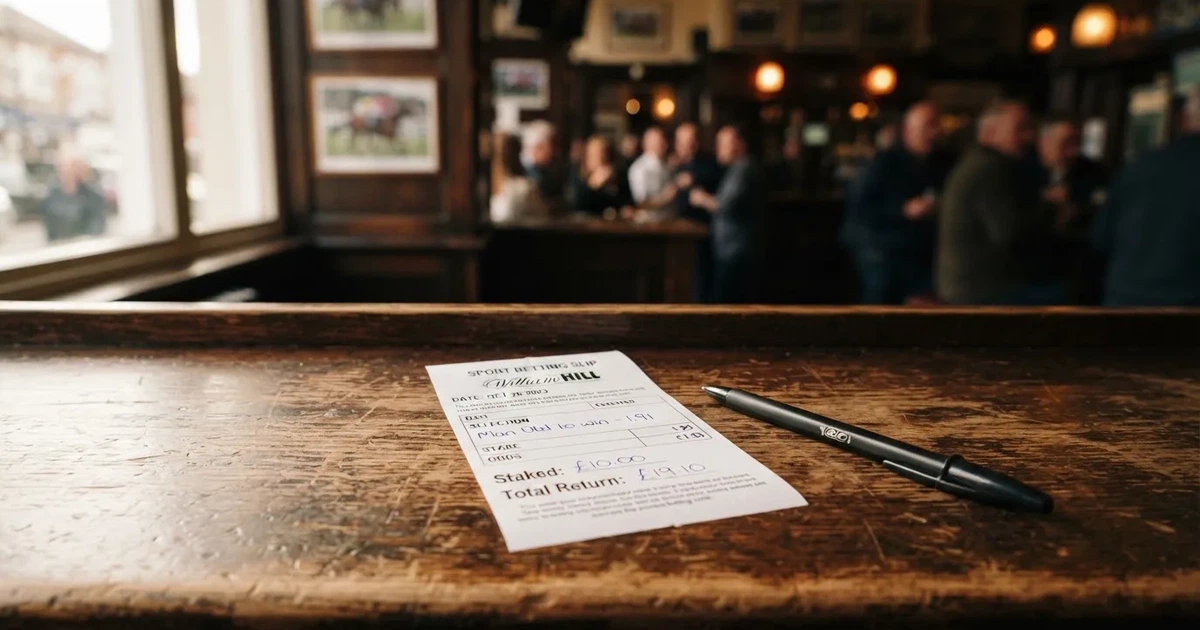
The page ranks ten Gambling Commission-licensed operators currently paying best odds guaranteed in some form, plus the wagers and markets where best odds guaranteed sits inside a broader product. A short preview of the mechanics opens the comparison, so the reader knows what the table is measuring before a single brand is named. Sections that follow sit around three questions that recur in reader search: which operators actually pay best odds guaranteed, what the licence and the offer cost the punter, and where a free bet, an enhanced price or an acca insurance changes what is on the table next to a guarantee. The angle is the choice: each operator solves a slightly different problem, and a punter should pick the one whose solution matches the bets they place.
A snapshot of the data sits below: a current source stamp, then the operators and their Gambling Commission remote licences.
Current as of 27 October 2026 · Licence details verified against the Gambling Commission’s public register (the register is the only test of who holds a licence).
The legal framework behind every guarantee
The Gambling Commission, a non-departmental public body sponsored by the Department for Culture, Media and Sport, is the regulator. Every commercial bookmaker offering remote betting to customers in Great Britain — England, Scotland and Wales — needs a Commission licence under the Gambling Act 2005, sections 33 and 36, since the Gambling (Licensing and Advertising) Act 2014 took effect. Northern Ireland sits outside that Act and runs its own older regime; a Great Britain licence does not authorise activity there, and “GB-licensed” is the precise phrasing for any brand regulated by the Commission for customers in England, Scotland and Wales. No statutory list of permitted bets exists: a bookmaker holds a licence for a category and writes markets inside its own terms, shaped by the Licence Conditions and Codes of Practice (LCCP).

A licence is not a recommendation. It is a permission to operate, attached to a holder, a domain and categories of activity, and it does the things set by law: minimum age 18, identity checks before the first deposit (since 7 May 2019, including with a free bet), GAMSTOP enrolment for online operators since 31 March 2020, a 10x cap on bonus wagering requirements since 19 January 2026, and a financial vulnerability check above £150 net deposits over a rolling 30 days (in force since 28 February 2025). Financial risk assessments are at a different — further — stage on a Commission timeline announced in a staged plan, with no start date, and they should not be written as if they have arrived.
Best odds guaranteed is a bookmaker’s own concession. Nothing in the Gambling Act requires it. The Commission’s public register, searchable by business name, domain or account number, is the only test of who holds a licence, and a brand using “.com” instead of “.co.uk” proves nothing either way. Operators that do not hold a Commission licence cannot lawfully provide facilities to customers in Great Britain; a Curaçao or Malta licence is not a substitute. A punter who bets on an unlicensed site loses the British protections that go with a licence: no GAMSTOP coverage, no Commission complaints route, no approved alternative dispute resolution, no British consumer redress if funds are withheld, no 10x bonus cap, no vulnerability check. Framing that as “legal to use” is dishonest; framing the licensed side as automatically “safe” is equally dishonest, because the same regulations also bring compulsory verification before the first bet.
Responsible gambling as a baseline
The bookmaker is the trader. Gambling services in Great Britain are not a free-fire zone, and the conditions attached to a remote licence are where the consumer-side protections actually live.

Identity and age come first. A punter cannot deposit or place a bet on a Commission-licensed site without passing name, address and date-of-birth checks before the first pound goes in. Credit cards have been banned for gambling in Great Britain since 14 April 2020 (LCCP condition 6.1.2), including credit-card-funded payments through an e-wallet; debit cards and bank-based payments are unaffected.
Self-exclusion is national. GAMSTOP is the multi-operator online self-exclusion scheme, and enrolment with an online operator is mandatory under licence conditions. The minimum exclusion periods are six months, one year, five years, or five years with auto-renewal; after the minimum runs out the exclusion continues for seven more years unless the punter asks GAMSTOP to remove it. Betting shops run their own separate service.
A financial vulnerability check is now in force. Above £150 of net deposits over a rolling 30-day window (since 28 February 2025), the operator runs a public-record check, looking for markers such as bankruptcy or county court judgments, not an income test and not a credit-reference check. Staged affordability rules have been announced but not brought in.
Deposit limits belong to the punter. The Commission sets a requirement that operators offer a gross deposit limit on a fixed time frame; the first changes have applied since 31 October 2025, a second phase was postponed to 30 September 2026 and whether it is now live is not established either way. There is no state-set deposit ceiling for betting in Great Britain; limits are the punter’s choice, and a ceiling the punter sets at account opening can be tightened or relaxed within the operator’s own process.
Where to get help. GamCare runs the National Gambling Helpline. GambleAware funds treatment and information. NHS gambling clinics operate in several regions. Gamblers Anonymous runs peer support meetings across the country. These are the routes a punter uses when a betting pattern changes in a way the punter wants to stop; an operator’s safer-gambling page is the route a punter uses to set a limit or close an account.
How a best odds guaranteed concession actually pays out
The mechanism is built around the starting price. For British horse racing, the starting price (SP) is the median of sampled bookmakers’ prices, defined as the shortest price in the longer-priced half of the sample, so at least half of those running the market offered that price or longer when the race went off. The SP settles winning bets where no fixed price was taken before the race. Best odds guaranteed compares the two: the price a punter took, and the SP. If the SP is longer, the bet is paid at the SP.
A simple example illustrates the shape. A punter backs a horse at an early price of 5/1 (decimal 6.00) in the morning. The horse returns at a starting price of 10/1 (decimal 11.00). Without a guarantee, the punter’s fixed price stands and the bet pays 6.00 times the stake. With best odds guaranteed, the same stake is paid at the SP, decimal 11.00. The difference matters most at long odds, where a shift from 5/1 to 10/1 roughly doubles the winnings — but every winning bet moves, not just the long ones, and short-priced favourites still pay a fraction more at a longer SP than at a fraction shorter SP.
Three caveats are part of the picture and should be read before any price is taken.
- Rule 4 deduction. When a horse is withdrawn from a race, the bookmaker applies a Rule 4 deduction to winning bets on the remaining runners, scaling the payout down. At Sky Bet, if a price taken receives a Rule 4 deduction, the deduction still applies unless the horse returns at a bigger SP than the price taken; in that case the bet is paid at SP with no deduction.
- A ceiling on the uplift. Sky Bet caps the best odds guaranteed uplift at £50,000 per bet or per race for horse racing, whichever sits lower at the time the bet settles. Other bookmakers set their own caps; some set none, several mirror industry practice around five-figure ceilings, and a punter staking on a long-priced outsider where the SP moves dramatically should check the operator’s terms before relying on a guarantee.
- Scope of the concession. William Hill pays best odds guaranteed on UK and Irish horse racing from 8 AM on the day of the race, on both single and multiple bets, and the concession does not apply to ante-post, tote or pari-mutuel bets. The 8 AM window is the rule on that brand; the timing on rivals varies, and other sports — greyhounds in particular — sit inside some operators’ guarantees and outside others’.
The mathematics around a best odds guaranteed concession are simple because the concession itself is simple. The arithmetic that matters is on the price the bookmaker was offering anyway, and that is where the margin sits, not in the best odds guaranteed uplift.
Worked margin: a two-way market at 1.90 / 1.90
The page’s gain in information is the way a margin shows up inside an ordinary price. Take a two-way market priced symmetrically at decimal odds of 1.90 on each side (fractional 9/10), as an illustration rather than as a quoted price. A one-pound stake on outcome A pays £1.90 if it lands, with £0.90 of profit; the same stake on outcome B pays the same if it lands. Of each pound staked across both outcomes, the bookmaker takes the difference between the two implied probabilities and 100%.
The implied probability of a decimal 1.90 price is 1 divided by 1.90, which is approximately 0.5263, or 52.63%. Two outcomes at the same price imply 105.26% of stake in payouts, against 100% of stake paid in. The 5.26% gap is the bookmaker’s gross margin on that market, sometimes called the overround. Payout share, the inverse, sits at around 94.74%.
A market’s margin is best read as a band rather than a single figure. Two-way markets at decimal 1.90 imply a margin in the region of 5%, and tighter prices — 1.95 / 1.95, where each implied probability is 51.28% — push the margin towards the 2.5% mark. Wider prices pull it up. The condition that drives the band is the symmetry or asymmetry of the two prices, and the band tightens as more liquidity sits behind a market and loosens as liquidity thins. The illustration is not a recommendation: it is the arithmetic that any quoted price carries, from a 1/100 outsider right up to an odds-on favourite, and the page keeps it short because the comparison that matters to a punter is whether the bookmaker’s price is a fraction longer or shorter than the next bookmaker’s, on the same selection, on the same race.
Bonuses and free bets: what sits next to a guarantee
Best odds guaranteed sits inside a broader promotional environment, and the same three or four rules shape most of the offers a punter will see on the same operators’ sites.
- Wagering requirements on bonuses are capped at 10x by the LCCP since 19 January 2026. A £10 bonus at a 50x turnover would have needed £500 of qualifying bets; under the cap no bonus in Great Britain can require more than £100 of qualifying betting per £10 of bonus. Mixed-product promotions — an offer that requires gambling on two or more product types — are banned under the same rule, so “bet on football to get free spins” is not a structure a British-licensed operator can run.
- Free bets are bookmaker credit, not cash. Where the bookmaker provides a free bet, the stake is usually not paid back on a winning bet; the punter receives the winnings only, calculated against the decimal odds. The British term is “free bet” or “bet credit”; the distinction from a cash bonus matters because a winning free bet at 5/1 (decimal 6.00) returns £30 of winnings on a £5 free bet, where a cash bonus of the same face value would return £35 (stake plus winnings).
- Enhanced odds and price boosts are short-term offerings. The same brand may run an enhanced price on a featured selection during a major meeting; the price is bigger for the punter, the stake is usually paid in cash at the regular price with the winnings topped up to the enhanced figure, and the offer is restricted to one selection, one race, one meeting. A few operators run a recurring price boost on a chosen market, sometimes each day.
- Acca insurance is the closest cousin to a guarantee. When a single leg of a multi lets the punter down, the stake is refunded as a free bet, subject to terms: minimum stake, minimum odds per leg, maximum refund, and an expiry on the free bet.
Two British conditions recur. The minimum odds for a free bet sit, on the data the page carries, at 1/2 (decimal 1.50) for most of the operators that publish the number. The expiry on a free bet is typically seven days from credit. BoyleSports’s acca insurance is one of the more transparent versions: opt-in, minimum stake £5, minimum odds 1/2 per leg, a maximum refund of £20 paid as a free bet that expires in seven days, and the qualifying bets must be placed and settled on the same day. QuinnBet’s free bets are valid for seven days from credit, can be used on any market at odds of 1/2 or greater with maximum odds of 50/1, and allow straight accumulators; Trixies, Patents and Yankees are not permitted on the free bet credit.
The page makes no attempt to do a like-for-like across these offers. Each operator writes its own terms; the terms on which a free bet pays, the maximum refund and the qualifying stake are features a punter checks at the bookmaker that interests them. The pattern the data shows is consistent: best odds guaranteed is a concession, free bets are credit, enhanced prices are time-limited, and acca insurance is a refund subject to a minimum stake, a minimum odds rule and a ceiling.
Bet types: where best odds guaranteed sits inside a betting slip
A best odds guaranteed concession settles a single bet or a multiple, depending on the operator. William Hill pays the concession on both single and multiple bets on UK and Irish horse racing; ante-post, tote and pari-mutuel bets are excluded. Elsewhere, the concession typically applies to singles and to multiples built from singles taken on the day; an each-way bet, a structure where the stake is split between a win and a place, counts as two bets of equal stake on the same selection, and the best odds guaranteed uplift applies to the win part with place terms settled separately.
The decimal odds format is the form the page uses throughout; the fractional form sits in parentheses where the original is a British fraction. A 5/1 price is decimal 6.00, because the conversion is fraction plus one: 5 divided by 1, plus 1. A 9/10 price is decimal 1.90, by the same rule. Odds-on prices — anything shorter than evens, where the numerator is smaller than the denominator — sit below 2.00 in decimal. The conversion is the same arithmetic both ways, and the page does not belabour it because the table and the in-text odds carry one form at a time.
Bet builders and same-game multis are a different market. A bet builder combines several selections from the same match — a result, a player to score, a total — into one price, and a same-game multi is a marketing name for the same product. Best odds guaranteed is not a feature of any bet builder the page has seen, partly because a bet builder is a bespoke price written when the bet is placed, partly because the start-and-end points of the selection are not a horse race. Several operators do extend an enhanced-price concession onto accumulators, where the multi pays more than the multiplication of the legs would suggest; that is an enhanced-odds concession rather than best odds guaranteed.
Cash out is a settlement feature, not a bet type. When a bookmaker offers cash out, the punter can close a bet before the event settles, at a price the bookmaker writes from the state of the market at that moment. Cash out is on offer at most of the operators in the ranking; it does not interact with best odds guaranteed, and the page does not credit a brand with a guarantee because it offers cash out.
Spread betting and exchange betting are different products. Spread betting carries its own tax regime, regulatory perimeter and risk profile: at Spreadex, regulated for spread betting by the FCA and for fixed-odds betting by the Gambling Commission, spread betting losses can exceed deposits. A betting exchange matches punter against punter rather than punter against the bookmaker; Matchbook runs on this model and carries a “betting intermediary” licence rather than the standard remote general betting standard.
The ten licensed operators ranked for best odds guaranteed
The comparison opens with a side-by-side, then unpacks each operator in turn. The table is the whole page’s data block on the licences and the best odds guaranteed terms; the prose underneath each name is what a punter checks against the table.
| Bookmaker | Gambling Commission remote licence | Licence holder | What the operator’s terms say about best odds guaranteed |
|---|---|---|---|
| BoyleSports | 039469-R-319383-025 (account 39469) | Boylesports Enterprise | BOG available on horse racing; acca insurance requires opt-in, £5 minimum stake, 1/2 minimum odds per leg, £20 maximum refund as a free bet expiring in seven days, bets placed and settled same day |
| BetUK | 039198-R-319450-029 (account 39198) | LeoVegas Gaming PLC | BOG terms published in the racing section; free bets exclude virtual sports, esports and non-UK/IE horse racing, and minimum odds apply |
| London Bet | 066162-R-340278-004 (account 66162) | Thistle Bet Limited | BOG offered on UK and Irish horse racing; full terms published on site |
| DragonBet | 064908-R-339041-003 (account 64908) | DragonBet Ltd | BOG alongside Welsh football and rugby markets, racing, American football, in-play and bet builder |
| Bet600 | 044731-R-323941-016 (account 44731) | Tyche Tech Limited | Pays BOG on horse racing: if SP exceeds the price taken, the bet is paid at SP |
| Matchbook | 039504-R-319407-024 (account 39504) | Triplebet Limited | Exchange model with bet builder, multiples, in-play and live streaming of horse racing and greyhounds; bookmaker-style BOG terms vary |
| Sporting Index | 027343-R-308898-011 (account 27343) | Sporting Index Limited | New-customer offer £10 fixed-odds bet at 1/2 minimum odds unlocks three £10 free bets, three £5 Total Goals spread bets, three £5 Winning Favourites spread bets, £1 Race Index spread bet; qualifying bet not placed in-play or cashed out |
| Spreadex | 008835-R-104580-022 (account 8835) | Spreadex Limited | New-customer offer £60 in free bets for a £10 fixed-odds bet; free bets usable across fixed odds and spread betting; qualifying bet must be placed within 28 days of opening account; FCA-regulated for spread betting where losses can exceed deposits |
| William Hill | 039225-R-319373-015 (account 39225) | WHG (International) Limited | BOG on UK and Irish horse racing from 8 AM on race day on single and multiple bets; ante-post, tote and pari-mutuel excluded |
| QuinnBet | 061011-R-335683-004 (account 61011) | QuinnBet (Gibraltar) Limited | Free bets valid for 7 days from credit, usable on any market at odds of 1/2 (1.50) or greater with 50/1 (51.00) maximum odds; straight accumulators allowed, Trixies/Patents/Yankees not permitted on free bet credit |
Each operator is a real brand with a Gambling Commission remote licence for general betting on real events, and the licence holder for each is named in the Commission’s own records. None of the ten is “the only” licensed British bookmaker; the Commission’s public register lists many more. A punter reading the page should hold the table as the basis of a decision, then check the operator’s own current terms at the betting slip before placing a guarantee-sensitive bet, particularly on a long-priced outsider where the SP uplift crosses a cap.
BoyleSports
BoyleSports carries the standard general betting standard remote licence, account 39469, held by Boylesports Enterprise, and the brand has built a reputation for paying best odds guaranteed on horse racing alongside a transparent acca insurance. The insurance terms are the most concrete number the licence file carries: opt-in required, minimum stake £5, minimum odds 1/2 per leg, maximum refund £20 as a free bet that expires in seven days, and the qualifying bets must be placed and settled on the same day.
The acca insurance sits naturally next to best odds guaranteed because both convert a near-miss into something back: the guarantee pays more on a winner, the insurance refunds the stake on a one-leg miss. A punter running both a racing single and a football acca on BoyleSports sees two slightly different rules on what counts as a near-miss. The seven-day expiry on the insurance refund is the same window BoyleSports uses on most of its free-bet credit.
BoyleSports is a strong option for a punter who runs racing singles on the morning and football multiples through the day, with acca insurance terms stated clearly, including the £20 maximum refund limit.
BetUK
BetUK shares LeoVegas Gaming PLC as licence holder, the same parent that runs BetMGM UK under a different Commission account, with the operator on this Commission licence the more racing-heavy of the two. The licence file shows account 39198, remote general betting standard licence for real events. Best odds guaranteed terms are published in the racing section of the site.
The free bets and the racing promotion sit on a slightly narrower turf than the all-purpose bookmakers in the comparison: free bets exclude virtual sports, esports and non-UK/IE horse racing, and a minimum odds rule applies. A punter who places a free bet on a virtual market at another book may find BetUK’s exclusion unfamiliar. For a punter who backs UK and Irish racing and the main football leagues, the exclusions cut very little.
BetUK is a suitable platform for a UK/IRE racing and football punter who takes a moment to read the free-bet exclusions before placing a bet.
London Bet
London Bet carries a remote general betting standard licence, account 66162, held by Thistle Bet Limited. The app shows a 17+ age rating and the operator states it is licensed and regulated in the UK. Best odds guaranteed sits on UK and Irish horse racing in the published terms.
London Bet is a smaller-scale operation than the largest names in the table, and the promotional footprint reflects that; the operator tends to focus on the racing offer and a smaller set of football markets rather than the broader feature catalogue that multi-product operators run. That is not a weakness for a punter who backs racing; it is a feature.
London Bet offers a focused racing experience for a punter who values a specialized book with a real Commission licence over the wider catalogue of a generalist operator.
DragonBet
DragonBet, with Commission account 64908 held by DragonBet Ltd, is built around a Welsh identity: Welsh football and rugby markets are first-class on the site, alongside racing, American football, in-play and bet builder markets. The licence file is a remote general betting standard licence for real events; best odds guaranteed accompanies the racing.
A punter outside Wales who wants only the racing offer will find DragonBet perfectly serviceable, but the page notes it because the operator’s identity is regional and the markets that distinguishes it sit alongside the racing concession rather than instead of it. A punter who wants to back the Welsh leagues and the Six Nations with a Welsh-licensed operator has a clear reason to choose this brand over a generic bookmaker.
DragonBet presents a compelling alternative for a punter seeking a Welsh-focused bookmaker with a real Commission licence and best odds guaranteed across its racing side.
Bet600
Bet600 sits on a remote general betting standard licence, account 44731, held by Tyche Tech Limited, and the brand states its best odds guaranteed position in plain terms: if the starting price is bigger than the early or show price taken, the bet is paid at the SP.
Bet600 does not run the broader feature catalogue of the multi-product operators in the table. The brand is racing-first, and that focus is the strength: a punter who wants a clean best odds guaranteed concession on the racing and is willing to switch to a different book for the football multiples has a sensible partner here.
Bet600 provides a simple, racing-first concession for a punter who prefers the most straightforward version of the guarantee — SP versus early or show price, with the bigger number paid out.
Matchbook
Matchbook runs on a betting intermediary licence, account 39504, held by Triplebet Limited, and the platform is an exchange: customers bet against each other, the platform takes a commission on net winnings, and the product is back and lay at user-set prices. The matchbook catalogue carries a bet builder, multiples, in-play and live streaming of horse racing and greyhounds, with the live-streaming feature notable on a Commission-licensed exchange.
Best odds guaranteed as a feature has a different texture on an exchange. The platform does not set the prices; users do. Where Matchbook runs a traditional sportsbook product as well, the terms on that product carry a best odds guaranteed offer that follows the same shape as a conventional bookmaker’s; the exchange side does not have a counterpart feature because there is no bookmaker margin to soften on the exchange.
Matchbook delivers an exchange model for a punter who seeks a Commission intermediary licence and a reliable sportsbook fallback specifically for the racing guarantee.
Sporting Index
Sporting Index sits on a remote general betting standard licence, account 27343, held by Sporting Index Limited. The brand is a spread-betting operator, and the new-customer offer shows the structure: a £10 fixed-odds bet at minimum odds of 1/2 unlocks three £10 fixed-odds free bets, three £5 Total Goals spread bets, three £5 Winning Favourites spread bets, and a £1 Race Index spread bet. The qualifying bet cannot be placed in play or cashed out early.
Best odds guaranteed on a fixed-odds racing book at Sporting Index is a sensible product to look at, but the same operator running spread betting alongside the fixed-odds book brings an extra dimension. A punter comfortable with both has more to compare.
Sporting Index serves a punter who wants to access both fixed-odds and spread betting under a single Commission-licensed operator.
Spreadex
Spreadex carries a remote general betting standard licence, account 8835, held by Spreadex Limited. The brand is also regulated for spread betting by the FCA, and the operator states clearly that spread betting losses can exceed the deposit — a phrase that matters to a punter whose account holds fixed-odds bets and spread positions alongside each other.
The new-customer offer turns a £10 fixed-odds bet into £60 in free bets usable across fixed odds and spread betting; the qualifying bet must be placed within 28 days of opening the account. Best odds guaranteed sits on the fixed-odds racing book.
Spreadex is worth considering for a punter who wants both the spread betting book and the fixed-odds book in one place, with best odds guaranteed on the racing side.
William Hill
William Hill carries a remote general betting standard licence, account 39225, held by WHG (International) Limited. The brand’s best odds guaranteed terms are the most clearly written of any in the table: the concession is paid on UK and Irish horse racing from 8 AM on the day of the race, on both single and multiple bets, and the concession does not apply to ante-post, tote or pari-mutuel bets.
The 8 AM start-of-day window matters because some operators run BOG only from later in the morning, and the day’s first races — particularly summer evening meetings with early first races — sit inside the window for William Hill and outside it for rivals whose BOG starts an hour or two later. The exclusion of ante-post is the standard rule; the inclusion of multiples is the explicit statement that loses some readers when the same rule is implicit elsewhere.
The verdict: the right choice for a punter who wants a Commission-licensed racing book with the clearest BOG terms in the comparison and the broadest multi eligibility.
QuinnBet
QuinnBet sits on a remote general betting standard licence, account 61011, held by QuinnBet (Gibraltar) Limited. The free-bet terms sit front-and-centre: seven days from credit, any market at odds of 1/2 (decimal 1.50) or greater with a maximum odds cap of 50/1 (decimal 51.00), straight accumulators allowed, Trixies, Patents and Yankees not permitted on the free bet credit.
Best odds guaranteed at QuinnBet is positioned alongside the broader free-bet framework. A punter running free-bet credit at odds at the 50/1 ceiling is using the ceiling of the operator’s risk appetite.
The verdict: the right choice for a punter who values a free-bet framework with a clear maximum-odds ceiling and a seven-day expiry published in plain English.
Frequently asked questions about best odds guaranteed bookmakers
The questions below are the ones the section data carries; the answers are written in plain language and avoid restating a number that has not been sourced.
Which bookmakers do best odds guaranteed?
The ten operators on this page all carry a remote licence from the Gambling Commission, and most of them publish best odds guaranteed terms on UK and Irish horse racing. William Hill pays BOG from 8 AM on race day on singles and multiples, with ante-post, tote and pari-mutuel excluded. Sky Bet pays BOG at the SP if the SP is longer than the price taken, subject to a £50,000 cap per bet or per race. Bet600 pays BOG at SP when the SP exceeds the early or show price taken. The full operator-by-operator map sits in the table above, and best odds guaranteed does not come from the regulator — it is a feature each bookmaker offers under its own terms.
Which bookmakers offer best odds guaranteed?
The same ten licensed operators publish best odds guaranteed offers; some name the concession only on horse racing, some also extend it to greyhounds, and Matchbook’s exchange model treats SP uplift differently from a bookmaker concession. The page’s table names the offer by operator, including the licence holder, the Commission account number and the operator’s own published wording. A punter who reads the betting slip terms at the operator’s site where they intend to bet will see whether the offer applies to the sport, the bet type and the time window they want.
What bookmakers offer best odds guaranteed?
The market’s bet type is a horse racing concession, and any British-licensed bookmaker with a racing product may offer it under its own terms; the page does not list a single “best” operator because the data is the licence and the published terms. BoyleSports’ acca insurance, QuinnBet’s seven-day free-bet framework, William Hill’s 8 AM BOG window and Bet600’s SP-versus-early-or-show rule are each a different mix of feature and rule, and the right one for a given punter depends on the bets the punter places.
How can it be checked that a bookmaker holds a Gambling Commission licence?
The Gambling Commission’s public register is searchable by business name, trading name, domain or account number, and a brand whose name appears there against an account number holds a licence on the register entry’s stated categories. The register is the only test of who holds a licence; the page carries no quota or count because any such number ages faster than the register does. Each operator in the table carries the Commission account number against the licence holder; a punter checking the operator types that account number into the Commission’s search at the register and reads the entry.
How is the return on a bet worked out from the stake and the odds?
The return on a winning bet is the stake multiplied by the decimal odds. A £10 stake at decimal 6.00 (fractional 5/1) returns £60 in total, of which £50 is profit and £10 is the stake returned; a £10 stake at decimal 1.90 (fractional 9/10) returns £19 in total, of which £9 is profit and £10 is the stake returned. The formula the page uses is return = stake × odds, and the net profit is stake × (odds − 1). Where a free bet is used instead of a cash stake, the stake is usually not paid back on a win, so the punter receives stake × (odds − 1) as winnings only.
What is the bookmaker’s margin and how can it be seen in the odds?
The margin is the share of every pound staked that the bookmaker expects to keep, calculated as 1 minus the payout share (or Quotenschlüssel). The payout share on a market is the reciprocal of the sum of the implied probabilities on all outcomes, where the implied probability of a decimal price is 1 divided by the price. On a two-way market priced at decimal 1.90 and 1.90, the implied probability on each side is 52.63%, the sum is 105.26%, and the payout share is 95.0%. The 5.26% overround represents the difference between the sum of implied probabilities and 100%, while the margin itself is 5.0%. Tighter prices push the margin lower; wider prices push it higher, and the margin is what the bookmaker keeps of a market whether or not any individual bet wins.
Free bets & offers – Boxing betting
Content created by the «Boxing betting» team
