
Badminton Betting Tips: Reading Form, Markets and Margin
 Available in US
Current as of 27 October 2026, verified against the Gambling Commission’s public register.

Badminton looks, to a casual observer, like tennis without the grunt — two players, a net, a shuttle, the next point decides the rally. That framing is half right and half misleading. The half that matters for betting is the half the casual observer never sees: a sport run on rally point scoring, where a 20–20 game stretches until someone leads by two and a 29–29 game ends on the next point. That changes what momentum means, what a comeback looks like and which markets actually pay attention to the running score.
The other half is the one a guide like this earns its keep on. Badminton sits in the shadow of football and horse racing at most bookmakers. The fixtures are real, the tournaments are international, the BWF World Tour runs almost year-round, and a punter who treats it as an afterthought gets the prices a serious market would not put up with. This page explains how the sport is structured, where the bookmaker’s margin hides inside the odds, what a value bet actually is and how a stake turns into a return, and which of ten licensed bookmakers treat the sport with enough seriousness to be worth a look.
The Sport That Hosts the Bets
The Badminton World Federation runs international badminton. It was founded in 1934 as the International Badminton Federation and took its current name in 1978, but the basic rules have been settled for decades and they matter for every bet that depends on how a game unfolds.
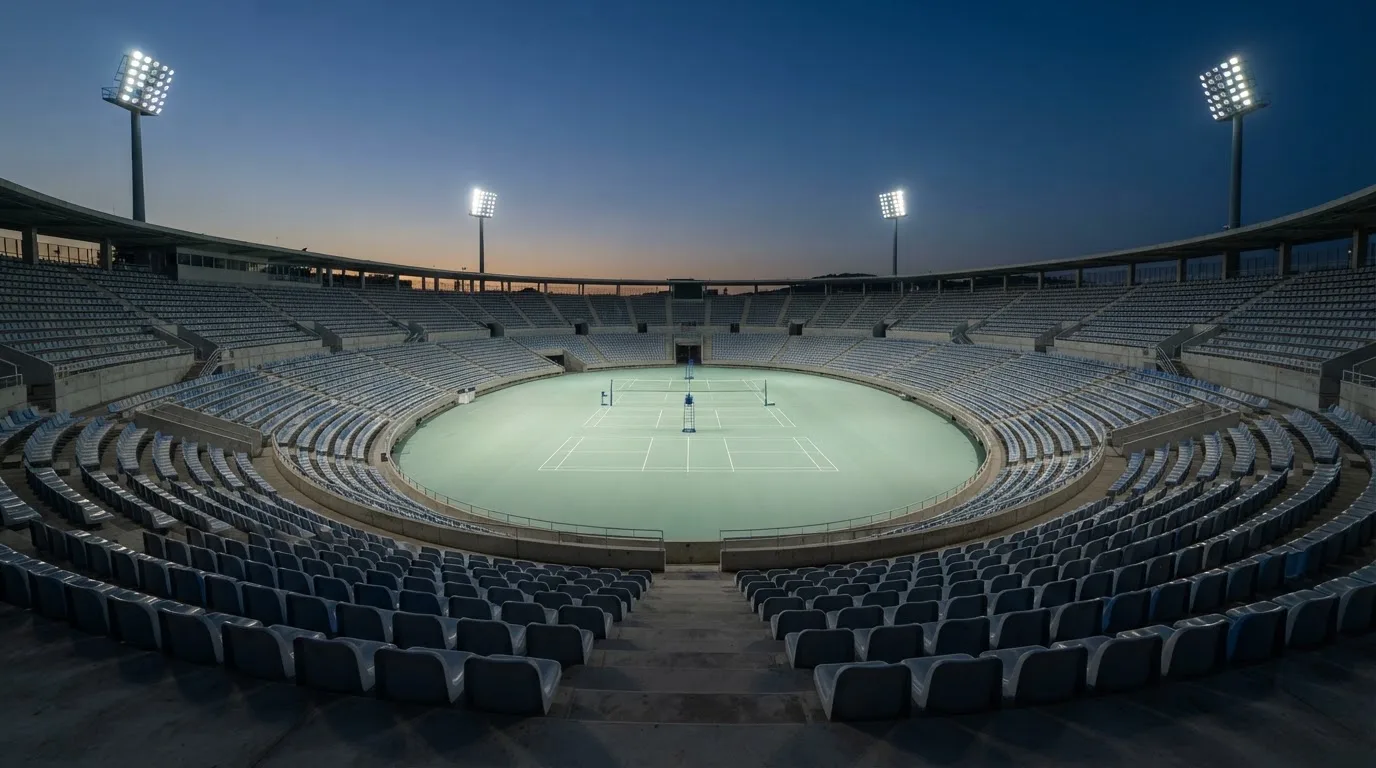
A game is played to 21 points under rally point scoring, which means a point is won on every rally, not only on serve. A match is the best of three games, and the court dimensions are fixed: 13.4 m long, 6.1 m wide for doubles, 5.18 m wide for singles, with the net 1.55 m high at the edges and 1.524 m at the centre. The five disciplines are men’s singles, women’s singles, men’s doubles, women’s doubles and mixed doubles, and the Olympic programme has carried badminton since Barcelona 1992, with mixed doubles added four years later.
The team tournaments give the calendar its rhythm. The Thomas Cup for men’s teams and the Uber Cup for women’s teams are held every two years; the Sudirman Cup, a mixed team event, began in 1989 and runs on the same cycle. At the top of the individual game sit the All England Open, first held in 1900, and the BWF World Championships, first held in 1977. The BWF World Tour threads through the rest of the year with Super 1000, Super 750, Super 500, Super 300 and Super 100 events, and the BWF World Tour Finals close the season.
Three consequences fall out of that structure. First, fixtures are dense enough that a serious punter can find live matches almost any week of the year. Second, the doubles market is real: bookmakers who carry only men’s singles treat half the sport as if it did not exist. Third, the team events introduce country-versus-country prices that behave differently from individual match-ups, because form rolls up the squad rather than the player.
Why Scoring Matters More Than It Looks
Rally point scoring changes the psychology of the game. At 20–20, a player needs two clear points to win the game; at 29–29, the next point wins outright. That gives trailing players a narrower target to chase late in games and gives leading players a sharper incentive to slow the rally down. In-play markets that price “next point” or “game winner from this position” must take that mechanic into account, and so must a punter who is pricing it themselves.

The other scoring fact is the length of a match. Two games of 21 points each is a normal men’s singles match, and three games with one extended deuce can run past that. Punters who carry bets over from tennis routinely underprice how quickly badminton rallies turn, because the shuttle does not bounce and the recovery time between points is shorter than in tennis. The bookmaker’s clock runs faster than the punter’s habit assumes.
How the Market for Badminton Betting Lines Up
Ten brands hold a Gambling Commission remote licence and run a betting product that includes badminton, at least to the depth of carrying outright tournament winners and a handful of match markets during the major events. The table below sets out which operator, which licence, and what each operator’s own terms say about the subject of this page — badminton as a betting market.
| Brand | Gambling Commission licence | Operator’s own statement on badminton betting |
|---|---|---|
| Ladbrokes | Account 54743 — LC International Limited | Offers odds boosts and acca boosts; in-play available across major sports |
| Copybet | Account 53774 — Copybet UK Limited | Best Odds Guaranteed on UK and Irish racing; broader sportsbook covers badminton |
| BoyleSports | Account 39469 — Boylesports Enterprise | Acca insurance requires opt-in, £5 minimum stake, 1/2 minimum odds, £20 free-bet refund, 7-day expiry |
| BetTom | Account 64959 — Bet Tom Limited | Welcome offer of 50% back as a free bet up to £50, matched by 50% casino free funds |
| Tote | Account 54779 — TDCO Limited | Pool betting heritage; fixed-odds sportsbook carries the major sports |
| Swifty Sports | Account 58957 — Swifty Global (UK) Ltd | Cash Out on football and racing; Bet Builder listed as coming soon |
| Fitzdares | Account 400 — Fitzdares Limited | Premium sportsbook across racing, tennis, rugby, cricket, golf and American football |
| Betmaster | Account 65699 — BM Solutions GB Ltd | Multi-product sportsbook with casino and sports under one licence |
| Bet600 | Account 44731 — Tyche Tech Limited | Best Odds Guaranteed on horse racing paid at the starting price |
| bet365 | Account 55148 — Hillside (UK Sports) ENC | In-play betting and live streaming of events worldwide, with Match Live tracker |
Licence, not endorsement: every brand in this list appears on the Commission’s public register against a remote general betting standard (real events) category, which is the licence type the Act requires for taking bets on real sporting events from customers in Great Britain. No brand carries more weight in this table than its licence does; a place in the comparison is not a ranking and is not a recommendation.
A single brand cannot be the only licensed bookmaker. The Commission’s register lists hundreds of remote betting licence holders, and the table names ten of them, all carrying badminton at least at the level of tournament winners and a few match markets during a major event. Punters who want a fuller shortlist should search the register themselves.
What Badminton Betting Actually Looks Like in Practice
Badminton on a British bookmaker’s site is not football. The fixtures list is thinner, the in-play markets are narrower, and outright tournament prices can sit for weeks without a market move. That has consequences a punter feels on the first bet.
The first consequence is that the headline market at most operators is match winner — sometimes called “moneyline” — with a two-way price on each player. Set betting, total games, handicap games, and player-specific markets (first to 10, first to 15, winner of game 1) appear at the bigger events and disappear at the smaller ones. Punters who want set betting on a Super 100 event find it at one bookmaker and not at another.
The second consequence is that live betting is real but narrow. bet365 carries in-play on badminton with Match Live tracker support; smaller brands may carry a winner market in-play and nothing else. The punter who bets in-play on badminton without checking the available markets first ends up taking a price on the only market the site offers, which is rarely the market the punter planned to take.
The third consequence is that outright tournament betting is the place most bookmakers are willing to make a price on badminton. The BWF World Championships, the All England Open and the Thomas Cup and Uber Cup are the events where every operator in the table above carries outright winner markets, and where the form book and head-to-head data is dense enough for a punter to work with.
Why the Odds Look the Way They Do: Margin and Value
Every decimal price on a betting market contains the bookmaker’s margin. The standard two-way match at decimal odds 1.90 / 1.90 illustrates the point. The payout share is 1 divided by the sum of the implied probabilities: 1 ÷ (1/1.90 + 1/1.90) = 1 ÷ (0.5263 + 0.5263) = 1 ÷ 1.0526 = 0.9500, or 95.00%. The margin is 1 minus the payout share, 5.00%. That 5% is what the bookmaker keeps, on average, from every pound staked on this two-way match; the rest is paid back to winning punters.
If the same market sat at 1.85 / 1.85, the payout share would be 1 ÷ (0.5405 + 0.5405) = 92.50%, with a margin of 7.50%. Move it to 2.00 / 2.00 and the market is “evens” — the payout share climbs to 100% and the margin falls to 0%, which is what a peer-to-peer betting exchange with no built-in vig looks like, but is not what a bookmaker offers. The takeaway: a margin of 5% sits inside a 1.90 / 1.90 two-way market, a margin of 7.5% sits inside a 1.85 / 1.85 two-way market, and the difference is what the bookmaker keeps of every pound staked. Most real badminton match markets sit somewhere between those two examples; some spread to wider margins during minor events with fewer participants, and pool betting at Tote operates without the margin at all because it is parimutuel.
What a Value Bet Actually Is
A value bet is a price that is bigger than the true probability of the outcome, once the bookmaker’s margin has been taken out. If a player has a 60% chance of winning a match, the “fair” decimal price is 1 ÷ 0.60 = 1.667, and anything at 1.70 or higher is a value bet. The catch is that no one knows the true probability exactly, and the punter’s job is to estimate it as well as possible before deciding whether the price on offer rewards the risk.
Three things follow from that. First, a tip — somebody else’s estimate of who wins — is not a value bet on its own. The price has to clear the probability. A tip on the favourite at 1.20 is not value unless the favourite genuinely wins 84% of the time or more. Second, the bookmaker’s margin is paid every time a bet is placed, win or lose, and the only way to overcome it over many bets is to find prices that beat the implied probability often enough that the margin disappears into the edge. Third, no tip is ever certain. The player who genuinely wins 60% of the time still loses four times out of ten.
Reading Form Without Believing the Headline
Form is a player’s recent results, head-to-head record against this opponent, ranking trajectory, injury status, court surface (indoor hard is standard, but conditions vary by venue), and the pattern of the season. The BWF publishes a rolling ranking updated weekly, and individual tournaments publish draw sheets and results that are public.
The headline is the ranking. It is also the most misleading number on the page, because the BWF ranking is a rolling 52-week points total and a player returning from injury carries points from results they have not played. A punter who reads only the ranking prices a player’s decline at its peak. The form table comes from recent matches, the head-to-head table comes from matches against this specific opponent, and the rest comes from the calendar — a player three weeks into a comeback is not the same player as the one who won the title twelve months ago.
A second habit worth breaking is reading the bookmaker’s favourite as a prediction. The bookmaker has priced the favourite because most of the money on the match has gone that way, not because the bookmaker has an opinion. Punters who treat the favourite as a market signal are reacting to the money, not to the form.
The Legal Frame: What a GB Licence Means
A bookmaker taking bets from customers in Great Britain needs a Gambling Commission licence, whatever its own jurisdiction happens to be. Since the Gambling (Licensing and Advertising) Act 2014 took effect, an operator whose remote facilities are used in Great Britain needs a Commission licence wherever it is based; a Curaçao, Maltese or Gibraltar licence alone is not a substitute. The framework is the Gambling Act 2005, which covers England, Scotland and Wales; Northern Ireland has its own separate regime and is outside the Act.
A GB licence is the only test the page uses to include a brand in the comparison. The Commission’s public register is searchable by business name, trading name, domain or account number and is the only source that matters for the question “is this brand licensed to take bets from Great Britain?”. A punter who wants to check a brand not in the comparison can do so directly.
What the licence does. A licensed remote operator verifies the customer’s name, address and date of birth before the first deposit, including where the first deposit is a free bet or bonus. The minimum age is 18. The operator takes part in GAMSTOP, the national multi-operator online self-exclusion scheme, which has been a mandatory licence condition for online operators since 31 March 2020, with exclusion periods of six months, one year, five years, or five years with auto-renewal. A financial vulnerability check applies to licensed remote betting when a customer’s deposits minus withdrawals exceed £150 in a rolling 30 days. Wagering requirements on bonuses are capped at 10x, and mixed-product promotions requiring gambling across two or more product types — betting and casino together, for example — are banned under rules in force since 19 January 2026. Credit cards are banned for gambling in Great Britain since 14 April 2020.
What the licence does not do. It does not cap the stake a punter may place; the operator sets its own maximum stakes and may restrict individual customers. It does not cap the size of a free-bet or enhanced-odds offer; the bonus cap is on wagering requirements, not on offer value. It does not guarantee the punter a win, a payout or any return on any bet. It does not set the odds on offer; those are the bookmaker’s own call, and the margin inside them is the bookmaker’s own call.
What the punter pays no tax on. The player pays no tax on betting winnings in Great Britain. General Betting Duty is the operator’s tax on gross profits, currently 15%, with a new remote rate of 25% scheduled from 1 April 2027; from that date, bets on UK horse racing, on self-service betting terminals in licensed premises, on pool betting and on in-person betting stay at 15%. Whether operators pass duty on through their odds is not established, and the page does not write that the player is charged duty. The information here is general, not tax advice; a professional gambler should ask HMRC or a qualified adviser.
The honest framing. Licensed means checks, limits, GAMSTOP coverage, a bonus cap and a regulator to complain to. Unlicensed means none of those, plus no recourse if funds are withheld. Neither is “the safe choice” by default — the punter’s job is to decide what trade-off suits their own situation.
The Offshore Caveat
A brand that does not hold a GB licence can still accept bets from customers in Great Britain, because enforcement is disruption rather than blocking. The Commission’s powers include cease-and-desist notices, search-engine referrals, work with registrars, hosts and payment providers, and DNS blocking powers that have been granted or are about to be granted by court order; ISP-level blocking is not in operation. The offence under section 33 of the Gambling Act 2005 is aimed at the operator, not at the customer: providing gambling facilities in Great Britain without the licence the Act requires is an offence aimed at the operator (on summary conviction up to 51 weeks’ imprisonment, a fine up to level 5, or both; six months in Scotland). No offence aimed at a customer who merely bets on an unlicensed site was found.
What that means for the punter is the loss of protection. No GAMSTOP coverage, no Commission complaints route, no approved dispute-resolution body, no British consumer redress if funds are withheld, and not bound by the 10x bonus cap or the £150 vulnerability check. The page does not describe unlicensed betting as “legal to use” or as “illegal”; it describes the practical difference, which is the difference between having a regulator and not having one.
Responsible Gambling: The Tools That Exist
A licensed bookmaker is required to offer a set of safer-gambling tools, and a punter who uses them deliberately pays their own way. Unibet’s set is a representative example: deposit limits, a Player Profile test, product restrictions and self-exclusion, with live chat support and links to BeGambleAware, GamCare, GAMSTOP, Gambling Therapy and the Betting and Gaming Council. Other operators carry broadly similar tools, and the table above’s brands all sit under the same licence conditions.
The tools in detail. A deposit limit is the punter’s own ceiling on what they will deposit in a fixed time frame, set on the operator’s site, with a cooling-off period before an increase can take effect. A time-out is a short break, typically 24 hours to several weeks, during which the punter cannot log in to gamble. Self-exclusion is a longer commitment via GAMSTOP, which extends across every online operator that holds a remote licence and lasts six months, one year, five years or five years with auto-renewal; after the minimum period, the exclusion stays in place for a further seven years unless the customer asks GAMSTOP to remove it. Reality checks are pop-up reminders of how long the punter has been logged in. Product restrictions are operator-level blocks on specific products for the punter’s own account.
The financial vulnerability check sits on top of the customer’s own controls. Where deposits minus withdrawals exceed £150 in a rolling 30 days, the operator runs a public-record check — bankruptcy, county court judgments and similar — and may ask follow-up questions. It is not an income check and not a credit reference check. Financial risk assessments (the “affordability checks” of the press) have been announced in a staged plan with no start date; the page does not describe them as in force.
Help outside the bookmaker. GamCare runs the National Gambling Helpline. GambleAware funds treatment and research. NHS gambling clinics operate in several regions. Gamblers Anonymous runs peer-support meetings. A punter who feels their betting is getting away from them can reach any of these directly.
Bonuses and Free Bets on Badminton
The marketing language on a sportsbook welcome page is built around two ideas: a “free bet” and a “boost”. A free bet is a token the operator credits to the punter’s account, usually in exchange for a deposit and a qualifying bet; the punter uses the token to place a bet, and if the bet wins, the stake is usually not returned with the winnings. A boost is an enhanced price on a specific market, available for a limited time and often at a maximum stake.
The wagering condition is where the offer’s real cost sits. BoyleSports’s acca insurance is a worked example: the punter opts in, places an accumulator with a stake of at least £5 and legs priced at 1/2 or higher, and if one leg lets them down the operator refunds up to £20 as a free bet, which expires in 7 days and must be used on bets placed and settled on the same day. The refund is in free-bet funds, not in cash, and the stake on the next bet is not returned with a win. That is the shape of “insurance” at this bookmaker: a token, not a refund, with a seven-day clock.
BetTom’s sports welcome offer takes a different shape: 50% back as a free bet up to £50, matched by a 50% back up to £50 as free slot funds for casino play. The 10x bonus wagering cap introduced on 19 January 2026 governs how that much betting the free-bet funds require; the cap limits how much turnover the offer demands, not how much the offer pays out. The page does not print a working bonus code, because codes change and the value of the offer is in the terms, not the code.
Three habits worth keeping on offers. First, the wagering requirement is the cost of turning bonus funds into withdrawable cash; a £10 bonus at 50x wagering is £500 of qualifying bets before withdrawal, and the cap puts a ceiling on that calculation. Second, the minimum price for a qualifying bet (often 1/2 in fractional odds, or 1.50 in decimal) is the price below which a bet does not count towards wagering; a punter who places short-priced accumulators at 1.30 a leg can find none of their bets qualifying. Third, the deadline is the clock on the whole arrangement; a free bet that expires in 7 days is a different deal from a free bet that expires in 30, and a punter who lets the clock run out gets nothing back.
The Cost of a Bonus in Real Numbers
The cost of clearing a bonus is the turnover required multiplied by the margin of the market the punter is betting on. A £10 bonus at 10x wagering is £100 of qualifying bets; if those bets are placed at a margin of 5%, the expected cost is £100 × 5% = £5, on average, before any winnings are taken into account. The expected cost is a statistical estimate over many bets, not a guaranteed outcome for any single punter. Where the bonus is a free bet rather than bonus cash, the calculation shifts: the free bet’s value is its amount multiplied by (odds − 1) divided by odds, then multiplied by the payout share of the market. A £10 free bet at decimal odds of 2.00 on a market with a 95% payout share is worth £10 × (2.00 − 1) ÷ 2.00 × 0.95 = £4.75 on average. The free bet does not promise a win or a payout; the calculation is the average over many uses.
Live Betting and Cash Out on Badminton
Live betting on badminton is real at the bigger bookmakers and patchy at the smaller ones. The mechanics are the same as in-play betting anywhere: the punter watches the match, the bookmaker updates the markets as the score moves, and the in-play price reflects the current state of the game. bet365 carries live streaming of events worldwide plus Match Live tracker support; smaller operators may carry a winner market in-play and nothing else, because the data feed for set-by-set or point-by-point markets is expensive to maintain and the betting volume on badminton does not always justify it.
Cash out is the operator’s offer to settle a bet before the match ends, at a price the operator sets. The cash-out price reflects the current state of the bet, the margin on the in-play market and the operator’s view of how the rest of the match is likely to go. Punters who cash out lock in a smaller win or a smaller loss than waiting for the result, and the trade is the punter’s: certainty now, or the full outcome at the end. Swifty Sports lists Cash Out on horse racing and football with a note that Bet Builder is coming soon; Fitzdares’ layout includes cash out alongside accumulators and Lucky 15s; the bigger brands offer cash out across more sports.
A practical habit with cash out is to check the cash-out price against the price of laying the bet off on an exchange. The two prices should be close; if the bookmaker’s cash-out price is meaningfully worse than the exchange’s lay price, the punter is paying the bookmaker a fee on top of the margin they have already paid in the original bet. The fee is invisible because it sits inside the cash-out price, and the punter only sees it by comparing.
Bet Types and How They Settle
The bet types available on badminton at a UK bookmaker are a subset of the bet types available across the sportsbook. The headline ones are match winner, set betting, total games, handicap games, and outright tournament winner; the in-play menu adds next game, next set and (at the bigger operators) next point. The punter who treats badminton as a tennis substitute finds the comparison useful at first and misleading at the second look, because rally point scoring changes which markets actually price the live action.
Single bets are one selection, settled at the decimal odds on offer. An each-way bet is two bets of equal value, one on the win and one on the place; the place terms are set by the bookmaker and vary by event. Accumulators (or “accas”) are bets where the leg terms multiply into one price; a four-fold accumulator at legs of 1.50, 1.60, 1.70 and 1.80 pays 1.50 × 1.60 × 1.70 × 1.80 = 7.34, and a £10 stake returns £73.40 if all four legs win. System bets like the Trixie (4 bets), Patent (7), Yankee (11), Lucky 15, Super Yankee (26), Heinz (57) and Goliath (247) cover combinations of selections in different ways; the total stake is the unit stake multiplied by the number of bets, so a Lucky 15 at £1 a bet is £15 staked. bet365, Midnite, BoyleSports and Fitzdares all carry accumulator products on their sportsbooks; Midnite’s site shows an acca builder and popular accas alongside its in-play markets.
Working Out the Return
A £10 stake at decimal odds of 2.50 returns £25 (£10 × 2.50 = £25), of which £10 is the stake returned and £15 is the profit. A £10 stake at 1.50 returns £15, of which £10 is the stake returned and £5 is the profit. The stake is always returned on a winning bet unless the bet is a free bet, in which case the stake is usually not returned. The return is the punter’s gross receipt; the profit is the net win above the stake; the loss on a losing bet is the stake itself.
On an accumulator, the calculation multiplies the legs into a single price. A £10 stake at four legs of 1.50, 1.60, 1.70 and 1.80 returns £10 × (1.50 × 1.60 × 1.70 × 1.80) = £10 × 7.344 = £73.44, of which £10 is the stake and £63.44 is the profit. The accumulator pays only if every leg wins; one losing leg and the whole bet loses. The multiplication is what makes accumulators attractive and what makes them expensive, because the bookmaker’s margin compounds across the legs, and the longer the accumulator the more margin compounds.
Best Odds Guaranteed and Starting Price
Best Odds Guaranteed (BOG) is a horse-racing promotion: if the starting price on a UK or Irish race is bigger than the price the punter took early, the bet is paid at the bigger price. William Hill pays BOG on UK and Irish horse racing from 8 AM on the day of the race, on single and multiple bets, but not on ante-post, tote or pari-mutuel bets. Ladbrokes and Bet600 carry the same kind of promotion. Badminton is not a horse race; BOG does not apply. Punters who carry the habit of waiting for the SP into a badminton market find no offer waiting for them.
The starting price (SP) is the horse-racing equivalent of the final market price at the off, and the SP convention does not transfer to badminton. A badminton match market has the price on offer at the time the punter takes it, and that price is the price that settles the bet.
How to Build a Forecast Without Calling It a Tip
A forecast is the punter’s own estimate of what will happen in a match. It is built from form, head-to-head, ranking trajectory, the draw, the venue and the calendar. It is not a tip — a tip is somebody else’s forecast sold to the punter — and the page does not produce tips because no one knows who will win and a tipster who claims otherwise is selling certainty that does not exist.
The pieces a punter works with. Form is recent results: the player’s last ten matches, the surface, the round reached. Head-to-head is this player against this specific opponent, which matters more in badminton than in many sports because individual styles can dominate individual opponents over years. Ranking trajectory is the BWF ranking moving over the past six months, which catches a player on the way up and a player on the way down. The draw is the path through the tournament, which can carry a quarter-final opponent who has beaten the punter’s pick in three of their last four meetings. The venue is the arena, the conditions, the altitude if the tournament is somewhere unusual. The calendar is the rest of the season, which catches a player at the end of a long run and a player returning from a break.
The bank’s job is to price the forecast. Once the forecast says “this player wins 60% of the time”, the punter compares it with the price on offer and decides whether the price rewards the forecast. A forecast of 60% at a price of 1.70 is value; a forecast of 60% at a price of 1.55 is not. The price has to clear the forecast for the bet to make sense, and the forecast has to be honest about how certain it is.
Bankroll Discipline
Bankroll discipline is the punter’s own rules on how much to stake, on what, and on how to handle a losing run. The basic rule is a fixed unit — often 1% to 2% of the bank — and never more than one unit on a single bet. The punter who doubles the unit after a loss is chasing; the punter who halves the unit after a win is locking in; neither is the discipline the bank needs.
The discipline that matters most is the rule that the punter stops when the bank has gone down by a set amount in a set period, and the rule that the punter does not increase the unit because the bank has gone up. Both rules are about the punter’s own psychology, not about the bets. The bookmaker does not care whether the punter is disciplined; the punter’s bank does.
The discipline that matters second is record-keeping. A punter who keeps a record of every bet — the match, the price, the stake, the forecast, the outcome — can review the record at the end of a month and see whether the prices they took were value, whether the forecasts they made were honest, and whether the bank is going up or down because the punter is good or because the punter is lucky. The record is what turns the punter’s habit into something they can learn from.
A Look at the Bookmakers in the Comparison
Ten operators carry a Gambling Commission remote licence and run a sportsbook that includes badminton at least at the level of outright tournament winners and major-event match markets. The notes below describe each one in the same terms the licence itself uses, plus a verdict that closes on what the brand actually offers the punter reading this page.
Ladbrokes
Ladbrokes runs on the LC International Limited licence, account 54743, and its site carries a deep sportsbook with odds boosts, acca boosts and a full in-play product. Badminton sits inside the standard sports menu with outright tournament markets and a match-winner market at the major events. The bookmaker’s strengths are breadth of market and the depth of its in-play product; its weakness on badminton is the same weakness most British bookmakers share, which is that badminton does not always justify the data investment the bigger sports do. Those needing a comprehensive sports account covering the British menu will find Ladbrokes suitable, while bettors prioritizing specialized badminton depth may explore niche alternatives.
Copybet
Copybet runs on the Copybet UK Limited licence, account 53774, and the site markets Best Odds Guaranteed all day, every day, on all UK and Irish racing, with payment at the starting price if the SP is bigger than the early or show price taken. The first-past-the-post payment on horse racing — paying out on the order the horses cross the line even if the winner is later disqualified — is a Copybet feature. The sportsbook carries badminton at the level of the major events, and the punter who wants a brand with a strong racing offer and a competent sportsbook for the rest finds it here.
BoyleSports
BoyleSports runs on the Boylesports Enterprise licence, account 39469, and its acca insurance is the headline product: opt-in, a £5 minimum stake, 1/2 minimum odds, a maximum refund of £20 as a free bet that expires in 7 days, and the bet must be placed and settled on the same day. The refund is a free bet, not a cash refund, and the stake on the next bet is not returned with a win. The sportsbook carries the major sports and a competitive in-play product; a punter who bets accumulators and reads the seven-day clock on the free bet finds the offer worth taking on those terms.
BetTom
BetTom runs on the Bet Tom Limited licence, account 64959, and the sports welcome offer is 50% back as a free bet up to £50, matched by 50% back up to £50 as free slot funds for casino play. The combined product nature of the offer is governed by the mixed-product promotion rules introduced on 19 January 2026, which banned offers requiring gambling on two or more product types; the page describes the offer as the operator’s own terms describe it, and a punter should read the terms before claiming. The sportsbook carries the standard menu and a competent in-play product.
Tote
Tote runs on the TDCO Limited licence, account 54779, and the brand’s heritage is in pool betting on horse racing, where punters bet against each other rather than against a bookmaker’s margin. The Tote’s fixed-odds sportsbook carries the major sports and badminton at the major events; a punter who appreciates the pool-betting model on racing and wants a stable fixed-odds partner for other sports finds a solid choice here, provided they accept the fixed-odds badminton menu is more targeted toward major events than extensive coverage.
Swifty Sports
Swifty Sports runs on the Swifty Global (UK) Ltd licence, account 58957, and the site carries Cash Out on horse racing and football, daily price boosts, live streaming and in-play betting; Bet Builder is listed as coming soon. The brand is newer than the bigger names and the menu is built around the features a modern punter expects. Badminton is on the menu at the major events, and this operator appeals to users prioritizing a modern product feel over extensive badminton-specific market depth.
Fitzdares
Fitzdares runs on the Fitzdares Limited licence, account 400, and the app offers cash out, accumulators, Lucky 15s, specials and antepost markets on horse racing, football, tennis, rugby, cricket, golf and American football, with in-play live odds. The brand positions itself as a premium sportsbook, and the menu leans into the racing and football end of the British market. This platform suits users seeking a premium-brand account for racing and major ball sports, but those primarily focused on badminton might find the selection limited compared to specialist brands.
Betmaster
Betmaster runs on the BM Solutions GB Ltd licence, account 65699, and the operator combines casino and sports under one licence. The sportsbook carries the major sports and badminton at the major events; the multi-product nature of the site means the punter’s account carries casino and sports together. A punter who wants one account for casino and sports finds the offer sufficient; those seeking a deep, sports-only specialist experience might find the badminton market depth less extensive than the dedicated sportsbooks.
Bet600
Bet600 runs on the Tyche Tech Limited licence, account 44731, and the brand pays Best Odds Guaranteed on horse racing — if the starting price is bigger than the early or show price taken, the bet is paid at the SP. The sportsbook carries the major sports and badminton at the major events, and the BOG offer is the headline feature for racing punters. A punter who bets racing and wants BOG on the side finds the offer compelling, while those prioritizing the badminton-only experience may prefer a larger selection elsewhere.
bet365
bet365 runs on the Hillside (UK Sports) ENC licence, account 55148, and the brand is the one most punters associate with in-play betting and live streaming. The app carries in-play betting and live streaming of events worldwide, plus Bet Track, Match Live and a Live Golf Tracker for following bets in play. The badminton in-play product is the deepest of any British bookmaker, and the brand’s data investment on the less popular sports is wider than its competitors. A punter who wants badminton in-play with a tracker finds bet365 the most consistent offer; a punter who wants a brand with a quieter in-play product and a smaller menu can find cheaper alternatives.
The Honest Picture on the Sport
Badminton sits in the second tier of British bookmaker sports menus: real enough to carry outright tournament markets and major-event match markets, not deep enough to support the data investment the bigger sports justify. The punter who treats the sport seriously does three things.
The first is to compare operators. The table above is the comparison, and a punter who picks on the basis of price alone may find a different operator each week. The licence is the same across the table; the badminton depth varies.
The second is to compare prices on the same match across operators. The bookmaker’s margin sits inside every price, and the punter who takes the first price on offer pays more margin than the punter who spends two minutes looking. A two-way match at 1.85 / 1.85 carries a margin of 7.5%; the same match at 1.90 / 1.90 carries a margin of 5%; the same match at 1.95 / 1.95 carries a margin under 3%. The page does not name a specific match because prices are time-stamped and the snapshot ages; the punter’s job is to take the price that rewards the forecast.
The third is to bet soberly. The bookmaker is not the punter’s friend, the bonus is not free money, the tipster is not the source of certainty, and the only edge the punter has is the quality of their own forecast and the discipline of their own bank. The framework on this page is the framework a serious punter uses, and the page does not pretend otherwise.
Frequently asked questions
How do I bet on badminton?
Pick a licensed bookmaker from the comparison above, open an account, verify your identity, deposit by debit card or bank transfer (credit cards are banned for gambling in Great Britain), and place a bet on the match or tournament market you want. The minimum age is 18, and the bookmaker will check your name, address and date of birth before your first deposit.
What is a value bet and why is no tip ever certain?
A value bet is a price that is bigger than the true probability of the outcome, once the bookmaker’s margin is taken out. If a player genuinely wins 60% of the time, the fair decimal price is 1.667; anything above that is value. No tip is ever certain because no one knows the true probability exactly, and the player who wins 60% of the time still loses four times out of ten.
What is the bookmaker’s margin and how can it be seen in the odds?
The margin is what the bookmaker keeps, on average, from every pound bet on it. For a two-way match at 1.90 / 1.90, the payout share is 95% and the margin is 5%. The punter sees the margin inside the prices — a tighter pair of prices means a smaller margin, a wider pair means a bigger margin.
How is the return on a bet worked out from the stake and the odds?
The return is the stake multiplied by the decimal odds. A £10 stake at 2.50 returns £25, of which £10 is the stake returned and £15 is the profit. On an accumulator, the legs multiply into a single price, and a £10 stake at four legs of 1.50, 1.60, 1.70 and 1.80 returns £73.44 if all four legs win.
How can it be checked that a bookmaker holds a Gambling Commission licence?
The Commission’s public register is searchable by business name, trading name, domain or account number and is the only test that matters. The register is at gamblingcommission.gov.uk, and the punter who searches the brand’s name sees the licence status, the licence holder and the licensed activities.
Which tools for controlling play does a licensed bookmaker have to offer?
Deposit limits, time-outs, self-exclusion via GAMSTOP, reality checks and product restrictions, with the operator’s own safer-gambling team available by live chat or email. The punter who wants to use any of these can set them on the operator’s site, and GAMSTOP covers every online operator that holds a remote licence.
Tennis, darts & cue sports – Boxing betting
Content created by the «Boxing betting» team
