
What is a Heinz bet and what does it cost to place one?
 Available in US
Current as of 27 October 2026 — checked against the Gambling Commission’s public register and the operator terms on each bookmaker’s own help pages. A Heinz looks like a single bet on a betting slip, but it is in fact 57 separate wagers rolled into one. That single word — 57 — is where every cost and every chance on this page begins.
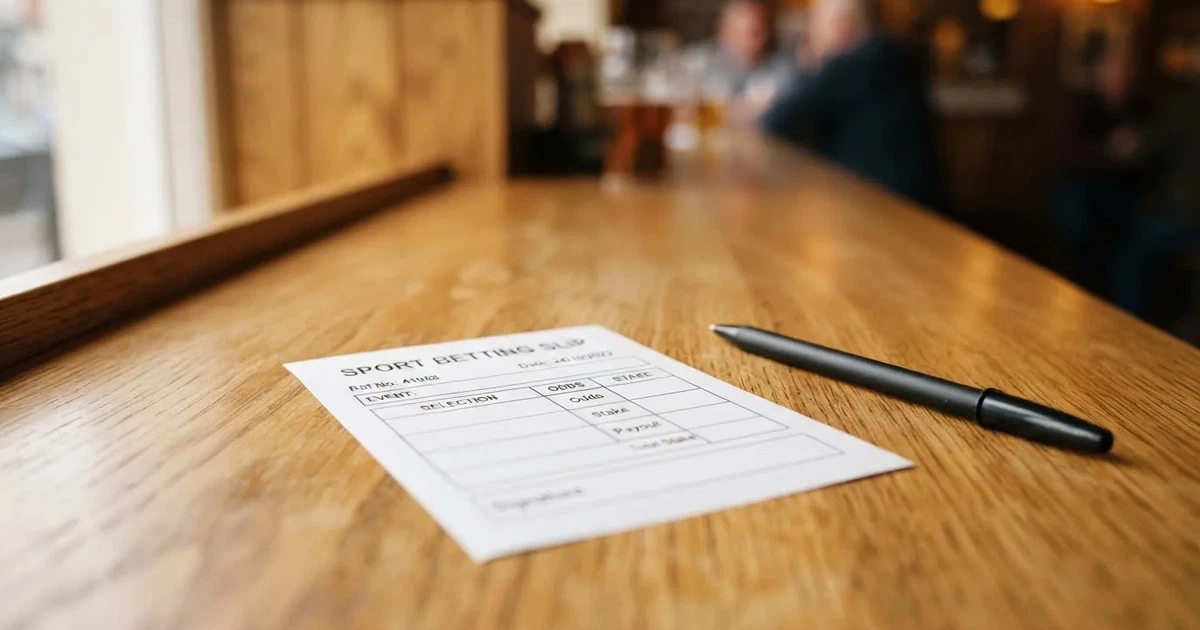
What punters actually ask about a Heinz bet
A Heinz is the bettors’ answer to a problem ordinary accumulators cannot solve at all. Six picks you fancy, with no confidence that any one of them is a lock, but reasonable confidence that several land. The Heinz lets you cover every way those six picks can combine without paying for the singles you do not want. It is not an instinct bet — the staking math punishes anyone who treats it like one. It is a structured bet, and the structure is the value.
What draws people in is the same thing that costs them. A £10 Heinz, at £2 a line across the 57 bets, looks like a £10 flutter. It is a £114 outlay. That gap — what the slip says versus what leaves the account — is the article, not an aside to it. The rest of this page works through that gap, the bets that make up the structure, and the bookmakers in Great Britain that let a punters run one without surprises.

Three things decide whether a Heinz is worth the stake before a single selection is picked. The unit stake, since the 57 multiplier hides it. The price of each leg, because six evens is a different bet from six short-odds favourites. And the bookmaker’s margin, which sits inside every one of those 57 prices and never disappears. This site takes the cost angle throughout. The Heinz is fun, and a £114 ticket that pays out makes for a good evening, but the arithmetic is older than the marketing.
The full-cover family and where the Heinz sits in it
Full-cover bets are a family of structured bets where every multiple over a given number of selections is wagered, but the singles are left out. The Heinz sits in the middle of that family. It is bigger than a Trixie or a Yankee, smaller than a Super Heinz or a Goliath, and the maths make a tidy ladder.

A Trixie on three picks is four bets: three doubles and one treble. A Yankee on four picks is eleven bets: six doubles, four trebles and a four-fold. A Lucky 15, by contrast, includes four singles among its fifteen bets, which is why a Lucky 15 still pays out something when only one of four picks lands. A Heinz on six picks is fifty-seven in all: fifteen doubles, twenty trebles, fifteen four-folds, six five-folds and one six-fold — and crucially, no singles. A Super Heinz on seven picks runs to one hundred and twenty bets; a Goliath on eight picks runs to two hundred and forty-seven. The family grows quickly because every new selection adds another layer of combinations, and the difference between fifty-seven and one hundred and twenty is the size of the ask, not a small step.
Two things separate this family from a plain accumulator. First, an accumulator on six picks is a single bet — all six must win or the whole stake is lost. A Heinz keeps four-folds and five-folds alive after one pick fails, because those multi-leg bets still have all their other legs standing. Second, the total outlay is the unit stake multiplied by the number of bets, not the unit stake as one figure. A £2 Heinz costs £114. A £10 Heinz, the kind that sits on a slip looking modest, costs £570. The slip shows £10. The account feels £570. That gap is the cost story.
Why punters reach for a Heinz bet
The reason is straightforward. A six-fold accumulator pays a much bigger price when it lands, but the chance of all six winning is the product of six individual chances — usually small. A Heinz keeps most of the upside while making the bet survivable: a single loser does not erase the ticket, only the legs that included it. Bettors who fancy five or six picks but cannot honestly rank them in order of confidence often find a Heinz the most honest way to express that doubt.
It is also why a Heinz is not the bet for someone with a single strong opinion. With six singles pulled out of the structure, anyone who is sure of one pick is paying for fifty-six bets that do not need that pick to win. A Lucky 15 or a single accumulator would serve that bettor better. The Heinz is the bet for the bettor who likes a half-dozen things at even money and does not want to be wiped out by one bad result on a Saturday.
How the 57 bets break down, leg by leg
A useful way to see the structure is to count combinations. From six selections, the doubles are every pairing of two — six choose two — which is fifteen. Trebles are six choose three — twenty. Four-folds are six choose four — fifteen. Five-folds are six choose five — six. The six-fold is one. Adding those: 15 + 20 + 15 + 6 + 1 = 57. Each layer pays out if every leg in that combination wins; the layers work in parallel, so a successful treble and a successful four-fold on the same slip are paid separately.
A void selection changes the count. Where one of the six picks is voided — a non-runner, for example — the bet drops to the next multiple down. A treble becomes a double, a four-fold becomes a treble, a five-fold becomes a four-fold, and the six-fold becomes a five-fold. A Heinz on six picks with one void settles as a fifty-five-bet Heinz on five picks, with the relevant lines settled as the structure dictates.
What a Heinz actually pays out
The arithmetic is mechanical, and the cost angle starts here. The unit stake is the figure to multiply by 57 to get the total outlay. The return on any single line is the unit stake multiplied by the decimal price of that line, which itself is the product of the decimal prices of each leg. A winning treble of three legs at 2.00, 2.50 and 3.00 pays unit stake × 15.00 on that line. The full ticket pays the sum of every winning line, each computed the same way.
An illustrative payout at three example prices
Take three illustrative selections at decimal odds of 1.50, 2.00 and 2.50, and a unit stake of £10 on an accumulator — or £2 per line for a full-cover bet, which keeps the per-line exposure modest. A single accumulator on those three legs at 1.50 × 2.00 × 2.50 = 7.50 pays a return of £10 × 7.50 = £75, a profit of £65 on the £10 stake.
The Heinz math is more involved, and that is by design. Across the 57 lines, a small change in any one price ripples through every combination that contains it. To give a sense of scale rather than a single answer, the band of outcomes runs from a modest return when only one or two layers hit to a sizeable one when all six land. With the same illustrative prices and a unit stake of £2 across the 57 lines, the total outlay is £114. A six-fold win at the top of the band, with each leg priced somewhere in the 1.50–2.50 region, returns the unit stake multiplied by the cumulative price — enough to turn the £114 into a four-figure payout. The exact figure depends on every leg’s price and which lines win; the upper end of the band is the headline-grabbing case, and the lower end is the more common one for a Heinz priced in that range.
A practical note. British bookmakers display odds in fractional form by default — 1/2, evens, 6/4 and so on — and the decimal conversion is a/b + 1. The 1/2 is 1.50, evens is 2.00 and 6/4 is 2.50, which is the set the example uses. Decimal odds make the multiplication on a Heinz clearer, and most operators let the punter switch formats at the slip.
Why the margin matters more on a Heinz than on a single
Every decimal price carries the bookmaker’s overround — the margin baked into the line so the book, across all outcomes, keeps a slice of every unit bet. A market where the true chances would total 100% is priced by a bookmaker at something over 100%, and the difference is the margin. On a single bet, that margin is a small slice of the price. On a Heinz, it is a small slice compounded across 57 prices — and the bigger the Heinz, the more this compounds.
A useful way to think about it: a margin of 5% on a single bet means the punter is paying 5p of every pound staked, on average, into the book. A 5% margin on every leg of a Heinz means the same 5p on every unit across all 57 lines — £5.70 of the £114 outlay, on average, goes to the bookmaker before a single pick is decided. That is the cost story again. A Heinz with six short-priced favourites looks cheap and is, in fact, the worst case for margin — every leg carries it, none of them carries much price to absorb it.
Bookmakers in Great Britain that take Heinz bets
A Heinz is a standard full-cover bet offered across the British market, and ten licensed bookmakers give a sense of how the offer varies. Each is a holder of a Gambling Commission remote licence for Great Britain, which is the only licence that counts at the point of consumption — a Curaçao or Malta licence alone does not cover a British stake. The list is not a ranking and inclusion is no recommendation.
The selection below reflects each operator’s house view of the Heinz, not the page’s. Each card carries the licence account number a punter can search on the Commission’s register, the licence holder named on that register, and what the operator’s own terms say about full-cover bets and free-bet handling. The free-bet cards matter because a Heinz is where a free-bet stake often gets tested — a £10 free bet on a Heinz at £2 a line covers 5 of the 57 lines, and the other 52 come out of cash.
| Brand | Licence | Terms |
|---|---|---|
| Midnite | 101839, Midnite Limited | Heinz offered; acca builder for bet builders, not full-cover |
| Smarkets | 39173, Smarkets (Malta) Limited | Exchange; construct line-by-line; 2% standard commission |
| 888sport | 39028, 888 UK Limited | Heinz standard; 57 lines; Cash Out available |
| BoyleSports | 39469, Boylesports Enterprise | Heinz standard; acca insurance applies if opted-in |
| William Hill | 39225, WHG (International) Limited | Heinz standard; BOG applies to racing selections |
| LiveScore Bet | 56859, LiveScore Betting and Gaming (Gibraltar) Limited | Heinz standard; strong in-play price availability |
| Betboro | 44181, Webmedia Development N.V. | Heinz standard; cash-out extends to full-cover |
| Spreadex | 8835, Spreadex Limited | Heinz standard on fixed-odds side; separate spread product |
| Lottoland | 38991, EU Lotto Limited | Heinz offered on sportsbook side |
| Paddy Power | 39439, PPB Counterparty Services Limited | Heinz standard; Super Sub applies to player-pick legs |
Midnite
Midnite runs on Gambling Commission account 101839, held by Midnite Limited. The site is built around in-play events, an acca builder, popular accas and price boosts with stated maximum-stake limits. The sports welcome offer for new customers is £5 or more on a pre-match bet at minimum odds of EVS (2.0) within 14 days of sign-up, returning £25 in free bets and 50 free spins, valid for 7 days — and that combination of betting and free spins on the same promotion is the kind of mixed-product offer the 19 January 2026 rules took aim at in their general form, so any new customer promotion should be checked at the operator’s terms before relying on the headline.
A Heinz on Midnite settles the same way any Heinz settles: unit stake × 57 in the slip, layers paid independently, voids reducing the structure. The acca builder is unrelated to a Heinz and exists for bet builders, not full-cover bets. Verdict: a workable Heinz book, with a welcome offer that pays back in free bets whose stake is typically not returned with a win — so the value of a Heinz placed with the £25 sits below the headline number once the 7-day expiry starts ticking.
Smarkets
Smarkets is a betting exchange running on Commission account 39173, held by Smarkets (Malta) Limited under a remote betting intermediary licence. Exchange betting is back and lay, not fixed-odds book, and a Heinz on an exchange is constructed line by line as a series of back bets at chosen prices. The platform applies a standard commission of 2% on eligible exchange bets, with new customers historically offered 0% commission for 60 days on a minimum first deposit of £10 — a structural discount that materially changes what a Heinz costs a frequent user, since commission is taken from net winnings on each line.
Verdict: for a punter who wants to lay off one or two legs of a Heinz against the exchange to insure the structure, Smarkets is one of the few operators in the list built for that workflow. For a punter who only wants to back a Heinz straight, the exchange’s commission is a cost a fixed-odds book does not add.
888sport
888sport operates under Commission account 39028, held by 888 UK Limited, with a remote general betting standard (real events) licence. The product covers pre-match and in-play betting, Cash Out, Bet Builder, racing streams, BetFinder form tools, a live bet feed and daily boosted odds. The Heinz is a standard full-cover bet at 888sport, with the same 57-line structure as elsewhere; voids settle the affected lines as the structure dictates.
Verdict: the offer is broad and Heinz punters get the full feature set — Cash Out can settle a Heinz ticket before all six legs have run, which is a feature with its own price because the offer taken on cash out is below the fair value of the remaining legs. Worth it for a bettor who actually uses Cash Out; indifferent to one who does not.
BoyleSports
BoyleSports holds Commission account 39469 through Boylesports Enterprise and runs a standard general betting standard licence. The Acca Insurance offer requires opt-in, a minimum stake of £5, minimum odds of 1/2 and pays a maximum refund of £20 as a free bet that expires in 7 days; bets must be placed and settled on the same day. The acca insurance is aimed at accumulators, and a Heinz can qualify under the same opt-in if the slip meets the conditions. The refund pays in free bets, not cash — and a free bet’s stake is not returned on a win.
Verdict: useful for the bettor who already builds a Heinz the same week as a separate accumulator, because the insurance covers a leg failure across both. Less useful for someone whose entire weekly stake is a single Heinz, since the £20 ceiling and 7-day expiry take most of the headline off.
William Hill
William Hill runs on Commission account 39225 through WHG (International) Limited and offers Best Odds Guaranteed on UK and Irish horse racing from 8 AM on the day of the race, on both single and multiple bets — though it excludes ante-post, tote and pari-mutuel bets. The BOG pays out at the starting price if that is higher than the price taken when the bet was placed. For a Heinz with several racing legs, BOG can lift the return meaningfully across the affected lines, since each leg pays the better of the two prices.
Verdict: the Heinz book for a bettor whose picks lean on UK and Irish racing. The BOG uplift is real and applies across the 57 lines, but a Heinz built on football or other sports gets nothing from it — and the offer excludes ante-post, so far-future picks are excluded from the uplift.
LiveScore Bet
LiveScore Bet operates under Commission account 56859, held by LiveScore Betting and Gaming (Gibraltar) Limited. The Bet Builder allows up to 10 selections and covers match result, both teams to score, corners, total goals, player scoring and card markets. Bet Builder is a separate product from a Heinz — it is a same-game or same-event multiple — and the Heinz remains a cross-event full-cover bet settled across six picks.
Verdict: strong for a Heinz built partly from in-play prices via the live feed, since the operator’s strength is real-time markets. The Bet Builder does not double the Heinz: the two are different products on the same slip.
Betboro
Betboro runs on Commission account 44181 through Webmedia Development N.V. and offers in-play markets and cash-out on football, racing and tennis, boosted odds on selected singles from £10 stakes, and the responsible-gambling tools the Licence Conditions and Codes of Practice require (deposit limits, reality checks, self-exclusion). The Heinz is available, with the cash-out feature functional across the full-cover slip.
Verdict: a competent Heinz book with a familiar feature set. The boosted-odds offer is on singles and does not apply to a Heinz slip, so it does not lift a multi-line ticket on its own.
Spreadex
Spreadex combines a fixed-odds book with a spread betting product, regulated by the Gambling Commission for fixed odds (Commission account 8835, held by Spreadex Limited) and by the Financial Conduct Authority for spread betting. The new customer offer pays £60 in free bets for a £10 fixed-odds bet, with the free bets usable across fixed odds and spread betting, and the qualifying bet must be placed within 28 days of opening the account. The two licences are worth noting because spread betting losses can exceed deposits, while a Heinz on the fixed-odds side does not carry that risk.
Verdict: the £60 free-bet headline is generous against the rest of the list, but the 28-day qualifying window and the cross-product use of the free bets mean the actual value depends on whether the punter uses both halves of the offer. A Heinz on the fixed-odds side is straightforward; a spread bet on the same slip is a different product with a different cost shape.
Lottoland
Lottoland runs on Commission account 38991 through EU Lotto Limited and combines casino, lottery betting, sports betting and scratchcards in one app, with the sportsbook licensed by the Gambling Commission for customers in Great Britain. The Heinz is available for sportsbook customers.
Verdict: useful for a punter who wants sports betting and lottery products in one place. The sportsbook is not the operator’s main product, so the Heinz offer sits in a thinner product area than the dedicated books in this list.
Paddy Power
Paddy Power operates under Commission account 39439 through PPB Counterparty Services Limited and offers Bet Builder+, Popular Bet Builders, Super Sub (a bet rolls over to the replacement player if a selected player is substituted), expanded Win More markets and player and ACCA stats. Super Sub matters for a Heinz: where a player-pick market is one leg of a six-fold structure, the Super Sub mechanic keeps the bet alive after a manager makes a change that would otherwise void the pick.
Verdict: the most Heinz-friendly feature set on the list for player-pick markets. The Super Sub mechanic reduces the void rate on player-markets, which on a six-pick structure can be the difference between a reduced ticket and a full loss.
A worked payout on three illustrative prices
Three example selections at decimal prices of 1.50, 2.00 and 2.50 — equivalent to fractional 1/2, evens and 6/4 — make a clean worked example. A unit stake of £10 on an accumulator at those prices gives a return of £10 × (1.50 × 2.00 × 2.50) = £10 × 7.50 = £75, a profit of £65 on the £10 stake.
A unit stake of £2 per line on a Heinz at the same prices gives a total outlay of £2 × 57 = £114. The exact return depends on which lines hit. At the lower end of the band, with only the smallest combinations landing, the return stays close to the outlay. At the upper end, with all six picks winning and each leg somewhere in the 1.50–2.50 range, the cumulative price on the six-fold is 1.50 × 2.00 × 2.50 × 1.50 × 2.00 × 2.50 ≈ 28.13, and the six-fold line alone pays 2 × 28.13 = £56.26 — meaningful against the £114 outlay, though not the headline figure for a Heinz at higher prices. The band runs wider when prices are higher and narrower when they are shorter, and the structure of the Heinz means the band is the honest way to present it.
The decisive assumption sits in the prices themselves. At 1.50, 2.00 and 2.50 across the three example legs, the bet is a moderate-priced structure. The same outlay on six legs all priced around 1.50 (3/1-on in fractional terms) would not pay the headline numbers some marketing suggests, because the cumulative price on the six-fold is small. A Heinz pays for itself most clearly when the picks are spread across a range of prices and at least some of them are evens or longer.
The legal frame in Great Britain for a Heinz bet
A Heinz is a bet like any other under the Gambling Act 2005, which covers Great Britain — England, Scotland and Wales — and is enforced by the Gambling Commission, a non-departmental public body sponsored by the Department for Culture, Media and Sport. Northern Ireland runs on its own older law, so a GB licence regulates Northern Ireland nowhere; a “Great Britain licence” is the right term.
Since the Gambling (Licensing and Advertising) Act 2014, an operator whose remote facilities are used in Great Britain needs a Gambling Commission licence wherever it is based — sections 33 and 36 of the 2005 Act as amended. A Curaçao, Maltese or Gibraltar licence does not substitute, although it may run alongside the GB one. The Commission’s public register, searchable by business name, trading name, domain or account number, is the whole test of whether a brand holds a GB licence; that is the register the table above points at by account number. Domains do not prove it: a licensed operator can run a .com and a .co.uk, and the domain proves nothing about the licence.
What may be bet on is not a statutory list. The Commission licences an operator for a category — remote general betting standard (real events), remote general betting standard (virtual events), remote general betting limited, remote pool betting and remote betting intermediary — and the operator offers markets under its own rules and the Licence Conditions and Codes of Practice. A Heinz is a structured bet within a sports-event market, and it is offered under the same rules as any other bet in that category. In-play betting is offered by GB operators under the operator’s licence conditions and customer-protection duties; calling it “unrestricted” would be a legal conclusion the Act does not make.
Spread betting and the FCA
Spread betting is the one product in this market that is not the Commission’s alone. Financial spread betting is regulated by the Financial Conduct Authority, not the Commission, and it is the FCA that authorises firms offering spread bets on financial markets. Spread bets on sports, where offered, sit under the Commission’s general betting duty. The distinction matters because FCA-regulated spread betting losses can exceed deposits — a feature of the product that is not present in a Heinz placed on a fixed-odds sportsbook.
The point-of-consumption rule
Providing gambling facilities in Great Britain without the licence the Act requires is an offence under section 33 of the Gambling Act 2005, on summary conviction up to 51 weeks’ imprisonment, a fine up to level 5, or both (six months in Scotland). The offence is aimed at the operator, not the customer, and the consequence for a customer who bets on an unlicensed site is the loss of British protections: no GAMSTOP coverage, no Commission complaints route, no approved dispute-resolution body, no British consumer redress if funds are withheld, no binding by the bonus cap or vulnerability check.
Enforcement is disruption, not blocking: cease-and-desist notices, search-engine referrals, work with registrars, hosts and payment providers. The Commission has been given or is about to receive court-order DNS blocking powers — that is not the same as ISP blocking being in operation. The honest framing is that licensed means checks, limits, GAMSTOP and the bonus cap, with verification before the first bet; unlicensed means none of those, and a real risk of losing funds.
Responsible gambling and the Heinz
A Heinz is the kind of bet that tests the limits around it. The £114 outlay on a £2-per-line ticket is modest on the slip and substantial in the account; a £10-per-line ticket reaches £570. A bettor who keeps a deposit limit and a stake-set within it is unlikely to slip here by accident; a bettor who does not is the kind of customer the responsible-gambling tools are designed for, and a Heinz is the kind of bet those tools catch.
GAMSTOP and the self-exclusion route
GAMSTOP is the national multi-operator online self-exclusion scheme and a mandatory licence condition for online operators in Great Britain since 31 March 2020. Exclusion periods are six months, one year, five years, or five years with auto-renewal, and after the minimum period the exclusion stays in place for a further seven years unless the customer asks GAMSTOP to remove it. GAMSTOP covers online sites and apps; high-street betting shops use a separate self-exclusion register.
A Heinz is settled at licensed operators only if the customer has not self-excluded; a self-excluded customer cannot place a Heinz on a licensed site, and any attempt to do so is a breach the operator is required to refuse.
Deposit limits and the new framework
Operators must offer a gross deposit limit on a fixed time frame under Remote Technical Standard 12. The first changes have applied since 31 October 2025; a second phase was postponed to 30 September 2026, and whether that phase is now live is not established. There is no state-set deposit or loss ceiling: the limits are the customer’s choice within the framework. A Heinz sits inside the same limit as any other bet, and the 57-line structure is one ticket on the slip for limit purposes — the deposit limit is hit on the deposit, not on the bet.
Vulnerability and financial checks
A financial vulnerability check (LCCP condition 3.4.4, in force since 30 August 2024) applies to licensed remote betting when a customer’s deposits minus withdrawals exceed £150 in a rolling 30 days (since 28 February 2025). It is a public-record check, not an income or credit-reference check — looking at things like bankruptcy or county court judgments. Financial risk assessments (the affordability checks of the press) are announced in a staged plan with no start date, so “announced, staged, no start date” is the right framing.
For a Heinz bettor, the practical consequence is verification at the account level, not at the slip. Identity is verified before the first deposit, source-of-funds questions appear at higher spend, and the deposit limit is the customer’s tool.
Where to get help
GamCare runs the National Gambling Helpline. GambleAware funds treatment and education. NHS gambling clinics operate in several regions. Gamblers Anonymous runs peer-support meetings. These are the routes for a bettor who finds the Heinz — or any other structured bet — is starting to cost more than the budget allows.
Bonuses and free bets on a Heinz
Bonuses change the cost shape of a Heinz in two ways: the headline figure inflates by the value of the bonus, and the wagering requirements attached to the bonus change what the punter has to bet through before any of it is withdrawable. The 19 January 2026 rules cap wagering requirements on bonuses at 10x — a £10 bonus at 50x would have required £500 of bets; under the cap no more than £100. Mixed-product promotions — an offer requiring gambling on two or more product types — are banned.
Free bets as a stake on a Heinz
A free bet is a credit the operator gives the punter to place a bet with; the stake is typically not returned on a win. A £10 free bet on a single at 5.00 pays £40 in profit (and does not return the £10 stake). A £10 free bet used as one of the lines on a Heinz — say, the six-fold at £2 a line — pays the same way: the £2 stake is not returned, and the line’s profit is paid.
The cost shape this creates is that a free bet’s headline value overstates its actual worth. A £25 free bet is not £25 of withdrawable cash on a win; it is the profit on the lines the free bet covers, less the stake. A Heinz is one of the bets where this difference matters most because the headline figure on a free-bet offer is often large enough to look like the win.
Cash bonuses and the wagering condition
A cash bonus is paid in money and carries a wagering requirement: the punter must wager the bonus a set number of times before the bonus and any winnings from it are withdrawable. The 10x cap limits this to £100 of wagering per £10 of bonus. A Heinz on a cash bonus counts the full £114 outlay (at £2 a line) toward the wagering, provided the legs meet any minimum-odds condition the operator sets — many operators set minimum odds of 1/2 or EVS (2.0) per leg, and a Heinz built from short-priced favourites can fail this condition line by line.
Welcome offers and the Heinz
Each operator’s welcome offer is the entry point for a new account. Midnite’s £25 in free bets plus 50 free spins on a £5+ pre-match bet at EVS+ is the only welcome offer in the featured set that explicitly states a betting-plus-casino structure, and any punter claiming it should check the operator’s current terms at the time of sign-up. Spreadex’s £60 in free bets for a £10 fixed-odds bet is the largest headline in the set, but the free bets are usable across both fixed odds and spread betting, and the cross-product use means the value depends on the punter’s actual use of both halves.
A welcome offer is a marketing cost the operator pays to acquire a customer, and the wagering or stake-not-returned conditions on the free bets are how the operator recoups some of it. The Heinz on a welcome offer is the same Heinz as on a regular account; what changes is whether the free bet’s headline is a useful start or an expensive habit.
What the rules do not settle
Two questions remain open after the 19 January 2026 changes: whether the 10x cap applies to free bets with no wagering condition, and whether there is any cap on the money value of a bonus itself. A Heinz on a free bet without a wagering condition pays the profit on the free-bet lines without further turnover, but the stake is still not returned; whether that is the case depends on the operator’s terms, not the Act.
Picking a Heinz bookmaker for 2026
A Heinz is offered by every operator in this list, and the differences are at the edges: which bookmaker pays Best Odds Guaranteed on racing, which one offers cash-out on full-cover slips, which one keeps player-pick markets alive through substitutions. The cost angle does not stop at the slip; it runs through the offer, the bonus and the protection the licence provides.
A short checklist before a Heinz lands:
- The unit stake, in pence-per-line, multiplied by 57. That is the actual outlay, regardless of what the slip says.
- The price of each leg. Six short-priced favourites is the worst case for the bookmaker’s margin, because every leg carries it and none of them carries enough price to absorb it.
- Any minimum-odds condition on a free bet or bonus. A Heinz built under the minimum does not count toward wagering.
- The cash-out offer, if the punter plans to use it. The offer is below the fair value of the remaining legs; that gap is the cost of taking cash out early.
- The licence account number, which the punter can check on the Commission’s public register before opening the account.
What to read before placing the bet
Each operator publishes its own terms, and the Heinz sits in the bet-types section along with the Trixie, the Yankee and the Super Heinz. The settle rules — what happens on a void, what happens on a Rule 4 deduction, what happens on each-way terms if the bet is on horse racing — are the same across the industry but worded differently on each operator’s help pages. A punter who has not read those pages is a punter who has not seen the fine print on the bet they are about to place.
The promotion terms are separate. A welcome offer or a free bet is its own document, and the Heinz sits on top of it, not inside it. The wagering requirement, the minimum odds, the deadline, the cap on free-bet winnings, the list of markets the offer excludes — all of it applies to the Heinz placed with the offer, and it is the punter’s job to know it before the clock starts.
What to skip
A Heinz on a betting exchange is a manual construction, line by line, and the exchange commission is a per-line cost a fixed-odds book does not add. A Heinz on a spread-betting product is not a Heinz at all — it is a different product on a different licence. A Heinz on an unlicensed site is a Heinz with no British protections, and the headline odds on an unlicensed book are sometimes higher precisely because the operator is not paying for the licence or the protection.
Final word on a Heinz bet in 2026
A Heinz is fifty-seven bets, not one. It costs fifty-seven times the unit stake, and it pays out across the layers that win. It is a structured bet for the bettor who has six picks at sensible prices and is honest about not being able to rank them. It is not a bet for the bettor with one strong opinion, and it is not a bet for the bettor who treats the £10 on the slip as a £10 outlay.
The arithmetic is older than the marketing. The bookmaker’s margin sits inside every leg of every layer, and the Heinz compounds it across fifty-seven prices. The promotion is a separate document with its own conditions, and the welcome offer pays in free bets whose stake is typically not returned. The licence is a public-record check, and the Commission’s register is the place to verify it.
A Heinz is a fair bet when the punter knows what it costs. The page has tried to put that cost on the table. The slip shows £10; the account feels the right number.
Frequently asked questions about a Heinz bet
What is a Heinz bet?
A Heinz is a full-cover bet on six selections, settled as 57 separate wagers: 15 doubles, 20 trebles, 15 four-folds, 6 five-folds and 1 six-fold. There are no singles in the structure, so a single losing leg does not cancel the ticket — it only affects the combinations that included it. The total outlay is the unit stake multiplied by 57; a £2-per-line Heinz costs £114, and a £10-per-line Heinz costs £570, regardless of what the betting slip displays.
What is a Super Heinz bet?
A Super Heinz is the next size up in the full-cover family: 7 selections and 120 bets, made up of 21 doubles, 35 trebles, 35 four-folds, 21 five-folds, 7 six-folds and 1 seven-fold. As with the Heinz, there are no singles in the structure. The total outlay is the unit stake multiplied by 120, and the same logic of independent layers applies — every combination across the seven picks is wagered, and the layers settle separately.
How many bets in a Super Heinz?
A Super Heinz contains 120 bets on 7 selections: 21 doubles, 35 trebles, 35 four-folds, 21 five-folds, 7 six-folds and 1 seven-fold. The family ladder runs Trixie (4 bets on 3 picks), Yankee (11 on 4), Lucky 15 (15 on 4, including singles), Heinz (57 on 6), Super Heinz (120 on 7) and Goliath (247 on 8). The count is the combinations across the picks without the singles; it grows quickly because every added selection adds a layer.
How can a bookmaker’s Gambling Commission licence be checked?
The Gambling Commission’s public register can be searched by business name, trading name, domain or account number. The account number is the fastest route: it is printed on each operator’s help pages or app-store listing and matches the register’s entry. A GB licence is the only licence that authorises remote betting facilities used in Great Britain; a Curaçao, Maltese or Gibraltar licence alone is not a substitute. The register is the test — a domain does not prove the licence, since licensed operators commonly run both a .com and a .co.uk.
How is the return on a bet worked out from the stake and the odds?
For decimal odds, the return on a winning bet is the stake multiplied by the decimal price; the profit is the stake multiplied by the price minus 1. A £10 single at 3.75 returns £37.50, a profit of £27.50. On a combination bet, the price of the combination is the product of the prices of each leg, and the return is the stake multiplied by that product. A £10 treble at 2.00, 3.00 and 4.00 returns £10 × 24.00 = £240, a profit of £230. Fractional odds (5/1, 11/4, evens) convert to decimal by a/b + 1, so 1/2 is 1.50, evens is 2.00 and 6/4 is 2.50.
What is the bookmaker’s margin and how does it appear in the odds?
The bookmaker’s margin is the slice of every unit staked that the book keeps on average across a market. It is set by pricing the outcomes so their implied probabilities sum to more than 100%; the excess is the margin. A two-outcome market priced at 1.91 and 1.91 sums to 1/1.91 + 1/1.91 ≈ 1.047, giving a payout share of about 95.4% and a margin of about 4.6%. On a Heinz, the margin appears inside every one of the 57 lines, and the compounding effect across the structure is one of the reasons a Heinz pays less, on average, than the headline prices suggest.
Bet types & in-play – Boxing betting
Content created by the «Boxing betting» team
