
Cricket betting odds 2026: prices, margin and where the value sits
 Available in US
Current as of 27 October 2026 and checked against the Gambling Commission’s public register for each operator named below.

The price on a cricket match is not the same number twice. Two UK bookmakers can show 1.91 and 1.85 on India to win a T20 and both be wrong, because each price carries the bookmaker’s margin inside it, and that margin is the slice the operator keeps from every pound staked regardless of who wins. Reading prices is less about spotting a bargain and more about seeing through the margin to what the price would be on a level game. The rest of this page is the work that comes out of that idea: how the market is built, what GB-licensed bookmakers offer on cricket, what the welcome gift really costs once the wagering and the minimum price are read, and where the value sits for the punter who knows where to look.
In-play cricket betting and cashing out mid-innings
Cricket is one of the easier sports to bet on live, because the innings structure breaks the match into natural pauses. A fall of a wicket, the end of an over, a rain delay, a batter reaching fifty, a bowler’s third over in a T20 powerplay — each of those is a moment when the bookmaker suspends the market, reprices, and the punter gets to read the new picture and decide whether the new price is fair. The whole point of in-play is that the prices move faster than the punter can react, and a licence condition exists precisely because that asymmetry has to be managed. Under the Gambling Commission’s Licence Conditions and Codes of Practice, GB-licensed operators run in-play cricket as a controlled product: markets are suspended for valid events (a wicket, the end of an over, a delayed start), prices are repriced rather than voided, and the operator’s own terms govern settlement.
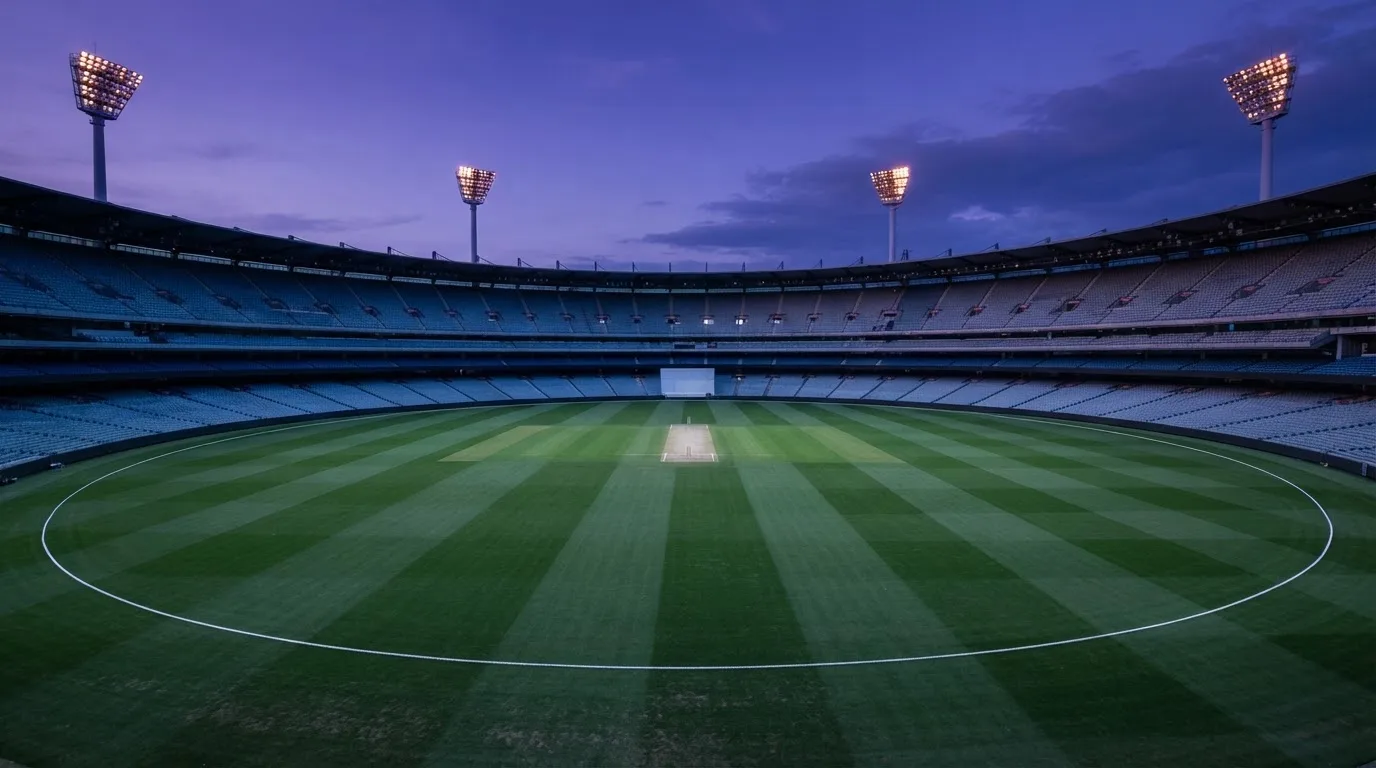
The practical shape of in-play cricket is a long series of small markets that open and shut. Match result, next over runs, next batter to be dismissed, method of dismissal, total at the fall of the next wicket, partnership runs, fifty markets, runs in the remaining overs — each appears as the match moves past its trigger condition. On a T20 these markets can change price every few deliveries; on a Test they shift less often because scoring is slower. The bookmakers listed in the section «Top 10 cricket bookmakers reviewed» take different approaches to depth: some run a deep book across all three formats, others concentrate on the marquee fixtures and price the rest thinly. Midnite, for instance, is one of the GB-licensed brands whose site advertises in-play cricket explicitly, alongside an acca builder, popular accas and price boosts with maximum-stake limits written on each card; that mix — in-play plus same-event combination plus boosted prices — is the in-play experience the punter actually meets on a busy India-England afternoon.
Cashing out is the other half of the live picture. A cash-out button appears when the bookmaker offers to settle the bet before the match has finished, at a price derived from the current in-play market. It is not a free option: the cash-out price carries its own margin, and on a market that was already thin the cash-out figure can be a long way from the punter’s idea of fair. The decision is rarely between cashing out and not cashing out; it is between this cash-out price, the live option to lay the bet on an exchange, and the value of running the position to settlement. The punter who uses it often is paying for it twice — once in the margin on the original bet, once in the margin on the cash-out price.
What in-play cricket really shows the punter is how the bookmaker thinks. A wicket falls and the favourite’s price drifts from 1.85 to 2.10. The punter who reads that drift knows whether the operator is repricing in line with the live state of the match or hedging its own exposure. On a sharp book the move is small and fast; on a soft book the move is large and slow, and the slow book is the one the live punter can exploit — until the operator restricts the account. UK rules on that are not set in statute: each operator has its own customer terms, and a successful live punter is a category every bookmaker watches.
A practical consequence: a punter who wants to bet in-play on county cricket or on a Hundred match outside the international calendar should check the bookmaker’s cricket lobby before settling on a brand, because some bookmakers that cover international cricket heavily run only the headline events in-play and leave the smaller fixtures to pre-match only. The brand with the deepest in-play cricket book is not always the brand at the top of a price comparison, because depth and headline price are different questions.
Cricket betting tips and the work a real prediction takes
Search traffic around cricket betting tips and predictions is large and largely worthless, which is worth saying at the top because it changes how the rest of the section reads. A tip is a forecast. A forecast is a statement about a future event, and a forecast of a single cricket match cannot be made with anything approaching the certainty that a tipster’s sales page implies. Most tipsters sell subscription access to picks the tipster themselves describes as “analysis”. A punter who pays for that access is paying for a forecast the tipster has no privileged information to make.

The work that goes into a real prediction is harder than the tip itself, and most of it is not unique to cricket. Form — recent results for the team, the venue, the conditions — matters. Head-to-head history matters in some rivalries more than others. Squad news matters most in the hours before the toss, when the teams are announced and the pitch is read. Pitch type matters heavily: a green seamer in England in April is a different game from a dry turner in Mumbai in November, and a forecast built on a team that won the last Test on a flat one says very little about what happens on a minefield.
What separates a usable prediction from a tip is the price the prediction is attached to. A forecast of “India to win” at 1.20 is barely a forecast, because the price is so short the margin does the work; the same forecast at 2.40 against a stronger opponent is a real claim. The punter who uses a tip without reading the price is paying for someone else’s forecast at someone else’s price, and that combination almost never beats the bookmaker’s margin over a season.
Bankroll management is the part the tipster rarely covers, because bankroll is the work the punter does for themselves. Staking a fixed unit (say, 2% of the bank on a standard bet, 1% on a speculative one) protects the bank from the bad run that arrives for every punter eventually. Chasing losses with bigger stakes does not, and it is the move every bankroll-management guide flags because it is the move that empties a real account fastest. Cricket’s long formats make the bankroll discipline easier: a Test series runs over five days, and the punter who has set a stake size for the series can read it through. A T20 tournament runs thirty matches in three weeks and punishes the punter who doubles the stake after a loss.
What a prediction cannot do is predict the rain. A forecast built on Saturday afternoon can be wiped out by a Saturday afternoon thunderstorm, and the Duckworth-Lewis-Stern method re-prices the match by overs rather than runs. A punter who built a forecast on a total-runs market for an ODI has lost the bet not because the forecast was wrong but because the format changed underneath it. The punter who reads the weather and the rules knows this is part of the bet; the punter who ignores it learns the lesson once.
A practical consequence: a free tip sheet is fine as long as the punter prices it independently. The tip says India; the punter checks the price, checks the squad, checks the pitch, and decides whether the price is fair. Where the tip disagrees with the punter’s read, the punter’s read wins. A punter who follows the tip without that check is taking the tipster’s price as their own forecast, which is a forecast of nothing in particular.
Bet types, odds formats and how a cricket price is settled
The cricket betting odds a GB-licensed bookmaker shows on its site are in one of two formats: fractional (5/1, 11/4, evens) and decimal (6.00, 3.75, 2.00). Fractional odds are the older British form: 5/1 means a £1 stake returns £5 profit plus the £1 stake back. Decimal odds are the newer European form: 6.00 means a £1 stake returns £6 in total, profit included. The conversion from one to the other is mechanical: decimal = a/b + 1, so 5/1 → 6.00 and 11/4 → 3.75. The return does not change; the way it is written does. British bookmakers show both side by side, and the punter picks whichever reads more easily. A £10 stake at 5/1 returns £60 (£50 profit, £10 stake back); the same £10 at 6.00 returns £60 (£50 profit, £10 stake back). The math is the same.
What the punter actually bets on is the market, and cricket markets fall into a handful of categories the bookmaker reprices for every fixture.
Match result is the basic market: who wins, or whether the match is a draw (in Tests) or a tie (in ODIs and T20s). The draw in a Test is a third outcome the bookmaker prices; the tie in an ODI is rare enough to be priced long. A two-way Test line, with the draw as a third runner, is the most common Test market on a GB site.
Tournament winner is the outright market: who wins the Ashes, the World Cup, the IPL. These are priced well in advance of the tournament and move with form, injuries and results.
Top batter / top bowler is a player market: who scores the most runs, or takes the most wickets, for their side in the match or the series. In a Test the top batter market is settled on the match as a whole; in a T20 series it is often settled per match.
Runs markets — total match runs, total team runs, runs at the fall of the next wicket, runs in the next over — are settled on the official scorecard. A punter should know which innings the market covers (the first innings only, or both) and whether extras are included.
Method of dismissal is settled against the official scorecard: caught, bowled, lbw, run out, hit wicket, stumped, handled the ball, obstructing the field, timed out, retired out. The first six are the working set; the rest are rules that exist but rarely settle a bet.
Over markets — runs in a specific over, runs off a specific delivery — are settled ball-by-ball and are a major in-play product. The punter who bets an over market in-play is betting the next six balls, not the innings.
Player milestones — fifty, hundred, five-wicket haul — are settled when the milestone is reached, and the bet is void if the player does not play.
Combination markets — a bet builder or same-game multi — combine several markets from one match into one bet. A India to win + Virat Kohli to score fifty + total runs over 320 is one bet at multiplied odds. The legs multiply, so the cumulative margin multiplies too. A two-leg combination at 1.90 / 1.90 carries roughly an 11% margin; a four-leg combination at the same prices carries closer to a 19% margin. The punter who builds an acca should know the cumulative margin of the legs, not just the headline price.
Settlement is governed by the operator’s own rules and the official competition rules. Where the operator’s rules and the competition rules disagree, the operator’s rules apply. A bet on the number of sixes in an innings is settled on the official scorecard, with the operator’s count of sixes as authoritative; a punter who disagrees with the count has the operator’s complaints procedure and, for unresolved disputes, an approved alternative dispute resolution (ADR) body. A bet on a player who does not play is void; a bet on a market that does not exist (a bet on the result of a coin toss after the toss is voided by default) is void.
What every one of these markets shares is the bookmaker’s margin. The margin is the percentage of every pound staked the operator keeps, on average, over a large number of bets. On a two-way market priced at 1.90 / 1.90 the implied probability of each outcome is 52.63%, totalling 105.26% — the excess over 100% is the margin, which here is roughly 5.13% (a payout share of around 94.87%). On a three-way Test market priced at 2.20 / 3.40 / 3.00 the implied probabilities are 45.45% + 29.41% + 33.33% = 108.20%, a margin of around 7.6%. The punter who wants to know what a market really costs reads the implied probabilities, adds them up, and reads the excess.
The free bet the operator hands out as part of a welcome offer is settled under a different rule: the stake is usually not returned with the winnings. A £10 free bet at 6.00 returns £50, not £60; the £10 stake is the operator’s, not the punter’s. A punter who reads the headline “£30 in free bets” as £30 of betting money has read it wrong; £30 in free bets is £30 of stake, and the value of the free bet depends on the price the punter puts it on. A free bet at 6.00 on a market with a 5% margin is worth roughly £25; the same free bet at 2.00 is worth roughly £7.50. The headline is the stake, not the value.
A practical consequence: the punter who reads prices as probabilities rather than as returns is a step ahead of the punter who reads prices as headlines. A bookmaker advertising “best odds guaranteed” on horse racing — QuinnBet and Bet600 both run BOG on UK and Irish racing — is not making the same promise on cricket, because cricket does not have a starting price in the racing sense. The punter who carries a racing idea across into a cricket market pays for the carry.
Cricket’s three formats, in plain English
Cricket has three international formats and a handful of domestic ones, and the markets a bookmaker offers shift with the format. A Test match is a different betting product from a T20, and the punter who treats them as the same market is paying for the confusion.
A cricket side has eleven players. The three international formats are Test matches, One Day Internationals (ODIs) and Twenty20 (T20). Test cricket is the oldest format: a Test lasts up to five days, with each side batting twice (up to four innings in total, two per side) and a minimum of ninety overs scheduled per day. A Test that is not won by either side is a draw — the third result, alongside win and loss, that the bookmaker prices. An ODI is a fixed-overs format: each side bats fifty overs, and a match that ends with the scores level when the chasing side is all out or runs out of overs is a tie. A T20 is the shortest: each side bats twenty overs (120 legal deliveries), a bowler may bowl at most four overs, and a tied match is decided by a super over. The Hundred is a further variation: each side faces one hundred balls rather than a fixed number of overs, with a similar rulebook; it is treated like a T20 by most bookmakers’ markets.
Rain is the variable no forecast can fully price. In rain-affected ODIs the Duckworth-Lewis-Stern method usually sets the target or the result; if too few overs are played — usually twenty — the match is a no result and most markets are void. The punter who bets an ODI market should know the rules around DLS, because a bet on the chase at a five-run target with two overs lost is a different bet from the same market at full overs. The bookmaker settles the rain-affected market on the official result, and the operator’s rules govern how DLS-applied totals are treated.
The fixture calendar shapes the betting calendar. The international calendar runs the World Test Championship, the ODI Super League and the ICC T20 World Cup; the domestic calendar runs the Indian Premier League (IPL), the Big Bash League (BBL), the Caribbean Premier League (CPL), The Hundred, county cricket and the various T20 franchise leagues around the world. The bookmakers covered on this page price international cricket heavily and T20 franchise cricket selectively; some run the IPL, the BBL and the CPL as full products, others carry them as a thinner book with fewer in-play markets.
The International Cricket Council (ICC) governs cricket internationally; twelve full members hold Test status, and the World Test Championship began its inaugural season in 2019. India won the 2026 ICC Men’s T20 World Cup, co-hosted by India and Sri Lanka from 7 February to 8 March 2026, beating New Zealand by 96 runs in the final. Tournament winner markets on the next T20 World Cup open well in advance of the tournament and move with form; outright winner markets on the IPL open in the autumn before the spring tournament and run through the league stage. A punter who wants an outright price on a tournament that is six months away has it, and a punter who wants to back a side at the start of a tournament pays a different price from the punter who backs the same side in the playoff.
What the format decides is which markets are open. A Test match runs to the second innings, and in-play markets are deep — fall of wicket, partnership runs, method of dismissal, session runs, runs at lunch and tea — because the format leaves room. A T20 is over in three and a half hours, and in-play markets concentrate on the next over, the next batter, the next method of dismissal. The bookmaker’s cricket lobby reflects that: a Test-day afternoon sees more live markets than a T20 powerplay does, even though the T20 is moving faster.
A punter who bets across formats should know what the format is doing to the cricket market. A bet on top batter in a Test is a bet on a five-day innings; the same market in a T20 is a bet on a 120-ball innings. A bet on total match runs in an ODI is a bet on 100 overs of batting across two innings; the same market in a T20 is a bet on 40 overs. The price the bookmaker offers reflects the format’s volatility, and the punter’s read of the format’s volatility shapes whether the price is fair.
A practical consequence: a punter new to cricket betting is best served by one format at a time. A bookmaker’s markets on the Hundred are a good starting point because the format is short, the fixtures are easy to follow, and the in-play book is deep on the marquee matches. Test match betting is a different discipline: longer, slower, with draws to read. The punter who mixes them without reading the difference pays the bookmaker for the privilege.
Top 10 cricket bookmakers reviewed
The ten brands below are reviewed here because each holds a Gambling Commission remote licence covering general betting on real events in Great Britain, and each names cricket on its sportsbook. They are listed in the order set by research; a licence is not a ranking and a place in the list is not a recommendation. Every operator in this list is GAMSTOP-enrolled, since that is a mandatory licence condition for online operators since 31 March 2020. The table that follows the per-brand write-ups summarises the licence and the cricket-relevant term each operator publishes.
Bet600
Bet600 is a smaller GB-licensed bookmaker whose welcome proposition has been Best Odds Guaranteed on horse racing: if the starting price is bigger than the early or show price taken, the bet is paid at the SP. BOG is a racing tool rather than a cricket tool, but the practice behind it — the operator carrying a price upward rather than against the punter — is the discipline the punter should look for on cricket too. The bookmaker’s cricket lobby is mid-depth: international cricket, IPL and the headline T20 leagues are covered, with thinner markets on county cricket. For a punter who bets international cricket at short prices, BOG is a small but real concession on the racing side; on cricket, the question is whether the prices on the marquee fixtures are competitive with the larger GB-licensed operators listed below.
Verdict: a respectable second bookmaker for a punter who already has a primary GB-licensed account and wants a second opinion on price.
bet365
bet365 is the largest UK sportsbook by betting volume and is the official global betting partner of the UEFA Champions League. Its app is widely described as the most-downloaded sports betting app in the UK. On cricket, the bookmaker is the deepest in the market: every international format, every major franchise league, county cricket and The Hundred are priced, with in-play markets that include Bet Builder+, Super Boosts, Winnings Boosts on Bet Builders and selected singles, and daily Bet Boosts. Bet Builder+ combines markets from one event into a single bet, available pre-match and in-play — a real same-event combination product. The depth has a price: bet365 is the operator whose margin is the benchmark the others are measured against, and the punter who wants to know whether a smaller bookmaker is offering value compares the price to bet365’s. The app is the gold-standard GB bookmaker app for a punter who wants live cricket markets on a handset.
Verdict: the benchmark on cricket depth and the brand to anchor a price comparison against.
BetMGM
BetMGM UK runs under LeoVegas Gaming PLC and is a GB-licensed sportsbook and casino combined. Its sports welcome offer for new UK customers who deposit £10 or more and place a sports bet within 7 days is four £10 free bets — two football accumulators of 4+ selections and two sports multiples of 2+ — valid for 7 days with minimum odds and an opt-in required. The free-bet value depends on the price the punter puts it on, and on a 7-day clock a punter who does not use the free bets within the window loses them. The cricket coverage is solid, with international fixtures and marquee T20 leagues featuring heavily in the daily in-play markets. The combined casino-sports product appeals to a punter who already plays both; a punter who only bets cricket gets less from the casino-side weighting of the welcome.
Verdict: A solid sportsbook and casino hybrid for a user who enjoys cross-product play and wants a welcome bonus spread across four separate free bets.
BoyleSports
BoyleSports’ sports welcome offer for UK players is £20 in free bets when a £10 bet is placed. The Irish equivalent is €30 in free bets for a €10 bet. The bookmaker is a major Irish and UK high-street and online brand, and its online cricket coverage is broad: international cricket, IPL, county cricket, and the marquee T20 leagues are priced. In-play cricket markets are present, and the bookmaker is one of the GB-licensed operators that price cricket deeply. For a punter who wants a bookmaker with a long UK and Irish history and a mid-tier free-bet welcome, BoyleSports sits in the middle of the field on depth and at the lower-middle of the field on headline free-bet value.
Verdict: An established bookmaker providing a broad cricket selection, making it a reliable alternative for a punter looking to diversify away from a primary account.
Octobet
Octobet is a newer GB-licensed sportsbook, run by Octopus Game Limited. Its sportsbook welcome offer is 50% back as a free bet up to £50, plus a £10 casino bonus for new customers. The 50%-back shape is structured as a one-shot safety net on a first bet: a punter who places a first bet, loses, and gets half back as a free bet (up to £50). The cap is a real limit: a punter who places a first bet of £100 gets £50 back as a free bet, but a punter who places £200 gets £50 back, not £100. The brand offers a mid-market cricket lobby covering international cricket and major franchise leagues, with in-play markets that are competitive without matching the top-tier depth. The casino weighting of the welcome is a small fraction of the headline offer.
Verdict: A suitable option for a newcomer seeking a first-bet safety net, though the cricket depth is more focused on major leagues.
Dabble
Dabble’s welcome offer is “Bet £10, Get £10 in Free Bets” on a first deposit for new customers, with minimum odds applying, a 7-day free bet expiry and the stake not returned. The shape is the standard GB free-bet welcome: a small first-bet stake unlocks a free bet of the same size. The 7-day clock is the constraint: a punter who does not use the free bet within a week loses it. The cricket lobby is mid-depth: international cricket, IPL and the headline leagues are priced, and in-play markets are present. The app’s social features — a feed of bets from other customers — are a distinctive part of the product for a punter who wants the social layer.
Verdict: An intuitive choice for a punter who prefers a social betting environment and can comfortably utilize the free bet within the one-week window.
Sky Bet
Sky Bet’s free bets expire 30 days after crediting, can be used only on single or each-way markets (not multiples) excluding virtuals, are non-withdrawable and do not return the stake with winnings. The 30-day clock is more generous than the standard 7-day clock on most GB welcome offers, but the multiple-market exclusion is a real constraint: a punter who wants to put a free bet on an acca cannot. Sky Bet’s cricket lobby is mid-to-deep: international cricket, IPL, county cricket, The Hundred and the major T20 leagues are priced, and in-play markets are competitive. The Sky Betting and Gaming group owns a wide UK portfolio; for a punter who wants a mainstream GB sportsbook with a generous free-bet clock and a deep cricket book, Sky Bet is one of the standard choices.
Verdict: a sound primary bookmaker for a punter who values the 30-day free-bet clock and bets singles or each-way.
Fitzwilliam Sports
Fitzwilliam Sports is a Dublin bookmaker with capped membership and a high-stakes welcome subject to compliance criteria. The capped membership shape means the brand is not open to every customer: the operator invites customers rather than taking every signup. The product is built around larger stakes and serious punters rather than the casual market, and the welcome is structured as a high-stakes proposition rather than a free-bet gift. The bookmaker offers instant deposits, fast withdrawals, timeouts and deposit limits, and links to GambleAware, GamStop and Gamblers Anonymous — the safer-gambling basics are present. The cricket lobby is mid-depth: international cricket and the headline T20 leagues are covered, but the bookmaker is not the deepest for the marquee fixtures. For a punter who qualifies for membership and stakes at the higher end of the market, the proposition is one of the few in the GB-licensed space built around larger stakes.
Verdict: A premium-tier proposition for high-stakes bettors; casual punters looking for a standard welcome offer will find other brands more accessible.
Kwiff
Kwiff is licensed by the UK Gambling Commission and operated by Spryme Ltd as a trademark. The Kwiff feature is a randomised odds boost on selected markets: a punter who places a bet may find the odds have been “Kwiffed” — moved to a higher price than the headline. The shape is a novelty rather than a structural change to the price, and the punter who bets Kwiff’s cricket markets gets the headline price as a floor and a randomised higher price as a possibility. The cricket lobby is mid-depth: international cricket and the marquee T20 leagues are covered, in-play markets are present, and the app has a 17+ App Store age rating. For a punter who likes the surprise of a randomised boost and does not need the deepest cricket book, Kwiff sits in the second tier of the GB-licensed field.
Verdict: a novelty product for a punter who likes the Kwiff feature and does not need the deepest cricket book.
QuinnBet
QuinnBet’s Best Odds Guaranteed applies to Irish and UK horse racing bets from 10:00am daily on singles, multiples and system bets, with a maximum benefit of £150 per customer per race. BOG is a racing tool rather than a cricket tool, but the practice behind it carries across: the operator carrying the price upward at the start of the race is the same discipline the punter looks for in any sport. The bookmaker’s cricket lobby is mid-depth: international cricket and the headline T20 leagues are priced, in-play markets are present, and the product is a mid-tier GB-licensed sportsbook with an Irish heritage. For a punter who bets Irish and UK racing alongside cricket, QuinnBet is a sensible combined choice.
Verdict: a reasonable choice for a punter who bets Irish and UK racing alongside cricket.
The next table summarises the licence and the cricket-relevant term each operator publishes on its own site.
| Brand | Licence holder | Gambling Commission account | Operator’s own term on cricket |
|---|---|---|---|
| Bet600 | Tyche Tech Limited | 44731 | Best Odds Guaranteed on UK and Irish horse racing |
| bet365 | Hillside (UK Sports) ENC | 55148 | Bet Builder+, Super Boosts, Winnings Boosts on Bet Builders and selected singles |
| BetMGM | LeoVegas Gaming PLC | 39198 | £10 deposit + sports bet within 7 days unlocks four £10 free bets |
| BoyleSports | Boylesports Enterprise | 39469 | £10 bet unlocks £20 in free bets |
| Octobet | Octopus Game Limited | 62545 | 50% back as a free bet up to £50, plus £10 casino bonus |
| Dabble | Dabble Sports UK Ltd | 65677 | Bet £10, get £10 in free bets; 7-day expiry; stake not returned |
| Sky Bet | SBG Sports Limited | 67370 | Free bets expire 30 days after crediting; singles and each-way only |
| Fitzwilliam Sports | SBKI Limited | 48760 | Capped membership; high-stakes welcome subject to compliance |
| Kwiff | Eaton Gate Gaming Limited | 44448 | Randomised “Kwiff” odds boost on selected markets |
| QuinnBet | QuinnBet (Gibraltar) Limited | 61011 | Best Odds Guaranteed on Irish and UK racing from 10:00am daily; £150 max per race |
What the Gambling Commission licence actually covers
A bookmaker serving customers in Great Britain needs a Gambling Commission licence wherever the operator is based, and the Commission’s public register is the whole test of who holds one. Since the Gambling (Licensing and Advertising) Act 2014 an operator whose remote facilities are used in Great Britain needs a Commission licence regardless of where it is incorporated; a Curaçao, Maltese or Gibraltar licence is not a substitute, and an offshore licence does not authorise an operator to take bets from GB customers. Betting licence types include remote general betting standard (real events), remote general betting standard (virtual events), remote general betting limited, remote pool betting and remote betting intermediary (the licence for betting exchanges). There is no statutory list of permitted bets or markets, and there is no state monopoly. Operators set their own maximum stakes and may restrict customers.
The register can be searched by business name, trading name, domain or account number, and a brand’s licence can be checked against it in a minute. Licensed operators use .com as well as .co.uk, so the domain proves nothing on its own; what proves the licence is the operator’s name and account number on the Commission’s public register. No single brand is “the only” licensed one; the register lists far more operators than any comparison can cover. Every GB-licensed online operator is enrolled in GAMSTOP. Minimum age 18; name, address and date of birth are verified before a customer can deposit or gamble, including with a free bet or bonus. Spread betting on financial markets is regulated by the Financial Conduct Authority, not the Commission.
A practical consequence: a brand that is not on the register should be treated as unlicensed. The punter who places a bet on an unlicensed site gives up the British consumer protections — no GAMSTOP coverage, no Commission complaints route, no approved dispute-resolution body, no British consumer redress if funds are withheld, no application of the 10x bonus cap, no application of the £150 financial-vulnerability check. The framing is not “unlicensed sites are illegal for the customer”; no offence aimed at a customer who merely bets on an unlicensed site was found in statute. The framing is the loss of the protection the GB licence buys.
Safer gambling, GAMSTOP and the £150 vulnerability check
The safer-gambling architecture in Great Britain is built around the licence. GAMSTOP is the national multi-operator online self-exclusion scheme, and a GB-licensed online operator is required to be enrolled. A customer who registers with GAMSTOP chooses a six-month, one-year, five-year, or five-year-with-auto-renewal period, and after the minimum period the exclusion stays in place for a further seven years unless the customer asks GAMSTOP to remove it. GAMSTOP covers online sites and apps; betting shops use a separate service. Self-exclusion is the heaviest lever in the safer-gambling toolkit; deposit limits, timeouts, reality checks and product blocks are the lighter levers a customer can set on their own account.
The financial vulnerability check is a Commission-imposed check that applies to licensed remote betting when a customer’s deposits minus withdrawals exceed £150 in a rolling 30 days. It is a public-record check — for example, a check of the bankruptcy register or county court judgments — not an income check and not a credit reference check. The check has been in force since 28 February 2025, against an LCCP condition 3.4.4 in force since 30 August 2024. The check is the Commission’s response to a small group of customers whose deposit pattern is consistent with financial difficulty; it is not an affordability check in the income sense. Financial risk assessments, often called “affordability checks” in the press, are a separate, heavier check that the Commission has announced in a staged plan with no start date; that is the framework to watch, not the £150 vulnerability check that is already live.
Deposit limits are a Commission requirement under RTS 12: operators must offer a gross deposit limit on a fixed time frame. The first changes have applied since 31 October 2025, a second phase was postponed to 30 September 2026, and whether it is in force now is not certain. There is no state-set deposit or loss ceiling for betting; limits are the customer’s choice, and the operator’s role is to make the limit easy to set. Help is available from GamCare (the National Gambling Helpline), GambleAware, the NHS gambling clinics and Gamblers Anonymous.
A practical consequence: a punter who wants the safer-gambling tools to work should set them before they are needed. A deposit limit set in calm is a deposit limit that bites when the losing run arrives; a deposit limit set in panic is a limit that arrives too late. GAMSTOP is the strongest lever and the most consequential: a six-month self-exclusion is six months of no betting at any GB-licensed site. The punter who needs a lighter touch sets a deposit limit, a session timeout, and a reality check on the betting app’s safer-gambling page, and reads the operator’s safer-gambling tools before they need them.
Cricket welcome offers, free bets and what they really cost
Cricket welcome offers are shaped by the broader GB welcome-offer market, because the offer is set by the bookmaker rather than by the sport. A welcome offer is a marketing spend the bookmaker makes to win a new customer, and the spend is recovered in the margin on the bets the customer places over the lifetime of the account. The punter who treats the offer as a gift is reading the wrong number; the punter who treats the offer as the price of admission is reading it more clearly.
The free bet is the standard GB welcome gift. A £10 free bet is a £10 stake the operator hands the punter; the stake is not returned with the winnings, so a £10 free bet at 6.00 returns £50, not £60. The headline “£30 in free bets” is £30 of stake, not £30 of return, and the value of the free bet depends on the price the punter puts it on. The value of a free bet at price p on a market with payout share q is roughly the free-bet amount × (p − 1) ÷ p × q. A £10 free bet at 6.00 on a market with a 95% payout share is worth roughly £7.92; the same free bet at 2.00 is worth roughly £4.75. The punter who reads the headline and ignores the price is leaving most of the value on the table.
Wagering requirements are the Commission’s framework for cash bonuses. Since 19 January 2026, wagering requirements on bonuses are capped at 10x: a £10 bonus at 50x needed £500 of bets; under the cap no more than £100 is required. The cap applies to cash bonuses and to bonuses with mixed-product terms (an offer that requires gambling on two or more product types such as betting, casino, bingo and lottery — for example “bet on football to get free spins” — is banned under the same rule). Whether the cap applies to free bets with no wagering condition, and any cap on the money value of a bonus, are not established in the rules; the punter who reads a welcome offer checks the wagering and the minimum price rather than the headline.
Mixed-product promotions — the cross-vertical welcome offer that bundles a sportsbook free bet with a casino bonus — are banned under the same rule. The Octobet welcome offer described above is a £10 casino bonus alongside a sportsbook free-bet safety net, which is the kind of bundled shape the rule addresses. A punter who reads the welcome offer and finds the casino bonus useless is closer to the operator’s actual spend than the headline.
Minimum odds are the second constraint. A free bet that must be placed at minimum odds 1.50 (3/2 in fractional) is a free bet that cannot be placed on a short-priced favourite; the punter who wants to put the free bet on India at 1.20 cannot. The minimum odds protect the operator from the punter who would otherwise put a free bet on a coin-toss, and they restrict the punter’s choice of price. The value calculation has to put the free bet at a price at or above the minimum, which means the punter has to find a bet that suits both the operator’s price floor and the punter’s read of the market.
Deadlines are the third constraint. A free bet that expires in 7 days is a free bet the punter must use within a week; a free bet that expires in 30 days is a more generous clock. Sky Bet’s 30-day expiry is one of the more generous in the GB market, and the punter who reads the clock before claiming the offer can plan around it.
The punter who wants to read a welcome offer reads four things: the headline, the wagering requirement (if any), the minimum odds, and the expiry. A free bet with no wagering requirement, a 30-day clock, and a minimum odds of 1.50 is one of the more punter-friendly offers in the GB market; a free bet with a 7-day clock, a 2.00 minimum, and a stake-not-returned rule sits in the middle. The punter who reads these four points and ignores the headline is closer to the offer’s real value.
A practical consequence: a punter who wants to compare two welcome offers does not compare the headlines; they compare the headline plus the wagering requirement, the minimum odds and the expiry. Two offers of £30 in free bets can sit at very different real values once those three constraints are read.
Cricket betting apps and the GB mobile market
The GB mobile market is dominated by a handful of sportsbook apps, and the cricket-specific features a punter gets depend on the app. bet365’s app is the most-downloaded sports betting app in the UK and offers the deepest in-play cricket product; Sky Bet’s app sits in the same tier for mainstream GB sportsbooks; BetMGM’s app combines sportsbook and casino; BoyleSports’ app combines sportsbook and racing; Lottoland UK’s app combines casino, lottery betting, sports betting and scratchcards for a punter who wants lottery alongside sport.
A cricket punter who bets on a handset wants three things from the app: live cricket markets, cash out, and a deposit / withdrawal flow that does not stall at the betting moment. The first is a depth question — does the app price the cricket match the punter wants, in-play, with the markets the punter wants. The second is a product question — does the app offer cash out on the markets the punter uses, and at what price. The third is a flow question — does the app take a debit card or a bank-based payment without a hold, and does the withdrawal land in the punter’s account in the timeframe the operator promises. The first is the brand’s product; the second is the bookmaker’s cash-out policy; the third is the payment method’s clearing time.
Credit cards are banned for gambling in Great Britain since 14 April 2020, including credit-card-funded payments through an e-wallet. Debit cards and bank-based payments are not covered by that ban, and the punter who uses a credit card to fund a betting account is using a payment method that should not work. A punter who wants anonymity does not get it at a GB-licensed site: identity verification before the first deposit means name, address and date of birth are checked, and source-of-funds questions at higher spend are normal under the money-laundering rules. Kalooki Sportsbook, a GB-licensed brand operated by Kalooki Sports Book Ltd under Gambling Commission account 57730, is one of the GB-licensed operators whose verification flow is the standard; the punter who bets at a GB-licensed site is verified, and the verification is the cost of the GB licence.
A practical consequence: a punter who wants to bet cricket on a handset should install two apps — a primary bookmaker with the deepest cricket book and a second bookmaker for a price check. Installing one app is fine for the casual punter; installing two is the basic discipline for a punter who wants to know whether the price on the bet slip is fair. The second app’s price is the comparison that tells the punter whether the first app’s price is good; without it, the punter takes the first app’s price on trust.
Reading the bookmaker’s margin in a cricket price
The bookmaker’s margin is the percentage of every pound staked the operator keeps, on average, over a large number of bets. It is built into every price the operator offers, and it is the single biggest cost a punter pays for the convenience of a licensed bookmaker. Reading the margin is the work of converting each price back into an implied probability, summing the implied probabilities, and reading the excess over 100% as the margin.
On a two-way market priced at 1.90 / 1.90, the implied probability of each outcome is 1 ÷ 1.90 = 52.6316%. The sum of the two implied probabilities is 105.2632%, and the excess over 100% is 5.2632% — the margin. The payout share is 100% − 5.2632% = 94.7368%. In a long run of £1 bets on this market the operator keeps roughly 5.26p from every pound staked; the punter gets back roughly 94.74p of every pound staked, on average, before the bettor’s specific bets are settled. The £1.05 stake on a 1.90 / 1.90 market that returns £1.00 on either outcome is the cost of the margin; the punter who wants to break even over a season has to overcome that 5.26% on every bet, which is exactly what the margin is designed to make hard.
A two-way market at 1.85 / 1.95 carries a different margin. The implied probabilities are 54.0541% and 51.2821%, summing to 105.3362% — a margin of about 5.34%. The asymmetry of the prices (54.05% / 51.28%) tells the punter the operator thinks the favourite is more likely to win than the underdog, but the total of 105.34% is the operator’s edge.
A three-way Test market at 2.20 / 3.40 / 3.00 has implied probabilities of 45.4545%, 29.4118% and 33.3333%, summing to 108.1996% — a margin of about 7.6%. The three-way Test market is structurally heavier in margin than a two-way ODI or T20 market because the draw is a third outcome the operator must price, and the draw carries a long tail the operator must protect. A punter who bets Test match result pays roughly 7.6% margin; a punter who bets T20 match result pays roughly 5%. That difference is one reason outright prices on Test series are tighter than outright prices on T20 leagues.
The margin is a band, not a single number, because each market carries its own margin. A two-way match result market carries one margin; an over/under total carries another; a top batter market carries another; a combination bet carries the multiplied margins of the legs. The punter who builds a four-leg combination at 1.90 / 1.90 / 1.90 / 1.90 is paying a margin of roughly 1 − (0.9474)^4 ≈ 19.05%, not 5.26%. The punter who reads the headline combination price without reading the cumulative margin is paying the bookmaker’s edge four times over.
A practical consequence: the punter who reads the margin before placing the bet pays the bookmaker less. A two-way match result market at a margin of around 5% is a standard cricket market; an over/under at the same margin is a standard cricket market; a combination bet at a 19% margin is the same combination bet, priced honestly, with the cumulative edge visible. The punter who compares two bookmakers’ prices on the same match result market is comparing two margins, and the lower margin one is the one that costs less per bet.
Where to find the best cricket betting odds in 2026
The phrase “best odds” is a marketing word that means different things in different contexts. A bookmaker advertising “best odds” on a market is usually advertising a Best Odds Guaranteed concession on horse racing (a price-floor commitment at the start of the race) or a price-boost on a single selection; it is not a permanent commitment to be the cheapest on every market. The punter who reads “best odds” as a permanent commitment is reading the marketing, not the price.
The honest work of finding the best price is mechanical: open two apps, find the same market on each, compare the prices, bet the higher one. The punter who does this for every bet pays the lower-margin bookmaker on that bet; the punter who skips the check pays whatever the first app shows. The cost of the second app is the time to open it; the saving is the difference between the two prices, applied across every bet the punter places. The cost of skipping the check is the margin the higher-priced bookmaker keeps.
A bookmaker’s price on a marquee cricket fixture — an India-England Test, an IPL playoff, an Ashes Test — is rarely far from the rest of the market’s, because the major bookmakers price these fixtures competitively. The bookmaker’s price on a smaller fixture — a county match, a bilateral ODI outside the World Cup cycle, a Hundred group match — is more variable, because fewer bookmakers price it and the margin is wider. The punter who bets the smaller fixtures pays more margin, which is a reason to focus the betting budget on the fixtures the bookmakers price competitively.
bet365 is the benchmark for cricket depth, and a punter who uses bet365 as the primary bookmaker has the deepest cricket book to anchor against. QuinnBet and Bet600 bring the racing discipline (Best Odds Guaranteed) into the field, though that discipline applies to racing rather than cricket. Sky Bet brings a generous 30-day free-bet clock and a mainstream GB sportsbook product. BetMGM brings a sportsbook-casino combination with a four-free-bet welcome. BoyleSports brings a long UK-Irish heritage and a mid-tier free-bet welcome. Octobet brings a first-bet safety net with a 50%-back shape. Dabble brings a social-feed product with a standard free-bet welcome. Fitzwilliam Sports brings capped membership for a punt at scale. Lottoland brings a casino-lottery-sportsbook combination for a punter who wants lottery betting alongside cricket. The punter who wants the deepest cricket book anchors on bet365; the punter who wants the most generous free-bet clock anchors on Sky Bet; the punter who wants a social-feed product anchors on Dabble. None of these is “the best” — each is the best for a particular punter, and the rest is the punter’s own read of their own betting.
Frequently asked questions about cricket betting odds
How does a punter bet on cricket in the UK?
A punter in Great Britain opens an account with a bookmaker that holds a Gambling Commission remote licence covering real events, completes the name, address and date-of-birth check (the standard GB verification), deposits £10 or more by debit card or bank transfer (credit cards are banned for gambling in Great Britain), opens the cricket lobby, and places a bet on the market of choice at the price shown. The bet is settled on the official competition result under the operator’s own terms, and the return is the stake multiplied by the decimal odds (or the stake plus the fractional-odds profit in the older British presentation).
What does the punter actually do when placing a cricket bet?
The punter chooses a market (match result, top batter, total match runs, over runs, method of dismissal, tournament winner), chooses a selection within the market (India to win, Virat Kohli top batter, over 320.5 runs), chooses a stake, and confirms the bet on the bet slip. The price on the bet slip is locked at the moment of confirmation; a price that moves after the slip is confirmed does not affect the placed bet. A combination bet combines several selections from one match into one bet at multiplied odds; the punter who builds a four-leg combination is paying the multiplied cumulative edge of the legs.
Is there a way to win at cricket betting reliably?
No prediction can be made with the certainty that a tipster’s sales page implies, and no system reliably wins at a bookmaker whose margin is built into every price. The punter who uses tips, predictions and forecasts as one input among several, and who reads the price before placing the bet, is closer to a workable approach than the punter who follows tips at face value. Bankroll discipline — a fixed unit stake, no doubling after a loss — protects the bank from the bad run that arrives for every punter eventually.
How does a punter check that a bookmaker holds a Gambling Commission licence?
The Gambling Commission’s public register lists every operator licensed in Great Britain, and the register can be searched by business name, trading name, domain or account number. A punter who wants to check a brand searches the register against the brand name or the domain, reads the licence type and the licence holder, and cross-checks against the operator’s own “about” page. The register is the test; an operator licence result without a register entry is an unlicensed operator, and an unlicensed operator gives up the British consumer protections — GAMSTOP, ADR, the £150 vulnerability check, the 10x bonus cap, and the British complaints route.
How is the return on a cricket bet worked out from the stake and the odds?
In decimal odds, the return is the stake multiplied by the odds: a £10 stake at 3.75 returns £37.50, of which £27.50 is profit and £10 is the stake returned. In fractional odds, the profit is the stake multiplied by the fraction: a £10 stake at 5/1 returns £60, of which £50 is profit and £10 is the stake returned. A combination bet multiplies the odds of the legs into one price; a free bet returns the winnings but usually not the stake. Settlement is governed by the operator’s own rules and the official competition rules, and where the two disagree the operator’s rules apply.
Rugby, cricket & Gaelic – Boxing betting
Content created by the «Boxing betting» team
