
Curling betting odds — how the price is built and where to find it
 Available in US
Current as of 27 October 2026 · licence data checked against the Gambling Commission’s public register
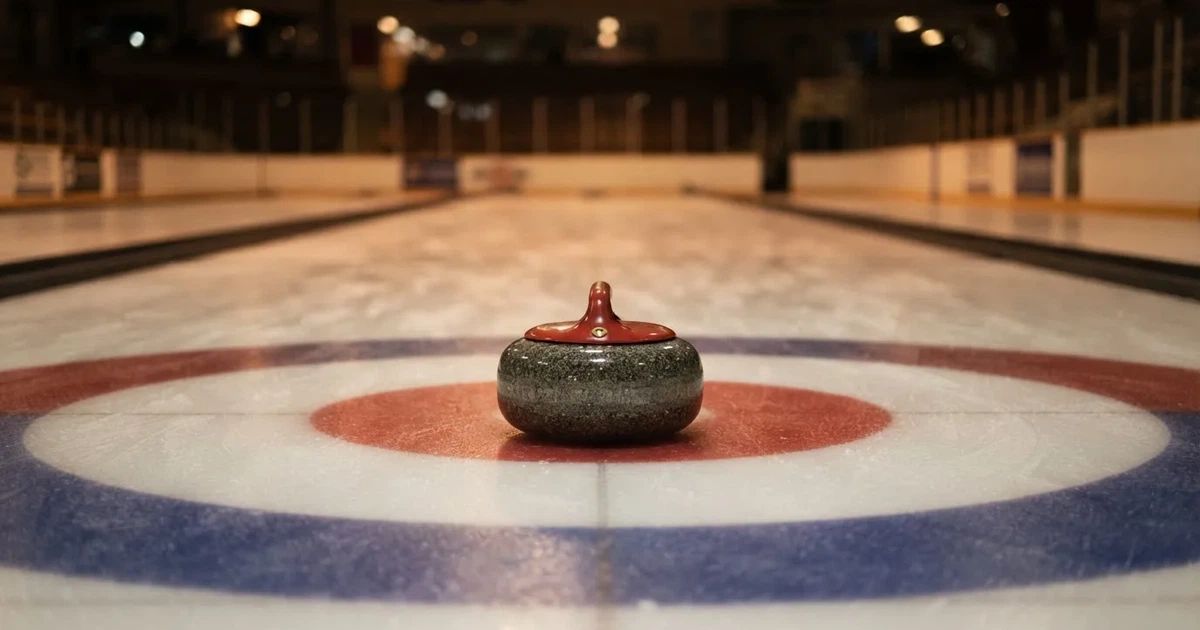
Curling is not a heavyweight on the British betting slip. It runs a tight calendar, mostly built around the Winter Olympics and the World Curling Championships, and most of the season the bookmaker’s “Curling” tab is a single line — outright winner, perhaps a match market at major championships, and that is it. That thinness is exactly why the odds matter: when the menu is short, each price is the page’s whole story, and the margin sitting inside it decides what the punter actually pays.
This guide is built for a bettor in Great Britain choosing among the Gambling Commission-licensed brands on the register. It explains how the sport’s match shape turns into a market, what kinds of bet a UK bookmaker typically prices on curling, how the margin built into the price is read off the numbers, and what the trade-offs look like at ten operators that hold a remote betting licence for Great Britain.
The sport behind the slip: curling fundamentals
Curling is played by two teams of four players on a sheet of ice, throwing granite stones towards a circular target called the house. A doubles variant uses two players per side, and every player on a team throws two stones, so each team delivers eight stones per end. After all sixteen stones have been thrown, the team whose stone sits closest to the centre of the house — the button — scores one point for every stone of theirs that lies closer to the button than the opponent’s nearest stone. Only stones inside the house count, and only one team scores per end.

A standard game runs eight ends at club level, ten ends at international level. Ties after regulation go to extra ends until one side finally scores. The hammer, the prized last stone of an end, goes to the team that did not score in the previous end; if the end is blanked, with no score, the hammer stays where it was. That hammer rule is what creates the late-end tactical contest a betting market eventually has to price, because the team with the hammer is rarely favourite to take a single end, but it is favourite to blank it and keep the hammer for the next one.
Each stone weighs between 17.24 and 19.96 kilograms under World Curling Federation rules, and the sport has been an official Olympic medal event since the 1998 Winter Olympics in Nagano. Mixed doubles joined the Olympic programme at Pyeongchang 2018. For the betting picture that matters: the Olympic cycle is what sets the calendar that bookmakers actually price, with the World Championships, the European Championships and the Grand Slam of Curling on the World Curling Tour filling the gaps.
What the match shape does to a market
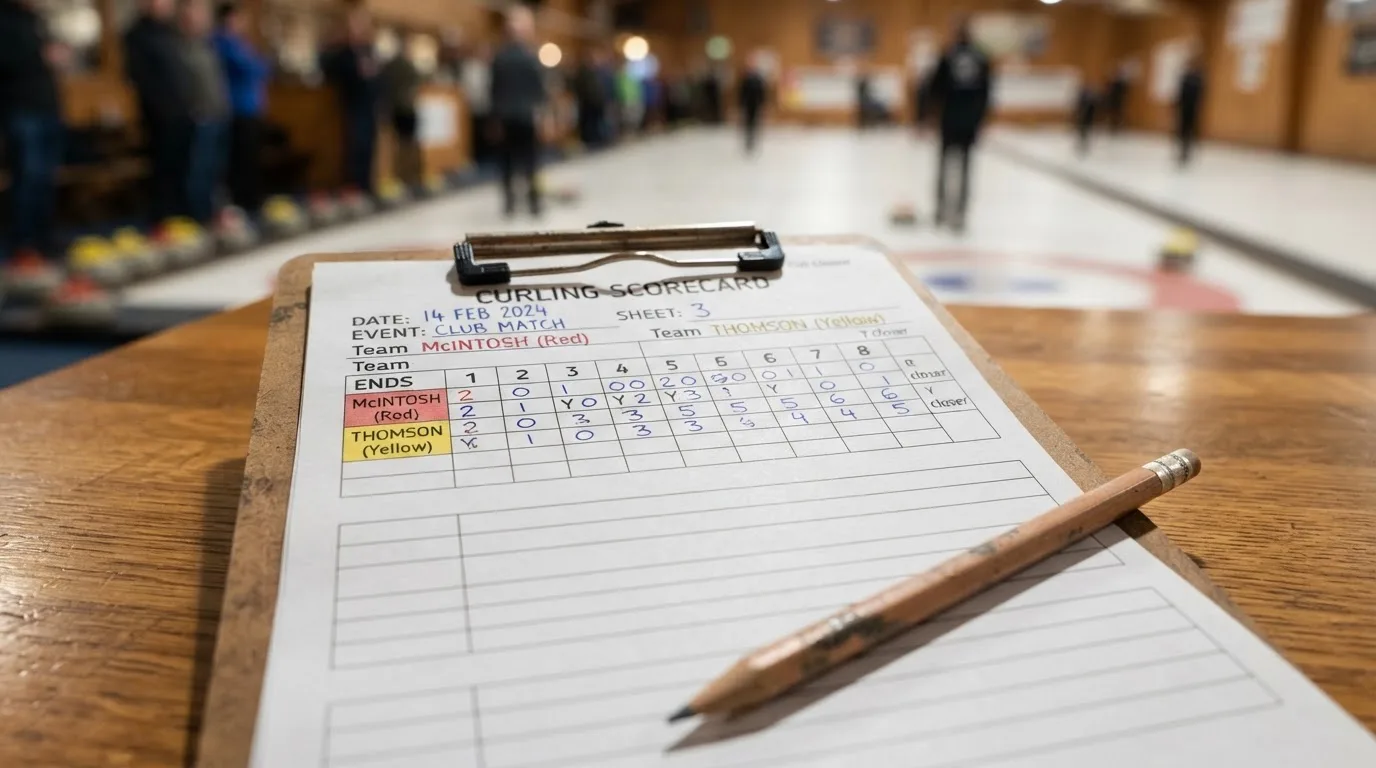
Most curling bets are settled on the team that wins the match, occasionally with a handicap applied end by end. Because ties go to extra ends, a regulation draw is a real outcome in the betting sense, and bookmakers typically settle the outright winner market on the result after extras. The hammer dynamics push the match odds slightly towards the team throwing second, all else equal, and the priced favourite is usually — but not always — the team with the hammer in a neutral end. Markets that try to price individual ends are rare on a UK-licensed site, because the score-by-score structure does not lend itself to single-end lines, but match totals and outrights are the bread and butter.
What the law lets a bookmaker take
In Great Britain there is no list of permitted bets and no list of prohibited ones. The Gambling Act 2005 licenses the *operator*, not the market, and once a brand holds a remote general betting licence for real events, it sets its own markets under the Licence Conditions and Codes of Practice (LCCP) and under its own house rules. Curling, like any other sport whose matches are played under a recognised governing body, falls inside what UK-licensed bookmakers may price without any further permission. The test for a punter is whether the operator is licensed, not whether the event is on some list.
Since the Gambling (Licensing and Advertising) Act 2014, the licence requirement attaches at the *point of consumption*: an operator serving customers in Great Britain needs a Gambling Commission licence wherever the operator itself is based. A Curaçao, Malta or Gibraltar registration is not a substitute, however familiar it looks on the brand’s footer. The Commission’s public register is the whole test of who holds a licence, and a search by brand name, domain or account number is open to anyone. Punters checking a brand should look up the trading name and the licence number on the register before depositing, and they should be wary of brands that hide the licence number or point to a non-Commission registration.
Betting exchanges — Betfair being the longest-running example in this set — run under a separate *betting intermediary* licence, and rates and rules are set by the exchange’s own terms. The exchange model has not historically been a deep venue for curling, because liquidity at low-margin events is thin and bookmaker-side prices elsewhere tend to set the line.
Offshore and the limit of “legal”
A bookmaker that takes bets from a customer in Great Britain without a Commission licence is operating outside the Act. That is an offence aimed at the operator under section 33 of the Gambling Act 2005, not at the customer who places the bet. The honest framing is not that an unlicensed site is “legal” or “illegal” for a British punter — it is that the British protections simply do not extend to it. No GAMSTOP coverage, no approved dispute-resolution route, no Commission complaints path, no British consumer redress if funds are withheld, no automatic application of the bonus cap or the financial vulnerability check. Enforcement is disruption rather than blocking — cease-and-desist notices, search-engine referrals, work with registrars, hosts and payment providers — so the unlicensed site usually keeps taking bets until something else catches up with it. A punter who chooses one is, in practice, choosing to leave the British safety net at the door.
What the licence actually buys
A Commission licence buys a defined set of obligations on the operator’s side. The minimum age is 18. Before the first deposit, or before the first bet using a free bet or bonus, the operator must verify the customer’s name, address and date of birth — that has been the rule since 7 May 2019, so anonymous play at a licensed site is over. Credit cards have been banned for gambling in Great Britain since 14 April 2020, including credit-card-funded e-wallet top-ups; debit cards and bank transfers are not affected. Beyond those basics, the operator must offer GAMSTOP self-exclusion, must publish safer-gambling tools, and must observe the Commission’s social responsibility code.
That last point cuts both ways. A licensed bookmaker is, by design, a regulated environment that checks identity before a deposit. A punter who wants to keep their details off a betting site, or who finds the financial vulnerability check intrusive at higher spend, has to weigh that against the consumer protections that come with it. The trade-off is real, and it is the trade-off the rest of this guide assumes the reader has already accepted by choosing a licensed brand.
Responsible gambling and what the operator has to offer
GAMSTOP is the national multi-operator self-exclusion scheme and a mandatory licence condition for online operators since 31 March 2020. A punter who signs up with GAMSTOP is excluded from every licensed online betting site for the duration they choose — six months, one year, five years, or five years with auto-renewal — and the exclusion runs for a further seven years beyond the minimum period unless the punter asks GAMSTOP to remove it. Betting shops use a separate scheme, and in-person pool betting is unaffected. Every brand in the ranking below is a GAMSTOP member by virtue of holding the licence.
Beyond GAMSTOP, licensed operators must offer deposit limits, timeouts, reality checks and self-exclusion at their own sites, and must signpost the National Gambling Helpline (GamCare), GambleAware, NHS gambling clinics and Gamblers Anonymous. Several brands in the ranking — Fitzwilliam Sports for one — name those organisations on their safer-gambling pages. A punter who wants the strongest controls chooses GAMSTOP; a punter who wants a softer set of day-to-day limits can set deposit caps on each operator individually, but the limit has to be set at a licensed site to carry the licence’s weight.
Two newer rules change the picture at higher spend. The first is the financial vulnerability check, in force since 30 August 2024 and operational since 28 February 2025: when a customer’s net deposits exceed £150 in a rolling 30 days, the operator runs a public-record check — bankruptcies, county court judgments and the like. It is not an income check and not a credit reference check, but a check against the public record. The second is the financial risk assessment, the “affordability checks” of the press coverage, which the Commission has announced in a staged plan with no start date set. Punters should expect the rules to get tighter over the year, not looser.
Deposit limits on a fixed time frame were due to start rolling out on 31 October 2025 for the first phase; a second phase was postponed to 30 September 2026, and whether either is live at any given operator is not a question this guide can answer for the reader — it is a question for the operator’s own terms page. There is no state-set deposit or loss ceiling in Great Britain. Limits are the customer’s choice, and the operator’s obligation is to provide the tool.
Help, when the betting has gone past the point of self-control, is at GamCare’s National Gambling Helpline, GambleAware, NHS gambling clinics and Gamblers Anonymous. The first three are free at the point of use; the last is a peer-support fellowship. A punter whose gambling has stopped being a choice rather than a habit should treat the helpline as the next step, not as a last resort.
Sports and tournaments on the curling calendar
The curling calendar that UK bookmakers actually price is short and predictable. It runs the Olympic cycle at its head — the Milano-Cortina Winter Olympics in 2026 for the men’s and women’s tournaments, and the mixed doubles event that became a medal sport at Pyeongchang 2018. The World Curling Championships, the World Men’s and Women’s Championships run by the World Curling Federation, sit alongside, with the European Championships and the World Mixed Doubles filling the gaps. Below the international circuit, the Grand Slam of Curling on the World Curling Tour runs most of the season and is where the bulk of in-season match odds appear.
Fixtures, frequencies and what is on the slip
At the Olympic and World Championships, UK-licensed bookmakers typically offer outright winner markets on the men’s and women’s tournaments, match winner markets from the group stage onwards, and a small set of handicap and totals lines at the business end of the event. Outright winner markets on the mixed doubles event are now standard. Below the international circuit, in-season coverage is thinner: a Grand Slam weekend in Canada or a Champions Cup event might draw outright and match lines on the biggest names — Team Mouat for Scotland, Team Homan or Team Carruthers for Canada, Team Edin for Sweden, Team Ulsrud’s successors for Norway — but a Tuesday-night tour event rarely moves the dial on a UK sportsbook.
The market menu at a major championship usually looks like this: outright winner, each-way terms on the outright (place terms vary), match winner, occasionally a handicap line based on the hammer in a given end, and very rarely a totals line. In-play markets on curling are not deep at most licensed UK sites, because the sport’s structure — an end takes roughly fifteen minutes of play and the score can move quickly — does not lend itself to live betting in the same way that football or tennis does. Bet Builders and same-game multiples on a curling match are unusual, and where they exist they are usually restricted to a small handful of events at a time.
When the calendar does not run
Outside the major championships and the Grand Slam, the calendar thins out. The Continental Cup and the World Junior Curling Championships pull light coverage at best, and most club-level curling in Scotland, Switzerland, Canada and the Nordic countries is not priced on UK-licensed sites at all. A punter looking to bet on curling between major championships finds the menu collapses to outrights on the next big event with a long-running book, and the odds during that window move only when a team wins a significant pre-event tournament.
That rhythm is the practical consequence of the sport being a minority interest on the UK slip. The British punter’s curling year is front-loaded into a few weeks, and the rest of the time the bookmaker’s Curling tab is more of a placeholder than a working market.
How to read curling odds — and the margin that sits inside them
A decimal odds price is the *return* on a £1 stake, stake included. A £10 bet at 6.00 returns £60; the punter’s profit is £50, because the stake comes back with the winnings. Fractional odds, the form British bookmakers have used for generations, show that same relationship as profit-over-stake: 5/1 means a £1 stake returns £5 of profit plus the £1 stake, decimal 6.00; 11/4 means £2.75 of profit on a £1 stake plus the £1 stake, decimal 3.75; evens, or 1/1, is decimal 2.00. To convert fractional to decimal, divide the numerator by the denominator and add one.
The bookmaker’s margin — also called the overround — sits inside every price and is what makes the book a business. Take a two-way market priced at 1.90 on each side. A “fair” book on a 50/50 event would price each side at 2.00, paying £2 for every £1 staked. The bookmaker has shaved both sides to 1.90, so the implied probability of side A plus side B is 1/1.90 plus 1/1.90, which works out to roughly 1.0526 — the book is over-round by 5.26%. In plain terms, for every £100 staked across both sides at this price, the bookmaker keeps about £5.26 of that in expectation and pays back about £94.74 in winnings. That 5.26% is the margin on this market at this price.
The margin is the single most useful number on a betting slip, because it tells the punter what the price is really costing. A market priced at 1.90 / 1.90 has a 5.26% margin; the same event priced at 1.85 / 1.85 has a margin of roughly 8.1%; at 1.95 / 1.95 the margin is roughly 2.6%. The lower the margin, the closer the punter is to a fair price; the higher the margin, the more the bookmaker is keeping.
Why the margin matters more in curling than in a major sport
In a deep market — Premier League football, English horse racing, the NBA — the margin on the most popular match odds is usually in the 2% to 5% band, and a sharp punter can shop for the tightest line. In curling the market is thin and the margin at smaller operators tends to sit higher, because the bookmaker is taking less money on the event and pricing for the uncertainty of where the line should sit. A punter backing curling outrights at the first price on the screen is paying a margin that may be a multiple of what a Premier League match winner costs at the same site. That is the trade-off for being on the menu at all.
The other point the margin makes is the dead heat. The bookmaker’s margin is the same in either direction: a price of 2.20 on side A and 1.65 on side B implies the same over-round as 1.90 / 1.90. The punter cannot “outsmart” the margin by picking favourites; the margin comes out of the price whatever the outcome. The only way to reduce the cost is to find a tighter book, and the only way to find a tighter book is to compare.
A worked example: the margin at 1.90 / 1.90
Take an illustrative two-way curling match winner priced at 1.90 / 1.90. The implied probability of each side is 1 ÷ 1.90, or roughly 0.5263. Adding both sides gives 1.0532, and the margin is 1 minus 1 ÷ 1.0532, which works out to about 5.0% to 5.3%. State it as a band: roughly 5% to 5.3% on this market at this price. The band exists because rounding in the displayed price — 1.90 versus 1.91 versus 1.905 — moves the implied probability fraction by a fraction of a percentage point, and the price the punter actually sees on a real betting slip is rounded to two decimal places.
The implied return on a £100 stake split evenly across both sides at this price is, on a fair outcome, £100; the bookmaker pays back roughly £94.74 to £95.00 of that in expectation and keeps roughly £5.00 to £5.26. That is what the punter is paying for the privilege of betting on a sport with a small market at a site with a relatively low book on it. At a major bookmaker on a deep curling event — the men’s Olympic final — the margin is usually tighter; at a smaller book on a Grand Slam qualifier it is usually wider.
Ranking the UK-licensed bookmakers on curling
The ranking below covers ten brands that hold a Gambling Commission remote licence for real-event betting in Great Britain. Each heading carries the brand name and a one-line note on what sets it apart in the comparison. None is “the only” licensed operator; a licence proves a brand may take bets in Great Britain, not that it is the right book for a particular punter.
The same columns run down each operator: the Gambling Commission licence number and licence holder, what the operator’s own terms state on the relevant subject (welcome offer shape, sports features, payment specifics, the operator’s own stance on the page’s topic), and a one-paragraph read on where the brand sits on a curling punter’s shortlist.
BetMGM — the casino-brand newcomer to UK sports
| Brand | Gambling Commission licence | What the operator’s own terms state |
|---|---|---|
| BetMGM | Remote licence 039198-R-319450-029; account 39198; LeoVegas Gaming PLC | Sports welcome offer for new UK customers who deposit £10 or more and place a sports bet within 7 days is four £10 free bets — two football accumulators of 4+ selections and two sports multiples of 2+ — valid for 7 days, with a minimum price and an opt-in required. |
BetMGM came to the UK on the back of LeoVegas Gaming PLC’s remote betting licence. The sports welcome offer is structured as four £10 free bets rather than a single free bet or matched deposit, which is unusual — most UK sports welcome offers are one free bet, one matched free bet, or a “bet £X get £Y” token split. The minimum price and the seven-day window apply to each of the four free bets separately, so the offer’s effective window is short. BetMGM’s licence holder is a Malta-listed company with a multi-brand UK portfolio, and the site is part of that portfolio rather than a standalone UK operation.
For a curling punter, BetMGM is a generic sportsbook that has not built a curling-specific product. The likely surface is an outright winner market at major championships and a handful of match odds at the Olympics and the World Championships, priced at a margin typical of a multi-brand bookmaker. The verdict is that BetMGM is a competent all-rounder for the punter who already plays at LeoVegas-group brands; a curling specialist gets no extra value here.
Star Sports — the phone-trading, racing-led brand
| Brand | Gambling Commission licence | What the operator’s own terms state |
|---|---|---|
| Star Sports | Remote licence 009177-R-104555-019; account 9177; Star Racing Limited | Phone trading on 08000 521 321 to open an account, place bets or raise queries, plus support at [email protected]. |
Star Sports is the racing-led end of the UK independent bookmaker scene. The phone-trading line is unusual — most online-only brands route support through chat and email, not a freephone number answered by a trader — and the brand’s heritage is in horse racing rather than curling. The licence holder is Star Racing Limited, and the licence number is among the older ones in the table, dating from a pre-online era.
For a curling punter, Star Sports is a long shot on this market. The brand is built to take telephone bets on horses during the working day, and the sportsbook is a sideshow; curling outrights at major championships may be available, but the depth and the margin will not beat a dedicated sportsbook. The verdict is that Star Sports is a niche option for the racing specialist who wants to keep an eye on curling, rather than the primary destination for a serious curling punter.
BetTom — the TV-ad friendly newcomer
| Brand | Gambling Commission licence | What the operator’s own terms state |
|---|---|---|
| BetTom | Remote licence 064959-R-339314-003; account 64959; Bet Tom Limited | Sports welcome offer: 50% back as a free bet of up to £50, with a matching 50% back up to £50 as free slot funds for casino play. Full terms apply. |
BetTom is one of the newer UK-licensed sportsbooks and its welcome offer is structured around two 50%-back components rather than a single matched free bet. The casino-side component (free slot funds) is conditional on the casino welcome offer’s separate terms, which is normal for a mixed welcome offer but means the punter has to clear two sets of conditions rather than one. The licence holder is Bet Tom Limited, a UK company set up specifically for the brand.
For a curling punter, BetTom is a low-friction UK-licensed option whose welcome offer is heavy on the casino side and light on the sportsbook. The likely curling surface is the standard major-championship outright and match winner set at a margin that is not exceptional either way. The verdict is that BetTom is a sensible option for the punter who wants the welcome bonus for the casino side and is happy to take curling at the bookmaker’s standard pricing; the punter who only bets on curling gets more value at a brand with a stronger sportsbook.
Betboro — the matched-free-bet mid-tier
| Brand | Gambling Commission licence | What the operator’s own terms state |
|---|---|---|
| Betboro | Remote licence 044181-R-324363-007; account 44181; Webmedia Development N.V. | Sports welcome offer: 100% matched free bet of up to £25 on the first qualifying wager; debit card deposit of at least £10; first bet £5 to £25 with at least three selections, each at 3/5 (1.60) or higher. |
Betboro’s welcome offer is a matched free bet rather than a deposit match, which is the more common UK sports welcome structure. The qualifying-bet minimum of three selections at 1.60 or higher is the kind of condition that costs the punter something: at 1.60 across three legs, an accumulator has an implied probability of winning of roughly 24%, so qualifying is not a formality. The licence holder is Webmedia Development N.V., a Curaçao-registered company that has taken a Commission remote licence specifically to serve the UK market.
For a curling punter, Betboro is a mid-tier bookmaker whose welcome offer is structured around football accumulators. Curling outrights and match winners are likely on the menu at major championships, but the welcome offer’s qualifying structure does not suit curling well — an outright curling bet is a single selection, not three. The caveat for the curling punter is that the welcome offer’s requirement of three legs at 1.60 or higher is at odds with the sport’s outright-focused market structure.
Lottoland — the lottery-rooted all-rounder
| Brand | Gambling Commission licence | What the operator’s own terms state |
|---|---|---|
| Lottoland | Remote licence 038991-R-319408-020; account 38991; EU Lotto Limited | App combines casino, lottery betting, sports betting and scratchcards; licensed by the Gambling Commission for customers in Great Britain. |
Lottoland’s UK business is rooted in lottery betting — betting on the outcome of foreign lotteries rather than buying a ticket — and the sportsbook is an addition to that core. The licence holder is EU Lotto Limited, a Gibraltar-registered company that has held a Commission licence for the UK market for some years. The combined casino, lottery and sportsbook product is unusual: most sportsbooks do not also offer lottery betting and scratchcards, and most lottery books do not also offer a sportsbook.
For a curling punter, Lottoland is a low-priority option. The sportsbook is a complement to the lottery product rather than a standalone product, and curling outrights are unlikely to be priced in any depth at a lottery-led bookmaker. Compared to a dedicated sportsbook, the Lottoland curling experience is thin, and the punter who wants real market depth looks elsewhere.
BetGoodwin — the small-stake friendly independent
| Brand | Gambling Commission licence | What the operator’s own terms state |
|---|---|---|
| BetGoodwin | Remote licence 002927-R-327985-008; account 2927; Goodwin Racing Limited | Sports welcome offer: “Bet £10 & Get £15 in Free Bets”, made up of a £5 sports bet, a £5 acca and a £5 Sub-Cover bet. |
BetGoodwin’s licence is one of the oldest in the table — account 2927, the kind of low number that dates from the early days of the Commission’s remote betting regime. The licence holder is Goodwin Racing Limited, a UK company. The welcome offer is split into three small free bets of £5 each, with the “Sub-Cover bet” being a brand-specific market name; a punter has to read the terms to find out what that is and how it settles. The total headline price of the offer — £15 back for a £10 qualifying bet — is competitive for a small-stake offer, and the small bet sizes suit a punter with a tight bankroll.
For a curling punter, BetGoodwin is an interesting option at the small-stake end. The split-free-bet welcome offer does not require a large qualifying bet, and an outright curling bet can be the qualifying wager if the minimum stake is £10 or less. Compared to other small-stake options, BetGoodwin offers a functional if basic curling service, though the punter must be clear on the Sub-Cover bet terms before signing up.
Betfair — the exchange-rooted sportsbook with the deepest menu
| Brand | Gambling Commission licence | What the operator’s own terms state |
|---|---|---|
| Betfair | Remote licence 039439-R-319330-013; account 39439; PPB Counterparty Services Limited | In-play betting, Bet Builder, free live streaming of UK and Irish horse racing and football within the app, and a 90 Minute Payout market. |
Betfair is the longest-running betting exchange in the UK and one of the few brands that runs both an exchange and a conventional sportsbook under the same roof. The exchange-side licence is a *betting intermediary* licence, separate from the sportsbook’s general betting licence; both are listed under PPB Counterparty Services Limited. The sportsbook is part of the Paddy Power-Betfair group, the same corporate family that runs Paddy Power, and the two brands are sometimes presented in parallel rather than as independent operators. The 90 Minute Payout market — a market that pays out on the 90-minute result irrespective of extra time — is a football-specific feature that does not apply to curling.
For a curling punter, Betfair’s sportsbook is a serious option because of the exchange. A curling outright or match winner on the exchange will, in normal conditions, have a tighter margin than the equivalent price on a conventional bookmaker, because the exchange takes only a commission on net winnings rather than building a margin into the price. The trade-off is liquidity: at smaller curling events the exchange has fewer participants, and the price may not be available in any size at all. Betfair is a serious choice for the punter who values price discovery above all else and who is happy to trade off the liquidity of the exchange against the margin of a standard bookmaker.
Fitzdares — the premium-positioning racing-and-sports boutique
| Brand | Gambling Commission licence | What the operator’s own terms state |
|---|---|---|
| Fitzdares | Remote licence 000400-R-103839-030; account 400; Fitzdares Limited | Cash out, accumulators, Lucky 15s, specials and antepost markets on horse racing, football, tennis, rugby, cricket, golf and American football, with in-play live odds. |
Fitzdares positions itself as a premium independent bookmaker and its licence — account 400 — is one of the very oldest on the Commission’s register. The licence holder is Fitzdares Limited, a UK company. The sportsbook lists seven sports on the App Store description, and curling is not one of them; horse racing, football, tennis, rugby, cricket, golf and American football are the named sports, and that list is the practical ceiling on the curling surface at Fitzdares.
For a curling punter, Fitzdares is the wrong book on the page’s subject. The brand’s menu is racing-led and the seven named sports are the menu in practice. The verdict is that Fitzdares is designed for the racing and major-sport enthusiast, and the curling specialist will find no depth here.
QuinnBet — the best-odds-guaranteed racing-led all-rounder
| Brand | Gambling Commission licence | What the operator’s own terms state |
|---|---|---|
| QuinnBet | Remote licence 061011-R-335683-004; account 61011; QuinnBet (Gibraltar) Limited | Best Odds Guaranteed applies to Irish and UK horse racing bets from 10:00am daily on singles, multiples and system bets; maximum benefit £150 per customer per race. |
QuinnBet is a Gibraltar-rooted sportsbook whose standout feature is Best Odds Guaranteed (BOG) on Irish and UK horse racing. BOG means that if a punter takes a price at, say, 5/1 in the morning and the starting price (SP) is bigger, the bet is settled at the bigger price. The £150-per-race cap limits the benefit at the high end — a winning £1,000 each-way bet at 33/1 with a £10,000 starting-price uplift is settled at the cap rather than the full uplift — but for the everyday punter BOG is a meaningful edge on the racing side. Curling is not covered by the BOG promise, and the licence holder’s UK focus is racing rather than minority sports.
For a curling punter, QuinnBet is a sportsbook whose standout features are racing-specific. Curling outrights are likely on the menu at major championships, and the licence-holder reputation is solid, but the bookmaker is not built around minority sports. The caveat for the curling specialist is that while the licence holder is reputable, the sportsbook’s focus on BOG-enabled racing means the curling experience is secondary and lacks extra value.
Bet Ahoy — the small-stake newcomer with no franchise
| Brand | Gambling Commission licence | What the operator’s own terms state |
|---|---|---|
| Bet Ahoy | Remote licence 100094-R-341742-003; account 100094; Bet Ahoy Ltd | Welcome offer: “Bet £10 & Get £10 in Free Bets”, made up of a £5 sports bet and a £5 acca. |
Bet Ahoy is one of the newest entries in the Commission’s remote betting register, with an account number in the six figures rather than the low thousands. The licence holder is Bet Ahoy Ltd, a UK company. The welcome offer is a £5 sports bet plus a £5 acca free bet for a £10 qualifying stake, which is a low-stakes structure suited to a small bankroll. The brand has no stated franchise beyond the welcome offer, and the surface of the sportsbook is likely standard.
For a curling punter, Bet Ahoy is a low-cost way into a UK-licensed sportsbook with a small welcome offer. The verdict is that Bet Ahoy is the right book for a small-stake curling punter who is happy to take whatever the brand prices on the next major championship; the punter looking for a curated curling product looks elsewhere.
Where this leaves the curling punter
The page’s whole point is the price, and the price on curling is what the margin makes it. A punter backing curling outrights at the first site they open is paying a margin that is structurally higher than the margin on a Premier League match winner at the same site, because curling is a thin market and thin markets cost more to bet into. The trade-off is straightforward: deeper books at bigger brands have tighter margins at major championships and shallower books everywhere else; smaller books at newer brands have wider margins and may not offer curling in any depth at all.
The single best move is to compare the price across at least two of the books above before placing a curling bet at a major championship, and to take the price with the tightest margin where the price offered is materially different. At a smaller event, the trade-off is between price and availability: the brand that prices curling at a Grand Slam qualifier is rarely the brand that prices it most tightly.
The second move is to read the welcome offer’s terms before claiming. A £10 bonus at 50x means £500 of bets; a £10 free bet with the stake not returned is worth less than the headline suggests, and a qualifying bet at three selections each at 1.60 or higher is a real cost in expected value. The bonus cap (10x cap on wagering requirements at licensed UK sites since 19 January 2026) puts a ceiling on the worst of those terms, but it does not make a poor welcome offer into a good one.
The third move is to check the operator on the Commission’s register before depositing. The register is open to anyone and a search by brand name, domain or account number confirms the licence and the licence holder. A brand that hides the licence number or that points to a non-Commission registration is not a brand to deposit with.
Frequently asked questions
How does a punter actually bet on curling?
A punter in Great Britain bets on curling at any Gambling Commission-licensed sportsbook that prices the event. The standard markets are outright tournament winner and match winner at major championships — the Olympics, the World Curling Championships, the European Championships, and selected Grand Slam events — with a smaller set of handicap and totals lines at the business end of the bigger events. The punter logs in, selects the Curling tab or searches for the event, picks a market, sets a stake and confirms the bet.
Can a punter in Great Britain bet on curling at all?
Yes, at any brand that holds a Gambling Commission remote licence and prices curling. There is no statutory list of permitted bets in Great Britain — the licence authorises them to offer markets under their own house rules — and curling is one of the recognised sports under the World Curling Federation. The punter’s check is the operator’s licence, not the sport’s status on some list.
How is a bookmaker’s Gambling Commission licence checked?
The Commission’s public register is open to anyone and can be searched by business name, trading name, domain or account number. The punter looks up the brand, confirms the licence number matches what the brand’s terms page states, and confirms the licence category covers remote general betting on real events. A brand that hides the licence number, that points to a non-Commission registration, or whose licence does not cover remote betting is not licensed to take bets in Great Britain.
How is the return on a bet worked out from the stake and the odds?
The return is the stake multiplied by the decimal odds. A £10 bet at decimal odds 6.00 returns £60; the punter’s profit is £50, because the stake comes back with the winnings. At fractional odds 5/1 the same relationship is £10 stake at 5/1 returns £60 — £50 profit plus the £10 stake — and decimal 6.00. For a combination bet the odds of the legs multiply into one price, so a double at 2.00 and 3.00 is a 6.00 accumulator.
What is the bookmaker’s margin and how is it seen in the odds?
The margin is the slice of every pound staked that the bookmaker keeps in expectation, built into the prices on both sides of a market. The implied probability of a side is 1 divided by the decimal odds, and the margin is 1 minus the sum of the implied probabilities of all outcomes. A two-way market priced at 1.90 / 1.90 has a margin of roughly 5% to 5.3%; the same market at 1.85 / 1.85 is roughly 8.1%, and at 1.95 / 1.95 is roughly 2.6%. The lower the margin, the closer the punter is to a fair price.
How do fractional odds such as 5/1 convert to decimal odds such as 6.00?
Fractional odds show profit over stake; decimal odds show total return (stake plus profit) per £1 staked. To convert fractional to decimal, divide the numerator by the denominator and add one. So 5/1 is 5 ÷ 1 + 1 = 6.00, 11/4 is 11 ÷ 4 + 1 = 3.75, and evens (1/1) is 1.00 + 1 = 2.00. The decimal form is what the betting slip shows when the punter toggles the format.
Tennis, darts & cue sports – Boxing betting
Content created by the «Boxing betting» team
