
Cycling betting odds in 2026: how to read the prices and where to place a bet in Britain
 Available in US
Cycling sits in an odd corner of the British sportsbook. It is not a weekly fixture the way football is, it does not have a closed season worth naming, and a single Grand Tour runs for three weeks where most sports settle the result in ninety minutes. The odds on offer reflect that shape, and so does this page. What follows is what a price on a Grand Tour stage, a one-day classic or a World Championship time trial actually contains, which markets a licensed British bookmaker is likely to run on the sport, and what the bookmaker’s slice of every pound staked looks like once you do the arithmetic.
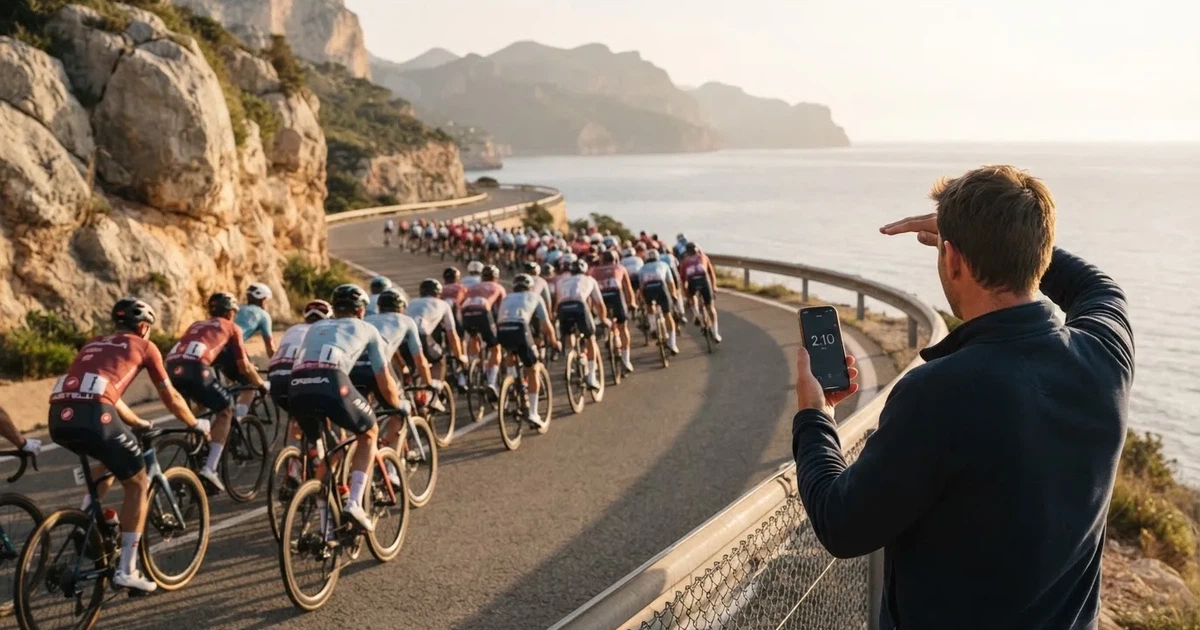
Data current as of 27 October 2026, cross-checked against the Gambling Commission’s public register and each operator’s own published terms. Cycling fixture dates and recent race results sit alongside that check.
The starting line: what “cycling betting odds” actually means on a British site
A cycling betting market is the same kind of object as any other sports market: a list of possible outcomes, each with a decimal price, and the prices summing through a margin that pays the bookmaker. Two practical differences follow from the sport itself. The first is that the field is large — a Grand Tour starts with around 150 riders and a one-day Monument starts with similar depth, so most outright books carry a “rest of the field” runner to mop up the names they have not priced individually. The second is that the calendar is short and concentrated: three Grand Tours a year, five Monuments, a week of World Championships and a constellation of stage races around them, and a long quiet winter. A bookmaker that lists twenty-six sports a day lists cycling for roughly four months of the calendar and at lower depth the rest of the time.

Three reference points fix the shape of the calendar. The UCI, the Union Cycliste Internationale based in Aigle in Switzerland, has governed road cycling since 1900 and runs the men’s and women’s Road World Championships every year. The UCI WorldTour came into being in 2005 as the ProTour and took its current name in 2011; it gathers the Grand Tours and the most prestigious one-day and stage races under one umbrella. The three Grand Tours are the Giro d’Italia, first held in 1909, the Tour de France, first held in 1903, and the Vuelta a España, first held in 1935, and UCI rules let each one run between 15 and 23 days. Their leaders wear a maglia rosa in Italy, a maillot jaune in France and a maillot rojo in Spain, and most editions carry two rest days. None of that is a betting rule, but each of those facts fixes a market that exists.
What follows from the calendar for the reader
A punter who plans to bet on cycling has to plan around the calendar, because the calendar decides when odds are deep and when they are thin. During the three Grand Tours the outright market is liquid: twenty or more riders priced individually, stage odds updated each morning, in-play prices throughout the day. Outside those three weeks the market narrows, fewer bookmakers carry cycling at all, and the prices that are on offer sit on a wider margin because there is less money being matched. The same punter looking at odds on a February stage race is looking at a thinner book than the one who looks in July, even at the same operator, and the margin tells the story before the names do.
Where the law stands: cycling betting under a Gambling Commission remote licence
Cycling is not a market the Gambling Act 2005 names or forbids. Britain has no statutory list of permitted sports, no whitelist of events that may or may not be bet on, and no rule that singles out cycling either way. What the Act requires is that any operator whose remote facilities are used in Great Britain — that is England, Scotland and Wales; Northern Ireland runs on its own older regime — holds a Gambling Commission licence, wherever that operator happens to be based, after the Gambling (Licensing and Advertising) Act 2014. A Curaçao, Maltese or Gibraltar licence on its own is not a substitute. Inside that licence the operator runs the markets its own house rules allow, under the Licence Conditions and Codes of Practice, and the Commission’s public register is the place where the licence is checked.
The register is searchable by business name, trading name, domain or account number, and it carries the account number, the licensee, the licence type and the activities the licence covers. The ten operators in the comparison later on this page all sit on that register, against a remote general betting standard (real events) category, and each card carries the account number and the licensee name. A punter who wants to verify one can search the register by the account number printed under the brand — that is the test, and it is the test that matters more than any review.
The licensing frame settles two questions a price alone does not. The minimum age is 18 across all licensed operators, and name, address and date of birth are verified before a customer can place a first bet or make a first deposit, including a free bet or a bonus credited on registration. That is the rule, and it is the same rule at every brand on this page.
What follows from the licence frame
A punter who bets with a licensed operator pays no tax on winnings in Great Britain — the General Betting Duty is the operator’s tax on gross profits, currently 15% until 1 April 2027, with a remote rate of 25% inside it from that date — but the same punter loses the right to bet anonymously. A punter who bets with an unlicensed operator keeps anonymity in the technical sense, but loses every other consumer protection a British licence puts in place: no GAMSTOP coverage, no approved dispute resolution, no British route for a complaint if funds are withheld, and no obligation on the operator to honour any of the bonus, stake-limit or marketing rules that the rest of this page takes for granted. Both framings are honest, and the choice is the punter’s.
Safer gambling on a British sportsbook
The British licences frame also decides what safer-gambling tools a punter can use without asking. GAMSTOP is the national multi-operator self-exclusion scheme and a mandatory licence condition for online operators since 31 March 2020; periods are six months, one year, five years, or five years with auto-renewal, and after the minimum period the exclusion runs on for a further seven years unless the customer asks GAMSTOP to remove it. It covers online sites and apps, while betting shops use a separate service. Every brand on this page is part of GAMSTOP.
Beyond self-exclusion the rules have moved in two steps that matter for cycling punters who bet across more than one sport. A financial vulnerability check applies to licensed remote betting when a customer’s deposits minus withdrawals cross £150 in a rolling 30-day window; that check is a public-record search, looking at things like bankruptcy or county-court judgments, not an income check and not a credit reference check. Deposit limits under the Commission’s Remote Technical Standards are operator-set and gross, on a fixed time frame, and the first changes have applied since 31 October 2025; a second phase was postponed to 30 September 2026, so a punter should expect a deposit-limit offer on registration rather than assume one is already running at the figure a site displays.
Help that is independent of any operator is available through GamCare, which runs the National Gambling Helpline, through GambleAware, through the NHS gambling clinics and through Gamblers Anonymous, and most licensed sites link to one or more of these services from the safer-gambling page.
What follows from the safer-gambling frame
The same punter who plans to bet on three weeks of Grand Tour racing has to plan the safer-gambling side of that across the calendar, because the bulk of cycling’s betting volume sits inside three concentrated windows a year. A deposit limit set in January reads as a budget that runs through to the Tour de France, but the same figure during July, August and September has to cover the Vuelta as well. The vulnerability-check threshold is the line that flags a closer look: a punter whose deposits minus withdrawals cross £150 in any rolling 30-day window will be checked, and that check is unrelated to whether cycling is the sport the punter bets on.
The cycling calendar as a betting fixture list
Cycling’s betting fixtures follow the calendar that the UCI organises and the Grand Tours sit at the top of it. The 2026 Tour de France ran from 4 to 26 July, starting in Barcelona with a team time trial and finishing on the Champs-Élysées in Paris, over 21 stages and 3,245 km, with 23 teams. The race was won by Tadej Pogačar of UAE Team Emirates, his fifth Tour victory. The Giro d’Italia and the Vuelta a España run on similar three-week windows, the Giro in May and the Vuelta in late summer, and each carries the same depth of outright, stage, jersey and head-to-head markets on a British sportsbook during its running.
Below the Grand Tours sit the five Monuments — Milan–San Remo in March, the Tour of Flanders in April, Paris–Roubaix in April, Liège–Bastogne–Liège in April and Il Lombardia in October — which are the one-day classics that command the deepest one-day markets outside the World Championships. The World Championships, held in a different country each year, settle the rainbow jerseys for the road race and the time trial, men’s and women’s. Around these headline races sit the WorldTour stage races — Paris–Nice, Tirreno–Adriatico, the Critérium du Dauphiné and the Tour de Suisse, among others — which carry stage and general classification markets at lower depth than the Grand Tours.
What follows from the calendar
The fixture list is the calendar, and the calendar decides what kind of bet is available when. During a Grand Tour the markets on offer at a typical British bookmaker include the outright, stage winner, general classification after each stage, points classification, mountains classification, young rider classification, head-to-head between named riders, and team classification; in-play prices update throughout the stage. During a Monument the outright sits alongside head-to-head matchups and a smaller selection of in-play markets. Outside these windows the outrights thin out, the stage markets thin out further, and the in-play market often disappears until the next event. A punter who wants to bet on cycling in February is mostly betting on outrights for races that are weeks away.
The shape of a British sportsbook’s cycling offer
Each British bookmaker runs its own cycling book, and the shape of the book varies with the size of the operator and the depth of its trading team. A large operator like bet365 lists outright markets on every WorldTour race and on most ProSeries races, runs stage winner and general classification markets on every Grand Tour stage from start to finish, and offers head-to-head, top three, top finish and a number of other positions through the field; a smaller operator may carry the Grand Tours and the Monuments and little else. Bet Builder markets on cycling are rare — most in-race building happens on football — but a few operators carry a same-stage multi on selected Grand Tour stages.
Across the operators in the comparison below, the cycling offer varies from a Grand Tour outright plus a handful of stages to a full three-week book with in-play at every stage and live streaming of selected races. Each card states what that book actually is, in plain prose, against what the operator’s own published terms say.
Markets a punter meets on a Grand Tour
The list below names the markets a punter typically meets at a licensed British bookmaker during a Grand Tour. The list is illustrative, drawn from what the operators in this comparison carry, not exhaustive.
- Outright winner. The general classification winner, priced weeks before the race and updated each morning.
- Stage winner. One market per stage, settled on the line of that stage.
- General classification after stage N. Updated each morning and at the end of each stage.
- Points classification, mountains classification, young rider classification. Settled on the final general classification.
- Head-to-head. Two named riders, settled on the rider finishing higher in the classification named in the market.
- Top three, top five, top ten. Positions through the field.
- Team classification. Settled on the team classification at the end of the race.
In-play prices update throughout each stage and settle on the live result, and the operator’s house rules govern what counts as a live versus a pre-match market. The set on offer narrows outside the Grand Tour windows.
What a price on cycling actually contains
A decimal price on cycling is built the same way a decimal price on football is built: a payout share, plus a margin the bookmaker keeps. For a two-way market with decimal prices of 1.90 and 1.90 the payout share is 1 ÷ (1 ÷ 1.90 + 1 ÷ 1.90) = 0.95, and the margin is 1 − 0.95 = 0.05, or 5%. For a five-runner outright at prices 4.00, 6.00, 8.00, 13.00 and 26.00, the calculation runs across all five prices, the payout share comes out lower and the margin comes out higher, because a longer field pays the bookmaker a bigger slice of every pound staked. Cycling outrights sit toward the longer-field end of that range, and the margin reflects it.
The same arithmetic works the other way around. For a matchup at 1.70 and 2.20 the payout share is 1 ÷ (1 ÷ 1.70 + 1 ÷ 2.20) = roughly 0.89, and the margin is 11%. A margin between 5% and 6% on a two-way market is competitive for a British sportsbook; a margin above 10% is wide for a matchup market and worth noticing; a margin above 25% on a long-field market is normal but worth knowing, because the bookmaker’s slice of every pound staked is a quarter before a wheel turns.
What follows from the margin for the reader
A punter who reads the margin before the prices gets a clearer picture of what a bet is worth on average. Two bookmakers offering 6.00 on the same Tour de France stage winner may sit on very different margins across the field, and the difference is what the prices pay back over many bets even when the winner’s name happens to be the same. The margin is also the reason a “best odds” line in a Grand Tour outright can sit on the same name at two different operators, and the rest of the field can sit at different prices. The headline price is the price on that one outcome; the margin is the picture across the whole market.
Worked example: reading the margin on a stage-winner market
The worked example below is illustrative, not a quoted price. A stage-winner market at a British sportsbook during a Grand Tour typically has between six and ten named riders plus a “rest of the field” runner. For a six-runner book with prices 4.50, 6.00, 8.00, 11.00, 17.00 and 26.00 the implied probabilities are 0.222, 0.167, 0.125, 0.091, 0.059 and 0.038, which add to 0.702. The payout share is 1 ÷ 0.702 = roughly 1.42, which cannot be right; the calculation is run on the reciprocals of the prices, not the implied probabilities, and the payout share is 1 ÷ (1 ÷ 4.50 + 1 ÷ 6.00 + 1 ÷ 8.00 + 1 ÷ 11.00 + 1 ÷ 17.00 + 1 ÷ 26.00) = 1 ÷ (0.222 + 0.167 + 0.125 + 0.091 + 0.059 + 0.038) = 1 ÷ 0.702 = 0.702, and the margin is 1 − 0.702 = 0.298, or 29.8%. That is a wide book; the bookmaker keeps roughly 30 pence of every pound staked on this market before a wheel turns.
A two-runner matchup at the same operator, priced at 1.80 and 2.10, gives a payout share of 1 ÷ (1 ÷ 1.80 + 1 ÷ 2.10) = 1 ÷ (0.556 + 0.476) = 1 ÷ 1.032 = 0.969, and a margin of 3.1%. That is a tight book; the bookmaker keeps around 3 pence of every pound staked on this market, which is competitive for a British sportsbook. The same calculation on a five-runner market with prices 3.50, 4.50, 7.00, 11.00 and 21.00 gives a payout share of around 0.79 and a margin of 21%. A punter who reads margins on three or four markets across the same operator gets a sense of where that operator prices tightly and where it prices loosely, and the picture does not depend on which stage of which race the operator happens to be running.
What follows from the worked example
The same arithmetic runs on any market the operator carries, on any sport, with any number of runners. A punter who has the patience to read the margin across an outright book at one operator and the same book at another will see where each one sits. The figures are illustrative bands, not printed prices: a specific margin belongs to a specific market at a specific operator on a specific date, and the margin moves as prices move.
The ten operators, side by side
The table below gathers the ten operators this page covers, the Gambling Commission account number under which each one runs, the name of the licence holder on the public register and the position the operator’s own published terms take on cycling. The column on cycling is what the operator’s site or app actually states; “not stated” means the operator’s own published terms do not name cycling as a covered sport, not that the operator does not carry cycling at all, because most cycling books on British sportsbooks run inside a “general sports” or “other sports” heading rather than a dedicated cycling section. The licence lines are statements of fact from the public register, not endorsements.
| Brand | Gambling Commission account and licence holder | What the operator’s own terms state on cycling |
|---|---|---|
| DragonBet | Account 64908 — DragonBet Ltd | Cycling is not named as a covered sport in the operator’s published terms; Welsh football, rugby, racing, American football, in-play and bet builder markets are listed on the app page. |
| Fafabet | Account 57385 — Taichi Tech Limited | Best Odds Guaranteed on UK and Irish horse racing win and each-way bets from 9am on race days; cycling is not named as a covered sport. |
| Betboro | Account 44181 — Webmedia Development N.V. | Sports welcome offer is a 100% matched free bet of up to £25 on the first qualifying wager; cycling coverage is not named in the operator’s own published terms. |
| Matchbook | Account 39504 — Triplebet Limited | Betting exchange for customers to bet against each other; Bet Builder, multiples, in-play and live streaming of horse racing and greyhounds; cycling is not named. |
| Spreadex | Account 8835 — Spreadex Limited | Combines fixed-odds and spread betting in one app, with cash out variants, Bet Builder across fixed odds or spreads, and live streaming; cycling is not named as a covered sport. |
| DAZN Bet | Account 48756 — DZBT Limited | Deposits from £5 by debit card, Apple Pay, Paysafecard, Trustly and Skrill and £20 by PayPal with no processing fees; cycling is not named. |
| Bet Ahoy | Account 100094 — Bet Ahoy Ltd | Welcome offer of “Bet £10 & Get £10 in Free Bets” as a £5 sports bet and a £5 acca; cycling is not named. |
| London Bet | Account 66162 — Thistle Bet Limited | Sports betting on football, tennis, horse racing, greyhounds, darts, golf, cricket, NFL, NBA, MLB and snooker alongside casino slots and in-play; cycling is not named. |
| 10bet | Account 43173 — Blue Star Planet Limited | Sportsbook covering football, tennis and horse racing, with cash out, Bet Builder and live streaming; cycling is not named. |
| Hollywoodbets | Account 53028 — Hollywoodbets International UK Limited | Sports welcome offer refunds the stake as a free bet up to £30 on the first qualifying losing accumulator with three or more legs at 4/1 or greater; cycling is not named. |
The shape of that table is the shape of the British market as a whole on this sport: every operator carries the headline sports, most name football, horse racing and tennis, and cycling sits under a generic “other sports” heading that does not appear in the app listing. The actual cycling book at any one of these operators is best checked directly on the operator’s site or app before a bet is placed, because the published terms cover the marquee sports and not every sport the operator carries.
The bookmakers, one by one
Each operator below carries what the public register and the operator’s own published terms say, plus a verdict on where it sits on cycling. The verdict is the page’s own judgement, drawing on the figure or limit that changes the picture, not a recommendation.
DragonBet — Welsh-rooted football and racing book with a thin cycling book
DragonBet runs under Gambling Commission account 64908 as DragonBet Ltd. The app lists Welsh football, rugby, racing, American football, in-play betting and bet builder markets; cycling is not named in the published terms. The operator’s published identity is Welsh-rooted, and the betting menu reflects that: a smaller bookmaker with depth on the sports that audience cares about and shallower depth elsewhere. A punter who wants a cycling outright on every WorldTour race is likely to find it thinner here than at a larger sportsbook; a punter who wants a Grand Tour outright plus a few stage markets at a smaller book is likely to find it. This book is built for the Welsh-sports fan, with a tailored menu for the marquee fixtures.
Fafabet — racing-led book with Best Odds Guaranteed on horses
Fafabet runs under Gambling Commission account 57385 as Taichi Tech Limited. Best Odds Guaranteed on UK and Irish horse racing win and each-way bets from 9am on race days is the headline racing concession, settled on the bigger of the original price or the starting price. Cycling is not named in the published terms. The bookmaker is built around horse racing, and the cycling offer is whatever sits under the “other sports” heading. It is a clear choice for the racing regular, but the cycling offer remains secondary.
Betboro — Curacao-rooted sportsbook with a 100% matched free bet welcome
Betboro runs under Gambling Commission account 44181 as Webmedia Development N.V., which is a Curaçao-rooted operator with a Gambling Commission remote licence for Great Britain. The sports welcome offer is a 100% matched free bet of up to £25 on the first qualifying wager, requiring a debit card deposit of at least £10 and a first bet of £5 to £25 with at least three selections each at 3/5 (1.60) or higher. Cycling is not named in the operator’s published terms, and the minimum price of 3/5 (1.60) on the qualifying bet is the kind of threshold that stops a qualifying bet on an outright at long odds from qualifying. This operator works for the punter who prioritises a small, low-friction welcome offer and a GB-licensed Curaçao platform, but the price-floor rules are a hurdle for outright bets at long odds.
Matchbook — betting exchange for back and lay on the cycling book
Matchbook runs under Gambling Commission account 39504 as Triplebet Limited and is one of the few betting exchanges licensed at the Commission; its categories on the register include both remote general betting standard (real events) and remote betting intermediary. The platform runs as a betting exchange where customers bet against each other rather than against the bookmaker, with Bet Builder, multiples, in-play betting and live streaming of horse racing and greyhounds. Cycling is not named in the operator’s published terms, but a betting exchange settles the cycling book differently: the depth comes from the customers backing and laying each outcome, and a punter who lays an outright can be the bookmaker rather than the backer. The exchange model suits those looking to back or lay at competitive prices, though casual punters may prefer a traditional fixed-odds structure.
Spreadex — fixed-odds and spread betting under one account
Spreadex runs under Gambling Commission account 8835 as Spreadex Limited and is regulated by the Financial Conduct Authority for spread betting alongside its Gambling Commission licence for fixed-odds betting. The app combines fixed-odds and spread betting in one place, with one-click, auto and partial cash out, Bet Builder across fixed odds or spreads, and live streaming of UK and Irish horse racing, greyhounds, tennis, NFL and selected football. The spread-betting side carries a specific warning on the homepage: spread betting losses can exceed the deposit. Cycling is not named in the operator’s published terms. Spread betting and fixed-odds in one app make this a destination for the experienced punter, provided they understand the risk inherent in the spread-betting product.
DAZN Bet — sportsbook with a deep payments menu at small stakes
DAZN Bet runs under Gambling Commission account 48756 as DZBT Limited. Deposits start at £5 by debit card, Apple Pay, Paysafecard, Trustly and Skrill and at £20 by PayPal, with no processing fees on the operator’s published terms. The deep payments menu at small stakes is the practical point of difference on this operator: a £5 deposit floor on five of six methods lets a punter try the book with a small stake, and no processing fees on the operator’s side keeps the deposit clean. A deep range of payment methods makes this a practical choice for the small-stake punter, even if the cycling book is not the headline draw.
Bet Ahoy — small-stake welcome offer split across a sports bet and an acca
Bet Ahoy runs under Gambling Commission account 100094 as Bet Ahoy Ltd. The welcome offer is “Bet £10 & Get £10 in Free Bets” made up of a £5 sports bet and a £5 acca, which is a small-stake structure aimed at a punter who wants to try the book rather than chase a headline match. The welcome offer is simple and low-friction, suited for the punter who is just starting out rather than the one seeking a large matched bonus.
London Bet — combined sportsbook and casino with a wide sport menu
London Bet runs under Gambling Commission account 66162 as Thistle Bet Limited. The app combines sports betting on football, tennis, horse racing, greyhounds, darts, golf, cricket, NFL, NBA, MLB and snooker alongside Pragmatic Play casino slots and live in-play betting, which is a wide sport menu with a casino attached. Cycling is not named among the sports the app lists, even though the menu runs wider than most. The combination of casino slots and a broad sports menu makes this a versatile option for the casual punter, though cycling fans may find the dedicated depth lacking.
10bet — sportsbook with cash out, bet builder and live streaming
10bet runs under Gambling Commission account 43173 as Blue Star Planet Limited. The sportsbook covers football, tennis and horse racing, with cash out, Bet Builder and live streaming on its published app page. Cycling is not named among the marquee sports. 10bet provides a stable experience with standard features like cash out and Bet Builder, appealing to those who value a familiar interface over niche sports depth.
Hollywoodbets — accumulator-led welcome offer with a 4/1 price floor
Hollywoodbets runs under Gambling Commission account 53028 as Hollywoodbets International UK Limited. The sports welcome offer refunds the stake as a free bet of up to £30 on the first qualifying losing accumulator with three or more legs at odds of 4/1 (5.00) or greater, settled within seven days, one free bet per customer. The structure is a stake refund on a losing acca, not a matched bonus on a winning first bet, and the 4/1 (5.00) minimum price on the acca is higher than the 3/5 (1.60) floor at some other operators. This offer is tailored for the accumulator-focused punter who appreciates a stake refund on a losing first bet, distinguishing it from operators offering a standard matched bonus.
What a winning cycling bet pays back
A cycling bet, like any other fixed-odds bet, pays back stake times the decimal price at which the selection was taken. A £10 bet at 5.00 pays back £50, which is £40 of profit on top of the £10 stake. A £10 bet at 1.60 pays back £16, which is £6 of profit on top of the £10 stake. A combination bet multiplies the prices of the legs into one price: an acca on three stages at 3.00, 4.00 and 2.50 prices to 30.00, and a £10 stake pays back £300. The return is the figure a punter looks at; the probability of the bet winning is a separate question, and the bookmaker’s margin sits inside both.
The figure a research tells is the return on the assumption the bet wins. A bet at 5.00 does not win five times out of every hundred bets; it wins as often as the selection actually wins, which is rarely five times in a hundred, and the price is the payout when it does win, not the probability it will. The two are different questions, and the only way a punter can read either one is by separating them.
What follows for the reader
A punter who reads a decimal price as a probability is reading it wrong. A 5.00 price is not a 20% chance, because the bookmaker’s margin has been added on top of the true probabilities across the market, and the implied probability at 5.00 is 1 ÷ 5.00 = 20% only on a market with no margin at all. On a real market with a margin the implied probabilities of all outcomes add to more than 100%, and the surplus is what the bookmaker keeps. The true probability of a 5.00 shot on a Grand Tour outright is somewhere below 20%, and the gap between the two figures is the margin.
British marketing rules on cycling bonuses
The British bonus frame has tightened in two ways that affect cycling punters, both announced and partly in force. Wagering requirements on bonuses are capped at 10x the bonus amount: a £10 bonus at 50x needed £500 of qualifying bets under the old rules and needs £100 under the cap. Mixed-product promotions, which require gambling on two or more of betting, casino, bingo and lottery in the same offer, are banned. Whether the 10x cap applies to a free bet that carries no wagering condition and any cap on the headline value of a bonus are not established, and a punter should read each offer’s small print rather than rely on the cap as a guarantee.
The wider frame is that the CAP Code (Committee of Advertising Practice) governs non-broadcast marketing and the BCAP Code governs broadcast; both are enforced by the Advertising Standards Authority. CAP Code section 16 says marketing must be socially responsible, must not be of strong appeal to under-18s and must not feature anyone who is or seems to be under 25 gambling, with a narrow exception for marketing placed where a bet can be placed directly. The whistle-to-whistle ban on TV advertising around live sport before the 9pm watershed is an industry code rather than a law and has run since 1 August 2019; horse and greyhound racing are excluded. None of this tells a punter whether a cycle is a good bet; it tells a punter what kind of marketing to expect around the bet.
What follows from the marketing frame
A punter who takes a welcome offer at one of the operators in this comparison should expect the bonus terms to fit inside the 10x cap and the offer to be on a single product rather than mixed, but should not assume every offer fits both rules automatically. The cap and the ban are Commission rules, and the small print on each offer is the place where the offer’s terms are stated. A free bet whose stake is not paid back with a win is the common shape at British sportsbooks, and a punter who treats a free bet like a cash bet on a winning selection is overstating the value.
How to check that a bookmaker holds a Gambling Commission licence
The Gambling Commission’s public register is the whole test, and the way to use it is to search by business name, trading name, domain or account number. The register carries the account number, the licensee, the licence type and the activities covered, and an entry confirms that the operator holds a remote licence in the categories printed against it. An entry does not confirm that the operator is regulated for any other purpose, and an entry under one licence type does not mean the operator is licensed for activities outside that type.
A punter who wants to verify a brand before opening an account should search the register by the trading name, the company name on the operator’s terms page or the Gambling Commission account number printed under the brand on a comparison page. The accounts on this page are the right place to start; the register is the place where each one is checked.
What follows from the register
A brand that appears on the register under a remote general betting standard (real events) category is licensed to take bets on real sporting events from customers in Great Britain. The same brand may or may not be licensed for virtual events, pool betting or as a betting intermediary, and each category on the register has to be checked on its own. The ten operators on this page are all licensed for remote general betting standard (real events), and Matchbook is also licensed as a remote betting intermediary; the other categories are not licensed at the operators in this comparison. A punter who wants to know whether a specific market is licensed should check the categories on the register against the market in question.
The cycling calendar as a betting fixture
The cycling calendar runs through three Grand Tours a year, with five Monuments and a week of World Championships around them. A typical year looks like this:
- Spring: Milan–San Remo, the Tour of Flanders, Paris–Roubaix, Liège–Bastogne–Liège, plus Paris–Nice and Tirreno–Adriatico as stage races.
- May: the Giro d’Italia, three weeks of stage racing in Italy.
- June: the Critérium du Dauphiné and the Tour de Suisse, the traditional Tour de France warm-up races.
- July: the Tour de France, three weeks of stage racing in France, Belgium, Spain and elsewhere.
- August–September: the Vuelta a España, three weeks of stage racing in Spain and Portugal, plus Il Lombardia as the autumn Monument.
- September: the Road World Championships, men’s and women’s road race and time trial.
- October–February: the road racing season runs down through the autumn and most of the peloton moves indoors or to early-season training camps; cycling outrights at British sportsbooks thin out and the in-play market mostly disappears until the spring classics.
What follows from the calendar for the punter
A punter who wants to bet on cycling regularly has to plan the calendar rather than chase it. Three weeks in May, three weeks in July and three weeks in late summer sit at the top of the betting calendar, and the rest of the year carries outrights for races that are weeks away and small stage races at the lower end of the WorldTour. A punter who sets a deposit limit for the year on the assumption that the betting runs at even pace will spend the limit on three concentrated months and have nothing left for the rest; a punter who sets the limit around the calendar has the betting budget to follow the season.
What a punter needs to read on each operator’s terms
A punter who opens an account at any of the operators in this comparison should read the safer-gambling page, the bonus terms of any offer being taken, the payments page for the deposit and withdrawal methods and the maximum-stake rules on the markets the punter wants to use. The deposit limit rules sit inside the safer-gambling page; the wagering requirement on any bonus sits inside the bonus terms; the deposit and withdrawal methods sit inside the payments page; the maximum-stake rules on selected markets, including any price-boosted markets, sit inside the operator’s house rules. The four pages together settle most of what a punter needs to know before a first bet.
A punter who wants to check whether a specific cycling market is on offer at a specific operator should check the operator’s site or app directly, because the published terms on the App Store listing cover the marquee sports and not every sport the operator carries. The actual menu at any one of these operators is the place where the cycling depth is set, and the page on a comparison like this one is the place to start the search rather than to finish it.
Practical next steps for the cycling punter
The British market on cycling is wide but uneven: a handful of large operators carry a deep book on every Grand Tour stage, most operators carry the outrights and a few stage markets, and a few smaller operators carry little or nothing. A punter who plans to bet on cycling regularly has at least two accounts open across the calendar — one at a large operator for the deep Grand Tour book, one at a smaller operator for the marquee-sport depth — and the deposit limit set at each one. The deposit limit applies separately at each operator, and the GAMSTOP exclusion applies across them all.
A final judgement on the comparison
The ten operators in this comparison are all licensed by the Gambling Commission for remote general betting standard (real events), and each one is part of GAMSTOP; none of them is licensed for virtual events or pool betting in the categories checked on this page. The marquee sports at most of them are football, horse racing and tennis, and cycling sits under a generic “other sports” heading that is not always named on the app page. The biggest practical differences between the operators sit on three axes: the welcome offer structure, the cycling book depth and the payments menu.
Welcome offer is best at the operator whose structure fits the punter’s bets: a small-stake matched free bet for the punter who wants to try the book, a stake refund on a losing acca for the punter who bets mostly on accumulators, and no welcome offer for the punter who does not want to commit to a bonus structure at all. Cycling book depth is best at the larger operators and thinner at the smaller ones, and the actual menu on the operator’s site is the place where the depth is checked. Payments depth is widest at DAZN Bet at small stakes across five of six methods, narrowest at the operators with a single deposit method on their published page. The punter who picks on the price rather than the bonus is the punter who keeps the most of what a winning bet pays back.
Frequently asked questions
How is the return on a bet worked out from the stake and the odds?
A decimal price multiplied by the stake is the return on a winning bet. A £10 stake at 5.00 returns £50, of which £10 is the stake returned and £40 is the profit. A combination bet multiplies the prices of the legs into one price; an acca on three stages at 3.00, 4.00 and 2.50 prices to 30.00, and the £10 stake returns £300. The return is the figure a punter looks at when the bet wins; the chance of the bet winning is a separate question.
What is the bookmaker’s margin and how can it be seen in the odds?
The margin is the slice of every pound staked that the bookmaker keeps on a market, and it sits inside the prices across the whole market rather than in any single price. For a two-way market at 1.90 and 1.90 the margin is 5%, calculated as 1 − (1 ÷ (1 ÷ 1.90 + 1 ÷ 1.90)). A five-runner outright has a wider margin than a two-runner matchup at the same operator because the longer field pays the bookmaker a bigger slice. The margin is the average cost of betting at that market on this book, not the cost of any single bet.
How do fractional odds such as 5/1 convert to decimal odds such as 6.00?
A fractional price converts to decimal by dividing the numerator by the denominator and adding one. 5/1 becomes 5 ÷ 1 + 1 = 6.00; 11/4 becomes 11 ÷ 4 + 1 = 3.75; 9/10 (a price shorter than evens) becomes 9 ÷ 10 + 1 = 1.90. British bookmakers publish both forms, and most sites let the punter pick which one is displayed. The arithmetic is the same in either form; the displayed number is not.
How can it be checked that a bookmaker holds a Gambling Commission licence?
The Commission’s public register is searchable by business name, trading name, domain or account number. Search by the trading name or the Gambling Commission account number printed under the brand, and the register returns the licensee, the licence type and the activities covered. An entry under remote general betting standard (real events) is the licence that allows the operator to take bets on real sporting events from customers in Great Britain. Other licence categories cover virtual events, pool betting and the betting intermediary licence that exchanges run under.
Which markets on cycling does a licensed British bookmaker typically offer?
During a Grand Tour a typical British bookmaker offers outright, stage winner, general classification after each stage, points and mountains classification, head-to-head between named riders, top three, top five, top ten and team classification, with in-play prices throughout each stage. During a Monument the outright and a smaller selection of in-play markets are the usual offer. Outside these windows the outrights thin out, the stage markets thin out further and the in-play market often disappears until the next event. The actual menu on the operator’s site is the place where the depth on a specific race is checked, because the published terms cover the marquee sports and not every sport the operator carries.
Combat & motorsport – Boxing betting
Content created by the «Boxing betting» team
