
Cycling Betting Tips 2026: How to Read Races, Markets and Margins
 Available in US
Data current as of 27 October 2026 and checked against the Gambling Commission’s public register of remote operating licences.

Cycling is one of the more unusual betting markets a British punter runs into: most weeks the calendar is quiet, then three weeks of Grand Tour compress the whole sport into one rolling news story with a different leader every evening. The same race offers outright winner markets months in advance, stage-by-stage betting once the flag drops, head-to-head match-ups between named riders, and live in-play prices on the next climb. None of it is hard to reach; the difficulty is reading it. A cycling betting guide is not a tip sheet and never will be: no one can call a breakaway on a wet descent or a domestique dropping his leader on a Tuesday in the Alps. What the page below does is lay out the machinery a reader needs to judge a price for themselves — how a Grand Tour is built, why the outright market on a three-week race behaves differently from a one-day Classic, what the bookmaker’s margin actually does to a price, and where the value sits when the favourite has already landed at odds-on.
The Grand Tours are the Giro d’Italia, the Tour de France and the Vuelta a España. Stage races, one-day Classics and the UCI WorldTour fill the calendar between them, and bookmakers frame a season around those events. The rest of the page works outward from there.
The Shape of the Cycling Calendar
Grand Tours, WorldTour and the rest of the season
The three Grand Tours are the Giro d’Italia, first held in 1909, the Tour de France, held since 1903, and the Vuelta a España, first held in 1935. Under UCI rules a Grand Tour may run between 15 and 23 days, and the race leader wears a pink jersey in the Giro, yellow in the Tour and red in the Vuelta. Races usually include two rest days. None of those three things is decorative: the length is what makes outright markets behave like overlong drives (more on that in a moment), and the jersey is what a bookmaker’s “leader” market is settled against.
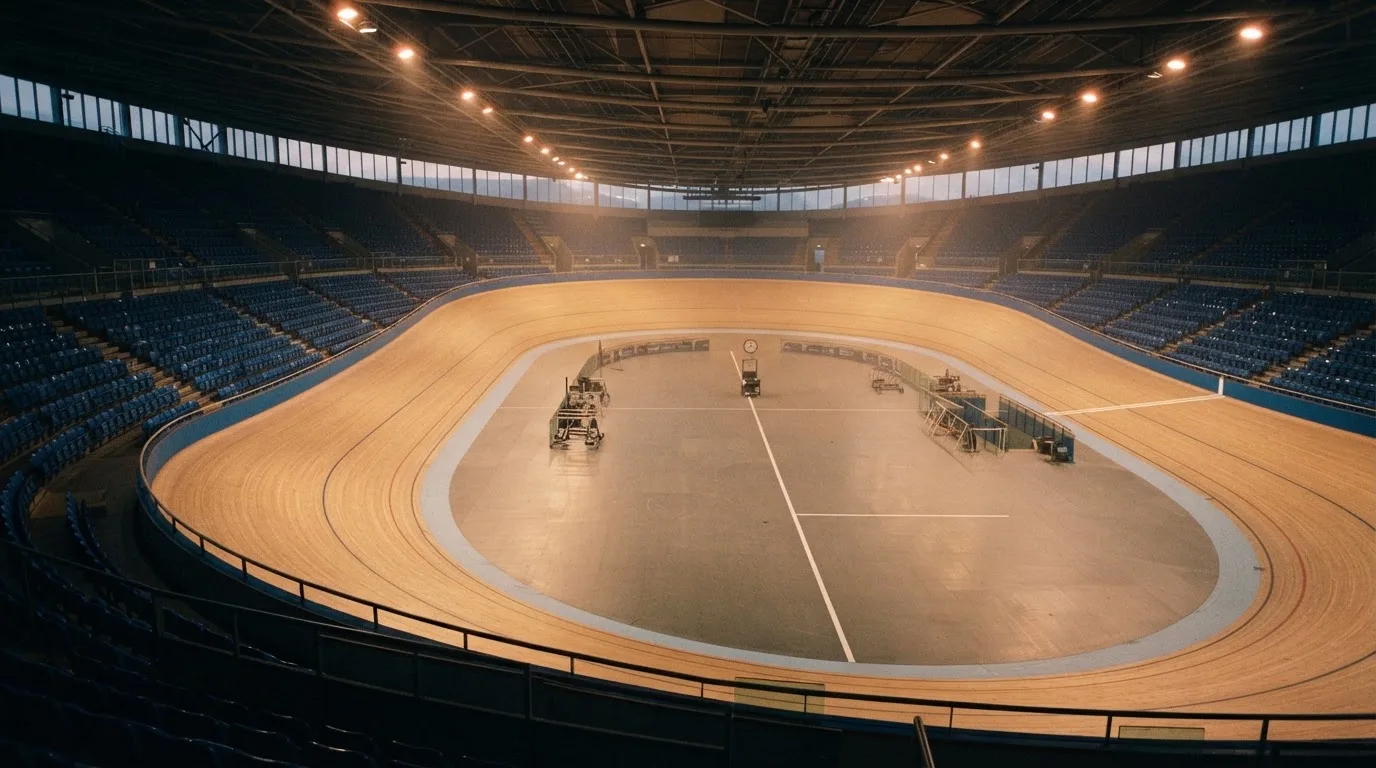
Above the Grand Tours sits the UCI WorldTour, created in 2005 as the ProTour and renamed the WorldTour in 2011. The WorldTour includes the Grand Tours and other major stage races, and it is the highest tier of the professional road calendar. Below it sit the UCI ProSeries and the continental and national calendars. For a punter the tiers matter because they decide what markets a bookmaker builds at all: a Grand Tour carries an outright winner, a GC top-three, a points classification, a King of the Mountains, a stage winner every day, head-to-heads and live in-play prices; a ProSeries one-day race often carries little more than a winner and a podium each-way.
The 2026 Tour de France as a worked example
The 2026 Tour de France ran from 4 to 26 July 2026, starting in Barcelona with a team time trial and finishing on the Champs-Élysées in Paris, across 21 stages and 3,245 km with 23 teams. Tadej Pogačar of UAE Team Emirates, riding for Slovenia, won the race — his fifth Tour victory. The race is the easiest concrete example to anchor a market discussion to, because every type of bet listed above was live during those three weeks, and the outright winner market was settled a stage early. The shape is the same every year: a team time trial or prologue to open, mountain stages stacked in the second and third weeks, and a flat sprint stage into Paris on the final day. Punters who learned the 2026 Tour will recognise the 2027 edition almost immediately.

One-day Classics and the rest
Outside the Grand Tours, the Spring Classics — Milan–San Remo, the Tour of Flanders, Paris–Roubaix, Liège–Bastogne–Liège — and the Autumn Monuments are one-day races with no GC and no points jersey. Markets on these are much narrower: a winner, each-way places, sometimes a podium, and an in-play match-up for the final hour. Stage races that are not Grand Tours, such as the Critérium du Dauphiné, the Tour de Romandie, the Tour de Suisse and the Volta a Catalunya, carry a smaller version of the Grand Tour menu, sometimes without the depth of head-to-head markets. The lesson for a betting slip is the same: the bigger the race, the more markets, and the more markets, the more places a price can be off.
Cycling Betting Markets and How They Settle
Outright winner, GC and classification jerseys
The outright market on a Grand Tour is open weeks or months before the flag drops and closes at the start. Early prices are tall because the field is wide and the form book is incomplete; once the race begins the book bets stage by stage and the outright market disappears. GC top-three, top-five and top-ten markets behave the same way but settle on final classification, which means a rider can lose twelve minutes on stage nine and still pay out if he finishes seventh overall. Classification markets — points (green or cyclamen jersey), mountains (polka dot), young rider (white) — are settled on the relevant jersey at the end of the race. Each-way terms vary by operator and by race: a bookmaker’s site lists them under the race header before the flag.
Stage winner and head-to-head markets
Stage markets open the morning of the stage and close at the start. They are framed by the stage profile: a flat sprint stage pulls the field toward the fast men, a mountain stage pulls toward the climbers, a time trial toward the specialists. Head-to-head markets pair two named riders — “Pogačar to beat Vingegaard”, for instance — and settle on whoever finishes higher on the stage or, in a GC market, on the overall classification. These markets are where a reader who has watched a few stages can find prices the morning line has not fully adjusted to: a domestique who lost time the previous day may be mispriced the next morning, and a bookmaker’s head-to-heads sometimes lag a rider’s form by a stage.
In-play and live markets during a stage
In-play prices update through the stage — sprint, breakaway, climb, descent, finish. The interesting bets sit on the climb and on the final twenty kilometres of a road stage, when the bookmaker is repricing a group of favourites in real time. Liquidity is thinner than in football in-play and prices can move sharply; a punt on a breakaway rider at long odds will sometimes be voided mid-stage under the operator’s rules if the break is caught. None of this is hidden, but it is the kind of detail a reader learns by reading a bookmaker’s terms before staking.
Each-way, ante-post and place terms
Each-way bets are two equal stakes: one on the win, one on the place. The place part pays a fraction of the win odds — commonly a quarter or a fifth — and the number of places depends on the race and the field size. A Grand Tour outright might pay four places on a quarter odds basis; a one-day Classic might pay three. Ante-post bets are placed before the final field is declared and are subject to non-runner rules; if a key rider withdraws before the race an ante-post stake is usually returned, but the rule sits in the bookmaker’s terms and a reader should check it before placing one. Rule 4 deductions apply when a horse withdraws in racing; the term is borrowed in cycling only loosely and is not a standard cycling mechanic, so a reader who sees it should treat it as a horse-racing artefact rather than a cycling one.
How a Betting Price Is Built
Decimal odds, fractional odds and the conversion
British bookmakers quote prices in fractions: 5/1, 11/4, evens (1/1), 4/6. The decimal form, which is what most betting apps show alongside the fraction, is the fraction plus one: 5/1 becomes 6.00, 11/4 becomes 3.75, evens becomes 2.00, 4/6 becomes about 1.67. A stake of £10 at 6/1 returns £70 — the £10 stake plus £60 of profit — and the decimal form gives the same number as 10 × 6.00 = £60, before adding the stake back. The two notations describe one price; the arithmetic below uses the decimal form because the multiplication is direct.
Payout share and margin from a worked market
A bookmaker’s margin is what the firm keeps of every pound bet on a market. It is the difference between the price the bettors would receive in a fair market and the price the firm actually offers, and it lives inside every line on the slip. The cleanest worked example is a two-way market priced at 1.90 / 1.90. A £100 stake on each outcome returns £190 at each end, and the firm’s take across the two outcomes is £10 of the £200 staked — a margin of about 5%. The payout share to bettors, 95%, is what the field is paid back in aggregate; the 5% kept by the firm is the margin. The same arithmetic on a one-way outright market uses the implied probabilities of all runners: the sum of one-over-decimal-odds across the field is the payout share, and one minus that sum is the margin.
Margin as a band, not a single number
The margin in the worked two-way example is 5%, but that is a condition attached to one example at 1.90 / 1.90. Real markets drift outward for the following reasons:
- A two-way head-to-head priced near evens tends to sit in the 5% to 7% margin band.
- A Grand Tour outright with twenty-five runners sits much wider, often between 8% and 15%, because the bookmaker is protecting itself against the long tail.
- A one-day Classic with eight runners sits closer to a football outright, typically 6% to 10%.
- A stage winner market on a flat day may sit near 8%; on a mountain stage with a defined group of favourites it can narrow to 5% to 6%.
The arithmetic in any of those bands is the same formula. What changes is the number of legs and the spread of probabilities.
Why the margin matters at the betting slip
A reader who backs a 5/1 shot on a market with a 10% margin is paying more for the bet than a reader on a 5% market, even at the same odds. The price looks identical on the slip; the implied probability of winning is the same. What differs is the slice the firm is taking off the top before the bet is struck. On a high-margin outright the bookmaker is being paid a premium for the privilege of offering twenty-five runners, and the value bet, if there is one, has to beat that premium. A reader who chases a long-priced outsider on a Grand Tour outright is fighting two things at once: the probability of the win and the margin built into the price.
Value, Form and How a Reader Judges a Price
What a value bet is, and what it is not
A value bet is a price higher than the true probability of the outcome, once the bookmaker’s margin is taken out. The true probability is not knowable — it is the model a reader builds from form, course profile, weather, team orders and recent racing — but the comparison is direct: implied probability of the price against estimated probability of the outcome. If a rider is priced at 4.00 (implied probability 25%, before margin) and a reader judges his chance at 30%, the price contains value. If the same rider is priced at 2.50 (implied 40%) and the reader’s model says 30%, the price is short and the bet should be skipped. No tip service can prove value after the fact: every losing value bet looked like value at the time, and the test is the model, not the result.
Form, course and team orders
Form is the starting point. A rider who podiumed the previous edition of the same race and has raced actively through the spring is a different proposition from a rider whose last result was a DNF in March. Course profile matters: a climbing stage rewards a pure climber, a flat stage rewards a fast man in a lead-out train, a time trial rewards a specialist. Team orders are the most underrated factor. A domestique whose job is to set the pace for his leader will not be allowed to chase a stage win, and a sprinter whose team has lost its lead-out man will not be able to contest the finish. None of this guarantees a result, but each of them moves the estimate of true probability.
Statistics that actually move a price
Three numbers move a cycling price more than any others. The first is recent finishing position at the same race or a comparable one: a podium at the 2024 Giro is more informative than a win at the Tour de Suisse. The second is the rider’s time gap to the leader on comparable terrain: a rider who finished two minutes down on the previous mountain stage is probably not the favourite for the next. The third is the head-to-head record against the other favourites: a rider who has been dropped by the same rival three times in three races is unlikely to overturn that on the fourth attempt. Beyond those three, the next layer is start-list quality, weather and route changes — useful, but smaller effects than the first three.
The line-up and the morning of the race
The morning line is the first price the bookmaker posts for the day. It is built from the form book and the betting the firm has taken overnight, and it is wrong in two directions: too short on riders whose backers have been keen, and too long on riders whose market is thin. A reader who has done the work the night before can sometimes spot the morning line before it is corrected, which is the simplest value-bet setup in cycling. The window is small — sometimes fifteen minutes, often less — and it is the reason a reader who bets the morning of a stage does better than one who bets the evening before.
Staking and Bankroll Discipline
The flat stake and why it is the default
A flat stake is the same amount on every bet, regardless of confidence. It is the boring answer and the right one for most readers. A flat stake means a losing streak does not blow the bank, and a winning streak does not encourage the reader to over-stake the next race. The size of the flat stake is a function of bankroll: between 1% and 3% of the bank per bet is the conventional range, and a reader who bets more than 5% on a single stage is staking too high for any market. Cycling concentrates losing streaks into three-week windows during the Grand Tours, and a flat stake is what survives them.
Confidence staking and why it does not work as advertised
Confidence staking — more on confident bets, less on uncertain ones — looks like common sense but is difficult to do well. The reader’s estimate of confidence is biased by recent results, by favourite-or-not and by how much they want the bet to win. The discipline that looks like confidence staking in calm moments turns into chasing during a losing streak, and chasing is the most expensive habit in betting. A flat stake removes the question; a reader who genuinely wants to scale by confidence should use a small band (1% to 3% of bank, never more) and should keep a written record so the band is applied before the bet is struck.
Bankroll and the cycling calendar
The cycling calendar is not flat. January and February are slow, March through May are dense with Classics and stage races, June is quiet, July is the Tour, August is the Vuelta, September is the World Championships, and October through December is quiet again. A reader who keeps a flat bankroll across the year will stake smaller in the busy months and larger in the quiet ones; a reader who lets the calendar drive the stake ends up over-staking in July and under-staking in March, when the form book is freshest. The flat stake, set against the bankroll at the start of the year, is the cleanest way to handle it.
Record-keeping and review
A reader who does not record cannot review. The minimum is stake, odds, race, market and outcome for every bet; the next layer is the reader’s pre-race estimate of probability, so the value calculation can be checked after the result. A monthly review of the record — what the closing line would have paid, what the margin was on each market, where the reader’s model was off — is the single most useful habit in this market, and it is the one almost no one keeps.
Legal Landscape: Great Britain
The Gambling Commission and the licensing test
The Gambling Commission is the regulator of the commercial gambling market in Great Britain, set up under the Gambling Act 2005 and sponsored by the Department for Culture, Media and Sport. A bookmaker offering remote betting facilities to customers in Great Britain needs a Commission operating licence wherever the firm itself is based — that requirement dates from the Gambling (Licensing and Advertising) Act 2014 and sits in sections 33 and 36 of the 2005 Act as amended. A Curaçao, Maltese or Gibraltar licence is not a substitute for a Commission licence. The Commission’s public register can be searched by business name, trading name, domain or account number, and it is the whole test of whether a brand holds a Commission licence. A reader who cannot find a brand on the register should not deposit with it.
What the licence covers and what it does not
A remote general betting standard (real events) licence is what covers sports betting on real-world events; a remote betting intermediary licence is what covers a betting exchange; a separate pool betting licence covers pool products on horse and dog racing; financial spread betting on financial instruments is regulated by the Financial Conduct Authority, not the Commission. A bookmaker can hold more than one licence category, and a single licensee can run several brands — Ladbrokes and Coral are operated under the same licensee, as are Paddy Power and Betfair. The licence does not cover marketing, which runs through the CAP Code (non-broadcast) and the BCAP Code (broadcast), enforced by the ASA, alongside the Commission’s marketing conditions in the LCCP.
Identity, age and the first deposit
The minimum age is 18. Since 7 May 2019 a licensed remote operator has to verify a customer’s name, address and date of birth before the first deposit and before any gambling — including with a free bet or bonus. Credit cards have been banned for gambling in Great Britain since 14 April 2020 (LCCP condition 6.1.2), including credit-card-funded payments through an e-wallet; debit cards and bank transfers are not covered by the ban. The verification step is the reason no anonymous play exists at a licensed site, and a source-of-funds request at higher spend is the money-laundering regime doing its job rather than a firm being awkward.
Bonuses, promotions and what changed in 2026
Wagering requirements on bonuses are capped at 10x the bonus under rules in force from 19 January 2026: a £10 bonus with a 50x wagering requirement would have needed £500 of qualifying bets and is no longer permitted — the cap means the wagering requirement is no more than £100 of qualifying bets for a £10 bonus. Mixed-product promotions — an offer that requires gambling on two or more product types such as betting and casino in one bundle — are banned. Whether the cap applies to free bets with no wagering condition, and any cap on the money value of a bonus, are not settled by the published rules, and a reader who wants to know should read the specific offer terms on the bookmaker’s site.
Tax on winnings
A punter in Great Britain pays no tax on betting winnings; General Betting Duty is the operator’s tax, currently 15% of gross profits on most bets. From 1 April 2027 a new remote betting rate of 25% applies within that duty on most remote bets, while remote bets on UK horse racing, bets on self-service betting terminals in licensed premises, pool betting and in-person betting stay at 15%. The duty is the operator’s problem, not the punter’s, and a punter should never assume the firm is passing duty on through shorter odds without checking the firm’s terms.
Offshore and the cost of being unlicensed
A bookmaker without a Commission licence that takes bets from customers in Great Britain is committing an offence under section 33 of the Gambling Act 2005 — up to 51 weeks’ imprisonment, a fine up to level 5, or both; six months in Scotland. The customer is not the target of that offence, but the customer does lose the protections a licence brings: no GAMSTOP coverage, no Commission complaints route, no approved dispute-resolution body, no British consumer redress if funds are withheld, and none of the bonus cap or vulnerability-check protections. Enforcement against unlicensed operators is disruption rather than blocking: cease-and-desist notices, search-engine referrals, work with registrars, hosts and payment providers, and court-order DNS blocking powers the Commission has been given or is about to receive. A reader who chooses an unlicensed site is choosing none of the above.
Responsible Gambling
GAMSTOP, self-exclusion and the multi-operator scheme
GAMSTOP is the national multi-operator online self-exclusion scheme, and a Commission licence condition since 31 March 2020 means every GB-licensed remote operator takes part. The exclusion periods are six months, one year, five years, or five years with auto-renewal, and after the minimum period the exclusion stays in place for a further seven years unless the customer asks GAMSTOP to remove it. GAMSTOP covers online sites and apps; betting shops run a separate in-shop self-exclusion scheme. The scheme is free to use and is the single most powerful tool a reader who feels their betting is getting away from them has at their disposal.
The financial vulnerability check
Since 28 February 2025 a financial vulnerability check has applied under LCCP condition 3.4.4 to licensed remote betting when a customer’s deposits minus withdrawals exceed £150 in a rolling 30-day window. The check is a public-record check — bankruptcy, county court judgments and the like — and is not an income check, not a credit reference check, and not a check on whether the customer can afford to bet. Financial risk assessments under the Commission’s staged plan — the press’s “affordability checks” — are announced, staged and have no start date, so a reader who sees a check at a higher spend should expect a public-record check, not an income request.
Deposit limits and the customer’s own ceiling
Operators have to provide a gross deposit limit on a fixed time frame; the first changes have applied since 31 October 2025, a second phase was postponed to 30 September 2026, and whether it is in force is not established for every operator. There is no state-set deposit or loss ceiling for betting: limits are the customer’s choice. A reader who wants to set a ceiling should set it before they open the account, when the limit feels least urgent; raising the limit during a losing streak is the move that costs the most, and most operators apply a cooling-off period before raising a limit for that reason.
Where to get help
GamCare runs the National Gambling Helpline and offers structured support; GambleAware funds treatment and research; the NHS runs gambling clinics in several regions; Gamblers Anonymous runs support meetings across the country. A reader who has self-excluded through GAMSTOP and is still finding ways to bet — through an unlicensed site, through a partner’s account, through a betting shop that is not part of the scheme — should contact GamCare or a GP. The self-exclusion is a strong tool; it is not the only tool, and the gap between the exclusion and the actual behaviour is the place where the next layer of help lives.
Sports and Tournaments at the Bookmaker
What a bookmaker’s cycling page actually shows
A bookmaker’s cycling product depends on the race. A Grand Tour in its third week will show outright (closed), GC top-three, classification jerseys, stage winner for the day, head-to-heads on the GC favourites, in-play on the stage, and often a points or mountains match market. A one-day Classic on a Saturday will show outright, each-way places, sometimes a podium market, sometimes a head-to-head on the two favourites. A mid-week ProSeries race will show outright and little else. The shape of the page tells the reader what the firm expects to be bet on, and a thin page is a signal that the firm has not built a serious book on the race.
Where cycling sits in the wider sportsbook
Cycling sits below football, horse racing and tennis in the average British sportsbook’s turnover, which is why the in-play product is narrower and why margins on outrights tend to be wider. The corollary is that price-movement news travels slower in cycling than in football: when a team is announced for a Champions League match, prices move within minutes; when a Grand Tour team is announced the morning of a stage, the outright market is already closed and the stage market takes the news with a delay a reader can use.
Stage races versus one-day races
The difference between a stage race and a one-day race at the betting slip is the number of bets. A reader can place one bet on Milan–San Remo and be done; a reader on the Tour de France can place a bet every day for three weeks. The discipline question is the same in both, but the volume is not. A reader who wants to bet every stage of the Tour should set a stage budget in advance (a flat stake multiplied by the number of stages) and stick to it; a reader who lets the day decide the stake ends the Tour with a smaller bank than they started.
Top 10 UK Bookmakers for Cycling
The ten brands below all hold a Gambling Commission remote operating licence. The licence number, the licence holder and what the operator’s own terms state on the key subject are laid out in the table that follows, and a short profile of each brand follows the table. None of these is a recommendation and none is “the only” licensed brand — there are more licensed firms than any single article can feature, and the ten here are the ones whose cycling product is built around the calendar the section above describes.
How the ten were chosen and what the table shows
The table below sets out three things per brand: the Gambling Commission remote licence number and the name of the licence holder against that number on the public register, and what the brand’s own terms state on the key subject for this page — cycling markets, in-play, in-running prices, or the relevant racing subject for the brands whose product is built around a different sport. The licence is the test of whether the brand can lawfully take bets from customers in Great Britain; the key subject is what the brand does with cycling, or what it does with the closest analogue when cycling is not its lead sport.
The comparison
| Brand | Gambling Commission remote licence and licence holder | What the operator’s own terms state |
|---|---|---|
| Spreadex | 008835-R-104580-022 (Spreadex Limited) | Fixed-odds and spread betting combined; one-click, auto and partial cash out; Bet Builder across fixed odds or spreads; live streaming on UK and Irish horse racing, greyhounds, tennis, NFL and selected football |
| BAR 1 Betting | 056516-R-332750-007 (Bar-One Racing Limited) | Irish independent bookmaker; horse racing sponsorships at Dundalk, Fairyhouse, Navan, The Curragh, Curraheen Park and Cork |
| Smarkets | 039173-R-319366-011 (Smarkets (Malta) Limited) | Betting exchange; open-bank-transfer deposits instant from £10 up to £10,000; withdrawals processed within 6 hours from £10 up to £100,000; debit card deposits instant from £10 up to £15,000 |
| William Hill | 039225-R-319373-015 (WHG (International) Limited) | Best Odds Guaranteed on UK and Irish horse racing from 8 AM on the day of the race, on single and multiple bets; does not apply to ante-post, tote or pari-mutuel bets |
| BetMGM | 039198-R-319450-029 (LeoVegas Gaming PLC) | Sports welcome offer: deposit £10+ and place a sports bet within 7 days for four £10 free bets (two football accumulators of 4+ selections and two sports multiples of 2+); minimum odds; opt-in required; valid for 7 days |
| Midnite | 101839-R-342850-001 (Midnite Limited) | In-play events, acca builder, popular accas and price boosts with maximum-stake limits; sports welcome offer: bet £5+ on pre-match odds of EVS (2.0) or greater within 14 days for £25 in free bets and 50 free spins; valid for 7 days |
| Paddy Power | 039439-R-319330-013 (PPB Counterparty Services Limited) | Sports betting app covering football, horse racing, boxing, rugby, tennis, golf, darts, snooker and F1 |
| Betboro | 044181-R-324363-007 (Webmedia Development N.V.) | Sports welcome offer: 100% matched free bet up to £25 on the first qualifying wager; debit card deposit £10+; first bet £5 to £25 with at least three selections at 3/5 (1.60) or higher |
| Octobet | 062545-R-337248-006 (Octopus Game Limited) | Sportsbook welcome offer: 50% back as a free bet up to £50, plus a £10 casino bonus for new customers |
| BetVictor | 039576-R-319370-028 (BV Gaming Limited) | Best Odds Guaranteed on UK and Irish horse racing; enhanced live race streaming; BetFinder feature; Smart Stats |
Spreadex
Spreadex is one of the few brands combining fixed-odds betting with financial spread betting under the same app. Spreadex Limited holds the Gambling Commission licence 008835-R-104580-022, and the financial side is regulated separately by the Financial Conduct Authority. The relevant fact for any reader looking at the brand for the first time is that spread betting losses can exceed the deposit, which is a different risk profile from a fixed-odds book. The cycling product sits inside the fixed-odds menu, and the broader in-play product — UK and Irish horse racing, greyhounds, tennis, NFL and selected football — is what the brand’s live-streaming and cash-out features are built around. The cycling page on the app is not the headline product; the spread product is. While the outright markets are less extensive than those of dedicated sportsbooks, the integration of spread and fixed-odds betting is unique; it is well-suited for those comfortable with the dual-risk profile.
BAR 1 Betting
BAR 1 Betting is the rebrand of Bar One Racing, an Irish independent bookmaker with shops across Ireland and horse racing sponsorships at Dundalk, Fairyhouse, Navan, The Curragh, Curraheen Park and Cork. The Gambling Commission licence is 056516-R-332750-007, held by Bar-One Racing Limited. The cycling product is not the lead product and is built around the headline events the firm expects its Irish customer base to bet on: the Tour de France, the Giro and the Vuelta, with stage and outright markets during those races and a thinner offering outside them. A reader who wants an Irish firm with high-street roots and a leaner online product will find a fit here; those seeking the deepest in-play menu or an exhaustive outright book on every ProSeries race should compare the offerings of the larger sportsbooks below.
Smarkets
Smarkets is a betting exchange, which means it matches peers’ activity but does not lay bets as a bookmaker. The Gambling Commission licence is 039173-R-319366-011, held by Smarkets (Malta) Limited, under the betting intermediary category. The relevant payment facts for any reader are the deposit and withdrawal windows: open-bank-transfer deposits are instant from £10 up to £10,000, withdrawals are processed within 6 hours from £10 up to £100,000, and UK debit card deposits are instant from £10 up to £15,000. An exchange is the place to lay a rider (bet against) as well as back one, and the depth of the exchange on a Grand Tour outright is the most informative price a reader can find, because it is built by other readers rather than by a single firm’s trader. The ability to compare the exchange price with the firm price is a key advantage; for a reader who prioritises the simplicity of a fixed-odds sportsbook, the exchange model may be less relevant.
William Hill
William Hill is one of the best-known high-street names in British betting and runs its UK online product under WHG (International) Limited, Gambling Commission licence 039225-R-319373-015. The headline racing feature is Best Odds Guaranteed on UK and Irish horse racing from 8 AM on the day of the race, on both single and multiple bets; it does not apply to ante-post, tote or pari-mutuel bets. The cycling product is built around the Tour de France and the other Grand Tours, with stage winner and head-to-head markets through the race and an outright market that runs from several weeks before the flag. It is a reliable choice for account holders who value a deep Grand Tour book; those seeking a brand that positions cycling as its central marketing pillar may prefer alternatives.
BetMGM
BetMGM runs its UK product under LeoVegas Gaming PLC, Gambling Commission licence 039198-R-319450-029. The headline welcome feature is four £10 free bets after a £10 deposit and a first sports bet within 7 days — two football accumulators of four or more selections and two sports multiples of two or more, with minimum odds, opt-in and a 7-day validity. The free bets are a typical modern welcome: small stakes, multiple legs, a short window. The welcome offer provides a structured introduction, though it is best assessed alongside the racing product itself; comparing across multiple brands is advisable for those focused on early outright markets.
Midnite
Midnite runs under Midnite Limited, Gambling Commission licence 101839-R-342850-001. The site’s home page features in-play events, an acca builder, popular accas and price boosts with maximum-stake limits. The sports welcome offer is £25 in free bets and 50 free spins after a £5+ wager on pre-match odds of EVS (2.0) or greater within 14 days of sign-up, valid for 7 days. Midnite is one of the newer UK brands and has built its cycling product around the Grand Tours and the headline Classics; the in-play menu is the part of the site that does the work. It is an efficient choice for those prioritising in-play action; readers seeking deep ante-post outright markets for Grand Tours months in advance may find the book less comprehensive.
Paddy Power
Paddy Power runs under PPB Counterparty Services Limited, Gambling Commission licence 039439-R-319330-013. Paddy Power and Betfair share the same licensee and are run as sister brands rather than independent operators. The sports betting app covers football, horse racing, boxing, rugby, tennis, golf, darts, snooker and F1; the cycling product sits inside the wider sports menu and is built around the Tour de France and the other Grand Tours, with the firm’s signature money-back specials the headline feature. For those who value a familiar brand with frequent specials, it is a primary option; readers prioritising the narrowest margins or the simplest welcome offers may prefer to look elsewhere.
Betboro
Betboro runs under Webmedia Development N.V., Gambling Commission licence 044181-R-324363-007. The headline welcome is a 100% matched free bet of up to £25 on the first qualifying wager, requiring a debit card deposit of at least £10 and a first bet of £5 to £25 with at least three selections each at 3/5 (1.60) or higher. The structure is a classic matched free bet: small stake, minimum odds on each leg, and a ceiling on the matched amount. This matched-free-bet structure is a standard choice for new sign-ups; those searching for a higher welcome cap or a broader sportsbook product will find larger alternatives on this list.
Octobet
Octobet runs under Octopus Game Limited, Gambling Commission licence 062545-R-337248-006. The headline welcome is 50% back as a free bet up to £50, plus a £10 casino bonus for new customers. The “back as a free bet” structure is the giveaway: the stake is not returned with a win, so the headline 50% is worth less than a 50% cash bonus on the same turnover. The free bet structure is distinct from cash bonuses, and the headline value should be assessed accordingly; readers seeking a cash-based welcome may prefer alternatives.
BetVictor
BetVictor runs under BV Gaming Limited, Gambling Commission licence 039576-R-319370-028. The headline features are Best Odds Guaranteed on UK and Irish horse racing, enhanced live race streaming, a BetFinder feature for finding racing bets, and Smart Stats. The cycling product is built around the Grand Tours and the headline Classics, with BetFinder the brand’s distinctive feature for finding bets in a busy racing card. A reader who wants a brand with strong racing tooling gets that here; a reader who wants the most aggressive welcome gets a more generous headline elsewhere on the list.
Worked Margin: Two-Way Market at 1.90 / 1.90
The margin calculation on this page uses one example: a two-way market at decimal odds 1.90 and 1.90 (fractional 9/10 each way). This is an illustrative example, not a quoted price from a specific market or event; it is the cleanest two-way market to anchor the arithmetic to.
A £100 stake on outcome A at 1.90 returns £190 if outcome A wins. A £100 stake on outcome B at 1.90 also returns £190 if outcome B wins. Across both outcomes, the firm has taken £200 in stakes and pays out £190 whichever way the market settles — keeping £10 of every £200 staked on this market, which is a margin of 5%. The payout share to bettors is 95%. The condition is the example: a two-way market priced exactly at 1.90 / 1.90. A real market will drift around that band depending on the number of runners, the bookmaker’s view and the betting the firm has taken; the formula is the same, the inputs change.
The same arithmetic on a one-way outright with N runners is the sum of one-over-decimal-odds across all runners. A twenty-five-runner Grand Tour outright where the sum of implied probabilities is 110% has a margin of 10%, and the payout share to bettors is 90%. The point is the same: the margin is the slice the firm keeps of every pound bet on the market, and the slice is set by the sum of implied probabilities across the field.
Frequently Asked Questions
How does a reader bet on cycling?
A reader opens an account with a bookmaker licensed by the Gambling Commission, verifies their identity, deposits by debit card or bank transfer (credit cards are banned for gambling in Great Britain), and selects a cycling market from the sportsbook. Grand Tours carry the deepest menu — outright, GC top-three, classification jerseys, daily stage winner, head-to-heads, in-play — while one-day Classics offer outright and each-way places. A flat stake of between 1% and 3% of bank is the conventional range, and the bet is settled at the price struck on the slip at the moment the bet was placed.
Is it possible to bet on cycling in Great Britain?
Yes, at any bookmaker holding a Gambling Commission remote operating licence. The Commission’s public register lists every licensed firm and can be searched by business name, trading name, domain or account number; a brand not on the register is not licensed to take bets from customers in Great Britain. The minimum age is 18 and identity is verified before the first deposit.
What is a value bet and why is no tip ever certain?
A value bet is a price higher than the true probability of the outcome, once the bookmaker’s margin is taken out. The true probability is built from form, course profile, recent results and team orders; the price’s implied probability is one over the decimal odds. If the reader’s estimate of probability is higher than the price’s implied probability, the price contains value. No tip is certain because the true probability is an estimate and a flat tyre, a crosswind or a domestique dropping his leader on a Tuesday can change the outcome in ways no model predicted.
What is the bookmaker’s margin and how can it be seen in the odds?
The margin is the slice the firm keeps of every pound bet on a market, and it is the difference between a fair market and the price the firm offers. The cleanest way to see it is to add up the implied probabilities across all outcomes of a market: a two-way market priced at 1.90 / 1.90 has implied probabilities of 52.63% on each side, summing to 105.26%, which means an overround of 5.26% and a margin of 5.0%. The wider the sum above 100%, the wider the margin.
How is the return on a bet worked out from the stake and the odds?
Return = stake × decimal odds; profit = stake × (decimal odds − 1). A £10 stake at decimal odds 6.00 (fractional 5/1) returns £60, made up of £50 profit and the £10 stake returned. On a combination bet the odds of the legs multiply into one price — three legs at 2.00, 3.00 and 4.00 become 24.00 — and the return is stake × 24.00. Each-way bets are two equal stakes, one on the win and one on the place, and the place part pays a fraction of the win odds according to the place terms stated on the race card.
How is it checked that a bookmaker holds a Gambling Commission licence?
The Commission’s public register can be searched by business name, trading name, domain or account number, and a brand that appears on the register with a remote betting licence category is licensed for customers in Great Britain. The register entry shows the licence number, the licence holder’s legal name, the licensed activities and the trading names the licence covers. A brand whose domain does not appear, or whose licence covers only a non-remote activity, is not licensed for online betting in Great Britain and a reader should not deposit with it.
Combat & motorsport – Boxing betting
Content created by the «Boxing betting» team
