
Esports betting odds: how prices are built, what they really cost and which GB-licensed bookmakers take them
 Available in US
Esports is competition between professional players or teams, mostly through multiplayer video games, organised around the same kind of leagues, seasons and finals that traditional sport runs on. Where football has the Premier League and the World Cup, esports has the League of Legends World Championship, Dota 2’s The International, the Evolution Championship Series for fighting games and Intel Extreme Masters — tournaments with multi-million-dollar prize pools and betting markets attached.

This page is about esports betting odds in Great Britain specifically. It explains what odds represent, where they come from, how a margin sits inside them, what a bet builder does to a price and what a “boosted odds” tag actually pays out. It then walks through the GB-licensed bookmakers whose own sites confirm esports markets, before closing on the consequences the headline terms hide.
Current as of 27 October 2026, verified against the Gambling Commission’s public register.
Statutory frame: who is allowed to take esports bets in Great Britain
The Gambling Commission licenses the whole commercial betting market in Great Britain under the Gambling Act 2005, covering England, Scotland and Wales. Northern Ireland runs on its own older law and is outside the Act. Since the Gambling (Licensing and Advertising) Act 2014, an operator whose remote facilities are used in Great Britain needs a Commission licence wherever it is based — sections 33 and 36 of the 2005 Act as amended. A Curaçao, Maltese or Gibraltar licence is not a substitute, and a Betting licence does not exist unless the operator appears on the Commission’s public register.
That register can be searched by business name, trading name, domain or account number. It is the whole test of who holds a licence. There is no statutory list of permitted sports or markets: esports are treated like any other event. The category that covers them on a GB-licensed site is remote general betting standard (real events) — the same category that covers football, tennis and horse racing. A separate virtual events category exists for computer-simulated fixtures; an esports tournament broadcast from a studio is real, not virtual.
Identity checks sit on the way in. Since 7 May 2019, name, address and date of birth are verified before a customer can deposit or gamble — including with a free bet or bonus. Minimum age is 18. Credit cards are banned for gambling in Great Britain (since 14 April 2020), and credit-card-funded e-wallet top-ups sit inside that ban; debit cards and bank transfers are not.
The single test a reader can apply: if the brand is not on the register, the customer loses the protections a Commission licence carries — GAMSTOP coverage, a Commission complaints route, an approved alternative dispute resolution body, British consumer redress if funds are withheld, and the bonus rules the next section covers. None of those are guaranteed at an unlicensed site.
Safeguards: what the licence actually obliges an operator to do
A licence is not a guarantee of fair play; it is a bundle of obligations. Three of them sit in front of every bettor in Great Britain.
GAMSTOP. The national multi-operator online self-exclusion scheme has been a mandatory licence condition for online operators since 31 March 2020. Self-exclusion periods are six months, one year, five years, or five years with auto-renewal. After the minimum period ends, the exclusion stays in place for a further seven years unless the customer asks GAMSTOP to remove it. Every online bookmaker licensed in Great Britain takes part, and a self-excluded customer is meant to be blocked across the lot at once — not one at a time. Betting shops use a separate in-shop self-exclusion register, not GAMSTOP itself.
A financial vulnerability check. Under LCCP condition 3.4.4, in force since 30 August 2024, licensed remote operators run a public-record check on a customer once deposits minus withdrawals exceed £150 in a rolling 30 days (since 28 February 2025). It is not a credit reference check, and it is not an income check — it looks at things like bankruptcy orders and county court judgments. A separate, heavier financial risk assessment has been announced as a staged plan (Commission article of 7 July 2026); no commencement date has been set, and it is described as announced rather than in force.
Deposit limits. Operators must offer a gross deposit limit on a fixed time frame. The first phase has applied since 31 October 2025; a second phase was postponed to 30 September 2026, and whether it is live is not yet established. There is no state-set deposit ceiling for betting — limits are the customer’s choice, and an operator cannot move them up without the customer’s consent.
Help sits outside the operator. GamCare runs the National Gambling Helpline; GambleAware funds treatment and education; NHS gambling clinics operate in several regions; Gamblers Anonymous runs mutual-aid meetings. A self-exclusion or a worry about a friend is the moment to call, not the day after.
Crypto and anonymity: how much the licence leaves
The Commission requires identity verification before any gambling takes place. There is no anonymous play at a GB-licensed site, and the conversation about crypto deposits at licensed operators is short for a reason: the operator has to know who it is paying out to. Bitcoin, ethereum and stablecoins are not on any Commission’s list of approved payment methods, and the register’s silence on a British named-account rule does not create one.
What the licence does require is source-of-funds checks at higher spend. A customer depositing through a regulated channel — debit card, bank transfer, an established e-wallet — meets that obligation at the same moment as identity verification. A customer depositing through an unregulated crypto wallet cannot meet it as easily, because the operator must still verify the person behind the transfer, which is the whole point of the licence. Several GB-licensed bookmakers, including some of the ten covered below, do not list cryptocurrency among their accepted deposit methods at all.
A reader considering crypto-only operators should expect one of two outcomes at a GB-licensed site: either crypto is not in the cashier, or the operator pairs crypto acceptance with the same identity and source-of-funds steps as a debit card. A brand that promises anonymous crypto betting and a GB licence is one of two things — unlicensed, or licensed with a thinner cashier than the marketing suggests.
Bonuses and free bets: the cap the licence imposes, and the cap it does not
Promotion rules in force since 19 January 2026 cap wagering requirements on bonuses at 10× the bonus- or deposit-related amount: a £10 bonus at 50× would need £500 of qualifying bets, and the cap means no licensed bonus can demand more than £100 of qualifying bets for every £10 of bonus. Mixed-product promotions — an offer that requires gambling on two or more product types, for example “bet on football to get free spins” — are banned at licensed operators.
What the rules do not cap is the bonus’s money value, nor do they pin down the type. A free bet is a free bet: the stake is usually not paid back with a win, which is the whole point of a free bet to the operator and the whole cost of a free bet to the reader. A “boosted odds” tag is a one-off price concession on a named selection, paid as winnings only, and it usually cannot be combined with other offers. A “risk-free” bet refunded as a free bet is a refund in bet credits, not money. An acca insurance refunds one leg of an accumulator when that leg loses, also typically as a free bet. None of these are interchangeable, and none of them are interchangeable with a cash bonus.
The terms a free bet carries matter more than the tag. A £40 in free bets issued within 7 days and expiring 7 days after issue is a different offer from a £40 in free bets issued at once and lasting 30 days, and the difference is real money to the reader who has a busy week. The headline number is the headline; the conditions are the offer.
| Brand | What the brand’s own terms state on its welcome offer |
|---|---|
| Coral | Get £40 in free bets when you bet £20: deposit and sports bet of £20 or more at minimum odds 2.0 (1/1); £40 in free bets issued within 7 days, expiring 7 days after issue; new GB customers, opt-in required |
| BetGoodwin | Bet £10 and get £15 in free bets: a £5 sports bet, a £5 acca and a £5 Sub-Cover bet |
Those two are the offers each brand’s own pages state. The other GB-licensed bookmakers covered here do not, on the terms visited, lead their sportsbook with a stated welcome promotion in this format — some run casino-side welcome packages, some run ongoing price boosts rather than sign-up deals, some run acca insurances on named leagues. A reader who treats a welcome bonus as the only consideration is comparing the wrong column.
Payments and payout speed: how money moves, and how fast
There is no state-set list of permitted payment methods at a GB-licensed bookmaker, and the Commission has not published a rule for or against specific e-wallets or bank-based rails. What is banned is credit cards (since 14 April 2020), including credit-card-funded e-wallet top-ups. Everything else is governed by the operator’s own cashier.
The channels most GB-licensed esports bookmakers name in their terms are debit cards (Visa, Mastercard), bank-based payments including Faster Payments and open-banking rails, established e-wallets (PayPal, Skrill, Neteller, Trustly depending on the brand), and pre-paid solutions (Paysafecard). Apple Pay and Google Pay appear where the operator supports them as front-ends over a debit card or bank transfer, not as separate payment types.
Payout speed is operator-by-operator and rail-by-rail. E-wallets and Faster Payments clear same-day or next-day at most GB-licensed brands on the terms visited; debit card withdrawals take one to three working days; bank transfer can take up to five working days at the slower end. None of these are statutory: the operator sets its own processing window, and the rail sets its own clearing time. A reader who needs same-day access should check both — the brand’s own stated payout time and the rail’s stated clearing time — because a same-day processing time on a three-day clearing rail is still three days.
Identity verification runs at withdrawal, not just at deposit. A first withdrawal typically triggers source-of-funds questions, and the operator may hold the withdrawal while the checks complete. That is a normal compliance step, not a refusal to pay, but it can stretch a same-day promise into a 24–72 hour one on the first payout.
The app and the browser: where the bet is actually placed
A GB-licensed bookmaker’s mobile app and its desktop site run the same markets, the same odds and the same account — what differs is the layout, the available features and, sometimes, the live-streaming catalogue. Native apps downloaded from the App Store or Google Play carry an age rating (17+ on the UK App Store for several of the bookmakers below) and tend to handle in-play, bet builder, cash out and notifications more cleanly than a mobile browser.
Three points are worth flagging. First, the app is part of the licensed product: downloading it does not change the brand’s licence status, and it does not exempt the customer from the verification steps. Second, a few features — biometric login, Face ID login, push notifications for price boosts — sit on the app but not on the browser. Third, live streaming on the app often needs a positive account balance or a qualifying bet placed within the last 24 hours; the bet does not have to win, but it does have to be placed.
Touch and handset matter for in-play. A live-esports market ticks once or twice a minute during a kill or a round break; the delay between a price update on the desktop site and the same update on the app is usually small, but it can be the difference between catching 1.85 and missing at 1.80 on a same-game multi.
Live betting, cash out and bet builder: how the price moves mid-match
In-play betting on licensed GB bookmakers is offered across esports titles, mapped by operators’ own licence conditions and customer-protection duties. The Commission has not declared in-play “unrestricted” as a legal conclusion, and operators set their own market coverage, suspension rules and maximum stakes in play. A reader who watches a League of Legends match live knows the kill-by-kill odds move with the scoreboard; a reader who bets on the same match without watching it pays the suspension risk.
Three features reshape the price in real time.
Bet builder. A bet builder combines several markets from one event into a single bet. The odds multiply together — the price of leg A times the price of leg B times the price of leg C — and the combined price carries the margin of each leg multiplied in, so a four-leg builder on a 5%-margin market carries something like a 19% combined margin before any leg is won. A bet builder at higher combined prices is not the same as a higher edge; it is the same edge stacked four times. A few bookmakers extend this — Bet Builder+ at bet365, for example, sits across pre-match and in-play and is the same combined-market construction with a longer window. The reader expects this still and a slightly different price.
Cash out. Cash out settles the bet early at a price the operator offers based on the current state of play. The price is the operator’s, not the market’s, and it usually carries a wider margin than the underlying market — the operator is taking the other side of the bet it has already laid. Auto cash-out triggers at a price the customer sets, useful when the customer cannot watch the live ticker. Sporting Index names auto cash-out among its in-app features; Betfair offers cash out on its sportsbook.
Live streaming. Betfair’s app shows free live streaming of events such as UK and Irish horse racing and football within the app, and the live-streaming catalogue varies by brand. Some operators gate streams behind a positive balance or a recent bet; others stream esports broadcasts without a gate. A reader choosing on streaming alone is choosing on the wrong column — the value sits in the in-play markets the stream makes readable.
Forecasts, tips and bankroll: what a tip actually costs
Searches for esports betting tips, predictions and “the most profitable bet today” outnumber searches for any other part of this market. They also tell the reader the least about what they are doing.
A tip is a prediction. A prediction is somebody’s view of who wins. The price on the same selection is the market’s view of who wins, formed from every other customer’s money. Where the two diverge, one of two things is true: either the tipster has spotted something the market has not, or the market has priced in something the tipster has not. The two outcomes are indistinguishable before the event; both are sometimes true at once.
Bankroll is the part a reader controls. The arithmetic is straightforward: pick a unit that is small against the account, never chase a losing run by doubling the unit, and stop when the unit stops being small. A £100 bankroll at a 2% unit is £2 a bet; a £1,000 bankroll at the same unit is £20. The size of the unit matters more than the number of tips.
The one piece of guidance a tipster cannot move: the margin. Every price on every market at every licensed bookmaker carries it, and the reader pays it on every bet placed. The next section is about that.
Bet types and odds: how the price is built
A decimal odds figure of 1.90 means a £10 stake returns £19: £10 of stake plus £9 of profit. A price of 3.75 means a £10 stake returns £37.50. The arithmetic is the same on every market at every bookmaker, and the format is the British standard; fractional odds are still quoted at some counters, and the conversion is a/b → a ÷ b + 1, so 5/1 becomes 6.00 and 11/4 becomes 3.75.
The price is not a single number. It is one of three or more prices on one market, each one the bookmaker’s view of one outcome. A two-way market has two prices; a three-way market has three; an each-way market doubles the number of bets. The prices are set to attract money on every side and to leave a margin.
That margin is the book’s edge on every pound bet. The math is straightforward: for a market with outcomes at decimal odds o₁, o₂, …, oₙ, the payout share is 1 ÷ (1/o₁ + 1/o₂ + … + 1/oₙ), and the margin is 1 − payout share. A two-way market at 1.90 / 1.90 gives a payout share of 1 ÷ (2 × 1/1.90) = 0.95, or 95%, and a margin of 5%. The same market at 1.85 / 1.85 gives 1 ÷ (2 × 1/1.85) = 0.925, or 92.5%, and a margin of 7.5%. A 1.95 / 1.95 market gives a margin of about 2.5% — tighter, harder to find, more expensive for the bookmaker to run, and usually reserved for high-liquidity events.
So for an illustrative two-way market at 1.90 / 1.90, the margin is 5%: a bookmaker keeps 5p of every £1 wagered across both outcomes, in expectation, after payouts. That is the edge that sits inside every price on this page. Where the same match is priced at 1.85 on one bookmaker and 1.91 on another, the 1.91 is the cheaper price for the reader, by about 3 percentage points of margin, and the difference is real money over a season of bets.
The margin is invisible until it is calculated. A reader who wants to see it can divide 1 by the sum of 1/odds across every outcome of a market. The number that comes out is what the bookmaker returns, on average, of every pound bet. The number that does not come back is the margin.
A combination bet — a double, a treble, an accumulator, a Lucky 15 — multiplies the prices of its legs into one. A treble at 1.50, 2.00 and 3.00 has combined odds of 9.00; a £10 stake returns £90 if all three win. The combined price carries the margin of each leg multiplied in, so three legs at a 5% margin each carry something close to a 15% combined margin before any leg is settled. Adding legs raises the combined price and raises the combined margin in roughly the same proportion.
Esports tournaments: what the calendar actually carries
Esports is not one schedule. It is several, one per title, each with its own regional leagues, international majors and year-end championships. The titles the licensed bookmakers covered here actually price up are League of Legends, Dota 2, Counter-Strike, Valorant, Overwatch, Call of Duty, Fortnite, Rocket League and StarCraft — the major competitive games in the English-language market. Each has its own season: League of Legends splits into Spring and Summer regional leagues and closes with the World Championship; Dota 2’s competitive year points toward The International; Counter-Strike runs a year-round circuit of tournaments closing with majors; Valorant runs the VCT with regional leagues and an international championship.
Two events set the size of the betting calendar. The International, Dota 2’s flagship, held a prize pool above US$40 million in 2021, the largest in esports history at that point. The Esports World Cup runs from 6 July to 23 August 2026 in Paris with a US$75 million prize pool across 24 games; the 2025 edition carried US$71.5 million and was won by Team Falcons, defending its 2024 title. Around those two, the EVO Championship Series anchors the fighting-game calendar and Intel Extreme Masters anchors the European Counter-Strike and StarCraft calendar.
What that means for a bettor: the major is the moment every bookmaker widens its market. Pre-tournament outrights appear weeks ahead; match-by-match markets open as the bracket fills; live betting markets run on every game. The smaller regional leagues carry fewer markets — match winner and a handful of maps at most — and the very small leagues carry no market at all. A reader looking for an esports bet on a Saturday afternoon in March is choosing between a Counter-Strike regional final and a League of Legends regional league match; on the third Sunday of August, the choice is between three or four live events at once.
The GB-licensed esports bookmakers: what each one actually offers
Ten GB-licensed bookmakers take esports markets on the terms visited. Each holds a Commission licence for remote general betting standard (real events) and appears on the public register; each takes part in GAMSTOP; each runs identity and age verification on the way in. What differs is the product: the welcome offer, the in-play depth, the bet builder, the streaming catalogue, the app, the payment rails. The list below describes each one in its own terms, then what they actually mean for the reader.
Coral — established sportsbook with stated welcome offer
Coral runs on Gambling Commission account 54743, held by LC International Limited, which also runs Ladbrokes under the same parent. The two brands sit under one licence and one GAMSTOP registration. Coral’s sports welcome offer is “Get £40 in free bets when you bet £20”: a deposit and a sports bet of £20 or more at minimum odds of 2.0 (1/1), with the £40 paid in free bets within 7 days and expiring 7 days after issue, for new GB customers who opt in. Coral’s esports markets sit on the same sportsbook as football and horse racing, with a standard match-winner market on the major titles and outrights on the bigger tournaments. The 7-day expiry is the constraint to watch — a busy week loses the free bets.
A reader picking Coral is picking the £40 welcome and accepting the 7-day window. The free-bet stake is not returned with a win, so a winning £40 free bet at 2.00 returns £40, not £80. The product beyond the welcome is a full sportsbook with esports on it, not an esports-first bookmaker.
Betmaster — esports coverage on a smaller sportsbook
Betmaster is operated by BM Solutions GB Ltd under Commission account 65699. Its GB app covers football, cricket, horse racing, NFL and esports — specifically League of Legends and Dota 2 among the named titles — and runs standard pre-match and in-play markets on the major tournaments. The product is a smaller sportsbook with esports coverage rather than a dedicated esports book.
A reader picking Betmaster is picking coverage of the two largest esports titles on a GB-licensed site without the wider market depth of the bigger brands. There is no stated welcome promotion in this format; the offer is the market, not a sign-up bonus.
Sporting Index — fixed odds alongside spread betting
Sporting Index runs under Commission account 27343, held by Sporting Index Limited. The interesting feature is the product mix: fixed-odds sports betting alongside financial and sports spread betting. The app lists in-play betting, Bet Builder for football, auto cash-out and Multi-Markets. The licensed bookmaker differs from the others covered here on the spread-betting side, which is governed by a different regulator (the FCA for financial spread betting, the Commission for everything else) and carries a different risk profile — spread-betting losses can exceed the deposit. A reader looking at Sporting Index should know that the spread-betting product is licensed separately and is not the same product as the fixed-odds esports market.
A reader picking Sporting Index is picking a brand that holds both kinds of licence and lets the customer move between them on one account. Esports markets are on the fixed-odds side, governed by the Commission; spread bets on esports indices are on the spread side, governed by the FCA, and carry the loss-can-exceed-deposit caveat that the fixed-odds side does not.
Betfair — exchange heritage, sportsbook product
Betfair Sportsbook runs under Commission account 39439, held by PPB Counterparty Services Limited. The sportsbook app offers in-play betting, Bet Builder, free live streaming of UK and Irish horse racing and football within the app, and a 90 Minute Payout market. The 90 Minute Payout pays out on the outright winner if the backed selection goes two goals up — a settlement rule, not a price concession, and one that reduces the variance on a single match rather than the margin across a season.
The Betfair exchange is its separate product under a separate licence category — remote betting intermediary — and runs back-and-lay markets on esports. A reader picking Betfair Sportsbook is picking a sportsbook with deep in-play and a strong streaming catalogue; a reader picking the Betfair exchange is picking a different product with different prices and a different commission structure. The two products are run by the same parent company but are not the same bet.
Fitzdares — premium positioning, smaller catalogue
Fitzdares runs under Commission account 400 — one of the lowest numbers on the Commission’s register — held by Fitzdares Limited. The app offers cash out, accumulators, Lucky 15s, specials and antepost markets on horse racing, football, tennis, rugby, cricket, golf and American football, with in-play live odds. Esports is not in the named list of sports on the product description; the markets that do appear are the ones the operator chooses to price up. A reader expecting the same esports depth here as on a dedicated esports bookmaker should expect a thinner market.
The pitch is premium, smaller-staff and bespoke service rather than broad-market coverage. A reader picking Fitzdares is picking the positioning rather than the esports market depth; the welcome and the product are aimed at the racing and football customer more than the League of Legends customer.
BetGoodwin — small welcome, named acca product
BetGoodwin runs under Commission account 2927, held by Goodwin Racing Limited. The sports welcome offer is “Bet £10 and get £15 in free bets”, split into a £5 sports bet, a £5 acca and a £5 Sub-Cover bet. Sub-Cover is a Goodwin product on racing; the £5 acca is the relevant slice for an esports reader. The total bonus is small and split across products, which is unusual against the £40 or £50 welcome deals at the bigger sportsbooks.
A reader picking BetGoodwin is picking a smaller product and a smaller welcome. The licensed status and the Commission’s protections are identical to the bigger brands; the market depth is thinner.
Kwiff — supercharged odds product
Kwiff runs under Commission account 44448, held by Eaton Gate Gaming Limited. The product is described as “supercharged” odds — randomly boosted prices on selections, applied after the customer places the bet, not at the time of placement. A bet placed at 1.80 on a League of Legends match may settle at 1.80 or at a boosted price if the operator’s algorithm applies. The App Store age rating is 17+. The licensed operator behind the brand is Spryme Ltd, with Eaton Gate Gaming as the licence holder.
The mechanics matter: the boost is the operator’s, not the customer’s, and applies after the bet is placed. A reader picking the brand is picking the random boost feature; a reader who values knowing the exact price at the moment of betting may find the feature too quiet.
bet365 — official Champions League partner, deepest product
bet365 runs under Commission account 55148, held by Hillside (UK Sports) ENC. The brand is the official global betting partner of the UEFA Champions League; its app is described as the most downloaded sports betting app in the UK. The product covers Bet Builder+ combining markets from one event pre-match and in-play, Super Boosts, Winnings Boosts on Bet Builders and selected singles, daily Bet Boosts, in-play betting, live streaming worldwide, Bet Track, Match Live and a Live Golf Tracker.
The product depth sets the ceiling of the comparison. A reader picking bet365 is picking the full-feature book: in-play, bet builder, streaming, boosts, app, on one licence. The licensed bookmaker covered here with the widest market catalogue on the terms visited; the price is rarely the absolute best, but the product around the price is the most complete.
BetVictor — racing-led, Best Odds Guaranteed on UK and Irish racing
BetVictor runs under Commission account 39576, held by BV Gaming Limited. The product offers Best Odds Guaranteed on UK and Irish horse racing, enhanced live race streaming, a BetFinder feature for finding racing bets, and Smart Stats. The pitch is the racing product; esports sits on the same sportsbook but is not the headline.
A reader picking BetVictor is picking the racing product and accepting a thinner esports presentation than the bigger multi-sport brands. The licensed operator carries the Commission’s protections; the value for the esports reader is the price on the named markets rather than the racing features.
888sport — full product, daily boosts
888sport runs under Commission account 39028, held by 888 UK Limited. The app offers pre-match and in-play betting, Cash Out, Bet Builder, racing streams, BetFinder form tools, a live bet feed and daily boosted odds. The licensed product is a complete sportsbook with the full feature set — bet builder, cash out, in-play, streaming — and daily price boosts on named selections.
A reader picking 888sport is picking the full-feature sportsbook at a brand that runs price boosts as a standing offer rather than a one-off welcome. The licensed bookmaker sits in the same product tier as bet365; the day-to-day product is closer than the welcome offers.
The comparison at a glance
The table below sets the ten GB-licensed bookmakers covered here side by side on what each one’s own terms state about its licence and its esports product. The columns are the matters a reader comparing options needs on one page: brand, Gambling Commission remote licence account number, the licence holder named on the register, and a one-line summary of the operator’s own product description.
| Brand | Gambling Commission remote licence account and licence holder | What the operator’s own terms state on the key’s subject |
|---|---|---|
| Coral | Account 54743 — LC International Limited | £40 in free bets on a £20 qualifying bet; full sportsbook with esports markets on major titles |
| Betmaster | Account 65699 — BM Solutions GB Ltd | App covers football, cricket, horse racing, NFL and esports (League of Legends, Dota 2) |
| Sporting Index | Account 27343 — Sporting Index Limited | Fixed-odds alongside financial and sports spread betting; in-play, Bet Builder for football, auto cash-out, Multi-Markets |
| Betfair | Account 39439 — PPB Counterparty Services Limited | In-play, Bet Builder, free live streaming of UK and Irish racing and football, 90 Minute Payout market |
| Fitzdares | Account 400 — Fitzdares Limited | Cash out, accumulators, Lucky 15s, specials, antepost markets on racing, football, tennis, rugby, cricket, golf, American football; in-play live odds |
| BetGoodwin | Account 2927 — Goodwin Racing Limited | £15 in free bets on a £10 qualifying bet, split into £5 sports, £5 acca, £5 Sub-Cover |
| Kwiff | Account 44448 — Eaton Gate Gaming Limited | Supercharged odds — random boosts applied after the bet is placed |
| bet365 | Account 55148 — Hillside (UK Sports) ENC | Bet Builder+ pre-match and in-play, Super Boosts, Winnings Boosts on Bet Builders and singles, daily Bet Boosts, in-play, live streaming worldwide, Bet Track, Match Live, Live Golf Tracker |
| BetVictor | Account 39576 — BV Gaming Limited | Best Odds Guaranteed on UK and Irish horse racing, enhanced live race streaming, BetFinder, Smart Stats |
| 888sport | Account 39028 — 888 UK Limited | Pre-match and in-play, Cash Out, Bet Builder, racing streams, BetFinder form tools, live bet feed, daily boosted odds |
All ten appear on the Commission’s public register and take part in GAMSTOP. No single brand is “the only” licensed one. The licensed bookmaker a reader chooses depends on the feature they value: the welcome, the bet builder, the streaming, the racing product, or the esports depth.
Where the comparison lands
The reader’s decision is not which licence to pick — every brand here holds the same one and answers to the same regulator. The decision is which product around the licence fits how the reader actually bets.
The reader who values the welcome picks Coral — the £40 in free bets on a £20 bet is the largest stated welcome in this set, and the 7-day expiry is the constraint to read. The reader who values bet builder depth picks bet365 — Bet Builder+ across pre-match and in-play is the deepest combined-market construction in the set. The reader who values live streaming picks Betfair or bet365 — both offer free in-app streaming of named events. The reader who values the racing product picks BetVictor or Fitzdares — Best Odds Guaranteed and antepost markets on the UK and Irish fixture list. The reader who values a smaller-staff positioning picks Fitzdares. The reader who values fixed-odds alongside spread betting picks Sporting Index, knowing the spread side is separately licensed and carries losses-can-exceed-deposit risk. The reader who values a random boost feature picks Kwiff, knowing the boost is the operator’s and applies after placement.
The reader who values nothing but the smallest margin per price has to compare prices on the same match across the ten — and the difference is usually small enough that the feature beats the price.
The fundamentals: what esports actually is, and what betting on it costs
Esports is a form of competition using video games, organised around multiplayer matches between professional players, individually or in teams. Major competitive titles covered by GB-licensed bookmakers include League of Legends, Dota 2, Counter-Strike, Valorant, Overwatch, Call of Duty, Fortnite, Rocket League, and StarCraft. The tournaments are the League of Legends World Championship, Dota 2’s The International, the Evolution Championship Series (EVO) for fighting games and Intel Extreme Masters — and the year-end flagship that brings them all together is the Esports World Cup, running 6 July to 23 August 2026 in Paris with a US$75 million prize pool across 24 games.
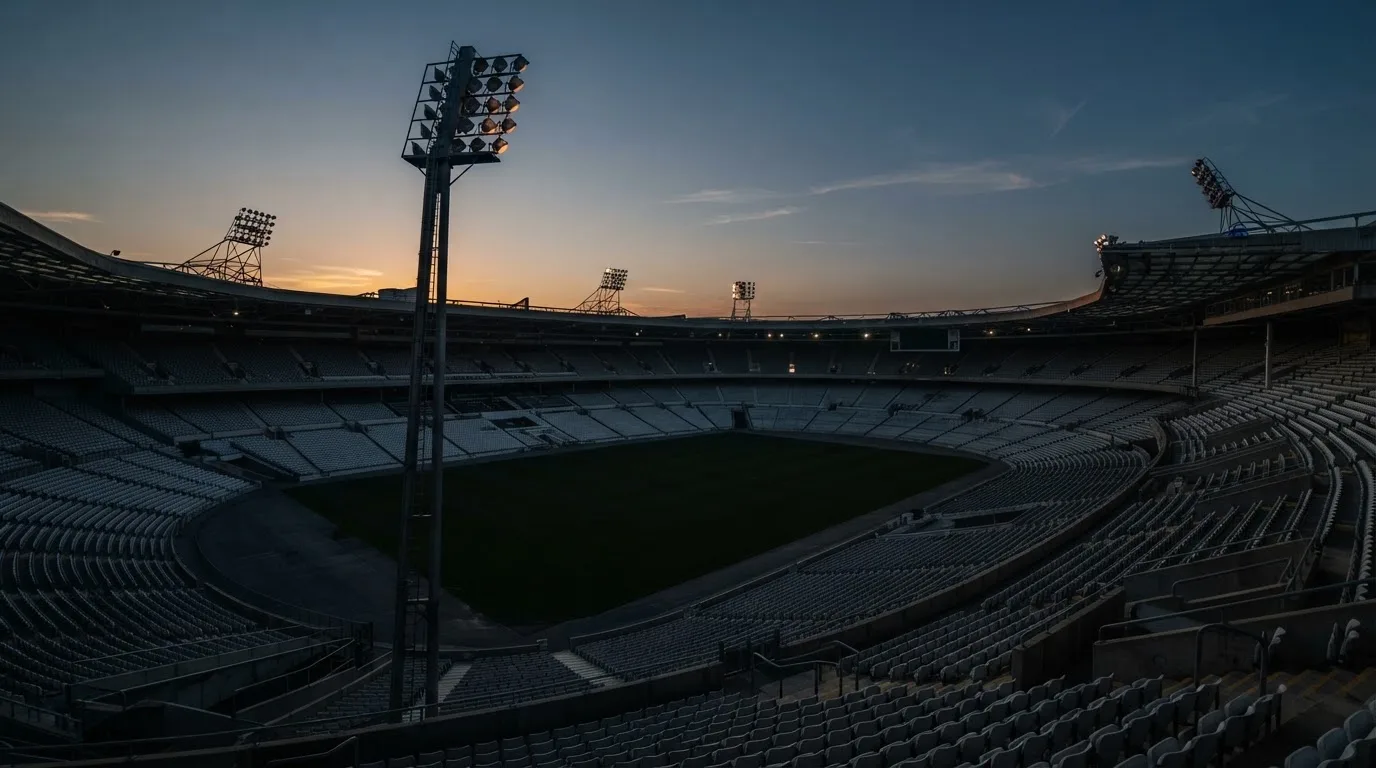
The economic backdrop matters for the betting market. A tournament with a US$75 million prize pool pays the players enough to compete professionally; a tournament with a US$40 million prize pool, like The International 2021, paid the winners more than most traditional-sport purses. The licensed bookmaker covered here is taking a price on a market made by players who are full-time professionals; the bet is on whether a team wins, and the team is paid to win. That changes nothing about the margin — the margin is still inside the price — but it changes the nature of the information available: form guides, head-to-head records, draft picks and patch-driven meta shifts are the basic data a reader can find.
What every esports bet actually costs is the margin. The arithmetic was set out earlier in this piece. A two-way market at 1.90 / 1.90 carries a 5% margin — the bookmaker keeps 5p of every £1 wagered across both outcomes, in expectation. The margin is the price a reader pays for the convenience of a one-click bet on a market the bookmaker has already priced up; a betting exchange charges commission on net winnings instead, and the equivalent edges, where both products run side-by-side on the same match, are close enough that the feature beats the fee for most readers.
Landscape: what the GB esports betting market looks like in 2026
The licensed GB esports market in 2026 is a ten-bookmaker set held mostly by a few parent groups — Entain owns Coral and Ladbrokes, Flutter owns Betfair and Paddy Power, the bet365 Group operates bet365 — with the independent brands (BetVictor, 888sport, Fitzdares, Kwiff, BetGoodwin, Betmaster, Sporting Index) running alongside. The licensed bookmaker covered here is not a fragmented market of hundreds of small operators; it is a market of ten sizeable brands under perhaps seven parent groups, plus the spread-betting and exchange products that sit on top.
What that means for the reader: the welcome offers compete in a narrow band (the largest here is £40 in free bets on a £20 qualifying bet at Coral), the in-play products are now table stakes across the bigger brands, the bet builder is now standard, the streaming catalogue differs more than the betting catalogue, and the licensed bookmaker covered here with the deepest product is also the one with the most downloaded app. The reader is choosing on product polish as much as on price.
What that means for the regulator: the Commission’s role is to police the licence conditions, the GAMSTOP participation, the bonus cap and the financial vulnerability checks — not to set the prices. The licensed bookmaker covered here takes the licence and runs the product; the Commission’s register names who holds each one.
The statute: what the licence and the rules actually say
The statute is the Gambling Act 2005, the Gambling (Licensing and Advertising) Act 2014, the Licence Conditions and Codes of Practice, the Remote Technical Standards and the Consumer Rights Act 2015 — read alongside the bonus rules in force since 19 January 2026, the credit-card ban in force since 14 April 2020, the GAMSTOP requirement in force since 31 March 2020, the financial vulnerability check in force since 30 August 2024 (the £150 rolling-30-days threshold since 28 February 2025), and the identity-verification requirement in force since 7 May 2019.

What the statute does not do is pick a winner. There is no statutory cap on stakes; there is no statutory list of permitted markets; there is no statutory list of permitted payment methods. The licensed bookmaker covered here sets its own prices, runs its own welcome, runs its own payment rails, and runs its own bet builder — within the licence conditions. The Commission’s role is the licence, the marketing rules, the bonus cap, the GAMSTOP coverage, the vulnerability checks and the dispute resolution; the rest is the operator’s.
A reader who wants the short form: the licence means checks, limits, GAMSTOP, the bonus cap and the dispute resolution route. The checks run before the first deposit. The limits are the customer’s choice, not the state’s. The licensed bookmaker covered here is the customer’s option for the package; the unlicensed one is the customer’s option without the package.
Frequently asked questions
How does a reader bet on esports?
Pick a GB-licensed bookmaker from the public register, complete identity and age verification, deposit via a permitted method (debit card, bank transfer or an e-wallet — credit cards are banned), open the esports section, choose a match and a market (match winner, map handicap, total rounds, outright), enter the stake and confirm. The bet is settled when the operator settles it — usually within an hour of the event ending for match markets.
What is esports betting?
Esports betting is wagering on competitive video-game events — League of Legends, Dota 2, Counter-Strike, Valorant, Overwatch and others — at licensed bookmakers. The licensed product treats esports like any other event under the remote general betting standard (real events) licence category. Markets include match winner, map handicap, total rounds and outright tournament winner, with in-play, bet builder and cash out available at the larger brands.
Where can a reader bet on esports?
At any of the GB-licensed bookmakers listed in the comparison above — Coral, Betmaster, Sporting Index, Betfair, Fitzdares, BetGoodwin, Kwiff, bet365, BetVictor or 888sport. Each appears on the Gambling Commission’s public register under the licence number stated in the table, and each takes part in GAMSTOP. No single brand is “the only” licensed one.
How can a reader check that a bookmaker holds a Gambling Commission licence?
Open the Commission’s public register, search by business name, trading name, domain or account number, and confirm that the licence category is remote general betting standard (real events) or another category that covers real-event betting. The register entry names the licence holder and the trading name; the customer-facing brand name should match. If the brand is not on the register, the brand is not licensed in Great Britain.
How is the return on a bet worked out from the stake and the odds?
In decimal odds, return = stake × odds. A £10 stake at 1.90 returns £19: £10 of stake plus £9 of profit. A combination bet multiplies the prices of its legs into one — a treble at 1.50, 2.00 and 3.00 has combined odds of 9.00, so a £10 stake returns £90 if all three win. The arithmetic is the same on every market at every bookmaker; the format is decimal across GB-licensed sites.
What is the bookmaker’s margin, and how can a reader see it in the odds?
The margin is the share of every pound wagered that the bookmaker keeps, in expectation, after payouts. For a market with outcomes at decimal odds o₁, o₂, …, oₙ, the payout share is 1 ÷ (1/o₁ + 1/o₂ + … + 1/oₙ), and the margin is 1 − payout share. A two-way market at 1.90 / 1.90 gives a payout share of 0.95 (95%) and a margin of 5%. A reader who wants to see the margin can do the calculation on any quoted market; a margin between 2% and 8% is typical on liquid esports events.
US & other team sports – Boxing betting
Content created by the «Boxing betting» team
