
Golf betting tips for 2026: how to read them, how to stake them, what to ignore
 Available in US
A “golf betting tip” is, in plain English, someone else’s opinion that a golfer will finish better than his price says. That price sits inside a market the bookmaker has already taken a margin on, and the tipster, like the bettor, has read form, statistics and course fit before offering it. The page that follows does not produce tips. It walks the reader through what a tip is built from, how a betting price is constructed, what staking discipline does to a bankroll, and what an offer — a free bet, an enhanced price, a stake-back — actually pays out once the small print runs through. The article closes with the ten UK-licensed bookmakers the comparison is built around and the responsible-gambling frame a GB bettor works inside.

The currency stamp under this section is the data’s own dating: figures and offer terms were checked against the operators’ own terms and against the Gambling Commission’s public register on 27 October 2026.
Crypto and pseudonymous deposits: what a GB bettor can and cannot do
Bitcoin, Ethereum and other cryptocurrencies appear in golf-betting marketing because the deposit side of the chain sits outside the usual banking rails. A bookmaker that accepts crypto and a bookmaker that pays out in crypto are not the same thing, and a GB licence does not require either of them. The licensed brands reviewed further down this article — Fitzdares, Coral, Bet600, Hollywoodbets, Kwiff, Unibet, DAZN Bet, BetUK, 10bet and Octobet — are all listed on the Gambling Commission’s public register. Each runs the standard verification every GB remote operator runs: a customer cannot deposit until name, address and date of birth have been verified (the rule that took effect on 7 May 2019 and applies to free bets and bonuses too, not just to cash wagers). A “pseudonymous” deposit in the bitcoin sense — a wallet address that does not name a person — is therefore incompatible with a verified GB account: the account is named to the operator, even when the rail behind the deposit is not.

What the licensed set actually offers on payments is what each operator’s own terms state. Coral’s welcome offer is paid out as free bets, not as withdrawable cash, and is conditional on a debit-card or bank-transfer deposit (the offer itself excludes several e-wallets). Unibet’s matched welcome offer names debit cards and instant bank transfer as the qualifying deposit methods. DAZN Bet accepts debit cards, Apple Pay, Paysafecard, Trustly and Skrill from £5, and PayPal from £20, with no processing fee. None of those rails is a cryptocurrency rail. None of those brands sits offshore. The offshore route — Curaçao, certain Malta licences, certain Gibraltar licences — is not on this page: a brand running on its own house rules, outside the Commission’s register, does not get the £150 financial vulnerability check, the 10x bonus cap, the GAMSTOP self-exclusion or the approved dispute route. It also does not pass the GB identity check before the first deposit, because that check is a GB licence condition.
The honest framing, then, is not “crypto = anonymous, GB = identified”. It is that a GB-licensed brand identifies the bettor behind every wallet, and an offshore brand does not — but the offshore brand also offers none of the British consumer protections that follow from identification. The bettor who wants crypto deposits trades away GAMSTOP, the bonus cap, the complaints route and the dispute-resolution service. That is the trade, and the trade is the choice.
Bonuses, free bets and what the marketing word is worth
A “free bet” is the marketing name. The terms the bookmaker attaches decide what it is. Coral’s sports welcome offer, as Coral’s own homepage states it, is “Get £40 in Free Bets when you bet £20”: deposit and stake £20 or more at minimum odds of 2.0 (1/1), receive £40 in free bets within seven days, free bets expire seven days after issue, new GB customers, opt-in required. Unibet’s matched headline offer runs on the same shape: £20 stake at minimum odds of 2.0 (1/1), £40 in free bets, seven days to use, debit card or instant bank transfer to qualify. Hollywoodbets’ welcome offer is stake-back rather than matched free bets: deposit £10 or more by card, place a first qualifying losing accumulator of £10 or more with three or more legs at minimum odds of 4/1 (5.00 decimal), settled within seven days, stake returned as a free bet of up to £30, one free bet per customer. None of the three pays the free bet’s stake back with a win. A £10 free bet at 4/1 returns £40 in profit, not £50. That is the rule the term “free” hides.
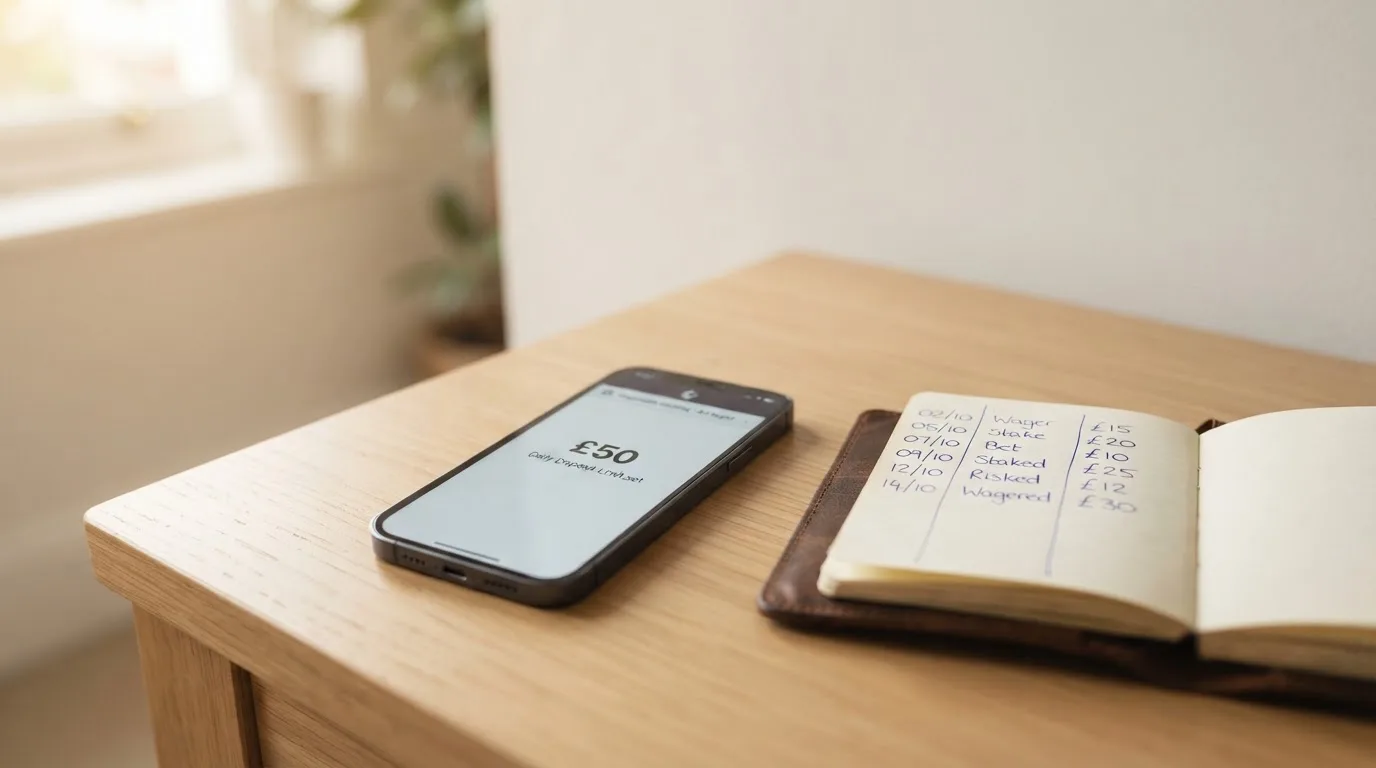
A “risk-free” or stake-back offer is the same shape in different clothes: a refund as a free bet is not a refund in money. The bettor who treats a stake-back as cash ends the promotion with a free bet whose stake he will not get back if it wins. Kwiff’s “Supercharge” feature is a different mechanism again: it boosts the odds on a single bet or a multi — the marketing example takes 2/1 (3.00) to 20/1 (21.00) — and the boost applies to the price, not to the stake. Octobet’s Best Odds Guaranteed is a settlement rule rather than a bonus: when the starting price on a UK or Irish horse race beats the price taken, the bet is paid at the SP, up to £150 per customer per race. Bet600’s matched Best Odds Guaranteed runs on the same logic for horse racing. None of these are tips and none of these are free money; each is a settlement or payout term the bettor reads before claiming.
What the bonus cap actually costs is the question the marketing line does not answer. Since 19 January 2026, a wagering requirement on a GB-licensed bonus is capped at 10x the bonus amount: a £10 bonus can require at most £100 of qualifying bets before withdrawal. A £10 bonus at 50x required £500 of bets before that date, and any operator still running a 50x bonus is running it illegally. Mixed-product promotions — a free-bet offer that requires play on casino or bingo to clear, for instance — are banned. The cap does not cover the value cap on a bonus; that figure is not established. What is established is that the bettor who claims a free bet at 7-day expiry, on a sport that runs on weekends, has already lost the value of any free bet he failed to place in time.
For a golf bettor the practical sequence runs like this. A major championship week begins on a Thursday; the welcome offer’s seven-day window opens from the qualifying bet’s settlement, not from registration; an each-way bet on an outright counts toward the £20 minimum at 2.0+ only if the win portion alone meets that threshold (each-way splits the stake, and the place half is settled at a fraction of the win price); the £40 of free bets expires seven days after issue; a £10 free bet on Saturday morning has until the following Saturday morning to be used. That sequence is the offer. The marketing line is the headline above the sequence.
Mobile and app betting on golf: what a handset adds and what it takes away
A betting app does the same job as the desktop site — same markets, same prices, same account — but the bettor on a course, on a train or in a shop sees one screen and one price. The Fitzdares app covers cash out, accumulators, Lucky 15s, specials and antepost markets on horse racing, football, tennis, rugby, cricket, golf and American football, with in-play live odds. Midnite’s site carries in-play events, an acca builder, popular accas and price boosts with maximum-stake limits. BetUK’s app excludes virtual sports, esports and non-UK/IE horse racing from its free-bet terms. Bet600’s app pays Best Odds Guaranteed on horse racing. Lottoland’s UK app combines casino, lottery betting, sports betting and scratchcards. London.bet’s app carries a 17+ age rating and is published by Thistle Bet Limited. BetWright’s app is licensed in the UK and gated to customers aged 18 or over. The point of the list is not the brands but the features: cash out is widely available; antepost is widely available; price boosts and acca builders are widely available; live streaming is not. None of the licensed brands reviewed below publishes live streaming of every PGA Tour event.
What the app adds is speed. The bettor on a course who wants a price on the next group out can get one in three taps. What the app takes away is the screen where the small print sat. A free bet’s expiry, a price boost’s maximum stake, a payment method’s exclusion from a welcome offer — all of these sit behind a tap the bettor does not always make. The reading habit has to come from the bettor, not from the interface. A push notification that announces “odds boosted” does not announce the maximum stake; the bettor who reads the terms before tapping has already done the work the notification did not.
A second trade-off is verification friction. The first deposit, on any GB-licensed app, requires the identity check. Photo of a passport, photo of a driving licence, a payslip or a bank statement. Five to ten minutes when it goes smoothly, longer when the algorithm decides it is not. A bettor who wants the bet on in the next ten minutes has a problem; a bettor who does the check before the major starts the week before does not. The check is the same on every GB-licensed app because the check is the licence condition, not a brand’s policy.
Live betting and cash out on golf: momentum, scorecards and the value of a settled bet
Live betting on golf means betting after the first tee shot has been hit. The bettor watches the scoreboard; the bookmaker updates the prices as the round unfolds. Three things make golf unusual as an in-play sport. First, the field is large — 156 players at The Open, 156 at the Masters, smaller fields of 70 or so at the PGA Championship and the US Open in some recent years. A bookmaker who prices every player in real time runs a much wider book than a Premier League in-play trader does. Second, golf’s scoring is bunched: a player four over through six can be one shot off the lead or ten shots off it; the gap matters, and the gap moves slowly. A football match scores every few minutes; a golf round scores every few holes. Third, golf has shot-by-shot data now — strokes gained, approach-shot quality, putting make percentage — and the bookmaker who uses it prices better than the bettor who watches the broadcast.
Cash out is the operator’s settlement tool. The bettor who backed a player at 50/1 before the first round can settle the bet at a reduced price after the third round, locking in a profit before the final round. The bookmaker sets the cash-out price, and the price carries the bookmaker’s margin. A bettor who cashes out at 5/1 (6.00) when the SP would have been 10/1 (11.00) has paid the operator for the certainty. The question the bettor asks is whether the certainty was worth it — and that depends on what he knows about the final round that the price does not. On a windy day at Royal Birkdale, four shots can disappear in an hour; on a benign day, three shots can disappear the other way. The bettor who reads conditions, pin positions and weather forecasts has information the cash-out price has not priced in; the bettor who has watched the broadcast and felt the momentum has not. The cash-out button is a tool. Tools can be used well.
Each-way in-play is its own mechanism. An each-way bet is two bets of equal stake: one on the win, one on the place. In-play the place terms are still the place terms the bookmaker set pre-tournament: typically a quarter of the win odds for the first six places, a fifth for seven, and so on. A bettor who backs a player each-way at 80/1 in-running, when the player is five off the lead with six to play, is betting on both the win and the place at the same time. The cash-out value of an each-way bet reflects both halves. The bettor who wants only the win half closes the place half, and vice versa — at the operator’s price.
Predictions, systems and what a tip is built from
A tip is built from form, statistics and course fit. Form is recent finishes: a player coming off three top-tens in his last four starts has form. Statistics are the strokes-gained family: off-the-tee, approach, around-the-green, putting. A player gaining strokes on approach at a course that demands iron play is a different proposition from a player gaining strokes off-the-tee at a course that demands driving. Course fit is the third leg: Augusta National rewards approach and short-game; Royal Birkdale in 2026 rewarded accuracy off the tee and patience in the wind; The Open Championship as a whole rewards the player who keeps the ball in play. Form without fit is noise; fit without form is unreliable; the tip is the intersection.
A “system” is the marketing word for a staking plan. A flat-stake system stakes the same amount on every bet. A proportional system stakes a fixed percentage of the current bankroll — say 2% — and that stake shrinks as the bankroll shrinks, grows as it grows. A Kelly system stakes a fraction of the edge over the price, and the fraction depends on the bettor’s confidence. None of these is a tipster system that “wins”. Each is a bankroll-management discipline: it changes the size of the bets and the shape of the bankroll curve, not the probability of any individual bet landing.
The value bet, in the strict sense, is a price whose implied probability is below the bettor’s estimate of the true probability. A player at 50/1 (51.00) implies a one-in-fifty-one chance; if the bettor’s model gives the player a one-in-thirty chance — 33/1 (34.00) implied — the price at 50/1 is a value bet. The edge is the difference between 33/1 and 50/1. Over hundreds of bets, the bettor who only backs value prices has a positive expected return; the bettor who backs whatever he fancies does not. The value-bet frame is a discipline of price selection, not a tip-picking trick. The bookmaker’s margin sits inside every price: see the next section for how that margin is calculated.
No tip is certain. The bookmaker’s margin is the first reason. The field’s depth is the second: in a 156-player major, the winner is one of 156, and a hot putter on Sunday can wipe out four shots of strokes-gained advantage. The weather is the third. The bettor who acts on a tip because it sounds confident is acting on the tipster’s voice. The bettor who acts on a tip because the price is value — the price implies less than the tip’s analysis says — is acting on the price. That is the frame.
Bet types, odds and how a price is built
A single is one bet, one selection, one price. A double is two selections, both must win, the prices multiply into one. A treble is three. An accumulator — an “acca” — is four or more. Each additional leg multiplies the price and the risk: a four-fold at average odds of 3/1 (4.00) carries 256/1 (257.00), and one losing leg wipes the stake. The marketing line on “£10 to £2,500” is the headline on a five-fold that pays when it lands. The marketing line on “win one leg, lose one leg” is what actually happens to most accas before settlement.
A Lucky 15 is fifteen bets on four selections: four singles, six doubles, four trebles and one four-fold. A Patent is seven: three singles, three doubles and one treble. A Yankee is eleven: six doubles, four trebles and one four-fold. A Heinz is fifty-seven. A Goliath is two hundred and forty-seven. The unit stake is multiplied by the number of bets: a 50p Lucky 15 is a £7.50 stake, a £1 Goliath is £247. A Lucky 15 wins something on one winner; a single returns the single stake at the price; a treble is settled as zero. The marketing line “one winner pays” is true in the sense that one leg returns something; it is misleading in the sense that the bettor has staked fifteen times the unit and lost fourteen of them.
An each-way bet is two bets of equal stake. On a golfer at 50/1 each-way at a quarter of the win odds for the first six places, the place half pays at 50/4 (13.50) if the player finishes in the top six. The stake doubles. An each-way treble on three short-priced favourites at 8/1 each-way each, with all three finishing in the top six, returns something on the place halves and the doubles. The shape of the each-way payout is the shape of the place terms — and the place terms vary by bookmaker and event.
Rule 4 is the deduction rule. When a runner withdraws from a race after the betting has started, the bookmaker applies a deduction to the winnings of every other runner, scaled to the withdrawn runner’s price. The table runs from 30p in the pound for a non-runner at even-money or shorter, down to 5p for one at 10/1 or longer. A Rule 4 deduction on a horse race is a settlement adjustment, not a fee the bettor chose. In golf, the equivalent applies to outright markets: a withdrawal after betting has begun can trigger a deduction on the winnings of remaining players, scaled to the withdrawn player’s price. The exact scale is set by each bookmaker’s own terms.
A ball coupon — in the British usage the term survives in — is a linked market on hole-by-hole or shot-by-shot performance: a player to birdie the next hole, the next group to finish first, the lowest scorer on a particular hole. The bookmaker packages several of these into a coupon, and the bettor picks one outcome per match. A “ball-by-ball” market is the live equivalent: prices update as the round unfolds. The margin on a ball coupon is wider than on an outright — the bookmaker has less data and the bettor has more, on every hole.
The margin itself is the calculation. Take an illustrative two-way market at decimal odds 1.90 and 1.90 — a head-to-head between two players at even money each. The implied probabilities are 1 ÷ 1.90 = 0.5263 for each. The sum of the implied probabilities is 0.5263 + 0.5263 = 1.0526, which is more than 1.00. The payout share is 1 ÷ 1.0526 = 0.9501, or about 95%. The margin is 1 − 0.9501 = 0.0499, or about 5%. That is the bookmaker’s edge on a balanced two-way market at 1.90 / 1.90. A market priced at 1.80 / 1.80 has a higher margin: 1 ÷ (0.5556 + 0.5556) = 0.9001, a 9.99% margin. The shorter the price on both sides, the wider the bookmaker’s edge; the longer the price, the tighter the edge. The bookmaker aims to balance the book — take an equal amount on each side — and pockers the margin whatever the outcome. The bettor’s job is to find prices whose implied probabilities are below his own estimate, after the margin has been stripped out.
For golf outrights — a 156-player major — the calculation is the same shape but the sum runs across many more outcomes. A book at average implied probability of 0.7% per player (1 ÷ 143, near 100/1) gives a sum of 0.007 × 156 = 1.092, a margin of 8.5%. The favourite at 8/1 (9.00) implies 11.1%; the 50/1 (51.00) shot implies 1.96%; the 200/1 (201.00) long shot implies 0.5%. The margin is the gap between the sum of all those implied probabilities and 1.00. On a major-championship outright the margin typically runs 7% to 12%, depending on the bookmaker and how early the prices are taken. That is the cost the bettor pays on every pound staked.
Sports, tournaments and the rhythm of a major year
The men’s major year runs April to July. The Masters is the first, played at Augusta National Golf Club in Georgia. The PGA Championship follows in May, the US Open in June, The Open Championship in July. The four are the highest-status events on the men’s calendar; Jack Nicklaus’s record of 18 major championships remains the men’s benchmark. The women’s major year runs differently — the AIG Women’s Open, the KPMG Women’s PGA Championship, the US Women’s Open, the Evian Championship, the Chevron Championship — but the same principle applies: a smaller field, a shorter season, and the same strokes-gained framework.
The Open Championship in 2026 was played from 16 to 19 July 2026 at Royal Birkdale, Southport. Ryan Fox of New Zealand won with 270 (-10), one stroke ahead of Cameron Young. The winner’s price before the tournament is the question the pre-tournament outright market answers, and the post-tournament SP on each round is the question the in-running market answered. The bettor who wants exposure to a major before it begins backs the outright; the bettor who wants exposure to a single round backs the three-ball or the round match-up; the bettor who wants exposure to a single hole backs the ball coupon.
Stroke play is the most common format at elite level: the player with the lowest total strokes wins. Match play pits one player against another, hole by hole; the player or side winning the most holes wins. The Ryder Cup is match play; the WGC-Dell Technologies Match Play is match play; the PGA Tour’s individual events are stroke play. A course typically totals par 70 to 72 over 18 holes, with par 3 holes under 250 yards for men, par 4 holes 251 to 450 yards, par 5 holes over 450 yards. The bettor who reads a course card knows what strokes the holes demand; the bettor who reads a player’s strokes-gained profile knows what strokes the player brings. The intersection is the tip.
Ranking the licensed set: what each of the ten does well and where each one costs
The comparison that follows covers ten operators listed on the Gambling Commission’s public register against a remote general betting standard (real events) licence. Every one of them serves customers in Great Britain, runs the GB identity check, takes part in GAMSTOP and pays the same standards on advertising, bonus terms and dispute resolution. None is recommended over another; each has a profile that suits a certain kind of bettor and a different profile that does not. The page reads the licences as the licences stand on the register, and reads the offers as each operator’s own terms state them. No promo code, voucher or working sign-up link is named on this page.
Fitzdares: a premium-priced book with a deep antepost menu
The Commission’s register lists Fitzdares Limited under account 400, with categories that include remote general betting standard (real events). The Fitzdares app carries cash out, accumulators, Lucky 15s, specials and antepost markets on horse racing, football, tennis, rugby, cricket, golf and American football, with in-play live odds. The antepost menu is the brand’s calling card: a bettor who wants a price on next year’s Open winner in November can usually find one. Live streaming is not a published feature on every event.
Fitzdares is the right fit for the antepost bettor who plans ahead and the Lucky 15 punter who plays each-way multiples. Casual in-play bettors looking for a quick price on the next group out at a major might find this brand less focused on their needs.
Coral: a high-street name with a matched free-bet welcome
LC International Limited holds account 54743 on the Commission’s register, with identical remote general betting licences to those held by Fitzdares. Coral sits on that licence. Coral’s sports welcome offer, as Coral’s own homepage states it, runs “Get £40 in Free Bets when you bet £20”: £20 stake at minimum odds of 2.0 (1/1), £40 in free bets issued within seven days and expiring seven days after issue, for new GB customers who opt in. Coral’s payment rails cover debit cards and several e-wallets; the offer’s qualifying deposit method excludes some e-wallets, and the bettor who uses an excluded rail will not qualify.
Coral is the right fit for the casual sports bettor who wants a high-street brand with a deep sportsbook and a matched free-bet welcome. Those looking for aggressive price-boosts on obscure niche markets may find the selection leans heavily toward high-profile headliners.
Bet600: Best Odds Guaranteed on horse racing, a tighter sportsbook elsewhere
Tyche Tech Limited holds account 44731 on the Commission’s register, under the standard remote general betting category. Bet600 pays Best Odds Guaranteed on horse racing: a bet taken at a price below the starting price is settled at the SP, so the bettor is paid the bigger number. The brand’s sportsbook is narrower than Coral’s or Unibet’s; the brand’s horse-racing product is its centre of gravity.
Bet600 is the right fit for the horse-racing punter who places antepost bets and wants the SP safety net. Golf specialists seeking deep outright markets months ahead of the event might find the focus elsewhere, as the brand prioritises its racing product.
Hollywoodbets: stake-back as a free bet, with a tighter odds floor
Hollywoodbets International UK Limited holds account 53028 on the Commission’s register, also under the standard remote general betting licence. The sports welcome offer, as the UK app store listing states it, runs a stake-back: deposit £10 or more by card, place a first qualifying losing accumulator (£10+, 3+ legs, minimum odds of 4/1, settled within seven days), stake returned as a free bet of up to £30, one free bet per customer. The minimum odds of 4/1 (5.00) and the three-leg floor make this a tighter offer than Coral’s £20-at-2.0 welcome: the qualifying bet has to clear a higher bar, and a losing treble at 4/1 is a rarer outcome than a losing single at evens.
Hollywoodbets is the right fit for the acca bettor who plays trebles and four-folds regularly and accepts a higher minimum odds floor on the qualifying bet. Singles punters seeking a simple matched welcome offer may be deterred by the three-leg accumulator requirement and the 4/1 odds floor.
Kwiff: a Supercharge that boosts the price, with maximum-stake terms
Eaton Gate Gaming Limited holds account 44448 on the Commission’s register, also under the standard remote general betting licence. Kwiff’s Supercharge feature boosts the odds on a bet — the brand’s example takes 2/1 (3.00) to 20/1 (21.00) — and the boost applies to singles and multi-bets on any sport. Maximum-stake limits apply; the bettor who assumes the boost carries no ceiling overstates what the boost does. The brand’s other features are a standard sportsbook and casino.
Kwiff is the right fit for the bettor who likes the lottery-ticket shape of a long-priced boosted bet and accepts the maximum-stake ceiling. Those planning structured, large-stake strategies might find their activity hampered by the limits on Supercharge payouts.
Unibet: a deep sportsbook with a matched free-bet welcome and named safer-gambling tools
Platinum Gaming Limited, Gibraltar, holds account 45322 on the Commission’s register, under the same standard remote general betting licence; Unibet’s UK site runs on that licence and the brand states it has operated since 1999. Unibet’s sports welcome offer runs the same shape as Coral’s: £20 stake at minimum odds of 2.0 (1/1), £40 in free bets, seven-day expiry, debit card or instant bank transfer to qualify. The safer-gambling tools on the UK site include deposit limits, a Player Profile test, product restrictions and self-exclusion, with live-chat support and links to BeGambleAware, GamCare, GAMSTOP, Gambling Therapy and the BGC.
Unibet is the right fit for the GB bettor who wants a deep sportsbook with a matched free-bet welcome and a published set of safer-gambling tools. Fans of horse-racing-centric books may find the emphasis here is more clearly on golf and football.
DAZN Bet: a deposit menu that includes five £5 rails and PayPal from £20
DZBT Limited holds account 48756 on the Commission’s register, under the same standard remote general betting licence. DAZN Bet’s deposit menu, as the help centre states it, starts at £5 on debit card, Apple Pay, Paysafecard, Trustly and Skrill, and at £20 on PayPal, with no processing fees. The five £5 rails are unusually wide for a UK-licensed brand; the bettor who wants a small first deposit has more options here than at most of the licensed set.
DAZN Bet is the right fit for the small-stake bettor who wants a £5 first deposit and a wide choice of payment rails. It is the wrong fit for the high-stake bettor, because the deposit minimums cap the size of the bonus claim a high-stake account would otherwise build.
BetUK: a sportsbook with named exclusions on free bets
LeoVegas Gaming PLC holds account 39198 on the Commission’s register, also under the standard remote general betting licence. The BetUK app’s free-bet terms, as the App Store listing states them, exclude virtual sports, esports and non-UK/IE horse racing, with minimum odds applying. The exclusions matter at settlement: a free bet placed on an excluded market does not return a win, regardless of the outcome. The bettor who reads the exclusions before claiming avoids the surprise at settlement.
BetUK is the right fit for the GB sports bettor who plays football, tennis and mainstream horse racing and reads the free-bet exclusions before claiming. Bettors focusing heavily on esports or virtual sports markets may find this operator’s free-bet restrictions limit their value.
10bet: Cash out, Bet Builder and Live Streaming on the headliners
Blue Star Planet Limited holds account 43173 on the Commission’s register, with categories that include remote general betting standard (real events). The 10bet app’s sportsbook covers football, tennis and horse racing as the headline sports, with Cash out, Bet Builder and Live Streaming as the headline features. Live Streaming is the differentiator: a bettor who wants to watch and bet on the same screen finds it here more often than at several of the licensed set.
10bet is the right fit for the football and tennis bettor who wants Cash out, Bet Builder and Live Streaming on the same platform. Golf outright specialists may find the football-focused sportsbook leaves their specific market needs less served.
Octobet: Best Odds Guaranteed on UK and Irish racing, with a per-race cap
Octopus Game Limited holds account 62545 on the Commission’s register, with categories that include remote general betting standard (real events). Octobet’s Best Odds Guaranteed, as the App Store listing states it, runs on UK and Irish horse racing, up to £150 per customer per race. The per-race cap matters at settlement: a winning BOG bet that would have paid £300 pays £150, and the bettor who plans a high-stake BOG position has to size the bet to the cap.
Octobet is the right fit for the UK and Irish horse-racing punter who wants Best Odds Guaranteed and accepts the £150 per-race cap. High-stakes racing bettors seeking unlimited BOG payouts may find the cap constrains their potential returns on a single win.
What the comparison is worth reading for
Three threads run through the ten brands above, and the bettor’s choice depends on which thread matters most. The first thread is welcome offer: Coral and Unibet run the matched £20-at-2.0-for-£40 free-bet shape; Hollywoodbets runs the stake-back-on-a-losing-treble shape; the other seven have other welcome structures. The second thread is feature: 10bet carries Live Streaming on the headliners; Fitzdares carries a deep antepost menu; Kwiff carries a Supercharge; the others sit closer to the median. The third thread is payment rail: DAZN Bet’s £5 rails are the widest small-stake on-ramp; Coral and Unibet’s debit-card-or-bank-transfer terms exclude several e-wallets from the welcome; the others sit in between. None of the ten is a bad choice, and none of the ten is “the best”: each has a profile that fits one bettor and a different profile that does not.
| Brand | Gambling Commission remote licence | What the operator’s own terms state on the key’s subject |
|---|---|---|
| Fitzdares | Account 400, Fitzdares Limited, remote general betting standard (real events) | App offers cash out, accumulators, Lucky 15s, specials and antepost markets on horse racing, football, tennis, rugby, cricket, golf and American football, with in-play live odds |
| Coral | Account 54743, LC International Limited, remote general betting standard (real events) and remote betting intermediary | Sports welcome offer: £20 stake at minimum odds of 2.0 (1/1), £40 in free bets within seven days, free bets expire seven days after issue, new GB customers, opt-in required |
| Bet600 | Account 44731, Tyche Tech Limited, remote general betting standard (real events) | Best Odds Guaranteed on horse racing: starting price paid when bigger than the price taken |
| Hollywoodbets | Account 53028, Hollywoodbets International UK Limited, remote general betting standard (real events) | Sports welcome offer: stake returned as a free bet of up to £30 on a first qualifying losing accumulator (stake £10+, 3+ legs, minimum odds of 4/1, settled within seven days), one free bet per customer |
| Kwiff | Account 44448, Eaton Gate Gaming Limited, remote general betting standard (real events) | Supercharge boosts the odds on a single bet or a multi, with maximum-stake limits |
| Unibet | Account 45322, Platinum Gaming Limited, remote general betting standard (real events) | Sports welcome offer: £20 stake at minimum odds of 2.0 (1/1), £40 in free bets expiring within seven days, debit card or instant bank transfer to qualify; safer-gambling tools include deposit limits, Player Profile test, product restrictions and self-exclusion |
| DAZN Bet | Account 48756, DZBT Limited, remote general betting standard (real events) | Deposits from £5 on debit card, Apple Pay, Paysafecard, Trustly and Skrill, and from £20 on PayPal, no processing fees |
| BetUK | Account 39198, LeoVegas Gaming PLC, remote general betting standard (real events) | Free bets exclude virtual sports, esports and non-UK/IE horse racing, with minimum odds applying |
| 10bet | Account 43173, Blue Star Planet Limited, remote general betting standard (real events) | Sportsbook covers football, tennis and horse racing, with Cash out, Bet Builder and Live Streaming |
| Octobet | Account 62545, Octopus Game Limited, remote general betting standard (real events) | Best Odds Guaranteed on UK and Irish horse racing, up to £150 per customer per race |
The table is a one-glance read. The text above is the longer read: the welcome terms, the feature differences and the payment-rail differences, all stated as the operators’ own terms state them. The two reads together answer the question the comparison was built to answer.
What a Great Britain licence actually gives the bettor
The Gambling Commission licenses the whole commercial market under the Gambling Act 2005, covering Great Britain (England, Scotland and Wales); Northern Ireland sits outside the Act and has its own older law, so a “GB licence” regulates GB, not Northern Ireland. Since the Gambling (Licensing and Advertising) Act 2014, an operator whose remote facilities are used in Great Britain needs a Commission licence wherever it is based — sections 33 and 36 of the 2005 Act, as amended. A Curaçao, Maltese or Gibraltar licence is not a substitute. The Commission’s public register can be searched by business name, trading name, domain or account number; it is the whole test of whether a brand holds a licence. The ten brands above are on that register; the table column “Gambling Commission remote licence” lists each one’s account number and licence holder.
What the licence gives the bettor runs in five parts. First, the identity check: name, address and date of birth are verified before the first deposit or wager (in force since 7 May 2019), including with a free bet or bonus — there is no anonymous play at a licensed site. Second, GAMSTOP self-exclusion: the bettor who has registered with GAMSTOP is blocked from every GB-licensed online operator, with periods of six months, one year, five years, or five years with auto-renewal. Third, the bonus cap: wagering requirements on bonuses are capped at 10x the bonus amount, in force since 19 January 2026, and mixed-product promotions are banned. Fourth, the financial vulnerability check: when a customer’s deposits minus withdrawals exceed £150 in a rolling 30 days (in force since 28 February 2025), a public-record check runs; full financial risk assessments have been announced, staged, with no start date as of the date of this page. Fifth, the dispute route: an approved alternative dispute resolution (ADR) body handles complaints the operator has not resolved in eight weeks; the Commission’s own complaints function handles licence-condition breaches.
The credit-card ban is part of the frame too: since 14 April 2020, credit cards cannot be used for gambling in Great Britain, including credit-card-funded payments through an e-wallet. Debit cards and bank-based payments are not covered by the ban. There is no state-set deposit or loss ceiling: limits are the customer’s choice. There is no state-set cap on stakes in sports betting: operators set their own maximums and may restrict individual customers.
What the licence does not give the bettor is anonymity. The identity check is mandatory, and a bettor who wants to bet pseudonymously has to leave the licensed set. The bettor who leaves the licensed set loses GAMSTOP, the bonus cap, the vulnerability check and the dispute route — and gains the absence of those protections. The framing this page uses is licensed = checks, limits, GAMSTOP, bonus cap, but verification before the first wager; unlicensed = none of those protections and possible loss of funds.
The player pays no tax on betting winnings in Great Britain (general information, not tax advice; a professional gambler should ask HMRC or an adviser). General Betting Duty is the operator’s tax on gross profits, currently 15%; from 1 April 2027 a new remote betting rate of 25% applies within it, while remote bets on UK horse racing, bets on self-self-service betting terminals in licensed premises, pool betting and in-person betting stay at 15%. Whether operators pass duty on through odds is not established, and the bettor is not charged duty.
Safer gambling, the GAMSTOP frame and where help is
The minimum age for gambling in Great Britain is 18; name, address and date of birth are verified before the first deposit or wager. A 17+ age rating on an App Store listing is the App Store’s gate, not the operator’s; the operator’s gate is the GB identity check at first deposit. BetWright’s App Store listing, for instance, names 18+; London.bet’s names 17+; both operators apply the GB check at registration.
GAMSTOP is the national multi-operator self-exclusion scheme and a mandatory licence condition for online operators since 31 March 2020. The bettor registers with GAMSTOP once; the registration blocks the bettor from every GB-licensed online operator for the chosen period — six months, one year, five years, or five years with auto-renewal. After the minimum period the exclusion stays in place for a further seven years unless the bettor asks GAMSTOP to remove it. GAMSTOP covers online sites and apps; betting shops use a separate service. A bettor who has registered with GAMSTOP cannot lift the exclusion to claim a welcome offer.
Deposit limits are the operator’s safer-gambling tool and a licence condition. Operators must offer a gross deposit limit on a fixed time frame; the first changes have applied since 31 October 2025, a second phase was postponed to 30 September 2026, and whether it is live is not established. A bettor who wants a deposit limit sets one in the account settings. A bettor who has not set a deposit limit has not capped the operator’s exposure.
Where help is, when the limit has been crossed: GamCare runs the National Gambling Helpline; GambleAware funds treatment and support; the NHS runs gambling clinics in several regions; Gamblers Anonymous runs peer-support meetings. The licensed brands above carry links to these services in their safer-gambling pages — Unibet’s UK site, for instance, links to BeGambleAware, GamCare, GAMSTOP, Gambling Therapy and the BGC. The links are there because the licence requires them. The links are useful only when the bettor clicks them.
The arithmetic of value, the cost of the margin and the cost of clearing an offer
The margin calculation in the section on bet types gave a worked example. The illustrative two-way market at 1.90 / 1.90 implies 0.5263 + 0.5263 = 1.0526, a payout share of about 95%, and a margin of about 5%. That is the band a balanced two-way golf match-up market runs at. The shorter the price on both sides, the wider the margin; the longer the price, the tighter the margin. A 1.80 / 1.80 line implies 0.5556 + 0.5556 = 1.1111, a payout share of 90.01% and a margin of about 10%. A 2.00 / 2.00 line implies 0.5000 + 0.5000 = 1.0000, a payout share of 100% and a margin of zero — which no bookmaker offers, because a zero-margin book is a giveaway. In practice, golf outright markets — a 156-player major — carry a margin of 7% to 12%, depending on the bookmaker and the timing.
The bonus calculation is the next layer. A £40 free bet at 2.0 (1/1) with a non-returned stake pays £40 × (2.0 − 1) = £40 in profit. A £40 free bet at 4.0 (3/1) with a non-returned stake pays £40 × (4.0 − 1) = £120 in profit. The expected value of the free bet depends on the margin of the market it is placed on: a free bet at 2.0 on a market with a 5% margin has an expected value of £40 × (2.0 − 1) ÷ 2.0 × 0.95 = £19.00; on a 10% margin it has an expected value of £18.00. The difference between a 5% margin and a 10% margin on a £40 free bet is £1.00 of expected value. That is the cost of placing the free bet on a market with a wider overround.
The turnover calculation is the cost of clearing a deposit bonus. A £10 bonus with a 10x wagering requirement — the cap that took effect on 19 January 2026 — requires £100 of qualifying bets. At a £5 unit stake, that is 20 bets. At £10, that is 10 bets. At £20, that is 5 bets. The expected cost of clearing a £10 bonus at 10x is the turnover (£100) times the margin of the market the bets are placed on. At a 5% margin, the expected cost is £5.00; at a 10% margin, £10.00. A bonus worth £10 with a £10 expected cost is a wash; a bonus worth £10 with a £5 expected cost is value. The breakeven market margin for a £10 bonus at 10x is exactly the £10 bonus divided by the £100 turnover, or 10%. Below 10% margin, the bonus is value; above 10% margin, the bonus costs more to clear than it pays.
The figure that follows from those numbers is the practical one. A matched £40 free bet at Coral or Unibet, placed on a 1.90 / 1.90 golf match-up market with a 5% margin, has an expected value of £40 × 0.50 × 0.95 = £19.00. A stake-back free bet at Hollywoodbets, returned on a losing treble at 4/1, has an expected value that depends on the probability of the treble landing and the margin of the next bet the free bet is placed on. A Supercharge at Kwiff that takes 2/1 to 20/1 on a single bet has an expected value of stake × (21.00 − 1) × payout share on that boosted market. None of these are tips and none of these are guarantees: each is an estimate of what the offer pays on average, across many placements, under the stated assumptions.
Frequently asked questions on golf betting tips
How do you bet on golf?
Pick a market — outright, each-way, three-ball, round match-up, ball coupon — pick a price, stake a unit. The outright market runs before the tournament on the winner; the each-way market runs on win and place; the three-ball market runs on which of three players scores lowest in a group; the round match-up runs the same shape across a single round; the ball coupon runs on hole-by-hole or shot-by-shot outcomes. The settlement rule varies by market; the odds sit inside the bookmaker’s margin. The bettor reads the form, the strokes-gained profile, the course fit and the conditions before staking.
What is Rule 4 in golf betting?
Rule 4 is a deduction rule that applies when a participant withdraws after betting has begun. The deduction is a percentage of winnings taken off the remaining selections, scaled to the withdrawn participant’s price. The exact table is set by each bookmaker’s own terms and runs from a higher percentage at shorter prices down to a lower percentage at longer ones. The bettor who has backed an outright field and lost a favourite to a withdrawal will see a Rule 4 deduction on the winnings of his remaining selection at settlement.
What are ball coupons in golf betting?
A ball coupon is a linked market on hole-by-hole or shot-by-shot performance: a player to birdie the next hole, the next group to finish first, the lowest scorer on a particular hole. The bookmaker packages several of these into a coupon, and the bettor picks one outcome per match. The margin on a ball coupon is wider than on an outright because the bookmaker has less data; the prices reflect that.
What is a value bet and why is no tip ever certain?
A value bet is a price whose implied probability is below the bettor’s estimate of the true probability. A player at 50/1 implies a one-in-fifty-one chance; if the bettor’s analysis gives the player a one-in-thirty chance, the price at 50/1 is value. The bookmaker’s margin sits inside every price; the bettor’s analysis has to clear that margin before the price is value. No tip is certain because the field’s depth, the weather and the variance between rounds all intervene. A value bet is a bettor’s edge, not a tipster’s promise.
What is the bookmaker’s margin and how can it be seen in the odds?
The margin is the bookmaker’s edge on a market: the gap between the sum of the implied probabilities and 1.00. A 1.90 / 1.90 market implies 0.5263 + 0.5263 = 1.0526, a payout share of about 95% and a margin of about 5%. A 1.80 / 1.80 line carries about 10%. A 2.00 / 2.00 line carries zero. The shorter the price on both sides, the wider the margin; the longer the price, the tighter the margin. The margin is the cost the bettor pays on every pound staked; the bettor’s job is to find prices whose implied probabilities sit below his own estimate, after the margin has been stripped out.
Tennis, darts & cue sports – Boxing betting
Content created by the «Boxing betting» team
