
Greyhound racing odds: how the prices are built, where to bet on them in 2026
 Available in US
The price a greyhound racing bookmaker quotes is not the price a dog is “worth” — it is a margin wrapped around one. The same fixture lists the favourite at 5/2, the second favourite at 3/1, and the dog the market treats as a tail at 50/1; all three numbers are inside one overround that quietly siphons roughly five to fifteen pence from every pound the field wagers. This page takes that pricing machinery apart. It explains the live in-play shape of a greyhound race, the way starting prices settle, the three or four bet types a serious punter uses most weeks, and the ten UK-licensed bookmakers the comparison is built around — each one reviewed for what their own terms say about greyhound markets, not for how loudly they market them.
Currency stamp: as of 27 October 2026, the licence and registration data has been checked against the Gambling Commission’s public register.
Live Greyhound Racing and Cash Out: How a Race Unfolds in Real Time
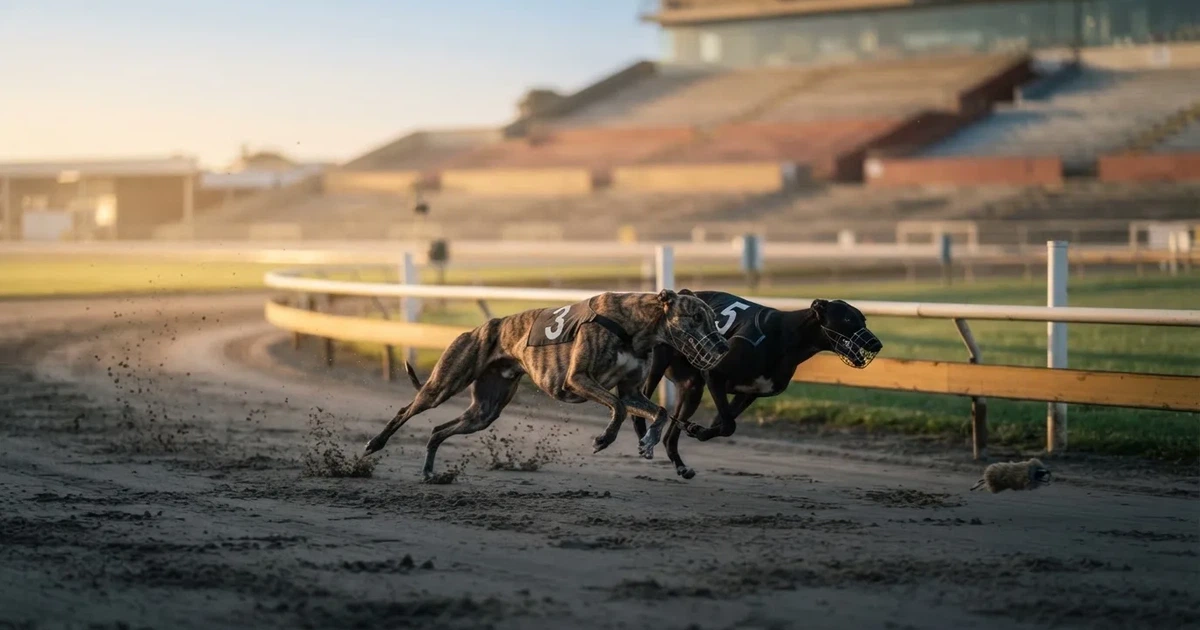
In greyhound racing, a mechanically operated artificial lure runs along a rail ahead of the dogs, and races often involve parimutuel or bookmaker betting. That sentence reads as background, but it sets up the whole live-betting story. The dogs run a circuit measured in seconds rather than minutes. The trap break, the first turn, the run to the pick-up — none of them waits for a punter to study form. A live market that opens ten seconds before the start and closes at trap rise is normal; a market that updates a dog’s price every stride because somebody has built the feed from a tracking system is rarer, and one bookmaker does it well while the rest play catch-up. The difference matters: a price that lags the picture is a price a sharper bettor can beat, and a price that leads it is the one that drives the rest of the field.

Three live mechanics recur. Some bookmakers open a race market at the off and lock the prices at trap rise — what stays open is the cash-out window on the bets already placed. Others stream a price ladder that ticks with each split, which lets a punter back a dog into the first bend or lay it off after the break if the trap looks wrong. A third variant posts fixed in-play lines at named intervals, with a margin baked into each one. The first rewards patience — a confident selection is the one that holds into the off — and the second rewards a fast judgement that the field’s reaction has mispriced one runner. Each bookmaker’s service is described from what its own terms state, and the difference shows up fastest in how often the price ladder updates, not in the size of the headline margin.
Cash out is the second live tool and it is structurally different from a back bet. A bookmaker offers to settle a bet before the race concludes at a price derived from the current live market; the bettor either locks a smaller profit or cuts a loss. The catch is that the cash-out price carries its own margin, layered on top of the live price, so a bettor who cashes out a winner at the bend is taking less than the live price would pay at the post. Some bookmakers let a bettor partially cash out — locking half the stake at the live number and leaving the other half to run — and that is the cleaner of the two tools because it keeps a stake on the outcome the bettor expected when the price was first taken. Bookmakers that only offer full cash out ask the bettor to choose between a certain smaller number and an uncertain bigger one, and that is rarely a kind trade when the race is a bend away from settling.
A live bet is settled the moment the official result is declared, and a bookmaker’s site is the source for what the official result is — the on-course judge, the photo-finish camera, the stewards’ inquiry if a dog interfered at the first bend. A live bet cannot be placed after the off; an in-play market is closed at trap rise, and the books that let bets land late into the run are the ones a punter should check the rule on before staking. Live greyhound betting is allowed at licensed UK bookmakers and is governed by each operator’s licence conditions and customer-protection duties, with no statutory list of markets and no blanket prohibition. The shape it takes — which markets exist, how the price ladder moves, whether cash out is partial — comes from each operator’s own product.
Greyhound Betting Tips, Predictions and the Strategy That Beats Hype
Tipping services and “systems” both deserve the same cold reading. A greyhound racing tip is a name, a price, and a reason that fits the form book — and the reason usually fits because the form book was read backwards. A system is a rule for staking — flat stakes, percentage staking, Martingale, Fibonacci — wrapped around whatever names the tipster is selling that day. Neither of them beats the margin in the long run, because the margin is the one constant in greyhound racing markets: every tip lands inside the same bookmaker spread, and a staking system does not change the spread, only the speed at which the punter meets it.

What does change the outcome is three things, and they are unglamorous. Reading trap draw on the form: a wide draw on a tight first bend is a different proposition from a wide draw on a long run to the turn, and form lines that do not adjust for that are selling the wrong picture. Reading race grade: a dog stepping up from A1 to A2 has not met the field it is now meeting, and the betting market often misses that. Reading trainer and kennel patterns: certain kennels peak at certain stages of the week, and a sales rep at a tipster service has not seen what the morning gallops show. None of these are secrets; all three are out of the bookmaker’s pricing, which is why no pricing chart names them either.
Bankroll is the only strategy a punter keeps. A bankroll is the amount set aside for greyhound betting, sized as the amount the punter can lose without changing how they live. A rule of one to two per cent of the bankroll per bet — £10 from a £500 bankroll, £20 from a £1,000 bankroll — keeps a bad run from finishing the job. The temptation in greyhound racing is to stretch stakes because the races are short and the field is six, not eighteen, and a “sure thing” looks closer than it does in a fourteen-runner handicap. That temptation is the margin’s friend, not the punter’s. The discipline is not to act on it.
Free betting systems are the third form the strategy trade takes, and they are the one to be most careful of. A free system is the entry point: a tipster offers a starter method, the punter subscribes for tips, the system is sold as a separate product, and the prices quoted in the marketing are the prices the system “would have” returned. The quoted prices are unverified. A punter who wants to take a system seriously asks for the recorded results, the recorded stakes, and the recorded returns, and treats any answer that does not give those three things as the marketing it is. Real form study, trap draw, race grade, kennel patterns — none of these are sold as a system, because they are not a system. They are the work.
What about accumulator insurance? It is sold as a cushion — if one leg of an acca loses, the stake is returned as a free bet. The math is straightforward: a six-fold at average odds of 3/1 a leg prices at a little over 729/1 if it lands, and the insurance pays back a smaller free bet on a loss. The cost of the insurance is folded into the price of the acca itself; the operator does not give the cushion and the price, because the price is the cushion. A punter who wants the cushion pays for it twice. The page returns to this point in the section on bonuses below.
Bet Types and Odds in Greyhound Racing
Greyhound racing uses the same bet vocabulary as horse racing, which is no surprise — the two sports share a starting-price system, a Rule 4 deduction for non-runners, and an each-way structure that pays a fraction of the win price for a place. The vocabulary travels. A single is one dog, one race. An each-way is two bets of equal stake — one to win, one to place — and the stake doubles. A double, treble and accumulator (or “acca”) string bets across multiple races. A Lucky 15, a Yankee, a Trixie — those are multiples, and the stake for a Lucky 15 is fifteen units because fifteen bets cover every combination of four selections in singles, doubles, trebles and a four-fold acca. A Goliath runs to 247 bets. These are not gimmicks; they are the standard kit, and the price a bookmaker quotes is built on the same margin whether the bet is a single or a Goliath.
Starting prices apply to greyhound racing as well as horse racing: they are the odds on an entry in the on-course fixed-odds market when the race begins. A bookmaker offering Best Odds Guaranteed (BOG) pays out at the higher of the price taken and the starting price, which matters on a dog backed early at a longer price that shortens into the off. BOG is a real concession; a bookmaker that does not offer it pays out at the price taken, and the punter’s view of the race at the time of the bet is the price they keep. Punters who back early and want BOG shop for the bookmakers that publish it; the rest of the market does not.
Ante-post greyhound betting is the futures market — bets struck before the final declarations, when the field is not yet known and Rule 4 deductions are not yet in play. The price is wider because the field is wider; the punter accepts that the dog may not run, and the rule on a non-runner is that the stake is returned. Some bookmakers offer non-runner no bet (NRNB) closer to the race, when the field is closer to set, and the price is shorter because the picture is. Punters who want a position early take ante-post; punters who want the picture pay for it best-odds-guaranteed or short into the off.
The greyhound bet calculator is the working tool. Stake × odds → currency → return (stake plus profit). A £10 single at 5/2 returns £35: £10 × (5 ÷ 2 + 1) = £10 × 3.50 = £35. The decimal conversion is 5/2 = 2.50, and the formula in decimal is the same shape: stake × decimal odds. The decimal form is the one a calculator reads; the fractional form is the one a betting slip reads in the UK. Both arrive at the same number, and the punter who wants to compare prices across bookmakers should do it in decimal — it is the only form where a smaller number is a worse price and a larger number a better one without doing mental arithmetic.
Spread betting is the third bet type on the list, and it is a different product. Spreadex is regulated by the FCA for spread betting and by the Gambling Commission for fixed-odds betting, and the operator states that spread betting losses can exceed the deposit. That is the heart of the warning: a spread bet is not a price taken against a result, it is a position sized against a number the bookmaker quotes, and the punter’s liability runs with the number rather than capping at the stake. A greyhound racing spread bet might quote a finishing time, a winning distance, or a “trap-to-trap” performance, and the punter buys or sells the number for a stake per unit. The upside is open-ended. The downside is, too. Spread betting is its own category for a reason.
Greyhound Fixtures, Stadia and Where the Sport Actually Runs
Greyhound racing in Great Britain is regulated by the Greyhound Board of Great Britain (GBGB), which has 18 licensed stadia. The eighteen stadia are the operational base of the sport — Belle Vue, Crayford, Doncaster, Hall Green, Henlow, Kinsley, Monmore, Newcastle, Nottingham, Perry Barr, Peterborough, Romford, Sheffield, Sittingbourne, Sunderland, Swindon, Towcester, Yarmouth — and the meeting schedule is the bookmaker’s pricing calendar. Punters who bet on greyhounds book their day around the evening cards: early doors at one stadium, the feature race at another, the late card at a third. The bookmakers’ coverage tracks that pattern, and a bookmaker with a thin evening coverage is the one whose in-play ladder closes before the late cards go off.
The major UK fixtures that draw ante-post money are the English Greyhound Derby at Towcester, the Scottish Greyhound Derby at Shawfield, the Irish Greyhound Derby at Shelbourne Park, and the category-one competitions that build a greyhound’s career. The English and Scottish Derbies are the two meetings where the GBGB’s licensed stadia carry the headline markets, and they are the events where bookmakers price up well in advance, where ante-post markets are deep, and where Rule 4 deductions on non-runners are the rule rather than the exception. Punters who want BOG on a Derby ante-post check the operator’s terms on a major fixture; the rest of the calendar carries less weight in the pricing.
Greyhound racing in New Zealand was ended by the Racing Industry (Closure of Greyhound Racing Industry) Amendment Act 2026, passed on 2 April 2026, with the phase-out set for 1 August 2026. Before the ban, Greyhound Racing New Zealand (GRNZ) organised seven affiliated clubs: Auckland, Waikato, Whanganui, Palmerston North, Canterbury, Otago and Southland. The shape of the sport outside Great Britain is changing — the New Zealand track network was a meaningful training ground for greyhounds that ran in Australia and the UK, and the closure of the seven affiliated clubs is a structural change to the supply of runners rather than a footnote in a calendar. Punters who follow the ante-post markets on Australian greyhound racing will feel that change first.
Winston Peters announced on 10 December 2024 that greyhound racing in New Zealand would be banned and phased out by 2026. That announcement sat in front of the Act by sixteen months, and the lead time was the industry working through the placement of the dogs that were already in training. The Australian greyhound racing industry continues to operate through state regulators — Greyhound Racing Victoria, Greyhound Racing NSW, Racing Queensland, and so on — and the international calendar the UK punter’s bookmaker prices up is the Australian night meeting on a Wednesday morning UK time, the Irish night meeting on a Friday evening UK time, and the UK evening meetings through the week. Each of those markets carries a margin; the depth of the price ladder and the shape of the cash-out window is what differentiates the bookmaker offering them.
The Top 10 UK-Licensed Bookmakers for Greyhound Racing Odds
The set and the order below are the ten UK-licensed bookmakers the comparison is built around. Each one is reviewed for what its own terms state about greyhound racing markets — odds, live in-play, cash out, each-way terms, ante-post depth, bet builders — and for what its licence register entry shows about the holder and the category. The brand order is the operator’s comparison, not a marketing order.
| Brand | Gambling Commission remote licence and holder | What the operator’s own terms state |
|---|---|---|
| Fitzdares | 000400-R-103839-030 (Fitzdares Limited) | Cash out, accumulators, Lucky 15s, specials, ante-post and in-play live odds across horse racing, football, tennis, rugby, cricket, golf and American football |
| Geoff Banks | 054095-R-330366-010 (GB Sports Advisors Limited) | Live in-play prices and ante-post prices on future events |
| Bar One Racing | 056516-R-332750-007 (Bar-One Racing Limited) | Irish independent bookmaker with shops across Ireland and horse racing sponsorships at Dundalk, Fairyhouse, Navan, The Curragh, Curraheen Park and Cork |
| Bet Ahoy | 100094-R-341742-003 (Bet Ahoy Ltd) | Welcome offer of a £5 sports bet and a £5 acca |
| Fitzwilliam Sports | 048760-R-335434-009 (SBKI Limited) | Dublin bookmaker with capped membership; instant deposits, fast withdrawals, timeouts and deposit limits; links to GambleAware, GamStop and Gamblers Anonymous |
| Paddy Power | 039439-R-319330-013 (PPB Counterparty Services Limited) | Football, horse racing, boxing, rugby, tennis, golf, darts, snooker and F1 coverage |
| Coral | 054743-R-330863-014 (LC International Limited) | Welcome offer of £40 in free bets after a £20 sports bet at minimum odds of 2.0 (1/1), issued within 7 days and expiring 7 days after issue |
| London Bet | 066162-R-340278-004 (Thistle Bet Limited) | Football, tennis, horse racing, greyhounds, darts, golf, cricket, NFL, NBA, MLB, snooker coverage, plus Pragmatic Play casino slots and live in-play betting |
| Betmaster | 065699-R-339929-002 (BM Solutions GB Ltd) | Football, cricket, horse racing, NFL and eSports (League of Legends, Dota 2) coverage |
| Swifty Sports | 058957-R-334734-006 (Swifty Global (UK) Ltd) | Best Odds Guaranteed, Cash Out on markets including horse racing and football, daily price boosts, live streaming and in-play betting; Bet Builder listed as coming soon |
Fitzdares — Premium Sportsbook with Ante-Post and Live Greyhound Coverage
Fitzdares offers cash out, accumulators, Lucky 15s, specials and ante-post markets on horse racing, football, tennis, rugby, cricket, golf and American football, with in-play live odds. Greyhound coverage sits under the ante-post and live structure alongside horse racing rather than as a separate category, which is the pattern to associate with a bookmaker that treats the sport as a serious racing product rather than a sidebar.
The Gambling Commission register lists Fitzdares Limited under account 400 with remote general betting standard (real events) as the licensed category. Fitzdares Limited is the entity, and the licence is the one the brand trades on. A punter who wants a bookmaker with the racing pedigree of a long-standing UK operator, ante-post depth on the major greyhound meetings, and a cash-out window that allows a partial position rather than only full settlement will find Fitzdares fits that reader. The catch is the price — premium positioning, one section of a comparison, is the positioning — and the punter pays for it through a margin that is firmer than the high-street names.
Geoff Banks — Independent App with Live In-Play and Ante-Post Coverage
Geoff Banks’ app is published by GB Sports advisors Ltd and offers live in-play prices and ante-post prices on future events. The product is built around two mechanics — the live ladder and the futures book — and that combination suits a punter who has a position to take on a major greyhound meeting and an opinion worth expressing in-running on the smaller ones. The GB Sports Advisors Limited licence under Commission account 54095 is the registration, and the remote general betting standard (real events) category covers the offering.
Geoff Banks is the reader who wants a smaller, opinionated bookmaker and is willing to trade the marketing weight of a major brand for an independent product. The price is sharper than the headline brands in some markets and softer in others, and that is the trade-off an independent book offers. The punter checks Geoff Banks’ site for the current ante-post depth on the English Greyhound Derby and the live ladder’s coverage of the late UK cards before staking.
Bar One Racing — Irish Independent Bookmaker with UK Remote Licence
Bar One Racing has rebranded as BAR 1 Betting, an Irish independent bookmaker with shops across Ireland and horse racing sponsorships at Dundalk, Fairyhouse, Navan, The Curragh, Curraheen Park and Cork. The shape is Irish-shop first, with a UK remote licence for online customers in Great Britain. Bar-One Racing Limited holds the remote general betting standard (real events) licence (Commission account 56516), which governs the service a punter in Great Britain meets when placing bets with Bar One online.
Bar One Racing is a reader who wants an Irish bookmaker’s product — ante-post on the Irish Greyhound Derby, evening coverage of Shelbourne Park and Curraheen Park, sponsorship-tied markets — with a UK remote licence. The catch is the GB-only licence: a customer in Northern Ireland is outside the GB-licensed frame, and the brand’s own terms on cross-border access are the source a punter checks. For a GB-resident punter the product fits the racing-shape reader; for a Northern Ireland customer it does not.
Bet Ahoy — New Brand and Staking-Operator Welcome
Bet Ahoy’s welcome offer is “Bet £10 & Get £10 in Free Bets”, made up of a £5 sports bet and a £5 acca. The split is small and tight: half the package is a single bet, half is an accumulator, and the punter is steered toward an acca by structure rather than by marketing. Bet Ahoy Ltd holds the remote general betting standard (real events) licence (Commission account 100094), marking the brand as a recent entry into the GB-licensed market.
The punter who takes the Bet Ahoy welcome is the punter who wants a small, structured starting offer and is comfortable with the acca bias the package builds in. The page describes what the package is worth in the bonuses section below; here the verdict is the position the brand occupies: a staking-tool reader rather than a racing-pedigree reader, and a punter who wants a racing product does not look to Bet Ahoy first. That is the honest frame.
Fitzwilliam Sports — Dublin Bookmaker with Capped Membership
Fitzwilliam Sports describes itself as a Dublin bookmaker with capped membership, and its welcome is a “High Stakes Welcome” subject to compliance criteria. The capped membership is the structural feature — the punter’s account is by invitation rather than open registration — and the high-stakes welcome frames the reader as a larger-stake punter than the rest of this set. The SBKI Limited licence under Commission account 48760 covers remote general betting standard (real events). Fitzwilliam Sports offers instant deposits, fast withdrawals, timeouts and deposit limits, and links to GambleAware, GamStop and Gamblers Anonymous.
Fitzwilliam is the reader with a bankroll that clears a compliance gate and a position to take on the Irish Greyhound Derby, the English Greyhound Derby, and the ante-post markets around both. The catch is the gate: a punter who does not pass the compliance criteria does not get a position, and the brand’s terms on what those criteria look like are the source the punter checks. For a punter who clears the gate, the product is a high-stakes, racing-pedigree bookmaker; for one who does not, the brand is not in the market.
Paddy Power — Major UK Brand with Broad Sports Coverage
The Paddy Power Sports Betting app is published by Paddy Power PLC and covers football, horse racing, boxing, rugby, tennis, golf, darts, snooker and F1. Greyhound coverage sits inside the racing structure alongside horse racing, and the brand’s product shape is the broad-sports bookmaker with a marketing machine behind it. PPB Counterparty Services Limited holds the remote general betting standard (real events) licence (Commission account 39439), as the company behind one of the major high-street names in the GB-licensed sector.
Paddy Power is the reader who wants a major brand, a marketing offer, and a price that is competitive across the major greyhound meetings rather than a sharp specialist book. The trade-off is the price — a major brand pays for marketing through a margin that is firmer on the smaller meetings and closer to the market on the major ones — and the punter checks the ante-post depth on the English and Scottish Greyhound Derby before assuming Paddy Power is the sharpest quote in the field. For a punter who wants the brand weight and the racing coverage, the product fits; for one who wants the sharpest quote, it does not.
Coral — Major UK Brand with a Free-Bet Welcome
Coral’s sports welcome offer is “Get £40 in Free Bets when you bet £20”: a deposit and sports bet of £20 or more at minimum odds of 2.0 (1/1), with £40 in free bets issued within 7 days and expiring 7 days after issue, for new GB customers who opt in. The package is a £40 free-bet return on a £20 qualifying bet, and the headline numbers look generous — £40 returned on £20 is a two-times headline. The trade-off is in the qualifying odds: a £20 bet at minimum odds of 2.0 (1/1) returns £40 if it wins (£20 stake + £20 profit), and the free bet adds another £40 if it lands, which puts the headline close to the qualifying-bet return. The arithmetic is in the bonuses section below.
The LC International Limited licence under Commission account 54743 covers remote general betting standard (real events) and remote betting intermediary — the latter is the exchange category — and the brand runs alongside Ladbrokes under the same licence holder. Coral is the reader who wants a major GB brand, a free-bet welcome, and a racing product that covers the headline greyhound meetings with Best Odds Guaranteed on the racing side. The catch is the welcome: a free bet whose stake is not paid back with a win, an expiry that costs the punter the free bet if the qualifying acca slips, and a minimum-odds condition that has to be checked before staking.
London Bet — UK-Licensed Bookmaker with Greyhound and Casino Coverage
London Bet’s app combines sports betting (football, tennis, horse racing, greyhounds, darts, golf, cricket, NFL, NBA, MLB, snooker) with Pragmatic Play casino slots and live in-play betting. Greyhound coverage is named in the app’s description, which puts London Bet in the smaller set of GB-licensed bookmakers that list the sport by name rather than folding it into a generic “racing” category. The Thistle Bet Limited licence under Commission account 66162 covers remote general betting standard (real events), and the brand is one to check for live in-play depth on the UK evening cards.
London Bet is the reader who wants a GB-licensed bookmaker that names greyhounds in its product description, a live in-play window on the racing side, and a casino product on the same account. The trade-off is the brand size: a smaller GB-licensed bookmaker offers a different price shape from the major brands, and the punter checks the ante-post depth on the English Greyhound Derby before assuming London Bet is a competitive quote. For a punter who wants the greyhound-naming product and the live in-play, the brand fits; for one who wants the racing pedigree of the major brands, it does not.
Betmaster — UK-Licensed Bookmaker with eSports and Racing Coverage
The Betmaster app is published by Bm Solutions Gb Limited and covers football, cricket, horse racing, NFL and eSports (League of Legends, Dota 2) betting. Greyhound coverage sits inside the racing structure alongside horse racing, and the brand’s product shape is a sports-and-esports bookmaker rather than a greyhound-pedigree operator. The BM Solutions GB Ltd licence under Commission account 65699 covers remote general betting standard (real events), and the brand is one of the smaller GB-licensed names that the punter checks for the racing product.
Betmaster is the reader who wants a bookmaker that combines a sportsbook with an esports product and offers a racing price alongside, rather than a greyhound-pedigree bookmaker. The trade-off is the greyhound product: a bookmaker whose headline is esports and football does not necessarily carry the ante-post depth on the English Greyhound Derby that a racing-pedigree book carries, and the punter checks the depth before staking. For a punter who values the mixed sports-and-esports offering, the brand is a sound match; for a punter seeking a greyhound-only specialist, it falls short of the mark.
Swifty Sports — UK-Licensed Bookmaker with Best Odds Guaranteed and Cash Out
Swifty Sports offers Best Odds Guaranteed, Cash Out on markets including horse racing and football, daily price boosts, live streaming and in-play betting; Bet Builder is listed as coming soon. The product shape is the racing-friendly bookmaker: BOG, cash out, daily price boosts, live streaming, in-play — the toolkit a punter uses on a Saturday card. The Swifty Global (UK) Ltd licence under Commission account 58957 covers remote general betting standard (real events), and the brand is one to watch for the BOG-on-greyhounds check before staking.
Swifty Sports is the reader who wants a GB-licensed bookmaker with the racing toolkit — BOG, cash out, price boosts, live streaming — and is willing to wait on the bet builder the brand has listed as coming soon. The catch is the live-streaming coverage: a bookmaker that streams racing but does not yet have a greyhound-specific feed is the one the punter checks the live coverage on before relying on the in-play price ladder. For a punter who wants the BOG and the cash out, the product fits; for one who wants a greyhound-specific live feed, the brand has not yet shipped it.
Greyhound Betting in Great Britain: The Regulatory Frame
A bookmaker serving customers in Great Britain needs a Gambling Commission licence wherever it is based, and the Commission’s public register is the whole test of who holds one. There is no statutory list of permitted sports or markets: a bookmaker holds a licence for a category and offers markets under its own rules and the Licence Conditions and Codes of Practice (LCCP). The minimum age is 18; name, address and date of birth are verified before a customer can deposit or gamble (since 7 May 2019), including with a free bet or bonus.
The Commission licensees in this comparison hold a remote general betting standard (real events) licence, and one of them — Coral’s LC International Limited — also holds a remote betting intermediary licence, the exchange category. Each licence is searchable on the Commission’s public register by business name, trading name, domain or account number; the register is the test of whether a brand holds a licence, and the licence types — remote general betting standard (real events), remote general betting standard (virtual events), remote general betting limited, remote pool betting and remote betting intermediary — are the categories under which the offering sits.
Several brands can run under one licensee. LC International Limited runs both Ladbrokes and Coral. PPB Counterparty Services Limited runs Paddy Power and Betfair. A licence is a holder, not a brand, and the page treats each brand as the operator’s own product rather than as an independent operator on the strength of a shared licence holder.
No brand is “the only” licensed one. A licence register lists far more brands than any article features, and a place in a comparison is not a licence. The ten bookmakers reviewed here are ten brands the operator’s comparison is built around; the GB-licensed frame runs to many more, and the Commission’s public register is the source a punter checks for the full list.
Responsible Gambling in Greyhound Racing: The Protections a Punter Should Know
The protections are real, and they sit in front of the punter’s stake rather than behind it. GAMSTOP is the national multi-operator online self-exclusion scheme and a mandatory licence condition for online operators since 31 March 2020; periods are six months, one year, five years, or five years with auto-renewal, and after the minimum period the exclusion stays in place for a further seven years unless the customer asks GAMSTOP to remove it. It covers online sites and apps; betting shops use a separate service. A financial vulnerability check (LCCP condition 3.4.4, in force since 30 August 2024) applies to licensed remote betting when a customer’s deposits minus withdrawals exceed £150 in a rolling 30 days (since 28 February 2025): it is a public-record check (for example bankruptcy or county court judgments), not an income check and not a credit reference check. Financial risk assessments (the “affordability checks” of the press) are announced in a staged plan (Commission article of 7 July 2026), with no start date — write “announced, staged, no start date”, never “in force”. Deposit limits (RTS 12): operators must offer a gross deposit limit on a fixed time frame; the first changes have applied since 31 October 2025, a second phase was postponed to 30 September 2026, and whether it is live is not established. There is no state-set deposit or loss ceiling for betting: limits are the customer’s choice.
The help is free, and it is the route to it that matters. GamCare runs the National Gambling Helpline. GambleAware funds treatment and education. NHS gambling clinics offer specialist support. Gamblers Anonymous runs peer-led meetings. Fitzwilliam Sports’ site links to GambleAware, GamStop and Gamblers Anonymous, and the pattern is the standard set across GB-licensed operators — the punter’s own bookmaker is the first stop, and the national services are the backstop.
Identity verification before the first deposit means no anonymous play at a licensed site. Source-of-funds questions at higher spend are normal under the money-laundering rules, and a bettor who crosses the £150-deposits-minus-withdrawals threshold inside a rolling 30 days meets the financial vulnerability check on top of the verification step. The frame is intrusive, and it is the price of a regulated market — the punter trades anonymity for the protections listed above, and the trade is the deal.
Bonuses and Free Bets on Greyhound Racing: What the Marketing Words Hide
The marketing words on a greyhound racing bonus are: “free”, “boosted”, “risk-free”, “best odds”, “guaranteed”. Each one is a wrapper around a number, and the number is what the bonus costs the punter. Coral’s sports welcome offer is “Get £40 in Free Bets when you bet £20”: a deposit and sports bet of £20 or more at minimum odds of 2.0 (1/1), with £40 in free bets issued within 7 days and expiring 7 days after issue, for new GB customers who opt in. Bet Ahoy’s welcome offer is “Bet £10 & Get £10 in Free Bets”, made up of a £5 sports bet and a £5 acca.
The Coral welcome is the larger of the two and the one worth reading closely. A £20 qualifying bet at minimum odds of 2.0 (1/1) returns £40 if it wins (£20 stake + £20 profit). The free bet adds £40 if it lands, for a headline £80. The catch: the free bet is a free bet, and the stake is not paid back with a win. A £40 free bet at odds of 2.0 returns £40 if it wins (£0 stake returned + £40 profit), not £80. The headline figure of £80 assumes the free bet lands at the same odds as the qualifying bet, and the punter’s actual return is closer to the qualifying-bet return than the headline suggests. The 7-day window on issue and the 7-day window on expiry are the second catch: a punter who does not use the free bet inside the window loses it, and the £20 qualifying bet is the entry fee to that window.
The Bet Ahoy welcome is smaller and structured. A £5 sports bet and a £5 acca — the punter places two bets, and the package pays out on each. The acca bias is the structural feature: half the package is a single, half is an accumulator, and the punter is steered toward the higher-margin product by structure rather than by marketing. The package is for a punter who wants a small, structured starting offer rather than a major-brand welcome.
Promotion rules in force since 19 January 2026 cap wagering requirements on bonuses at 10x (a £10 bonus at 50x needs £500 of bets; under the cap no more than £100). Mixed-product promotions — an offer that requires gambling on two or more product types such as betting, casino, bingo and lottery — are banned. Whether the cap applies to free bets with no wagering condition, and any cap on the money value of a bonus, are not established; the punter checks each operator’s terms.
A price boost is the second product the marketing reaches for. Swifty Sports offers daily price boosts on selected markets, and the offer is straightforward: the bookmaker improves a price, the punter takes the improved price, the punter’s margin is the difference between the boosted price and the unboosted market. The product is genuine — a price boost is a real concession on a specific market — and the trade-off is that the boosted price is on the markets the bookmaker wants to write, not the markets the punter wants to back. The punter takes the boost when the boosted price matches a market the punter was already pricing; otherwise the boost is the marketing.
Best Odds Guaranteed is the third product and the most honest of the three. BOG pays out at the higher of the price taken and the starting price, and the cost is built into the bookmaker’s margin across the racing book rather than into a single concession. A punter who backs early and wants BOG shops for the bookmakers that publish it; the rest of the market pays out at the price taken. Swifty Sports’ product description names BOG, and the punter checks the operator’s site for the BOG terms — race types, minimum odds, exclusions — before assuming the offer covers a specific meeting.
Acca insurance is the fourth product. A bookmaker offers to refund the stake as a free bet if one leg of an accumulator loses. The cost is folded into the price of the acca itself, and the operator does not give the cushion and the price — the price is the cushion. A punter who wants the cushion pays for it twice. The page returns to this point in the section on accumulator strategy above.
The minimum-price rule is the silent cost. A free bet whose qualifying odds are 2.0 (1/1) is a different product from a free bet whose qualifying odds are 5.0 (4/1); the qualifying bet at 2.0 has to win to unlock the free bet, and the punter is taking a roughly 50% chance of qualifying for a free bet that returns a smaller number than the qualifying bet did. The punter checks the qualifying terms before treating the bonus as value.
Greyhound Betting Apps: The Mobile Frame in 2026
Greyhound betting apps sit on two platforms — iOS via the App Store, Android via the Google Play store — and the GB-licensed brands in this comparison publish on both. The Paddy Power Sports Betting app is published by Paddy Power PLC; the Fitzdares app is published by Fitzdares Limited; the Geoff Banks app is published by GB Sports Advisors Ltd; the London Bet app is published by Thistle Bet Limited; the Betmaster app is published by Bm Solutions Gb Limited; the Swifty Sports app is published by Swifty Global (UK) Ltd; the Bar One Racing app is published by Bar-One Racing Limited. Each one is the publisher’s product, not a third-party white-label, and each one is bound by the GB-licensed frame the Commission’s register governs.
The greyhound bet app for Android is the product a punter checks for: a clean racing tab, a live in-play window, a cash-out window, a price-ladder on the late UK cards. Swifty Sports’ product description names BOG, Cash Out, daily price boosts, live streaming and in-play betting, with Bet Builder listed as coming soon — the racing toolkit a punter uses on a Saturday card, with the build-out the brand is shipping. Fitzdares’ app offers cash out, accumulators, Lucky 15s, specials and ante-post markets on horse racing, football, tennis, rugby, cricket, golf and American football, with in-play live odds — the racing-pedigree product, with ante-post depth on the major meetings.
The mobile browser is the second route, and a punter who prefers a browser over an app is met by each brand’s responsive site. The browser route trades the app’s push-for notifications and one-tap stake entry for a faster update path — the browser product is the one the operator updates first, the app the second — and a punter who wants the sharpest price ladder on a live race chooses the browser over the app. The trade is the punt’s to make.
Live streaming is the third mobile feature. Swifty Sports’ product description names live streaming on the racing side, and the live feed is the input to the in-play price ladder — the bookmaker that streams the race is the one whose price ladder reflects the picture, and the one that does not stream is the one whose price ladder lags. A punter who wants the in-play edge checks the live-stream coverage on the brand’s site before staking.
The download route is a GB-licensed frame inside a wider consumer frame. Apps from GB-licensed brands sit on the App Store and Google Play under their publisher’s name, not under a third-party label, and the GB-licensed publication pipeline is the publisher’s own. A punter who wants to download a greyhound bet app for Android searches the publisher’s name on Google Play rather than a brand search term; the publisher label is the one the regulator verifies.
What the Bookmaker’s Margin Actually Looks Like on a Two-Way Greyhound Market
The bookmaker’s margin is the difference between what the field wagers and what the field is paid back, and it is the one number every price on the page wraps around. Take an illustrative two-way greyhound market at decimal odds of 1.90 / 1.90 (fractional 9/10). The “true” odds — the price the field would get if there were no margin — would be even money on each side, decimal 2.00. The bookmaker offers 1.90 on each side instead. The payout share is 1 ÷ (1 ÷ 1.90 + 1 ÷ 1.90) = 1 ÷ (0.5263 + 0.5263) = 1 ÷ 1.0526 = 0.95. The margin is 1 − 0.95 = 0.05, or 5%. The bookmaker keeps 5p of every pound the field wagers on this market.
A 5% margin is a band rather than a single figure, and the band moves with the market shape. A six-runner greyhound race with one favourite and five longshots will price at a wider margin than an evenly-matched two-way market, because the longshot prices carry more overround to protect the bookmaker against a popular outsider. A 1.90 / 1.90 two-way market is a low end of the band; a six-runner race with the favourite at 2.50 and the field at 6.00 / 8.00 / 12.00 / 15.00 / 25.00 prices at a margin closer to 12–15%. The shape of the field is what moves the margin, and the price a punter sees is the bookmaker’s response to that shape.
The margin sits inside every price on the page — a single, an each-way, an accumulator, a Lucky 15 — and it is the one constant the punter cannot negotiate away. The punter’s edge is in finding the bookmaker whose margin is the smallest on the specific market the punter is taking. A bookmaker at 5% on a two-way market and 12% on a six-runner race is a bookmaker whose product fits the two-way markets more than the multi-runner ones, and the punter picks the bookmaker for the market the punter is on.
The snapshot date matters. The 1.90 / 1.90 price is illustrative, not a quoted price; the page does not print a specific price or margin as a current read, because prices age and a price printed as a snapshot is a price the punter cannot rely on at the time of the bet. The punter checks the live price ladder at the time of the bet for the next customer. The margin is the structure; the live price is the variable.
Offshore Greyhound Betting Sites: The Cost of an Unlicensed Frame
A GB licence is compulsory at the point of consumption. Providing gambling facilities in Great Britain without the licence the Gambling Act requires is an offence under section 33 of the Gambling Act 2005 — on summary conviction up to 51 weeks’ imprisonment, a fine up to level 5, or both; six months in Scotland — and is aimed at the operator. No offence aimed at a customer who merely bets on an unlicensed site was found: state the loss of protection — no GAMSTOP coverage, no Commission complaints route, no approved dispute-resolution body, no British consumer redress if funds are withheld, not bound by the 10x bonus cap or the £150 vulnerability check — and never “legal to use”.
The honest framing is two-sided. Licensed = identity checks before the first bet, deposit limits, GAMSTOP coverage, the 10x bonus cap, the £150 vulnerability check, the Commission’s complaints route, British consumer redress. Unlicensed = none of those protections and possible loss of funds. Neither is “the safe choice” by default — the licensed frame is intrusive and the unlicensed frame is unprotected, and the punter’s choice is between the two real shapes rather than between “safe” and “unsafe” in the abstract.
Enforcement is disruption, not blocking. The Commission uses cease-and-desist notices, search-engine referrals, work with registrars, hosts and payment providers; the Commission has been given, or is about to receive, court-order DNS blocking powers — never write that ISP blocking is in operation. The punter’s check on an unlicensed site is the Commission’s public register: a brand not on the register is not licensed, and a brand that is on the register carries the protections the frame offers.
Frequently Asked Questions on Greyhound Racing Betting Odds
How do I bet on greyhound racing?
A greyhound racing bet is placed with a GB-licensed bookmaker on one of three bet types: a single on one dog in one race, an each-way on one dog to win or place (a stake that doubles), or a combination bet across several races — a double, treble, accumulator, or a multiple like a Lucky 15. The punter picks a meeting on the bookmaker’s racing tab, picks a race, picks a dog, picks the bet type, and enters the stake. The price shown is the price taken; with Best Odds Guaranteed the punter is paid at the higher of the price taken and the starting price if the dog wins.
How do I bet on greyhound dogs?
A greyhound dog bet is the same product as a horse racing bet — the bet types, the each-way structure, the starting-price system, the Rule 4 deduction for non-runners all carry across. The difference is the meeting calendar: greyhound meetings are shorter — six runners over a few hundred metres, races every ten or fifteen minutes through the evening card — and the bookmaker’s pricing window is shorter for the same reason. The punter picks a meeting on the racing calendar, picks a race, picks a dog, and stakes. Best Odds Guaranteed covers greyhound racing as well as horse racing at the bookmakers that publish it.
How can I win at greyhound betting?
The bookmaker’s margin sits inside every price, and the only way to win in the long run is to find the bookmaker with the smallest margin on the specific market the punter is taking, and to stake a percentage of the bankroll the punter can lose. A 5% margin on a two-way market means the punter needs to beat the market by more than 5% to come out ahead. Reading trap draw, race grade and kennel patterns is the work — none of which is sold as a system because none of it is a system. A staking rule of 1–2% of the bankroll per bet keeps a bad run from finishing the job. No system beats the margin; only sharper prices and disciplined staking do.
How can I check that a bookmaker holds a Gambling Commission licence?
The Gambling Commission’s public register can be searched by business name, trading name, domain or account number. The register is the whole test of whether a brand holds a licence, and the licence types — remote general betting standard (real events), remote general betting standard (virtual events), remote general betting limited, remote pool betting and remote betting intermediary — are the categories under which the offering sits. A brand not on the register is not licensed; a brand on the register carries the protections the frame offers. The punter searches the brand’s name and checks the licence category matches the product the punter is taking — a remote general betting standard (real events) licence covers real-event betting, not virtual events.
How is the return on a bet worked out from the stake and the odds?
Return = stake × decimal odds. Profit = stake × (decimal odds − 1). A £10 single at decimal odds of 5.00 returns £50 (£10 × 5.00) and yields £40 profit (£10 × 4.00). A £10 each-way is two £10 bets — one to win, one to place — and the stake doubles to £20. A combination bet multiplies the odds of the legs into one price; a £10 double at odds of 3.00 and 4.00 returns £10 × (3.00 × 4.00) = £10 × 12.00 = £120 if both legs win. Fractional odds convert to decimal by dividing the numerator by the denominator and adding one: 5/2 → 5 ÷ 2 + 1 = 2.50 + 1 = 3.50.
What is the bookmaker’s margin and how can I see it in the odds?
The margin is the difference between what the field wagers and what the field is paid back. For a market with N outcomes at decimal odds O₁, O₂, …, Oₙ, the payout share is 1 ÷ (1 ÷ O₁ + 1 ÷ O₂ + … + 1 ÷ Oₙ), and the margin is 1 − payout share. A two-way market at 1.90 / 1.90 has a payout share of 95% and a margin of 5%. A six-runner race with prices 2.50 / 6.00 / 8.00 / 12.00 / 15.00 / 25.00 prices at a margin closer to 12–15%. The margin is the one constant the punter cannot negotiate away; the punter’s edge is in finding the bookmaker whose margin is the smallest on the specific market the punter is taking.
Horse racing & greyhounds – Boxing betting
Content created by the «Boxing betting» team
