
High limit betting sites — what a maximum stake actually costs
 Available in US
As of 27 October 2026, every operator featured below was checked against the Gambling Commission’s public register.
A bookmaker’s maximum stake is the biggest single wager it will accept on a given market. It is not a fixed number on the wall: it changes by sport, by event, by market type and by customer. A Premier League match winner may take a five-figure sum from one punter and a four-figure sum from another; the same operator on the same day may cap the correct-score market at a tenth of that. The headline figure on a comparison site is one operator’s cap on one particular selection — useful as a starting point, almost useless as a comparison across brands, sports and market types.
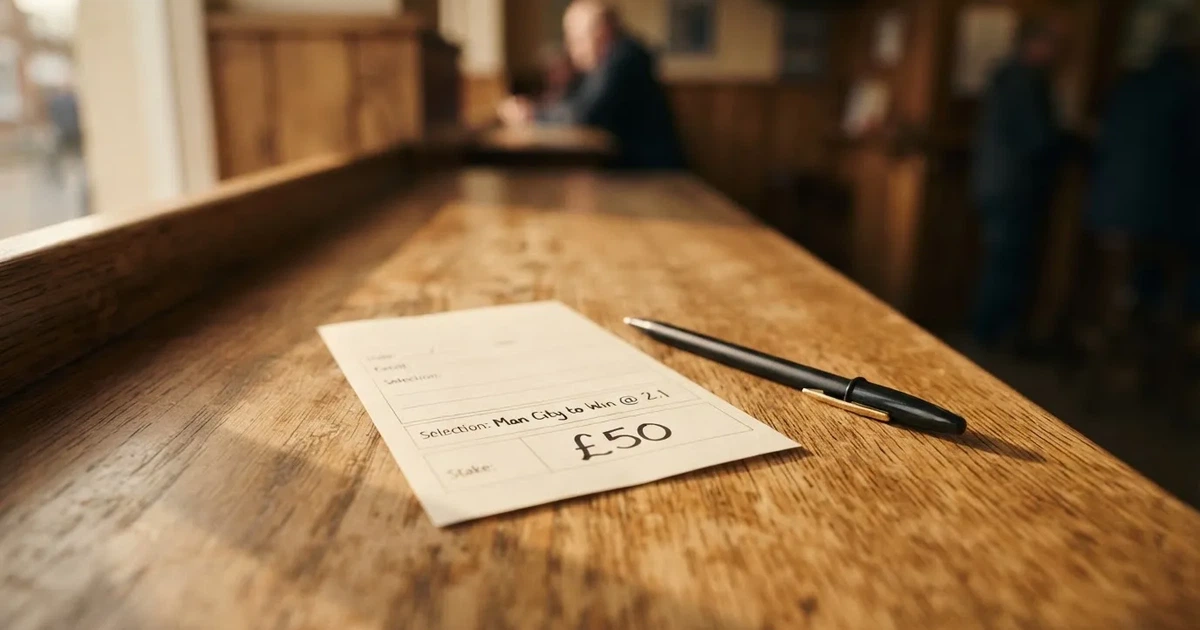
This page is about what the high end of the staking scale actually looks like in Great Britain in 2026. It covers where the limit sits, how it is set, why some customers see lower numbers than others, which licensed brands take the largest stakes as a matter of course, and what the arithmetic behind every price — the bookmaker’s margin — does to the value a winning bet returns. The angle is cost: every limit, every margin, every bonus term is read for what it costs the person paying it.
What a maximum stake is, and where it sits in a bet
A stake limit is the most a bookmaker will lay on a single wager. The exposure limit is the most it will risk in total across all selections at one price — a closely related ceiling that matters on accumulators, where the liability multiplies. A minimum stake is the smallest amount the bookmaker will accept on a single wager, usually 10p to £1 online, and a separate ceiling from the maximum.

Stakes are not the same as deposit limits. A deposit limit caps what a customer can put into an account over a fixed time frame; a stake limit caps what one wager can be. A £1,000 deposit on Monday does not let the punter place a £1,000 single on Saturday; the operator sets its own maximum for that market. That distinction matters because search results for “no deposit limit betting” surface a different question from “no maximum stake” — and the answer to one is not the answer to the other.
Maximum stakes also vary by bet type. A £500 maximum on a match-winner single is common; the same operator on a same-game multi covering goalscorer, total goals and corners can drop the cap sharply because the model likes those markets less. Accumulators attract higher exposure ceilings because each leg is correlated with others in the slip, but the per-leg maximum still binds. The punter who needs to place serious money finds the cap by trying to put it on — and the operator either accepts, rejects, or partially accepts the wager as it sits.
The bookmaker’s margin and what it does to the price
Every price carries the bookmaker’s overround — its built-in profit margin. The market is a market with a back and a lay, or a 1X2 with home, draw and away, or an over/under line at a number: the prices on all outcomes add up to more than 100% when expressed as implied probabilities, and the gap between that total and 100% is the margin. A two-way market priced at decimal odds 1.90 / 1.90 implies 52.63% on each side, totals 105.26%, and the 5.26% gap is what the bookmaker keeps of every unit staked before any other cost enters.

The arithmetic is straightforward. The implied probability of a decimal price is 1 ÷ odds, so 1.90 implies 52.63% (1 ÷ 1.90 = 0.5263), and 0.5263 + 0.5263 = 1.0526 — a 105.26% book and a 5.26% margin. A perfectly fair two-way market at 2.00 / 2.00 would imply exactly 50% on each side and total exactly 100%. The tighter the spread between the two prices — 1.95 / 1.95 versus 1.90 / 1.90 — the smaller the margin and the better the long-term return for the punter.
This number sits inside every price on the page. It is the single largest cost a bettor pays and the one least visible in the marketing. A headline boost from 3/1 (4.00) to 4/1 (5.00) sounds generous until the boosted price is compared to the margin of the underlying market — the boost may still leave the bookmaker with a 6% to 8% margin on the boosted outcome, which is richer than the rest of the card and a worse price than a non-boosted competitor on the same selection.
The page presents this as a band: for the example above, a two-way market at decimal 1.90 / 1.90 implies a margin in the 5–6% range, depending on rounding; a three-way 1X2 typically runs higher, and a same-game multi or a niche prop market often runs higher still. The exact figure changes with every selection and every event.
Where the limit comes from: the operator’s side
Bookmakers set maximum stakes for two reasons. The first is risk management: a single wager at long odds can dwarf the operator’s expected profit on the market if it wins, and the bigger the stake the bigger that tail. The second is customer management: a high-staking customer who wins consistently is expensive in the long run, and the operator’s response — over time — is to cap the stake, change the price the customer sees, or restrict the markets that customer can bet on.
That second reason is the one that drives most of the search traffic behind “high limit betting sites”. A “sharp” bettor is a customer whose wagering pattern beats the closing line — the last price available before the event starts — often by betting on information the bookmaker has not yet priced in or by modelling events more accurately than the trading team. Bookmakers identify sharp customers by tracking closing-line value (the gap between the price taken and the final price), bet timing, market selection and stake sizing. Once flagged, the operator’s responses range from a polite stake cap to a complete account closure, and the steps in between vary by operator, by jurisdiction and by the operator’s tolerance for a profitable customer.
The honest framing is this: there is no large bookmaker that never limits a profitable customer, because unlimited profitable customers are not a business model. The differences between operators are matters of degree — how quickly they limit, how steeply, and on which markets. The brand comparison below reads each operator’s published stance on maximum stakes and the features it offers around them.
How Great Britain regulates this
Every commercial bookmaker taking bets from customers in Great Britain needs a Gambling Commission licence. The Gambling Act 2005 is the statute, and since the Gambling (Licensing and Advertising) Act 2014 an operator whose remote facilities are used in Great Britain must hold the relevant Commission licence regardless of where the operator is based — a Curaçao, Maltese or Gibraltar licence alone does not authorise a GB-facing site. The Commission’s public register is the whole test of who holds one: searchable by business name, trading name, domain or account number, and the only place a brand’s licence claim should be verified.
There is no statutory list of permitted bets or markets in Great Britain. An operator holds a licence for a category — remote general betting standard (real events) for most sports betting, remote general betting standard (virtual events) for simulated events, remote betting intermediary for exchanges, remote pool betting for pool products — and offers markets under its own rules within the Licence Conditions and Codes of Practice. The categories are the licence types, not the markets themselves; a “remote general betting standard (real events)” licence covers a football match, a horse race, an esports final and a novelty market alike, subject to the LCCP. No statutory cap on stakes in sports betting was found; operators set their own maximums.
The minimum age is 18. Identity verification before the first deposit has been required since 7 May 2019 — name, address and date of birth must be confirmed before a customer can deposit, place a bet or claim a free bet. There is no anonymous play at a licensed site, and the verification step is the reason most deposit-and-bet flows take minutes rather than seconds.
Player protection and the limits the law does set
GAMSTOP is the national multi-operator online self-exclusion scheme and a mandatory licence condition for online operators since 31 March 2020. Exclusion periods run six months, one year, five years, or five years with auto-renewal; after the minimum period the exclusion stays in place for a further seven years unless the customer asks GAMSTOP to remove it. GAMSTOP covers online sites and apps; betting shops run a separate scheme. Any licensed brand on the public register takes part.
A financial vulnerability check has applied to licensed remote betting since 28 February 2025, where a customer’s deposits minus withdrawals exceed £150 in a rolling 30 days (LCCP condition 3.4.4, in force since 30 August 2024). It is a public-record check — bankruptcy or county court judgments, for example — not an income check and not a credit reference check. Financial risk assessments — sometimes called “affordability checks” in the press — were announced on 7 July 2026 in a staged plan with no start date yet set.
Deposit limits sit with the customer: operators must offer a gross deposit limit on a fixed time frame, and the first changes under RTS 12 applied from 31 October 2025; a second phase was postponed to 30 September 2026. There is no state-set deposit or loss ceiling for betting. Help lines are GamCare, GambleAware, NHS gambling clinics and Gamblers Anonymous.
Credit, payments and the offshore line
Credit cards have been banned for gambling in Great Britain since 14 April 2020 (LCCP condition 6.1.2), including credit-card-funded e-wallet deposits; debit cards and bank-based payments are not covered. Identity verification before the first deposit means no anonymous play at a licensed operator; source-of-funds questions at higher spend are normal under anti-money-laundering duties. No British named-account rule, state list of permitted payment methods or rule on cryptocurrency deposits at licensed operators is established: payments are described qualitatively from each operator’s own terms.
A GB licence is compulsory at the point of consumption. Providing gambling facilities in Great Britain without the licence the Act requires is an offence under section 33 of the Gambling Act 2005, aimed at the operator (on summary conviction up to 51 weeks’ imprisonment, a fine up to level 5, or both; six months in Scotland). No offence aimed at a customer who merely bets on an unlicensed site was found, but the protections vanish with the licence: no GAMSTOP coverage, no Commission complaints route, no approved dispute-resolution body, no consumer redress if funds are withheld, and not bound by the bonus terms the LCCP imposes on licensed brands. Enforcement runs through disruption — cease-and-desist notices, search-engine referrals, registrar and payment-provider work — rather than blocking. Neither licensed nor unlicensed is “the safe choice” by default; the licensed route gives the protections the Act requires, and the unlicensed route gives none of them.
What an offer actually costs the punter
Bonuses, free bets and boosts all carry terms that change what the offer is worth. A “risk-free” bet refunded as a free bet is not a refund in money — the stake is usually not paid back with a win, and the bonus base is the free-bet amount rather than the original stake. A wagering requirement of 10x (the cap that applies to bonuses on GB-licensed brands since 19 January 2026) on a £10 bonus needs £100 of qualifying bets before withdrawal. Mixed-product promotions — an offer that requires gambling on two or more product types, like “bet on football to get free spins” — are banned for licensed operators.
The cheapest bonus is the one with the lowest wagering factor, the lowest minimum price for qualifying bets, and the longest deadline. A bonus that expires in seven days can quietly run out while the punter is still clearing turnover, and a free bet with a 1.50 minimum price (1/2) rules out most outright markets. Best Odds Guaranteed on horse racing — paying at the bigger of the price taken and the starting price — is one of the few concessions that is purely upside: the punter never loses by taking the early price.
Choosing the top 10 brands for high-stake betting
This site reviews ten brands licensed by the Gambling Commission for remote general betting standard (real events). Each was checked against the Commission’s public register. They are listed here in the order the spec sets, not as a recommendation: every brand below is licensed, and a place in the ranking is not a licence. Several run under one parent; Ladbrokes and Coral, Paddy Power and Betfair are not reviewed twice.
What the table reads is what each brand says it offers on the limit question, the licence that authorises it, and the features that matter to a high-staking customer: maximum stake per market, maximum payout per bet, in-play depth, exchange or fixed-odds model, and the welcome offer each brand publishes. The verdict under each brand closes on what the table cannot say — whether this brand’s offer suits the customer the page is aimed at.
Brand and licence snapshot
| Brand | Gambling Commission account (remote) | What the operator’s own terms say on the subject |
|---|---|---|
| Bet600 | Tyche Tech Limited, account 44731 | Pays Best Odds Guaranteed on horse racing: if the starting price is bigger than the price taken, the bet is paid at the SP. |
| VBet | SCGO Limited, account 44662 | The Vbet app offers Bet Builder, pre-match and in-play betting, live streaming and a live calendar with results and stats. |
| Swifty Sports | Swifty Global (UK) Ltd, account 58957 | Offers Best Odds Guaranteed, Cash Out on markets including horse racing and football, daily price boosts, live streaming and in-play betting; Bet Builder listed as coming soon. |
| Betmaster | BM Solutions GB Ltd, registered Malta, account 65699 | States it holds Gambling Commission account 65699. |
| Fafabet | Taichi Tech Limited, account 57385 | Pays Best Odds Guaranteed on UK and Irish horse racing win and each-way bets from 9am on race days: the bigger of original and starting price is paid. |
| DragonBet | DragonBet Ltd, account 64908 | The DragonBet app features Welsh football and rugby markets, racing, American football, in-play betting and bet builder markets. |
| Dabble | Dabble Sports UK Ltd, account 65677 | Welcome offer is “Bet £10, Get £10 in Free Bets” on a first deposit for new customers, with minimum odds applying, a 7-day free bet expiry and the stake not returned. |
| Betboro | Webmedia Development N.V., account 44181 | Offers in-play markets and cash-out on football, racing and tennis, boosted odds on selected singles from £10 stakes, and responsible gambling tools. |
| DAZN Bet | DZBT Limited, account 48756 | Offers Cash Out, Bet Builder, daily bet boosts and in-play betting; cash out availability is not guaranteed and bets stand if it is unavailable. |
| Betway | Betway Limited, account 39372 | Welcome offer for new UK and Ireland customers is £40 in free bet tokens (4 x £10) credited on settlement of a first bet of at least £10 at minimum odds of 2.0, with a 7-day expiry and debit card deposits only. |
Bet600 — Tyche Tech Limited, account 44731
Bet600 pays Best Odds Guaranteed on horse racing: if the starting price is bigger than the early or show price taken, the bet settles at the SP. BOG is the most genuinely punter-friendly concession in British racing — the punter takes the early price without losing the upside — and on a high-staking racing account the cumulative effect over a season is meaningful. The racing depth is the headline; football and the other sports sit beneath it.
The verdict: the right pick for a high-staking racing customer who values BOG over breadth of markets.
VBet — SCGO Limited, account 44662
VBet offers Bet Builder, pre-match and in-play betting, live streaming and a live calendar with results and stats through its app. The combination matters for a high-staking customer because in-play depth and live streaming are usually the markets on which a serious bettor places the largest individual wagers — the operator’s willingness to keep the in-play book live, and to stream the event so the customer is not betting blind, is a feature the maximum-stake punter leans on. The bet builder adds a same-game multi capability that competes with the more established names.
The verdict: a credible all-rounder for a customer whose staking is concentrated on in-play football and who values streaming alongside the slip.
Swifty Sports — Swifty Global (UK) Ltd, account 58957
Swifty Sports offers Best Odds Guaranteed, Cash Out on markets including horse racing and football, daily price boosts, live streaming and in-play betting; Bet Builder is listed as coming soon. The product set is broad on paper and missing the bet builder — a feature many high-staking customers use heavily. BOG and Cash Out cover the racing and football sides; the in-play book and the streaming schedule decide whether the rest of the offer works in practice.
The verdict: worth a try for the BOG-plus-Cash-Out combination on racing and football, but the missing bet builder is a real gap for a same-game multi customer.
Betmaster — BM Solutions GB Ltd, account 65699
Betmaster is operated by BM Solutions GB Ltd, registered in Malta, and states it holds Gambling Commission account 65699. The page does not carry detailed product terms for this brand beyond the licence confirmation; the operator’s own terms on maximum stakes and market depth are the place to check before any high-stake bet is placed.
The verdict: licensed and live in Great Britain; the size of the book and the maximum-stake policy are not established from the page’s research and need to be checked on the operator’s own site before any serious wager.
Fafabet — Taichi Tech Limited, account 57385
Fafabet pays Best Odds Guaranteed on UK and Irish horse racing win and each-way bets from 9am on race days: if the starting price is bigger than the original price, the bigger odds are paid. The 9am start time is the detail that matters — some racing books bring BOG in earlier, others later — and 9am on race day is a respectable window for a punter placing wagers the morning of the race.
The verdict: a BOG-focused racing book with a clear window; suits the punter who places win and each-way bets on UK and Irish racing the morning of the race.
DragonBet — DragonBet Ltd, account 64908
DragonBet’s app features Welsh football and rugby markets, racing, American football, in-play betting and bet builder markets. The Welsh football and rugby focus is unusual among British operators and gives a niche customer base a deeper book than the majors; American football adds NFL and college markets; the bet builder covers the same-game-multi ground. A high-staking customer whose interests sit on those markets will find more here than at a generalist.
The verdict: the right book for a high-staking customer whose interest is Welsh football, Welsh rugby or American football rather than the Premier League mainstream.
Dabble — Dabble Sports UK Ltd, account 65677
Dabble’s welcome offer is “Bet £10, Get £10 in Free Bets” on a first deposit for new customers, with minimum odds applying, a 7-day free bet expiry and the stake not returned. The terms are exactly the pattern the LCCP now caps: a 1x bonus with a 7-day window and a free-bet stake that is not returned. On a high-staking account the welcome offer is small beer — what matters is the size of the book and the maximum-stake policy for established customers.
The verdict: a thin welcome by high-staking standards and the £10 / £10 structure does not move the needle; the brand’s staking policy for established customers is the test.
Betboro — Webmedia Development N.V., account 44181
Betboro offers in-play markets and cash-out on football, racing and tennis, boosted odds on selected singles from £10 stakes, and responsible gambling tools. The boosted-odds minimum (£10) is unusually low — most operators set their boost minimums higher — and means a serious customer can use the boost without having to scale the stake to qualify. The cash-out availability is on the three core sports, which is a meaningful slice of the high-stake punter’s slip.
The verdict: a serious operator on football, racing and tennis; the low boost minimum and the cash-out coverage make it competitive for a customer staking across those three.
DAZN Bet — DZBT Limited, account 48756
DAZN Bet offers Cash Out, Bet Builder, daily bet boosts and in-play betting; cash out availability is not guaranteed and bets stand if it is unavailable. The “bets stand if cash out is unavailable” line is the one to read twice: it means the punter cannot assume a cash-out window will be there at the moment they want it, and any staking plan that depends on a guaranteed cash-out will not survive that gap.
The verdict: the bet builder and the boost schedule are appealing, but the cash-out availability clause makes this a second-book brand for a customer whose staking plan relies on closing a position early.
Betway — Betway Limited, account 39372
Betway’s welcome offer for new UK and Ireland customers is £40 in free bet tokens (4 x £10) credited on settlement of a first bet of at least £10 at minimum odds of 2.0, with a 7-day expiry and debit card deposits only. The four-token structure (£10 × 4) is friendlier than a single £40 free bet — the punter can split the staking across four selections — and the minimum odds of 2.0 (1/1) rule out short-priced favourites. Debit card only excludes credit cards (already banned by the Act) and e-wallets funded by credit cards, but also excludes some bank-based methods; a punter who normally uses an e-wallet will need to switch.
The verdict: a competent generalist with a structured welcome that splits the staking; the e-wallet exclusion and the 2.0 minimum are the friction points.
The numbers behind a winning wager
The arithmetic of a winning bet is the same for every price format. The return on a single wager is stake × odds; the net profit is stake × (odds − 1). A £100 stake at decimal odds 3.00 returns £300 — the £100 stake plus £200 profit. The same bet at fractional odds of 2/1 returns £300 on a £100 stake, with £200 profit. The conversion is straightforward: a/b in fractional terms is (a ÷ b) + 1 in decimal terms, so 2/1 is (2 ÷ 1) + 1 = 3.00.
On accumulators the odds multiply. A four-fold acca at 2.00 / 2.00 / 3.00 / 4.00 has combined odds of 2.00 × 2.00 × 3.00 × 4.00 = 48.00. A £10 stake returns £480 if all four win; £470 of that is profit. The catch is that each leg has its own margin, and the multiplied margin is harsher than any single price: a 5% margin on each leg at even money is approximately a 19% margin on the combined price, before any correlation between legs.
The arithmetic of a free bet whose stake is not returned is different. A £10 free bet at decimal odds 3.00 returns £30 — the £10 free-bet amount is not paid back with a win, so the punter’s profit is £20, not £30. The expected value of the free bet is the stake × (odds − 1) ÷ odds × payout share of the market; for a 5% margin market at decimal odds 3.00, that is £10 × (3.00 − 1) ÷ 3.00 × 0.95 = £6.33. The free bet is worth £6.33 in expectation, not £10. The marketing says “£10 free bet”; the arithmetic says £6.33.
Why some customers hit limits faster than others
Three patterns drive most account restrictions. The first is closing-line value: the punter consistently beats the closing price, which is the most expensive signal to the operator because it indicates the punter is pricing the market better than the trading team. The second is bet sizing: staking large amounts on selections the book has priced thin, or scaling stakes after a winning streak, draws attention faster than flat staking on the same market. The third is market selection: betting on niche props, correct scores and same-game multis where the bookmaker’s model is weaker is a faster route to a stake cap than betting on match-winner markets where the model is well calibrated.
The book’s response usually begins with a stake cap — a polite “we can take £X on that selection” — and ends with a market restriction or an account closure. The intermediate step, a price the punter sees worse than the public price, is less common in Britain than in the US, where “dynamic pricing” for known winners is a standard tool. British operators cap and restrict rather than reprice, and the public price is usually the public price.
What unblocks a high-staking customer is rarely the operator. New accounts, betting on mainstream markets, stake sizes that look recreational, and the absence of a long winning record are the conditions that preserve maximum-stake access. That advice is not in any operator’s interest and not in any marketing material; it is the practical reality of a market where the operator’s tolerance for a profitable customer is a finite resource.
What this costs the reader, in one frame
The biggest cost a British punter pays on every wager is the margin inside the price. The second biggest is the bonus terms on offers the punter claims — a 10x wagering requirement on a £50 bonus is £500 of qualifying bets before withdrawal, and the £500 is itself priced into markets with their own margin. The third is the friction of account restrictions, which limits the markets the punter can play and the prices they see, and is invisible until it bites.
For a high-staking customer the third cost dominates: a £10,000 wager on a Premier League match winner is the headline number, and the maximum stake that book accepts decides whether the wager goes on at all. The page’s worth to that customer is in the comparison of which brands take the largest stakes on which markets, and in the quiet understanding that the largest book on the headline event is not always the largest book on the prop market the same customer wants to bet.
For a recreational customer the first cost dominates: every £10 wager carries a margin, and the choice between a 4% margin book and an 8% margin book is the choice between keeping £0.40 of every £10 and losing £0.80 of every £10 to the operator, before any other term enters. The choice compounds over a season.
For a sharp customer the second cost is the limit itself: every successful wager brings the account closer to a stake cap, and the question is not whether the cap arrives but when.
Frequently asked questions
Which bookmakers do not limit?
None of the major licensed operators commit to never limiting a customer. A profitable, high-staking account will eventually be capped, restricted or closed, because unlimited profitable customers are not a business model. The differences between brands are about timing and steepness: how quickly the operator identifies a sharp pattern, how aggressively it caps stakes, and how much of the product it keeps open to the customer. The brand comparison above reads each operator’s published stance; the practical test for any individual account is the size of the wager the operator accepts on the market the customer wants to play.
Why do sportsbooks limit winning bettors?
Because every winning wager costs the operator the margin it would otherwise have kept, and a customer who wins consistently is taking more than the operator priced in. The bookmaker’s response is to cap the stake on the markets the customer plays, restrict the markets the customer can access, or close the account entirely. The exact threshold varies by operator and by the customer’s track record; the underlying reason is the same.
Why do sportsbooks limit sharp bettors specifically?
A sharp bettor is one whose wagers consistently beat the closing price — the last price available before the event starts. Closing-line value is the proxy the industry uses because it correlates tightly with long-term profit: a customer who beats the close by even a small margin is, over a season, expensive. The operator’s response to closing-line value is the same response as to winning — cap, restrict, close — and is rarely negotiable. Identifying a sharp customer is a data exercise on the operator’s side and is the reason accounts that look recreational preserve maximum-stake access for longer.
How can it be checked that a bookmaker holds a Gambling Commission licence?
The Commission’s public register is the whole test. It is searchable by business name, trading name, domain or account number, and lists every operating licence the Commission has issued, with the categories it covers and the status (active, suspended, revoked). A brand’s licence claim should be checked there before any account is opened or any deposit is made; the check is free, takes a minute, and is the only definitive answer to the question. Brands use .co.uk and .com interchangeably, and the domain proves nothing on its own.
How is the return on a bet worked out from the stake and the odds?
Return = stake × odds. At decimal odds of 3.00, a £100 stake returns £300; the £100 stake plus £200 profit. At fractional odds of 2/1, the same stake returns £300; the conversion is (numerator ÷ denominator) + 1 in decimal terms. On an accumulator the odds multiply: a four-fold at 2.00 / 2.00 / 3.00 / 4.00 has combined odds of 48.00, and a £10 stake returns £480 if all four win.
What is the bookmaker’s margin and how can it be seen in the odds?
The margin is the gap between the prices on all outcomes of a market and 100%, when prices are converted to implied probabilities. For a two-way market at decimal odds 1.90 / 1.90, the implied probability is 52.63% on each side (1 ÷ 1.90), totalling 105.26% and a 5.26% margin. A perfectly fair two-way market at 2.00 / 2.00 would imply 50% on each side and total exactly 100%. The tighter the spread between the two prices, the smaller the margin and the better the long-term return for the punter.
Betting sites & exchanges – Boxing betting
Content created by the «Boxing betting» team
