
Where the live market actually moves in 2026
 Available in US
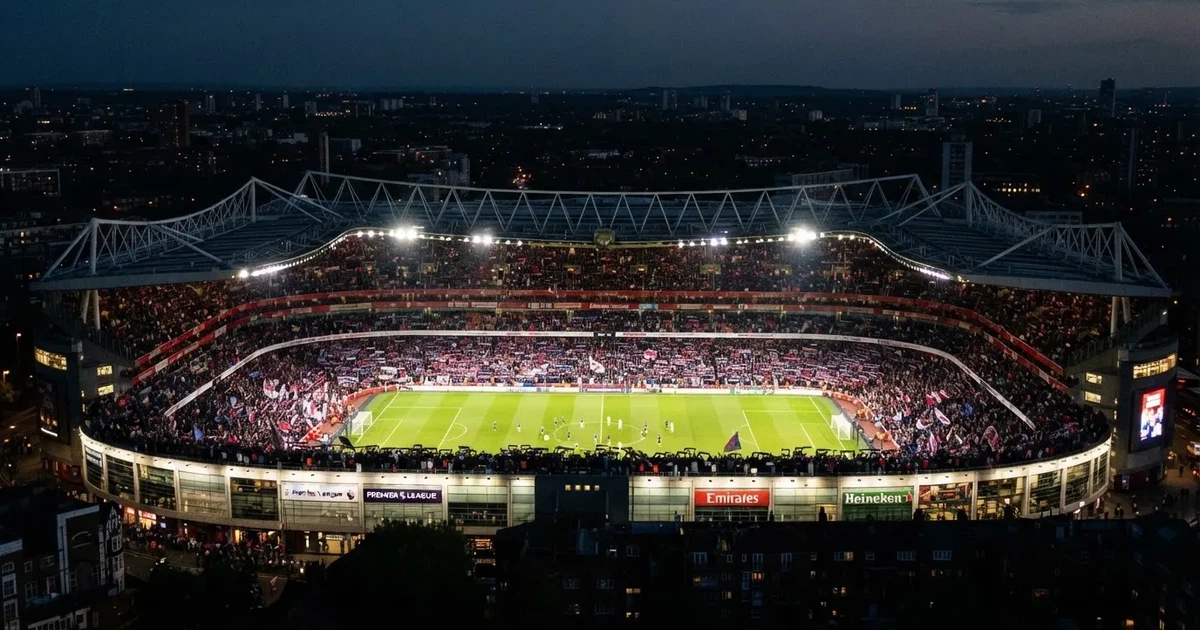
The appeal of an in-play market is straightforward enough — a goal goes in, the price collapses, and you can lay the side that was a moment ago favourite. The cost of that appeal is harder to see until you’ve placed the bet, watched it sit in the queue, and then watched it either match at a different number or fail to match at all. This page is about what a UK bettor is dealing with on a live market in 2026: how in-play differs from a pre-match bet, how cash out is paid and when it fails, what the Gambling Commission actually requires a licensed site to offer, and which operators carry the weight of the live market today.
Current as of 27 October 2026 and verified against the Gambling Commission’s public register.
What in-play betting actually is
In-play betting is a wager placed after an event has started. Odds refresh through the event, suspended during points where the outcome is about to change (a penalty, a goalmouth scramble, a serve) and reopened when it isn’t. A bettor sees a price change, clicks the bet, and the bet sits in the queue while the bookmaker confirms it; during a fast-moving market, the price the bettor saw is rarely the price the bettor gets.
Three mechanics sit underneath that experience, and each can be the difference between a matched bet and a missed one. First, prices update on a delay measured in seconds. The decimal price quoted on the screen is a snapshot, not the price that will apply when the bet is confirmed. Second, markets suspend — and a suspended market cannot accept bets until the action that caused the suspension is resolved. Third, the rules of each market are set by the bookmaker, and the bookmaker’s settlement decision is final under the operator’s own terms. Where a price is offered, suspended, repriced and settled several times in a single passage of play, the trade is not against a referee but against a constantly adjusting quote.
The distinction from a pre-match bet matters because the bookmaker’s margin sits inside the live price, and the live price is also where the margin is widest. Live markets attract casual bettors reacting to what they have just watched, and those bettors are paying for the privilege. Where pre-match margins on a top-flight football 1X2 sit in a tight band, live margins typically run several percentage points higher. The calculation further down the page shows what a £10 bet at 5/2 (3.50) actually returns — the figure changes only with the odds, but the cost of taking that live price, in margin terms, is several times what it would have been twenty minutes before kick-off.
A live bet is also a bet with a tight bookmaker-side clock on it. Where a pre-match bet can be placed ten minutes before kick-off and settled twenty-four hours after the final whistle, a live bet has to clear while the market is still open, which means each leg of a live accumulator has to remain live through the rest of the event. A football live acca built at half-time cannot include a player to be booked in the second half if the market is suspended by then. The structure of the bet forces a flatter pace than the same bet placed the night before.
Cash out, and what it actually pays
Cash out is the bookmaker’s offer to settle a bet before the event ends. Two flavours exist, and the difference matters more than the marketing. A cash-out offer of £65 on a £10 bet that is currently winning at 6/1 reflects the bookmaker’s view of the remaining probability — not the full potential return of £70. The bettor trades certainty against a haircut, and the haircut is the operator’s margin on that early settlement. A bettor who took a 5/1 free bet on a Preakness winner watched the leader pull clear at the half-mile pole and cashed out at half the potential return is a famous cautionary tale for a reason: the math is unforgiving when the price is short and the haircut is long.

The second flavour is partial cash out, where the operator lets the bettor take a fraction of the available cash-out value and leave the rest running. Standard on the apps of mid-tier UK bookmakers, partial cash out gives a bettor some control over how much certainty they buy.
Cash out fails more often than the marketing suggests. The specific failure mode, found in standard operator terms, is the gap between the cash-out offer being displayed and the bet actually being settled in the bettor’s account — during that gap the odds can change or the market can be suspended. Where a market suspends during the cash-out delay, the cash out fails. DAZN Bet’s terms state this plainly: cash out availability is not guaranteed and the original bet stands if it is unavailable. William Hill’s cash-out page is equally explicit: cash out is not available on each-way bets, is not always available on accumulators, and is never guaranteed by the operator. The bettor takes whatever value the bookmaker offers at the moment of acceptance, which is rarely the value displayed on screen when the button was pressed.
Cash out also changes what the bookmaker needs to track. A live market with cash out is, operationally, two markets at once: the price at which the bet was struck, and the price at which the bet would settle if cashed out now. That second price carries its own margin, and that margin is what the bettor is paying for the certainty of the haircut. The product is genuinely useful for a bettor whose edge has gone — a tennis back who took a set and a break and now watches the opponent find a serve — but it is not free, and a bettor who cashes out reflexively on every small swing bleeds margin all season.
UK regulation and what the Gambling Commission actually requires
In Great Britain, in-play betting and cash out are not separately regulated products. They are sports-betting products offered under a remote general betting standard (real events) licence, and the conditions attached to that licence are what governs them. Northern Ireland sits outside the Gambling Act 2005, which is why a GB-licensed operator must say so explicitly.
The Commission is a non-departmental public body sponsored by the Department for Culture, Media and Sport. It licenses the whole commercial market under the Gambling Act 2005, and since the Gambling (Licensing and Advertising) Act 2014 any operator whose remote facilities are used in Great Britain needs a Commission licence wherever the operator itself is based — a Curaçao, Maltese or Gibraltar licence is not a substitute. There is no state monopoly and no cap on the number of licences: every bookmaker reviewed on this page holds its own Gambling Commission account number, and that number is searchable on the Commission’s public register by business name, trading name, domain or account number. A licensed operator will often use a .com domain rather than .co.uk, so the domain by itself proves nothing about the licence.
Identity verification happens before the first deposit. Since 7 May 2019, an operator has to verify a customer’s name, address and date of birth before the customer can deposit or gamble, including with a free bet or a bonus. The minimum age is 18. Credit cards are banned for gambling in Great Britain since 14 April 2020, including credit-card-funded payments through an e-wallet; debit cards and bank-based payments are unaffected. The point of the verification step is to connect the customer to the national self-exclusion scheme, GAMSTOP, which is a mandatory condition for every online operator since 31 March 2020 and covers online sites and apps only — betting shops use a separate service.
A newer control is the financial vulnerability check. Since 28 February 2025, a public-record check has applied to licensed remote betting when a customer’s deposits minus withdrawals exceed £150 in a rolling 30 days. The check looks at publicly available records — bankruptcy, county court judgments — and is not a credit reference or income check, although it functions as a soft tripwire for customers whose financial situation is already stressed. The more aggressive “financial risk assessments” the press describes have been announced in stages, with a Commission article of 7 July 2026 detailing the plan but no start date. A £150 trigger is a real rule, an income check is not yet one.
Deposit limits (RTS 12) require operators to offer a gross deposit limit on a fixed time frame. The first changes have applied since 31 October 2025 and a second phase was scheduled for 30 September 2026 — whether the second phase is live is not established. There is no state-set deposit or loss ceiling for betting: limits are the customer’s choice within the tools an operator is required to offer.
The Commission’s records are what give the framework teeth in disputes. A bettor with a complaint against a licensed operator has a Commission complaints route and an approved alternative dispute resolution (ADR) body — typically IBAS — whose decision is binding on the operator. A bettor with a complaint against an offshore brand has none of these.
What an operator has to provide in player protection
Every UK-licensed bookmaker has to integrate with GAMSTOP. A customer who registers with GAMSTOP is barred from creating new accounts at every GB-licensed online operator for the chosen period — six months, one year, five years, or five years with auto-renewal. After the minimum period the exclusion stays in place for a further seven years unless the customer asks GAMSTOP to remove it. GAMSTOP covers online only, and it does not cover a customer who is already logged in at the time of registration: the customer’s existing account is left as it is, and the operator’s local self-exclusion tool remains the control on that account.
Safer-gambling tools the operator must offer on a GB-licensed site include deposit limits, product restrictions (which can mean restricting the customer from casino or high-velocity products while leaving sports open), reality checks during long sessions, and self-exclusion at the operator level. Unibet publishes its safer-gambling hub on its UK site, alongside live chat and direct links to GamCare (the National Gambling Helpline), GambleAware, GAMSTOP, Gambling Therapy and the Betting and Gaming Council. bet365, William Hill, Betfair, Coral and the other major operators carry broadly equivalent tools.
The help services behind the regulator are not licensed operators and not profit-making: GamCare runs the National Gambling Helpline, GambleAware funds treatment and education, the NHS runs specialist gambling clinics, and Gamblers Anonymous runs local meetings. The standard advice, written into every operator’s safer-gambling hub, is that a customer who feels their gambling is no longer under control should self-exclude first, talk to a treatment service second, and treat the operator’s safer-gambling team as a third line — useful, but not the right place to start if there is real harm.
Promotion rules and the bonus cap that took effect this year
The Commission does not licence advertising. Marketing is enforced through the CAP Code (non-broadcast) and the BCAP Code (broadcast), with the ASA handling complaints, and the LCCP marketing conditions sitting on top of those for licensed operators. CAP Code section 16 sets the substantive standard: marketing must be socially responsible, must not be of strong appeal to under-18s, and no one who is or seems to be under 25 may be featured gambling or play a significant role (with an exception for marketing placed where a bet can be made directly). The rule concerns who may appear in the advertisement, not who may bet — the minimum age for placing a bet is 18 and is unaffected by the under-25 marketing rule.
Promotion rules tightening those standards came into force on 19 January 2026. Wagering requirements on bonuses are now capped at 10x: a £10 bonus with a 50x wagering requirement would have needed £500 of bets, and under the cap no more than £100 of qualifying play. Mixed-product promotions — an offer that requires gambling on two or more product types such as betting, casino, bingo and lottery — are banned outright. The “bet on football to get free spins” coupon drops off the page on this rule alone.
What is not established is whether the cap applies to free bets with no wagering condition, or whether there is a separate ceiling on the money value of a bonus. A bettor who wants the answer for a specific offer needs the operator’s own terms. “Whistle-to-whistle” is an industry code rather than law: betting advertisements are not shown on TV from five minutes before a live sporting event to five minutes after it, before the 9pm watershed — horse and greyhound racing are excluded because their audience is older. The Premier League clubs’ withdrawal of gambling sponsorship from the front of matchday shirts from 2026/27 is voluntary, not law, and sleeves and hoardings stay. Operators are responsible for marketing placed by their affiliates.
How a winning bet returns: the working calculation
The arithmetic of a bet is the part the page carries as its own analysis of the numbers. For a single bet of stake *s* at decimal odds *d*, the gross return on a win is *s × d* and the net profit is *s × (d − 1)*. A £10 bet at 5/2 (3.50) returns £35 if it wins — £10 stake plus £25 profit. That band sits between two practical cases: a winning favourite at 4/6 (1.67) returns just £16.70 on a £10 bet, while a winning outsider at 20/1 (21.00) returns £210, and a long-odds winner on a small stake is the case where the £10 bet looks, briefly, like the right one.
Two qualifiers come with the figure. First, the odds used in the example are illustrative — 3.50 was chosen because it is a common British offering on an in-play underdog rather than because a specific bookmaker priced it there today. Second, the return is the gross figure: a winning bet does not trigger a separate tax in Great Britain, although General Betting Duty is paid by the operator on its gross profits at 15% (the rate changes for remote bets from 1 April 2027, but a bettor does not pay either the existing or the new rate). Conversion from fractional to decimal is mechanical: 5/2 becomes (5 ÷ 2) + 1 = 3.50; 11/4 is (11 ÷ 4) + 1 = 3.75; 1/3 is (1 ÷ 3) + 1 = 1.33; 6/4 is (6 ÷ 4) + 1 = 2.50; evens (1/1) is 2.00; odds-on (shorter than evens, like 4/6) is below 2.00. A reader who has the marginal one of those wrong is at risk of pricing a market every which way, and the audit of a slip starts with the conversion.
For an accumulator, the price of the bet is the product of the prices of the legs. Three legs at 3.00, 4.00 and 5.00 produce a price of 60.00, and a £10 stake returns £600 if all three win. The price is real. The probability that all three win is the product of the probabilities, which is typically much smaller than any one of the legs in isolation, and the margin of the combined bet is the cumulative margin of the three legs with no cross-cancellation: a 5% margin per leg produces a roughly 14% margin on a treble, and a 25% margin across a five-leg acca is typical. The marketing of accumulators concentrates on the upside and ignores the margin entirely.
A free bet is its own arithmetic. Where the free bet is paid as stake-not-returned, a £10 free bet at 5/2 (3.50) returns £25 on a win — the £10 stake does not come back. The value of the free bet, weighed against its odds and the margin of the market it is spent on, is normally below 70% of its face value — a £10 free bet is typically worth around £6 to a bettor placing it on an event with average margin. A free bet paid as stake-returned is the older structure, rarer today, and is worth closer to face value because the stake does return on a win.
The ten UK-licensed operators running live markets today
What follows is a working set, not a ranking. Each operator holds a Gambling Commission remote licence for general betting on real events, and each is named here because the page has to cover the licensed set in the order research sets and the page’s brief is what those licences actually let the operator do. Where an operator’s profile runs against the page’s subject — a thinner in-play product, an offer that omits a feature the licence would let it carry — the mismatch is named in the operator’s own write-up. A reviewer who describes ten operators and ignores the three that do not quite fit is writing a sales page rather than a comparison.
| Operator | Licence holder | Commission account | What the operator’s own terms state on live and cash out |
|---|---|---|---|
| DAZN Bet | DZBT Limited | 48756 | Cash Out offered on selected markets; Bet Builder across football, MMA and selected others; daily bet boosts; in-play markets across major sports. Cash out availability not guaranteed — bets stand if cash out is unavailable at the moment the bettor clicks. |
| William Hill | WHG (International) Limited | 39225 | Cash Out offered on singles and most multiples; not available on each-way bets; not always available on accumulators; availability never guaranteed. Live in-play across football, tennis, horse racing and selected others. Streaming service (WHTV) requires a funded account or a qualifying bet in the last 24 hours. |
| London Bet | Thistle Bet Limited | 66162 | App combines sports betting (football, tennis, horse racing, greyhounds, darts, golf, cricket, NFL, NBA, MLB, snooker) with Pragmatic Play casino slots. Live in-play offered alongside the sportsbook; trading hours short relative to the larger operators. |
| Bet Ahoy | Bet Ahoy Ltd | 100094 | Pre-match and in-play Bet Builder across 11 sports. Early, Partial and Auto Cash Out offered. Up to 800 live markets on Premier League fixtures. |
| Swifty Sports | Swifty Global (UK) Ltd | 58957 | Best Odds Guaranteed on UK and Irish racing; Cash Out on selected markets including horse racing and football; daily price boosts; live streaming on selected events; in-play betting. Bet Builder listed as coming soon. |
| Spreadex | Spreadex Limited | 8835 | Fixed-odds and financial spread betting in one app — split regulated: FCA for spread betting, Gambling Commission for fixed-odds. One-click, Auto and Partial cash out; Bet Builder across fixed odds or spreads; live streaming on UK and Irish horse racing, greyhounds, tennis, NFL and selected football. Spread betting losses can exceed deposits. |
| Betboro | Webmedia Development N.V. | 44181 | In-play markets and cash-out on football, horse racing and tennis. Boosted odds on selected singles from £10 stakes. Safer-gambling tools include deposit limits, reality checks and self-exclusion. |
| Fitzwilliam Sports | SBKI Limited | 48760 | Phone and live chat with the office open 09:00 to 21:00, Monday to Sunday; messenger replies typically within 90 seconds. A phone-led bookmaker with a smaller in-play product than the major apps. |
| Unibet | Platinum Gaming Limited | 45322 | Bet Builder, daily Uniboosts, live streaming through Unibet TV, in-play betting across a deep fixture list. Best Odds Guaranteed on UK and Irish horse racing. Cash Out offered on thousands of markets; safer-gambling tools include deposit limits, a Player Profile test, product restrictions and self-exclusion. |
| Kalooki Sportsbook | Kalooki Sportsbook Limited | 57730 | Best Odds Guaranteed on UK and Irish horse racing. In-play betting, daily boosts, extra-place races. Instant withdrawals by bank transfer advertised as settled within minutes on a working-bank-window basis. |
DAZN Bet
The DAZN Bet product is the sportsbook arm of the DAZN streaming business, and the licence is the standard remote general betting standard (real events) licence held by DZBT Limited under Commission account 48756. The product page carries in-play markets, Bet Builder across football and MMA, and a daily bet boost line. The live markets are real enough — DAZN Bet trails the giants on outright depth but covers the top-flight football, the major US sports and the headline tennis without gaps. Cash out is offered on selected markets and comes with the right disclaimer: its availability is not guaranteed, and a bet stands if cash out is unavailable when the bettor clicks. The clause is standard, and it is the clause a bettor needs to know about before treating cash out as an alternative to settlement.
The DAZN brand carries weight with viewers but the sportsbook is still building depth, and the page’s view is that the product is best suited to a DAZN subscriber who wants to place a bet alongside the stream they were already watching. Outside that audience, the same Bet Builder and the same in-play product is available on longer-established books — the reason to use DAZN Bet is the integration with the stream rather than any standalone advantage on the live market.
William Hill
William Hill is the long-established bookmaker whose UK brand has run under Commission account 39225 for years and whose parent (WHG International, part of 888) now services the licence. The product is the deepest on the page: live in-play across football, tennis, horse racing and a long tail of other sports; WHTV streaming requiring a funded account or a bet in the last 24 hours; Betting TV carrying selected UK and US horse racing and UK greyhounds free. Cash out is offered on singles and most multiples, with the explicit caveats that it is not available on each-way bets and not always available on accumulators, with availability never guaranteed by the operator.
For a serious in-play bettor, William Hill is one of the two or three products that cover the breadth of fixtures the bettor wants to bet on, and the streaming product is the clearest tie-in: a bettor with a qualifying bet on a race can watch the race through WHTV, and the integration between the slip and the stream is what an in-play experience is meant to feel like. The cost is the price of betting into a saturated liquidity pool — margins are tight on the headline markets and wider on the long tail. For a bettor who wants coverage rather than the cheapest price, William Hill is the page’s working choice.
London Bet
London Bet runs under Thistle Bet Limited on Commission account 66162, and the app combines a sportsbook (football, tennis, horse racing, greyhounds, darts, golf, cricket, NFL, NBA, MLB, snooker) with Pragmatic Play casino slots. The product is a hybrid: a sportsbook with a slot lobby attached, aimed at a customer who wants both products under one login. Live in-play is offered alongside the sportsbook, and the page’s read is that the in-play product is functional without being differentiated — fixtures are present, prices are competitive without being market-leading.
The audience here is a customer who wants a small, London-facing sportsbook with a casino tab. The product is right for that reader and not really aimed at a bettor shopping the deepest live market — London Bet’s distinguishing feature is the dual product rather than the in-play sportsbook itself.
Bet Ahoy
Bet Ahoy operates under Bet Ahoy Ltd on Commission account 100094, and the app markets itself heavily on the live product: pre-match and in-play Bet Builder across eleven sports, Early, Partial and Auto Cash Out, and a claimed up to 800 live markets on Premier League fixtures. The product description is a marketing description, and the listing-level source for the spread is the App Store page. Where the page measures up against the live market’s biggest names, Bet Ahoy has a thinner fixture list across the long tail but a more granular product on the fixtures it covers — Auto Cash Out is the standout feature, because it offers a discipline a manual cash-out bettor often cannot keep.
The trade-off is straightforward: Bet Ahoy is built for the bettor who wants structure on the Bet Builder and on the cash-out timing, and is not built for a bettor shopping fifty leagues of football. Bet Ahoy functions best as a specialist tool inside a wider betting setup, rather than as a single-app replacement for one of the major operators.
Swifty Sports
Swifty Sports runs under Swifty Global (UK) Ltd on Commission account 58957. The product set is broad for a newer brand: Best Odds Guaranteed on UK and Irish horse racing, Cash Out on horse racing and football, daily price boosts, live streaming on selected events, and in-play betting. Bet Builder is listed as coming soon at the time of writing, and a bettor who needs that product should look elsewhere until the listing changes. The page’s read is that Swifty is a BOG-first product — the racing product is the spine — with an in-play product layered on top, and the in-play product is competent rather than class-leading.
A bettor whose betting is concentrated on racing will find the BOG-and-Cash-Out pairing useful; a bettor whose betting is concentrated on football or tennis will find the depth thinner than the major operators and may prefer to keep Swifty as one shop in a wider set rather than a single-app choice.
Spreadex
Spreadex operates under Spreadex Limited on Commission account 8835, and it is the page’s only dual-regulated operator: financial spread betting is regulated by the FCA; fixed-odds sports betting is regulated by the Gambling Commission. A customer who opens the Spreadex app sees a single product surface, but the spread-betting leg carries its own warning — spread betting losses can exceed the deposit, which is true of financial spread betting, of sports spread betting, and of any leveraged product. The fixed-odds side carries the same kind of Cash Out, Bet Builder and live streaming as the rest of the page, with one-click, Auto and Partial cash out available across fixed-odds bets and a Bet Builder that spans fixed odds and spreads.
The Spreadex product is genuinely differentiated. A bettor who understands spread betting can lay a position as well as back one, and the app supports that without making the customer switch products. The cost is the spread-betting risk on the leg the bettor decides to use it, which is genuine and which the operator flags in its marketing. Spreadex is a strong fit for a spread-betting customer, though a newcomer should treat it as a product to master before relying on it for fixed-odds betting alone.
Betboro
Betboro runs under Webmedia Development N.V. on Commission account 44181, and the UK-facing site offers in-play markets and cash out on football, horse racing and tennis, with boosted odds on selected singles from £10 stakes. The product is mid-tier — in-play is offered, the depth on the top-flight football is reasonable, and the boosted-odds line on singles is the operator’s marketing hook. Safer-gambling tools on the site include deposit limits, reality checks and self-exclusion, meeting the Commission’s minimum.
The page’s view is that Betboro sits in the middle of the pack on live markets and offers a single-feature differentiator (the boosted singles from £10) which is useful to a small-stake bettor shopping a specific fixture. Outside that pattern, the same product is offered more cheaply or with deeper markets at one of the major operators.
Fitzwilliam Sports
Fitzwilliam Sports operates under SBKI Limited on Commission account 48760, and the product is phone-led rather than app-led: a customer rings the trading room between 09:00 and 21:00, with messenger replies typically within 90 seconds. The in-play product is offered but the experience is fundamentally a phone experience rather than a click-and-bet experience. For a bettor who has used a phone betting service before — and a generation of UK bettors grew up on them — Fitzwilliam has a familiar rhythm and a layer of personal service the apps cannot match.
For an in-play bettor, the same model is its disadvantage: an in-play bet cannot be struck without a phone call, the pricing on a phone bet is typically less sharp than an app’s pricing on the same market, and the spread of live events is shallower than the major apps. The page’s view is that Fitzwilliam works for a customer who values the personal relationship and trades smaller stakes across a narrower set of markets — not for the live-market shopper.
Unibet
Unibet’s UK site runs under Platinum Gaming Limited in Gibraltar on Commission account 45322, and the brand has been online since 1999. The product is one of the deepest on the page: Bet Builder, daily Uniboosts, in-play betting, Best Odds Guaranteed on UK and Irish horse racing, live streaming through Unibet TV, and Cash Out on thousands of markets — the “thousands of markets” figure is the operator’s own and is the kind of figure worth testing on a specific fixture before relying on it. Safer-gambling tools include deposit limits, a Player Profile test (Unibet’s own self-assessment), product restrictions and self-exclusion; support is live chat with direct links to BeGambleAware, GamCare, GAMSTOP, Gambling Therapy and the BGC.
For an in-play bettor, Unibet is comparable to William Hill in fixture depth and arguably wider in the long tail of markets it will offer live. The page’s view is that Unibet is a strong second-app choice alongside William Hill or bet365, with the BOG product on racing as a clearer tie-in than the major competitors offer.
Kalooki Sportsbook
Kalooki Sportsbook runs under Kalooki Sportsbook Limited (company number 12938274) on Commission account 57730, and the brand is GAMSTOP-registered. The product set focuses on racing: Best Odds Guaranteed on UK and Irish horse racing, in-play betting across the other sports, daily boosts and extra-place races as headline offers. The other claim the page is interested in is instant withdrawals by bank transfer, settled within minutes during the working-bank window — the qualifier matters because “within minutes” applies to a specific window and is not a constant guarantee.
For a racing-led bettor, Kalooki is a credible BOG-and-extra-places shop; for an in-play football or tennis bettor, the product is narrower than Unibet or bet365 and is best kept as one of several apps rather than a single-app choice. The instant-withdrawal claim is the page’s clearest signal of where the operator wants to compete: speed of settlement is the spine of the brand.
How the live market ages over a session
The same in-play product at two different times of day is not the same product. Football dominates the live market between 19:00 and 22:30 on a UK evening; the same fixtures thin out the moment play ends, and live tennis takes over for the rest of the evening. Horse racing runs on its own clock throughout the day, and greyhound racing takes the racing live market when the horse meetings end. US sports take the overnight window, and the depth of an in-play product is the product the operator chooses to staff and the product the operator chooses to leave to its rivals.
The implication for a bettor is not that one in-play product is best in absolute terms; it is that the product changes by the hour, and an app that is the strongest live-market tool at 20:00 on a Saturday is the same product at 04:00 on the morning of the US Open, where staffing is thinner and the prices are wider. The major operators run the deepest in-play rotas around the clock; smaller operators run a narrower one. A bettor whose betting is concentrated on Friday-night football needs a different product from one whose betting is concentrated on Tuesday-night Champions League, and the page’s view is that the live-market experience is the product to shop, not the brand.
Two mechanics to watch on a live bet
The first is the suspension pattern. Football live markets suspend on a goal, on a penalty award, on a red card, and on a substitution near the touchline; the suspension typically lasts between three and fifteen seconds. Tennis live markets suspend on a set point, on a break point, and on the medical timeout; suspensions last longer. A bettor who clicks a price while a suspension is in place will see the bet rejected without a clear message, and the bettor has to wait for the market to reopen. A bettor who watches the suspension pattern develops a sense of when the next click is likely to land and when the bet is more likely to be rejected.
The second is the cash-out gap. The number on the screen when the bettor presses cash out is the operator’s quoted cash-out value; the value actually credited can be a fraction of that, depending on the price change between the click and the confirmation. Where the operator’s terms are written to allow this, the operator is not acting in bad faith; the gap is the product, and the bettor is paying the haircut twice — once for the cash-out margin, and once for the price drift between the click and the settlement. A bettor who wants certainty at the quoted number is asking the operator for a feature the operator has not sold; the bettor has to wait until the next price move and click again.
What the page is not for
This page is not a tipster. Nobody publishing in 2026 knows who wins the next Champions League final or the next County Championship, and the page will not tell a reader. The page is also not a guide to opening an account at any specific operator — the comparison is the product, and signing up is a decision the reader takes with their own time and their own data. The marketing material an operator publishes is a description of the operator; the page’s view of that material is the reader’s.
A licence is also not a recommendation. The ten operators reviewed here all hold a Gambling Commission remote licence, which is a description of what each operator is allowed to do, not a view on whether any of them deserves a customer’s money. The licence tells the reader where to complain; the page tells the reader where the in-play product is, and the gap between those two facts is the decision the reader makes.
If the betting stops being under control
A bettor who feels their betting is no longer under control has a route that does not go through the operator. GAMSTOP, the national multi-operator online self-exclusion scheme, is the first call: registering with GAMSTOP bars the bettor from every GB-licensed online operator for the chosen period. GamCare runs the National Gambling Helpline on 0808 8020 133, with live chat and email also available. GambleAware funds treatment. The NHS runs specialist gambling clinics in several cities. Gamblers Anonymous runs local meetings. None of these numbers is a route back to the operator’s balance; they are routes out.
The operator’s own safer-gambling team is a third line, not a first: deposit limits, product restrictions, reality checks and operator-level self-exclusion sit on top of GAMSTOP, and the operator’s safer-gambling pages on the major UK-licensed sites link directly to the help services above. A customer who has self-excluded through the operator has taken the right first step; a customer who wants to talk to someone outside the operator should go to GamCare first.
Frequently asked questions
How does in-play betting differ from a pre-match bet?
An in-play bet is placed after the event has started, with odds that refresh through the action and markets that suspend when the outcome is about to change. A pre-match bet is placed before the event and runs to its settlement under rules set in advance. Both products are settled under the same kind of Gambling Commission licence, and the wider margin on live markets is the practical cost of taking the live price. Cash out sits on top of an in-play bet — it lets a bettor take an early settlement on a winning or losing position.
How is the return on a bet worked out from the stake and the odds?
Return = stake × decimal odds. For a £10 bet at 5/2, the decimal odds are 3.50 and the gross return is £35 — the £10 stake plus £25 of profit. The result is identical for a pre-match bet, a live bet, a single or a leg of an accumulator; only the price changes, and the price is what the operator quoted at the moment the bet was struck.
How can it be checked that a bookmaker holds a Gambling Commission licence?
The Commission’s public register at the Commission’s website can be searched by business name, trading name, account number or domain, and every operator licensed in Great Britain appears against the categories the operator is licensed for. The Commission account number is the most reliable field, and the licence categories — remote general betting standard (real events), remote pool betting, and so on — confirm what the licence actually lets the operator do. A brand that does not appear on the register is not licensed and cannot lawfully take bets from a customer in Great Britain.
Which tools for controlling play does a licensed bookmaker have to offer?
Deposit limits on a fixed time frame, product restrictions, reality checks during long sessions, and operator-level self-exclusion are the standard controls at a GB-licensed site. Customer can register with GAMSTOP for a national online self-exclusion of six months, one year, five years, or five years with auto-renewal. Since 28 February 2025, a public-record financial vulnerability check applies when deposits minus withdrawals exceed £150 in a rolling 30 days. Income-based financial risk assessments have been announced but have no start date.
How do fractional odds such as 5/1 convert to decimal odds such as 6.00?
Decimal = (numerator ÷ denominator) + 1. 5/1 → 5 ÷ 1 + 1 = 6.00. 5/2 → 5 ÷ 2 + 1 = 3.50. 11/4 → 11 ÷ 4 + 1 = 3.75. 1/3 → 1 ÷ 3 + 1 = 1.33. The decimal form is the figure used in the return calculation: return = stake × decimal price. The minimum price a bonus requires, and the conditions attached to a free bet, are stated in decimal form on most modern sites.
Are betting winnings taxed in Great Britain, and who pays General Betting Duty?
A bettor in Great Britain pays no tax on betting winnings — General Betting Duty is paid by the operator on its gross profits from betting, currently 15%. From 1 April 2027 a new remote betting rate of 25% applies within General Betting Duty, while remote bets on UK horse racing, bets on self-service betting terminals in licensed premises, pool betting and in-person betting stay at 15%; until that date the remote rate is 15%. A bettor whose gambling is treated as a trade by HMRC should ask an adviser. Spread betting has its own rates.
Bet types & in-play – Boxing betting
Content created by the «Boxing betting» team
