
Boxing betting in Great Britain: markets, margins, and what an offer actually pays
 Available in US
Bookmakers licensed by the Gambling Commission carry the same basic package for boxing as for any other sport on the calendar: a winner market, a method-of-victory market, totals rounds, and a handful of side markets that show up when a title fight rolls around. The British market has no shortage of operators serving it — the Commission’s public register lists far more brands than any review can feature — and a punter in 2026 is weighing which one of those licences, and which one of those welcome offers, is worth their tenner. This page is the picture that falls out of those choices: what a boxing price actually pays, what an offer actually costs to clear, and where a licensed operator leaves a punter exposed in a way an offshore one does not.

Data current as of 27 October 2026, checked against the Gambling Commission’s public register.
Bitcoin, Ethereum and the rest: crypto rails in British boxing betting
The headline question for crypto-curious bettors in Great Britain is not whether a licensed bookmaker takes Bitcoin — most licensed brands in this set say nothing about it either way. The reason sits upstream of any one operator’s cashier page. Identity is verified before the first deposit at every GB-licensed site, since 7 May 2019, and the licensed operators in this guide show no feature list that opens around a pseudonymous account or a blockchain-native deposit rail. A punter who funds a sportsbook with stablecoins or ether at an unlicensed offshore book sidesteps the verification that the British regime requires, but the sidestep is paid for in what the operator no longer has to do: no GAMSTOP enrolment, no Commission complaint route, no approved alternative dispute resolution, no £150 financial-vulnerability check, no 10x wagering cap on bonuses, no General Betting Duty regime on gross profits applied at source. The page does not include any of those brands because the public register does not list them — and outside the register, the Commission’s own evidence base for protection drops away.
What a GB punter actually finds at a licensed cashier is a debit-card and bank-transfer stack, with e-wallets on top for the brands that have integrated them. A crypto purchase, where it shows up at all, is what the customer does on the way to a debit card, not what the bookmaker takes. That is the practical shape of crypto boxing betting under a British licence in 2026: less a product category than a payments choice made upstream of the bet, with the sportsbook itself unaware that the customer ever touched an exchange.
Three sub-points sharpen the picture, because the marketing around crypto betting often outruns the terms.
The verification point. Even where a brand markets itself around fast onboarding, a GB-licensed operator cannot let a customer deposit or place a bet until name, address and date of birth are confirmed against a trusted source. A customer who wanted to bet on boxing with Bitcoin at a licensed book would be depositing pounds, satoshis several times removed and not at all, and the deposit would arrive to a verified account regardless of how the funds were sourced.
The protection point. GAMSTOP enrolment is a mandatory licence condition for online operators. A punter who has self-excluded and then signs up at an unlicensed crypto book has not bypassed the exclusion; they have placed themselves outside the scheme’s coverage. The licensed route covers the customer in this kind of case. The unlicensed one offers whatever its own terms happen to say.
The exchange point. A GB-licensed exchange-style book exists in this set — Betfair runs betting exchange rails — and that is the one place the British punter can back and lay, with a Commission-registered intermediary licence behind it. The crypto question is, again, separate from that licence, and the cashier still settles in sterling.
A punter who wanted to bet on boxing with bitcoin because the cashier is faster and the limits are higher than at a GB-licensed shop would be choosing those qualities, and choosing them with the protections turned off. A punter who wanted to fund their normal licensed account with proceeds of a bitcoin sale is doing something the Commission does not specifically forbid at the deposits stage; whether the operator accepts the resulting debit is the operator’s call.
Boxing free bets and welcome offers in 2026: the rollover line by line
The standard sales pitch for a boxing betting free bet in the UK arrives in two pieces: a headline number, and the small print that decides what the offer is actually worth. Wagering requirements on bonuses are capped at 10x under Commission rules since 19 January 2026 — meaning a £10 bonus cannot ask for more than £100 in qualifying bets, the rule landed before the cap came in and was settled in practice for many offers — and any promotion that requires gambling across two or more product types (say, “bet on boxing to unlock free spins”) was banned under the same reform. That is the perimeter inside which every welcome offer in this set sits, and the perimeter is the first thing a boxing punter should read before they claim.
Most welcome offers on boxing in Great Britain come in one of three forms: a free bet whose stake is returned only as winnings if it wins, a percentage match on the first deposit whose balance must be turned over a stated number of times before it withdraws, or an enhanced-odds price on a specific bout that pays at the higher number only if a particular selection wins. Each shape carries a different cost, and the cost is the only number that matters to the punter deciding whether the offer is worth claiming.
A free bet whose stake is not returned nets, on average, the free-bet amount multiplied by (odds − 1) divided by odds, scaled by the book’s payout share on the chosen market. A £10 free bet at decimal odds 3.00 against a market with a 95 per cent payout share has an expected value of £10 × (3.00 − 1) ÷ 3.00 × 0.95 — about £6.33. That is what the offer pays on average, and it is also the ceiling of what it can ever pay: a free bet that loses pays nothing, a free bet whose price drifts to 1.01 pays pennies, a free bet at 1000.0 on a longshot is closer to £10 in expected value because no margin eats the stake. The headline number is the face value, not the value.
A deposit match is harder, because the bonus balance is locked behind a turnover requirement. A £20 matched bonus at 5x turnover means £100 of qualifying bets at minimum qualifying odds before withdrawal. If those bets are placed at the book’s average margin of around 5 per cent, the expected cost of clearing the bonus is about £5 — the £100 turnover times the 5 per cent margin. The punter walks away with roughly £15 of value on average, plus whatever the qualifying bets themselves win. Offers with higher turnover, at higher minimum odds, on markets with wider margins, can cost more than the bonus is worth.
Enhanced odds on a specific bout are the simplest shape, and the easiest to misread. A price boost from 4.00 to 6.00 on a specific fighter pays the headline number if that fighter wins, and zero otherwise. The expected value relative to the true price is built into the boost, and a punter who already wanted to back that fighter at the original price has captured a free option worth the difference; a punter who took the boosted price only because it looked generous has paid a negative expectation for a one-shot lottery.
The wagering cap and the mixed-product ban do not change which offer is best in absolute terms — a ten-times turnover rule does not turn a bad offer into a good one — but they do change how badly a boxing punter can be soaked by an offer whose terms they did not read. The £100 turnover cap on any single bonus is what stops a £10 welcome from becoming a £500 liability. And the mixed-product ban is what stops a “bet on the heavyweight title fight and get free casino spins” from being the headline terms of an offer — a customer who wanted to bet on boxing is now betting on boxing, full stop.
Boxing betting apps and the case for betting on a touchscreen
The differences between mobile boxing betting and desktop boxing betting in 2026 are narrow: licensed British bookmakers have spent a decade making their apps complete versions of their sites, and what shows up at LiveScore Bet on a laptop is also what shows up in the LiveScore Bet app. Where mobile does add something is at the points a punter interacts with most often — placing the bet, watching the bout, cashing out mid-fight.
An app-based bet on a boxing bout starts with the same market grid as the desktop version: winner, method of victory, total rounds, sometimes a “fight to go the distance” line on the bigger cards. The bet placement on a handset is a touch target rather than a cursor target, which sounds like a small thing and is in practice the reason several apps in this set allow a one-handed slip confirmation but block bet submission at above a set per-bet threshold. That threshold is the operator’s call, and it varies; the punter’s call is whether the app they are using lets them set one.
In-play boxing is one of the sport’s stronger mobile products. A punter who has watched Joshua-Fury on a smartphone screen and tapped “Method of victory — TKO, round 8” between rounds has done the thing in-play betting exists for. The licensed British apps in this set that stream boxing events as part of their live-streaming bundle — Betfair’s free live streaming inside the app, for instance — extend the in-play experience to a single screen on the handset, which is what the customer pays for in attention and the bookmaker pays for in rights.
The third mobile-specific feature is cash out. Boxing settles in a single sharp moment — the bell, the towel, the stoppage — and a mobile customer who has live-streamed the bout and watched the cut man work on a fighter’s eye can cash out at any price the bookmaker offers. The price is the book’s; the punter decides whether to take it. The trade-off is that on a long-priced underdog who is winning on the cards, the cash-out value is the book’s latest read of the fight, not the punter’s; on a heavy favourite whose opponent has just been hurt, the cash-out value is closer to what the punter would have won at the bell. Boxing is one of the better markets for cash-out by sport, because there are few enough decisive moments in a fight that each one is observable to a watching punter in real time.
Live boxing betting and cash out: in-play mechanics a punter should know
A licensed British bookmaker offering in-play boxing is offering prices that the operator’s trading desk updates round by round, sometimes punch by punch, on a fight the customer can watch in the app. The mechanics are straightforward in principle. The fight begins; the operator suspends the winner market on the bell for round 1; trading resumes when both fighters have thrown and the betting interest has settled; prices update on every clean shot to the head; totals rounds tighten as the scheduled distance approaches. The same in-play rails that govern tennis and football apply here, with the small distinction that boxing rounds are short and the decisive moments tend to cluster: a corner stoppage tends to come at the end of a round, a knockdown tends to come in a flurry, and the seconds after either one are when an in-play book leans its prices hardest.
Live betting on boxing in the UK is offered by every major licensed operator and several smaller ones. A punter who places an in-play bet at decimal odds 2.50 on a fighter who then scores a knockdown in the next exchange has not, despite the appearance of it, locked in the price at 2.50 — the price the book took was the price at the moment of placement, and a knockdown afterwards moves the price sharply away from the bettor. In-play price moves this fast are the reason a sportsbook’s liability limit on boxing is lower than on football: a boxing in-play book can be exposed several minutes of liability at the old price before a stoppage settles the bout.
Live streaming inside the app — Betfair’s bundle of UK and Irish racing and football, bet365’s catalogue of worldwide events — is what turns a phone from a betting device into a viewing-and-betting device. A punter watching a heavyweight title fight in HD on their phone is also tapping the cash-out button on a four-fold across the undercard, and that combined experience is the product. The bookmaker’s streaming rights are paid for by the betting margin; the punter does not pay separately for them. The same applies to the live-tracker tools that several apps offer, including Bet Track, Match Live and a Live Golf Tracker for following bets in play.
Cash out on boxing in the UK has three cash-out questions the punter should think about before they place the bet. First, the cash-out value is the operator’s, not the fair one, and at a 5 per cent margin on a market of three outcomes the cash-out value is between 1 per cent and 3 per cent below what a punt on the same selection at the starting price would have won. Second, the cash-out value is the operator’s offer, not an obligation — a punter who wanted to cash out at the moment of a knockdown may not find a price for a few seconds while the book is suspended; that gap is when the punter is most exposed to a stoppage that settles the fight before the book reopens. Third, on boxing specifically, a corner stoppage in the final round is the kind of settlement that does not give the customer time to react at all; an un-cashed-out back bet on the eventual winner loses its cash-out option at exactly the moment it would have been most valuable.
Boxing betting tips and strategy: the budget angle
There is no system that wins at boxing betting. The bookmaker’s margin is in every price, and a punter’s job is to find selections whose true probability is higher than the price suggests, not to out-trade a market that already prices the favourite correctly. The mechanical pieces of a strategy — bankroll management, line-shopping, selection discipline — do real work, and the strategic pieces — fight study, ring-side reading, fight IQ — are not available to a customer who is not watching the bouts.
The budget point comes first because it is the one that compounds across every bet placed. A punter staking 2 per cent of a £500 bank on a single boxing bet has £10 on the line, the loser is a £10 loss, the cycle through 250 bets at that stake is what a £500 bank survives and what a £50 bank does not. A boxing card in 2026 offers between five and fifteen fights to bet on, depending on the undercard, and a punter staking 2 per cent on each fight has tied up 10 to 30 per cent of a small bank on one card’s worth of action. The bankroll question is not about safety; it is about whether the punter has money left for the next card.
The line-shopping point comes second because it is the single mechanical edge a betting customer can claim. A fight whose median price at five bookmakers is 1.91 is offering different numbers at different books — the books at 1.85 are giving up value to the books at 1.95 — and the punter’s job is to find the higher price for the same selection. The marginal edge on a single price move is small; over a year of betting it is the difference between a punter who is down 4 per cent on turnover and a punter who is down 6 per cent on turnover, and those are two different long-term trajectories.
The fight-study point is the one most tipsters sell. A tipster is a person with a view on who wins. Their view can be correct on any given fight, and over a year of fights the tipster’s record against the closing price is what matters: A tipster who picks 11 winners in 20 fights at average odds of 1.91 has broken even after the margin and is one fight ahead of a coin-flip approach, while one averaging odds of 2.50 is well ahead; the difference is in the odds the tipster’s picks were matched at, and that is not visible from the tipster’s record in headline terms. A punter paying for tips is buying the tipster’s selections plus a record; the price they pay should be lower than the edge those selections give.
The ring-reading point is the harder one. A punter watching a fight in real time sees what a tipster, a model and a stats sheet cannot see: a cut opened in round 6 that will bleed through rounds 8 and 9; a fighter whose legs are gone in round 10; a referee who has warned both corners twice and is now a single foul from a disqualification. The decision to place an in-play bet on a boxer who is winning on the cards but losing on cuts is a reading-of-the-fight decision, and it is one that boxing — with its discrete rounds and visible damage — supports more cleanly than, say, football supports a reading of a 0-0 second half. A punter with the live stream and the discipline to watch the fight is what the in-play market on boxing exists for.
The thing to walk away with: the only system that wins is the one whose edge exceeds its own variance, and the edge on boxing betting is the difference between the closing price and the punter’s estimate of the true probability of each outcome. The variance is the longshot losing run that any bettor hits. A punter who built their box around bankroll, line-shopping and a willingness to sit out the fights they have not studied has the only kind of system that wins in this market.
Boxing bet types and odds: the markets a book offers on a title fight
The basic boxing odds and betting markets in Great Britain break into three layers: the markets a book always offers on a professional fight, the markets that appear on a title fight and not on a six-round undercard bout, and the markets a punter builds themselves through a bet builder or lays on an exchange.
On any professional fight on a British-licensed site, the operator offers a winner market (also called the “match result” market) on each fighter, priced on the day and shifting as the fight approaches. A draw is a third selection on the same market, normally long because draws are rare in professional boxing. The match-result market is the foundation, and the punter who has not shopped at least three operators for the same selection before placing the bet has not read the prices seriously enough.
Method of victory is the next market up, and it is what differentiates a serious title-card price from a four-round undercard price. Method of victory asks the punter to pick the winning fighter and the way they won: knockout or technical knockout, decision (split, majority or unanimous), disqualification. The odds on a Tyson Fury decision are different from the odds on a Tyson Fury KO, and they are different from a Tyson Fury any-method-of-victory selection that pays if he wins by any route. Method-of-victory is the market the in-play betting product makes its money on: a fight that is even on the cards at round 8 is a method-of-victory trade, because the difference between a decision win and a stoppage win is what the next round will decide.
Total rounds (over/under) is the market for the punter who wants to bet on the shape of the fight rather than its outcome. The book sets a line at 8.5 rounds for a 12-round bout, and a punter on over 8.5 is betting that the fight goes into the ninth round; a punter on under 8.5 is betting that the fight ends before then. The line moves as the fight progresses, which is why totals rounds is one of the better in-play markets on boxing: the rounds themselves are the units the book trades in.
“Go the distance” is the question of whether the bout reaches the final bell under the scheduled number of rounds. A yes means both fighters have heard the final bell; a no means the fight has ended at any point before. The yes is short, the no is longer, and the market tends to thin out below the championship level, where go-the-distance markets are mostly offered on twelve-round title bouts.
Round betting and group-round betting are the deeper markets. A bet on a specific round the fight ends in is a lottery ticket at every level; a bet on a group of rounds (for instance, rounds 9 to 12) is a higher-probability lottery ticket at a fraction of the price. The bookmaker’s margin on a 12-outcome round bet is wide and should be read accordingly.
Each-way betting is the same shape as it is on horse racing: two bets of equal stake, one on the win, one on the place, with the place paying between a quarter and a fifth of the win price depending on the number of runners. Boxing rarely has more than two runners, so each-way on boxing is mostly a hedge the punter pays for rather than a value-add.
A bet builder — a same-game-multi in sportsbook language — combines several markets on the same fight into one bet. A bet builder on a Joshua win, in rounds 7 to 9, over 9.5 total rounds is a single bet with the price the book set; whether the price is fair is a calculation the punter needs to do on the components. A bet builder at odds 4.00 built out of components at 1.50, 1.80 and 1.65 is offering par value or better; a bet builder at 6.00 on the same components is offering some book margin on top.
An accumulator (acca) across several fights is the structure that pays the longshots. A five-fold at 5.00, 5.00, 5.00, 5.00 and 5.00 is a 3,125-line bet whose expected value is the product of the legs’ expected values times the implied probability of all five winning. A book running acca insurance — a refund of the stake as a free bet if one leg loses — is a partial mitigation, and a punter who took the insurance should think of it as a price adjustment on the accumulator rather than as a free option.
An exchange bet (on Betfair) is the structure where the punter can back or lay, betting against another customer rather than against the bookmaker. A back bet at 4.00 on Betfair is matched at 4.00 against a lay bettor willing to take the other side; the betting exchange takes a commission on net winnings. The exchange’s margin is below the sportsbook’s on most markets, and the punter who has set up the exchange side of the book can use it as a price-discovery tool.
Odds on boxing at British-licensed books are quoted in decimal form by default and can be displayed in fractional form. A 5/1 shot in fractional form is a 6.00 decimal price; 9/10 (shorter than evens) is 1.90; evens is 2.00. The bookmaker’s overround — the sum of the implied probabilities across all outcomes, the inverse of the payout share — is the margin the book is taking on the market. A two-way boxing market at 1.90 / 1.90 has a payout share of about 95.0 per cent (1 ÷ (1/1.90 + 1/1.90) = 1 ÷ 1.0526 = 0.95) and a margin of about 5.0 per cent; a three-way market with a draw priced at 12.00 has a higher total of implied probabilities and a wider margin. Boxing markets at licensed books carry margins between 4 per cent and 8 per cent on the winner market on big fights, and substantially more on the undercard and on novelty markets. The bet to identify and lay into is the one the book has built the highest margin into, because that is where the value gap is widest.
Sports and tournaments: the boxing calendar a punter can bet on
The sanctioning bodies that recognise world championships in professional boxing are the WBA (World Boxing Association), the WBC (World Boxing Council), the IBF (International Boxing Federation) and the WBO (World Boxing Organization); titles in each of those four bodies are the world championships a punter sees at the top of a UK-licensed sportsbook’s boxing page. A fifth body, The Ring magazine, names its own belt using the philosophy that the number-one and number-two fighters in any division should meet for it; The Ring belt is not a sanctioning-body title in the formal sense but it is recognised by the betting market.
The schedule of fights a British punter can bet on over a twelve-month window includes world-title fights across the recognised divisions — heavyweight, light-heavyweight, middleweight, welterweight, lightweight and the rest — plus British title fights at a domestic level, plus European title fights at a continental level, plus the cards the biggest promoters stage in the United States, Saudi Arabia and elsewhere. The fastest-moving line in the boxing calendar is the heavyweight title, where the top ten are interchangeable and a single fight result reshuffles the next six months of betting lines.
A title fight at the British-licensed sportsbooks will offer somewhere between eight and fifteen markets depending on its scale: winner, method of victory (sometimes broken out into KO/TKO and decision), total rounds, go the distance, group round bets, and a small handful of fighter-specific markets (to be knocked down, to win by stoppage, to be cut). A smaller undercard fight on the same bill will offer the winner market, often totals rounds, and rarely the deeper markets.
Bouts are scheduled for ten or twelve rounds at the championship level; six and eight rounds are common for the lower levels. Each round lasts three minutes with a one-minute rest between rounds. A four-round bout is a common format for very early-career fighters. The round count matters to the punter because the totals rounds line on the sportsbook is set against the scheduled distance: a 1.5 line on a four-round fight is the same kind of line the book would set at 7.5 on a twelve-round fight.
A bout can be won by knockout (a fighter unable to continue after a count), technical knockout (the referee, doctor or a fighter’s corner stopping the fight), decision on the judges’ scorecards (split, majority or unanimous), or disqualification (the referee penalising a fighter for fouls). The draw is a possible outcome on the judges’ scorecards; a draw occurs when the three judges cannot agree on a winner. A no-contest and a technical draw also exist in the rules, though most British-licensed books price only the four outcomes named above plus the draw. A punter who wants the others has to read the operator’s house rules.
The boxing calendar also carries Olympic boxing, which is contested under a different rule set and a different weight-class structure from the professional game. A punter betting on Olympic boxing in 2026 will find the events on the major sportsbooks only when the Games are in their competition window: the Paris 2024 boxing competition moved lines on every major fight it staged, and the 2028 Los Angeles Games will do the same. Olympic boxing is offered by the same licensed brands that offer the professional game; the markets are thinner and the depth is shallower.
Amateur boxing in the UK is on a smaller scale, with British title fights and English title fights at home plus internationals. The British-licensed sportsbooks offer a thinner market on amateur boxing than on the professional game; a punter who wanted to bet on an amateur card in 2026 would need to check the operator’s programme in advance.
The boxing betting landscape in the UK: ten licensed bookmakers, side by side
The number of bookmakers serving British punters in 2026 is well into double figures; the table below compares ten licensed operators by the terms of their entry into this guide. Every brand listed holds a Gambling Commission remote licence for general betting on real events and is included on the public register at the access date above. Offers are described only as each operator’s own terms state them; no operator is “the best” and no offer is the largest; what the table names is the licence and the fact each operator’s terms make the easiest to verify.
| Brand | Gambling Commission remote licence | What the operator’s own terms state |
|---|---|---|
| VBet | 044662-R-324273-022 (account 44662), held by SCGO Limited | Welcome offer: a £10 free bet if a new, verified customer stakes £10 or more on a first-ever bet that loses |
| LiveScore Bet | 056859-R-332720-005 (account 56859), held by LiveScore Betting and Gaming (Gibraltar) Limited | Bet Builder supports up to 10 selections across match result, both teams to score, corners, total goals, player scoring and card markets |
| Betfred | 039544-R-319290-010 (account 39544), held by Petfre (Gibraltar) Limited | The Betfred Sports, Casino & Games app covers 21 sports plus over 2,000 casino-style games |
| Bet Ahoy | 100094-R-341742-003 (account 100094), held by Bet Ahoy Ltd | Welcome offer: “Bet £10 & Get £10 in Free Bets” — a £5 sports bet and a £5 acca |
| Betmaster | 065699-R-339929-002 (account 65699), held by BM Solutions GB Ltd | The Betmaster app covers football, cricket, horse racing, NFL and eSports (League of Legends, Dota 2) betting |
| BoyleSports | 039469-R-319383-025 (account 39469), held by Boylesports Enterprise | Sports welcome offer for UK players: £20 in free bets when a £10 bet is placed (€30 in free bets for a €10 bet for Irish players) |
| Betfair | 039439-R-319330-013 (account 39439), held by PPB Counterparty Services Limited | In-play betting, Bet Builder, free live streaming of events such as UK and Irish horse racing and football inside the app, and a 90 Minute Payout market |
| Octobet | 062545-R-337248-006 (account 62545), held by Octopus Game Limited | Sportsbook welcome offer: 50 per cent back as a free bet up to £50, plus a £10 casino bonus for new customers |
| Copybet | 053774-R-330743-010 (account 53774), held by Copybet UK Limited | Best Odds Guaranteed all day, every day on all UK and Irish racing; pays first past the post on horse racing even if the winner is later disqualified |
| Lottoland | 038991-R-319408-020 (account 38991), held by EU Lotto Limited | The Lottoland UK app combines casino, lottery betting, sports betting and scratchcards, and states it is licensed by the Gambling Commission for customers in Great Britain |
The gambling landscape in Great Britain is wider than any table can capture. The Commission’s public register lists far more operators than this set covers, including Spreadex (regulated by the FCA for spread betting and the Commission for fixed-odds, where spread betting losses can exceed the deposit), Unibet (operating since 1999 under Platinum Gaming Limited, Gibraltar, with Commission account 45322), and the Kalooki Sportsbook, a relatively newer GB-licensed brand operated by Kalooki Sports Book Ltd (company number 12938274) under Commission account 57730 and a GAMSTOP member. None of these is included in the comparison above because the table is fixed at ten operators.
A punt for the reader who came here to choose. The table is about entry-level identification, not betting recommendation: a brand’s presence in this set is the licence register, the offers are what the operator’s own terms state, and the question of which of these ten is best for a given punter depends on the punter’s actual habit of betting, not on a column count. The right way to read this table is to confirm the licence, to confirm the welcome offer if one is being claimed, and to spend the rest of the decision on the books the operator’s terms do not put on the table.
VBet
VBet’s UK site runs under Commission licence 044662-R-324273-022, with SCGO Limited as the licence holder. The welcome offer in this set is a £10 free bet triggered by a first-ever losing bet of £10 or more by a new, verified customer; it is the conditional shape (lost-bet triggers, fixed-amount free bet) that defines the small-print risk of the offer rather than its headline number. The site’s broader offering sits inside the licensed-broker template of in-play, bet-builder and acca markets without any single one of those products being the brand’s signature here.
For a boxing bettor the offer’s interesting feature is its size: £10 on a £10 trigger is the floor for a welcome offer at a licensed book, and the punter who wanted a larger first-bet insurance policy would look at brands whose welcome promotions are a percentage match of the first deposit. The licence is verifiable on the Commission’s public register by the SCGO Limited business name or by the vbet.co.uk domain; the offer is verifiable on VBet’s terms page on the GB App Store listing.
Verdict on VBet: a licensed operator whose welcome offer is sized for casual boxing bettors, not for high-stake first deposits; reasonable starting point for a punter who wanted a small, fixed-trigger free-bet insurance policy on their first bout.
LiveScore Bet
LiveScore Bet operates under Commission account 56859 (licence 056859-R-332720-005), held by LiveScore Betting and Gaming (Gibraltar) Limited. The product feature the operator’s own terms push to the front of the page is the Bet Builder’s ten-selection ceiling across match result, both teams to score, corners, total goals, player scoring and card markets. That is a wider same-game-multi support than the basic winner-plus-one market builder that several competitors offer.
For a boxing bettor the Bet Builder’s selection ceiling translates into a fight-card bettor who can combine the title fight winner, the method-of-victory, a total-rounds line on the undercard and a round-group bet on a different fight in a single slip. The price the operator sets on the combined bet is the operator’s; the punter’s job is to back-compute whether the combined price is fair against the components. A punter who wants a deep Bet Builder is one of the better-served boxing bettors in this set at LiveScore Bet.
Verdict on LiveScore Bet: a licensed bookmaker whose Bet Builder is a feature rather than a footnote; a strong choice for the boxing punter who likes a multi-market fight-card bet and wants to put ten legs on one slip.
Betfred
Betfred’s licence is Commission account 39544, with Petfre (Gibraltar) Limited as the holder. The Betfred Sports, Casino & Games app is the product the operator’s own terms describe first, and the description is wide: 21 sports plus more than 2,000 casino-style games. That catalogue is what makes Betfred a one-app-for-everything bookmaker rather than a sport-specific one, and a boxing punter who also wants casino, lottery and the rest of the sports calendar is in the operator’s core use case.
For a boxing bettor the relevant point is that Betfred’s boxing page sits inside the same sports-grid template its football, horse racing and tennis pages use; the markets a title fight offers (winner, method, totals rounds, go the distance) are not differentiated by brand from any other licensed bookmaker’s title-fight line. The differentiator is the catalogue rather than the boxing product specifically. A punter who wanted their boxing betting inside a wider sportsbook-plus-casino bundle is the right fit for Betfred’s positioning here.
Verdict on Betfred: a licensed brand whose value to a boxing punter is the size of the catalogue rather than the depth of the boxing product specifically; a sensible choice for the bettor who already uses Betfred for other sports and wants their boxing slip on the same app.
Bet Ahoy
Bet Ahoy operates under Commission account 100094, with Bet Ahoy Ltd as the licence holder. The welcome offer the operator’s own terms state is “Bet £10 & Get £10 in Free Bets” — a £5 sports bet and a £5 acca. That is the smaller-deal shape of welcome offer in this set, with the £5 acca portion reflecting the way most licensed books blend single-bet and accumulator insurance into one headline.
For a boxing bettor the relevant point is that the £5 acca is tied to an accumulator bet; a punter whose first bet is a single on a title fight collects the £5 sports portion only and forfeits the £5 acca. Boxing-only bettors who do not place accumulators should expect to use the £5 sports portion as a free bet on a follow-up title fight rather than on the opening night. The £10 trigger on a brand with a smaller per-bonus denomination than competitors is the place a punter’s own discipline matters most: a boxer who takes the £5 sports portion and the £5 acca has actually cleared the offer; a boxer who takes the £5 sports portion and skips the acca has left £5 of value on the table.
Verdict on Bet Ahoy: a licensed, smaller-welcome-offer bookmaker whose offer rewards the punter who actually places an accumulator on top of their boxing bet; a fit for the bettor who wants to clear the offer on their first fight night rather than spread it over several cards.
Betmaster
Betmaster is operated by Bm Solutions Gb Limited under Commission account 65699 (licence 065699-R-339929-002). The product feature the operator’s own terms push to the front is the sports catalogue inside the Betmaster app: football, cricket, horse racing, NFL and eSports (League of Legends, Dota 2). Boxing is not in the named catalogue; the terms page the public listing draws from does not foreground boxing in the way the football page does.
For a boxing bettor the relevant point is that a sports-first brand whose own terms name five sports on its front page tends to give boxing secondary depth. The licensed operators in this set all carry boxing markets on their sites, but the operators whose home-page marketing names boxing as part of the offering tend to give the boxing product a more developed price grid. A punter who wanted a book whose boxing was already a known quantity would look at the brands in this set that name boxing in their terms pages; a punter who wanted Betmaster’s specific catalogue of football, cricket, horse racing, NFL and eSports would find those sports served at the depth the brand’s terms describe.
Verdict on Betmaster: a licensed sportsbook whose own terms foreground a non-boxing catalogue; an option for a punter seeking those terms, rather than an active boxing product.
BoyleSports
BoyleSports operates under Commission account 39469 (Boylesports Enterprise). The sports welcome offer the operator’s terms state for UK players is £20 in free bets when a £10 bet is placed — €30 in free bets for a €10 bet for Irish players. That makes the offer a tiered-denomination structure split by jurisdiction, with the UK leg the larger of the two on a per-pound basis.
For a boxing bettor the UK terms (£20 free for £10 trigger) are among the more generous welcome triggers in this set on a headline ratio. The fine print — minimum qualifying odds, expiry of the free bet portion, whether the free bet stake is returned — is what decides whether the headline ratio translates into a meaningful offer; a punter who claimed a £20 free and used it on a single 1.50 shot over 30 days has not got £20 of value. The terms the operator publishes in the App Store listing cover what the offer is and the trigger for it; the play-through mechanics live on BoyleSports’ terms page. A punter who wants the offer at the ratio and at the trigger the brand publishes should still read the play-through before they place the qualifying bet.
Verdict on BoyleSports: a licensed bookmaker with a competitive UK welcome trigger ratio and a jurisdiction-specific split that rewards UK customers at the better of the two headline rates; a sensible choice for the punter who wants a generous headline and is prepared to read the play-through requirements.
Betfair
Betfair Sportsbook sits under Commission account 39439, with PPB Counterparty Services Limited as the licence holder. The product features the operator’s own terms state up front are in-play betting, the Bet Builder, free live streaming of events such as UK and Irish horse racing and football inside the app, and the 90 Minute Payout market. The 90 Minute Payout specifically settles football bets at full price if the favourite goes two goals up, regardless of the final score.
For a boxing bettor the relevant points are the in-play product, the Bet Builder and the exchange. The in-play product is the same in-play product on boxing as on football, with the round-by-round price moves characteristic of the sport. The Bet Builder is one of two or three in this set with named multi-market selection support. The exchange is the second major feature: Betfair’s betting exchange runs under the same PPB Counterparty Services Limited licence and is the place a boxing punter can back at one price and lay at another, against another customer rather than against the bookmaker. The exchange’s commission on net winnings is how Betfair is paid on that side of the business; the sportsbook’s margin is the smaller product on the Betfair side.
Verdict on Betfair: a licensed bookmaker and exchange in one app, with the strongest product fit for the boxing bettor who wants both a sportsbook and a back-and-lay interface in the same place; the exchange component remains the only stand-alone interface of this type in this set.
Octobet
Octobet operates under Commission account 62545 (Octopus Game Limited). The sportsbook welcome offer the operator’s terms state is 50 per cent back as a free bet up to £50, plus a £10 casino bonus for new customers. That is a percentage-match welcome whose headline value scales with the punter’s first qualifying bet, capped at £50 of free-bet value.
For a boxing bettor the relevant point is the offer’s elasticity: a punter who stakes £100 on their first qualifying bet at the right minimum odds collects £50 in free bet; a punter who stakes £20 on their first bet collects £10; a punter who stakes £50 collects £25. The £10 casino bonus on top is the dual-product shape the Commission’s mixed-product ban does not classify as a banned mixed-product promotion in this layout — the casino bonus is paid alongside the sportsbook offer, not as the trigger for it. A boxing punter whose interest stops at the sportsbook product collects the £10 casino bonus as additional value and treats it as a marketing bonus; a punter whose interest includes casino treats it as a small introduction. Either way the offer’s headline is the percentage-back sport portion.
Verdict on Octobet: a licensed bookmaker with a percentage-back welcome that scales with the first qualifying bet up to £50, plus a small casino bonus; a suitable match for the punter who prefers their welcome offer to scale with the initial bet size, rather than accepting a fixed-amount free bet.
Copybet
Copybet operates under Commission account 53774, held by Copybet UK Limited. The product feature the operator’s own terms push to the front is Best Odds Guaranteed all day, every day on UK and Irish racing, plus first-past-the-post payment on horse racing even if the winner is later disqualified. The terms’ foreground is horse racing, not boxing; the operator has built a BOG product around racing and named it on the front page.
For a boxing bettor the relevant question is what Copybet offers on a fight card. The licensed operators in this set all carry boxing markets on their sites, but the depth of the boxing product varies, and a brand whose own terms page names Best Odds Guaranteed on racing first is one whose boxing offer the punter should check in the operator’s programme before betting, not read off the terms page. BOG on racing is a meaningful feature for horse-racing customers and a non-feature for boxing customers; a punter who wanted BOG on a popular fight-night market would not find it at Copybet.
Verdict on Copybet: a licensed bookmaker whose headline feature is Best Odds Guaranteed on horse racing rather than a boxing-specific product; a fit for the bettor who wanted racing-led terms and accepts a thinner boxing product as the trade.
Lottoland
Lottoland UK’s app runs under Commission account 38991, held by EU Lotto Limited. The product feature the operator’s own terms state is the combination of casino, lottery betting, sports betting and scratchcards in a single app, with the Commission’s Great Britain licence explicitly named for customers in Great Britain. That is the lottery-led positioning: a brand whose primary product is bets on the outcome of lottery draws, with sports betting as one of several secondary products in the same app.
Lottoland’s boxing page sits inside a multi-product app whose primary identity is not sports betting, which is the relevant point for any punter considering this brand. A punter who wanted a sports-first bookmaker is poorly served by a lottery-led brand; a punter who wanted to place a sports bet on a fight card and a lottery bet on a draw in the same app is well served. The Licensed-by-the-Commission line is the brand’s primary regulatory marker, and the licence is on the public register under EU Lotto Limited.
Verdict on Lottoland: a licensed, lottery-led multi-product bookmaker whose boxing product is one of several rather than the headline; a fit for the bettor who wanted lottery betting in the same app as their boxing and is not looking for a sports-first bookmaker.
Online boxing betting fundamentals: where the bets land in 2026
Boxing is a sport in which the bookmaker’s product is, in essence, a series of probability statements about outcomes that happen infrequently. A title fight happens every few weeks at the championship level; an undercard fight happens every weekend; a ten-fold across both is a bet that needs every fight to land. The base product at a licensed British sportsbook — a boxing odds page with a winner market, a method-of-victory market, a totals-rounds line, a go-the-distance market and a handful of group-round markets — is roughly stable across the operators in this set. The differences are in how those markets are priced, how deep the in-play product goes, and what welcome offers sit on top.

The licence frame is the reason a punter in Great Britain uses a licensed bookmaker at all. The Gambling Act 2005 requires every operator whose remote gambling facilities are used in Great Britain to hold a Gambling Commission licence, regardless of where the operator is based. Operators in Gibraltar, Malta, Curaçao and the British Virgin Islands serving British customers without a GB licence are running without one. The Commission’s public register is the whole test of who holds a licence; every brand in this set is on it. A punter who wanted to confirm any of them can do so by searching the register by business name, trading name, account number or domain.
The point at which a licensed book becomes meaningfully different from an unlicensed one is on protection. A licensed bookmaker is part of GAMSTOP, the national multi-operator online self-exclusion scheme, which is a mandatory licence condition for online operators. A licensed bookmaker’s bonuses are bound by the Commission’s 10x wagering cap, and any promotion mixing betting with casino or lottery has been banned since 19 January 2026. A licensed bookmaker runs a financial vulnerability check on customers whose deposits minus withdrawals exceed £150 in a rolling 30 days, since 28 February 2025 — a public-record check, not an income check. A licensed bookmaker holds customer funds under the Commission’s segregation rules, and the customer has access to an approved alternative dispute resolution service if a complaint is not resolved by the operator.
A punter who loses £500 to a licensed bookmaker on a boxing bet has lost £500 and can complain to the operator, escalate to ADR, and self-exclude via GAMSTOP. A punter who loses £500 to an unlicensed bookmaker has lost £500 to a brand that may or may not settle the bet, may or may not return the funds on a successful withdrawal request, and is not part of the British self-exclusion scheme or the British dispute-resolution route. The case for licensed boxing betting in 2026 is not that the bets win more often or the prices are better; it is that the disputes get heard and the protections apply. The case against a licensed book on a specific offer is usually the offer’s small print; the case against licensed books in general is the absence of crypto rails, the credit-card ban, and the verification-before-deposit friction the British regime adds.
Boxing betting legality in the UK: statute, licence, what it costs the bettor
The regulator of boxing betting in Great Britain is the Gambling Commission, a non-departmental public body sponsored by the Department for Culture, Media and Sport. The Commission’s statutory base is the Gambling Act 2005, which covers England, Scotland and Wales (Great Britain); Northern Ireland runs under older legislation and is outside the 2005 Act, so a GB licence does not regulate betting in Northern Ireland. The Gambling (Licensing and Advertising) Act 2014 closed the prior gap in remote betting, so that an operator whose remote facilities are used in Great Britain needs a Commission licence regardless of where the operator is based.
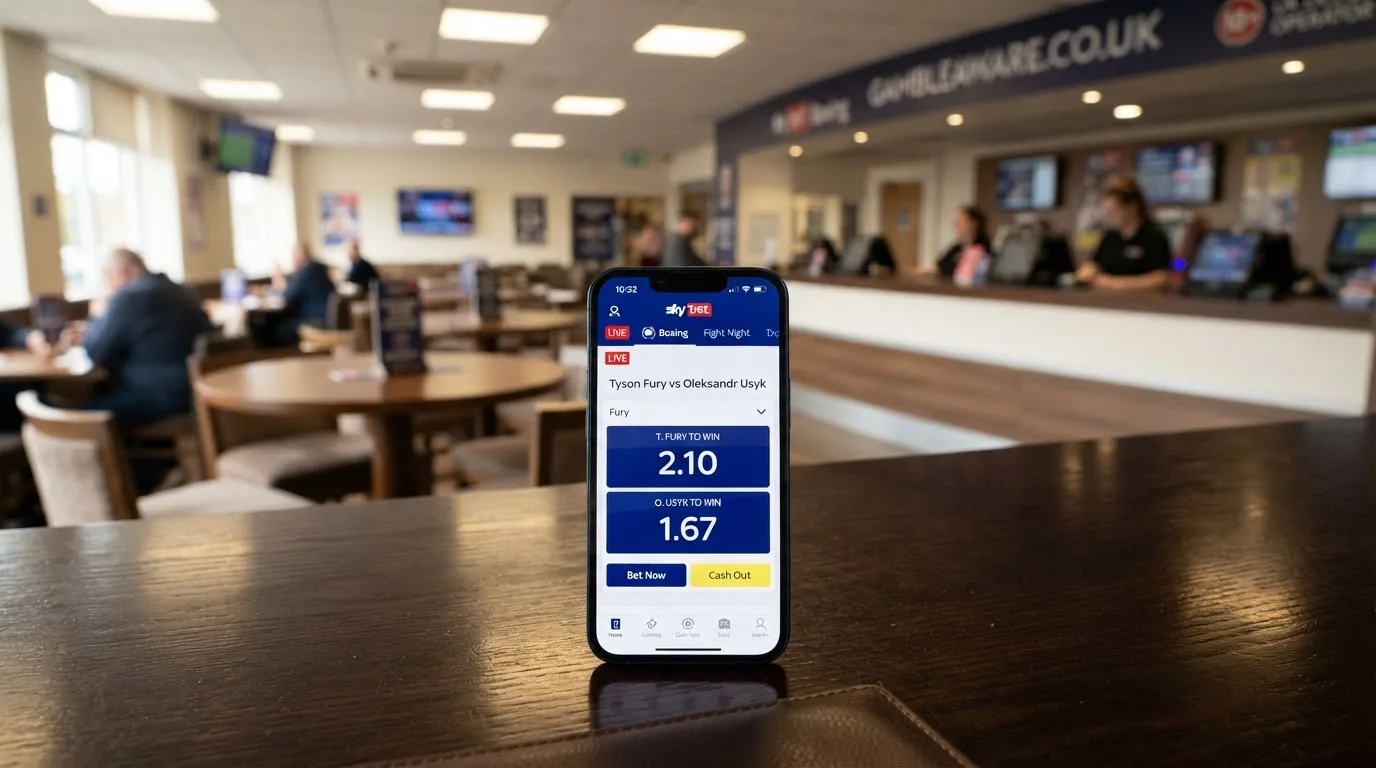
A licence from Gibraltar, Malta, Curaçao or any other overseas jurisdiction is not a substitute for a Commission licence in Great Britain; the operator must also hold a GB licence to serve British customers remotely. Operating unlicensed is a criminal offence under section 33 of the 2005 Act, on summary conviction up to 51 weeks’ imprisonment, a fine up to level 5, or both — six months in Scotland. There is no statutory list of permitted sports or permitted markets; the Commission’s licensing categories are the framework inside which operators offer markets under their own rules and the Licence Conditions and Codes of Practice.
The kind of licence a punter sees in the register entry for any of the brands in this set is “remote general betting standard (real events)”. Other categories the Commission issues include remote general betting standard (virtual events), remote general betting limited, remote pool betting, and remote betting intermediary — the last of which is the licence for betting exchanges, the kind under which Betfair’s exchange runs. The licence categories define what markets the operator may offer; the operator’s own terms define what it does offer.
Financial spread betting in Great Britain is regulated by the Financial Conduct Authority, not the Commission. Spreadex, which appears in the broader GB market, is regulated by the FCA for spread betting and by the Commission for fixed-odds betting; the FCA’s spread-betting licence lets Spreadex offer bets whose losses can exceed the deposit. The Commission’s regime does not extend to financial spread betting, so a boxing bettor using Spreadex for fixed-odds boxing bets is using the Commission-regulated side of the house, and the FCA is not relevant to that bet.
The minimum age to bet with a licensed operator is 18. Identity is verified before a customer can deposit or place a bet, including with a free bet or bonus, since 7 May 2019. The verification requires name, address and date of birth, confirmed by trusted-source documents. An anonymous boxing betting experience is not available at a GB-licensed bookmaker, and the verification itself is a sharper protection than any number of in-product features: a customer who passes the verification has been checked once at the entry point, and the rest of the relationship inherits that check.
Self-exclusion at a GB-licensed online bookmaker is GAMSTOP, which is a mandatory licence condition for online operators since 31 March 2020. GAMSTOP periods are six months, one year, five years, or five years with auto-renewal. After the minimum period the exclusion stays in place for a further seven years unless the customer asks GAMSTOP to remove it. GAMSTOP covers online sites and apps; betting shops use a separate service. A punter who wants to be locked out of every licensed British online bookmaker for at least six months can do so through GAMSTOP in a single step.
The 10x bonus wagering cap is the headline rule of the 19 January 2026 reform: a £10 bonus at 50x would have asked for £500 of qualifying bets; the cap means no more than £100 of qualifying bets per £10 of bonus. Mixed-product promotions — offers requiring gambling across betting and casino, or betting and lottery — are banned under the same reform. It is unclear whether the cap applies to free bets with no wagering condition (most licensed books treat a £10 free bet whose stake is not returned as outside the cap because there is no playthrough to multiply), and there is no statutory cap on the money value of a bonus.
Player protection in 2026 also includes a financial vulnerability check (Licence Conditions and Codes of Practice condition 3.4.4, in force since 30 August 2024), which applies to licensed remote betting when a customer’s deposits minus withdrawals exceed £150 in a rolling 30 days since 28 February 2025. The check is a public-record check (bankruptcy, county court judgments and similar), not an income check and not a credit reference check. The “financial risk assessments” or “affordability checks” of the press are different: those were announced by the Commission in a staged plan published on 7 July 2026, with no start date yet set, and should be written as “announced, staged, no start date”, not “in force”.
Deposit limits are a long-running rule: the Commission requires licensed remote operators to offer a gross deposit limit on a fixed time frame. The first set of changes has applied since 31 October 2025; a second phase was postponed to 30 September 2026, and whether that second phase is live at the time of reading is unclear. There is no state-set deposit or loss ceiling for betting; the customer’s deposit ceiling is the customer’s own choice, and the operator may add its own minimum and maximum deposit limits within the rules.
The credit-card ban for gambling in Great Britain has been in force since 14 April 2020 (LCCP condition 6.1.2). The ban covers credit cards directly and credit-card-funded payments through an e-wallet; debit cards and bank-based payments are not covered. A punter whose boxing bets are placed with a debit card or a bank transfer is unaffected; a punter whose boxing bets would have been paid from a credit-card-funded PayPal balance is in scope of the ban.
Advertising and bonus marketing carry the Commission’s LCCP marketing conditions plus the CAP Code (non-broadcast) and BCAP Code (broadcast), enforced by the ASA. Section 16 of the CAP Code: marketing must be socially responsible, must not be of strong appeal to under-18s, and no one who is or seems to be under 25 may be featured gambling or play a significant role (an exception applies to marketing placed at a place where a bet can be made directly). The “under 25 in ads” rule governs who may appear in marketing, not who may bet. “Whistle-to-whistle” is an industry code, not law: since 1 August 2019 betting advertisements are not shown on TV from five minutes before a live sporting event to five minutes after it, before the 9pm watershed (with horse and greyhound racing excluded).
The voluntary Premier League clubs’ withdrawal of gambling sponsorship from the front of matchday shirts from 2026/27 is not law; sleeves and hoardings remain sponsored. Operators are responsible for the marketing done by their affiliates; a punter who clicks an affiliate link and signs up at a licensed book has the operator’s customer relationship and the affiliate’s marketing provenance, and the LCCP makes the operator answerable for the affiliate’s compliance.
The player pays no tax on betting winnings in Great Britain (general information, not tax advice; a professional gambler should ask HMRC or an adviser). General Betting Duty is the operator’s tax on gross profits, currently 15%; from 1 April 2027 a new remote betting rate of 25 per cent applies within it, while remote bets on UK horse racing, bets on self-self-service betting terminals in licensed premises, pool betting and in-person betting remain at 15 per cent (HM Government policy paper of 26 November 2025). Spread betting has its own rates (3 per cent for financial spread betting, 10 per cent for other). The 25 per cent remote rate applies from 1 April 2027; until then the remote rate stays at 15 per cent. How operators pass duty on through odds is unclear; the player’s winnings are not reduced by duty.
Operating an unlicensed gambling business for British customers is an offence under section 33 of the 2005 Act; operating the same unlicensed business from outside the UK and advertising it at British customers has been the practical case the Commission has gone after in recent years. Enforcement is disruption, not blocking: cease-and-desist notices, search-engine referrals, work with registrars, hosts and payment providers. The Commission has been given, or is about to receive, court-order DNS blocking powers; that does not mean ISP blocking is in operation. The state of enforcement in 2026 is that the Commission is empowered to disrupt unlicensed operators through a range of channels, and has not been empowered to block at the ISP layer.
The honest framing for a punter in Great Britain choosing between a licensed and unlicensed bookmaker: licensed means the protections apply — GAMSTOP coverage, Commission complaints route, approved dispute resolution, £150 financial-vulnerability check, 10x bonus cap, segregated customer funds; unlicensed means none of those apply and the punter is outside the British protection regime, with the added disadvantage that an unlicensed operator has no British duty to settle disputes in the punter’s favour. Neither is “the safe choice” by default; a licensed book is the baseline a British punter should expect, and an unlicensed book is the one the punter chooses knowing those protections are absent.
Responsible gambling and what help looks like in Great Britain
Boxing betting in Great Britain is gambling, with all that the Commission’s safer-gambling framework implies. Help is available at the following channels, which are the British norm rather than a list specific to boxing:
- GamCare and the National Gambling Helpline. GamCare is the main national provider of information, advice and support for gambling harm in Great Britain. The National Gambling Helpline is a free, confidential 24-hour service. Operators are required under LCCP condition to refer customers to GamCare where appropriate, and GamCare’s website publishes the operator-level complaints procedure for cases the operator cannot resolve.
- GambleAware. GambleAware funds research, education and treatment for gambling harm, with treatment delivered through the NHS and partner organisations. GambleAware is referenced by most licensed UK operators’ responsible-gambling pages.
- NHS gambling clinics. A national network of specialist NHS gambling clinics provides treatment for gambling disorder. NHS clinics are part of the publicly funded health service; referrals can be made by GPs or self-referrals.
- Gamblers Anonymous. A long-running fellowship of men and women who share their experience, strength and hope with each other that they may solve their common problem and help others to recover from gambling problems. Gamblers Anonymous meetings are run by members in-person and online.
- GAMSTOP. GAMSTOP is the national multi-operator online self-exclusion scheme and a mandatory licence condition for online operators since 31 March 2020. A punter who self-excludes through GAMSTOP is locked out of every licensed GB online bookmaker for the period they choose (six months, one year, five years, or five years with auto-renewal). After the minimum period the exclusion stays in place for a further seven years unless the customer asks GAMSTOP to remove it. Self-exclusion at GAMSTOP covers all GB-licensed online brands, not just one.
A punter who wanted to take a break from boxing betting specifically — keep the sports betting account open but stop gambling on fights — can do this with a product-level time-out at their licensed bookmaker. Most licensed GB operators offer 24-hour, seven-day and 30-day time-outs in addition to the GAMSTOP-level exclusion. The product-level time-out is one book at a time; the GAMSTOP exclusion is every book at once.
A punter who wanted to set a deposit limit can do so through their licensed bookmaker, and the Commission’s rules require operators to offer a gross deposit limit on a fixed time frame. The first changes have applied since 31 October 2025; a second phase has been postponed to 30 September 2026 and whether it is live is not established. A punter who wanted to keep themselves under a fixed monthly limit can request one through their bookmaker, and the limit should take effect within the operator’s stated turnaround rather than require a Commission intervention.
A punter who notices in themselves any of the following markers is in territory where help is appropriate, not a place to push through. Chasing losses: a punter who has lost more than they intended and has increased stake size to recover is past the line of recreational betting. Hiding bets from family, partners or friends. Borrowing to fund bets. Spending time at the betting app that interferes with work, sleep or relationships. Loss of interest in other activities. These markers are clinical signals, not moral ones, and the clinical response is to seek help.
A punter who suspected another punter is over their head can point them to GAMSTOP and GamCare; the punter themselves cannot force a self-exclusion, but they can name the channels.
Frequently asked questions
How to bet on boxing?
A licensed British bookmaker offers a winner market on every professional fight on its programme, plus a method-of-victory market on title fights and the deeper cards, plus totals rounds, plus go-the-distance, plus round-group bets. A punter picks a market, picks a selection, enters a stake, and confirms the bet at the decimal (or fractional) odds the book is showing. The bet is settled after the fight settles; the stake plus winnings is returned to the betting account if the bet wins, the stake is gone if it loses.
How boxing betting works in the UK?
Licensed British bookmakers run under the Gambling Commission’s regime; every operator whose remote facilities are used in Great Britain needs a Commission licence regardless of where it is based, and the public register is the whole test of who holds one. Bets are settled at the price shown at placement; in-play markets are offered on boxing and updated round by round; welcome offers are subject to the 10x wagering cap on bonuses since 19 January 2026; mixed-product promotions are banned under the same reform. The bookmaker’s margin is in every price; a 1.90 / 1.90 two-way market has a payout share of about 95.0 per cent (1 ÷ (1/1.90 + 1/1.90)) and a margin of about 5.0 per cent.
How to bet on boxing online?
Find a licensed bookmaker by searching the Commission’s public register (business name, trading name, account number or domain), register an account, pass identity verification (name, address, date of birth) before depositing, fund the account by debit card or bank transfer, find the boxing page on the site or app, pick a market, pick a selection, enter a stake and confirm. In-play betting, bet-builder support and cash-out are products on top of the basic winner market; live streaming of boxing fights is offered by some apps and not by others.
How can it be checked that a bookmaker holds a Gambling Commission licence?
Search the Commission’s public register by the operator’s business name, account number or domain. Every brand in this set is on the register at the access date above; a brand not on the register is not licensed to serve British customers. The register is the whole test of whether a brand holds a GB licence; a Gibraltar licence, a Curaçao licence, a Maltese licence or any other overseas licence is not a substitute. Account numbers are listed in the comparison table earlier on this page.
How is the return on a bet worked out from the stake and the odds?
The return on a winning bet is the stake multiplied by the decimal odds. A £10 bet at decimal odds 4.00 returns £40 (a £30 profit on top of the £10 stake returned); a £10 bet at 1.50 returns £15 (a £5 profit on top of the £10 stake returned). An accumulator’s total odds are the product of the legs’ decimal odds, and the return is the stake multiplied by that product. A free bet whose stake is not returned nets the free bet amount times (odds − 1); a £10 free bet at 3.00 returns £20 winnings and £0 stake, for a £20 net, when the bet wins.
What is the bookmaker’s margin and how can it be seen in the odds?
The bookmaker’s margin is the share of every unit bet that the book keeps on average, calculated as one minus the payout share. The payout share on a market is one divided by the sum of the reciprocals of the decimal odds on every outcome (1 ÷ (1/odds₁ + … + 1/oddsₙ)). A two-way boxing market at 1.90 / 1.90 has a payout share of about 95.0 per cent (1 ÷ (1/1.90 + 1/1.90) = 1 ÷ 1.0526 = 0.95) and a margin of about 5.0 per cent; a three-way market including a draw at 12.00 would have a higher total of reciprocals and a wider margin. The margin is the cost of every bet the punter places, scaled by the size of the bet: a punter placing £100 on a market with a 5.0 per cent margin is paying on average £5 for the bet, before considering whether the selection is correct.
Combat & motorsport – Boxing betting
Content created by the «Boxing betting» team
