
Where to back a horse in 2026 — the GB-licensed field at a glance
 Available in US
Two things decide every wager on a horse in Great Britain: whether the firm taking it holds a Gambling Commission licence, and what its each-way terms look like once the race card drops. The licence question has a single, public answer — the Commission’s register, searchable by name, trading name, domain or account number — and that is the test. The each-way question is messier, because place terms vary from operator to operator, and the operator’s own page is the only reliable reading of what those terms actually are. What follows is a comparison of ten licensed bookmakers on the horse racing they actually carry, written for someone who already understands what an each-way bet is and wants to know who pays it best, and at what cost.
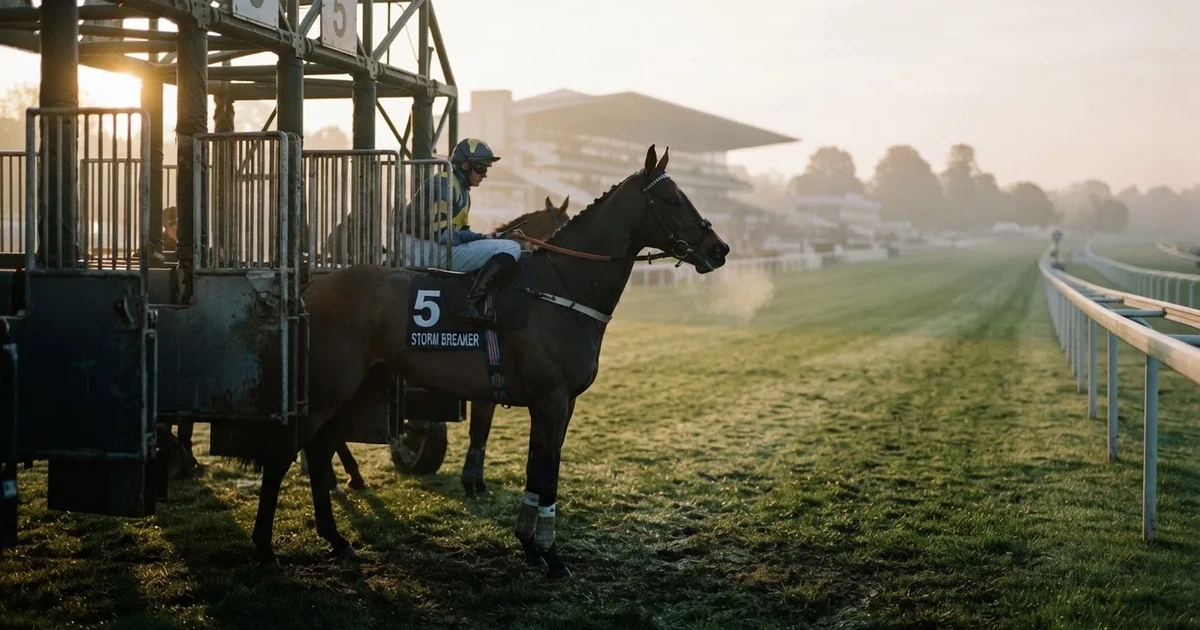
Snapshot as of 27 October 2026, cross-checked against the Gambling Commission’s public register for every operator named below.
Crypto and the unlicenced trade: what anonymity actually costs a UK punter
Searching for crypto horse racing betting, or for “sites not on GamStop”, is its own traffic stream, and the operators behind it are a different population from the ten compared further down. The first thing to get straight: every Gambling Commission-licensed remote operator in Great Britain is a GAMSTOP member by licence condition, because GAMSTOP has been a mandatory licence condition since 31 March 2020. So a “horse racing site not on GamStop” is, by definition, a brand outside the GB licensing frame. That is not the same as “blocked” — it is unverified and unregulated, and the protections a punter is used to at a UK-licensed bookmaker simply do not apply.
What the search usually turns up is one of two things. First, the offshore betting exchange or crypto-friendly sportsbook, accepting Bitcoin or stablecoin deposits, advertising in jurisdictions where the firm has chosen to hold a licence — Curaçao, the Isle of Man, Anjouan, occasionally Malta. Second, a parallel “crypto rail” on a brand that, elsewhere in its offering, also holds some form of remote licence, where the cryptocurrency route is a deposit or withdrawal method layered onto a different operating company. The Commission’s public register is where the distinction lives, and it is the only place where it lives.
The cost of anonymity, where it does exist on an offshore brand, is the loss of every consumer-protection mechanism tied to a GB licence. Self-exclusion through GAMSTOP is one — a self-excluded customer’s only way back is to ask GAMSTOP to lift it after the minimum six-month period, with a seven-year tail. The Commission’s complaints route is another: a dispute with an offshore brand falls to whatever alternative-dispute-resolution service the operator signs up to, and the bindingness of that outcome depends on the operator’s willingness to honour it. There is no deposit cap, no £150 financial vulnerability check, no cap on wagering requirements for bonuses, and the credit-card ban that has applied to UK gambling since 14 April 2020 is the operator’s own policy rather than a binding rule. The Commission’s enforcement powers — cease-and-desist, registrar and payment-provider referrals, and the court-order DNS blocking powers that have been given or are about to be given — target the operator, not the punter. No offence aimed at a customer who simply bets with an unlicensed firm has been established; what is established is that a punter who pays an unlicensed operator has no British consumer redress if funds are withheld.
Identity verification is a useful tell. GB-licensed remote operators verify name, address and date of birth before the first deposit — that regime has applied since 7 May 2019, and it covers free bets and bonuses as well as cash play, which is why no anonymous play is offered at a licensed site. A firm that lets a customer deposit and bet Bitcoin without any of that is, on the available evidence, operating outside the Commission’s frame. The honest framing is the one the Commission itself uses: “licensed = checks, limits, GAMSTOP, bonus cap, but also verification before the first bet; unlicensed = none of those protections and possible loss of funds.” Neither route is “the safe choice” by default. Punters who decide that anonymity matters more than those protections should know exactly what they are giving up — and the answer is most of what makes a UK betting account safe to complain about.
Bonuses and free bets: the price behind “free” on horse racing
Free bets and matched bonuses are the marketing word that does the most work on a horse racing search, and the worst return on a punt. The condition that pulls the carpet is the rollover — the multiple of the bonus the customer must wager before any withdrawal becomes possible — and the law on that is now hard. The Commission’s promotion rules, in force since 19 January 2026, cap wagering requirements on bonuses at ten times the bonus amount: a £10 bonus at fifty times, which is what older offers still in circulation used to ask for, would need £500 of bets to clear, and that exact structure is now out of bounds. The cap on the monetary value of a bonus, and whether it applies to free bets that carry no wagering requirement, were not published in the rules.

Where this meets horse racing, the second clause of the same rule matters just as much: mixed-product promotions — an offer that requires gambling on two or more product types such as betting, casino, bingo and lottery — are banned. A “bet on football to get free spins” shape was the textbook example, and the rule drops it altogether. A free bet issued against a horse racing deposit, with no casino hook on the back of it, is a different offer by the same rule, and is generally still in circulation at licensed firms.
The free bets that do remain in the field, ignoring the cap and the rollover question, settle on three structures. The first is the matched deposit bonus, where the bookmaker matches a percentage of the customer’s first deposit in free bets — a familiar shape and one that is now subject to the rollover cap. The second is the no-deposit free bet, smaller in size and either credit-only or with a token win-cap. The third is the “bet £X get £Y” credit, where a qualifying bet unlocks a fixed credit bundle. The common feature, and the one most punters underestimate, is that on almost all free bets the stake is not paid back with the winnings. The free bet is the wager; what the customer walks away with is the profit, on top of which a cap on free-bet winnings is normal. A £10 free bet at odds of 5.00 (4/1) returns £50 of profit, not £60 — a £10 already spent on the stake.
The punting math behind this is the single most over-claimed number on bookmaker marketing. Average value of a free bet whose stake does not return — the formula a sharp punter actually uses, value = free-bet amount × (odds − 1) ÷ odds × payout share of the named market — sits well below the headline figure. On a two-way market priced 1.91/1.91 (roughly 10/11 each side), the payout share is around 95.3% and the average value of a £10 free bet on that price works out near £9.20. That is an average over many bets: place the same free bet on a 10.00 shot and the average value rises; place it on odds shorter than the market allows — and minimum-price clauses for free bets almost always restrict this — and it falls. The cap on free-bet winnings, often £500 to £2,000 depending on the offer, takes the upside off the longshot play without making the short-odds play safe. The market margin turns the rest.
Where bonuses do work for the punter is in the form that flattens the marketing term: Best Odds Guaranteed (BOG). Several bookmakers — William Hill is the named example here — pay BOG on UK and Irish horse racing from 8 AM on race day, on both single and multiple bets. The mechanic is simple: take the price at the time of bet; if the starting price (SP) is greater, the bet settles at SP. BOG is not a bonus in the strict sense — it is a price-promotion, not a credit, and is not subject to the wagering cap. What it costs the bookmaker is paid back through the margin built into the rest of the card. Punters comparing offers should weigh BOG against free-bet bundles every time, because BOG pays on every race, and a free bet pays on the one race the customer uses it on.
Mobile and the app table: where the GB horse racing apps actually sit
The horse racing betting app field is not what it looks like on a download chart. The chart is dominated by brands with full multi-sport products — football-heavy, with horse racing as one of several verticals — and the UK shop-window for an app-only horse racing experience is narrow. Within the ten licensed bookmakers compared below, several run app-only. Matchbook is one. Midnite runs a sports-only product built around the in-play menu, with the Commission licence it cites (account 101839) on the public register. BoyleSports and Paddy Power distribute native apps through the GB App Store, alongside the mature web products they run underneath.
The native-app advantage for horse racing is fourfold: a one-handed betting slip on a phone screen, push notifications for non-runner changes and Rule 4 deductions, in-play markets that refresh quickly enough to use, and a single identity for depositing and withdrawing. The native-app disadvantage, comparatively, is narrower in 2026 than it was three years ago: most major operators now render their sportsbook in mobile web so cleanly that the difference is in-house features rather than display. A punt on the Geegeez Gold Cup from a phone browser on a Saturday afternoon is mostly the same bet as a punt through the native app; the difference is whether the bookmaker exposes its live-streaming player, its each-way place-terms editor, or its acca builder on the mobile web view or only inside the app.
Build, in this context, is the place the two diverge most. bet365’s Bet Builder+ is described as combining markets from one event into a single bet, available both pre-match and in-play, with Super Boosts and daily Bet Boosts as a layer above. That kind of construct lives inside the native app because the pricing logic it requires does not survive a refresh-on-every-tap mobile web session as cleanly. Same-game multiples — “horse to win and jockey to lead at the furlong” — are still the preserve of the native app, and the bet-builder tab on a horse race is the cleanest differentiator between operators whose apps treat horse racing as core and those whose apps treat it as a sub-tab under football.
Speed-to-market on rule changes is a quieter point. Non-runner changes trickle through the bookmaker’s settlement system once the official going is published, and an operator whose app updates its display on a thirty-second cycle will pay out early or late against a Rule 4 deduction depending on how the price was taken. The identity-verification screens that GB-licensed operators run before the first deposit — check name, address and date of birth, validate against public records, and source-of-funds questions at higher spend — also live inside the native app as a fully-built flow, and a customer who has only ever used the desktop flow on a phone browser has not seen the same version of the same checks.
Live betting, in-running markets and cash-out on horse racing
Live horse racing in Great Britain is a regulated product, not an unrestricted one. The Commission’s licence conditions permit in-play betting — a televised race can be bet on after the off, on most licensed operators — but the controls around it are the operator’s own, and the controls on offer limits and pricing freshness are tight. Live odds on a horse race move step-function on the off, settle into a near-flat state for the early part of the race, and only re-open meaningfully at the furlong marker, when a lay on the leader starts to make real money. A bookmaker that publishes live odds on every UK race from every meeting, mid-meeting, is rare — most choose a selected card.
In-running markets are the place where the bettor’s understanding of the racing itself matters most. Laying the leader at 1.20 about two out, when the gap to the chasing horse is two lengths and closing, is a different wager from laying at 1.20 at the same distance when the leader is travelling well. The published margin on an in-running two-way market is wider than the pre-off margin on the same race, because the published prices reflect a wider universe of inputs (track condition, sectional times, the punter’s exposure on the leader, the live stream delay). Cash-out, the bookmaker’s mid-event settlement mechanism, is the quote one step removed from the in-running price, and it widens the gap further. A cash-out quote of 95p on a 1.00 in-running position two lengths clear with two to race is generous; a cash-out quote of 60p on the same position four lengths clear with one to race is a punter-friendly price. Neither is the bookmaker’s generosity: both reflect, in part, the running margin.
The Commission’s stance on in-play is straightforward: it is licensed, it is offered, the controls are operator-set and the controls matter more than the headline. A reader who has not seen a £20,000 in-running liability cap quoted against a personal account has not seen the worst of it. Some operators will restrict a customer’s stake on a live race once the customer’s exposure crosses an internal threshold; some will simply refuse the bet at a price the customer has not earned through a track record. None of this is illegal; all of it is uncomfortable to learn about on a Saturday afternoon. A punter comparing live-horse offers should ask each operator’s customer service, ahead of opening, what its in-running liability cap is and what its policy on customer-level limits looks like. The answers vary widely.
Fitzdares’ app description lists cash out alongside accumulators, Lucky 15s, specials and ante-post markets on horse racing, football, tennis, rugby, cricket, golf and American football. London Bet’s app combines sports betting with Pragmatic Play casino slots and live in-play betting. Both are the shape a multi-product licensed app takes. The single-product alternatives — a betting exchange, a sports-only mobile bookmaker — are different: Matchbook’s app pages through a much narrower menu of markets, with the live-streaming of horse racing and greyhounds as its centrepiece. A punter whose betting day is built around one race from Punchestown at 3.15 will use a different tool for it from a punter running a portfolio of in-play bets across meetings. Both forms exist at GB-licensed firms; neither is a free choice.
Predictions, tips and the staking the day actually takes
“Today’s horse racing” as a search has two distinct reader types. The first is the racing fan who has read the Racing Post, has the form on the runner, and is looking for the market on the race. The second is the casual bettor who has seen a tipster’s name and wants to know which horse to back. The first group is well served by the licensed operators below; the second is not, and the reason is structural.
Tipsters work for sale, and a tipster whose selections win at a price a regular follower can actually find is rare. The cost of a subscription to a tipster, the cost of betting at the prices the subscription recommends, and the cost of the margin between those prices and the price of the same horse on the betting exchange — laid together — is the tipster-fan bettor’s bill. The honest rule, repeated across the racing press for years, is that tipsters are a content category, not an alpha category. The form-book reader makes a profit on the days the form reads; the tipster follower pays the tipster on every day.
Bankroll — the flat amount per bet that takes the variance of racing into account — is the practical decision most punters underweight. A £100 bank backing horses at the average three-to-one longshot will be flat across a hundred races; backing once and chasing losses is the path to bust. The staking instruction most racing books repeat is simple: set aside the bank, set the unit stake at one per cent of that bank, do not chase, and accept that a 33% win rate at 3/1 is breakeven after margin. The staking is the strategy; the system is the staking. Betting systems sold as strategies — “each-way Dutching on handicap favourites”, “lay the favourite in non-handicap races” — are a separate trade, and the only honest answer to a punt on whether a system works is that the system either shows a long-term profit on a closing line-value test or it doesn’t.
The closing line is the price the market closes at. Comparing the price the backer took to the price the market settled at, over enough bets, is the underlying test of whether the backer’s eye on form has any edge. The eye may have edge in one race type (two-year-old maidens, say) and not another (apprentice handicaps), and edge over one bookmaker and not another (because the margin differs). The thing to remember is that the closing line is the one number racing’s economics revolve around: a bettor is supposed to be ahead of the market on the bets they place, which is a different claim from having a profitable day. Without a closing-line test, there is no honest way to grade a tipster, a system or a self-run form study. The gambling press has been at this for fifty years, and the result is the same as it has always been: most punters are not ahead of the closing line, and the maths of that are not in the punter’s favour.
This is also where in-running and in-play strategy meets form. A punter who can read a race well enough to back the leader-to-be at 4/1 with a furlong to run, instead of at the SP of 6/4, has no edge in a market where someone inside the bookmaker’s office is settling bets on sectional times. The eye of the punter, against the eye of the pricing desk, is the racing game played at the level the racing press writes about. Most punters are operating two levels down: not the eye-vs-desk game, but the eye-vs-the-form-book game, and the form-book is the safer place to learn.
Bet types, odds and the calculator work behind a horse racing wager
The horse racing bet list is the deepest in British betting, and the calculator behind the bet list is worth understanding at the level of each bet type. The win single is the simplest: stake on a horse to win the race. The each-way is a win single combined with a place bet at the same stake, so the total stake is doubled (a £10 each-way wager costs £20: £10 to win and £10 to place). The place part pays a fraction of the win odds, set by the operator and the race: handicaps with sixteen or more runners pay 1/4 of the win odds for four places; twelve-to-fifteen-runner handicaps pay 1/4 for three places; other races with eight or more runners pay 1/5 for three places; five-to-seven-runner races pay 1/4 for two places; fewer than five runners is win-only. A £10 each-way bet on a 10/1 horse at 1/4 place terms (three places) costs £20; if the horse wins, the win part returns £110 (£10 × 11) and the place part returns £35 (£10 × 3.5), totalling £145. If the horse finishes in the place positions without winning, the win part is lost and the place part pays £35; the punter is £85 down on the race.
Beyond the each-way, the multi-leg bets construct the rest of the form. A double is two selections, both must win; a treble is three; an accumulator (“acca”) is four or more. The combined odds of the legs multiply into a single price; a treble at 3/1, 4/1 and 5/1 carries combined odds of 119/1, so a £10 treble at those prices returns £1,200 if all three win. The combined-price maths on a multi-leg bet is straightforward: every additional leg multiplies the combined odds by the decimal equivalent of the leg’s fractional price. A Trixie (three selections, four bets — three doubles and a treble); a Patent (three selections, seven bets — three singles, three doubles and a treble); a Yankee (four selections, eleven bets); a Lucky 15 (four selections, fifteen bets — four singles, six doubles, four trebles and a four-fold); a Canadian or Super Yankee (five selections, twenty-six bets); a Heinz (six selections, fifty-seven bets); a Goliath (eight selections, two hundred and forty-seven bets). The unit stake on a multi-leg bet is the stake per leg per combination, so a £1 Lucky 15 costs £15 in real money.
Bet Builder and same-game multiples are a different construct, and they are the front of the racing-product line at the multi-sport bookmakers. bet365’s Bet Builder+ combines markets from one event into a single bet, available pre-match and in-play, with Super Boosts and daily Bet Boosts as additional pricing. The same shape at the racing line is rarer: most operators offering Bet Builder on horse racing limit it to combining win and place markets on the same race, or to combining a horse’s finishing position with a forecast (first and second in order). Each bookmaker’s own page is the test.
Spreads and exchanges deserve a separate paragraph. Spreadex — which is licensed by the FCA for spread betting and by the Gambling Commission for fixed-odds betting — runs a spread on every televised horse race, on a points scale determined by the bookmaker’s trader. Spread betting is a different loss-profile from fixed-odds betting: the punt is on whether the spread closes above or below the line, with the winnings or losses scaled by the number of points. Spreadex’s own terms state that spread betting losses can exceed the deposit, which is the underlying warning the FCA’s spread-betting regime is built around. A punter comparing offers should treat spread betting as a separate product, with separate tax treatment (3% for financial spread bets, 10% for sports spreads) and separate limits.
Exchanges — Matchbook being the named entry here — are a third model. An exchange runs no bookmaker margin in the same sense: a backer’s stake is matched against a layer’s stake at a price both customers have agreed, the exchange takes a commission on net winnings, and the rest of the position is between two customers. The price on an exchange, on a popular race, is the cleanest price on the market, because no operator margin sits inside it — what sits inside it is the commission. A £100 back bet at 5.00 on Matchbook, on a horse that wins, returns £500 with commission deducted on the profit; the equivalent bet on a fixed-odds bookmaker at the same 5.00 has the bookmaker’s margin baked in.
The calculator sits behind all of these. Working out a £5 each-way treble on three selections at 5/1, 4/1 and 3/1 each at 1/4 place terms with three places: each leg returns £30 in win (£5 × 6) and £7.50 in place (£5 × 1.5) on the place fraction, on each of three legs. The treble pulls the three returns into one combined position, which is the main mathematical game the multi-leg bets perform. A bet calculator at any licensed bookmaker will produce the answer in less than a second: the leg-by-leg maths runs in real time, the combined fraction is displayed in decimal and fractional, and the place-pay table at the operator is laid out next to the entry.
Horse racing, the sport: distances, formats and the British calendar
Flat racing and jump racing (called National Hunt in Great Britain and Ireland) are two formats that do not run on the same tracks or at the same time of year. Flat races are run directly between two points on a straight or oval track, with the shortest recognised distance at 440 yards (400 metres) and the longest at more than four miles (6.4 kilometres). The common distances are five to twelve furlongs (1.0 to 2.4 km), with the middle of that range — six to ten furlongs — carrying the bulk of the British flat racing programme. The Classics (the 1000 and 2000 Guineas, the Oaks, the Derby and the St Leger) are all run over a mile and a half or a mile, with the Derby in particular being the centre of the British flat-racing summer.
Jump racing uses a different track layout: fences and hurdles are placed on an oval, with longer distances (the Gold Cup at Cheltenham runs over three miles and two furlongs) and a different handicapping approach. The Cheltenham Festival in March, the Grand National meeting at Aintree in April, and the Punchestown Festival in Ireland in late April are the three meetings that set the jump-racing calendar. The Grand National itself is run over four miles and two and a half furlongs, with thirty fences and a field that is capped (in 2024 onwards) at thirty-four runners after a series of safety-driven reductions. The shape of the betting on the National is its own market, with place terms often extended and bookmaker specials layered on the win market.
Handicap races and conditions races are the two structures the punter sees on a race card. In a handicap, each horse carries a different weight assigned by the official handicapper based on the horse’s assessed ability, with the aim of equalising the field; the betting market on a handicap is a deeper handicap with the weights built in. In a conditions race, all runners carry the same weight, with allowances for younger horses (age-allowances, by sex and by number of runs) and female horses. The Derby and the Guineas are conditions races; a Saturday afternoon handicap at Kempton is a handicap. The form-book approach to each is different, and so is the betting angle: weights are the main overlay on a handicap favourite, while the form of the favourite in a conditions race is the overlay.
The British Triple Crown consists of the 2000 Guineas, the Derby and the St Leger. Winning all three in the same season is one of the rarest achievements in racing — Nijinsky in 1970 was the last horse to do it — and the ante-post market on a Triple Crown candidate is a separate structure from the day-of-race market, with the bookmaker carrying the risk of a non-runner across meetings. The opposite of the ante-post is the starting-price (SP) market, which settles on the official SP as returned by the on-course bookmakers at the close of betting; the SP is what a customer who has “taken SP” on a horse receives, and most operators settle single bets to whichever is greater — the SP or the price taken at the time of bet, when Best Odds Guaranteed is in force.
Top-ten ranking: the GB-licensed horse racing bookmakers at a glance
The ten operators compared here are holders of a Gambling Commission remote licence as listed on the public register, each under a different (or differently-named) licensee. Several pairs of brands run under one licensee, and the registered trading names of those pairs are not independent operators for these purposes. The set is not a recommendation and is not exhaustive — the Commission’s register lists many more licensed brands than any comparison can carry. What it is, is a representative cross-section of the GB-licensed horse racing market in 2026: a fixed-odds bookmaker of long standing (William Hill’s offer is described below from the operator’s own terms); newer entrants that have built around mobile and in-play (Midnite’s app), spread and exchange specialists (Spreadex and Matchbook), and the smaller premium houses (Fitzdares, Star Sports, London Bet) that trade on a higher-touch service. Each review below carries the brand and what sets it apart, the licence record on the Commission’s register, and a verdict on which reader the operator fits.
Tote
Tote is the pool-betting arm of the British horse racing industry, owned by the same operator that runs the on-course pool at most British meetings. Its licence is held by TDCO Limited under Commission account 54779. The product is pool, not fixed-odds: customers bet into a pool, the pool is divided among winning tickets after a deduction for the operator, and the dividend is declared at the close of the race. The place terms on a Tote place bet (typically 1/4 of the win dividend for the first three home in races with eight or more runners) are different from fixed-odds each-way terms. Tote is also the bookmaker through which the on-course betting operation at most British racecourses is run, so its prices are the SP reference that Best Odds Guaranteed offers settle against.
Tote suits the punter who wants SP-style dividends or who bets on course, where the on-course pool is the product. Tote is not a fit for the punter chasing a fixed-odds price on a single horse, because the product is pool-based; the punter taking a fixed-odds single is at a fixed-odds bookmaker, where the offer above applies.
Star Sports
Star Sports is a higher-touch independent bookmaker with a customer base built around telephone betting, where customers call a trader directly on 08000 521 321 to open an account, place bets or ask customer queries; the email support route ([email protected]) is the alternative. Its licence is held by Star Racing Limited under Commission account 9177. The product is fixed-odds with a heavy racing focus — British, Irish and international racing are the core, with football, tennis and US sports as supporting markets. The each-way place terms and the Best Odds Guaranteed offer are the main racing-day mechanics; the customer-service angle is what sets Star Sports apart from the multi-sport full-cover bookmakers.
Star Sports suits the racing-only customer who values a phone line over an app and a smaller, more specialist bookmaker over a multi-sport full-cover brand. It is not the fit for the punter who wants every price on every sport in one app or who is happy with the experience at a larger operator.
Fitzdares
Fitzdares is the premium-side independent, holding Commission account 400 as Fitzdares Limited. Its app lists cash out, accumulators, Lucky 15s, specials and ante-post markets on horse racing, football, tennis, rugby, cricket, golf and American football, with in-play live odds. The product is a fixed-odds single-app bookmaker with a high-end service wrapper — a concierge desk, an emphasis on larger stakes, and the racing product treated as the centrepiece rather than a sub-tab. The each-way place terms at Fitzdares track the GB standard, and the customer-service angle is its main differentiator.
Fitzdares is the fit for the racing-punter who backs at the top of the card and wants a bookmaker that treats each customer individually. It is not the fit for the punter running a portfolio of small-stake bets across many sports in one account, which is what the multi-sport full-cover operators are designed for.
London Bet
London Bet is a multi-product licensed bookmaker offering a fixed-odds sportsbook (football, tennis, horse racing, greyhounds, darts, golf, cricket, NFL, NBA, MLB, snooker) alongside Pragmatic Play casino slots, with live in-play betting through the app. The licence is held by Thistle Bet Limited under Commission account 66162. The product shape — sportsbook plus casino, with racing carried in the sportsbook alongside the casino vertical — is the mainstream licensed-bookmaker shape in 2026. London Bet’s racing coverage is built into the broader sportsbook product; its each-way terms follow the GB standard.
London Bet suits the punter who wants sportsbook and casino in one account and is happy with a smaller brand’s product depth. The race card is supported rather than front-led; the racing-fan specialist service that Fitzdares and Star Sports provide is not what London Bet is built for.
Betboro
Betboro is a multi-product bookmaker with a sports welcome offer in the matched free-bet shape. The offer mechanics research names — a 100% matched free bet of up to £25 on the first qualifying wager, requiring a debit card deposit of at least £10 and a first bet of £5 to £25 with at least three selections each at 3/5 (1.60) or higher — are the shape a small-stake welcome offer takes at a new-entry GB-licensed operator in 2026. The licence is held by Webmedia Development N.V. under Commission account 44181. The minimum-price clause (1.60 each leg on a treble or higher) sits inside the offer’s eligibility, and is the kind of clause a customer should read before claiming: the three-leg at 1.60-each structure limits how aggressive the qualifying bet can be.
Betboro suits the punter who values a small-stake welcome offer at a new firm and is happy to read the small print; the welcome offer is the main draws. The long-term fit at Betboro depends on how deep the racing product runs day-to-day and what the post-welcome offer structure looks like, which research does not pin down. The standard reading is that the punter-by-punter comparison with established GB-licensed brands will rest on those post-welcome terms.
Kalooki Sportsbook
Kalooki Sportsbook is a sports-only licensed bookmaker operating under Kalooki Sportsbook Limited (company number 12938274) with a Commission licence under account 57730, and is a GAMSTOP member. The “sports-only” tag is the differentiator: no casino, no bingo, no lottery; the product is a focused sportsbook with horse racing as one of several verticals. The licenceholder is the same firm whose name sits on the Commission register, which is the cleanest reading of the regulated footprint; the GAMSTOP membership makes the broader consumer-protection frame explicit.
Kalooki suits the racing-fan customer who values a sports-only product and is happy with a smaller firm’s racing-coverage depth. The fit is the anti-full-cover-brand fit: focused, narrow, no casino side-wagering on the same account.
Paddy Power
Paddy Power is one of the two or three most-downloaded sports-betting apps in the UK App Store, and is published by Paddy Power PLC. The licence is held by PPB Counterparty Services Limited under Commission account 39439, which is also the licensee behind Betfair — a regulated dual-brand pair that should not be presented as two independent operators. The product is full-cover with a strong racing line: football, horse racing, boxing, rugby, tennis, golf, darts, snooker and F1 are the named sports, with each-way terms, Best Odds Guaranteed on UK and Irish racing, and a deep racing-product pitch. The brand’s profile is built on specials and novelty markets alongside the core racing product.
Paddy Power suits the punter who wants racing as one of several full-cover sports in a single top-tier UK app and values the specials and the BOG promotion. The PPB/Betfair dual-brand structure is a clarification a customer should make when comparing to a single-licensee competitor; the licensee backing Paddy Power is the same as Betfair’s.
BoyleSports
BoyleSports is an Irish-and-UK multi-product bookmaker with a GB App Store presence and a sports welcome offer for UK players structured as £20 in free bets against a £10 qualifying bet (€30 in free bets against a €10 bet for Irish players). The licence is held by Boylesports Enterprise under Commission account 39469. The product shape is full-cover with a strong Irish-racing angle (BoyleSports’ Irish roots show in the coverage of Irish race meetings) and a UK-GB-licensed product as the wider frame. The BoyleSports brand on the GB App Store signals a UK-GB product first, with the Irish angle as a secondary differentiator.
BoyleSports suits the punter who values Irish racing coverage alongside UK racing and wants a generous welcome offer shape. The welcome-offer eligibility — the £10 qualifier at minimum — is the kind of clause that should be on the customer’s reading list before any claim.
Octobet
Octobet is a multi-product bookmaker with a sportsbook welcome offer in the refund-as-free-bet shape: 50% back as a free bet up to £50, plus a £10 casino bonus for new customers. The licence is held by Octopus Game Limited under Commission account 62545. The offer shape (refund back as a free bet if the first bet loses) is the same as the £20-in-free-bets £10-qualifier shape, just scaled up: a stake up to £100 returns 50% as a free bet if it loses; the £10 casino bonus is a separate parallel offer and is one of the offers now subject to the mixed-product promotion rules if any gambling play is required. Octobet’s fit with the GB racing market is a new-entry full-cover brand with a sportsbook product that runs alongside a casino product.
Octobet suits the punter who wants a refund-as-free-bet welcome offer at a new GB-licensed firm and is happy with the standard rollover structure. The mixed-product promotion clause should be on every customer’s reading list: the £10 casino bonus on its own is one offer, but a parallel free-bet-with-the-casino-bonus structure on a single signup would be a separate offer under the rules now in force, and Octobet’s offer text needs to be checked before any claim.
Matchbook
Matchbook is a betting exchange where customers bet against other users, with Bet Builder, multiples, in-play betting and live streaming of horse racing and greyhounds. The licence is held by Triplebet Limited under Commission account 39504, which adds the betting intermediary (exchange) category to the standard remote general betting category — a different licence type. The product is exchange, not fixed-odds: a backer’s stake is matched against a layer’s stake at a price both customers have agreed, the exchange takes a commission on net winnings, and the rest of the position is between two customers. The price on a popular horse race on Matchbook is the cleanest price on the market, because no operator margin sits inside it; what sits inside it is the commission.
Matchbook suits the racing-fan punter who can read form and price up a horse against the rest of the field, and who wants the cleanest price on the card. It is not the fit for the punter who wants every market from football to novelty in one app, because the product shape is racing and greyhounds at the centre, with the multi-sport features as supporting.
| Brand | Gambling Commission remote licence | Licence holder | Operator’s own horse racing terms |
|---|---|---|---|
| Tote | 54779 | TDCO Limited | Pool betting only — SP-style dividends on the on-course pool |
| Star Sports | 9177 | Star Racing Limited | GB-standard each-way terms; phone-led customer service on 08000 521 321 |
| Fitzdares | 400 | Fitzdares Limited | Cash out, Lucky 15s, specials, ante-post on racing alongside multi-sport |
| London Bet | 66162 | Thistle Bet Limited | Each-way terms on racing inside a multi-product sportsbook + casino |
| Betboro | 44181 | Webmedia Development N.V. | Welcome offer: 100% matched free bet up to £25 on a 3-leg+ qualifier at 1.60+ |
| Kalooki Sportsbook | 57730 | Kalooki Sportsbook Limited | Sports-only bookmaker with GB-standard each-way and GAMSTOP membership |
| Paddy Power | 39439 | PPB Counterparty Services Limited | Best Odds Guaranteed on UK and Irish racing, deep racing line in full-cover app |
| BoyleSports | 39469 | Boylesports Enterprise | Welcome offer £20 in free bets against a £10 qualifying bet (UK offer) |
| Octobet | 62545 | Octopus Game Limited | Welcome offer 50% back as a free bet up to £50, £10 casino bonus parallel offer |
| Matchbook | 39504 | Triplebet Limited | Exchange model — back/lay prices between customers, commission on winnings |
How the GB-licensed horse racing market is regulated
The Commission’s regulatory framework is the only frame that matters for any operator serving customers in Great Britain. The Gambling Act 2005 covers England, Scotland and Wales — Northern Ireland is outside the Act and runs an older legal regime, so GB-licensed means GB only. Since the Gambling (Licensing and Advertising) Act 2014, an operator whose remote facilities are used in Great Britain needs a Commission licence wherever it is based (sections 33 and 36 of the Act as amended); a Curaçao, Maltese or Gibraltar licence is not a substitute. There is no state monopoly and no cap on the number of licences.
Licence categories matter because the licence type on the register tells the customer what the firm is licensed to do. The remote general betting standard (real events) category covers sports betting on real sporting events; remote general betting standard (virtual events) is a separate category for computer-simulated events; remote general betting limited is the lower-volume licence; remote pool betting is the on-course pool product; remote betting intermediary is the exchange. Matchbook’s account 39504 carries both remote general betting standard (real events) and remote betting intermediary; the others carry the general betting standard alone. Spreadex carries an FCA licence for financial spread betting separately from its Commission licence for fixed-odds betting — spread betting is a regulated activity under a different regulator for the financial product.
What may be bet on under those licences is not statutorily restricted: there is no statutory list of permitted bets or markets. An operator holds a licence for a category and offers markets under its own rules and the Licence Conditions and Codes of Practice (LCCP). Esports are treated like any other event; virtual events are a separate licence category; bets on politics, TV shows and novelty markets are offered by GB bookmakers and no statutory prohibition was found. In-play betting is licensed and offered; the controls are the operator’s conditions and customer-protection duties, and the legal analysis does not extend to “unrestricted” as a conclusion. Spread betting that is not a financial product is inside General Betting Duty.
Marketing rules have tightened twice. The CAP Code section 16 rule — marketing must be socially responsible, not of strong appeal to under-18s, and no one who is or seems to be under 25 may be featured gambling or play a significant role — operates on who appears in the ad, not on who may bet. The promotion rules in force since 19 January 2026 cap wagering requirements on bonuses at 10x and ban mixed-product promotions entirely. The “whistle-to-whistle” broadcast rule (since 1 August 2019, betting ads are not shown five minutes before or after a live sporting event, before the 9pm watershed, with horse and greyhound racing excluded) is an industry code through CAP/BCAP, not statute. The Premier League clubs’ voluntary withdrawal of gambling sponsorship from the front of matchday shirts (from 2026/27) is voluntary, not law.
The customer-side obligations are the more customer-facing frame. Identity verification before the first deposit has applied since 7 May 2019 — name, address and date of birth — and that regime covers free bets and bonuses as well as cash play, which is why no anonymous play is offered at a licensed site. The financial vulnerability check (LCCP condition 3.4.4, in force since 30 August 2024) applies once a customer’s deposits minus withdrawals exceed £150 in a rolling 30 days (since 28 February 2025): it is a public-record check (bankruptcy, county court judgments), not an income check and not a credit check. Financial risk assessments — the “affordability checks” the press reports on — have been announced in a staged plan (a Commission article of 7 July 2026), with no published start date. Deposit limits (RTS 12) are being introduced in phases; the first changes have applied since 31 October 2025 and a second phase was postponed to 30 September 2026, with whether the second phase is now live not established. There is no state-set deposit or loss ceiling for betting: limits are the customer’s choice.
Player protection: where a GB-licensed punter gets help
GAMSTOP is the national multi-operator online self-exclusion scheme, and a mandatory licence condition for every GB-licensed remote operator since 31 March 2020. The exclusion periods are six months, one year, five years, or five years with auto-renewal; after the minimum period expires, the exclusion stays in place for a further seven years unless the customer asks GAMSTOP to remove it. GAMSTOP covers online sites and apps; betting shops use a separate service, so the self-exclusion applies on the side of the product the customer uses.
Self-exclusion is the cleanest action a customer can take on a punt that has become a problem. The mechanic is straightforward: register with GAMSTOP, choose a period, and the customer is excluded from every GB-licensed online operator for that period. The Commission publishes the GAMSTOP participation list as a licence-condition requirement, so any licensed operator a customer can reach with an account will recognise an active GAMSTOP self-exclusion. The cash side of an active account is returned to the customer through the operator’s normal withdrawal process at the time of exclusion, and the operator is required to honour the exclusion across its entire product.
The advice line is the step before self-exclusion. GamCare runs the National Gambling Helpline (0808 8020 133); the helpline is free, confidential and runs 24 hours. GambleAware funds the helpline and provides information on the network of services in the customer’s area; the NHS runs gambling clinics in several cities for the more structured treatment; Gamblers Anonymous runs peer-led groups in most major cities. The four together — helpline, treatment clinics, peer-led meetings, and self-exclusion — are the four-tap path a problem gambler is expected to follow in Great Britain.
Player-side controls at the operator level are a complement to GAMSTOP, not a substitute. Deposit limits (the customer’s own choice — £20 a day, £100 a week — set inside the account), time-out periods (24 hours to six weeks), reality checks (a pop-up reminder every set interval of session time), and activity statements (a regular account review covering deposits, withdrawals and net position) are all standard at GB-licensed operators. The financial vulnerability check at the £150 deposit-minus-withdrawal threshold is the regulator-set control that sits above the customer’s own controls. The financial risk assessments the press has reported on are a different layer — an income-and-source-of-funds check that operators may run on higher-spend customers, announced in stages and not yet in force.
A punter comparing operators should check what each one offers on player-side controls before opening an account. A clear deposit-limit setter, a clean time-out button, reality checks configurable at the customer’s level, and an activity statement that downloads as a PDF are the four baseline features a GB-licensed bookmaker should have, and a customer who finds any of them missing at signup is on a sign that something is not right.
The arithmetic behind every price: a worked look at margin
The margin is the share of every unit bet on a market that the bookmaker keeps, on average across every bet. The mechanic is the inverse of the payout share: payout share is the share that returns to bettors in winnings over the long run, and margin is the share that stays with the bookmaker. The formula is straightforward — payout share = 1 ÷ (1/odds₁ + … + 1/oddsₙ) over all outcomes of one market, and margin = 1 − payout share — but the interpretation is where most punters undersell it. The margin is the bookmaker’s edge on the market; the smaller the margin, the better the price for the customer across every bet placed on that market; the larger the margin, the worse the price.
A worked example is the cleanest way to see it. Take a two-way market at decimal odds of 1.90 and 1.90 (roughly 9/10 on each side). The sum of the implied probabilities is 1/1.90 + 1/1.90 = 0.5263 + 0.5263 = 1.0526. The payout share is the inverse, 1/1.0526 = 0.9500, or 95.0%. The margin is 1 − 0.9500 = 0.0500, or 5.0%. That 5% is the bookmaker’s expected take on every £100 bet on that market: £95 returned to winners across many bets, £5 retained by the bookmaker, on average. The bettor pays the 5% as a deduction from what would otherwise be a fair price, baked into both sides of the market.
A useful sanity check, given the price rather than derived from it: a fair two-way market at decimal odds 2.00/2.00 has a payout share of 100% (1/(1/2 + 1/2) = 1) and a margin of 0%; no bookmaker offers that on a real market, because the book’s economic model is the margin. A market at 1.95/1.95 has a payout share of 1/(1/1.95 + 1/1.95) = 0.9744, or 97.4%, and a margin of 2.6%; this is closer to a sharp bookmaker’s best price on a popular two-way market. A market at 1.80/1.80 has a payout share of 1/(1/1.80 + 1/1.80) = 0.9000, or 90.0%, and a margin of 10.0%; this is the kind of price a longshot market sees at a routine bookmaker.
The margin belongs to the market, not to a single bet. A punter who places a single £10 bet on a horse at 5.00 (4/1) does not pay a 5% margin as a flat deduction; the punter’s bet is one position in a market the bookmaker has built, and across the whole market the 5% is the average. On a specific race with twelve runners priced from 4.00 down to 101.00, the sum of the implied probabilities can come in anywhere from 105% to 130% depending on the bookmaker — 110% to 115% on a typical British horse race with a balanced field. The margin is the inverse of the payout share, and a 115% book (overround of 15%) is a margin of 13%. A 110% book is a margin of 9%.
The most important thing to know about a margin is that it is the one number that racing’s economics revolve around. The punter cannot change it; the bookmaker’s margin is what sits inside every price on the card. The punter can choose to bet at the bookmaker with the lower margin (the cleanest bookmaker on the day), the punter can choose to bet at the exchange (where the price has no operator margin baked into it), the punter can choose to bet at the bookmaker running a Best Odds Guaranteed promotion (where the upside on a horse that drifts at the off reduces the effective margin), and the punter can choose to back the bookmaker’s specials less often. The margin is one of the few things the punter can actually compare on every meeting, every card, every race: it is right there in the price, and it is worth the time it takes to read.
A note on tax and on the player’s side
The punter pays no tax on betting winnings in Great Britain — general information, not tax advice, and a professional gambler should ask HMRC or a qualified adviser. General Betting Duty is the operator’s tax on gross profits, currently 15% at the time of writing, with a new remote betting rate of 25% applying within it from 1 April 2027. Remote bets on UK horse racing, bets on self-service betting terminals in licensed premises, pool betting, and in-person betting stay at 15%; the rate change is on the remote sports-betting side, not on the UK-horse-racing side. Spread betting carries its own rates — 3% for financial, 10% for sports. Whether operators pass the duty change through to the punter’s odds in 2026 is not established, and the legal analysis does not extend to that conclusion. The Commission’s statutory levy is a separate charge, distinct from duty, paid by the operator.
A second clarification: paying duty is the operator’s job, and writing that the punter is “charged” duty is a category error. The framework is that duty moves the operator’s margin up or down by a fixed percentage of gross profits, and the operator’s price-setting absorbs that movement; the punter’s price changes when the operator’s cost changes, and the operator’s cost changes in step with the duty. The punter sees only the price; the duty is hidden behind it. Writing that the punter pays duty would mis-describe the legal frame.
Frequently Asked Questions
How do I place a horse racing bet?
Open an account at a GB-licensed bookmaker, verify your identity—name, address, and date of birth are required before the first deposit—and fund your account using a debit card or bank payment. Select a race meeting, review the runner form, and place your win single or each-way wager. Settlement is automatic upon official results.
How do betting odds work for horse racing?
Odds represent the price for converting your stake into a return. A 5.00 (4/1) decimal price returns £5 profit per £1 staked, plus your £1 stake, totalling £6. A 2.00 (evens) price returns £1 profit per £1. Decimal prices reflect the total return per pound, while fractional prices show profit relative to the stake.
How is the return on a horse racing bet calculated?
The basic return is stake multiplied by decimal odds. Profit equals stake multiplied by (odds minus one). For each-way bets, the win part returns stake by win odds, while the place part returns stake by the place fraction. Licensed bookmakers provide automated bet calculators that perform these complex calculations instantly for any wager type.
How do I check if a bookmaker holds a Gambling Commission licence?
Use the Gambling Commission’s official public register to search by brand, trading name, domain, or account number. This is the definitive verification tool. If a bookmaker does not appear on this register, it is not licensed for customers in Great Britain, regardless of any other licences it may hold in foreign jurisdictions.
What is a bookmaker’s margin and how can the reader see it in the odds?
The margin is the share of every bet the bookmaker retains as profit, calculated by dividing one by the sum of implied probabilities across all market outcomes and subtracting this from one. It is a fundamental property of the market, not individual bets, and it is the key figure for comparing pricing fairness.
Horse racing & greyhounds – Boxing betting
Content created by the «Boxing betting» team
