
Online MMA Betting in Great Britain — Odds, Markets and What the Licence Means
 Available in US
Mixed martial arts sits in an unusual corner of British sports betting. The fight cards are fewer than football’s, the betting markets deeper than they look, and the regulatory frame is among the strictest in the world. This guide walks the reader through what online MMA betting is in 2026, how licensed operators price the fights, what the rules around bonuses and age checks actually do, and which bookmakers serve British customers under a Gambling Commission licence. It is written for the punter who wants to place a bet with eyes open, not the one chasing a tip.

The figures below are current as of 27 October 2026, checked against the Gambling Commission’s public register and each operator’s own published terms.
Why the Licence Comes First, Not Last
Every other question in MMA betting — the size of the welcome offer, the depth of the in-play markets, whether a price boost pays out in cash — sits on top of one prior question: is the operator licensed to serve customers in Great Britain? British law is built around that one fact. Since the Gambling (Licensing and Advertising) Act 2014, an operator needs a Gambling Commission licence wherever it is based if its remote facilities are used in Great Britain. A Curaçao, Maltese or Gibraltar licence on its own is not a substitute, no matter how prominent the brand. Section 33 of the Gambling Act 2005 makes the unlicensed offer an offence.
The Commission’s public register is the test. It can be searched by business name, trading name, domain or account number, and every UK-facing brand on this page appears there. The licence itself is not a stamp of quality in the marketing sense. It is a permission to operate, granted under the Act and the Licence Conditions and Codes of Practice that come with it. What it buys the bettor is concrete: GAMSTOP coverage, identity checks before the first deposit, a complaints route through the Commission and an approved dispute-resolution service, exposure to the 10x bonus wagering cap, and the £150 financial vulnerability check that runs once a customer crosses a 30-day deposit threshold. Operators based offshore offer none of those.
Saying “licensed” is therefore not the safety pitch it looks like in a bookmaker’s own marketing. Licensed means checked, capped, identified, and — for anyone who has signed up to GAMSTOP — refused. Offshore means the opposite, with the added risk that funds held by an unlicensed operator sit outside British consumer protection entirely. This guide covers only the licensed set.
What MMA Looks Like as a Betting Sport
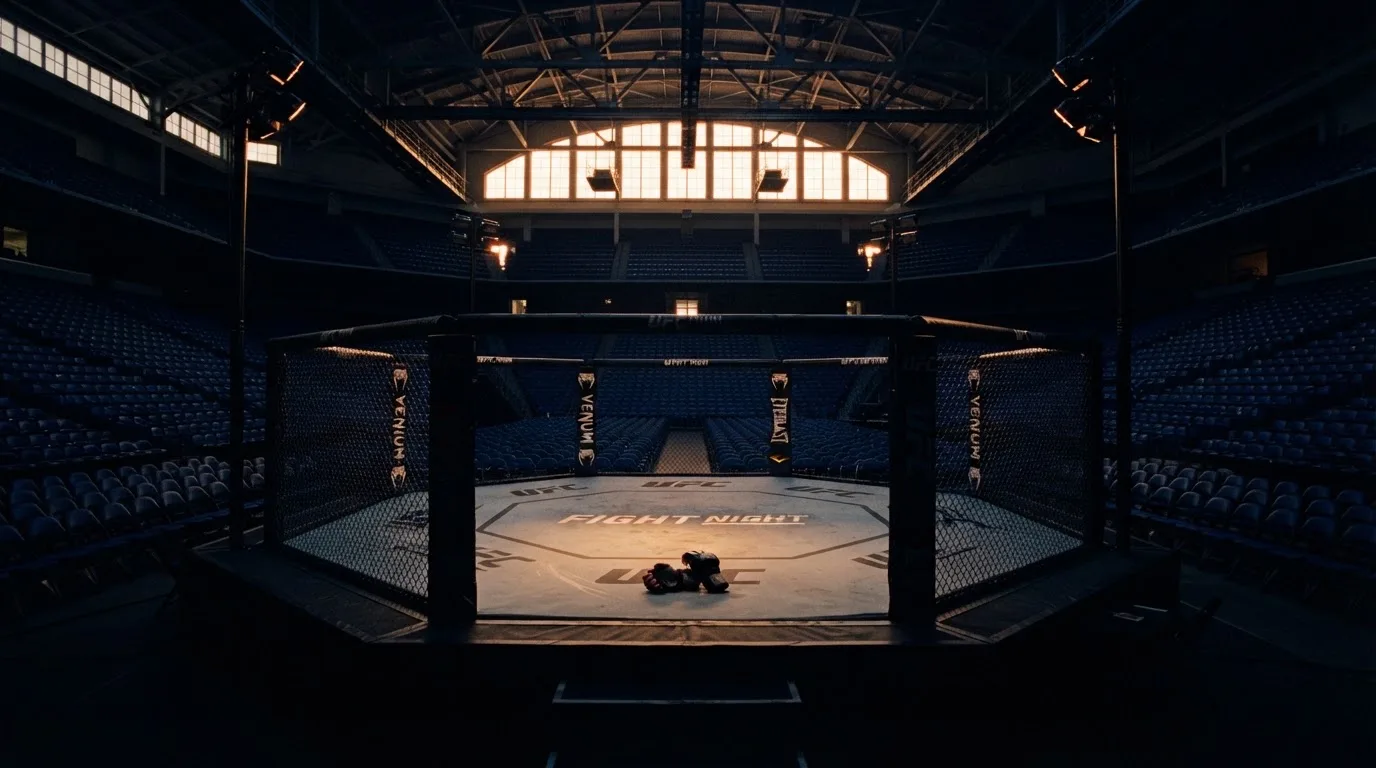
The Ultimate Fighting Championship, founded on 12 November 1993 at McNichols Sports Arena in Denver, has long since outgrown its novelty status. The UFC now fields 11 weight divisions — eight men’s and three women’s — and cards run almost every weekend of the calendar. Bellator, ONE Championship, PFL and a steady stream of regional promotions fill out the schedule. The sport’s structure rewards research in a way team sports often do not: two athletes, known records, a small number of meaningful stylistic variables.

Bouts are contested under the Unified Rules of Mixed Martial Arts. Each round lasts five minutes with a one-minute rest between rounds; non-title bouts normally run three rounds, title bouts five. Three judges score each round under the 10-point must system — the round winner takes 10, the loser 9 or fewer, and an even round is scored 10-10. Decisions can be unanimous, majority or split, and the same three words cover a draw. A bout ends in disqualification if an intentional foul incapacitates a fighter, and in a no contest if an unintentional one does. These are the rules that govern how a fight ends, and therefore how a bet on it settles.
That structure is what gives MMA its depth as a betting sport. Each fight has many ways to finish — knockout, technical knockout, submission, decision, disqualification, no contest — and licensed bookmakers offer a market for each. The method-of-victory market alone runs three or four selections; round and method combinations layer in further. A fight can be priced as a two-way line (fighter A or fighter B), as a three-way (including the draw, which is rare), or as a method market with several outcomes per fighter. The licensed British bookmakers listed below all offer the major markets on UFC main cards; depth on Bellator or regional events varies.
What the Odds Are Doing, and What the Margin Takes
Every decimal price on a fight card embeds the bookmaker’s margin. The margin is the share of every pound staked that the bookmaker keeps, on average, over a large number of bets. It is the single most useful number on the page for judging whether a bookmaker’s prices are tight or loose, and it is what the marketing word “best odds” usually obscures.
The arithmetic is straightforward. Take a market with two possible outcomes — fighter A to win and fighter B to win — priced at decimal odds of 1.90 and 1.90. The “payout share” is the share of every pound staked that the bookmaker returns to customers in winnings, on average. It is calculated as one divided by the sum of the inverse odds:
Payout share = 1 ÷ (1 ÷ 1.90 + 1 ÷ 1.90) = 1 ÷ 1.0526 = 0.9500.
The margin is the difference: 1 − 0.9500 = 0.0500, or about 5%. So out of every £100 staked across that market, the bookmaker keeps roughly £5 on average and pays back £95 to customers as winnings. Decimal odds in MMA pre-event markets typically run from 1.20 for a heavy favourite up to around 9.00 for a long-shot outsider, and the margin on a tight two-way line from a competitive bookmaker usually lands in a 4% to 8% band. Method-of-victory and round-combination markets tend to carry a higher margin — often 8% to 12% — because they have more outcomes and the prices are softer.
A higher margin is not a moral judgement. It is the bookmaker’s cut for compiling the card, managing the risk and running the platform. What it means for the punter is that the harder or more specialist the market, the more the price already costs. A “best odds” headline from one bookmaker compared to another rarely closes a gap wider than a couple of percentage points at the two-way stage — most of the action on a UFC card happens in markets the books are tighter on — but the gap grows sharply once you step into method, round or combination markets, where liquidity is thinner.
The headline price sits next to its margin for a reason. A price of 1.91 is not a better deal than 1.85 in isolation; it depends on the second number.
How a Bet Actually Settles and Pays Out
Once a market is priced and a stake set, settlement runs through a fixed pipeline. Place the bet before the event starts (or in-play, where the operator allows it) at the price displayed at the time of placement. The bet is locked in at that price — not at any later price, however much the line moves. The fight runs, the result is recorded, and the bet is settled against it. A winning single returns stake multiplied by the decimal odds; the net profit is stake multiplied by (odds minus one).
A concrete illustration: a £10 single at 3.50 returns £35 — the £10 stake plus £25 profit. A losing single returns nothing; the stake is lost. A combination bet, called an accumulator or acca, multiplies the odds of each leg together; a four-fold at 2.00, 3.00, 2.50 and 1.50 returns stake times 22.50, so a £5 stake returns £112.50. The catch is that every leg must win. One loser drops the whole stake.
Each-way betting is mostly a horse-racing tool, but it appears on some outright markets and on a few specials. It is two bets of equal stake — one on the win, one on the place — so the stake doubles and the place terms depend on the operator and the sport. On outright markets most books settle each-way at a quarter or a fifth of the win odds for places one to three, with extra places offered at major events. The place portion pays out whether or not the selection wins, and a winning each-way bet pays both halves.
Cash out is the operator’s offer to settle a bet before the fight finishes, at a price the operator sets in real time. It is useful when a fight is going one way and the punter wants to bank a profit, or to cut a loss. The price is the operator’s, not the market’s, and it widens with volatility. On a UFC main event, cash out is widely available across the licensed British operators reviewed below.
What the Welcome Offer Really Costs
British bookmakers headline a string of welcome offers for new sign-ups: free bets, bonus cash, “boosted” odds, acca insurance, profit boosts. The 19 January 2026 promotion rules cap wagering requirements on bonuses at 10x — a £10 bonus at 50x wagering, which would have required £500 of bets, is no longer permitted. The cap is a real change, and the marketing has not entirely caught up.
Take the kind of offer that appears on most British bookmakers’ landing pages: “bet £10, get £30 in free bets”. The headline is honest about the headline, but the economics sit one level down. A free bet whose stake is not returned with a win is worth less than its face value on average; its expected value is the free-bet amount multiplied by (odds minus one) divided by odds, then multiplied by the payout share of the market the free bet is placed on. A £10 free bet at decimal odds of 4.00, on a market with a 95% payout share, is worth roughly £7.13 on average. That is the typical gross value before the deadline and the minimum price for using the free bet are factored in.
Most welcome free bets expire in seven days. Most carry a minimum price — typically 1.50 or 2.00 decimal — below which the bet does not qualify as a qualifying wager or the free bet cannot be used. An offer that combines a sports bonus with a casino bonus — “bet on football, get free spins” — is now banned under the mixed-product promotion rules that came into force on 19 January 2026.
The arithmetic to clear a bonus is the second figure worth knowing. Suppose a bookmaker offers a £50 bonus with a 6x wagering requirement on the bonus only, meaning the punter must place £300 of qualifying bets before the bonus becomes withdrawable cash. At a margin of 5% on the betting markets used, the expected cost of clearing that bonus is £300 multiplied by 0.05, or £15 on average. The punter who clears it has, on average, given up £15 of expected value to win £50 of bonus — a positive expected value, but only if the punter would have bet anyway. A punter who bets more than they otherwise would to chase the bonus turns it negative.
Acca insurance and profit boosts work differently. Acca insurance refunds the stake as a free bet — usually capped — if one leg of an accumulator loses. It is not a refund in cash; it is a free bet that carries the same expiry and minimum-price conditions as any other. A profit boost increases the odds on a named bet; the increase is paid in winnings only and the stake is not boosted. Both moves look generous in isolation; both carry the same conditions as any other promotional stake.
A bookmaker’s headline offer is an introduction, not the long-term price. The long-term price is the margin on the markets the punter actually bets on. Welcome offers are a way for a bookmaker to discover whether a new customer is the sort who chases promotions — in which case the margin does the heavy lifting — or one who just wants fair odds on a fight card.
How the In-Play Markets Behave
In-play MMA betting is one of the more visceral experiences available through a licensed British bookmaker. The odds update round by round, sometimes within a round; cash out reprices at the same speed. The volume of bets is concentrated on UFC events; regional cards draw less liquidity, and the in-play offer is therefore thinner and the margins wider.
The mechanics are different from pre-event. The bookmaker’s algorithm has to assess momentum in real time — strikes landed, takedown attempts, visible damage — and reprice the market against the next significant event (a knockdown, a submission attempt, a cut opening up). The punter’s edge, if any, comes from seeing what the algorithm has not yet priced in: the eye on the fight.
The controls are not legal in nature. There is no statutory cap on in-play bets, and the Commission does not restrict the markets. The practical limit is the operator’s own risk management: a stake cap on a single in-play bet, a delay between price updates, a maximum payout on the in-play markets. These are stated in each operator’s terms and vary widely.
Live streaming on UFC events is offered by some licensed British bookmakers — typically the larger, more established ones — and the stream is keyed to a placed bet or a positive account balance. The coverage is rarely complete; preliminary and early prelim fights are often video-only through the promoter.
Mobile Apps, Browsers and Where the Bet Actually Happens
Most MMA bets in Great Britain are now placed through a mobile app. The App Store listings for the licensed British operators reviewed below show downloads in the hundreds of thousands, with bet365 the most-downloaded sports betting app in the UK market and Unibet, Betfred and BetVictor prominent among the rest. The apps differ in design more than in function — single-bet slip, accumulator builder, cash out button, in-play tab, account settings — but two differences matter for an MMA punter.
The first is the in-play tab. A clean in-play tab updates prices quickly, separates UFC fights from regional events, and offers cash out as a button rather than a hidden setting. The second is the bet builder, sometimes called a same-game multi: the ability to combine several markets from one fight — fighter to win, method of victory, total rounds over or under — into one bet. It is now standard on the bigger books and is one of the few product features an MMA punter actively wants.
Browser betting on the desktop is the second tier and is rarely the primary channel for MMA. The exception is the in-play punter who wants two screens — fight and market — at the same time, which a desktop handles more comfortably than a phone.
What Cryptocurrency Does, and What It Does Not, Change
Cryptocurrency deposits have grown across the global betting market. In Great Britain the picture is more settled than the headlines suggest. There is no statutory ban on crypto deposits at licensed operators; there is also no rule requiring an operator to accept them. Identity verification before the first deposit — in force since 7 May 2019, on which the Commission’s customer due diligence rules turn — is the controlling requirement. A customer who opens an account and deposits in Bitcoin still has to pass the same name, address and date of birth checks as a customer who pays by debit card.
The licensed British bookmakers reviewed here accept payment methods ranging from debit cards and bank transfers through e-wallets such as PayPal and Skrill. None of them markets itself as a crypto-first MMA betting site. The brands that do are predominantly unlicensed offshore operators, and the section on legality explains what that means in practice.
The reader looking for crypto MMA betting should understand three distinctions. First, the speed of a crypto deposit does not change the settlement speed of the bet — bookmakers still settle against the fight result. Second, the volatility of the asset is the punter’s problem; a £200 deposit in Bitcoin can be worth £170 or £230 by the time the bet settles. Third, the no-anonymity claim that occasionally appears in crypto betting marketing does not survive contact with British identity rules. A bookmaker licensed by the Gambling Commission is required to know who its customer is before that customer’s first bet, regardless of how the deposit is funded.
What the Reviewers Found: Ten Licensed Operators
| Brand | Licence Number & Holder | Market Focus |
|---|---|---|
| Betfred | 039544-R-319290-010 (Petfre (Gibraltar) Limited) | UFC main cards, in-play markets, cash out |
| Fitzdares | 000400-R-103839-030 (Fitzdares Limited) | UFC cards, premium racing-led platform |
| DragonBet | 064908-R-339041-003 (DragonBet Ltd) | UFC international cards, regional-sport focus |
| BetUK | 039198-R-319450-029 (LeoVegas Gaming PLC) | UFC main cards, acca-focused |
| Spreadex | 008835-R-104580-022 (Spreadex Limited) | UFC cards, fixed-odds & spread betting |
| BetTom | 064959-R-339314-003 (Bet Tom Limited) | UFC main cards, in-play markets |
| BetVictor | 039576-R-319370-028 (BV Gaming Limited) | Major UFC cards, racing-led |
| Unibet | 045322-R-324275-019 (Platinum Gaming Limited) | UFC event coverage, bet builder |
| Fitzwilliam Sports | 048760-R-335434-009 (SBKI Limited) | Main UFC cards, high-stakes focus |
| Geoff Banks | 054095-R-330366-010 (GB Sports Advisors Limited) | UFC main cards, compact offering |
The ten operators below all hold a remote general betting standard (real events) licence on the Gambling Commission’s public register. They are reviewed in the order set for this page. The section that covers each one states the licence number, the licence holder and the headline terms of any welcome offer as the operator publishes them; the verdict at the end of each block is this guide’s own.
Betfred — A Household Name Whose MMA Card Carries the Licence’s Weight
Betfred is one of the longer-established British bookmakers and one of the larger operators on the Commission’s register. The Betfred Sports, Casino & Games app is published by Done Brothers (Cash Betting) Ltd and lists 21 sports on its App Store page, alongside more than 2,000 casino-style games. The MMA coverage is broad on UFC main cards; method-of-victory and round-combination markets are priced; in-play is offered with cash out.
The welcome offer for new sports customers runs in cycles; the headline is typically a free-bet package with a bet-£X-get-£Y construction and a seven-day window to use the free bets. The exact headline varies, and Betfred’s own terms page is where the live figure sits. The licence is Gambling Commission remote licence 039544-R-319290-010 (account 39544), held by Petfre (Gibraltar) Limited.
A punter who wants a large operator with deep market coverage and accepts that MMA is one sport among many on the platform is well served here. The verdict is that Betfred’s licence, scale and UFC market depth make it the kind of bookmaker a first-time MMA punter can settle on without much friction; the cost of that choice is the same as the cost of going with any large operator — the welcome offer is competitive rather than generous, and the long-term edge sits inside the margin.
Fitzdares — A Premium Bookmaker With a Racing Bias
Fitzdares sits in the premium tier of British bookmakers. The Fitzdares app on the App Store lists cash out, accumulators, Lucky 15s, specials and antepost markets across horse racing, football, tennis, rugby, cricket, golf and American football, with in-play live odds. MMA is offered on UFC cards; the platform is stronger on horse racing than on the fight sports.
The licence is Gambling Commission remote licence 000400-R-103839-030 (account 400), held by Fitzdares Limited. The welcome offer structure, where it appears, leans on a free-bet or bonus package for new sports customers; the live terms are on the operator’s site.
The verdict is that Fitzdares suits a punter whose betting is weighted toward horse racing and football and who wants the same account to handle the occasional UFC card. A punter whose primary interest is MMA betting will find the markets and the specials thinner here than at a sports-led operator and should treat Fitzdares as a complement rather than the main book.
DragonBet — A Welsh-Flavoured Bookmaker With a Broader Punch
DragonBet markets itself around Welsh sport. The DragonBet app on the App Store lists Welsh football and rugby markets, racing, American football, in-play betting and bet builder markets. MMA is offered on the international cards, with the depth expected of a smaller platform.
The licence is Gambling Commission remote licence 064908-R-339041-003 (account 64908), held by DragonBet Ltd. The welcome offer for sports is, in the operator’s standard pattern, a free-bet or matched-bet construction.
The verdict is that DragonBet is a credible second account for a punter who wants a different price on a UFC main event or a regional promotion; the MMA depth does not match the specialist books, but the licence, the bet-builder option and the cash-out availability cover the basic needs. The brand appeal is the Welsh-sport angle rather than the MMA one.
BetUK — A Free-Bet Pack Designed for the Accumulator Punter
BetUK’s offer structure tells the reader what the platform is built for. According to the App Store listing, new customers who deposit £10 or more and place a sports bet within seven days of registering receive four £10 free bets: two football accumulators of four or more selections and two multiples of two or more. Each free bet is valid for seven days, with opt-in required. The package is built for the punter who likes to combine selections.
The licence is Gambling Commission remote licence 039198-R-319450-029 (account 39198), held by LeoVegas Gaming PLC. The MMA coverage is mainstream — UFC main cards, standard markets — and the bet builder is available on the bigger fights.
The verdict is that BetUK suits an acca punter first and an MMA punter second. The headline offer is package-shaped rather than lump-sum, and the MMA depth is adequate without being distinctive. A punter who already bets accumulators across several sports will find a natural fit; a one-sport MMA punter will find the operator capable without being optimised.
Spreadex — Where Spread Betting and Fixed Odds Meet
Spreadex is unusual among the licensed British operators: it offers both fixed-odds and spread betting through a single account. The financial side of the business is regulated by the Financial Conduct Authority, not the Commission. The fixed-odds side sits under Gambling Commission remote licence 008835-R-104580-022 (account 8835), held by Spreadex Limited. The Spreadex app, per its App Store listing, combines fixed-odds and spread betting with one-click, auto and partial cash out, a Bet Builder that works across both products, and live streaming of UK and Irish horse racing, greyhounds, tennis, NFL and selected football.
Spread betting is a different product from fixed odds. A spread bet’s stake can lose more than the deposit that funded it, because the loss is determined by how far the result moves from the quoted spread rather than by a fixed stake-versus-payout calculation. The Spreadex homepage states this directly.
The MMA coverage is built on UFC cards. Spread bets on MMA outcomes are quoted on the major fights; the fixed-odds side covers the standard markets. The welcome offer for new fixed-odds customers follows the same pattern as the larger British books.
The verdict is that Spreadex is the right fit for a punter who already understands spread betting and wants the MMA action on the same screen — the ability to lay a fighter as well as back them is genuinely useful on a one-sided card. A punter new to spread betting should not start with MMA; the product’s loss profile sits outside the fixed-odds frame the rest of this guide uses.
BetTom — A 50% Cashback Welcomethat Rewards the Cautious Bettor
BetTom’s sports welcome offer is unusual in British licensing terms. According to the App Store listing, new sports customers receive 50% back as a free bet of up to £50, with a matching 50% back as free slot funds of up to £50 for casino play. The headline is two free-bet components rather than the lump-sum free bet most books use, and the casino and sports halves are kept separate.
The licence is Gambling Commission remote licence 064959-R-339314-003 (account 64959), held by Bet Tom Limited. The MMA coverage includes UFC main cards; the bet builder and in-play markets are available.
The verdict is that BetTom’s split welcome rewards a punter who wants a hedge against a losing first bet more than a punter chasing a single large free bet. The matched-casino half is a casino offer and is governed by the casino’s own terms; the sports half qualifies as the MMA bettor’s path in. A cautious first-time punter, or one who bets smaller and wants the safety net, will find the construction sympathetic; a punter who bets to win rather than to insure will probably prefer a lump-sum free bet.
BetVictor — Best Odds Guaranteed on Racing, and a Racing-Led Identity
BetVictor is one of the older British bookmakers still trading under its own name. The BetVictor app on the App Store lists Best Odds Guaranteed on UK and Irish horse racing, enhanced live race streaming and a BetFinder feature for finding racing bets, alongside Smart Stats. MMA is offered on the major cards; the heart of the platform is elsewhere.
The licence is Gambling Commission remote licence 039576-R-319370-028 (account 39576), held by BV Gaming Limited. The welcome offer for new sports customers is a free-bet or bonus package; the live terms sit on the operator’s site.
The verdict is that BetVictor suits a punter whose betting is anchored on horse racing and who wants a single account for the rest. The MMA coverage is sound without being a centrepiece; the punter who comes to BetVictor for the racing and uses it for the occasional UFC card is in its target audience. A dedicated MMA bettor will find the platform functional rather than specialist.
Unibet — A 23-Year-Old Operator With a Single-Sentence Welcome
Unibet’s UK site has been live since 1999 and is run by Platinum Gaming Limited under Gambling Commission account 45322. The current welcome offer for new GB customers, as the operator’s homepage states, is “Get £40 in Free Bets when you bet £20”: deposit and sports bet of £20 or more at minimum odds of 2.0 (1/1) decimal, with the free bets expiring within seven days, restricted to GB customers using a debit card or instant bank transfer. The headline is clear about the headline.
The welcome’s effective value is what the formula above makes explicit: a £40 free-bet package whose face value depends on the odds at which the free bets are used. A punter who uses the four free bets at average odds around 5.00, on markets with a 95% payout share, should expect a gross value in the £25 to £30 range on average — a real headline, smaller than the printed number, and not bad for a one-deposit-and-one-bet trigger.
The MMA coverage at Unibet is broad on UFC events; pre-event and in-play markets are priced; the bet builder is available; cash out is offered.
The verdict is that Unibet is a high-functioning, well-priced generalist with a clear welcome headline and a clean MMA offering. The £40 in free bets is competitive for the trigger; the minimum odds are set at a level that makes them achievable on most fights. A punter looking for one account that handles MMA seriously without specialising in it will find it here.
Fitzwilliam Sports — A Dublin Bookmaker With a Capped Membership
Fitzwilliam Sports is a Dublin-based bookmaker serving British customers under Gambling Commission remote licence 048760-R-335434-009 (account 48760), held by SBKI Limited. The platform describes itself as having a capped membership and offers a “High Stakes Welcome” subject to compliance criteria — meaning the headline welcome is reserved for customers who meet a higher deposit and turnover threshold.
The Fitzwilliam site offers instant deposits, fast withdrawals, timeouts and deposit limits, alongside links to GambleAware, GamStop and Gamblers Anonymous. The MMA coverage is on the main cards; the platform is positioned for the larger-stakes punter rather than the casual MMA fan.
The verdict is that Fitzwilliam Sports is built for a particular reader: a higher-stakes MMA punter, comfortable with the compliance criteria, who wants a more bespoke bookmaker service than the mass-market operators offer. The casual punter will find the welcome gated and the platform narrower; the high-stakes punter will find the welcome more generous and the service more attentive. Both readings are correct.
Geoff Banks — A Small Bookmaker Whose MMA Offering Is Real but Compact
Geoff Banks’ app is published by GB Sports Advisors Ltd and offers live in-play prices and ante-post prices on future events, per the App Store listing. The licence is Gambling Commission remote licence 054095-R-330366-010 (account 54095), held by GB Sports Advisors Limited. The operator is a smaller name on the British register; the MMA coverage is built on UFC main cards with the standard markets.
The welcome offer for new sports customers follows the typical small-operator pattern: a free-bet package with a seven-day window. The platform is leaner than the larger books; the focus is on the core markets and the ante-post offering.
The verdict is that Geoff Banks suits a punter who wants a smaller-bookmaker experience on a licensed UK platform — a tighter account, a more personal service, and prices that may diverge from the larger books on a particular fight. The MMA depth is functional rather than specialist; the punter looking for one of the bigger UFC special markets may need to keep a second account at a larger book.
How the Odds Look on a Real Market: A Worked Example
To make the margin concrete, take an illustrative two-way market at decimal odds of 1.90 and 1.90 — a balanced price, an example rather than a quoted line. The payout share is one divided by the sum of the inverse odds, which comes to about 95%. The margin is the difference, roughly 5%. Out of every £100 staked across that market, the bookmaker keeps about £5 on average and pays back £95 to customers as winnings.
A £10 single at 1.90 returns £19 — £10 stake plus £9 profit. A £10 acca with three legs at 1.90 each returns £68.59 (£10 × 1.90³). The maths is exact; the variance is large, because three legs all need to win.
A market with a 7% margin rather than 5% returns the punter 93% of stakes on average — 2 percentage points less, which on £1,000 of stake over a month is a £20 swing in expected value. That is the gap “best odds” headlines try to close, and the reason margin tracking matters more than chasing a single 0.02 difference on one fight. Real markets land in a band rather than at one figure, and the band itself — what the published price implies — is what the punter actually bets against.
Verification, Identity and the £150 Vulnerability Check
Every customer at a licensed British bookmaker passes through the same front door. Identity verification — name, address and date of birth — has been required before the first deposit or bet since 7 May 2019. The Commission’s customer due diligence rules apply to free bets and bonuses, not only to deposits funded with cash. A licensed bookmaker has no anonymous play, on any payment method.
The £150 financial vulnerability check, in force since 28 February 2025 under LCCP condition 3.4.4, runs once a customer’s deposits minus withdrawals exceed £150 in a rolling 30 days. It is a public-record check (bankruptcy, county court judgments and the like), not an income check and not a credit reference check. The punter does not have to provide payslips at this stage; the Commission’s published affordability framework is separate, was announced in stages on 7 July 2026 and has no start date. Where the operator’s terms add their own affordability checks beyond the Commission’s check, those terms are stated on the operator’s site.
Identity checks at a licensed bookmaker take seconds when the credit-reference data is clean; they can take days where the data does not match. Punters registering with a new address, a recent change of name or a thin credit file should expect a manual review. A source-of-funds request — payslips, bank statements — is a normal follow-on at higher spend under the money-laundering rules and not a sign of trouble on its own.
What the Self-Exclusion Regime Looks Like
GAMSTOP is the national multi-operator online self-exclusion scheme and a mandatory licence condition for online operators since 31 March 2020. Signing up excludes the customer from every licensed online operator in Great Britain for a chosen period — six months, one year, five years, or five years with auto-renewal — and after the minimum period the exclusion stays in place for a further seven years unless the customer asks GAMSTOP to remove it. Betting shops operate a separate scheme; GAMSTOP itself covers online sites and apps.
A punter who has signed up to GAMSTOP cannot open an account at any of the ten operators reviewed here and cannot use an existing one. There is no cooling-off period after registration and no override.
Deposit limits are a separate tool and the customer’s choice, not the regulator’s. The first changes to the Remote Technical Standards on deposit limits applied from 31 October 2025, with a second phase postponed to 30 September 2026. The customer chooses a daily, weekly or monthly deposit ceiling, and the operator is responsible for enforcing it.
Help lines and support are run by GamCare (the National Gambling Helpline), GambleAware, NHS gambling clinics and Gamblers Anonymous. A punter who is worried about their own betting, or about someone else’s, can reach any of them. The names appear on every licensed operator’s safer-gambling page.
Why Mixed-Product Promotions Are Now Gone
The 19 January 2026 promotion rules changed what a British bookmaker can offer. Wagering requirements on bonuses are capped at 10x — a £10 bonus at 50x wagering, which would have required £500 of bets, is no longer permitted. Mixed-product promotions — an offer that requires gambling on two or more product types, such as “bet on football to get free spins” — are banned. What is left is a cleaner offer structure: a sports free bet, a sports bonus, a casino bonus, each on its own.
Whether the 10x cap applies to free bets with no wagering condition and any cap on the money value of a bonus are not established; the rules as published do not address these cases directly. The capped number is therefore the conservative read: a £10 bonus is cleared with at most £100 of qualifying bets, and a £50 bonus with at most £500.
For the MMA punter, the practical consequence is that welcome offers are sharper than the marketing implies and that mixed-product baits are no longer there to be caught. A sports-only free bet at a 10x cap is a smaller effective offer than the headline number suggests, because the cap reduces both sides of the trade. A punter who would have bet anyway keeps most of the value; a punter who bets more than they would to clear the bonus still gives up the same expected amount per pound of extra stake.
The Tax Question, Briefly
The player pays no tax on betting winnings in Great Britain. That is general information rather than tax advice; a professional gambler should consult HMRC or a tax adviser. General Betting Duty, currently 15%, is the operator’s tax on gross profits; from 1 April 2027 a new remote betting rate of 25% will apply within it, while bets on UK horse racing, pool betting and in-person betting stay at 15%. Until that date the remote rate is 15%; whether operators pass duty on through odds is not established. The Commission’s statutory levy is a separate charge.
None of that changes the punter’s experience. The price on the screen is the price; the duty sits behind it. A reader who has heard that betting winnings are taxed in Britain has heard wrong — at least at the level of general information.
What an Offshore Brand Can and Cannot Offer
An operator without a Gambling Commission licence cannot lawfully serve customers in Great Britain. The books reviewed above are licensed; the question of what an offshore brand offers is therefore a question for a punter who has chosen not to use them. The answer is shorter than the marketing.
Offshore means no GAMSTOP coverage, no Commission complaints route, no approved dispute-resolution body, no British consumer redress if funds are withheld, no compliance with the 10x bonus cap or the £150 vulnerability check. It does not mean illegal to use; the offence under section 33 of the Gambling Act 2005 is aimed at the operator, not the customer. But it does mean the punter is betting without the consumer-protection frame British law provides, and any complaint has to be made to an overseas body or under an overseas law. Some offshore operators run their own complaints processes; some do not.
The Commission’s enforcement is disruption, not blocking: cease-and-desist notices, search-engine referrals, work with registrars, hosts and payment providers. The Commission has been given, or is about to receive, court-order DNS blocking powers. ISP blocking is not in operation across the board. None of that changes the underlying point: a British punter with a dispute at an unlicensed operator has fewer routes than at a licensed one.
Final Verdict: How to Use This Guide
For the punter with a specific UFC card in mind, the practical reading order is short. Check whether the operator is licensed (the Commission’s public register is the test). Pick one or two of the ten above whose welcome offer suits the way the punter bets (BetUK’s acca pack, Unibet’s clean free-bet, BetTom’s split cashback, Fitzwilliam’s high-stakes welcome). Look at the method and round markets for the fights that interest the punter, not just the two-way line. Read the welcome’s minimum price and seven-day window before claiming. Use GAMSTOP if the punter’s betting is doing harm.
The deeper claim of this guide is that an MMA bet, like any other, is settled by arithmetic the punter can do in advance, not by a tip or a hunch. The margin is the price of admission; the welcome is the front; the licence is the frame. With those in mind, MMA betting in Great Britain is a serious market with serious operators and serious risks — and a punter who treats it that way does better than one who chases the headline.
Frequently Asked Questions
How does MMA betting work?
An MMA bet is a wager on the outcome of a fight, settled against the official result. The most common market is the two-way line (fighter A or fighter B), priced at decimal odds; a method-of-victory market, a round-combination market and an over/under on the total number of rounds are also standard. The bet is placed at the price displayed, locked at placement, and settled when the fight ends — by knockout, submission, decision, disqualification or no contest — under the Unified Rules.
Where can I bet on MMA fights with high odds?
Higher-priced markets on a fight card are the method-of-victory specials, the round-combination bets and the over/under on total rounds. These markets carry wider decimal odds than the two-way line and a higher margin built into them — typically 8% to 12% rather than 4% to 8% on the two-way line. The trade-off is a real one: long odds are paired with thinner liquidity and a fatter bookmaker cut, so the headline price costs more than it looks.
Is it worth looking for top-value MMA bets this weekend?
The honest answer is structural: every punter can look at the card, the records and the prices, but no one knows who will win. What a value bet actually requires is a price the punter believes is mispriced — a decimal odds that exceeds the punter’s own estimate of the true probability, after the margin is stripped out. A card with one obvious favourite and one long-shot outsider does not produce many such bets; a tightly priced three-way card produces more but at lower prices. The arithmetic of value is real; the certainty of it is not.
How can I check that a bookmaker holds a Gambling Commission licence?
The Gambling Commission’s public register can be searched by business name, trading name, domain or account number. Every operator reviewed in this guide appears there under a remote general betting standard (real events) licence. The licence number, the account number and the licence holder are published in the operator’s own terms and on the register; comparing the two is the test. A brand whose licence cannot be found on the register is not licensed to serve customers in Great Britain.
How is the return on a bet worked out from the stake and the odds?
Return on a single is stake multiplied by the decimal odds. Net profit is stake multiplied by (odds minus one). A £10 single at decimal odds of 3.50 returns £35 — £10 stake plus £25 profit. On an accumulator, the odds of each leg multiply together; a £5 four-fold at decimal odds of 2.00, 3.00, 2.50 and 1.50 returns £112.50 if all four legs win.
What is the bookmaker’s margin, and how can I see it in the odds?
The margin is the share of every pound staked that the bookmaker keeps on average. It is calculated as 1 minus the payout share, where payout share is 1 divided by the sum of the inverse decimal odds across all outcomes of one market. A two-way market priced at 1.90 and 1.90 carries a payout share of about 95% and a margin of about 5%. A market with more outcomes and softer prices carries a higher margin — usually 8% to 12% on MMA method-of-victory and round-combination markets. The margin is what “best odds” headlines try to compress.
Combat & motorsport – Boxing betting
Content created by the «Boxing betting» team
