
Table tennis betting in Great Britain — what the market offers, what it costs, who is licensed
 Available in US
Verified against the Gambling Commission’s public register and operator terms on 27 October 2026.

A table tennis match is fast — games to eleven points, with the serve alternating every two points and, once both players reach ten, point by point until one leads by two. That pace is why the sport has become a fixture of in-play betting: by the time the bookmaker’s price settles, the score has moved again, and the punter watches the market rather than the page. Table tennis does not get the column inches of football or horse racing, but it is offered year round — the ITTF calendar runs almost continuously and professional leagues in Russia, China, Germany, France and the Czech Republic fill the gaps between major events. For a British bettor the market is wide, every licensed brand carries it, and the practical questions are about which brand offers the in-play experience, the cash-out control and the outright tournament depth that suit the way the bettor wants to play.
This page covers table tennis betting from the British bettor’s side of the counter: how the sport is priced, how live markets work, what kind of offer each licensed brand carries, and what a margin of a few percentage points on a single market actually does to the bottom line. The ten bookmakers reviewed here all hold a Gambling Commission remote licence and are entered on the public register; offers and terms are described from each operator’s own published pages.
Live table tennis markets and cash out
Table tennis suits live betting for a structural reason: a single game is short and the score is the most informative signal the bettor has. The bookmaker’s price moves more often than it does in a five-set tennis match, and the punter who watches a player falter at 9-7 can react before the next point.

The ten reviewed brands all carry in-play on table tennis fixtures, though the depth of the in-play product varies. Bet365 lists in-play across a wide range of events and pairs it with live streaming where rights allow, plus match visualisation tools (Match Live, Bet Track) that the brand says are designed for following a bet in play. Spreadex bundles fixed odds and spread betting inside one app and adds one-click, partial and auto cash out on both formats — a useful feature for a sport whose price moves sharply and often. Betfair carries in-play markets alongside Bet Builder, free live streaming on selected events and its 90 Minute Payout product (a single market the brand offers on selected football fixtures rather than table tennis; the framework is worth knowing because the same Betfair in-play trading interface handles table tennis price moves). Midnite’s app lists in-play events, acca builder, popular accas and price boosts with maximum-stake caps. Swifty Sports lists in-play and live streaming, daily price boosts and Cash Out; its Bet Builder is described by the brand as coming soon at the time of writing.
Cash out is where live table tennis pricing sits or falls. The bookmaker’s mid-game spread has to be wide enough that the firm can still keep a margin, and the punter only realises the implied slippage at the moment the cash-out button is pressed. Spreadex, Betfair and bet365 all offer cash out on the main event markets. Swifty Sports lists Cash Out specifically for horse racing and football in its app description, and table tennis customers should check inside the bet slip for which markets it covers on a given fixture. Betway does not flag cash out on table tennis; for an in-play punter that is the kind of thing to confirm before placing the first bet.
A note on what live table tennis is not: it is not a sport where the bookmaker’s price is “locked” once a point is won. Live prices update on the same rhythm as the underlying score, and the punter will see a price swing during a rally. That is the feature, and the risk: a price taken at the moment a player is 10-7 ahead and trailing on the previous point carries exactly the kind of edge the bookmaker has had time to model out.
Predictions, models and how to think about a tip
There is no shortage of tipsters claiming to know who will win the next WTT event, and the search results for “table tennis betting tips” are crowded with paid subscriptions, free picks and tracking services. Honest framing: nobody knows the outcome of a specific match, and a tipster who claims a hit rate they cannot document is selling certainty that does not exist. Two things are nonetheless true and worth knowing.
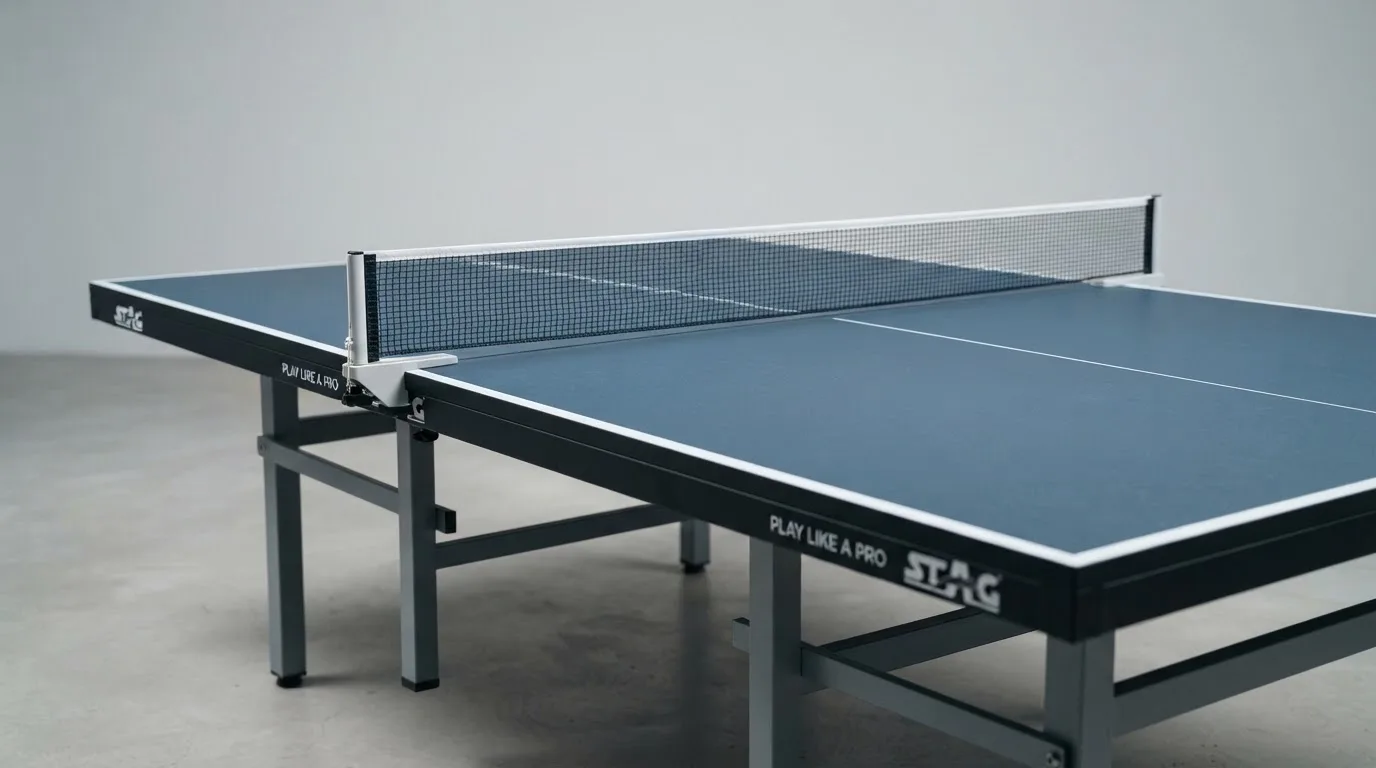
First, the public information is rich. Head-to-head records, recent form, playing style (penhold versus shakehand, defensive versus attacking), the venue surface and the ball type are all available for most fixtures on the ITTF calendar, and a model built from them is at least better than a guess. The punter who builds such a model still has to beat the bookmaker’s margin, which is set so that a price quoted in the morning already reflects the average modelled probability plus the firm’s take.
Second, the move that costs the most is acting on a tip alone without knowing what the price implies. A tip that says “player A wins” gives no information unless the price is at least what the tip implies. A £10 bet at odds of 1.45 on a player who would normally be priced at 1.30 is a value bet relative to the wider market; the same tip taken at 1.20 is a donation to the bookmaker. Three questions protect the punter from the marketing: what is the implied probability of the tip, what is the bookmaker’s margin on this market, and what would the punter have paid elsewhere for the same selection.
Specialised tipster services published for table tennis exist; they are paid services that publish picks and bankroll histories. There is no free lunch in their existence either: the ones that document their returns transparently over a long enough sample are useful inputs into the punter’s own modelling, and the rest are marketing dressed up as analysis.
Bet types, odds and the shape of a table tennis price
The core market on a table tennis match is the match winner, often quoted in a two-way or three-way form depending on whether the bookmaker offers a handicap or tie-break. The match-winner market has only two outcomes in a best-of-five fixture (no possibility of a draw) and so prices naturally pair towards even-money; a price of 1.90 against 1.90 implies a payout share of 1 ÷ (1 ÷ 1.90 + 1 ÷ 1.90) = 0.95, and a margin of 1 − 0.95 = 0.05, or 5%. The 5% is what the bookmaker keeps, on average, of every unit bet on this market, before the cost of running the operation. A market margin of 5% is the standard floor for a well-priced bookmaker on a major sport; table tennis in-play markets tend to run wider because liquidity is thinner.
From the match-winner base the bookmaker builds a small constellation of related markets. The handicap line (also called the spread in the British style, not to be confused with financial spread betting) gives a one- or two-game start to the underdog and clears the draw from the picture. The total games line sets an over/under on the number of games in the match (best-of-five over/under on 3.5 games, for example); the winning-game score is a more exotic variant. Set betting in the larger matches lists each score-line (3-0, 3-1, 3-2 for one side and the mirror) at long odds.
Outright markets run on tournaments: who wins the World Championships, who reaches the final of a WTT event, named-player markets on a longshot. Outright odds compound the margin: every leg of the bookmaker’s probability tree is priced with its own take, and the cumulative margin on a 64-player outright is meaningfully higher than the margin on the equivalent two-way match winner. That is one reason the punter who likes a name at 80/1 in an outright is rarely getting value relative to the match-by-match prices elsewhere on the same player.
Each-way and accumulator (acca) mechanics apply to table tennis in the same way they apply to any sport, with a few sport-specific details. Each-way is rarely offered on outright table tennis markets because place terms are hard to standardise for a knockout draw; the structure is more natural in horse racing. Accumulators combine short-priced favourites across multiple fixtures and amplify both the bookmaker’s compounded margin and the punter’s variance; a four-fold of short-priced matches is more about the attractive headline price than the expected value.
Worked margin on an illustrative market
Take an illustrative two-way market on a table tennis match at decimal odds of 1.90 against 1.90 (fractional 9/10). The payout share at those prices is the harmonic sum of the implied probabilities, which works out as 1 ÷ (1 ÷ 1.90 + 1 ÷ 1.90) — that is, 0.95, or 95%. The remaining 5% is the bookmaker’s margin on the market. Against the standard 5% margin on a well-priced two-way, this is the kind of price a careful punter would expect to see on a major fixture in pre-match; in-play markets on table tennis typically run a full percentage point wider because liquidity is thinner, and outright tournament markets compound to a higher margin still.
Table tennis fixtures, leagues and tournaments
Table tennis offers one structural advantage to the British punter: the calendar does not stop. The ITTF World Table Tennis Championships run every two years, and WTT (World Table Tennis) runs a continuous tour with events across all major continents. National leagues in Russia, China, Germany, France, the Czech Republic and several smaller European countries provide year-round fixtures between events. For a punter who wants to study the sport and not just the market, the depth of fixture availability is a strong reason to take table tennis seriously.
The sport has been an Olympic event since 1988, when singles and doubles debuted in Seoul, and it is one of the more accessible Olympic sports from a betting perspective: the format is short, the matches are quick and the bookmaker markets are usually offered by every GB-licensed brand. The ITTF was founded in 1926, and the international governance framework is mature; competition rules have been broadly stable for decades, with the most visible change being the move from a 21-point to an 11-point game in 2001.
Three formats matter for the punter. The best-of-five match (the most common in senior ITTF and WTT events) means there is no possibility of a draw; the bookmaker prices only two outcomes. The best-of-seven format is reserved for the longer events — the men’s singles at the World Championships is a best-of-seven, for example — and the wider match horizon means the outright and handicap markets behave differently on those fixtures. Best-of-three formats are common in lower-tier leagues and in the early rounds of some team competitions, and a three-game match presents a narrow price range because the underdog has fewer chances to come back.
Player fitness, surface and ball type matter less in table tennis than in most racquet sports, but the variables are not zero. Some players struggle in high-altitude venues; some play noticeably better on home soil; and the move from one ball type to another (the ITTF changed the ball specification in recent years and continues to revise it) has tended to benefit the more aggressive style of play.
The ten licensed brands at a glance
The ten brands reviewed below all hold an active Gambling Commission remote licence for Great Britain. The licence numbers and licence holders given in the table can be checked against the Commission’s public register; that register is the whole test of whether a brand holds a GB licence. None of these ten is the only licensed brand: the Commission register lists hundreds. They are the ten that sit inside the comparison covered by this page.
| Brand | Licence holder | Commission licence | Stance on table tennis in their own terms |
|---|---|---|---|
| Betway | Betway Limited | 039372-R-319367-029 | In-play across major sports with Free Bet Club offering up to £10 weekly |
| Dabble | Dabble Sports UK Ltd | 065677-R-340363-005 | First-deposit welcome with minimum odds and 7-day free bet expiry |
| Spreadex | Spreadex Limited | 008835-R-104580-022 | Combined fixed-odds and financial spread betting, one-click and partial cash out |
| bet365 | Hillside (UK Sports) ENC | 055148-R-331498-002 | In-play with live streaming; Super Boosts and Bet Builder+ across markets |
| Smarkets | Smarkets (Malta) Limited | 039173-R-319366-011 | Betting exchange with instant bank transfers and 6-hour withdrawals |
| Bet600 | Tyche Tech Limited | 044731-R-323941-016 | Best Odds Guaranteed on horse racing only |
| BoyleSports | Boylesports Enterprise | 039469-R-319383-025 | UK welcome offer of £20 in free bets on a £10 first bet |
| Betfair | PPB Counterparty Services Limited | 039439-R-319330-013 | In-play with Bet Builder, streaming and 90 Minute Payout markets |
| NetBet | Netbet Enterprises Limited | 039170-R-319343-032 | Daily Boosts, Profit Boosts and Bet Builder with dynamic odds |
| Swifty Sports | Swifty Global (UK) Ltd | 058957-R-334734-006 | In-play, streaming, daily boosts and BOG on UK/Irish racing |
The licences above are the entry test; the table does not score the brands against one another, and the rows that follow do. What the licence tells a punter is that the brand sits within the Commission’s enforcement perimeter — minimum age 18, identity verification before the first deposit, GAMSTOP enrolment, the 10x bonus wagering cap and the £150 financial vulnerability check threshold all apply. None of that gets a brand off the hook for the price it offers, and the review that follows is the price.
Betway — established sportsbook with a steady free bet rhythm
Betway’s free-bet mechanism is the part of the offer most worth explaining. The Free Bet Club credits up to £10 in free bets every week after opt-in; the qualifying bar is spending £25 or more on sports, which earns 2 x £5 free bets. The club is the operator’s clearest hook on table tennis betting specifically because the qualifying spend counts across the sportsbook and the timing is weekly: a punter who bets on table tennis as part of a wider slate of fixtures can clear the threshold without forcing the bet.
The brand holds a Gambling Commission remote licence for general betting standard (real events) — a standard full sportsbook licence, not the smaller limited or pool categories. In-play, Bet Builder and Bet Boosts are typical of the mainline brands, and the table tennis product sits inside that envelope rather than as a special feature.
For a punter who plays a few fixtures a week across multiple sports and wants a steady free-bet flow rather than a headline welcome offer, Betway’s rhythm suits. For a punter chasing a single value bet on a specific table tennis fixture, the Free Bet Club does not change the price of that bet.
Dabble — first-deposit welcome with a clear free-bet structure
Dabble’s headline welcome is a £10 free bet for a first £10 wager, with minimum odds applying, a 7-day free bet expiry and the stake not returned on a winning free bet. The structure is simple and the terms are typical of the market: a first bet at the minimum eligible price unlocks a free bet of equal size, and that free bet is the kind whose stake is forfeit if it wins (the punter keeps only the winnings, calculated on the free stake rather than the stake plus the free stake).
The brand holds a Gambling Commission remote licence under account 65677 as Dabble Sports UK Ltd. Identity verification before the first deposit applies, GAMSTOP enrolment applies and the £150 financial vulnerability check threshold applies — all standard for a remote general betting standard licence holder.
For a punter who wants a single, clean first-deposit welcome and plans to deposit only once, Dabble’s structure is straightforward. The 7-day expiry is the bound to watch: free bets sitting unused past the deadline disappear.
Spreadex — fixed odds and spread betting in one app, with strong cash out
Spreadex runs two product lines under one app: ordinary fixed-odds sports betting (Gambling Commission-regulated) and financial spread betting (FCA-regulated), the latter with the caveat that losses can exceed the deposit. That double regime is unusual; the betting exchange model at Smarkets is the closest parallel on this list and it is a different mechanism.
The cash-out coverage is the feature that reads sharpest for table tennis in-play. Spreadex lists one-click, auto and partial cash out on its fixed-odds product, plus Bet Builder across fixed odds or spreads and live streaming on UK and Irish horse racing, greyhounds, tennis, NFL and selected football. Live streaming rights on table tennis are thinner than on the major UK sports, but the cash-out mechanics work on any market the bookmaker makes in-play.
For the punter who values rapid cash-out control on short-cycle in-play markets, Spreadex is a useful single-app alternative to the mainline brands; for the punter who does not want to learn a spread-betting product, it is one feature too many on the same login.
bet365 — mainline features built around in-play
Bet365’s profile is built around in-play pricing and live streaming across a wide range of events. The brand is the official global betting partner of the UEFA Champions League, and its app is described by its own UK App Store entry as the most downloaded sports betting app in the country. The footprint on table tennis sits inside the in-play module, which is the place where the brand is structured to lead.
The product range includes Bet Builder+ (a bet builder that combines markets from a single event into one bet, with pre-match and in-play coverage), Super Boosts, Winnings Boosts on Bet Builders and selected singles, and daily Bet Boosts. Match Live, Bet Track and a Live Golf Tracker are visualisation tools the brand markets for following bets in play; the first two translate directly to a sport like table tennis where the score is the live data the punter cares about.
The headline figure — most-downloaded UK sports betting app — does not tell the punter whether bet365 is the best-priced bookmaker on a given table tennis market; it tells the punter the in-play product is heavily invested in. For the punter whose priority is the in-play experience over the headline welcome, that is the right reading.
Smarkets — a betting exchange with fast withdrawals
Smarkets is a betting exchange, not a fixed-odds bookmaker. The Commission licence categorisation is “remote betting intermediary” — the exchange category — and the business model is different: the punter backs or lays a selection against other punters, with the exchange taking a commission on net winnings rather than a margin baked into the price. A well-tuned exchange price is usually sharper than a bookmaker’s price on a liquid market, and it is materially sharper than a bookmaker’s price on a niche market where the bookmaker’s liquidity is thin. Table tennis is in that niche for most of the year.
The payments module is part of the brand’s profile: UK bank transfers deposit instantly from £10 up to £10,000 and withdrawals are processed within 6 hours from £10 up to £100,000; UK debit-card deposits are instant from £10 up to £15,000. The speed is the relevant feature, not the headline limit.
For a punter who treats table tennis as a value-hunt and can learn the difference between backing and laying, Smarkets offers prices close to the true market probability. For a punt-and-forget punter who wants the bookmaker’s convenience and the marketing cadence, it is the wrong shape of product.
Bet600 — Best Odds Guaranteed on horse racing, not on table tennis
Bet600 offers Best Odds Guaranteed on horse racing only: if the starting price is bigger than the early or show price the punt took, the bet is paid at the SP. BOG does not apply to table tennis and the punter should not expect it to; it is a horse-racing-specific concession from bookmakers, deeply embedded in that market’s product culture and not a feature that translates across sports.
The wider Bet600 product is a small-scale licensed sportsbook under Tyche Tech Limited, and it is one of the smaller brands on this list. The table tennis product is offered in the same in-play envelope as the mainstream sports, but the liquidity at this scale of operator is thin and the prices reflect that.
For a punter who already has a Bet600 account and wants to place the occasional table tennis bet alongside a horse-racing portfolio, the price is acceptable. For a punter building a table tennis book from scratch, it is not the obvious starting point.
BoyleSports — UK welcome offer with the £20 free-bet pattern
BoyleSports’ UK welcome offer is £20 in free bets when a £10 bet is placed, with Irish customers getting €30 in free bets on a €10 first bet. The brand runs the standard remote general betting standard licence (real events) and operates across the same full sportsbook envelope as the other mainline brands.
The terms on the welcome offer are typical of the Irish/UK market: minimum odds on the qualifying bet, a free-bet expiry and the stake not returned on a winning free bet. The proportion is more generous than the £10-for-£10 starting point, and the trade-off is the usual one — the qualifying bet carries a minimum-odds clause that pushes the punter into a short-priced selection.
For a punter who plays a few bookmakers in rotation and wants a clean £20 welcome, BoyleSports fits the rotation. The welcome is the feature; the rest of the product sits inside the mainline bookmaker envelope.
Betfair — exchange plus sportsbook, with a rich in-play toolkit
Betfair is both a betting exchange and a sportsbook (Betfair Sportsbook). The Sportsbook carries the in-play betting, Bet Builder, free live streaming of events such as UK and Irish horse racing and football and the 90 Minute Payout market — a niche product that pays out on selected football fixtures. The 90 Minute market does not apply to table tennis, but the in-play trading interface is what handles table tennis price moves on the Sportsbook side.
The Commission licence is a remote general betting standard licence (real events) under PPB Counterparty Services Limited — the same licensee as Paddy Power, on which point both brands are correctly described as running under one licence rather than as independent operators.
For a punter who wants a full sportsbook product and the option of placing the same selection on the exchange for a potentially sharper price, Betfair is the only single-brand answer on this list. The exchange’s commission eats into the price advantage at small net winnings, and a casual punter pays for the dual product.
NetBet — Boosts and Bet Builder on a standard licence
NetBet’s published product includes Daily Boosts, Profit Boosts and free-bet offers, a Bet Builder with dynamic odds and sports stats for major leagues. The shape is the standard mainline sportsbook envelope, with the Boosts as the brand’s distinctive marketing rhythm.
The licence is a remote general betting standard licence (real events) under Netbet Enterprises Limited. There is nothing in the licence category that marks the brand out from the rest of the list; the differentiation is the marketing cadence.
For a punter who likes the Boosts mechanic and plays a steady stream of small-stake bets across multiple sports, NetBet is a reasonable fit. For a punter who prefers a quieter product without daily boost push notifications, the cadence reads as marketing noise.
Swifty Sports — newer brand, in-play and live streaming with Bet Builder to come
Swifty Sports is the newest brand on this list and the product is mid-build: the brand’s app description lists Best Odds Guaranteed (UK and Irish horse racing only), Cash Out on horse racing and football specifically, daily price boosts, live streaming and in-play, with Bet Builder described as “coming soon”. A punter comparing Swifty to the other brands on this list on a like-for-like basis is comparing a smaller product surface.
For a punter willing to use a newer brand in return for the discount that typically attaches to scale-up marketing, Swifty is a reasonable addition to a wider rotation. For a punter whose primary need is a Bet Builder across markets, the wait is the cost.
What a UK table tennis punter actually has on the table
The legal framework under which all ten brands operate has three features a punter will meet whether they want to or not. Identity is checked before the first deposit: name, address and date of birth are verified before any real money moves, and that is the same for a free bet or a bonus. GAMSTOP enrolment is mandatory for every online operator, so the punter who has self-excluded through the national scheme cannot open an account at any of these brands. The 10x wagering cap on bonuses has been in force since 19 January 2026; a £10 bonus now needs £100 of qualifying bets at most, and the cap has removed the most punishing bonus conditions that the market used to write.
None of that is optional, and the punter who values anonymity at a licensed operator will not find it. The licensed environment is a verified environment.
UK licensing and the public register
Every GB-licensed bookmaker has to be on the Gambling Commission’s public register. The register is searchable by business name, trading name, domain or account number, and it is the single source of truth for whether a brand holds a licence. Several of the ten reviewed brands run under a common licensee: Betfair and Paddy Power both sit under PPB Counterparty Services Limited, for example, and they should be read as one licence rather than two independent operators. The licence category matters too: Spreadex holds both a Commission sports-betting licence and an FCA financial spread-betting licence, and the dual status is what allows the brand to offer both product types from one app.
A British punter who wants to confirm a licence should look up the brand name on the Commission’s register; the licence number, account number and licence holder come back from the same lookup. The test is whether the brand is listed, not whether it carries a logo on its homepage — every licensed brand carries the logo, and unlicensed brands have been known to copy it. A licence number without the register lookup is not a licence: it is a claim.
Where a GB punter gets help
The national framework for gambling-harm support is consistent across the ten brands: GamCare (the National Gambling Helpline), GambleAware, NHS gambling clinics and Gamblers Anonymous are the four routes the Commission encourages operators to link to, and the ten reviewed brands carry those links on their safer-gambling pages. Fitzwilliam Sports, a smaller licensed operator outside the comparison, lists GamCare, GambleAware, Gamble Aware and Gamblers Anonymous in the same register; the convention is industry-wide.
Two structural options exist at the customer’s level. GAMSTOP is the multi-operator online self-exclusion scheme, with self-exclusion periods of six months, one year, five years or five years with auto-renewal; after the minimum period the exclusion stays in place for a further seven years unless the customer asks GAMSTOP to remove it. Deposit limits are the customer’s own tool: operators must offer a gross deposit limit on a fixed time frame, with a first set of changes in force since 31 October 2025 and a second phase announced for 30 September 2026; whether that second phase is live should be checked at the operator’s safer-gambling page before relying on it. The £150 financial vulnerability check applies once a customer’s deposits minus withdrawals exceed that threshold in a rolling 30 days; it is a public-record check (bankruptcy, county court judgments), not an income check.
Crypto, anonymity and the British licensed environment
There is no anonymity at a GB-licensed operator. Identity is verified before the first deposit, and the verification is what the licence requires. A punter who wants to bet with bitcoin, ethereum or any other cryptocurrency on table tennis is betting at an unlicensed site that does not sit under the Commission’s framework, and the trade-off is the standard one: no GAMSTOP coverage, no Commission complaints route, no approved dispute-resolution body, no British consumer redress if funds are withheld, no 10x bonus cap, no £150 vulnerability check and no recourse to the FSA or the FCA for the spread-betting product. Some of those sites are honestly run; some are not. None is licensed for Great Britain under the Gambling Act 2005.
The Commission’s enforcement against unlicensed sites is disruption rather than blocking: cease-and-desist notices, search-engine referrals, work with registrars, hosts and payment providers, and the planned court-order DNS blocking powers. None of that undoes the loss of a customer’s funds at an unlicensed site that decides not to pay out. Crypto is not in itself a problem; the choice to bet on table tennis with crypto is a choice to bet outside the GB consumer-protection framework, and the punter should know that before depositing.
The credit-card ban applies at every GB-licensed operator: credit cards cannot be used to fund gambling in Great Britain, including credit-card-funded e-wallet top-ups. Debit cards and bank-based payments are not covered by that ban. There is no statutory list of permitted payment methods at a licensed operator, and the choice between a debit-card deposit, an open-bank transfer, an e-wallet or a pre-paid card is the operator’s product decision rather than the regulator’s mandate.
Bonuses, free bets and what an offer really costs
The 10x bonus wagering cap that has been in force since 19 January 2026 is the sharpest change in the British bonus market of recent years. A £10 bonus at the old 50x wagering factor meant £500 of qualifying bets; under the cap, no more than £100 of qualifying bets are needed to clear the same bonus. The trade-off is that the bonuses themselves tend to be smaller, and the headline “100% up to £X” is rarer than it was.
A free bet is structurally different from a bonus. The cap on bonus wagering requirements applies to bonuses; the question of whether it applies to free bets with no wagering condition is not settled in the same rule. A free bet that wins keeps the winnings but returns the stake only as a notional line in the calculation; the punter does not see the stake back. The value of a £10 free bet taken at decimal odds of 3.00 is £10 × (3.00 − 1) = £20 in winnings; the stake is not added. That is the standard mathematical shape of a free bet, and the punter should know it before judging any welcome offer.
The bets needed to clear a bonus depend on the qualifying stake per bet and the number of bets the punter is willing to make. A £10 bonus requiring £100 of qualifying bets at a stake of £10 per bet takes ten qualifying bets at minimum eligible price; the same requirement at a stake of £5 takes twenty. The expected cost of clearing the bonus depends on the margin of the qualifying market — a £100 turnover at a 5% margin costs £5 of expected value, while a £100 turnover at a 10% margin costs £10. That is the line the bonus marketing never reads aloud: the bonus is the headline, the qualifying-bet margin is the cost, and the punter who bets at minimum eligible price tends to be betting on markets wide enough to wipe out the headline.
Mixed-product promotions (an offer that requires betting on two or more product types to unlock a single benefit) are banned under the same 19 January 2026 framework. The pattern of “deposit and bet £10 on football to get free spins” is not a legal offer under the GB regime. That is a quieter change than the 10x cap and a meaningful one for punters who used to chase promotional rewards across product types.
Advertising standards run through the Committees of Advertising Practice (the CAP Code, non-broadcast) and the Broadcast Committee of Advertising Practice (the BCAP Code, broadcast), enforced by the Advertising Standards Authority. Section 16 of the CAP Code requires marketing to be socially responsible, not strongly appealing to under-18s, and with no one who is or seems to be under 25 featured gambling in the creative — the rule concerns who appears in the ad, not who can bet. “Whistle-to-whistle” is an industry code rather than law: since 1 August 2019, betting advertisements are not shown on TV from five minutes before a live sporting event until five minutes after it, before the 9pm watershed, with horse and greyhound racing excluded.
Operator verdicts at a glance
The reviews above are the figures; the verdicts below are the calls. Each one closes on what the block above it actually established, not on the brand’s general suitability.
Betway suits the steady multi-sport bettor more than the table-tennis specialist. The £10 weekly free-bet flow rewards betting volume rather than value-hunting on a single fixture.
Dabble suits the punter who wants one clean welcome and will not reload, because the operator’s edge is in the first deposit rather than in the cadence.
Spreadex suits the punter who wants fast cash-out control on a short-cycle in-play sport, and who is comfortable holding a spread-betting product they may not use.
bet365 suits the punter whose priority is the in-play experience and live-streaming width, because the brand has invested more in in-play infrastructure than any of its listed competitors.
Smarkets suits the punter who treats value as the dominant variable and can learn the difference between backing and laying on the same selection.
Bet600 suits a punt-and-forget horse-racing customer looking for a small brand to round out a portfolio. Its table tennis product is the same envelope as everyone else’s, with thinner liquidity at this scale.
BoyleSports suits the welcome-offer shopper, because the £20 free bet is the clearest headline on a £10 first bet.
Betfair suits the punter who wants both a sportsbook and an exchange under one licence, because it is the only listed brand running both products.
NetBet suits the punter who likes a daily-Boost cadence and treats the marketing rhythm as entertainment rather than noise.
Swifty Sports suits the punter building a rotation and willing to wait for the brand’s Bet Builder to arrive.
Frequently asked questions
How is the return on a table tennis bet worked out from the stake and the odds?
The return on a winning single bet is the stake multiplied by the decimal odds; the net profit is the stake multiplied by the odds minus one. A £10 stake at decimal odds of 2.50 returns £25 — £10 of stake returned and £15 of profit — and a £10 stake at decimal odds of 1.50 returns £15 (a £5 profit). For an accumulator, the odds of the legs multiply into a single price before the stake is applied, so a four-fold priced at combined odds of 30.00 on a £10 stake returns £300 if all four legs win.
What is the bookmaker’s margin and how does it show in the price?
The margin is the slice of every unit staked on a market that the bookmaker keeps, on average, before operating costs. For a two-way market at decimal odds of 1.90 and 1.90, the payout share is 1 ÷ (1 ÷ 1.90 + 1 ÷ 1.90) = 0.95 (95%), and the margin is 1 minus 0.95 = 0.05 (5%). A £100 stake at those prices returns £95 of payouts in aggregate across all outcomes at fair-book pricing, and the remaining £5 is the margin. Markets with wider margins — typically in-play or outright — return less of the stake to the punter on average, and that is what gives the bookmaker its edge.
How can it be confirmed that a bookmaker holds a Gambling Commission licence?
The Gambling Commission’s public register is the single source of truth. It is searchable by business name, trading name, account number or domain, and the search returns the licence number, the licence holder and the licence categories. A licence number on a brand’s homepage that does not appear on the register is not a licence. Every GB-licensed online bookmaker is also a GAMSTOP member and is identifiable in the GAMSTOP exclusion list of operators.
How does live betting work on table tennis and is it different from pre-match?
Live betting prices update as the match is played, and the score drives the bookmaker’s model in real time. The market is wider than pre-match (the bookmaker’s margin is typically a percentage point or two higher because liquidity is thinner), but the same structural pricing applies: the sum of the implied probabilities across the outcomes is greater than 1, and the gap is the margin. Cash out is a feature on top: the bookmaker offers to settle the bet early at a price derived from the current state of the book and the live score, and the punter sees only the headline figure.
Why are bonuses and free bets treated differently at a GB-licensed bookmaker?
A free bet is a bet paid for by the bookmaker rather than by the punter, and the stake is not returned with the winnings; a bonus is added to the punter’s balance on a qualifying transaction and is subject to a wagering requirement before it can be withdrawn. The 10x bonus wagering cap that has been in force since 19 January 2026 limits the qualifying bets the punter must place to clear a bonus to ten times the bonus value, but free bets are governed by their own terms and may or may not be subject to the cap depending on whether they carry a wagering condition.
Tennis, darts & cue sports – Boxing betting
Content created by the «Boxing betting» team
